Is It Worth Going To Oslob?
An honest look at whether Oslob in Cebu, Philippines is worth the early start and long drive: whale shark fees, rules, sighting odds, and what else to do in town.
Oslob, a small town on the southeast coast of Cebu Island in the Philippines, has built its entire tourism economy around one morning activity: snorkeling a few meters from whale sharks off the barangay of Tan-awan. The encounter is run by the municipal government, the fees are fixed by local ordinance, and the animals are wild fish that swim in from the Tañon Strait, which means the experience is regulated in a way few wildlife tours are, and unpredictable in a way no tour operator can promise around. This page weighs the real costs, the rules and the odds, so you can decide whether the long drive south earns a day of your Cebu itinerary.
Is It Worth Going To Oslob?
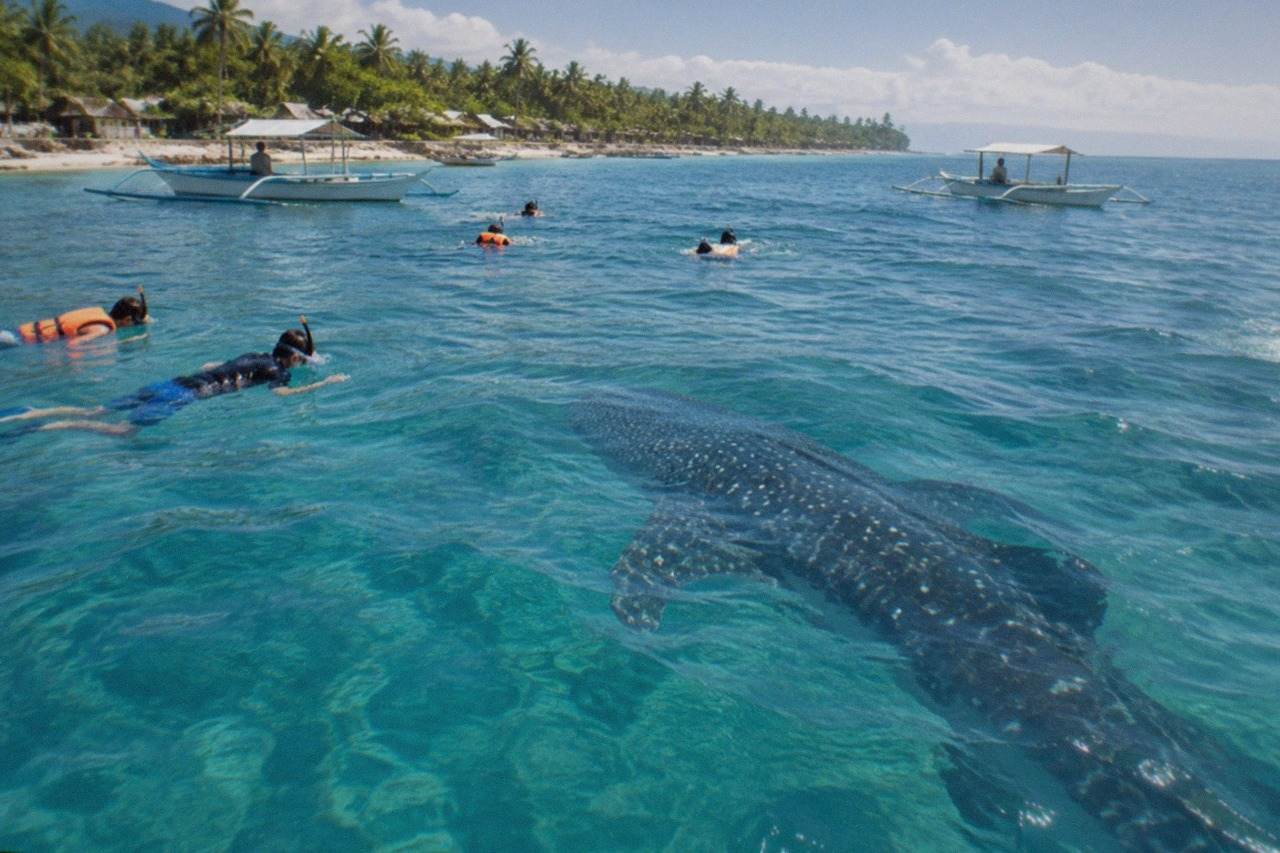
Yes, for most first-time visitors to Cebu it is worth going to Oslob, with two honest caveats: the whale sharks are wild and sightings are not guaranteed, and the trip means a very early start from Cebu City, roughly three and a half to four and a half hours away by bus. If swimming beside the largest fish in the sea is a priority for you, no other spot in the Philippines combines the same reliability of sightings with the same easy shore access.
The value question really splits into two parts. The first is the encounter itself. A thirty-minute session in the water with a whale shark, at a distance of about four meters, is a genuine bucket-list experience, and Oslob is the one place in the country where it happens on a schedule, roughly 6 AM to 12 PM daily. The second part is everything around it: the pre-dawn departure, the crowds at peak season, and the ethics of a feeding program, which this site covers separately in the whale shark ethics guide.
Visitors who arrive with realistic expectations tend to rate the day highly. Visitors who expect a private, pristine, guaranteed encounter tend to leave disappointed. The mechanics of the morning, from the briefing to the paddle boats, are the same whether you come in January or July, and the town's own tourism office runs the registration desk at Tan-awan.
What Do The Oslob Whale Shark Fees Actually Cover?
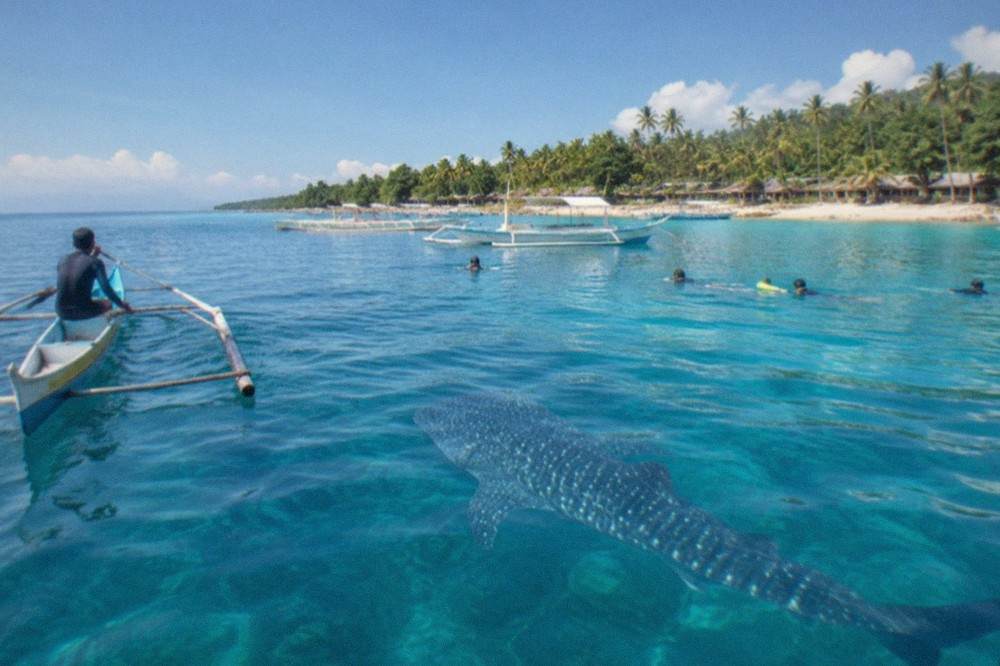
The municipal fee is P1,000 (about US$16) per foreign tourist and P500 (about US$8) per Filipino, boat and guide included, paid at the Tan-awan briefing center. That covers a mandatory orientation, a paddle boat out to the interaction area, a guide in the water with you, and roughly thirty minutes of snorkeling. Scuba diving and a second session cost extra, and the rules are strict: no touching, no sunscreen, no flash photography, and about four meters of distance from the animal at all times.
The two-tier pricing reverted to the 2020 municipal ordinance rates in March 2025, so older blog posts quoting different figures are out of date. The fee is the same whether you book direct at the center or through a day tour; the tour simply adds transport and, usually, a stop elsewhere in south Cebu. For a fuller cost breakdown including food and extras, see what Oslob costs.
| Item | Figure (as of 2026) | Notes |
|---|---|---|
| Whale shark fee, foreign tourist | P1,000 (about US$15.9) per person | Boat and guide included, set by municipal ordinance |
| Whale shark fee, Filipino | P500 (about US$8.0) per person | Same inclusions |
| Tumalog Falls entrance | P50 (about US$0.8) per person | Habal-habal from Tan-awan about P50 (about US$0.8) to P100 (about US$1.6) each way |
| Ceres bus, Cebu City to Oslob | P145 (about US$2.3) to P250 (about US$4.0) | About 3.5 to 4.5 hours from the South Bus Terminal |
The no-sunscreen rule surprises people, so it deserves emphasis: reef-safe or not, lotion of any kind is banned in the interaction area because the sharks ingest whatever is on your skin when they feed near you. Bring a rash guard instead. Life jackets are mandatory, and only the licensed spotters may feed the animals, which is the practice that keeps the sharks lingering near Tan-awan and the one that divides opinion among marine conservationists.
Is The Early Start From Cebu City Worth It?
For most travelers, yes, but only because the alternative is worse: whale shark activity runs about 6 AM to 12 PM and effectively ends by midday, so arriving late means missing it entirely. From Cebu City the trip is roughly three and a half to four and a half hours each way, which is why visitors either book a day tour with a 3 AM pickup or sleep in Oslob the night before. The early start is not negotiable.
Doing it independently is possible and cheaper: Ceres buses leave the Cebu South Bus Terminal throughout the day for the Bato via Oslob route, and you pay onboard. The trade-off is that you carry the risk of a full boat at the briefing center on a busy morning, and you still need a habal-habal or tricycle for the last stretch to Tan-awan. Day tours absorb all of that friction, which is the main thing you are paying for beyond the municipal fee itself. The comparison between the two southern towns as a base is laid out in Moalboal or Oslob for your stay.
If the pre-dawn drive sounds miserable, the honest alternative is to skip the day trip and stay overnight. Oslob town itself is small and quiet, but waking up twenty minutes from Tan-awan turns a punishing schedule into a relaxed one, and several small resorts sit within a short ride of the briefing center.
Are The Whale Shark Sightings In Oslob Guaranteed?
No, and any operator that promises otherwise is overselling. The whale sharks are wild animals feeding on natural plankton, and in late May 2026 they were absent from the Tan-awan interaction area for about four days when the plankton moved to a neighboring barangay. The town paused operations rather than fake it, and sightings resumed. Over the full year, sightings are far more reliable here than almost anywhere else, but the honest framing is "very likely, not certain."
That four-day gap made local news precisely because it is rare. The municipal tourism office was clear that the sharks had not left Oslob permanently, and the mayor publicly described the feeding as a minor lure rather than the animals' main food source, which is why they follow the plankton when it drifts. For more on the odds and the timing, see are whale sharks guaranteed at Oslob.
Timing within the day matters too. The earliest sessions get calmer water, better light for photos and thinner crowds at the registration desk, while late-morning arrivals can face a wait and choppier conditions as the wind picks up. None of that changes the fee, but it changes the experience enough that serious photographers plan around it.
What Else Is There To Do In Oslob Besides The Whale Sharks?
Tumalog Falls is the obvious second stop, a short and steep habal-habal ride inland from Tan-awan, with a cold natural pool under a curtain of water and a small entrance fee. Beyond that, Oslob serves as the gateway to Sumilon Island's marine sanctuary, and the town carries a modest Spanish-colonial heritage quarter around the old cuartel and church ruins. Most day tours bundle the whale sharks with Tumalog and a Sumilon stop precisely because the shark session ends by noon.
Tumalog's entrance runs about P50 (about US$0.8) per person, and the habal-habal ride from Tan-awan costs roughly P50 (about US$0.8) to P100 (about US$1.6) each way depending on negotiation and season. Sumilon Island, a short boat ride away, is managed as a private resort with a day-pass system that includes transfers and access to the beach, lagoon and sanctuary. It is the "beautiful island" half of the classic Oslob day. Heritage-minded visitors should also know that the 30 September 2025 magnitude 6.9 earthquake off northern Cebu did its worst structural damage far from Oslob, in the northern towns, so the south coast itinerary was unaffected. The full day plan is in the Oslob day trip guide.
A guided walk through the old downtown markets and street food of Cebu City covers more of the area than you could manage alone in a day.
Who Should Skip Oslob Altogether?
Skip Oslob if you cannot tolerate crowds, early mornings, or the idea of a regulated feeding program, because all three are structural to the experience and not fixable by paying more. Travelers with only two nights in Cebu City and no appetite for a 3 AM pickup will get more from a Mactan island-hopping day or a city heritage walk than from six-plus hours in a bus for thirty minutes in the water. The ethics question is genuinely contested.
The conservation debate matters to some visitors more than others. Critics argue that hand-feeding keeps the sharks dependent and habituated to boats; the town and its defenders argue the feeding is a minor lure, that the rules keep contact minimal, and that the fees fund the monitoring that replaced the historical hunting of these animals in the area. Both positions deserve a fair reading before you decide, and the ethics guide on this site sets them out side by side.
For the fence-sitters, the practical middle path is to book the earliest possible session, keep the four-meter distance scrupulously, and pair the morning with Tumalog Falls so the day stands on more than one experience. A day that includes a waterfall, a sanctuary island and the whale sharks is much harder to regret than one built on a single thirty-minute swim.
Common Questions About Oslob
Is it worth going to Oslob?
For most first-time visitors to Cebu, yes: it offers the most reliable whale shark encounter in the Philippines on a fixed morning schedule, with government-set fees and enforced rules. It is not worth it if a 3 AM start, crowds, or the feeding program would ruin the day for you.
How much does it cost to see the whale sharks in Oslob?
The municipal fee is P1,000 (about US$15.9) per foreign tourist and P500 (about US$8.0) per Filipino, boat and guide included. Day tours add transport and extra stops on top of that fee.
What time do the whale sharks start in Oslob?
Operations run about 6 AM to 12 PM daily, with registration effectively closing late morning. Most tours leave Cebu City around 3 AM to be in the water early.
Can you touch the whale sharks at Oslob?
No. The rules require about four meters of distance, no touching, no sunscreen and no flash photography, and a guide stays in the water with each group. Violations end your session.
What is Oslob known for besides whale sharks?
Tumalog Falls, the Sumilon Island marine sanctuary, and a small Spanish-colonial heritage quarter around the old cuartel. Most day tours bundle all of these with the morning whale shark session.
Is it better to stay in Oslob or Moalboal?
Oslob suits a one-night stop before an early shark session; Moalboal offers more dining, the sardine run and a livelier base for several days. Many travelers sleep in Moalboal and take a day tour to Oslob from there.
The short version: Oslob is worth going to if the whale shark encounter is something you actually want, and it is skippable without regret if it is something you feel obliged to want. Check the current sightings situation before you commit the day, book the earliest session you can manage, and let Cebu Travel Guide carry the rest of the planning.