Cebu City
Cebu City is the capital of the island province of Cebu in the Central Visayas region of the Philippines, the country's oldest city, and the practical base for almost every trip to the island.
Short answer
Cebu City is the oldest city in the Philippines, founded as a Spanish settlement in 1565 and chartered on 24 February 1937. It sits on the Mactan Channel, administratively independent of Cebu Province, and works as the island's transport, heritage and food hub.
Cebu City is the oldest city in the Philippines, a chartered city on the island of Cebu in the Central Visayas region, and the place where the Spanish story of the country began in 1565. It is not part of Cebu Province for administrative purposes: Cebu City, together with Lapu-Lapu and Mandaue, is a highly urbanized city that governs itself, though all three sit cheek by jowl around the Mactan Channel. The city held 964,169 residents at the 2020 census, and the provincial government still keeps its offices here, which is why almost every visitor to the island passes through at least once.

For trip planning the city splits into two useful halves. The downtown strip between Colon Street and the port holds the oldest heritage sites, the Santo Niño basilica and Magellan's Cross among them, and it is walkable in a morning. The upland barangays of Busay and the business districts of Cebu IT Park and the Cebu Business Park hold the hotels, the viewpoints and the nightlife, connected by jeepney, taxi and ride-hailing apps. This guide on Cebu Travel Guide covers both halves, the fees you will actually pay, and the day trips that leave from the city's terminals and piers.
What Is Cebu City And Where Exactly Is It?
Cebu City is the provincial capital and oldest chartered city of the Philippines, located on the east coast of Cebu island in the Central Visayas, facing the Mactan Channel. It was founded as a Spanish settlement in 1565 and chartered on 24 February 1937, and with 964,169 residents at the 2020 census it is the largest city on the island. It is administratively independent of Cebu Province as a highly urbanized city.
The geography matters for planning. The city hugs a narrow coastal plain, with barangays climbing into the hills of Busay to the west, where the viewpoints sit, and the port area and downtown at sea level. Across the channel lie Mactan island and the cities of Lapu-Lapu and Mandaue, reached by two bridges or the CCLEX toll crossing. Mactan-Cebu International Airport sits on the Mactan side, which is why reaching the city proper involves a bridge crossing.
The history is the reason the city exists as a destination at all. Magellan's fleet arrived in 1521 and planted a cross that is still venerated today, though the expedition's leader died at the Battle of Mactan on 27 April 1521. The permanent Spanish settlement came in 1565 under Legazpi, making Cebu the country's first Spanish city, antedating Manila by seven years as the city government itself notes. The Santo Niño image, given at the 1521 baptism of Queen Juana and rediscovered in 1565, still anchors the Sinulog festival every third Sunday of January.
What Are The Top Attractions In Cebu City?
The top attractions in Cebu City are the Basilica Minore del Santo Niño, Magellan's Cross, Fort San Pedro, the Colon Street heritage strip and the upland viewpoints at Tops Lookout and the Temple of Leah. Several of the downtown sites are free to enter and the paid ones charge only modest peso fees, so a full sightseeing day costs very little in admissions and most of the budget goes to transport and food.
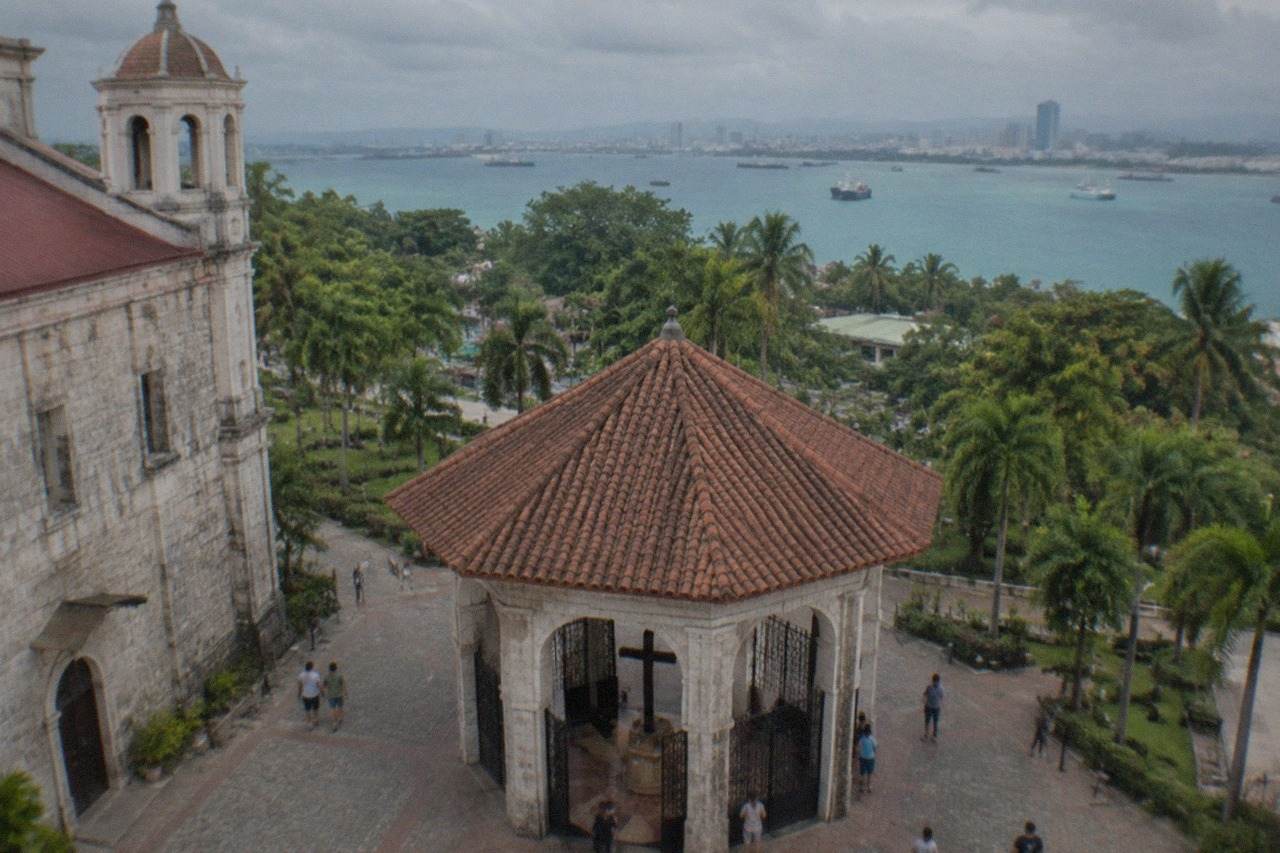
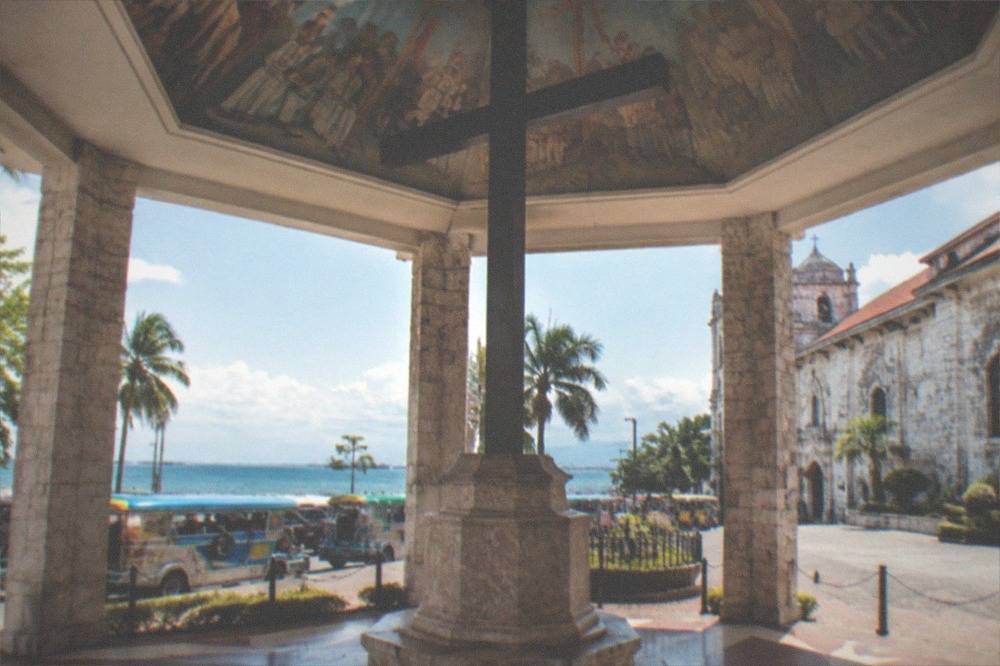
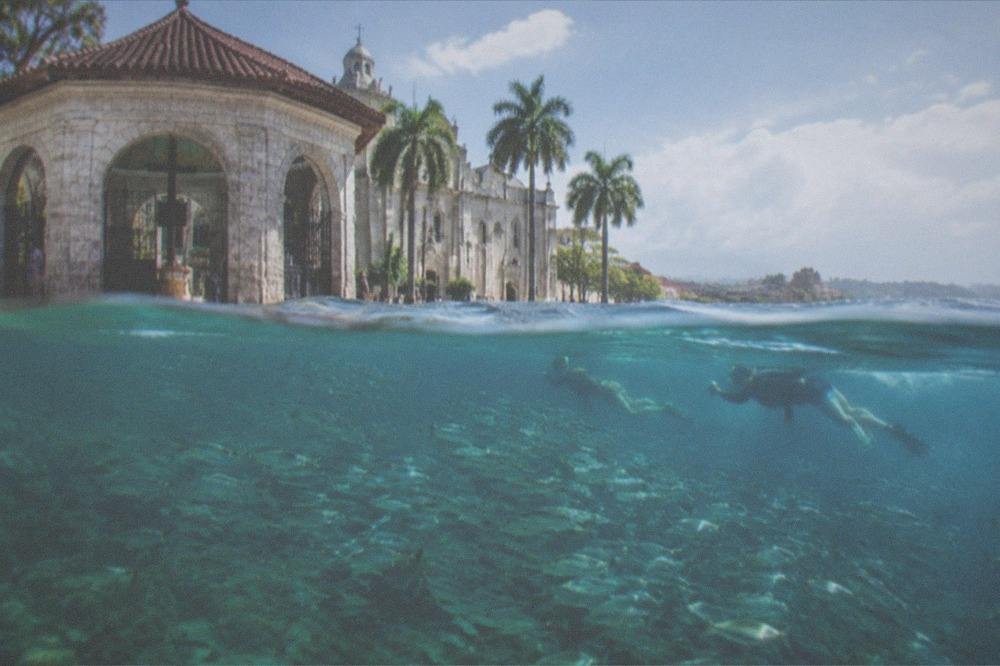
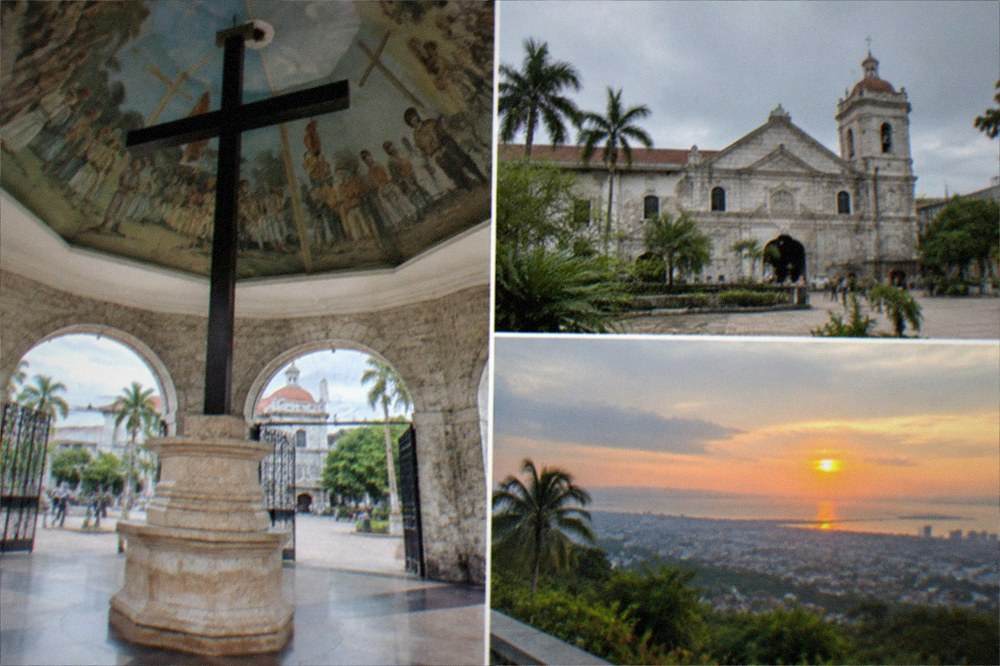
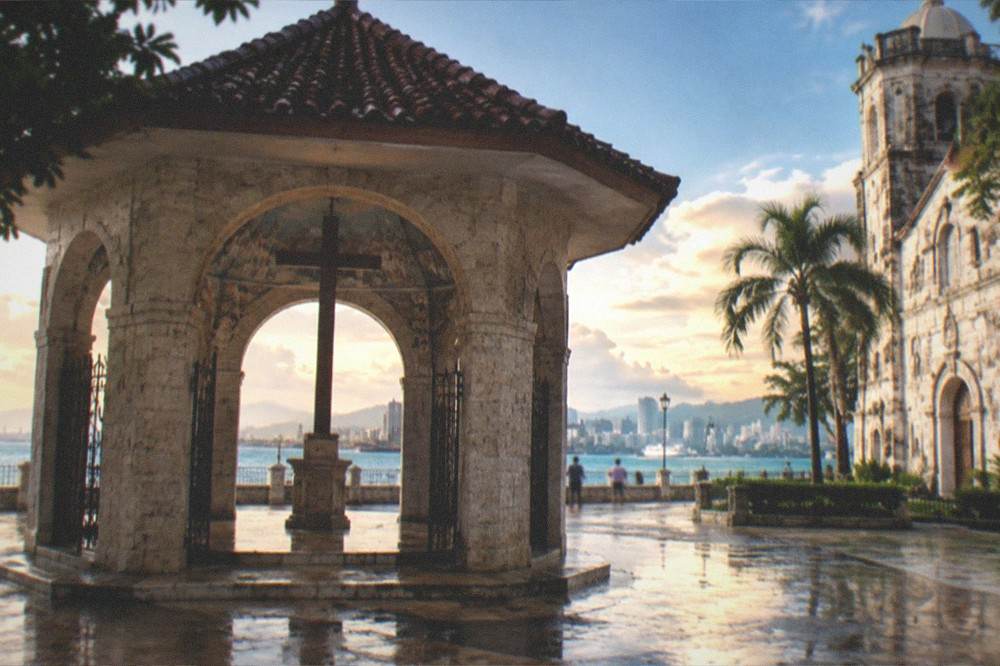
Start downtown, where the three oldest sites sit within a five-minute walk of each other. The Basilica of the Santo Niño is the country's oldest Christian shrine, founded on 28 April 1565 on the spot where the image was found; the current stone structure dates from around 1735 to 1740. Magellan's Cross stands in a pavilion a few steps away, free to visit and open roughly 8 AM to 6 PM. Fort San Pedro, the oldest triangular bastion fort in the country with stone walls dating to 1738, charges P50 (about US$0.8) regular and P40 (about US$0.6) for students and seniors, and keeps hours of roughly 8 AM to 7 PM.
The upland barangay of Busay holds the city's best views. Tops Lookout is open 24 hours and charges P100 (about US$1.6) regular entry, P70 (about US$1.1) for seniors and PWDs with ID, free for children under two; the operator's own site lists a shuttle-plus-entry combination at P200 (about US$3.2) from IT Park. The Temple of Leah, a hilltop monument built as a tribute, is recently reported at around P120 (about US$1.9) on weekdays and P150 (about US$2.4) on weekends, with hours shortened since April 2026, so confirm before the trip up. Sirao Flower Garden adds flower terraces at around P100 (about US$1.6) per person on the same hill road.
Two museums cover the city's story in climate-controlled comfort. Casa Gorordo Museum, a restored 19th-century house, charges around P100 (about US$1.6) regular and P50 (about US$0.8) for students and seniors, open Monday to Saturday. Museo Sugbo, the provincial museum in the former provincial jail complex, reopened on 29 August 2025 after nearly two years and charges P50 (about US$0.8) general admission, P25 (about US$0.4) for students and seniors, Monday to Friday only.
| Attraction | Entry fee | Hours | Notes |
|---|---|---|---|
| Basilica Minore del Santo Niño | Free | Daily, mass schedule restored Nov 2024 | Founded 1565, current structure c. 1735-1740 |
| Magellan's Cross | Free | About 8 AM-6 PM | Pavilion dates from 1834 |
| Fort San Pedro | P50 (about US$0.8) regular, P40 (about US$0.6) student/senior | About 8 AM-7 PM | Oldest triangular bastion fort, 1738 walls |
| Tops Lookout | P100 (about US$1.6), P70 (about US$1.1) senior/PWD | Open 24 hours | Shuttle plus entry P200 (about US$3.2) from IT Park |
| Temple of Leah | About P120 (about US$1.9) weekday, P150 (about US$2.4) weekend | Shortened hours since Apr 2026 | Confirm before visiting |
| Casa Gorordo Museum | About P100 (about US$1.6), P50 (about US$0.8) student/senior | Mon-Sat | 19th-century ancestral house |
| Museo Sugbo | P50 (about US$0.8), P25 (about US$0.4) student/senior | Mon-Fri | Reopened 29 Aug 2025 |
Heritage walks reward a guide more than most city sightseeing does, because the downtown sites carry dates and devotions that signage alone does not explain. A half-day historical tour is the efficient way to cover the basilica, the fort and the Colon strip with the context attached, and the free GuruWalk option below costs nothing up front, tip based as those walks are.
What Does A Food Tour Of Cebu City Cover?
A food tour of Cebu City covers the public markets, the Colon Street stalls and the lechon shops that made the city the food capital of the Visayas, typically with a local guide. The city's signature dish is lechon, whole roasted pig, and its most famous name, Cebu lechon, is sold by weight from downtown outlets and market stalls alike. Prices for guided walks vary by operator and are best checked on the live listing.
The eating geography follows the old city. Colon Street, often called the oldest street in the Philippines, holds street-food stalls and old eateries in the shadow of the heritage district. The public markets, Carbon chief among them, carry the full range of Visayan cooking: ngohiong, the local fried roll; tuslob buwa, pork brain and liver simmered in oil and eaten with hanging rice; and puso, rice boiled in woven coconut leaves, which is the island's portable carbohydrate of choice.
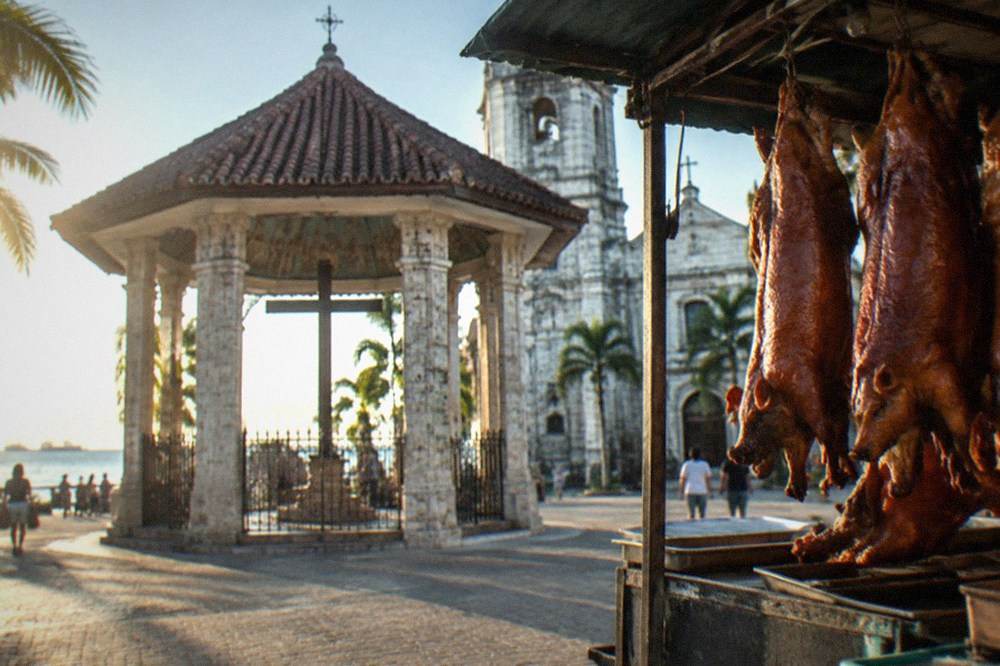
Lechon is the headline act. Whole pigs are roasted over charcoal, seasoned with lemongrass and salt, and sold by the kilo; the city's best-known lechon names draw queues at lunch and sell out by mid-afternoon, so timing matters more than anything a guide can arrange. A market walk that ends at a lechon counter is the standard format for the city's food tours, and it works.
The Cebu Market & Food Tour comes with a guide who handles the ordering, the translation and the market navigation; its price is not published by the operator, so check the live listing for the current figure and departure point. For a free alternative, the tip-based walks on GuruWalk cover the same ground, including one that pairs backstreet stalls with a Michelin Bib Gourmand reference point and a jeepney ride, with no fixed price at all.
| Food experience | Where in the city | What to expect |
|---|---|---|
| Lechon by weight | Downtown outlets and market stalls | Sold by the kilo, best before mid-afternoon |
| Ngohiong and puso | Colon Street stalls, Carbon market | Fried rolls with rice cooked in coconut leaves |
| Tuslob buwa | Carbon and downtown eateries | Pork offal dip with hanging rice |
| Market fruit and snacks | Carbon public market | Seasonal tropical fruit, native sweets |
| Guided market walk | Downtown and Carbon | Three to four hours with a local guide |
How Do You Get Around Cebu City?
Cebu City runs on jeepneys, taxis and the Grab ride-hailing app, with a partial bus rapid transit line operating since 13 March 2026 on a single Il Corso to IT Park route. Grab works across the city, Mandaue and Mactan, taxis meter from a flag-down, and jeepneys remain the cheapest way up and down the main arteries. There is no rail system, so every journey is by road.
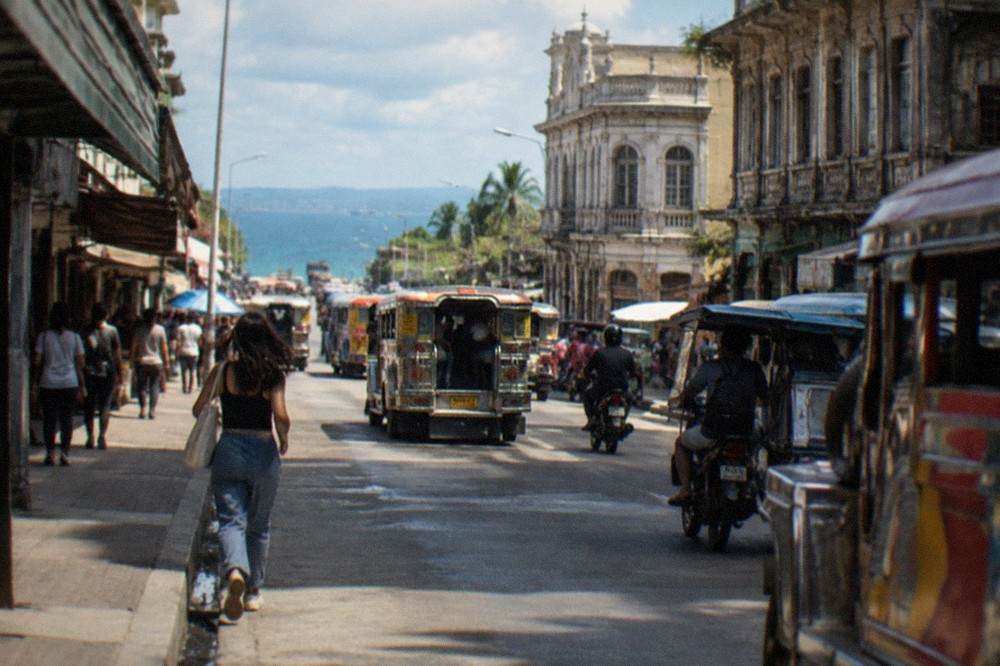
The jeepney network is dense and cheap, and the routes follow the main roads: the Colon to IT Park corridor, the routes south toward the Cebu South Bus Terminal, and the lines across the bridges to Mactan. Fares are set nationally by the LTFRB, with a fare adjustment approved in late September 2026, though the coverage of that adjustment in Region 7 was not confirmed by the approving article, so pay what the driver asks and keep small notes. For visitors, the practical advice is simpler: jeepneys for the straight runs, Grab for door-to-door trips, and taxis from the rank at the airport and malls, where the white metered cabs are the standard.
The bus rapid transit system is the city's newest option but a limited one. Partial operations began on 13 March 2026 with 17 buses running from Il Corso on the South Road Properties to IT Park, using a short dedicated corridor on Osmeña Boulevard and mixed traffic elsewhere. Free rides were offered at launch under a one-year program, with distance-based fares of a minimum P18 (about US$0.3) for the first 5 km listed alongside the free-ride schedules from March 2026, so check the current fare before boarding. The World Bank restructured the project in 2026 and cut funding for later packages, which means the full network is not expected before 2027 at the earliest.
For trips beyond the city, two terminals matter. The Cebu South Bus Terminal runs Ceres buses down the east and west coasts of the island, toward Oslob in roughly three and a half to four and a half hours and Moalboal in roughly two and a half to three and a half hours. Pier 1 downtown is the fastcraft terminal for the roughly two-hour crossing to Tagbilaran on Bohol, with OceanJet sailing around thirteen times a day at P960 (about US$15.3) tourist class and P1,440 (about US$23) business class since the September 2026 fuel surcharge.
| Transport mode | Coverage | Practical notes |
|---|---|---|
| Jeepney | All main city arteries and bridges | Cheapest option, pay onboard, small notes |
| Grab | Cebu City, Mandaue, Lapu-Lapu/Mactan | App-based, upfront pricing |
| Metered taxi | City-wide, ranks at airport and malls | White cabs are the standard |
| CBRT bus | Il Corso to IT Park only, since Mar 2026 | Free rides at launch, check current fare |
| Ceres bus (south) | From Cebu South Bus Terminal | Oslob 3.5-4.5 h, Moalboal 2.5-3.5 h |
| Fastcraft to Bohol | Pier 1, about 2 h | OceanJet, about 13 sailings daily |
Where Should You Stay In Cebu City?
The best area to stay in Cebu City depends on the trip: the IT Park and Business Park district for modern hotels and nightlife, the downtown heritage strip for cheap lodging near the oldest sites, and Busay or the Nustar area for views and resorts. IT Park, the city's call-center and dining hub, has the densest concentration of mid-range and business hotels within walking distance of restaurants.
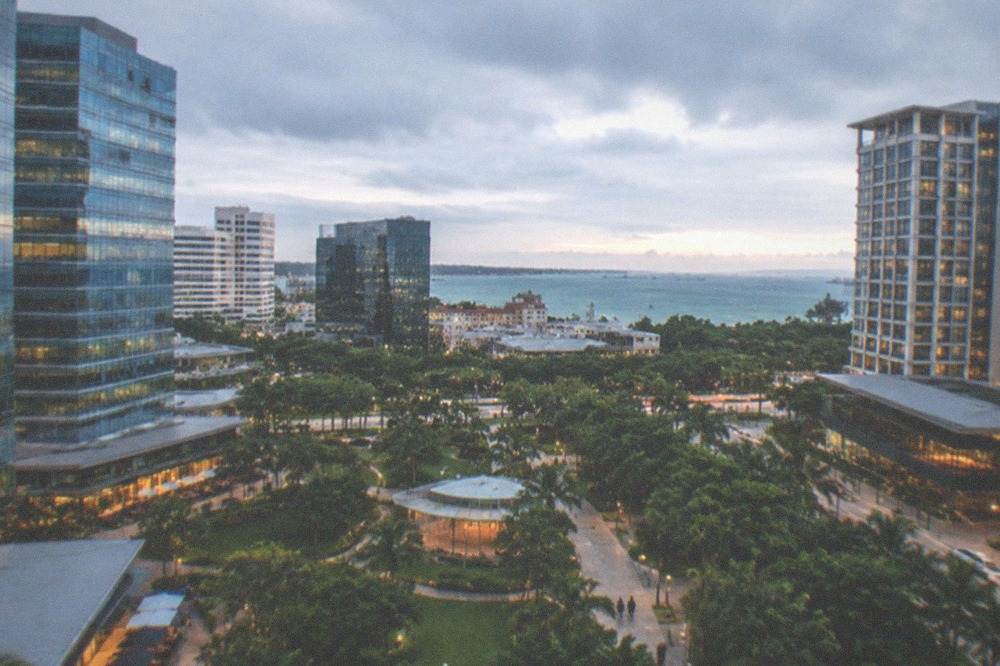
IT Park is the default for most first-time visitors. The district holds the city's tech offices, a large park at its center, and a restaurant and bar scene that runs late, and it sits on the CBRT line and the Tops shuttle route. The adjacent Cebu Business Park, home to the Ayala Center mall complex, offers the same package with slightly more upscale hotels. Both areas are twenty to forty minutes from the airport by road depending on bridge traffic.
Downtown, around Colon Street and the basilica, is where the budget hotels and heritage inns cluster. The trade-off is noise and traffic, but nothing in the heritage district is more than a short jeepney ride away, and the food stalls open early and close late. For views rather than convenience, the Busay hillside above the city has resorts along the road to Tops Lookout, and the Nustar development on the South Road Properties added a casino resort and, since February 2026, a glass-walkway skydeck attraction.
Families and beach-bound travelers should read the honest comparison first: Cebu City itself has no swimming beach, and the resort coastline is on Mactan, across the channel. Staying in the city and day-tripping to the beaches, or splitting the trip between a city hotel and a Mactan resort, is the standard pattern, and the where to stay in Cebu comparison covers it in detail.
When Is The Best Time To Visit Cebu City?
The best time to visit Cebu City is the dry season from December to May, with the coolest and driest months December to February and the Sinulog festival on the third Sunday of January as the peak draw. The rainy season runs June to November, with typhoon risk peaking roughly July to October, and the Mactan station's 1991-2020 normals show 1,685 mm of rain and 138 rain days spread across the year.
The monthly rainfall figures tell the story precisely. April is the driest month in the Mactan series at 48.1 mm, and March and February follow closely; October is the wettest at 194.8 mm, with July and September nearly as heavy. Temperatures barely move: the annual mean is 28.1 degrees, with a mean maximum of 31.3 and a mean minimum of 24.9, so packing is about rain gear and air-conditioning, not layers.
Sinulog is the one date that changes the calculus. The grand parade falls on the third Sunday of January, which was 18 January in 2026 and is confirmed for 17 January 2027 at the Cebu City Sports Center, the venue the festival returned to in 2025 and 2026 after two years at the South Road Properties. Book months ahead for that weekend, expect road closures downtown, and treat the crowds as part of the show.
The 2025 disaster record is worth knowing, not for alarm but for realism. Typhoon Tino in early November 2025 brought record rainfall and severe flooding to Cebu, and the M6.9 earthquake of 30 September 2025 damaged heritage churches in the north of the island, though the Department of Tourism declared the province open to tourists by late October 2025. The city's core attractions reported no major damage, but northern church visits, including the Bantayan and Malapascua day trips, are worth a status check before you commit.
| Month | Rainfall at Mactan station | Season |
|---|---|---|
| January | 105.2 mm | Dry season, Sinulog month |
| February | 69.6 mm | Dry season |
| March | 58.6 mm | Dry season |
| April | 48.1 mm | Driest month |
| May | 95.0 mm | End of dry season |
| June | 175.6 mm | Rainy season begins |
| July | 192.9 mm | Typhoon peak period |
| August | 143.5 mm | Rainy season |
| September | 179.6 mm | Rainy season |
| October | 194.8 mm | Wettest month |
| November | 161.9 mm | Rainy season |
| December | 139.7 mm | Dry season begins |
What Day Trips Work Best From Cebu City?
The best day trips from Cebu City are the Oslob whale shark interaction about three and a half to four and a half hours south by bus, the Kawasan Falls and canyoneering runs at Badian, the Moalboal sardine run, and the same-day ferry trip to Bohol with a Loboc River lunch cruise. The whale shark interaction is regulated by the municipal government, with a lower fee for Filipinos than for foreign tourists, boat and guide included, and sessions running roughly 6 AM to noon.
The south coast day trips all leave from the Cebu South Bus Terminal in the early morning. Oslob is the headline: whale sharks gather at Tan-awan year-round, the interaction is regulated by the municipal government with a mandatory briefing, a minimum four-metre distance, no sunscreen and no touching, and about 800 to 900 visitors a day in the peak month of May 2026. Sightings are not guaranteed, and in late May 2026 the sharks were absent from the interaction area for about four days when the plankton moved, so a flexible plan beats a rigid one. The Tumalog Falls stop, at around P50 (about US$0.8) entrance, is the standard add-on.
Kawasan Falls at Badian pairs a turquoise swimming basin with the island's most famous adventure activity, canyoneering down the river gorge. The Level 1 entrance is around P200 (about US$3.2), and guided canyoneering runs roughly P1,500 (about US$24) to P2,000 (about US$32) with a Badian-accredited guide including gear, fees and lunch. Note the current rules: the Alegria route is suspended, only the Badian route operates, cliff jumping is banned at the main basin, and a P110 (about US$1.8) million rehabilitation program has been underway since June 2026 with the site staying open throughout.
Moalboal offers the easiest big wildlife moment in the Philippines: the sardine run sits a few dozen metres off Panagsama Beach, snorkelable from shore for a P100 (about US$1.6) environmental user fee, with the resident school present year-round. Bohol is the one trip that leaves from the pier rather than the bus terminal: the fastcraft crossing is a quick sail, and a countryside tour with the Loboc River lunch cruise returns the same evening.
The one day trip that needs an overnight rather than a dawn start is the thresher shark dive at Malapascua, in the far north of the island. The sharks gather at dawn on the shoals off the island, which is why the dive boats leave before sunrise and why the dive shops on Malapascua run the trip as a stay, not a commute from the city.
| Day trip | Travel time from Cebu City | Key fee | Best for |
|---|---|---|---|
| Oslob whale sharks | 3.5-4.5 h by bus | P1,000 (about US$15.9) foreign, P500 (about US$8.0) local | The signature wildlife encounter |
| Kawasan Falls and canyoneering | South coast, via Moalboal road | Around P200 (about US$3.2) entrance | Adventure and swimming |
| Moalboal sardine run | 2.5-3.5 h by bus | P100 (about US$1.6) environmental user fee | Shore snorkeling with a big school |
| Bohol countryside tour | About 2 h by fastcraft | Ferry P960 (about US$15.3) tourist class | Tarsiers, Chocolate Hills, Loboc lunch |
| Malapascua thresher sharks | Overnight stay recommended | Dive fees around P1,800 (about US$29)-P2,000 (about US$32) | Divers, dawn dive |
How Many Days Do You Need For Cebu City Itself?
Two full days cover Cebu City itself: one for the downtown heritage strip of the basilica, Magellan's Cross, Fort San Pedro and Colon Street, and one for the upland viewpoints at Tops Lookout, the Temple of Leah and Sirao Flower Garden, with evenings free for the food scene. A third day adds the museums and the Mactan side, and anything longer is better spent on the island's south coast or a Bohol crossing.
Day one is the heritage walk, and it works on foot. Start at the basilica for the morning masses, cross to Magellan's Cross in its pavilion, walk Fort San Pedro on the waterfront, then finish on Colon Street, often called the oldest street in the country, where the food stalls and the old commercial buildings close the loop. The whole circuit fits a morning at a relaxed pace, leaving the afternoon for the museums or the mall.
Day two goes uphill. The Busay road climbs past Sirao's flower terraces and the Temple of Leah to Tops Lookout, and the viewpoints are best at late afternoon into sunset, when the city and the channel light up below. The operator's shuttle from IT Park bundles the transfer with entry at P200 (about US$3.2), which removes the need to negotiate a habal-habal motorbike fare for the return in the dark.
Day three, if you have it, crosses the channel: the Mactan side holds the beach resorts, the Lapu-Lapu shrine marking the battle site of 27 April 1521, and the airport, which makes it a natural final day. The one-day and the three days in Cebu plans break these options down hour by hour if you want the detail.
Common Questions About Cebu City
Is Cebu City part of Cebu Province?
No. Cebu City, together with Lapu-Lapu and Mandaue, is a highly urbanized city that administers itself independently of the province, though it serves as the provincial capital and the provincial government offices are located there. The 2020 census counted 964,169 residents in the city proper.
How do I get from the airport to Cebu City?
Mactan-Cebu International Airport sits on Mactan island, across the channel from the city. The MyBus service runs between the airport and SM City Cebu for P50 (about US$0.8), roughly every twenty minutes from 7 AM to 10 PM from the airport side. Grab and metered taxis cover the crossing directly, with the journey to the IT Park area typically taking twenty-five to sixty minutes depending on bridge traffic.
What is Cebu City famous for?
Three things above all: as the oldest city in the Philippines, founded 1565 and chartered 1937; as the home of the Santo Niño image and the Sinulog festival held on the third Sunday of January; and as the food capital of the Visayas, with Cebu lechon the single most famous dish on the island.
Is Cebu City safe for tourists?
The city carries no destination-specific advisory from the UK, Australian or US travel authorities; the US State Department's Level 2 "exercise increased caution" rating applies to the Philippines as a whole, with its highest warnings reserved for parts of Mindanao and the Sulu archipelago. Standard city precautions apply, and the Department of Tourism declared Cebu open to tourists after both the September 2025 earthquake and the November 2025 typhoon.
Do I need a visa for Cebu City?
Nationals of the United States, the United Kingdom, Australia and every EU state receive a 30-day visa-free stay for tourism, extendable with the Bureau of Immigration. You need a passport valid at least six months beyond your stay, an onward ticket, and a free eTravel registration completed within 72 hours before arrival. Foreign tourists staying under a year are exempt from the Philippine travel tax.
What is the cheapest way to get around Cebu City?
The jeepney, the island's shared minibus, is the cheapest motorized transport on the island and runs every main artery in the city. Fares are set by the national regulator, with an adjustment approved in late September 2026, so pay the posted fare onboard. The Grab app is the comfortable middle option, and the CBRT bus line is free or low-cost on its single Il Corso to IT Park route.
The short version: give the city two days, one for the 1565 heritage strip and one for the hillside views, eat lechon at lunch before it sells out, and use the terminals and piers downtown as your launch pad for the whale sharks, the waterfalls and the sardine run that make the rest of the island worth the early starts.