Should I Stay In Moalboal Or Oslob?
Should you stay in Moalboal or Oslob on a Cebu trip? A plain comparison of South Cebu's two overnight bases, the sardine run, whale sharks, travel times and which town fits your itinerary.
Moalboal and Oslob sit on opposite ends of South Cebu, the island province in the Central Visayas region of the Philippines, and most first-time visitors end up asking the same question: which one deserves the hotel night? The honest answer is that they do different jobs. Oslob is a morning town built around a single famous wildlife encounter, while Moalboal is a full base with a shore-side sardine run, a famous waterfall within reach and a dive scene that fills several days. This guide compares the two on what actually matters when booking a bed: what you can do from each base, how long the journeys take, what the fees are, and which kind of traveller each town suits.

Should I Stay In Moalboal Or Oslob?
Stay in Moalboal if you want more than one activity within easy reach: the sardine run swims a few metres from shore at Panagsama Beach, Pescador Island diving sits just offshore, and Kawasan Falls is a workable day trip. Stay in Oslob if the whale shark encounter is your priority and you want to be at the briefing area first thing, since watching runs roughly 6 AM to 12 PM. Oslob is quieter outside those hours; Moalboal has the longer evening and more to fill a second day.
Both towns sit on the south side of the island, but they are not neighbours. Oslob lies about 3.5 to 4.5 hours south of Cebu City by Ceres bus, while Moalboal is closer, roughly 2.5 to 3.5 hours from the Cebu South Bus Terminal. That geography shapes the whole decision: Oslob is the far point of a southward sweep, Moalboal is a hub you can branch out from.
The deeper comparison, including which activities you can only do from one base, is covered in the Oslob versus Moalboal guide. The short version for accommodation purposes: Moalboal rewards staying, Oslob rewards timing.
What Does Staying In Moalboal Give You?
Moalboal gives you the sardine run on your doorstep. The municipal tourism site places the famous bait ball at Panagsama Beach, a few metres from shore, with the best viewing between 7 and 9 AM, and a P100 (about US$1.60) environmental user fee covers swimming and snorkelling under the local ordinance. Pescador Island, the marine sanctuary offshore, adds reef diving at roughly P100 (about US$1.60) per dive in sanctuary fees. One night is enough for the sardines; two or three lets you use the town properly.
The sardine run is the reason most people book a room here. The school is resident, not seasonal, so it shows up on ordinary mornings rather than on a lucky calendar date, and you can walk into the water from the beach rather than boarding a boat. The municipal government's own what-to-do page is the source for the location and the 7 to 9 AM window.
Around that anchor, Moalboal stacks up options. Canyoneering at Kawasan Falls, one of Cebu's signature adventures, is commonly run from Moalboal as a half-day package with lunch, and the Level 1 entrance at the falls itself is about P200 (about US$3). White Beach at Basdaku gives the town its proper swimming beach. The practical case for sleeping here is simple: you wake up, snorkel with the sardines before the crowds, and still have most of the day for a second activity.
What Does Staying In Oslob Give You?
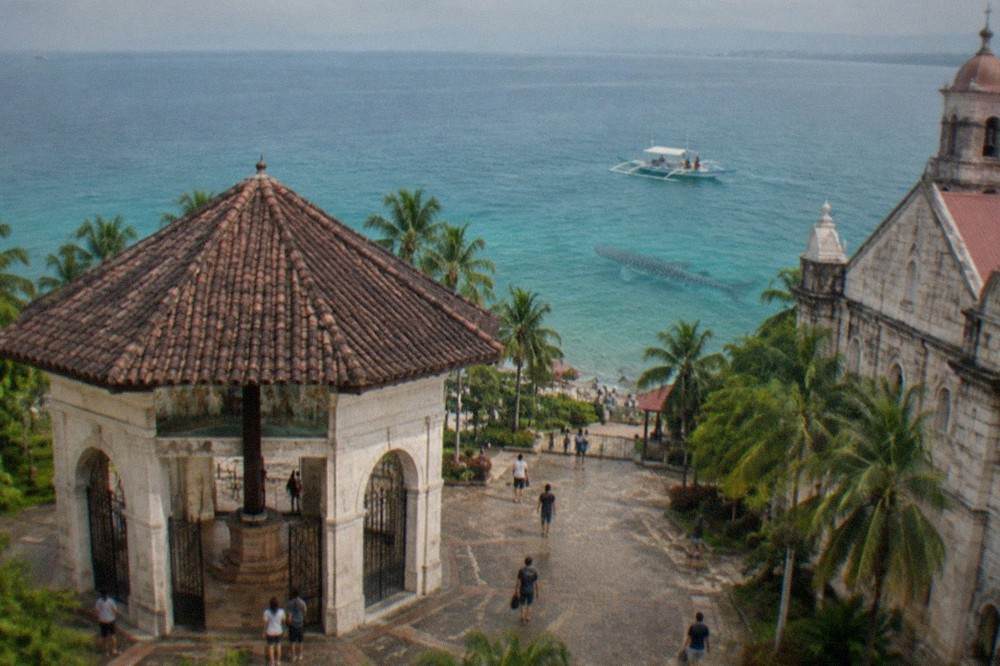
Oslob gives you first position for the whale sharks. The watching fee is P1,000 (about US$16) for foreign tourists and P500 (about US$8) for locals, boat and guide included, the interaction runs roughly 6 AM to 12 PM, and staying overnight means you reach the briefing before the buses from Cebu City unload. The town's other draws, Tumalog Falls at about P50 (about US$0.80) entrance and Sumilon Island's day-use beach, are short hops away.
What Oslob does not give you is much to do after lunch.
The whale shark encounter is the town's whole economy, and the rules are set by the local government: a mandatory briefing, a minimum distance of about four metres, no touching, no sunscreen, no flash photography, and roughly thirty minutes in the water. Sightings are not guaranteed. In late May 2026 the sharks were absent from the Tan-awan interaction area for about four days when the plankton moved, and operations paused until they returned, so the encounter is a strong likelihood rather than a certainty. Everything else covered here is indexed on Cebu Travel Guide.
Staying overnight fixes the encounter's main weakness, which is the early window. Watchers need to be at the registration area in the morning, and day-trippers from Cebu City leave before dawn to get there. Sleeping in Oslob turns a pre-dawn departure into a short ride. Tumalog Falls, the tall thin cascade a habal-habal ride from Tan-awan, and Sumilon Island, whose resort offers day use from 8 AM to 3 PM with boat transfers, round out a full day. After that, the town goes quiet, which is either the appeal or the problem depending on what you want from an evening.
Which Cebu Traveller Should Pick Which Town?
Choose Moalboal if you dive, snorkel independently, want a swim beach, or are building a two-to-three day South Cebu leg around canyoneering and the sardine run. Choose Oslob if the whale sharks are the single reason for your trip, if you cannot face a pre-dawn bus, or if you are pairing the town with Sumilon and heading onward along the coast. Splitting the stay, one night in each, is the standard answer for visitors who want both headline experiences.
The decision table below compresses the comparison into the factors that usually settle it.
| Factor | Moalboal | Oslob |
|---|---|---|
| Headline activity | Sardine run at Panagsama Beach, shore access | Whale shark watching, boat-based |
| Activity window | Snorkel best 7-9 AM; dives and beach all day | Watching roughly 6 AM-12 PM |
| Signature fee | P100 (about US$1.60) environmental user fee | P1,000 (about US$16) foreign, P500 (about US$8) local |
| Bus time from Cebu City | About 2.5-3.5 hours | About 3.5-4.5 hours |
| Second activity | Kawasan Falls canyoneering, White Beach | Tumalog Falls, Sumilon Island day use |
| Evening scene | Bars and restaurants along Panagsama | Very quiet after midday |
| Best stay length | 2-3 nights | 1 night, occasionally 2 |
Families and divers tilt toward Moalboal, the first because the sardines require no boat and no briefing queue, the second because Pescador Island and the reef wall give repeated dives. Photographers and whale shark devotees tilt toward Oslob, accepting the quiet evenings as the price of a calm morning. If you are still weighing Oslob against the alternatives, the question is Oslob worth visiting gets a fuller treatment elsewhere on this site.
How Do You Split A Trip Between Moalboal And Oslob?
The standard split is two nights in Moalboal and one in Oslob, travelled in that order, so the sardine run and canyoneering come first and the whale shark morning comes last with an overnight in Oslob before it. Buses between the two towns run along the same south coast road, so the transfer is a single journey rather than a return leg through Cebu City. Reversing the order also works, but the Moalboal-first version avoids a pre-dawn departure on any morning of the trip.
The geography makes the split easy. Both towns sit on the coastal highway that runs south from Cebu City, with Oslob the farther of the two, so a single southbound sweep takes in Carcar, Moalboal, then Oslob without backtracking. Travellers coming from the city can break the journey at Moalboal, spend a night or two, then continue to Oslob in the afternoon and wake up next to the briefing area.
A sample shape: arrive Moalboal, snorkel the sardines that evening or next morning; spend day two canyoneering at Kawasan; transfer to Oslob on day three, visit Tumalog Falls on the way; watch the whale sharks early on day four, then either head back north or continue toward the ferry links further down the coast. Visitors short on time can compress this, and the question of how many days in Cebu are enough has its own answer page.
Before or after the southern leg, many travellers spend a night in Cebu City itself, where a guided walk through the public markets is a popular way to eat through an arrival day. The tour's operator listing carries the current price and availability, and the city leg pairs naturally with the question of the best part of Cebu to stay in before you commit to a base.
Common Questions About Staying In Moalboal Or Oslob
Should I stay in Moalboal or Oslob?
Stay in Moalboal for a multi-activity base with the sardine run, diving and canyoneering within reach; stay in Oslob if the whale shark encounter is your priority and you want to be first in line for the roughly 6 AM to 12 PM watching window. Many visitors split the trip, two nights in Moalboal and one in Oslob.
Can you do both Moalboal and Oslob in one trip?
Yes, and it is the usual plan. Both towns sit on the same south coast road, Oslob farther out, so a single southbound sweep covers Moalboal first and Oslob second without backtracking through Cebu City.
Is one night in Oslob enough?
For the whale sharks, Tumalog Falls and a Sumilon Island day pass, one night is enough, since the watching window ends around midday and the town is quiet afterwards. Add a second night only if you want a slow coastal morning.
Is one night in Moalboal enough?
One night covers the sardine run, which swims a few metres from shore at Panagsama Beach, but it squeezes out canyoneering at Kawasan Falls. Two nights is the comfortable minimum for both.
Are the whale sharks in Oslob guaranteed?
No. Sightings are usual but not guaranteed; in late May 2026 the sharks were absent from the Tan-awan area for about four days when the plankton moved, and operations paused until they returned.
Which town is closer to Cebu City?
Moalboal, at roughly 2.5 to 3.5 hours by bus from the Cebu South Bus Terminal, against roughly 3.5 to 4.5 hours to Oslob on the same southbound route.
Whichever town wins the hotel night, the pattern that serves South Cebu best is the one that respects the clock: the sardines want an early start, the whale sharks want an earlier one, and a bed in the right town is what turns both from a pre-dawn bus ride into a short walk.