Whale Shark Watching Ethics In Oslob
Oslob, on the southern coast of Cebu island in the Philippines, is the country's most famous place to swim with whale sharks, and also its most argued-about. This guide lays out what actually happens in the water at Tan-awan, what the rules say, and how to visit in the least harmful way.
Short answer
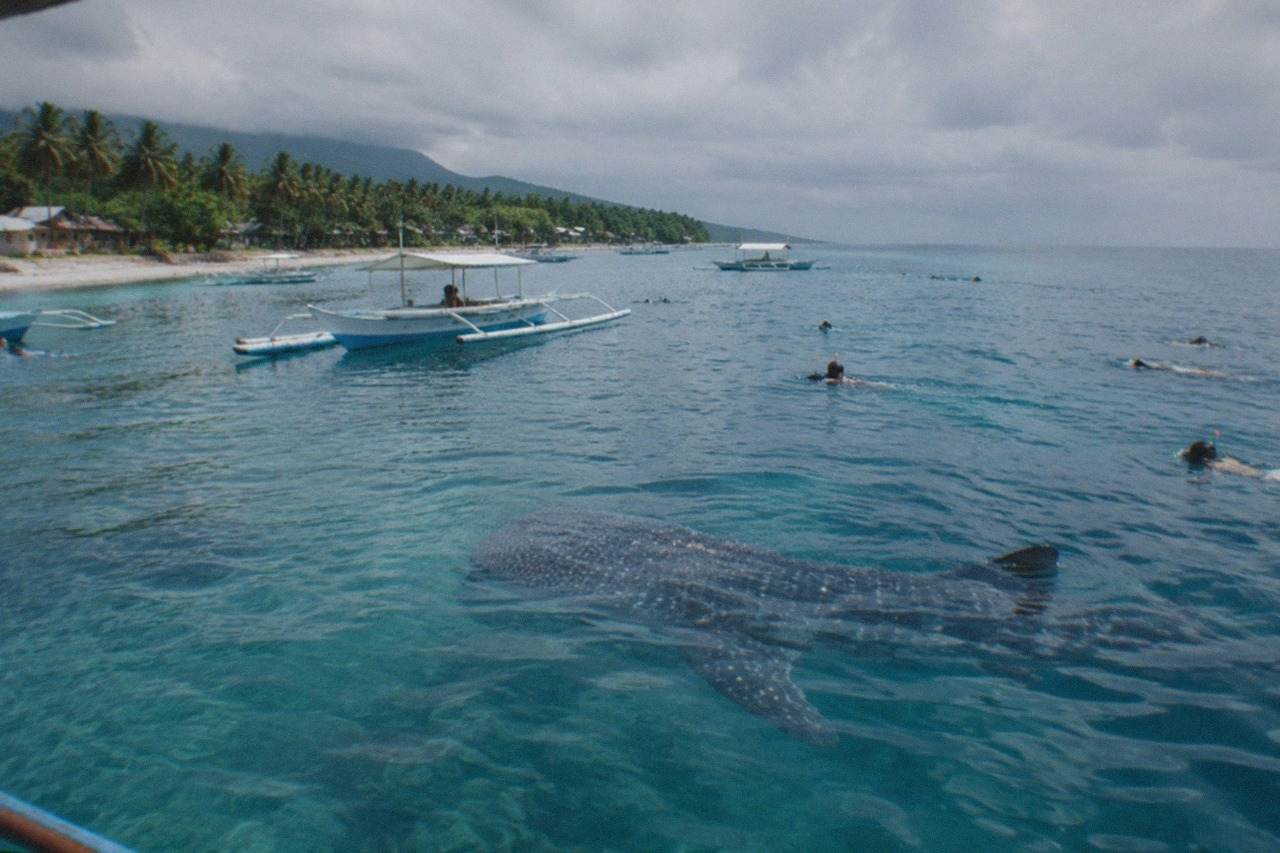
Whale shark watching in Oslob is legal and LGU-regulated, but it is not a purely wild encounter: licensed spotters hand-feed krill to keep the sharks near the interaction area. The rules set a minimum distance of about 4 meters, ban touching, sunscreen and flash photography, and cap each session at about 30 minutes. Following every rule, choosing a licensed operator, and going early gives you the most defensible version of the trip.
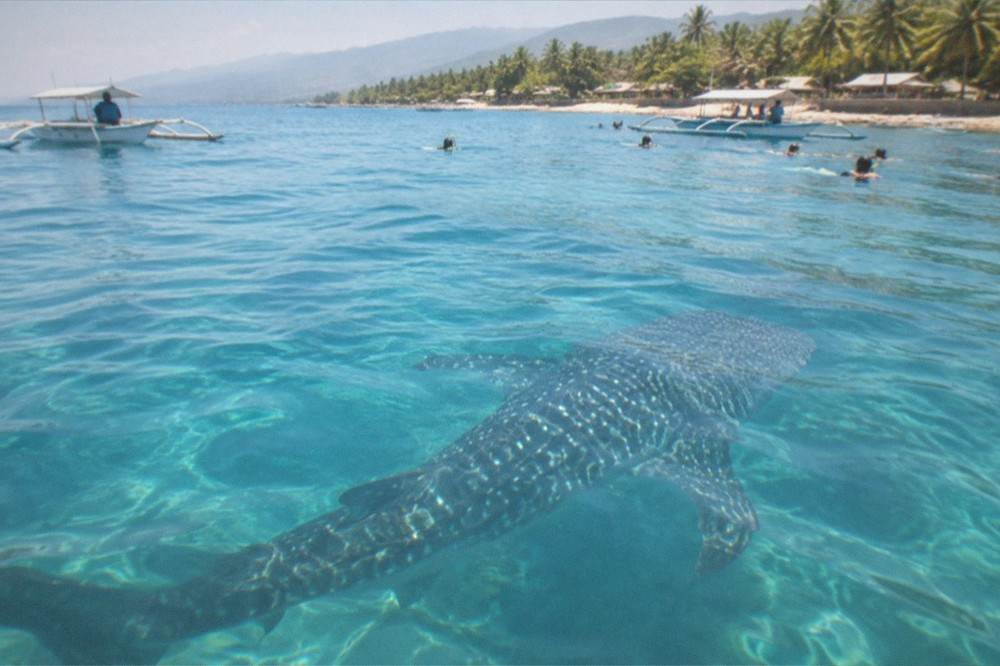
Oslob is a small town on the southeast coast of Cebu, an island province in the Central Visayas region of the Philippines, and its barangay of Tan-awan has become one of the most talked-about wildlife attractions in Southeast Asia. Every morning, hundreds of visitors ride outrigger boats a few dozen meters from shore to float beside the world's largest fish. The practice transformed a fishing village into a tourism economy, and it also transformed the whale sharks, which are now drawn to the interaction area by hand-feeding rather than found by searching. Anyone planning the trip deserves an honest account of how the encounter actually works, which rules exist, and what a visitor who cares about the animals can realistically do about it. This page from Cebu Travel Guide walks through the ethics debate on its own terms rather than telling you it is either perfect or shameful, because it is neither.
Is Whale Shark Watching In Oslob Ethical?
Whale shark watching in Oslob sits in a genuine grey zone. The activity is legal, regulated by the municipal government, and has replaced fishing with tourism as the local livelihood, but it is not a wild encounter: licensed spotters lure the sharks with hand-fed krill, which changes their natural movement and feeding behavior. The most defensible position is to go informed, follow every rule strictly, and treat the encounter as a managed interaction, not a natural one.
The core of the debate is the feeding. In a fully wild whale shark interaction, such as those in Donsol or in open-ocean snorkels elsewhere, boats search for animals feeding naturally and approach them. In Oslob, the sharks are conditioned: licensed spotters on paddle boats scoop krill into the water to keep the animals circling the interaction zone a short distance from the beach. The sharks are not captive, they come and go, and they are not fed their full daily diet, but they do associate boats and people with food, and studies of the Tan-awan population have noted changes in how long the sharks linger and how they relate to vessels.
The counter-argument is equally real. Before the interaction area was established, Tan-awan was among the poorest barangays in Oslob, and many of the men now working as spotters and boat crew were fishermen, some of them formerly hunting sharks and rays. Whale shark tourism now supports hundreds of registered boat crews, and the municipality collects fees that fund monitoring and local projects. The sharks are protected under Philippine law, and the operation runs under municipal ordinance with mandatory briefings, distance rules and caps on interaction time. Whether that trade-off is acceptable is a judgment each visitor makes for themselves; what is not in dispute is that the money funds an economy that now has a strong interest in the animals surviving.
For the practical side of the trip, including how it compares with Cebu's other headline marine attraction, see our Oslob versus Moalboal comparison, and for the wider picture of the town, the Oslob area guide.
What Are The Rules At Oslob Whale Shark Watching?
The municipal rules require a mandatory briefing before boarding, a minimum distance of about 4 meters from the shark's body and about 5 meters from its tail, no touching, no chasing, no flash photography and no sunscreen in the water, life jackets for all swimmers, and a session capped at roughly 30 minutes. Feeding is performed only by licensed spotters. Operating hours run roughly 6 AM to 12 PM daily, with sightings dictating whether boats go out at all.
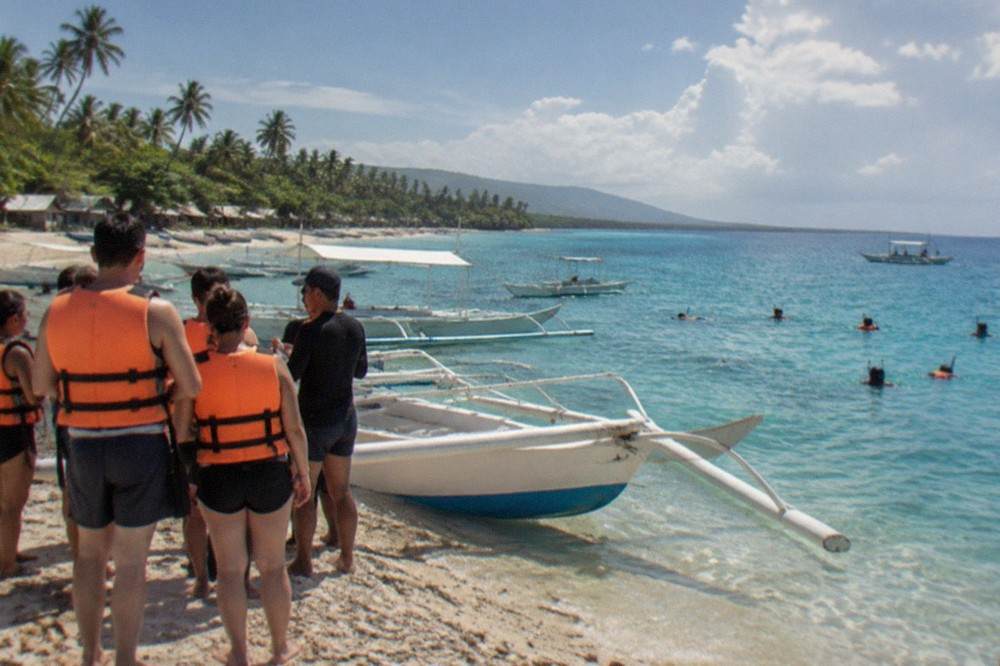
The rules matter because they are the entire ethical content of your visit. The distance rule exists because whale sharks, despite their size, are easily stressed by contact, and a shark's tail can injure a swimmer who crowds it. The sunscreen ban exists because chemical sunscreens are toxic to the plankton the sharks feed on and to the reef; if you burn easily, wear a rash guard instead. The no-flash rule exists because the sharks' eyes are adapted to filtering surface light, and repeated flash photography has been linked to behavioral avoidance in fed populations. The life-jacket rule keeps swimmers on the surface, which is both a safety measure and a way to stop people diving down toward the animals.
Feeding is the one part of the operation no visitor can opt out of, because it is how the encounter works. What you can control is your own conduct in the water, and the honest answer is that a visitor who keeps distance, stays still and lets the shark choose its path is doing the least-harm version of what Oslob offers. The table below summarizes the rules as they are briefed on-site.
| Rule | What it means in practice |
|---|---|
| Mandatory briefing | Attendance is required before boarding; the briefing covers conduct and the reason for each rule |
| Minimum distance | Stay about 4 m from the shark's body, about 5 m from the tail |
| No touching | Contact is prohibited, even if a shark swims toward you; move away instead |
| No sunscreen | Chemical sunscreens are banned in the water; wear UV clothing instead |
| No flash photography | Flash is prohibited; natural light is ample in the morning session |
| Life jacket | Required for all swimmers; you stay on the surface |
| Session length | Roughly 30 minutes in the interaction area; a second session costs extra |
| Feeding | Performed only by licensed spotters; tourists may not feed the sharks |
If you are weighing whether the trip is worth it at all, our article on whether snorkeling with the whale sharks is worth it works through that question directly, and the main Oslob whale sharks attraction page covers the logistics of getting there from Cebu City.
How Much Does Oslob Whale Shark Watching Cost?
The municipal environmental fee is P1,000 (about US$16) per foreign tourist and P500 (about US$8) per Filipino, boat and guide included, with snorkeling or scuba upgrades adding roughly P200 (about US$3.2) to P500 (about US$8.0) on top. Those fees are paid at the LGU facility in Tan-awan, not to your tour operator, so a packaged day tour price covers transport and coordination on top of the municipal fee rather than instead of it. Fees reverted to these 2020 ordinance rates on 21 March 2025 and remain current in 2026.
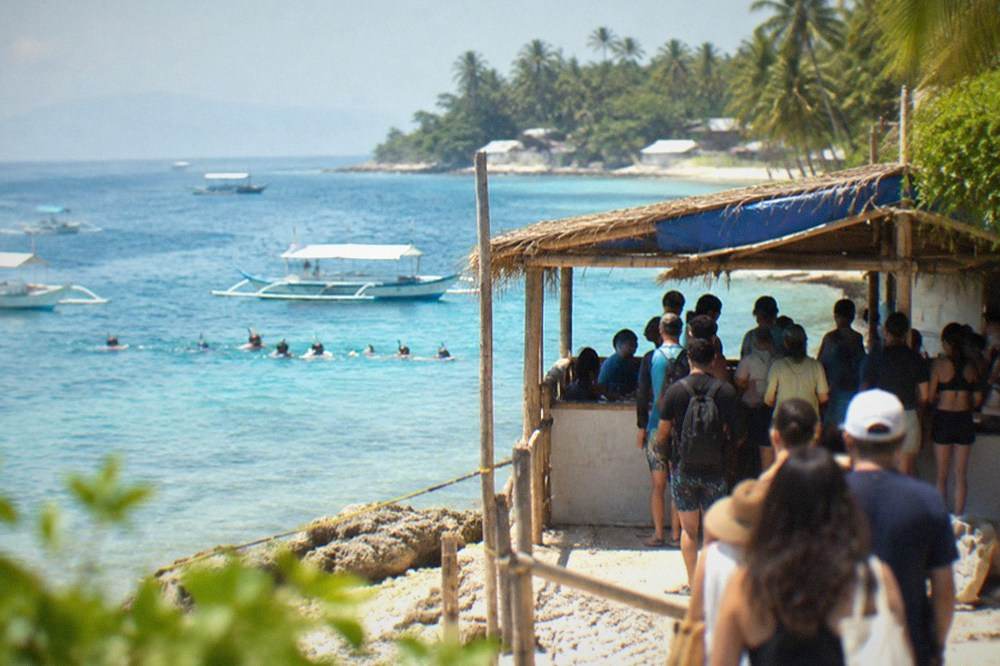
The fee structure is one of the more confusing parts of the trip, because several different payments stack. The municipal fee is the big one and it is the same whether you arrive independently or on a packaged tour. Upgrades for snorkeling from the boat or for scuba add a further charge, and a second 30-minute session is paid separately. Around the interaction area, habal-habal motorbike rides to Tumalog Falls run about P50 (about US$0.8) to P100 (about US$1.6) each way, and Tumalog's entrance is about P50 (about US$0.8). None of these peripheral fees are large, but they add up for a family.
| Item | Typical figure | Notes |
|---|---|---|
| Whale shark fee, foreign tourist | P1,000 (about US$15.9) | Boat and guide included; LGU rate effective 21 Mar 2025 |
| Whale shark fee, Filipino | P500 (about US$8.0) | Same inclusions, local rate |
| Snorkel or scuba upgrade | P200 (about US$3.2) to P500 (about US$8.0) | Paid on top of the base fee, on site |
| Tumalog Falls entrance | P50 (about US$0.8) | Separate site, short habal-habal ride away |
| Habal-habal to Tumalog | P50 (about US$0.8) to P100 (about US$1.6) each way | Motorbike taxi, per rider |
For the full cost breakdown of the encounter itself, including what a swim costs in total, see what it costs to swim with Oslob's whale sharks. If you are comparing against the south coast's other big draw, Kawasan Falls charges about P200 (about US$3.2) for Level 1 swimming access and canyoneering runs roughly P1,500 (about US$24) to P2,000 (about US$32) with a Badian-accredited guide, figures our Oslob day trip guide puts in context.
The packaged route is worth a moment of thought here, because the fee split explains most of the price differences you will see between operators. Everyone pays the same municipal fee at the same kiosk; what varies is the quality of the transport, the departure time and whether the crew takes the rules seriously. That is also why two tours at very different prices can be ethically identical, and why the cheapest one is sometimes the worst choice.
The join-in option above is the format most first-time visitors choose, because the long road transfer from Cebu City makes a coordinated early departure matter more than almost any other planning decision. An independent alternative is the Ceres bus from the Cebu South Bus Terminal toward Bato via Oslob, which runs multiple times daily.
Are Whale Shark Sightings Guaranteed At Oslob?
No, sightings are not guaranteed, and the honest version of the sales pitch says so. The sharks are free to come and go, and in late May 2026 they were absent from the Tan-awan interaction area for about four days when seasonal plankton moved toward a neighboring barangay, pausing operations until they returned. The municipal tourism office confirmed the sharks had not left Oslob's waters, only the feeding zone. Anyone who promises a guaranteed sighting is promising something nobody can control.
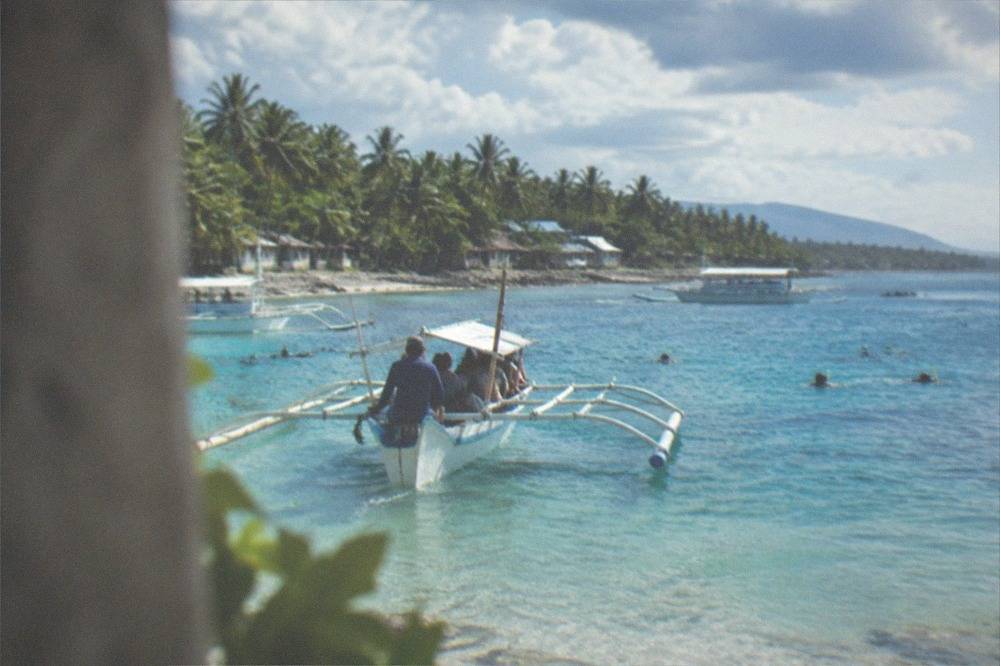
The May 2026 absence is worth knowing about because it illustrates the one genuinely wild element left in the operation. The sharks follow food, and the food follows plankton blooms that shift with currents and season. When the bloom moves, the sharks move with it, and no amount of krill scooping keeps them in place. Operators resumed normal activity within days, and the mayor publicly described the absence as seasonal rather than a sign the sharks had abandoned the area. The practical lesson is to build slack into your itinerary: if a sighting is the single reason for your whole trip to Cebu, give yourself a morning to spare.
The seasonal pattern also matters for planning. Our article on the best month for whale sharks in Cebu covers the timing question in detail, and the question of whether whale sharks are guaranteed at Oslob answers the anxiety directly. The short version: go between December and May when seas are calmest, book the earliest slot available, and accept that the ocean votes last.
How Do You Choose A Responsible Oslob Operator?
A responsible Oslob operator is one that uses LGU-registered boats and licensed spotters, runs the mandatory briefing properly, enforces the distance and no-touch rules in the water, departs early enough to hit the first interaction window, and does not promise a guaranteed sighting. The operator's price is not the signal; the roster compliance and the briefing quality are. Ask directly whether boats are municipal-registered and whether the crew will pull swimmers who break the distance rule.
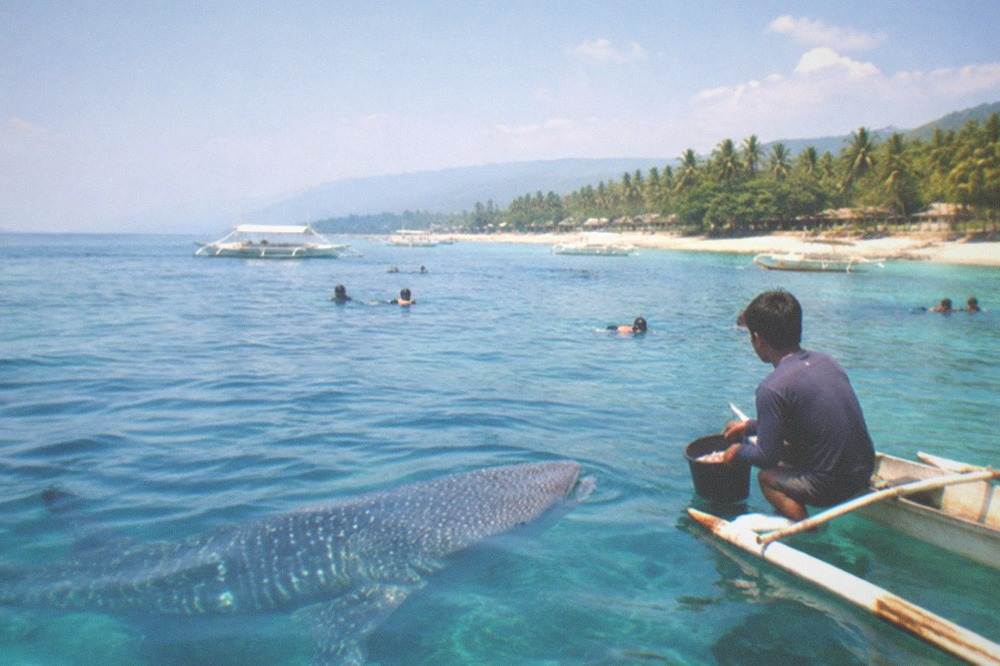
The operator question is where your influence actually lives. You cannot change the feeding program, but you decide who gets your money, and the difference between a good and bad Oslob trip is largely the difference between crews who police the rules and crews who let swimmers crowd the sharks for a better photo. Registered boats carry LGU markings, and the briefing is delivered to the whole group before boarding; if your operator skips it, rushes it, or lets the boat's own photographer shepherd you toward the shark, you have picked the wrong company. A crew member in the water watching swimmers is a good sign, not an intrusion.
Timing is the second filter. The interaction window opens around 6 AM and the sharks are most reliably present in the first hours, which is why the best tours leave Cebu City in the middle of the night. An operator departing at a civilized hour is selling you the worst light, the biggest crowds and the thinnest odds. The checklist below is what to verify before you pay anyone.
| Check | Good sign | Warning sign |
|---|---|---|
| Boat registration | LGU-registered boat, municipal markings | Unmarked private banca |
| Briefing | Full rules briefing before boarding | Skipped or rushed briefing |
| Crew conduct | Crew member policing distance in the water | Crew encouraging you to touch or approach |
| Departure time | Leaves Cebu City well before dawn | Departs mid-morning |
| Sighting claims | Says sightings are likely, not guaranteed | Promises a guaranteed shark |
| Feeding | Only licensed spotters handle krill | Tourists invited to feed |
If you are still deciding whether Oslob deserves a day of your trip at all, read whether Oslob is worth going to and our answer on where is the best place in the world to see whale sharks, which places Oslob against the genuinely wild alternatives.
Oslob Or Moalboal: Which Is The More Ethical Choice?
Moalboal is the more natural encounter and Oslob is the more reliable one. Moalboal's sardine run is a wild, unfed phenomenon: a permanent school of millions of sardines living off Panagsama Beach a few meters from shore, reachable by swimming, with a P100 (about US$1.6) environmental user fee and no feeding, no luring and no fixed schedule. Oslob offers a near-certain whale shark morning at the cost of the feeding program.
If minimizing intervention is your priority, Moalboal wins; if the whale shark is the animal you came for, Oslob is the only realistic option on Cebu.
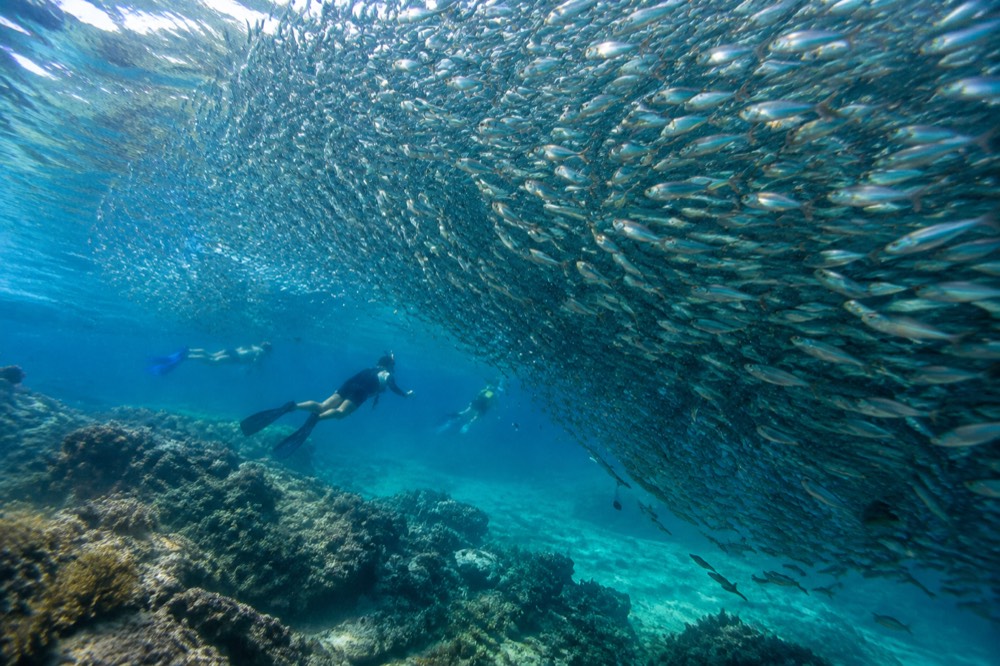
The comparison is not a stunt, because the two towns sit on the same south-coast circuit and most itineraries choose one or the other for the marine day. Moalboal's sardines are the ethical benchmark: nothing is fed, nothing is enclosed, and the school is a resident population present year-round, best in the early morning between 7 and 9 AM when visibility is clearest. Sea turtles graze the same reef, and Pescador Island's marine sanctuary adds a further P100 (about US$1.6) per dive or activity. The encounter is chaotic and humbling in a way a managed interaction cannot be, and no briefing is needed beyond "don't touch anything."
Oslob's counterweight is certainty. The sardine run is weather-dependent and visibility-dependent; the whale sharks at Oslob appear on a schedule because the schedule is built around them. Many visitors do both in one long south-Cebu day, which is exactly what the question of Oslob versus Moalboal for your stay is designed to help you decide.
| Factor | Oslob whale sharks | Moalboal sardine run |
|---|---|---|
| Feeding | Licensed spotters feed krill | None; fully wild school |
| Certainty | High within operating hours | Weather and visibility dependent |
| Hours | Roughly 6 AM to 12 PM | Any time; best early morning |
| Entry fee | P1,000 (about US$15.9) foreign | P100 (about US$1.6) environmental user fee |
| Main animal | Whale sharks | Sardines, turtles, reef fish |
| Ethical friction | Conditioning debate | Minimal |
For the full decision, including where to sleep, see Moalboal or Oslob for your stay and which is better, Oslob or Moalboal.
What Should You Bring And Not Bring To Oslob?
Bring a rash guard or UV shirt instead of sunscreen, a dry bag for your phone, cash in small bills for the on-site fees, a towel and a change of clothes, and water shoes if you dislike coral rubble underfoot. Do not bring flash equipment, drones without checking local rules, single-use plastics, or any expectation of a swimming session longer than about 30 minutes. Sunscreen is banned in the interaction area outright, so the rash guard is not optional advice, it is the compliance plan.
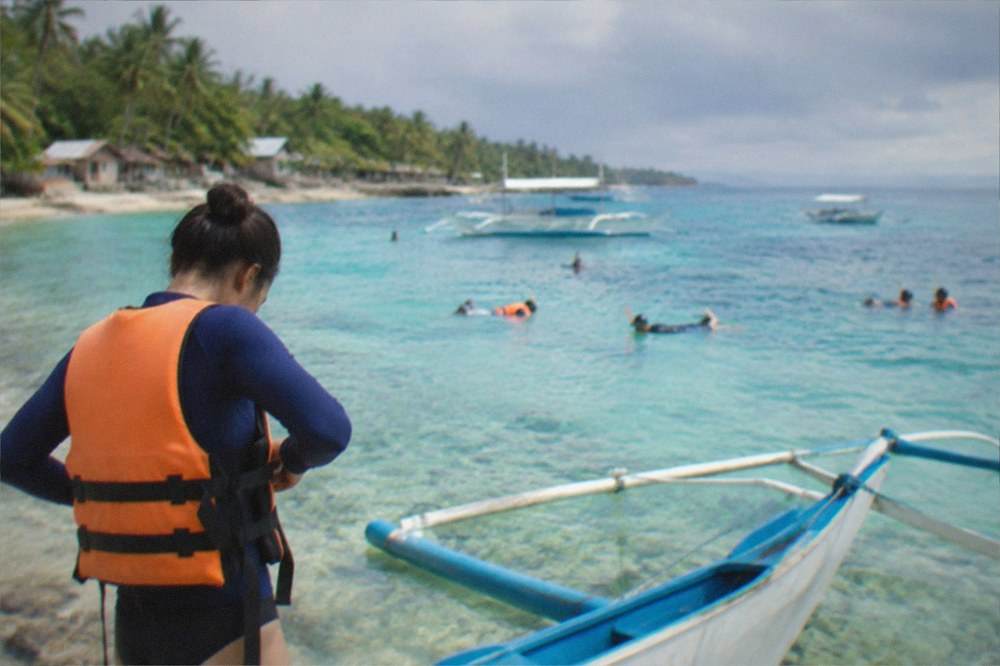
The packing list is short because the trip is short, but the sunscreen point deserves its own paragraph. Chemical sunscreens harm the plankton the sharks feed on, which is the entire reason the ban exists, and it is enforced at the briefing. A dark rash guard protects you better than sunscreen anyway over a 30-minute float, and it removes any ambiguity at the checkpoint. Cash matters because the municipal facility, the Tumalog Falls entrance and the habal-habal drivers all operate on pesos; card payment is not something to plan around.
The morning itself runs on a rhythm worth knowing in advance. Registration and briefing happen at the Tan-awan facility, boats go out in waves from roughly 6 AM, and the whole interaction is over by noon regardless of demand. Arriving for the first wave means calmer water, fewer boats and better light for photos, which is the rare case where the ethical choice and the selfish one are the same choice.
| Item | Bring or leave | Why |
|---|---|---|
| Rash guard or UV shirt | Bring | Replaces sunscreen, which is banned in the water |
| Reef-safe zinc (small) | Bring, sparingly | Only for exposed face areas if needed |
| Dry bag | Bring | Keeps phone and cash safe on the banca |
| Small-bill cash | Bring | On-site fees and habal-habal rides are cash |
| Water shoes | Bring | Coral rubble on the beach entry |
| Flash equipment | Leave | Flash photography is prohibited |
| Sunscreen lotion | Leave | Banned in the interaction area |
| Single-use plastics | Leave | No reason to add waste to a marine site |
For the wider planning picture, the Tumalog Falls guide covers the stop most tours pair with the sharks, and our answer on what Oslob is known for rounds out the town's other sights.
Common Questions About Whale Shark Watching Ethics In Oslob
Is whale shark watching in Oslob ethical?
It is regulated and legal, but it is not a wild encounter: licensed spotters feed krill to keep the sharks near the interaction area, which alters their natural behavior. The activity also replaced fishing with a tourism economy that depends on the sharks surviving. The most defensible visit is one that follows every rule strictly and treats the trip as a managed interaction. Our longer answer on whether Oslob's whale sharks are ethical works through both sides.
Why are the whale sharks fed at Oslob?
Feeding is how the encounter model works: licensed spotters hand-scoop krill to draw the sharks to a fixed interaction zone a short distance from shore, making a near-certain sighting possible within set morning hours. The sharks are not captive and the feeding is a lure rather than their full diet, but it does condition their movement. No DENR or LGU order to end the feeding program was issued in 2025 or 2026.
Can you touch the whale sharks at Oslob?
No. Touching is prohibited, along with chasing, blocking a shark's path and flash photography, and the minimum distance is about 4 meters from the body and about 5 meters from the tail. Life jackets keep swimmers on the surface. Crew who let visitors break these rules are the single biggest ethical failure you can encounter on site.
Are Oslob whale shark sightings guaranteed?
No. The sharks are free-ranging, and in late May 2026 they were absent from the Tan-awan interaction area for about four days when plankton moved to a neighboring barangay, pausing operations until they returned. Early slots between December and May give the best odds, but the ocean decides.
How much does it cost to swim with the whale sharks in Oslob?
The municipal fee is P1,000 (about US$16) for foreign tourists and P500 (about US$8) for Filipinos, boat and guide included, with snorkel or scuba upgrades adding roughly P200 (about US$3.2) to P500 (about US$8.0). The detailed breakdown lives in our Oslob cost answer.
What is the best time of day and year for Oslob whale sharks?
Go for the first boats from roughly 6 AM, when the sharks are most reliably present, the water calmest and the crowds thinnest. Across the year, the December-to-May dry season offers the calmest seas; the June-to-November rainy season brings rougher water and occasional suspensions. Our best time of year for whale sharks answer has the detail.
The final word on Oslob is that your conduct is the part of the ethics you actually control. The feeding program will be running whether you visit or not, but a visitor who keeps four meters of water between themselves and the shark, wears a rash guard instead of sunscreen, books the earliest boat and pays the municipal fee through a registered operator is doing everything the system currently asks, and doing it well. For everything else on the island, start with things to do in Cebu and plan the rest of your trip around the parts of the province that ask nothing of the animals at all.