Where Do Wealthy People Live In Cebu?
Where wealthy people live in Cebu: the Busay highlands above Cebu City, the Business Park and IT Park towers, and the Mactan resort coast in Lapu-Lapu City.
Cebu, an island province in the Central Visayas region of the Philippines, keeps its money in three visible corners. The wealthy of Metro Cebu live in the Busay highlands above Cebu City, in the condominium towers of the Cebu Business Park and IT Park, and along the resort coast of Mactan Island in Lapu-Lapu City. Each address says something different about how that wealth was made, and a visitor can read the geography of the city's money without ever opening a property listing.
Where Do Wealthy People Live In Cebu?
Wealthy Cebuanos concentrate in three areas: the Busay and Tops highlands west of Cebu City, where hillside estates sit above the haze line; the Cebu Business Park and IT Park in the city proper, home to executives in tower condominiums; and the Mactan Channel coast of Lapu-Lapu City, where resort-adjacent villages and gated subdivisions line the water. Older landed families historically held addresses in and around the city center, while newer wealth has pushed uphill and seaward.
The pattern is not random. Cebu City is the provincial capital and the region's commercial hub, but it is administratively independent of Cebu Province, as are Lapu-Lapu and Mandaue: all three are highly urbanized cities. Money follows that structure. Land in the flat city core is scarce and commercial, so private wealth moved up the slopes of Busay or across the channel to Mactan, where beachfront and resort infrastructure already existed. The Cebu Travel Guide coverage of the city's districts traces the same split.
For a visitor, this matters practically. The neighborhoods where wealth lives are also where several of the island's paid attractions cluster, from the lookouts of Busay to the resort day passes of Mactan, and the drive between them crosses the toll bridges that the commuting wealthy pay for daily.
Why Do The Busay Highlands Attract Cebu's Wealthy Residents?
Busay, the upland barangay a short drive above central Cebu City, holds the island's most visible private estates, positioned to catch the breeze and the view over the city and Mactan Channel. Its attractions confirm the address: Tops Lookout sits here open around the clock for a modest entry fee, the Temple of Leah stands nearby, and Sirao's flower gardens line the same ridge road, all serving a resident population that can pay premium hillside land prices.
The Temple of Leah, a grand stone structure built as a family mausoleum, charges about P120 (about US$1.9) on weekdays and P150 (about US$2.4) on weekends, figures reported by local guides in 2025 and 2026 with no official price list published. Sirao Flower Garden charges about P100 (about US$1.6) per person. These are amenities for a hillside community with disposable income, not commuter attractions.
| Busay and highland spot | What it is | Entry fee | Hours |
|---|---|---|---|
| Tops Lookout (The Circle at TOPS) | Hilltop viewing deck above Cebu City | P100 (about US$1.6) regular, P70 (about US$1.1) senior/PWD | Open 24 hours daily |
| Temple of Leah | Grand private memorial building in Busay | About P120 (about US$1.9) weekday, P150 (about US$2.4) weekend | Daily, hours shortened since April 2026 |
| Sirao Flower Garden | Flower terraces on the same ridge road | About P100 (about US$1.6) per person | Roughly 8 AM to 5 or 6 PM |
The highlands also escaped the damage that hit northern Cebu in the 30 September 2025 magnitude 6.9 earthquake, whose epicenter lay offshore near Bogo City, roughly 19 kilometers away from that town. Local property reports after the quake explicitly noted no damage to Temple of Leah or the surrounding Busay properties, which did not hurt the area's standing among buyers.
If the highland sights appeal, a guided day covering the temples and gardens above the city is the easiest way to see them.
Is Mactan Island Where The Resort Money Lives?
Yes, Mactan Island in Lapu-Lapu City is Cebu's resort-wealth address, where beachfront subdivisions and hotel-adjacent villages line the coast facing the Camotes Sea and Hilutangan Channel. Lapu-Lapu is one of the three highly urbanized cities independent of Cebu Province, counted at 497,604 residents in the 2020 census, and its island-hopping waters carry their own fees that only a leisure-spending population sustains.
The island's economy runs on tourism infrastructure, and the wealthy who live there live beside it. The Cebu-Cordova Link Expressway, an 8.9-kilometer bridge opened on 30 April 2022, gave the island a third road link to the mainland, and its tolls, P107 (about US$1.7) one-way for a car in the full rate matrix in force since October 2025, are a daily cost the area's residents absorb without discussion.
Marine sanctuary fees tell the same story. Island hopping from Lapu-Lapu carries an environmental fee of P100 (about US$1.6) for foreign tourists, while a July 2025 amendment cut the local tourist fee to P20 (about US$0.3) for residents using accredited city boat operators, a discount that effectively prices the activity for the people who live there. Sanctuary entry at Hilutungan and Nalusuan runs roughly P150 (about US$2.4) to P300 (about US$4.8) per person on top.
The newest money on the island and the facing shoreline is visible at Nustar Resort, whose glass Skydeck walkway opened on 1 February 2026, and across the channel at the SM Seaside Cebu Arena, a 25,000-seat venue that opened on 9 July 2026. These are the amenities of a metropolitan wealthy class that spans the channel in both directions.
Mactan versus the city is a genuine decision for visitors too, not just residents, and the Mactan or Cebu City stay question turns on the same trade-off between beach access and urban convenience.
Do Wealthy Cebuanos Still Live In Cebu City Itself?
Yes, but vertically and centrally rather than in mansions: the wealthy of Cebu City itself concentrate in the Cebu Business Park and the IT Park, two master-planned districts of towers, offices and condominiums, with older families holding houses in the established residential quarters around them. Cebu City counted 964,169 residents at the 2020 census, and its premium housing stock sits within that dense core rather than beyond it.
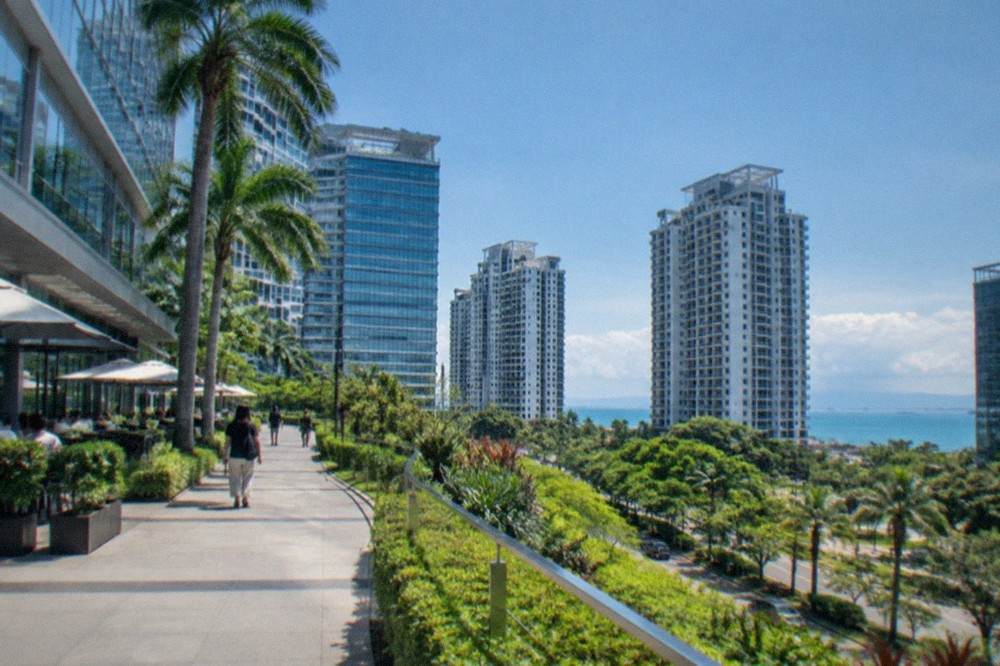
The IT Park, a former airport site converted into a special economic zone, and the Cebu Business Park, built on the old Lahug golf course, are the two districts where executive salaries and property prices concentrate. Both are walkable, both sit on flat land close to the water, and both anchor the best part of Cebu to stay in for visitors who want the same convenience.
What the city center's wealth does not do is dominate the old downtown. Colon Street, the country's oldest commercial street, remains a working-class and mid-market shopping district, and the contrast between Colon and the Business Park is one of the sharpest wealth gradients on the island, crossed in a 20-minute jeepney ride. The nicest area to stay in Cebu question usually resolves to the park districts for exactly this reason.
The city's food scene sits across that gradient too. Old-family recipes, lechon houses and market stalls feed every income level, and the best way to read the city's class geography is to eat across it. The Cebu Market & Food Tour walks that line: its price is not published by the operator, so check the live listing rather than any figure quoted elsewhere. Check availability
How Does Cebu's Population Map Onto Its Wealth Map?
Cebu's wealth map follows its administrative map: Cebu City, Lapu-Lapu and Mandaue are highly urbanized cities independent of Cebu Province, and they hold 964,169, 497,604 and 364,116 residents respectively in the 2020 census, against 3,325,385 in the province excluding those three cities. Metro Cebu groups seven cities and six municipalities, and the wealthy addresses sit inside the three urbanized cores, not in the provincial towns.
That structure explains why "where the wealthy live" has a precise answer. The province's own figures exclude the three cities, so provincial wealth and city wealth are counted separately by the Philippine Statistics Authority, and the 2024 census updated the city figures only marginally: Cebu City at 965,332, Lapu-Lapu at 497,813, Mandaue at 364,482.
| Metro Cebu unit | 2020 census population | Character of its wealthy addresses |
|---|---|---|
| Cebu City | 964,169 | Busay highland estates, Business Park and IT Park towers |
| Lapu-Lapu City | 497,604 | Mactan resort-coast subdivisions and beachfront villages |
| Mandaue City | 364,116 | Industrial and logistics wealth, gated subdivisions |
| Cebu Province (excluding the three cities) | 3,325,385 | Landed provincial wealth, farm and coastal towns |
The census is also the reason the where most foreigners live in Cebu question has a different answer from this one: expatriate residents cluster in Mactan's resort belt and the park districts, while long-established Cebuano wealth also holds the highlands and older city quarters.
Which Of Cebu's Wealthy Areas Should A Visitor Actually Stay Near?
Visitors should base near the wealthy areas rather than in them: the IT Park and Business Park for city sightseeing and food, the Mactan coast for beaches and island hopping, and a day trip up to Busay for the views, because the premium districts hold the island's best hotels, restaurants and transport links even where private residences are closed to outsiders. The wealthy areas are the practical base camps, not the destination themselves.
The reasoning is simple. The districts that can support premium housing are the same districts that support the island's best visitor infrastructure, from the arena and Skydeck openings of 2026 to the toll bridges and BRT corridor that make them reachable. Cebu's partial Bus Rapid Transit began initial operations on 13 March 2026 on a route linking the South Road Properties at Il Corso with IT Park, which puts one of the wealthy districts on the newest public transport line on the island.
For planning beyond the city, the things to do in Cebu roundup covers the day trips that radiate out from these base areas, and the Cebu City or Mactan stay comparison works through the trade-off in detail.
Whichever district a visitor picks, the geography holds: uphill for the view, mid-city for the towers, across the channel for the beach. That is where the money lives, and it is where the trip usually ends up too.
Common Questions About Where Wealthy People Live In Cebu
Where do wealthy people live in cebu?
In three main areas: the Busay highlands above Cebu City, the Cebu Business Park and IT Park tower districts, and the Mactan Island resort coast in Lapu-Lapu City.
Is Mactan a wealthy part of Cebu?
Yes. Lapu-Lapu City on Mactan holds beachfront subdivisions beside the resort belt, a third bridge link via the 8.9-kilometer CCLEX, and marine sanctuary and island-hopping infrastructure that serves a leisure-spending resident population.
Do rich Cebuanos live in the highlands?
Many do. Busay, above Cebu City, is the island's best-known estate area, with Tops Lookout, the Temple of Leah and the Sirao gardens along the same ridge road serving the hillside community.
Is Cebu City itself a wealthy city?
Cebu City is the regional commercial capital with 964,169 residents at the 2020 census, and its premium housing concentrates in the master-planned Business Park and IT Park districts rather than in the older downtown around Colon Street.
Where do wealthy foreigners live in Cebu?
Foreign residents with means cluster mainly on the Mactan resort coast and in the IT Park and Business Park condominiums, the same two districts that anchor the island's visitor infrastructure.
Can visitors stay near the wealthy areas of Cebu?
Yes, and it is usually the best plan. The premium districts hold the island's top hotels, restaurants and transport links, so visitors base there even though the private residences themselves are closed to outsiders.