Where Do Most Foreigners Live In Cebu?
Where foreign residents actually settle in Cebu, Philippines: Mactan and Lapu-Lapu City, central Cebu City, and the south-coast dive towns, with what each base offers.
Cebu, an island province in the Central Visayas region of the Philippines, has become one of the country's most popular bases for foreign residents, and they do not spread themselves evenly across it. The pattern is strongly coastal and strongly metropolitan: the heaviest concentration sits on Mactan island in Lapu-Lapu City, followed by the central districts of Cebu City itself, with smaller long-stay communities scattered down the south coast and up to the dive islands in the north. This site's editorial desk has not been to Cebu; every figure below comes from government and operator sources.
Where Do Most Foreigners Live In Cebu?
Most foreigners living in Cebu base themselves in one of three areas: Mactan island, which administratively is Lapu-Lapu City, a highly urbanized city of 497,604 residents at the 2020 census; the central and northern districts of Cebu City, the provincial capital with 964,169 residents; and, in much smaller numbers, the south-coast dive town of Moalboal and the northern island of Malapascua. Lapu-Lapu City and Cebu City are independent of Cebu Province but grouped with it geographically.
The Mactan concentration is the single clearest pattern. Lapu-Lapu City sits directly beside Mactan-Cebu International Airport, holds the resort beaches along its east coast, and connects to the mainland across the Mactan-Mandaue and Marcelo Fernan bridges plus the newer CCLEX crossing, so a foreign resident can live a beach-adjacent life while staying within a short drive of the airport and the city's business districts. The Cebu Travel Guide area pages for Mactan and Lapu-Lapu City cover this corridor in detail.
Cebu City draws the second wave of foreign residents, and they cluster in specific neighbourhoods rather than spreading across the city. The IT Park and the Cebu Business Park, both on the city's north side, are the walkable, air-conditioned, cafe-dense districts where much of the foreign workforce lives, because the offices and co-working spaces are inside them. Banilad, just north, adds gated subdivisions and international schools to the same fifteen-minute radius.
A third, much smaller group lives outside metro Cebu entirely. Moalboal, on the southwest coast, and Malapascua, off the northern tip, are dive-industry towns where a modest but permanent foreign community of dive instructors, resort operators and long-stay retirees has formed around the year-round marine attractions, the sardine run at Panagsama Beach and the thresher sharks at Kimud Shoal.
Why Does Mactan Attract The Largest Foreign Community In Cebu?
Mactan attracts the largest foreign community in Cebu because it combines the region's airport, its densest strip of resort beaches, and the shortest commute to the mainland business districts. Lapu-Lapu City's 497,604 residents share an island whose east coast faces calm swimming water, whose west coast faces the marine sanctuaries used for island hopping, and whose bridges cross to Mandaue City in minutes.
The airport is the structural reason. Mactan-Cebu International Airport's own transport guide lists the MyBus connection to SM City Cebu running from roughly 6:00 in the morning to 10:00 at night, and the terminal operator, Aboitiz InfraCapital Cebu Airport Corporation, has run the airport since full operations commenced on 16 January 2025. A resident of Lapu-Lapu City can reach an international departure hall without crossing a bridge, which matters enormously for foreign residents who travel home regularly.
The beach stock matters just as much. The island's east-coast resorts and the marine sanctuaries around Hilutungan and Nalusuan give the island-hopping industry its base, and the municipal fee structure reflects how established the sector is: Lapu-Lapu City's environmental fee for island hopping is P100 (about US$1.6) for foreign tourists, while a July 2025 amendment cut the rate for local tourists to a small fraction of the foreign figure. Foreign residents who stay on Mactan live inside the departure zone for the very trips that bring other visitors across the world.
Whether Mactan or Cebu City makes the better base is the single most common question foreign movers ask, and the site's dedicated comparison, Mactan Or Cebu City: Which Should You Stay In?, works through the trade-offs: beach access and airport proximity against walkability, dining and nightlife.
Which Cebu City Neighbourhoods Do Foreign Residents Settle In?
Foreign residents in Cebu City settle mainly in three adjacent north-side districts: the Cebu IT Park, a former airport site redeveloped into a walkable business campus; the Cebu Business Park around the Ayala commercial complex; and Banilad, the residential district north of them known for gated subdivisions and international schools. Downtown, around Colon Street and the heritage quarter, hosts visitors and short-term renters rather than long-stay residents.
IT Park is the anchor. It is the district most cited in connection with Cebu's outsourcing industry, and its apartment towers, gyms and coffee shops are built around a workforce that includes a significant foreign component. The site's IT Park guide covers the district's layout, dining and accommodation.
The Business Park and Banilad extend the same corridor northward, and the whole strip sits within a short drive of the highland escapes that residents use on weekends: Tops Lookout, open 24 hours with entry at P100 (about US$1.6) per the operator's own site, and the Temple of Leah and Sirao Flower Garden above Busay. Living in the north of the city puts both the offices and the mountain road within one easy loop.
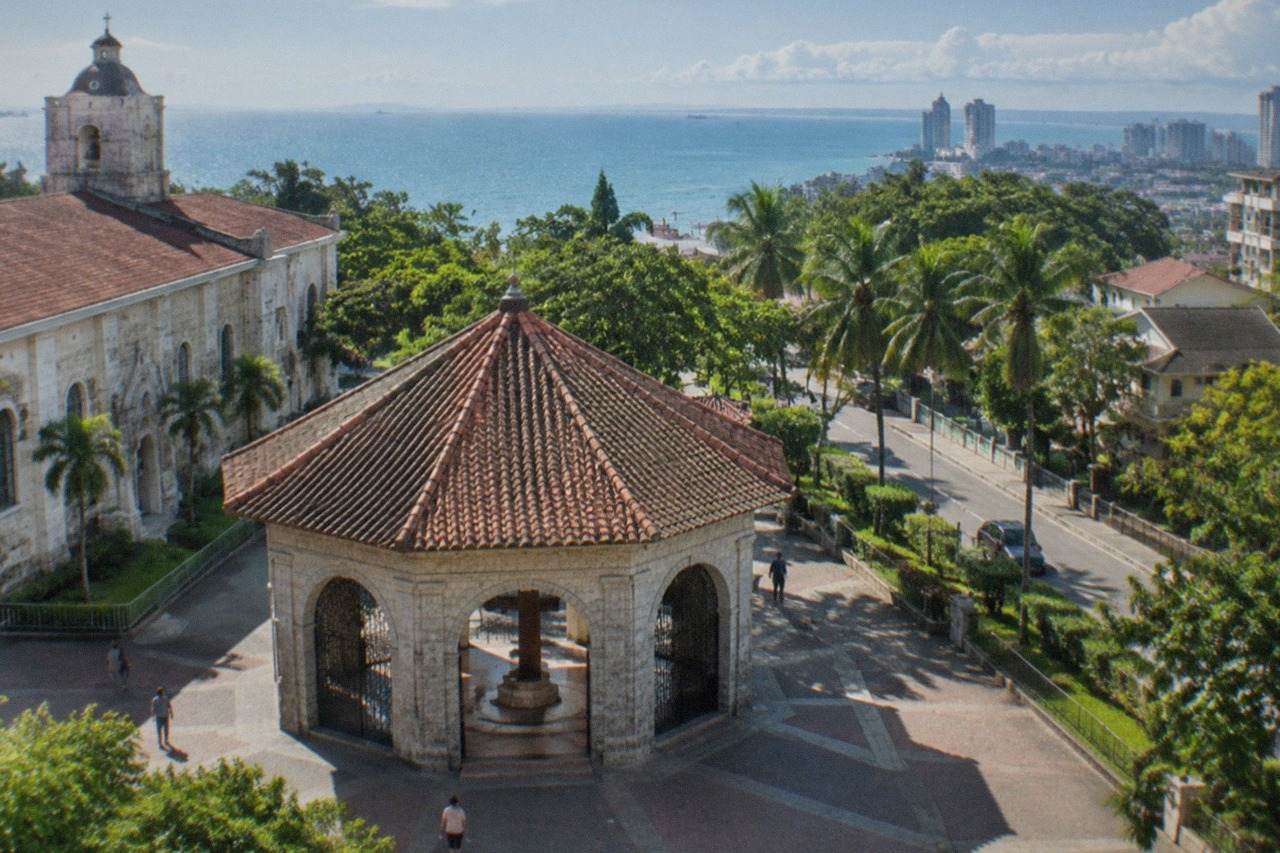
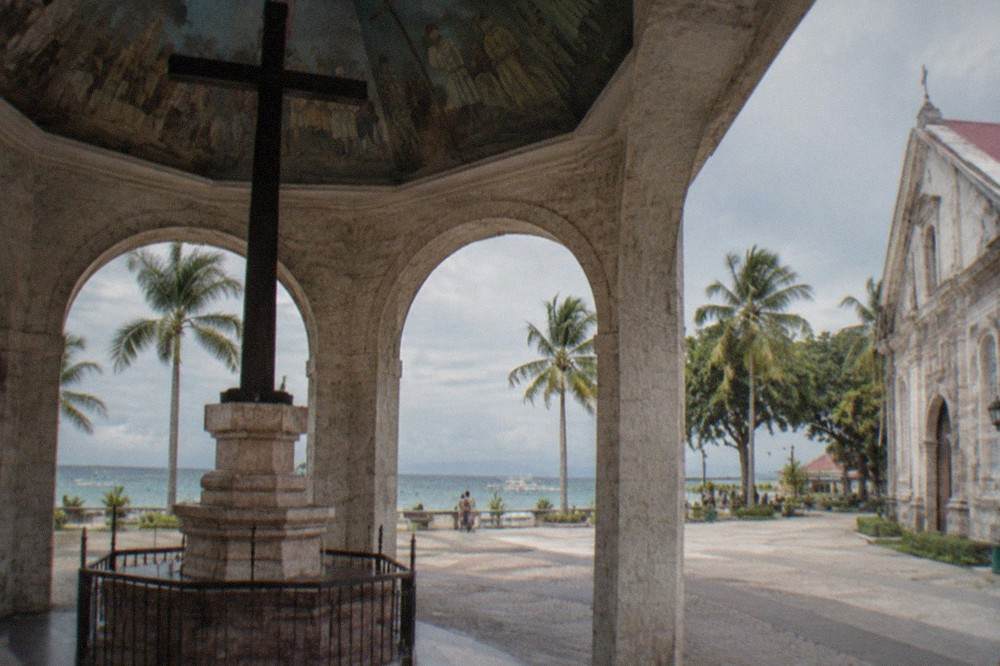
Downtown works differently. The heritage sites, Magellan's Cross, the Basilica Minore del Santo Niño, Fort San Pedro at P50 (about US$0.8) regular entry, and the market streets around them, are the city's tourist core, and the foreigners you meet there are mostly visiting rather than resident. The exception is the food-and-market scene, which is exactly where a resident's city and a visitor's city overlap.
That overlap is why a market walk is one of the better ways for a new resident to learn the city's geography. The Cebu Market & Food Tour runs through the downtown markets; its price is not published by the operator, so check the live listing. For a resident settling into the north side, it is a practical orientation trip as much as a tour.
Do Foreigners Live Outside Metro Cebu?
Yes, a smaller but permanent foreign population lives outside metro Cebu, concentrated in Moalboal on the southwest coast and Malapascua off the northern tip, both dive-industry towns. Moalboal sits about 2.5 to 3.5 hours by Ceres bus from the Cebu South Bus Terminal; Malapascua requires the same southbound-style commitment in reverse, reached via the port at Maya on the island's north coast.
Moalboal's foreign community formed around the sardine run at Panagsama Beach, which the municipal government's own tourism page describes as accessible a few metres from shore, best in the early morning. The town's environmental user fee to swim or snorkel is P100 (about US$1.6) per person under the local ordinance, and Pescador Island's marine park adds its own per-dive fee on top. Dive instructors and resort staff make up the bulk of the resident foreign population, with retirees and remote workers joining them in growing numbers.
Malapascua is the more remote and the more specialized. The island is the only regular place in the world where thresher sharks can be seen on day dives, mostly at Kimud Shoal now, with dive fees and marine park charges set by the local operators and payable on site. A foreign resident here is almost always connected to the dive industry. The Malapascua Island guide covers the island's layout and logistics.
The table below summarizes the realistic long-stay bases and what each one trades on.
| Base | Character | What draws foreign residents | Main trade-off |
|---|---|---|---|
| Lapu-Lapu City / Mactan | Resort island, airport hub | Beaches, airport proximity, bridges to the city | Heavier traffic on the bridge corridor |
| Cebu City north side (IT Park, Business Park, Banilad) | Walkable business and residential districts | Work, dining, gyms, international schools | No swimming beach at the door |
| Downtown Cebu City | Heritage and market core | Culture, food, low rents | Tourist-density, older infrastructure |
| Moalboal | Dive town on the southwest coast | Sardine run, Pescador Island, low cost of living | 2.5 to 3.5 hours by bus from the city |
| Malapascua | Northern dive island | Thresher sharks, small-community life | Ferry-dependent, farthest from the airport |
What Should A Foreigner Know Before Choosing Where To Live In Cebu?
A foreigner choosing a Cebu base should know three administrative facts: visa-free nationals, including US, UK, EU and Australian citizens, get an initial 30-day stay extendable through the Bureau of Immigration; foreign tourists staying under a year are exempt from the Philippine travel tax; and eTravel registration, free of charge, is required within 72 hours before arrival. None of these rules restrict where on the island a foreigner may live.
The 30-day figure comes from the official e-visa policy page, which lists the United States, the United Kingdom, Australia and the EU states among 157 visa-free countries, and the first Bureau of Immigration extension adds 29 days, with longer extensions after that. The travel-tax exemption is confirmed on the TIEZA official site: non-immigrant aliens whose stay is less than one year do not pay the P1,620 (about US$26) economy travel tax that Filipinos and residents pay on departure. eTravel's own FAQ states the registration is "absolutely free of charge" and warns about imitation sites charging fees.
Climate shapes the choice of base more than most newcomers expect. PAGASA's national rule puts the rainy season from June to November and the dry season from December to May, and the Mactan station's 1991-2020 normals show 1,685.0 mm of annual rain across 138 rain days, with a mean temperature of 28.1 °C. Typhoon season runs June to November, peaking roughly July to October; Typhoon Tino in early November 2025 caused severe flooding in parts of Cebu, though the Department of Tourism stated the core tourism zones of Cebu City and Mactan were largely unaffected and open. A resident on the coast should plan for that rhythm; a resident in the city's concrete districts experiences it mostly as disrupted traffic.
Cost expectations are covered in depth on the site's dedicated pages: Is Cebu Expensive? for overall budgeting, and Where Do The Wealthy Live In Cebu? for the high-end end of the same map. The short version is that the same island supports both a resort-market lifestyle on Mactan and a considerably cheaper provincial one in the south, and most foreign residents pick their base first and let the budget follow.
Common Questions About Where Foreigners Live In Cebu
Where do most foreigners live in Cebu?
Most foreigners live on Mactan island in Lapu-Lapu City, in the north-side districts of Cebu City around IT Park, the Cebu Business Park and Banilad, or in the smaller dive-industry communities of Moalboal and Malapascua.
Is Mactan or Cebu City the better base for a foreign resident?
Mactan suits residents who want beach access and airport proximity; Cebu City's north side suits those who want walkable districts, dining and work. The site's comparison page works through the trade-offs in detail.
Do any foreigners live in southern Cebu permanently?
Yes, a small permanent community lives in Moalboal, built around the dive industry and the sardine run at Panagsama Beach, which the municipal tourism page describes as accessible a few metres from shore.
How long can a foreigner stay in Cebu?
Visa-free nationals, including US, UK, EU and Australian citizens, receive an initial 30-day stay, extendable through the Bureau of Immigration, with the first extension adding 29 days.
Do foreign residents in Cebu pay the Philippine travel tax?
Non-immigrant foreigners staying less than one year are exempt from the travel tax, per the official TIEZA exemption rules; Filipinos and residents pay P1,620 (about US$26) in economy class on departure.
Which Cebu neighbourhoods should a new foreign resident avoid renting in blind?
No Cebu district is off-limits, but the practical rule is to rent short-term first: the visitor-facing comparison pages on where foreigners stay cover the differences between the resort coast, the business districts and the downtown core before a lease is signed.