What Is The Cheapest Month To Fly To Cebu?
The cheapest months to fly to Cebu in the Philippines are typically the low-season months of June through September, outside the December-to-May dry season and away from Sinulog in January. Here is how to time it.
Cebu, the island province in the Central Visayas region of the Philippines, runs on a tropical calendar, and airfare demand tracks it closely. The PAGASA national rule puts the rainy season from June to November and the dry season from December to May, with Sinulog, the country's biggest festival, landing on the third Sunday of January. Airlines price around that curve. This page breaks down which months are usually cheapest, why, and what the low-season trade-offs look like, using verified climate and festival data rather than folklore.
What Is The Cheapest Month To Fly To Cebu?
The cheapest months to fly to Cebu are typically June through September, the low season between the two demand spikes of the December-to-May dry season and the Sinulog festival period in January. June, July, August and September sit inside PAGASA's rainy season, when visitor numbers drop and fares usually follow. No month carries a guaranteed price, and exact fares move with fuel costs and route competition, so treat this as a timing rule rather than a promise.
Why those months specifically? The demand pattern in Cebu is unusually legible. The dry season from December to May is when travelers head for the beaches of Mactan, Moalboal and Bantayan, and January adds Sinulog on top, which filled Cebu City for the Grand Parade on 18 January 2026 and is already scheduled for 17 January 2027 at the Cebu City Sports Center. Once the rains arrive in June, occupancy falls, and airlines discount to fill seats.
There is a second, smaller shoulder worth knowing about. Late May and early June, and again late November after the typhoon peak, can carry fares below dry-season levels while the weather is still transitional. The trade-off is real, though: typhoon season runs June to November with the peak roughly July to October, and Typhoon Tino (Kalmaegi) in November 2025 brought severe flooding to Cebu, even though the Department of Tourism confirmed the core tourism zones of Cebu City and Mactan stayed open.
If the goal is the cheapest fare with the least weather risk, September is the month most planners point to: it is deep in the low season, after the height of the July-August school-holiday travel in source markets, and before the November-December spike in typhoon landfall risk for the Visayas.
Why January And The Dry Season Cost More In Cebu
Fares to Cebu peak from December through early May because that is PAGASA's dry season, the window when rain days are lowest and beach and island-hopping conditions are at their best. January is the single most expensive month to arrive, since Sinulog draws a huge domestic and international crowd into Cebu City on the festival's third-Sunday date. Anyone flying in January should book far ahead or expect to pay a premium.
The rainfall numbers explain the demand. PAGASA's 1991-2020 climatological normals for the Mactan station show the driest months of the year are April at 48.1 mm and March at 58.6 mm, while the wettest are October at 194.8 mm and July at 192.9 mm. Annual rainfall at the station is 1,685.0 mm spread over 138 rain days, with a mean temperature of 28.1 C. Visitors pay for the dry months because the numbers say they are genuinely dry.
| Month | Rainfall at Mactan station (mm) | Season |
|---|---|---|
| January | 105.2 | Cool dry, Sinulog month |
| February | 69.6 | Cool dry |
| March | 58.6 | Hot dry |
| April | 48.1 | Hot dry, driest month |
| May | 95.0 | Hot dry, turning wet |
| June | 175.6 | Rainy season begins |
| July | 192.9 | Rainy season |
| August | 143.5 | Rainy season |
| September | 179.6 | Rainy season |
| October | 194.8 | Rainy season, wettest month |
| November | 161.9 | Rainy season, typhoon risk high |
| December | 139.7 | Cool dry begins |
Sinulog is the demand event that overrides everything. The Grand Parade returns to the Cebu City Sports Center for 2027 on 17 January, with the opening salvo on 7 January, and the venue has been confirmed as staying at CCSC rather than the South Road Properties used in 2023-2024. Flights and rooms around that week sell at their annual peak. Anyone whose real goal is the festival should read when to visit Cebu for the best weather and budget for the surge rather than fight it.
The rest of the dry season is cheaper than Sinulog week but still above the rainy-season floor. If a dry-season trip matters more than the absolute lowest fare, the March-to-April window combines the two driest months on the Mactan normals with post-festival pricing.
If a cheap flight lands you with a spare afternoon in Cebu City, spending it on food rather than transport is the natural move. These are the tours that pair well with a low-season trip:
The market and food walk is the obvious anchor: its price is not published by the operator, so check the live listing, but the format, a stroll through Cebu's markets and backstreet eateries, costs a fraction of a day tour and works rain or shine. The canyoneering option from Moalboal is the adventure pick for a dry-day plan, and the free walking tour is the zero-fixed-cost fallback.
What Are The Rainy-Season Trade-Offs For Cheap Cebu Flights?
Flying to Cebu between June and September usually means lower fares but a real chance of rain and, in some years, typhoon disruption, since the season runs June to November with peak activity roughly July to October. The rains are typically heavy showers rather than all-day events, and the Department of Tourism confirmed Cebu's core tourism zones stayed open even after the November 2025 typhoon. Travel insurance and flexible tickets matter in this window.
The honest framing is that low season in Cebu is not low season in the Mediterranean sense. This is a tropical climate with two seasons, not four. The Mactan normals show rain in every single month of the year, including 48.1 mm in the driest month of April, so the choice is between more rain and less rain, never between rain and none. Mean minimum temperature only falls to 24.9 C, so a low-season trip is never cold, just wetter. The rest of the planning pages sit on Cebu Travel Guide.
The typhoon question deserves a straight answer. Typhoon Tino (Kalmaegi) in early November 2025 caused severe flooding in Cebu and 253 deaths across the Philippines, and the province declared a state of calamity, yet the Department of Tourism said within days that Cebu City and Mactan were largely unaffected and open, and explicitly asked tourists not to cancel flights. The pattern is that storms disrupt specific days, not whole months, and the PAGASA risk for Visayas landfalls runs highest in November and December, which is one reason September sits at the sweet spot of the low season.
| Period | Weather expectation | Typical fare level | Main risk |
|---|---|---|---|
| December - February | Cool dry, lowest rain of the year | High, peaking at Sinulog | Crowds, peak pricing |
| March - May | Hot dry, driest months | Medium-high | Heat, higher fares than rainy season |
| June - August | Rainy season, frequent showers | Low | Rain, typhoon season underway |
| September | Rainy season, showers | Usually the year's lowest | Rain, some typhoon risk |
| October - November | Wettest months, typhoon peak | Low to medium | Typhoon disruption, flooding |
One planning note that saves money on the ground as well: the airport transfer. MyBus runs from SM City Cebu through Parkmall to Mactan-Cebu International Airport for P50 (about US$0.8) at most, depending on the segment, and a white metered city taxi starts at a flag-down of about P40 (about US$0.6) plus P14 (about US$0.2) per kilometre, while the yellow airport taxi flags down at about P70 (about US$1.1). The bus is the budget option, running from the airport to SM roughly 7:00 AM to 10:00 PM. The airport transfer options guide covers the routing question, and what Cebu is known for covers what to do once the cheap ticket has landed you there.
How To Book Around Weather And Festivals When Flying To Cebu
The practical rule is to book low-season dates, June through September, four to eight weeks out for the best balance of price and schedule, and to avoid the Sinulog week in January unless the festival is the point of the trip. Flexible or refundable tickets are worth the small premium in typhoon season, and the eTravel registration required for arrival is free and done within 72 hours before the flight. Checking the festival calendar before booking prevents expensive surprises.
A few specifics make the low-season booking safer. Every arriving passenger must register on the eTravel platform within 72 hours before arrival, and it is free of charge, with the Bureau of Immigration repeatedly warning about fake sites that charge fees. Foreign tourists staying under a year are exempt from the Philippine travel tax, so that line item should never appear in a visitor's budget. Visa-free nationals, including those from the United States, United Kingdom, Australia and the EU, get an initial 30-day stay, so a cheap low-season ticket can be extended on the ground if the rains turn out milder than expected.
The festival calendar matters even outside Sinulog, because domestic travel spikes lift fares on the Cebu routes around any long weekend. The 2027 calendar is already partly public: Sinulog's opening salvo falls on 7 January and the Grand Parade on 17 January, both at the Cebu City Sports Center. Booking a flight that avoids the festival fortnight, arriving late January or February instead, keeps the dry-season weather at a post-peak price.
For travellers weighing Cebu against other gateways, the comparison of flying into Manila or Cebu matters, and the question of whether Cebu is expensive once on the ground is worth reading before committing, since a cheap flight into a high-season hotel market erases the saving.
What To Do In Cebu When The Low-Season Rains Arrive
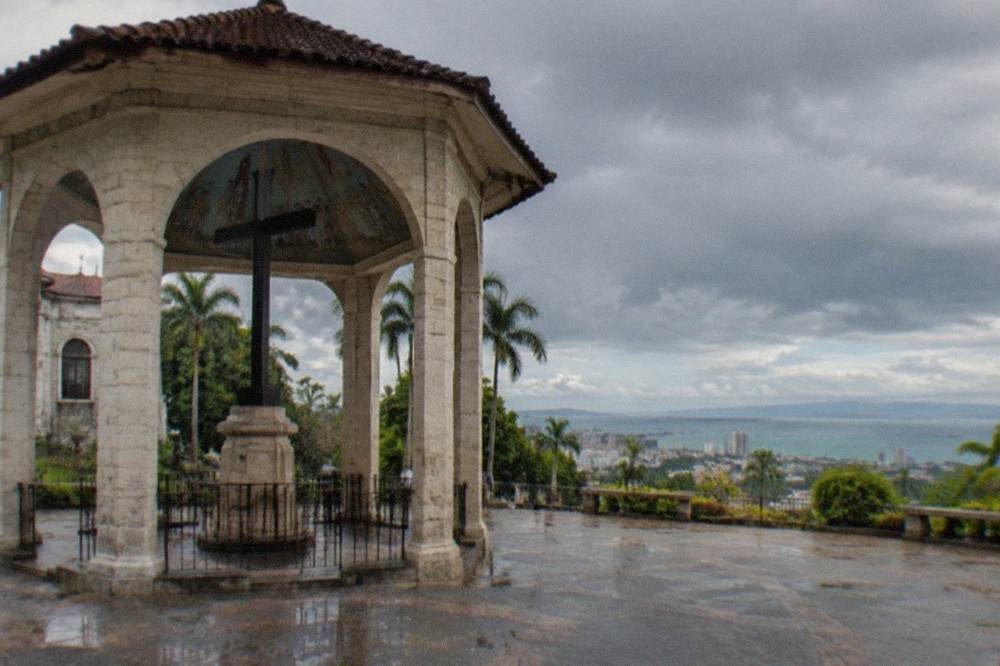
A cheap June-to-September ticket to Cebu does not mean a washed-out trip: the rainy months suit food walks, museums, heritage churches and the highland viewpoints around Cebu City, all of which sit within a short ride of the airport and cost little to enter. Fort San Pedro charges P50 (about US$0.8) regular admission, Magellan's Cross is free, and the sardine run at Moalboal runs year-round a few metres from shore. The rain schedule, not the season, decides the day.
The indoor and covered options are strong. The Basilica Minore del Santo Niño, founded on 28 April 1565, and Magellan's Cross next to it form the heritage core downtown, and the cross pavilion costs nothing to enter. Fort San Pedro, whose present stone structure dates from 1738, charges P50 (about US$0.8) (about US$8) regular and P40 (about US$0.6) (about US$6) for students and seniors. Museo Sugbo reopened on 29 August 2025 after nearly two years of closure and charges P50 (about US$0.8) general admission on weekdays.
Food is the other rainy-day pillar, and Cebu's reputation rests on it. The most famous food in Cebu question has a one-word answer in lechon, and the market and food tour walks straight through the stalls where it is sold, with the operator's listing carrying the current price and the 3-4 hour duration.
For the days the rain holds off, the free walking tour deserves a specific mention because it is genuinely free. The Essential Cebu walk, bookable through GuruWalk with a local guide leading ten stops across three hours, runs on tips alone, and the platform's listing shows a 4.99 rating from 265 reviews. A tip-based walk is the cheapest possible introduction to the city, and it pairs naturally with a jeepney ride, the classic Cebu transport experience, on the same day.
Here are the three tours that fit a low-season Cebu trip best, whatever the weather decides:
The canyoneering tour from Moalboal is the one to hold for a confirmed dry day, since it runs the Kawasan Falls gorge with an early 07:00 start; its price is not published by the operator, so the live listing is the only source. The food walk works in any weather, and the free tour costs nothing but the tip. Between them, a low-season week in Cebu can be filled for very little beyond the flight.
Common Questions About Cheap Flights To Cebu
What is the cheapest month to fly to cebu?
June through September are typically the cheapest months, with September usually the lowest of all. These months fall inside PAGASA's rainy season, away from the December-to-May dry-season peak and the Sinulog festival in January. Exact fares vary by route and fuel costs, so compare dates on the airline's own calendar before booking.
Is January expensive for flights to Cebu?
Yes, January is usually the most expensive month. It combines the cool dry season with Sinulog, held on the third Sunday of the month, which drew the year's biggest crowds to Cebu City for the Grand Parade on 18 January 2026 and is set for 17 January 2027 at the Cebu City Sports Center.
Do typhoons cancel flights to Cebu in low season?
Sometimes, but rarely for long. Typhoon season runs June to November with peak activity roughly July to October, and Typhoon Tino in November 2025 disrupted travel for days, yet the Department of Tourism confirmed Cebu City and Mactan stayed open and asked tourists not to cancel. Flexible tickets and travel insurance cover the risk.
What is the cheapest way from Mactan-Cebu airport to the city?
The MyBus airport service costs P50 (about US$0.8) at most per segment and runs between MCIA and SM City Cebu roughly every twenty minutes, from the airport to SM about 7:00 AM to 10:00 PM. A white metered taxi flags down at about P40 (about US$0.6) plus P14 (about US$0.2) per kilometre, and the yellow airport taxi at about P70 (about US$1.1).
Does the rainy season in Cebu mean all-day rain?
No. The Mactan station normals show rain in every month of the year, including 48.1 mm in the driest month, April, so low season means more frequent and heavier showers, not constant rain. Showers often pass in hours, and indoor options like the Basilica, Fort San Pedro and the reopened Museo Sugbo fill the gaps.
Do foreign tourists pay the Philippine travel tax on a cheap Cebu flight?
No. Non-immigrant foreign visitors staying less than one year are exempt from the Philippine travel tax, which falls on Filipinos and residents instead. Arriving passengers only need the free eTravel registration, completed within 72 hours before the flight on the official government platform.