Kawasan Falls
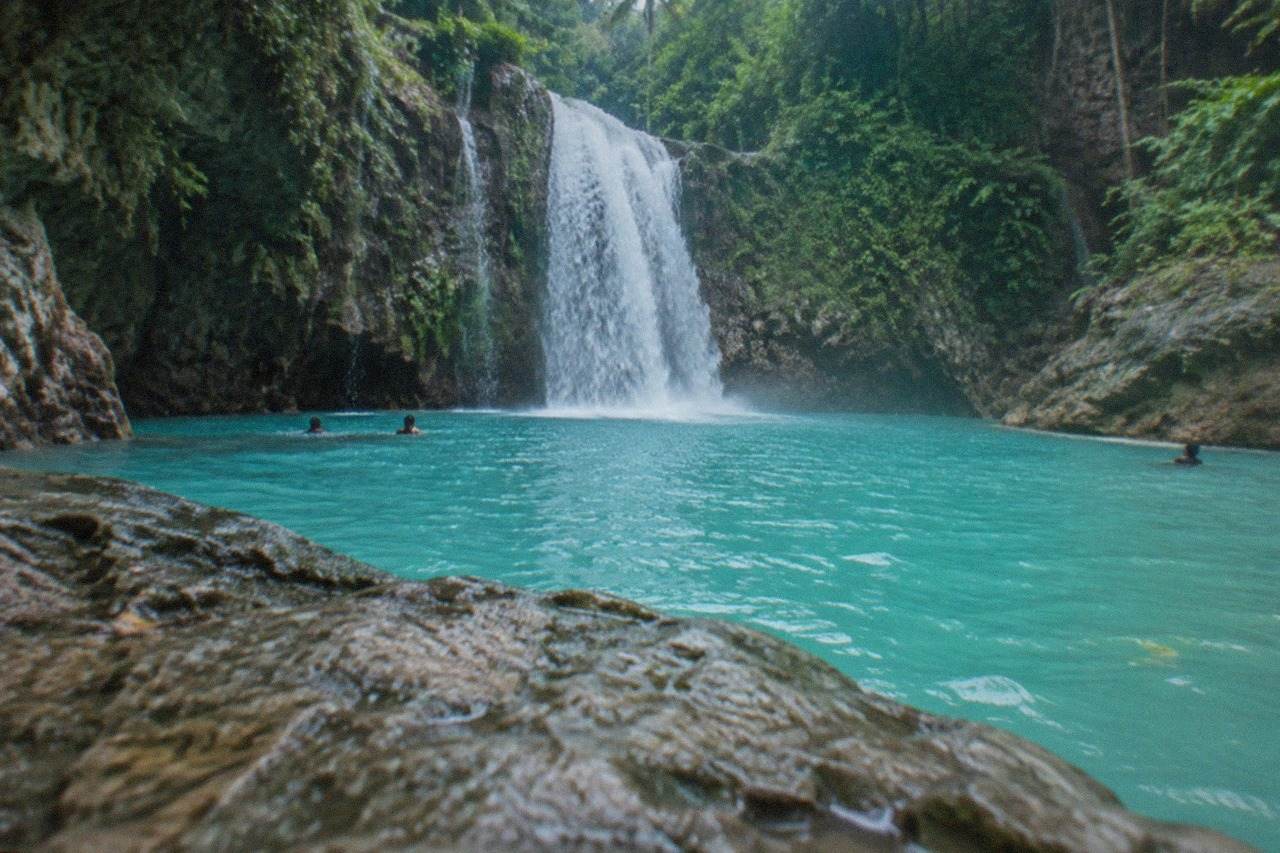
Kawasan Falls is a three-tiered turquoise waterfall system in Badian on Cebu island's southwest coast, the anchor of most South Cebu itineraries and the finish line of the Philippines' best-known canyoneering run.
Short answer
Kawasan Falls sits in Badian, about 3 to 4 hours south of Cebu City on Cebu island, Philippines. Entrance to the Level 1 basin costs about P200 (about US$3) per person, and the canyoneering run down the Kawasan canyon from the Badian jump-off costs roughly P1,500 to P2,000 (about US$24 to US$32) with an accredited guide. The Alegria route is suspended, so all canyoneering now runs through Badian.
Kawasan Falls is a multi-tier waterfall system on the Matutinao River in Badian, a municipality on the southwest coast of Cebu island in the Central Visayas region of the Philippines. The water is the unreal turquoise that the island's limestone geology produces, and the main pool below the Level 1 falls is where nearly every South Cebu day trip ends up by early afternoon. The falls became nationally famous as the finish line of the Badian canyoneering run, a guided descent through gorges, jumps and rappels that starts in the hills above and exits into the main pool. This guide covers the current fees, the 2026 rule changes, how to get there from Cebu City or Moalboal, and how to plan the day around it.
Where Exactly Is Kawasan Falls In Cebu?
Kawasan Falls sits in Barangay Matutinao in the municipality of Badian, on the southwest coast of Cebu island in the Central Visayas region of the Philippines, several hours by road south of Cebu City. The falls are part of the Kawasan Cascadas Natural Park, and the Level 1 basin, the lowest and most visited tier, is reached on foot from the barangay road after a short walk along the river. Moalboal is the nearest transport hub.
The location matters for planning. Badian sits on the Cebu City to Moalboal to Oslob corridor that the Ceres buses run down the island's west coast, so the falls slot naturally into any South Cebu itinerary alongside the sardine run at Moalboal and the whale sharks at Oslob. The road from Cebu City is coastal and winding, and the journey from the city runs about 3.5 to 4.5 hours on the bus. From Moalboal it is a much shorter hop.
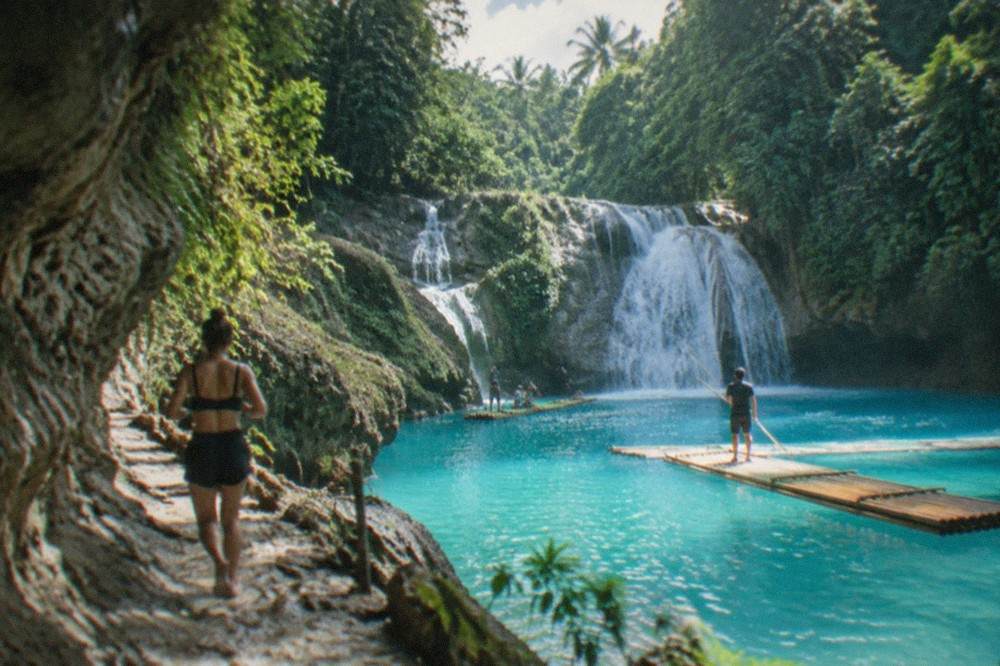
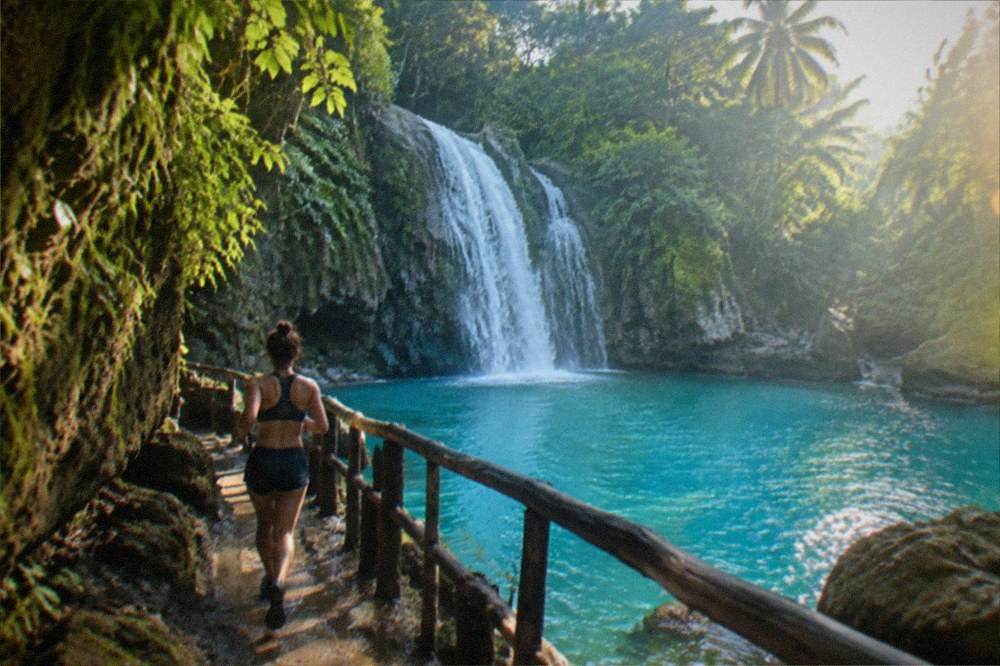
The walk from the parking area to the Level 1 basin is along a paved and boardwalk path beside the river, and bamboo raft operators work the pool itself. The upper tiers, Level 2 and Level 3, sit above the main falls and are reachable on foot, but since the current rules came in, independent visitors are effectively confined to Level 1, with the upper levels reserved for canyoneering groups. That is the single biggest change to how the falls work compared with five years ago, and it reshapes every visit.
How Much Does Kawasan Falls Cost To Visit In 2026?
Entrance to the Level 1 basin at Kawasan Falls costs about P200 (about US$3.2) per person for swimming and viewing, while the full canyoneering run with a Badian-accredited guide runs roughly P1,500 (about US$24) to P2,000 (about US$32) per person, a range that includes the guide, environmental and activity fees, habal-habal transfers, gear and lunch. There is no single published official price list, so treat those figures as the going rates reported by the municipal structures and local guides in 2026, and confirm current amounts at the registration area.
The entrance fee works out to about P200 (about US$3.2), and the canyoneering range to roughly P1,500 (about US$24) to P2,000 (about US$32) per person. That canyoneering range deserves a note. Some guide sites quote a flat P1,500 (about US$24) all-in figure, while SunStar reported in October 2025 that tourists typically pay around P2,000 (about US$32) on the ground. The honest position is the range: roughly P1,500 (about US$24) to P2,000 (about US$32) with a Badian-accredited guide, depending on the package and the inclusions. What the price buys is not negotiable: the Municipal Ordinance framework requires an accredited guide for the canyon run, and independent access above Level 1 is not permitted.
| Item | Going rate (2026) | Notes |
|---|---|---|
| Level 1 entrance (swim/view) | about P200 (about US$3.2) per person | The only tier open to independent visitors |
| Canyoneering package (Badian route) | roughly P1,500 (about US$24) to P2,000 (about US$32) per person | Guide, fees, gear, habal-habal and lunch included |
| Bamboo raft ride on Level 1 pool | priced on site | Operated by local associations at the basin |
| Environmental fee | included in packages, or about P50 (about US$0.8) to P100 (about US$1.6) separate in some setups | Collection varies, confirm locally |
| Habal-habal to jump-off point | included in guided packages | Solo arrivals negotiate on site |
If you are booking a canyoneering day as a packaged tour rather than assembling it yourself, the operator's listing carries the price, and the half-day package from Moalboal that includes lunch is the most common choice:
For most visitors that package, guide, gear, lunch and transfers bundled, is simpler than arriving at Matutinao and negotiating piece by piece, and it guarantees an accredited guide under the current ordinance. Whatever route you take to the canyon mouth, budget cash for the Level 1 entrance if your package does not line-item it.
What Are The Current Rules And Bans At Kawasan Falls?
Cliff jumping is banned at the main Level 1 basin, life jackets are mandatory, visits to the upper canyon are limited to about three hours with a guide, and a rope barrier separates walk-in visitors from the deep water, all rules in force through 2026 under the revised Badian canyoneering ordinance. Only the Badian route operates, because the Alegria route has been suspended since 2025. Only Level 1 is open to independents.
The rule set is municipal, not a private operator's policy, and it is enforced. The most visible pieces for a day visitor are the cliff-jump ban at the Level 1 basin and the rope barrier. The ban matters because the Level 1 basin's rocks around the jump points are slippery and the pool's depth varies with rainfall; the municipal government made the jump prohibition explicit in the 2025 rule set after a series of incidents at other Cebu swimming spots.
| Rule (2026) | What it means in practice |
|---|---|
| No cliff jumping at Level 1 basin | Jumps happen only inside guided canyoneering, never at the main pool |
| Life jackets mandatory | Applies to swimming at Level 1 and throughout the canyon run |
| About 3-hour limit in the upper canyon | Guided groups are moved through, no lingering |
| Rope barrier at Level 1 | Walk-in swimmers stay inside a marked zone |
| Accredited guide required | No independent access to Levels 2 and 3 |
| Alegria route suspended | All canyoneering runs the Badian route only |
The bigger safety event visitors should know about is the October 2025 rockfall in the canyon, which injured a guide and led Badian to suspend canyoneering in Matutinao from 26 October 2025; it reopened after inspection on 28 October. That closure, two days long, is the pattern to expect: the municipality shuts the canyon quickly after heavy rain or any incident and reopens after inspection. In 2025 and 2026 canyoneering was paused repeatedly for rain and for storms, while the Level 1 falls themselves typically stayed open to swimmers. Check locally on the day.
A P110 (about US$1.8) million rehabilitation project, repairing damage from the 2025 typhoon season, began around mid-June 2026, and the site remained open during the works. If you visit during the rehab period expect some scaffolding and partial closures of specific structures, not a shutdown. This is where a booked tour helps: the operator handles the current-status question before you commit the bus fare.
When Is The Best Time Of Day And Year To Visit Kawasan Falls?
The best months for Kawasan Falls are the dry-season stretch of roughly March to May, when Cebu's rainfall bottoms out and the canyon is at its most runnable, though the falls are open year-round and guided trips run daily. The best time of day is the earliest slot you can manage, ideally at the jump-off by 7 AM, because the Level 1 basin fills badly by late morning in high season. PAGASA's dry-season rule for the Philippines is December to May, with the rainy season June to November.
The seasonal logic comes straight from the climate data. PAGASA's Mactan station normals for 1991 to 2020 give the island about 1,685 mm of rain across roughly 138 rain days a year, concentrated in the June-to-November wet half of the year. April is the driest month in that series, at 48.1 mm, while October is the wettest, at 194.8 mm. The canyon is a river gorge: heavy rain upstream raises the water level fast, and that is exactly when the municipality suspends canyoneering.
| Period | Cebu island conditions | Kawasan implications |
|---|---|---|
| December to February | Cool dry season | Comfortable, occasional rain, low crowds midweek |
| March to May | Hot dry season, April driest at 48.1 mm | Best water clarity and canyon stability, busiest |
| June to September | Rainy season builds, September 179.6 mm | Higher water, more closures after storms |
| October to November | Wettest months, October 194.8 mm | Highest suspension risk, quietest basin |
Typhoon timing matters too. The November 2025 Typhoon Tino (Kalmaegi) flooding was the event that damaged the site and seeded the 2026 rehab, and the peak typhoon window for the Visayas runs roughly July to October with a secondary landfall-risk peak in November and December. None of that closes the falls permanently; it just means you should build a rain day into any wet-season trip to South Cebu.
How Do You Get To Kawasan Falls From Cebu City Or Moalboal?
From Cebu City, take a Ceres bus from the Cebu South Bus Terminal toward Badian or Moalboal, a ride of roughly 3.5 to 4.5 hours, and ask to be dropped at the Matutinao or Badian stop on the coastal road, from where habal-habal motorcycles and the registration area are a short hop. From Moalboal the same coastal road runs south, roughly 30 to 45 minutes by bus or habal-habal, and most guided tours include the transfer. There is no train anywhere in this equation; the island's transport is road and sea.
The buses run frequently down this corridor, with the Moalboal service leaving every 30 to 45 minutes through the day, so you do not need to pre-book a seat. The Oslob-bound services via Bato pass the same stretch of coast, and both work for the falls. Pay on board or at the terminal. The last stretch, from the coastal highway junction to the Matutinao registration area and up to the trailhead, is habal-habal territory, and those motorcycles are also how guided groups reach the canyon's upstream jump-off.
If you would rather not assemble bus, habal-habal and registration yourself, the packaged day tours from Cebu City and from Moalboal handle the whole chain, and the same is true for the combination days that pair the falls with the highlands. One practical pattern worth knowing: the Cebu City to Kawasan corridor is the same road that serves Moalboal's sardine run at Panagsama Beach and the Pescador Island dive sites, so a single South Cebu base usually beats a day trip out and back.
| Route | How | Rough time | Notes |
|---|---|---|---|
| Cebu City to Badian/Matutinao | Ceres bus, South Bus Terminal | 3.5 to 4.5 hours | Fares about P145 (about US$2.3) to P250 (about US$4.0) |
| Cebu City to Moalboal | Ceres bus, every 30-45 min | 2.5 to 3.5 hours | The usual overnight base |
| Moalboal to Kawasan | Bus or habal-habal down the coast | about 30 to 45 minutes | Tour vans include it |
| Cebu City guided day tour | Van door-to-door | set by the tour's own listing | Includes transfers and guide |
For travelers landing at Mactan-Cebu International Airport, the sequence is the airport bus or a Grab into Cebu City, then the South Bus Terminal. Budget a full day for the round trip if you go independently, which is the strongest argument for either overnighting in Moalboal or taking a packaged day.
Is Canyoneering At Kawasan Falls Worth Doing?
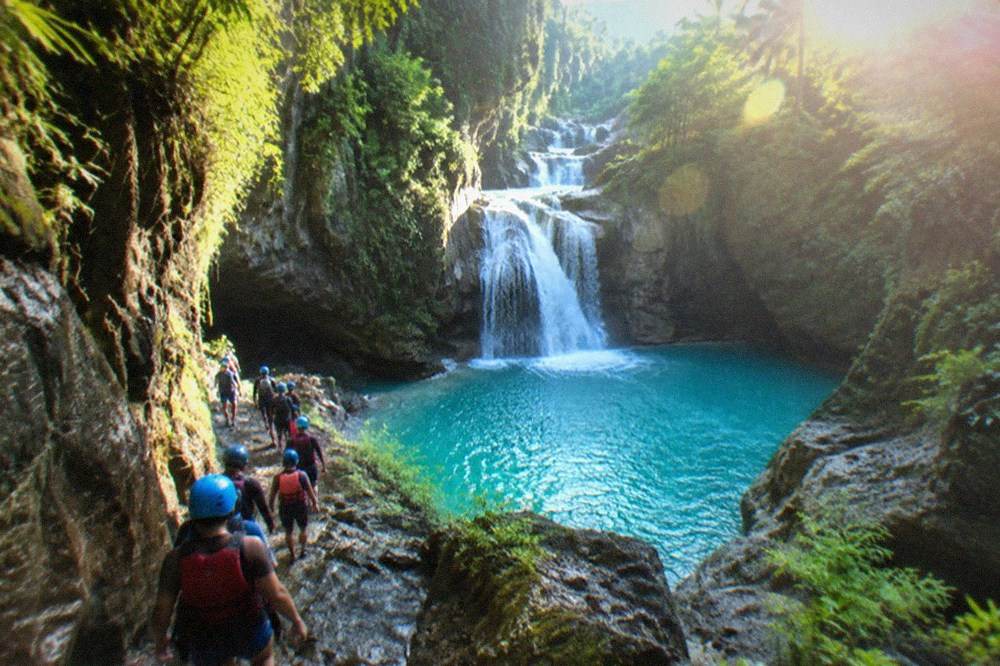
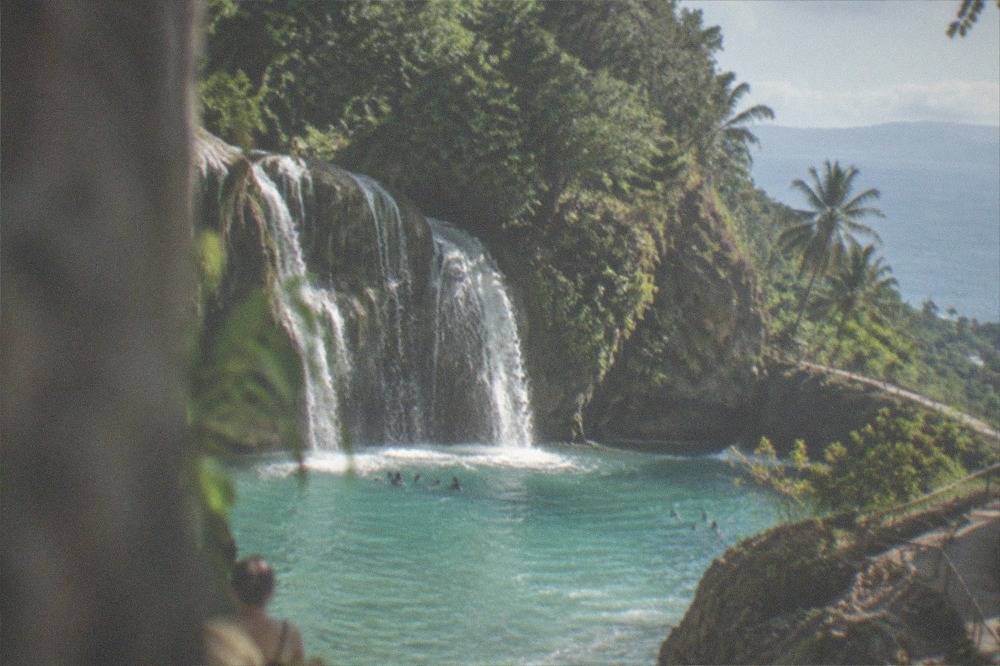
For most able-bodied visitors, yes: the Badian canyoneering run is the reason Kawasan is famous, a guided descent through gorges, rappels, jumps and slides that finishes in the main falls pool, and no walk-in visit to Level 1 alone gives you anything like the same experience. The run needs a guide under municipal ordinance and is physically demanding enough that non-swimmers or anyone with mobility limits should skip it and enjoy Level 1 instead. The honest trade-off is effort versus access.
The experience splits cleanly. Level 1 on its own is a beautiful, easy waterfall visit: a turquoise pool, bamboo rafts, food stalls, families on the boardwalk. The canyon above it is a different animal. You enter upstream, descend through limestone slots and cascade pools, and arrive at the falls from behind and above, which is the shot everyone associates with Kawasan. Since the Alegria route's suspension, all of that runs through Badian, and the route's jumps and rappels are inside the guided framework rather than optional extras.
The safety record is worth weighing soberly. The October 2025 rockfall that injured a guide and triggered a two-day closure is the recent example, and the three-hour canyon limit, the mandatory life jackets and the accredited-guide rule all date from the tightening that followed earlier incidents. Guides are locally trained and the ordinance framework is real, with at least one guide suspended in September 2026 for conduct violations, which tells you the enforcement mechanism works. The decision point, then, is your own swimming confidence and fitness, not the credibility of the operation.
The half-day package from Moalboal is the standard way to run the canyon, and travelers basing themselves on the south coast for a few days often pair it with an early-morning dive out of nearby Malapascua before or after the canyon day:
If you book nothing else for South Cebu, book the canyoneering package, because the guide requirement makes walk-up assembly both slower and no cheaper. Travelers pairing the falls with a city day can also look at the half-day historical city walk, whose price is on the operator's live listing:
Both options render their current prices and availability from the listing itself, so nothing here needs to be guessed at the terminal.
Can You Swim At Kawasan Falls Without Canyoneering?
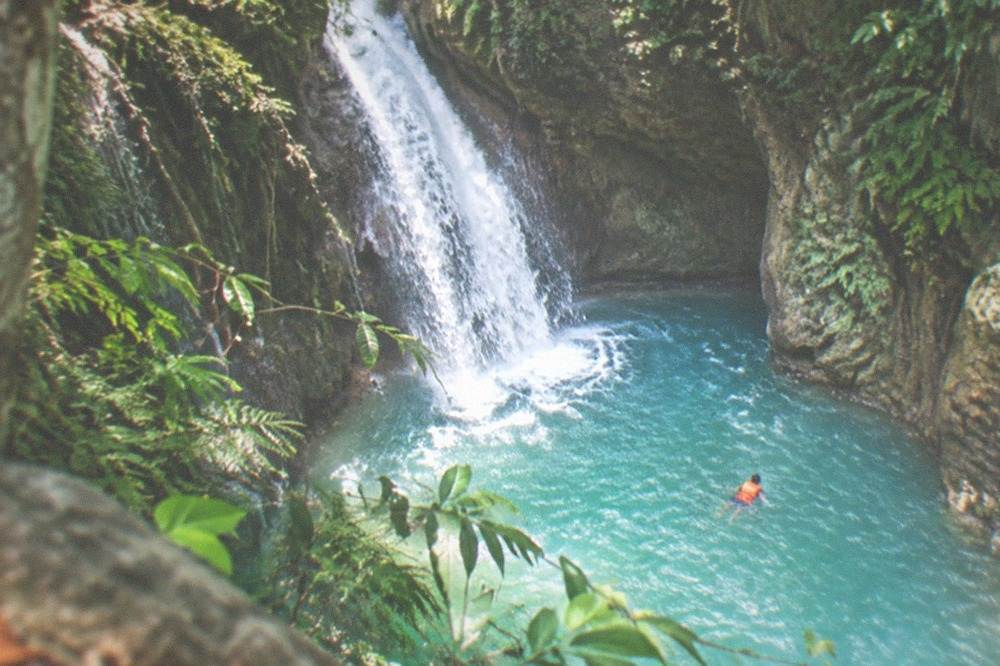
Yes, and plenty of visitors do exactly that: the Level 1 basin is open to walk-in swimmers for the entrance fee, with life jackets mandatory, a rope barrier marking the swim zone, and cliff jumping banned at the main pool. What you cannot do without a guide is go above Level 1, because the 2026 rules reserve the upper falls and the canyon for accredited canyoneering groups. For families and non-swimmers, Level 1 alone is a legitimate half-day.
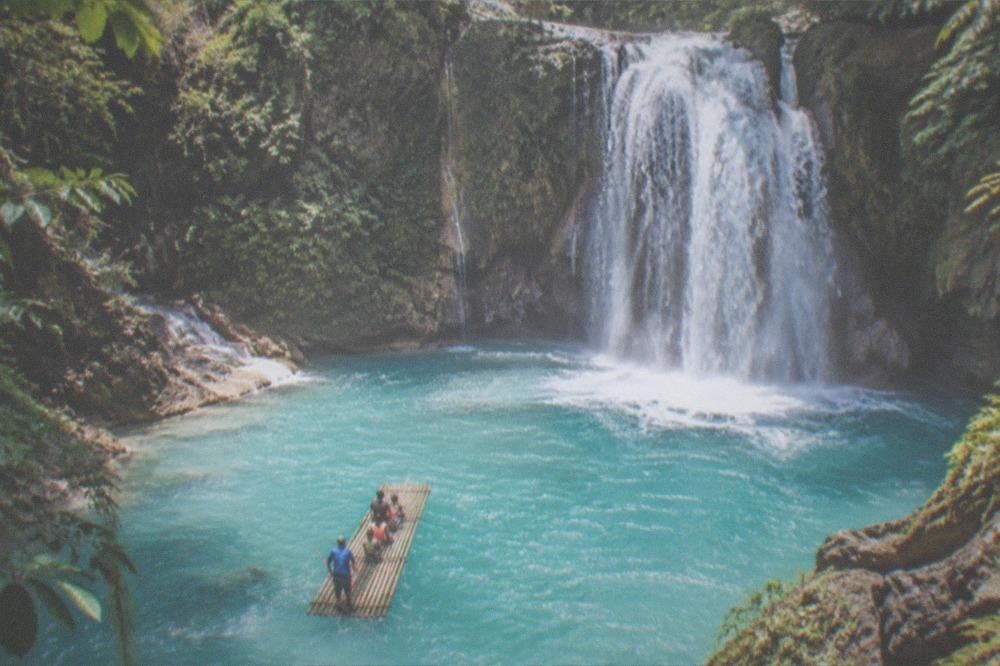
The entrance works out to about P200 (about US$3.2) per person. Arrive early for it. The Level 1 basin is the bottleneck of the whole site, and by late morning in high season it holds tour groups finishing their canyon runs, day-trippers from Cebu City and the bamboo rafts all at once. The same pool at 8 AM is quiet enough to swim laps. The rafts themselves are a local operation, priced on site, and they ferry passengers under the main cascade, which is the classic photograph.
The boardwalk and the food stalls at Level 1 make it a comfortable half-day even without the canyon. Grill lunch spots line the approach, and lechon and grilled fish are the standard order. The falls keep their normal daytime pattern, roughly morning to late afternoon, with trips best finished before the late-afternoon rain risk builds in the wet season.
What Should You Combine With Kawasan Falls In South Cebu?
The classic combination is Moalboal plus Kawasan Falls, pairing the canyon run with the sardine run at Panagsama Beach, a shore-accessible snorkel where a resident school of sardines gathers year-round, about 20 to 30 metres off the beach. The fuller South Cebu loop adds the Oslob whale sharks, P1,000 (about US$15.9) for foreign visitors and P500 (about US$8.0) for Filipinos with boat and guide included, plus Tumalog Falls and Osmeña Peak, the island's highest point. All four sit on the same coast road.
That loop is what the multi-day South Cebu itineraries exist for, and the geometry is simple: Cebu City sits at the north, Oslob at the southeast corner, Moalboal and Badian on the west, and Osmeña Peak inland above Dalaguete. Two nights based in Moalboal covers the west side, then a bus east over the island via Oslob or Samboan gets the whale sharks at their 6 AM opening. The whale shark operation runs about 6 AM to 12 PM, and the whole Oslob fee structure reverted in March 2025 to the municipal ordinance rates above.
| South Cebu stop | Fee basis (2026) | Time needed |
|---|---|---|
| Kawasan Falls Level 1 | about P200 (about US$3.2) | half day, morning |
| Canyoneering (Badian) | roughly P1,500 (about US$24) to P2,000 (about US$32) | half day, guided |
| Moalboal sardine run | about P100 (about US$1.6) environmental user fee | 2-3 hours, best early |
| Oslob whale sharks | about P1,000 (about US$15.9) foreign / P500 (about US$8.0) local | morning only, about 6 AM to 12 PM |
| Tumalog Falls (Oslob) | about P50 (about US$0.8) | 1-2 hours |
| Osmeña Peak (Dalaguete) | about P50 (about US$0.8) to P100 (about US$1.6) registration | half day, cool months best |
The pairing logic for a single long day is Kawasan plus the sardine run from a Moalboal base, or Kawasan plus Tumalog Falls and the whale sharks if you overnight in Oslob the night before. Trying to do the canyon run and Oslob in one day from Cebu City is possible on a packaged tour but means two very early starts' worth of driving. Pair the falls with Osmeña Peak for the highlands-and-waterfall combo, and read the dedicated Oslob whale sharks page before committing to that half of the loop.
Where Should You Stay To Visit Kawasan Falls?
Moalboal, specifically the Panagsama or Basdiot beach areas, is the practical base for Kawasan Falls, putting you 30 to 45 minutes from the Matutinao jump-off with the widest range of hostels, resorts and dive shops on the south coast, plus the sardine run on your doorstep. Badian itself has a small strip of resorts near the falls for visitors who want to be at the basin at opening time. Budget travelers use Cebu City as a base only if they accept the long ride each way on a day tour.
The case for staying in Badian is purely the early start. The canyon is safest and most pleasant before the crowds, and an overnight near the falls puts you at the registration area first. The trade is a thin accommodation and food scene compared with Moalboal's backpacker infrastructure. The case for Cebu City is none for the falls themselves, unless the rest of your trip is city-based heritage: Magellan's Cross, the Basilica, Fort San Pedro and the heritage houses cluster in the old city center, and a Kawasan day tour from there is the standard packaged pattern.
Whichever base you pick, book the canyoneering day in advance in high season, because guide availability at Matutinao is not guaranteed for walk-ups, and the accredited-guide requirement means a full group ahead of you can absorb the last morning slots. The tour listings carry current availability:
Checking availability costs nothing, and it is the difference between a planned morning at the canyon and a standby afternoon at the bus terminal.
Is Kawasan Falls Safe After The 2025 Earthquake And Typhoon?
Kawasan Falls and Badian were not significantly damaged by the 30 September 2025 magnitude 6.9 earthquake off northern Cebu, whose worst effects hit the northern towns of Bogo, Daanbantayan and San Remigio and the coral-stone churches there, not the south coast, and the Department of Tourism confirmed on 28 October 2025 that Cebu was open for visitors. The damage that shaped the falls' 2026 works came instead from November 2025's Typhoon Tino flooding.
That typhoon flooding drove the P110 (about US$1.8) million rehabilitation that began around mid-June 2026 with the site remaining open. Both events are worth separating, because the internet tends to merge them. The earthquake's tourism disruption was northern: Bantayan Island and Malapascua were both confirmed open and operational by the DOT in late October 2025, while some northern heritage sites awaited clearance. Cebu City, Mactan and the whole southwest corridor, which is where Kawasan sits, kept operating throughout. The typhoon a month later was a different story: record rainfall flooded much of Cebu, the province declared a state of calamity, and the DOT again had to state publicly that the core tourism zones were safe and open.
The practical safety picture for a visitor is the ordinary one: check the weather before the canyon day, because the municipality suspends canyoneering after heavy rain and reopened it two days after the October 2025 rockfall inspection, and go with an accredited guide who knows the current water levels. A reasonable reading of the 2025-2026 record is that the site's suspension-and-reopen cycle works quickly and conservatively, which is what you want from a river canyon operation.
What Should You Pack For A Kawasan Falls Or Canyoneering Day?
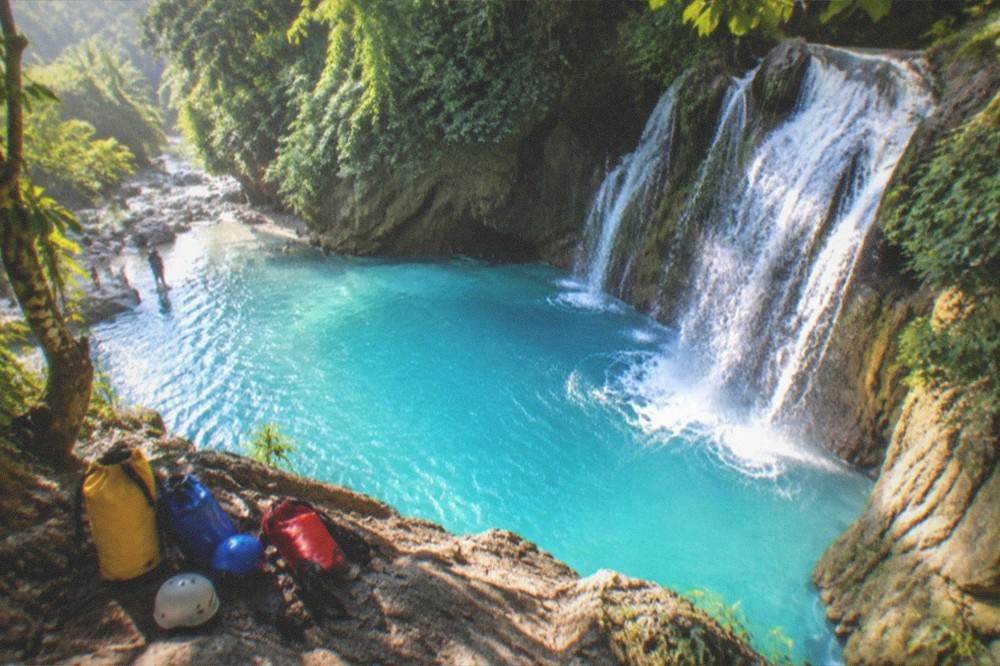
Pack for a wet, half-day canyon trip: a dry bag or waterproof case, closed-toe shoes that grip wet rock, swimwear already on, a rash guard or light long-sleeve top for the sun, a change of dry clothes for the bus home, cash in small bills for the entrance fee and habal-habal, and reef-safe or no sunscreen at all, because the canyon rules discourage chemicals in the water the same way the Oslob whale shark rules do. Helmets, life vests and canyon gear come with the guided package.
The shoe point is the one people get wrong. Flip-flops fail on the canyon's wet limestone, and the guided packages provide gear but expect you to bring footwear that stays on. A sports sandal with a heel strap or an old pair of trainers you do not mind soaking both work. Phones go in a dry case on a lanyard, because the classic photograph of the falls from mid-canyon is worth protecting the device for.
Cash matters more than usual in Badian. Card acceptance at the registration area and the Level 1 stalls is not something to rely on, the entrance fee and the raft rides are cash transactions, and the habal-habal drivers want small bills. There are ATMs in Moalboal town proper, so stock up before leaving the base. Food is not a problem: lunch is included in the canyoneering packages, and the Level 1 stalls grill all afternoon for walk-in visitors.
If that checklist sounds like the kind of day you would rather hand to someone who runs it every morning, the half-day canyoneering package with lunch covers the guide, the gear and the transfers in one booking:
Common Questions About Kawasan Falls In Cebu
How much does it cost to enter Kawasan Falls?
Entrance to the Level 1 basin is about P200 (about US$3.2) per person for swimming and viewing. The canyoneering run costs roughly P1,500 (about US$24) to P2,000 (about US$32) per person with a Badian-accredited guide, including gear, fees, transfers and lunch. Bamboo raft rides on the main pool are priced on site.
Can you visit Kawasan Falls without a tour guide?
Yes, for Level 1 only. Walk-in visitors pay the entrance fee, swim in the marked zone with a mandatory life jacket and enjoy the main basin freely. Levels 2 and 3 and the canyon itself are reserved for accredited canyoneering groups under the 2026 municipal rules, so a guide is required for anything above the main falls.
Is cliff jumping allowed at Kawasan Falls?
Cliff jumping is banned at the Level 1 basin. Jumps and rappels happen only inside the guided canyoneering run, under the accredited guide framework, never as a free activity at the main pool.
How long does canyoneering at Kawasan take?
The Badian canyoneering run takes about half a day as a package from Moalboal, with the canyon time itself capped at about three hours under the current rules. The operator's live listing carries the exact duration for each package.
Can you do Kawasan Falls and Moalboal in one day?
Yes, and it is the standard pairing. The canyon run finishes at Level 1 by early afternoon, and the sardine run at Panagsama Beach is a short drive back up the coast, best done the next morning or the same late afternoon if visibility holds.
Is Kawasan Falls open after the earthquake and the 2026 rehabilitation?
The falls were not significantly affected by the September 2025 earthquake, which hit northern Cebu hardest, and the DOT confirmed Cebu open for visitors in October 2025. The P110 (about US$1.8) million rehabilitation of typhoon damage began around June 2026 with the site remaining open throughout.
For the full picture of how the falls slot into an island-wide plan, the itineraries and day-trip guides on Cebu Travel Guide cover every combination of south coast, city and northern Cebu.