What Is Cebu Famous For?
Cebu is famous for lechon, the Sinulog festival, swimming with whale sharks in Oslob, Kawasan Falls, and being the oldest city in the Philippines. Here is what makes the island province known worldwide.
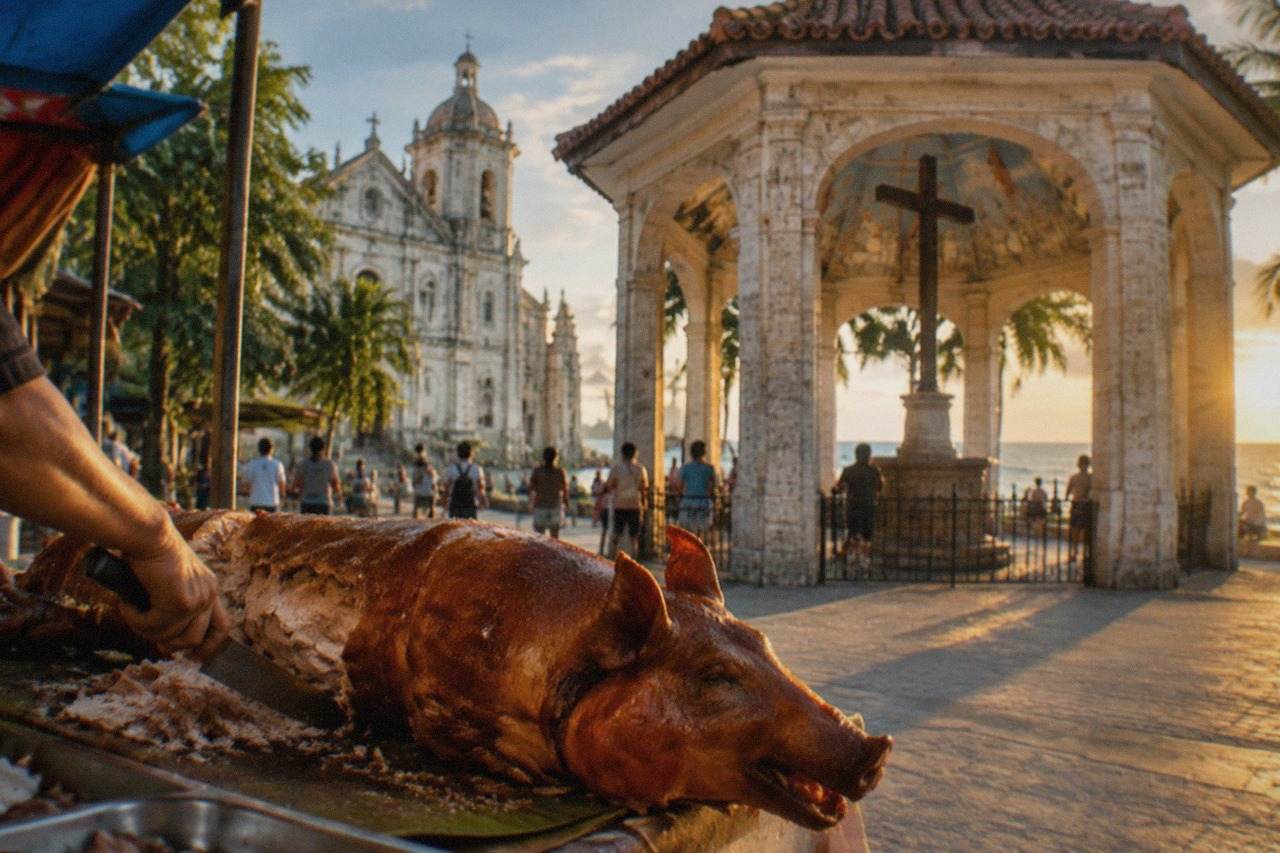
Cebu, an island province in the Central Visayas region of the Philippines, is famous worldwide for roasted lechon, the Sinulog festival held every third Sunday of January, swimming with whale sharks in Oslob, the blue waterfalls of Kawasan, and its long history as the oldest Spanish settlement in the country. Magellan's Cross and the Basilica del Santo Niño anchor that history in the heart of Cebu City, which the DILG's Region VII office notes was chartered on 24 February 1937 as "the first and oldest city in the country antedating Manila by 7 years." Ask ten travelers what is Cebu famous for and you will get some mix of food, faith, festivals and water.
What Is Cebu Famous For?
Cebu is famous for lechon, the Sinulog festival, whale shark encounters in Oslob, Kawasan Falls, white sand beaches around Mactan and Bantayan, and being the place where Christianity in the Philippines began in 1521. The island province pairs a dense, history-rich capital city with some of the country's most recognizable marine wildlife, and travelers typically come for one of those two halves and stay for both.
The food claim alone carries real weight. Lechon, whole roasted pig, is eaten across the Philippines, but Cebu's version is the one the rest of the country measures itself against, and the island's name is attached to it on menus nationwide. The festival claim is just as strong: Sinulog, held on the third Sunday of January, fills Cebu City with millions of spectators for a grand parade that the Sinulog Foundation has kept running for decades. And the wildlife claim is unique in the country, since Oslob is the one place in the Philippines where whale sharks gather close to shore in numbers that let hundreds of visitors a day enter the water beside them.
Why Is Cebu Called The Oldest City In The Philippines?
Cebu City is called the oldest city in the Philippines because the Spanish settlement founded there in 1565, Villa del Santisimo Nombre de Jesus, was the first Spanish town in the archipelago, and the city was formally chartered on 24 February 1937 under Commonwealth Act No. 58. Even before that, Magellan's fleet arrived in Cebu in April 1521 and planted the cross that still stands today.
The timeline is the heart of the story. Ferdinand Magellan's expedition reached Cebu on 7 April 1521, and the Basilica's own chronicle records that a wooden cross was planted that month to mark the baptism of Rajah Humabon and Queen Juana. Magellan never left the region: he died at the Battle of Mactan on 27 April 1521, defeated by the local chieftain Lapu-Lapu, whose statue now stands in a shrine on Mactan Island. The Spanish return came in 1565, when the Legazpi-Urdaneta expedition landed on 28 April and Fr. Andres de Urdaneta founded the Church of the Santo Niño the same day, on the spot where the Santo Niño image was found.
Visitors can walk this history in a single afternoon in downtown Cebu City. Magellan's Cross, housed in a stone kiosk on Magallanes Street, sits a few minutes on foot from the Basilica Minore del Santo Niño, whose current structure dates from 1735 to 1740. Fort San Pedro, begun as a wooden fort in 1565 and rebuilt in its present stone form by 1738, is the oldest triangular bastion fort in the country, and the SunStar reported in March 2026 that its fees now stand at P50 (about US$0.8) regular and P40 (about US$0.64) for students and seniors. The Cebu Travel Guide hub page collects these heritage stops into a single walking route if you want the full colonial-era circuit.
What Food Is Cebu Famous For?
Cebu is famous above all for lechon, whole pig roasted over charcoal until the skin shatters, which the rest of the Philippines treats as the island's signature dish. Around that centerpiece sit other local staples: sutukil, dried fish such as danggit, baked goods from the city's old Chinese bakeries, and the mangoes of nearby islands, all of which travelers can taste across Cebu's markets and carinderias.
Lechon deserves its own paragraph. The Cebuano style skips the liver sauce that Manila lechon requires, because the pig is stuffed with lemongrass, salt, pepper and spices before roasting, so the meat is seasoned from the inside. Anthony Bourdain's televised praise of Cebu lechon, calling it the best pig he had eaten, is part of why foreign visitors now seek it out deliberately. The best-known sources are the markets and dedicated lechon houses of Cebu City and the town of Carcar to the south, and the most famous food from Cebu question on this site goes deeper on where to eat it.
The rest of the food map is broader than one dish. Sutukil, a Cebuano portmanteau for sugba, tinola and kinilaw, grilled, souped and raw, names the seafood rows along Mactan where you pick your fish and choose your cooking method. Danggit and other dried fish come from Bantayan Island and the northern coast, and the Taboan public market in Cebu City is the classic place to buy vacuum-packed supplies to take home. A guided market walk is the efficient way to taste all of this in one morning, and the operator's live listing for the Cebu Market & Food Tour shows the current price and availability for the route.
The tour's own listing carries the current price and the meeting point, and it slots neatly into a morning before an afternoon of heritage walking downtown. Bookings are handled through the operator's live listing rather than on the day, which matters on weekends when the markets are at their busiest and the best stalls sell out of the good cuts by mid-morning.
What Natural Attractions Is Cebu Known For?
Cebu is known for whale shark watching in Oslob, the three-tiered turquoise pools of Kawasan Falls in Badian, the year-round sardine run off Moalboal, thresher shark dives at Malapascua, and the white sand beaches of Mactan, Bantayan and Sumilon islands. The province packs all of this into a single elongated island reachable by bus or van from the capital in a few hours.
Oslob is the headline act. The fishing village of Tan-awan has hosted daily whale shark interactions for well over a decade, and the Oslob municipal government's own notice, effective 21 March 2025, sets the environmental fee at P1,000 (about US$16) for foreign tourists and P500 (about US$8) for Filipinos, boat and guide included. Sessions run from about 6 AM to noon, with rules the LGU enforces: a minimum distance of about four meters, no touching, no sunscreen, and feeding only by licensed spotters. The what Oslob is known for page covers the ethics debate in full.
Kawasan Falls and Moalboal anchor the south. Kawasan's Level 1 entrance runs about P200 (about US$3) per person for swimming, while the canyoneering route down the Badian gorge costs roughly P1,500 (about US$24) to P2,000 (about US$32) with an accredited guide, gear and lunch included, and a P110 (about US$1.8) million rehabilitation that began in June 2026 has kept the site open throughout. The famous waterfall question on this site explains why Kawasan, not some other Philippine falls, is the one foreigners name. Moalboal's sardine run is the other southern icon: a permanent school of sardines that holds just off Panagsama Beach year-round, reachable from shore for the P100 (about US$1.6) environmental user fee under Moalboal's Ordinance 165-2021.
| Natural attraction | Location | Entry or activity fee | Best window |
|---|---|---|---|
| Whale shark interaction | Oslob, southeast coast | P1,000 (about US$16) foreign, P500 (about US$8) local | Year-round, 6 AM to about noon |
| Kawasan Falls swimming | Badian, southwest | About P200 (about US$3) Level 1 entrance | Dry season, December to May |
| Kawasan canyoneering | Badian gorge | Roughly P1,500 (about US$24) to P2,000 (about US$32) with guide | Dry season; closed after heavy rain |
| Sardine run snorkeling | Panagsama, Moalboal | P100 (about US$1.6) environmental user fee | Year-round; clearest water November to May |
| Thresher shark dives | Monad and Kimud Shoals, Malapascua | About P1,800 (about US$29) to P2,000 (about US$32) per dive | Year-round, early morning departures |
When Is Sinulog And Why Does It Draw Millions?
Sinulog is held on the third Sunday of January each year, with the Grand Parade filling the streets around the Cebu City Sports Center, and it draws millions because it fuses the country's oldest Catholic devotion with a street party of dance troupes, drum lines and floats. The 2027 Grand Parade is set for 17 January, and the festival honors the Santo Niño image given to Queen Juana in 1521.
The festival's pull is hard to overstate. Sinulog commemorates the Santo Niño, the Flemish wooden image about eleven inches tall that Magellan's expedition presented to Queen Juana at her baptism in 1521 and that was rediscovered in 1565, and the Basilica del Santo Niño remains the devotion's physical center. Dancers move in a forward-backward step said to echo the current of Cebu's rivers, and the parade route, stages and satellite events spread across the city for a full week, with the opening salvo for 2027 announced for 7 January.
Practical planning matters here. Hotel rates across Metro Cebu spike for the festival weekend, and streets in the city center close for the parade, so visitors who want the spectacle book months ahead while those who want quiet beaches schedule around it. The venue itself is settled: after the 2023 and 2024 editions moved to South Road Properties, the Grand Parade returned to the Cebu City Sports Center in 2025 and the organizers confirmed in September 2026 that CCSC remains the main venue for 2027. The why Cebu is famous among foreigners page looks at how Sinulog shapes the island's January visitor surge.
Is Cebu A Good Base For Island Hopping?
Cebu is one of the best island-hopping bases in the Philippines because its position in the Central Visayas puts Bohol, Camotes, Bantayan, Malapascua, Sumilon and the Mactan marine sanctuaries all within a day trip by ferry or boat, and its airport, Mactan-Cebu International, is the country's second-busiest gateway. Travelers can swim one morning in a Hilutungan sanctuary and cross to Bohol the next.
The ferry network is the quiet advantage. OceanJet runs about thirteen fastcraft sailings a day from Cebu City's Pier 1 to Tagbilaran in Bohol, a trip of about two hours, with fares of P960 (about US$15) in tourist class and P1,440 (about US$23) in business class since the 21 September 2026 fuel surcharge. Slower RORO options and a same-day Bohol countryside tour, including the Loboc River lunch cruise, let visitors see the Chocolate Hills without changing hotels. Closer to the city, the Mactan island-hopping circuit links Gilutungan, Caohagan and Nalusuan, with sanctuary fees of roughly P150 to P300 (about US$2 to US$5) per island and a Lapu-Lapu City environmental fee of P100 (about US$1.6) for foreign tourists.
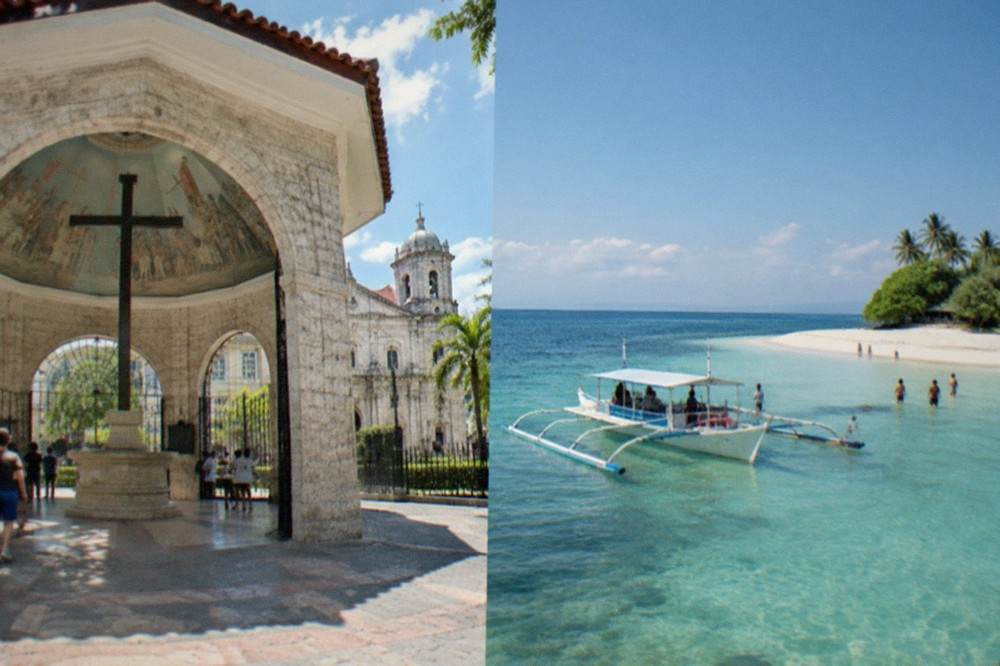
The northern islands complete the picture. Bantayan Island, reached by bus to Hagnaya and a short ferry crossing, charges a modest terminal fee and ecological fee on arrival at Santa Fe, and its summer crowds have made it a domestic byword for white sand. Malapascua, at the province's northern tip, is the dive island, famous as the one reliable place in the world to see thresher sharks at dawn on the shoals offshore. The full things to do in Cebu page ranks all of these day trips by travel time and cost, and the nicest beach question settles which stretch of sand suits which kind of traveler.
Common Questions About What Is Cebu Famous For
What is Cebu famous for?
Cebu is famous for lechon, the Sinulog festival every third Sunday of January, whale shark watching in Oslob, Kawasan Falls, and its long history as the oldest city in the Philippines, anchored by Magellan's Cross and the Basilica del Santo Niño.
Is Cebu worth visiting compared to Boracay or Palawan?
Cebu is worth visiting on its own terms: it combines city heritage, mountains and waterfalls, whale sharks and island-hopping on one island, while Boracay is mainly a beach destination and Palawan is mainly about remote islands and lagoons. Cebu also has the region's busiest airport, which makes it the practical hub for the Central Visayas.
What is the number one tourist spot in Cebu?
The single most visited spot is the Oslob whale shark interaction, which the SunStar reports draws 800 to 900 visitors a day in season, followed closely by Kawasan Falls and the Magellan's Cross and Basilica complex in downtown Cebu City.
Is Cebu safe for tourists right now?
Yes. The Philippines carries a Level 2 "exercise increased caution" advisory from the US State Department, but no foreign government names Cebu specifically, and after the September 2025 earthquake the Department of Tourism declared Cebu open and safe for visitors, with Bantayan and Malapascua ports fully operational.
How many days do you need in Cebu?
A trip of three to five days works well: one day for Cebu City heritage and food, one for Oslob or the south coast waterfalls, one for island hopping around Mactan, and a spare day for Bohol if the ferry schedule allows a same-day return.
What is the best month to visit Cebu?
The best months are December to May, PAGASA's dry season, with the driest weather in March and April. January adds Sinulog to the mix, while June to November brings the rainy season and the highest typhoon risk, peaking from July to October.