Magellan's Cross In Cebu, Philippines: History, Hours And How To Visit
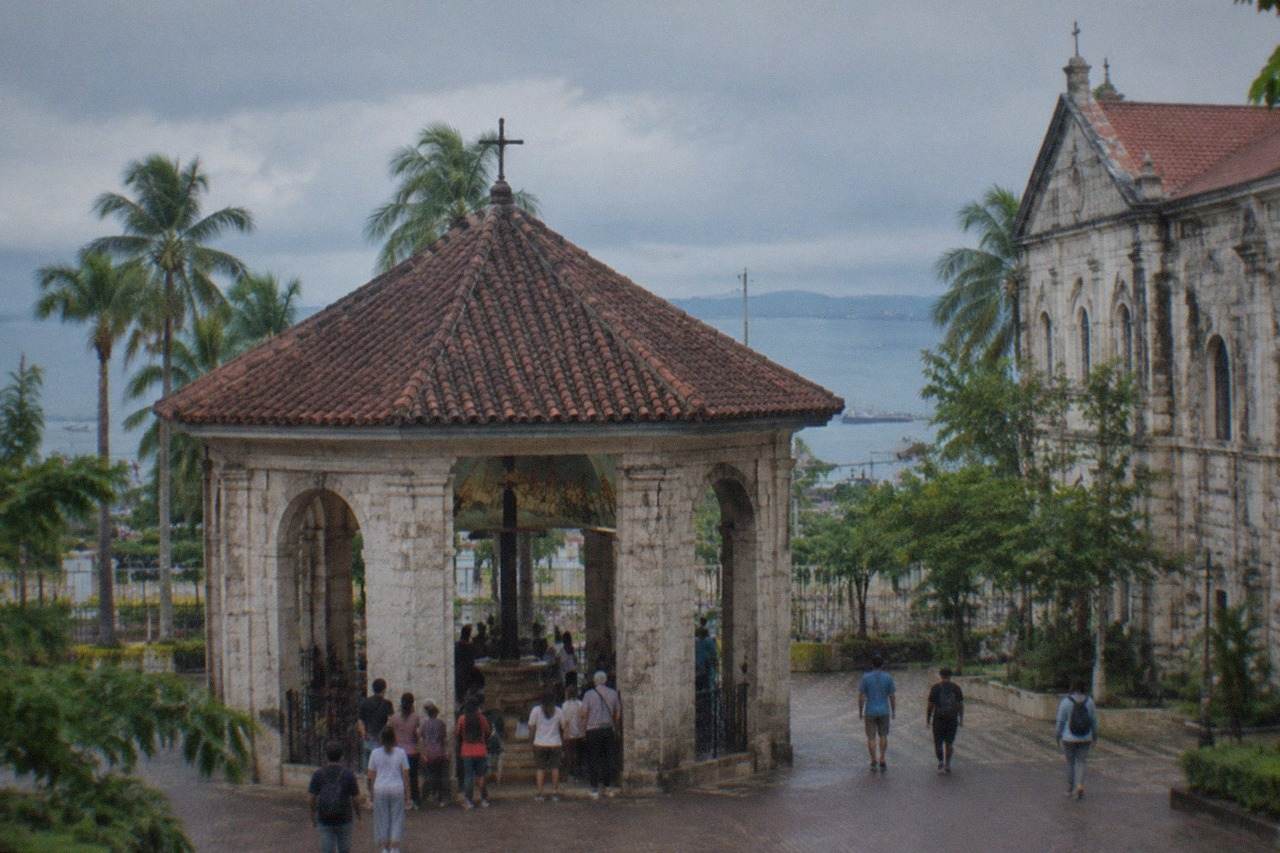
A wooden cross planted, by tradition, in April 1521 stands today inside an octagonal stone pavilion beside the Basilica Minore del Santo Niño in downtown Cebu City, the oldest city in the Philippines and the place where Christianity first took root in the country.
Short answer
Magellan's Cross is a free heritage site in downtown Cebu City, Philippines, generally open from about 8 AM to 6 PM daily. Tradition dates the cross to April 1521, when Ferdinand Magellan's expedition reached Cebu. It stands in a stone pavilion beside the Basilica Minore del Santo Niño, at the heart of a colonial heritage core you can cover on foot.
Inside a small octagonal pavilion in downtown Cebu City, on the island of Cebu in the Central Visayas region of the Philippines, stands the wooden cross that tradition links to Ferdinand Magellan's expedition of April 1521. Magellan's Cross is the most widely recognized symbol of the arrival of Christianity in the country, it costs nothing to visit, and it stands beside the Basilica Minore del Santo Niño in the heart of the oldest city in the Philippines. This guide covers the history, the opening hours, the fees at the sites around it and the practical details of a visit, with every figure drawn from verified sources.
What Is Magellan's Cross In Cebu And Why Is It Famous?
Magellan's Cross is a wooden cross displayed in an open-sided stone pavilion beside the Basilica Minore del Santo Niño in downtown Cebu City, Philippines. Tradition dates its planting to April 1521, when Ferdinand Magellan's expedition reached Cebu and the local ruler Rajah Humabon accepted baptism alongside Queen Juana. Entry is free, the site generally opens around 8 AM and closes around 6 PM, and the cross has become the most recognized symbol of the introduction of Christianity to the Philippines.
The story begins with the expedition itself. Magellan's fleet reached Cebu in early April 1521, with 7 April the date most often cited from the surviving accounts. Within weeks, Rajah Humabon, his queen Hara Amihan, remembered in Philippine history as Queen Juana, and many of their followers accepted baptism, and the expedition gave the queen the wooden image of the Santo Niño, a Flemish-carved figure about eleven inches tall that still anchors devotion at the Basilica next door. A cross was planted to mark the arrival of the faith, and tradition cites either 14 or 21 April for the event.
The triumph was short-lived for Magellan himself. On 27 April 1521, at the Battle of Mactan across the channel, forces under the chieftain Lapu-Lapu defeated and killed him. The Spanish presence lapsed for more than four decades until the Legazpi-Urdaneta expedition landed on 28 April 1565, found the Santo Niño image in a native house, and founded the Church of the Santo Niño on the same day, the origin of the Basilica that stands beside the cross today.
Cebu itself grew from that settlement into the oldest city in the country, formally chartered on 24 February 1937, and the cross remains the fixed point around which the city tells its own story. For visitors, its fame is practical as well as symbolic: it is free, it is central, and it sits at the start of the most walkable heritage route in the Visayas.
| Detail | What to Know |
|---|---|
| What it is | A wooden cross in an octagonal stone pavilion, planted by tradition in April 1521 |
| Location | Beside the Basilica Minore del Santo Niño, downtown Cebu City, Central Visayas, Philippines |
| Opening hours | About 8 AM to 6 PM daily |
| Entrance fee | Free |
| Nearest landmark | Basilica Minore del Santo Niño (immediately adjacent) |
| Significance | Symbol of the introduction of Christianity to the Philippines |
| Time needed | The pavilion is small; visits are typically brief |
Where Is Magellan's Cross Located And How Do You Get There?
Magellan's Cross stands in downtown Cebu City, in the heritage core around the Basilica Minore del Santo Niño. Cebu City is one of the island's three highly urbanized cities, alongside Lapu-Lapu and Mandaue, and all three are administratively independent of Cebu Province. Mactan-Cebu International Airport sits about 13 to 15 km away in Lapu-Lapu City, a drive of roughly 25 to 60 minutes depending on traffic, and the airport's two terminals split domestic and international flights.
The airport side of the trip is straightforward. Terminal 1, the older building from 1990, primarily handles domestic flights, while Terminal 2, opened in 2018, primarily handles international ones, and the two are connected by a walkway. The airport's own transport guide lists the MyBus service between the terminals and SM City Cebu, with fares of P30 (about US$0.5) to P50 (about US$0.8) depending on the destination; buses run from about 7 AM to 10 PM from the airport toward SM City Cebu and from about 6 AM to 9 PM in the other direction. From SM City Cebu, the heritage core is a short onward taxi or ride-hail ride.
Taxis and ride-hailing both work from the terminal doors. Reports on Cebu airport transfers put the white metered city taxi flag-down at about P40 (about US$0.6), with the yellow airport-accredited taxis at about P70 (about US$1.1) to start. Grab lists Cebu among its Philippine service areas and maintains designated pickup points at the terminals, with the app showing the fare before you book. Whatever you choose, agree on a meter or an app price rather than a flat negotiated rate.
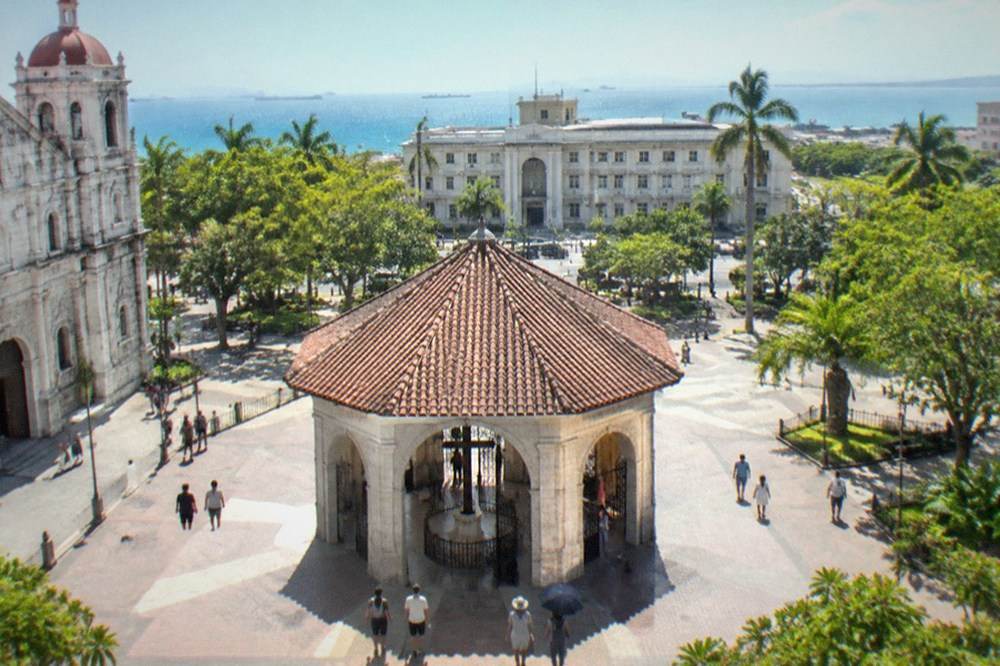
For orientation, the cross sits in the oldest part of Cebu City, the low-rise colonial quarter between the Basilica and the city hall, where most heritage walks begin. Visitors staying on Mactan island for the resorts should budget for the bridge crossings, since the airport island and the city core sit on opposite sides of the Mactan Channel. Once you are in the downtown heritage core, everything in this guide's walking circuit is reachable on foot.
If you would rather fold the heritage core into a wider first day in Cebu, organized day tours cover it alongside the island and highland highlights, and the three below are the combinations visitors most often compare:
Each of those packages departs from the Cebu City area, so a morning at the cross before an early pickup, or a full-day tour with the cross saved for the following morning, is a common pattern.
What Are Magellan's Cross Opening Hours And Entrance Fees?
Magellan's Cross is free to visit and generally open from about 8 AM to 6 PM each day, with no ticket and no booking of any kind. The sites around it set their own charges: the Basilica beside it is free, Fort San Pedro sells tickets at two price levels, the Casa Gorordo Museum and Museo Sugbo each charge modest admission, and the Cebu Taoist Temple asks only for donations. A budget for the whole heritage core stays small, and none of these fees require advance purchase.
The free entry is worth pausing on, because it makes the cross one of the rare headline attractions anywhere that costs literally nothing. There is no combined ticket, no timed slot and no dress code beyond the general modesty expected at an active religious site next door. The pavilion is public and open-sided, so you can see the cross from the outside even outside opening hours, though the interior barrier and the base are best appreciated up close during the day.
The surrounding sites do charge, and the table below gathers the figures in one place. One caution applies to the house museums: after the magnitude 6.9 earthquake off northern Cebu on 30 September 2025, several Cebu City heritage properties, including Casa Gorordo, the Yap-Sandiego Ancestral House and Museo Sugbo, were closed for structural inspection in early October 2025, and their current status should be confirmed before you build a day around them. Museo Sugbo itself reopened on 29 August 2025 after nearly two years of rehabilitation work.
| Site | Entry Fee | Hours |
|---|---|---|
| Magellan's Cross | Free | About 8 AM to 6 PM daily |
| Basilica Minore del Santo Niño | Free | Generally 6 AM to 6 or 7 PM, varies by day |
| Fort San Pedro | P50 (about US$0.8) regular, P40 (about US$0.6) students and seniors | Roughly 8 AM to 7 PM daily |
| Casa Gorordo Museum | About P100 (about US$1.6) regular, P50 (about US$0.8) students and seniors | Monday to Saturday, about 9 AM to 5 PM |
| Museo Sugbo | P50 (about US$0.8) general, P25 (about US$0.4) students and seniors | Monday to Friday, about 9 AM to 4 or 5 PM |
| Cebu Taoist Temple | Free, donations welcome | Daily, hours vary, confirm on site |
Two practical notes round this out. First, the student and senior discounts at Fort San Pedro and the museums generally require a valid ID, so carry one if it applies to you. Second, the fees above are the figures at the time of writing, and local governments do revise them, so treat the table as a planning range and check the posted rates at the gate. If you would rather have a guide handle the heritage core in one organized pass, a small-group city tour is the usual solution:
The operator's live listing carries the current price, the departure point and the cancellation terms, and the booking is flexible if your plans shift with the weather.
What Will You See Inside The Magellan's Cross Pavilion?
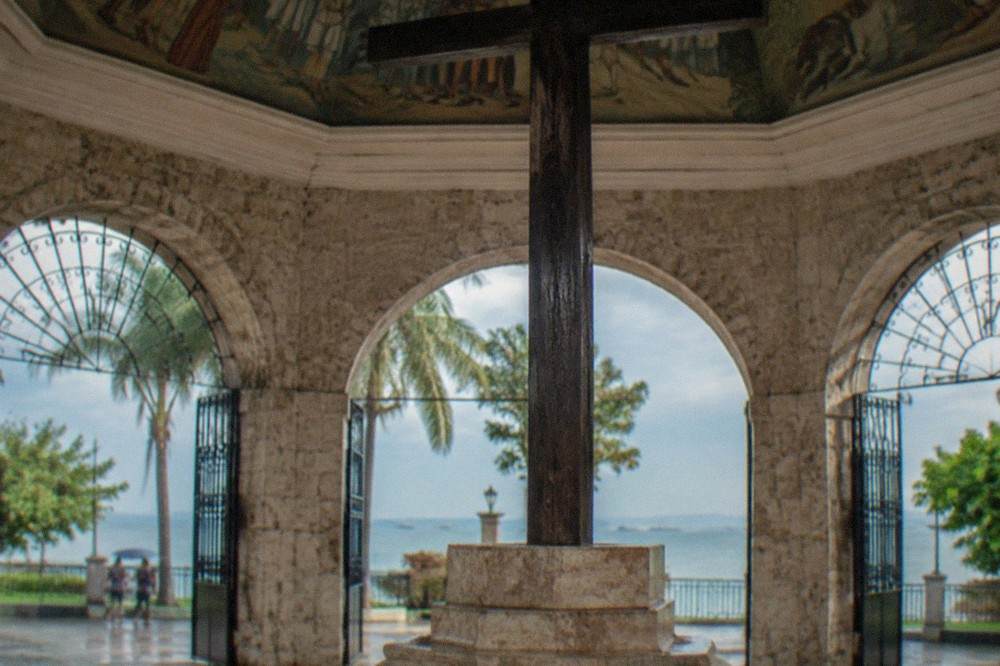
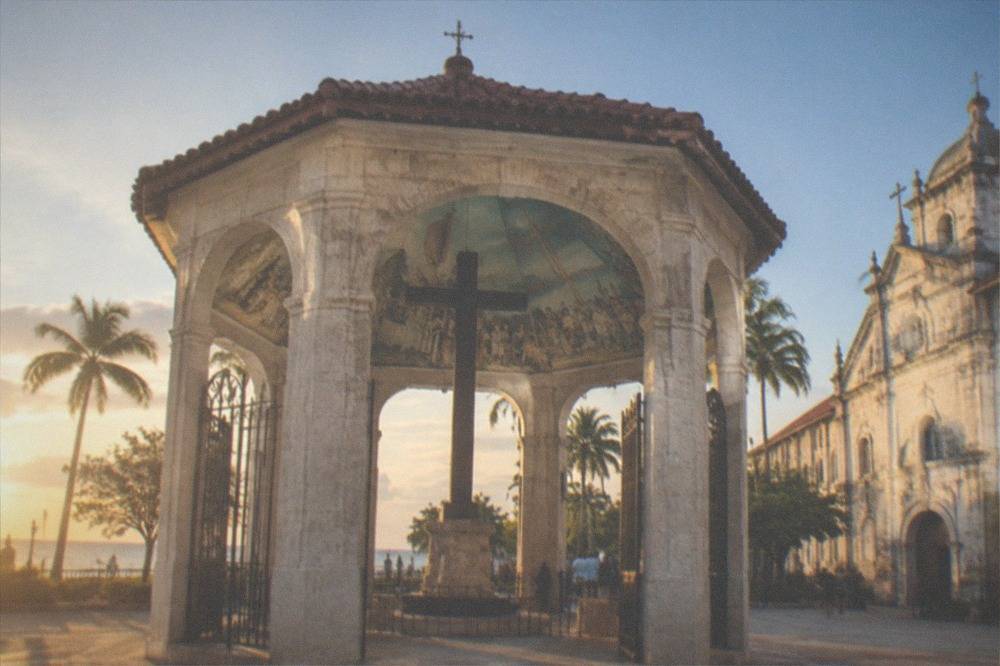
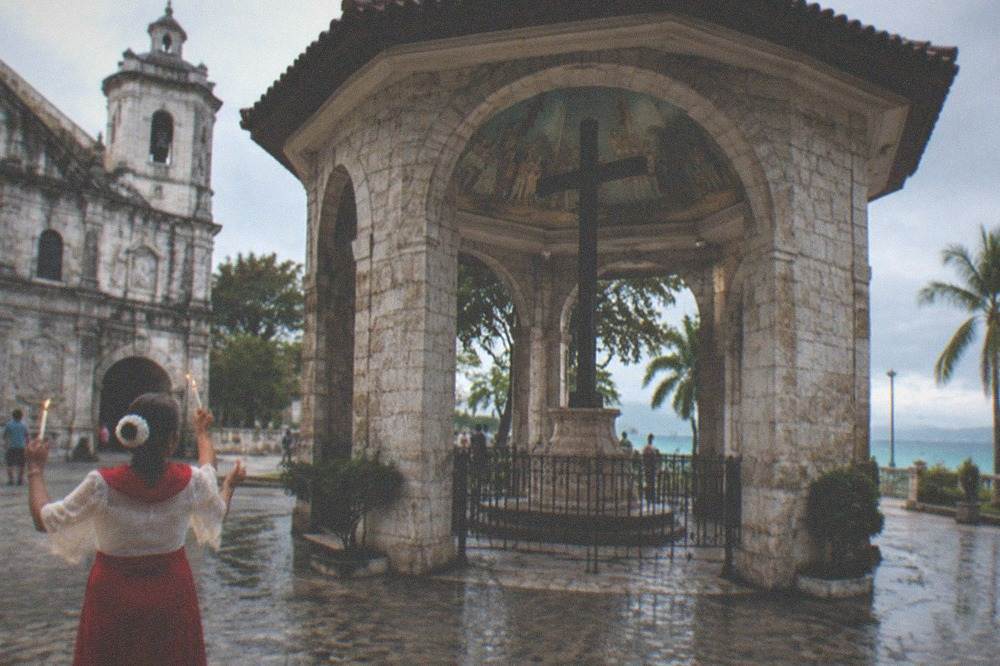
Inside the pavilion you will see the cross itself, a dark timber shaft set on a raised base inside an octagonal, open-sided kiosk, together with a painted ceiling whose panels retell the 1521 story of the planting of the cross and the first baptisms on Cebu. The pavilion is compact and free-flowing, with no barrier beyond the base itself, and candle sellers and attendants traditionally gather at the entrance, where devotees have long performed the Sinulog prayer dance with lighted candles.
The structure is the classic image of Cebu: a stone-and-mortar kiosk in the shape of an octagon, open on all sides, with a small dome above and the cross standing on a stepped plinth at the center. Look up as you enter, because the ceiling mural is a detail easily missed in the rush to photograph the cross. Its painted panels carry the 1521 narrative, from the expedition's arrival and the planting of the cross to the baptism of Rajah Humabon and Queen Juana, the same events that the Basilica's own chronicles document.
At the entrance you will usually find the candle sellers, an unbroken tradition around the site. Devotees buy candles and hand them to the older women who dance the Sinulog, a prayer dance performed in two steps forward and one back, in honor of the Santo Niño. Watching it happen is one of the quiet highlights of a visit, and it connects the pavilion to the festival that takes over the city every January.
Photography is unrestricted in practice, and the pavilion is at its most photogenic in the morning when the light comes through the open sides and catches the ceiling panels. Crowds thin noticeably on weekday afternoons, while Sunday mornings bring the Basilica's faithful spilling across the plaza. There are no facilities inside the kiosk itself, no ticket desk and no shop; everything practical, from water to restrooms, lives in the Basilica complex and the surrounding blocks.
Is The Cross Inside The Pavilion The Original From 1521?
No source settles the question, and honest guides treat it as open. The Basilica's own history pages record that a cross was planted in April 1521, with the 14th and the 21st both cited in tradition, and that the gazebo-style pavilion followed much later, with 1834 the date given for the present structure. Whether the timber on display is the original, a repair of it or a full replacement has been debated for generations, and the Basilica's chronicles do not settle it either way.
The verifiable anchor points are firm, and they are worth knowing before you stand in front of the cross. The expedition's arrival, the baptisms, the gift of the Santo Niño image and the planting of the cross all belong to April 1521. Magellan's death at Mactan followed within the same month. The Spanish return under Legazpi on 28 April 1565 re-established the settlement, and the Santo Niño image was found on the day of landing, an event the Basilica still commemorates as the Kaplag. More of these guides are collected on Cebu Travel Guide.
The centuries after that shaped what you actually see. The present Basilica structure was built between roughly 1735 and 1740, and the pavilion that houses the cross is dated to 1834 in the accounts drawn from the Basilica's own records, meaning the protective kiosk is itself nearly two centuries old. The widely told account on site is that the original cross was encased in a protective outer shell of harder timber to preserve it from relic hunters and the tropical climate, which is why the visible shaft is thicker than a 1521 ship's cross would be. That account is tradition rather than certified fact, and the Basilica's pages do not claim it as history.
The honest position, and the one this site takes, is that the cross's power does not depend on the dendrology. What is documented is the planting in 1521, the continuous veneration at this spot, and a pavilion that has sheltered the site since 1834. The timeline below puts the verified dates in order.
| Date | Event |
|---|---|
| Early April 1521 | Magellan's fleet reaches Cebu; 7 April is the date most often cited |
| April 1521 | A cross is planted, tradition citing 14 or 21 April; Rajah Humabon and Queen Juana accept baptism and receive the Santo Niño image |
| 27 April 1521 | Battle of Mactan; Lapu-Lapu's forces defeat and kill Magellan |
| 28 April 1565 | Legazpi-Urdaneta expedition lands; the Santo Niño image is found and the Church of the Santo Niño is founded the same day |
| 1735 to 1740 | The present Basilica structure is built |
| 1834 | The gazebo-style pavilion housing the cross is erected, per accounts drawn from the Basilica's records |
| 24 February 1937 | Cebu becomes a chartered city, the oldest in the country |
| 15 October 2013 | The magnitude 7.2 Bohol earthquake damages the Basilica's belfry; restoration follows in the years after |
What Can You Visit Within Walking Distance Of Magellan's Cross?
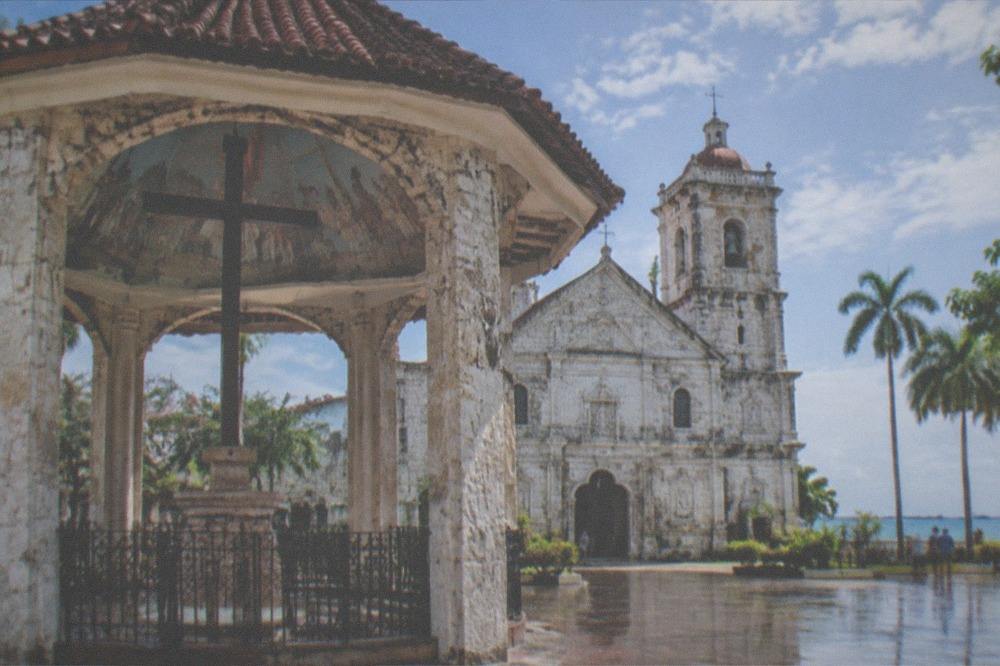
The cross sits inside Cebu City's compact colonial heritage core, where the Basilica Minore del Santo Niño shares the plaza area with the Cebu Metropolitan Cathedral, the Yap-Sandiego Ancestral House and the Casa Gorordo Museum stand in the old Parian district, Fort San Pedro guards the waterfront side, and the historic downtown commercial stretch of Colon Street runs through the same district. These stops form one coherent walking circuit, and the whole cluster is what most first-time visitors treat as base camp for a city stay.
Start where you are. The Basilica, immediately beside the pavilion, is the home of the Santo Niño image given in 1521 and rediscovered in 1565, and its interior is the most moving space in the city for many visitors. The Cebu Metropolitan Cathedral sits a short distance across the same quarter, a heavier, neoclassical building that anchors the archdiocese. Both are free to enter, with the Basilica asking for modest dress as an active place of worship.
From there, the Parian district holds the old houses. The Yap-Sandiego Ancestral House is a colonial-era residence built of traditional materials, and the Casa Gorordo Museum presents a restored 19th-century merchant home, charging about P100 (about US$1.6) for regular admission on a Monday-to-Saturday schedule. Neither fee for Yap-Sandiego is verified in our sources, so check the posted rate at the door, and remember the post-earthquake inspection caveat above. The Cebu Taoist Temple, free and donation-supported, sits uphill from the core and rounds out the religious story of the city with its Chinese-Filipino chapter.
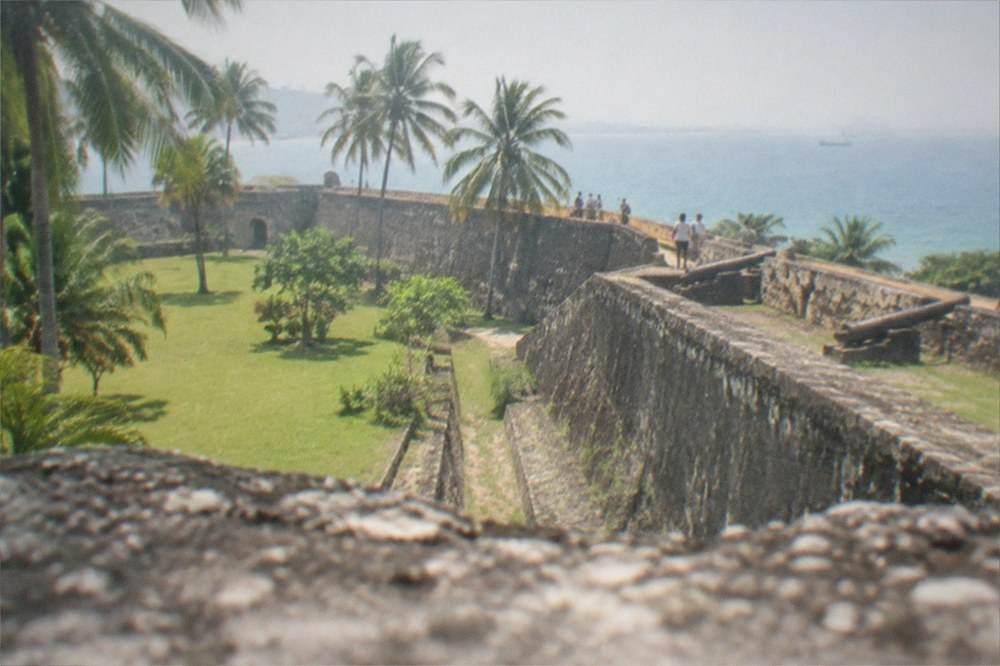
On the waterfront side stands Fort San Pedro, the oldest triangular bastion fort in the country, started in 1565 under Legazpi and reaching its present stone form by 1738. At P50 (about US$0.8) regular and P40 (about US$0.6) for students and seniors, it is the one substantial ticket on the circuit, and the museum inside tells the Spanish-era story the cross begins. The suggested order below keeps the walk logical.
| Order | Stop | Why It Belongs on the Walk | Entry |
|---|---|---|---|
| 1 | Basilica Minore del Santo Niño | Home of the Santo Niño image given in 1521, beside the cross | Free |
| 2 | Magellan's Cross | The 1521 planting site in its 1834 pavilion | Free |
| 3 | Cebu Metropolitan Cathedral | The city's main Catholic cathedral in the same quarter | Free |
| 4 | Yap-Sandiego Ancestral House | Colonial-era ancestral house in the Parian | Fee not verified, check on site |
| 5 | Casa Gorordo Museum | Restored 19th-century house museum | About P100 (about US$1.6) |
| 6 | Fort San Pedro | Oldest triangular bastion fort in the country | P50 (about US$0.8) regular, P40 (about US$0.6) students and seniors |
If the circuit leaves you with a free afternoon, the wider list of things to do in Cebu stretches from this core to the mountains and the outer islands, and a guided pass over the same ground is an easy way to compress it:
A small-group format with a local guide is the common choice for travelers who want the history explained rather than just walked past, and the listing carries the current details.
When Is The Best Time To Visit Magellan's Cross In Cebu?
The calmest hours are weekday mornings soon after the roughly 8 AM opening, before tour groups arrive and before the Basilica's midday masses draw crowds. PAGASA's national rule gives Cebu a dry season from December to May and a rainy season from June to November, and the Mactan station's 1991-2020 normals show 1,685.0 mm of annual rain over 138 rain days at a mean of 28.1°C. January adds the Sinulog grand parade on the third Sunday: 18 January in 2026 and 17 January in 2027.
The weather logic is simple. Cebu is tropical, never cold, and the choice between months is a choice between dry and wet rather than warm and cool. The monthly rainfall normals below, from the PAGASA Mactan station, show the shape of the year: April is the driest month at 48.1 mm, October the wettest at 194.8 mm, and the June-to-November block carries the heaviest totals. The pavilion itself is one of the better rainy-day stops in the city, since the visit is brief and the Basilica next door offers cover.
| Month | Typical Rainfall (mm) |
|---|---|
| January | 105.2 |
| February | 69.6 |
| March | 58.6 |
| April | 48.1 |
| May | 95.0 |
| June | 175.6 |
| July | 192.9 |
| August | 143.5 |
| September | 179.6 |
| October | 194.8 |
| November | 161.9 |
| December | 139.7 |
The figures are monthly normals from the 1991-2020 series for the Mactan station, and the annual total for the same station is 1,685.0 mm in the climatological normals publication. Typhoon season runs June to November with peak activity roughly July to October, and while Cebu sits south of the main Philippine typhoon belt, the November 2025 Typhoon Tino flooding was a sharp reminder that the wet season deserves respect. If you travel in those months, keep a flexible day or two in the plan.
January is the special case. The Sinulog festival, built around the Santo Niño, culminates in a grand parade on the third Sunday of the month, and the whole heritage core around the cross becomes the festival's spiritual center. The Basilica restored its full pre-pandemic mass schedule in November 2024, which means English masses at 8 AM and 5:30 PM on weekdays and Saturdays, hourly masses on Fridays, and a full slate from early morning on Sundays and holy days. Expect crowds at those times, and expect the parade weekend to fill the city.
| Year | Sinulog Grand Parade | Main Venue |
|---|---|---|
| 2026 | 18 January | Cebu City Sports Center |
| 2027 | 17 January | Cebu City Sports Center |
Which Guided Tours Pair Well With Magellan's Cross?
The cross needs no guide and no ticket, but it pairs naturally with organized days out across Cebu: a small-group city tour covers the heritage core, a canyoneering package at Kawasan Falls adds the province's adventure headline, an island-hopping boat trip off Mactan covers the sandbars and marine sanctuaries, and a highlands half-day reaches the temples and gardens above the city. All four run as bookable day tours from the Cebu City area.
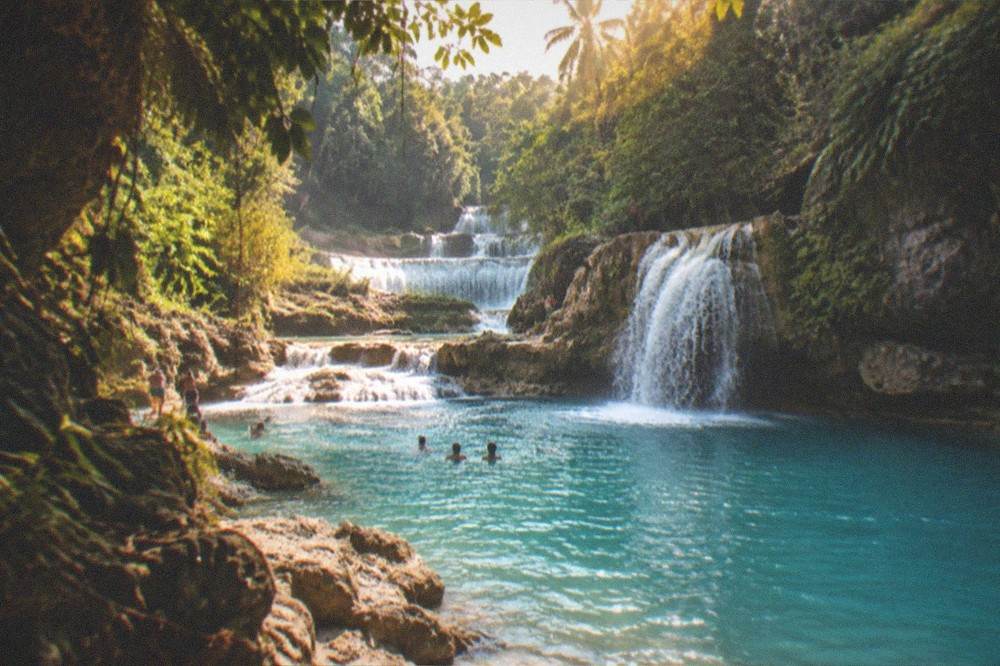
The adventure pairing is the most popular extension, and Kawasan Falls in Badian is its center. The Level 1 entrance for swimming runs about P200 (about US$3.2) per person, while the full canyoneering experience with a Badian-accredited guide runs roughly P1,500 (about US$24) to P2,000 (about US$32) per person, covering the guide, gear, fees, transfers and lunch. Note two current rules: the Alegria canyoneering route remains suspended, so only the Badian route operates, and cliff jumping is banned at the main Level 1 basin. A phased rehabilitation program at the falls began in June 2026, and the site stayed open throughout.
The half-day canyoneering package from Moalboal is the version most often booked from Cebu City, and its listing on our Kawasan canyoneering page carries the live price and rating. Check availability if the falls day appeals, since departures fill first on dry-season weekends.
The water pairing works the other direction, out from the city across the channel. Island hopping off Mactan covers the Gilutungan, Caohagan and Nalusuan marine sanctuaries, with sanctuary fees of roughly P150 (about US$2.4) to P300 (about US$4.8) per island and a Lapu-Lapu environmental fee of P100 (about US$1.6) for foreign tourists, cut to P20 (about US$0.3) for local tourists by a July 2025 amendment. The sardine run at Moalboal and the whale sharks at Oslob, the latter at P1,000 (about US$15.9) for foreign visitors and P500 (about US$8.0) for locals, are the two signature marine sights of the south, and both are commonly combined with the heritage core on longer itineraries.
The highlands pairing stays closest to home. The hills above Cebu City hold the Temple of Leah at about P120 (about US$1.9) on weekdays and P150 (about US$2.4) on weekends, though its hours were shortened from April 2026 and should be confirmed, Tops Lookout open around the clock at P100 (about US$1.6) regular and P70 (about US$1.1) for seniors and visitors with disabilities, and the Sirao Flower Garden at about P100 (about US$1.6). A half-day highlands tour is the standard way to see all three without negotiating uphill transport.
Whichever direction you choose, the pattern holds: the cross and its heritage core cost almost nothing and anchor the downtown, while the organized day tours carry you to the falls, the islands and the ridgelines. For a full comparison of the three most-booked combinations, the shortlist below gathers that same trio:
Common Questions About Magellan's Cross In Cebu
Is Magellan's Cross free to visit?
Yes. Entry to the pavilion is free, with no ticket, no booking and no guide required. The surrounding heritage sites set their own fees, but the cross itself costs nothing at any hour it is open.
What are Magellan's Cross opening hours?
The site is generally open from about 8 AM to 6 PM daily. Hours are not published in an official schedule, so treat the range as a guide and expect the pavilion to be viewable from outside even when the interior barrier is not staffed.
Is Magellan's Cross the original cross from 1521?
No source settles it. The Basilica's own history records the April 1521 planting and the 1834 pavilion, while the tradition told on site says the original timber was encased in a protective outer shell. Historians treat the question as open, and the site's significance does not depend on the answer.
Where is Magellan's Cross located?
In downtown Cebu City, Philippines, in the plaza area immediately beside the Basilica Minore del Santo Niño, in the heart of the city's colonial heritage core and roughly 13 to 15 km from Mactan-Cebu International Airport.
Can you take photos inside the pavilion?
Yes, visitors photograph the cross and the painted ceiling freely, and the pavilion's open sides make morning the best light. Be considerate during masses next door at the Basilica, where a more restrained approach is expected.
When is Sinulog, and does it affect a visit?
The Sinulog grand parade falls on the third Sunday of January, 18 January in 2026 and 17 January in 2027, with the Cebu City Sports Center as the main venue. The heritage core around the cross is the festival's spiritual center, so expect very large crowds in the days around the parade.
Magellan's Cross rewards almost no planning: arrive in the morning, walk in for free, look up at the ceiling, and step out into the oldest neighborhood in the oldest city in the Philippines, with the Basilica at your shoulder and four centuries of Cebu's story within a short stroll.