What Is The Most Famous Waterfall In Cebu?
Kawasan Falls in Badian is the most famous waterfall in Cebu, Philippines. This guide covers entrance fees, canyoneering rules, 2026 rehabilitation status and other Cebu waterfalls.
Kawasan Falls in Badian, on the island of Cebu in the Central Visayas region of the Philippines, is the waterfall people mean when they talk about a Cebu waterfall trip. It is a three-tiered cascade of strikingly turquoise water inside the jungle of Badian in southern Cebu Province, roughly a half-day journey from Cebu City, and it has become the anchor of the island's adventure-tourism scene through the canyoneering routes that end in its main basin. This page answers the question directly, then covers what it costs, what changed in 2025 and 2026, and which other Cebu waterfalls deserve a place on your list.
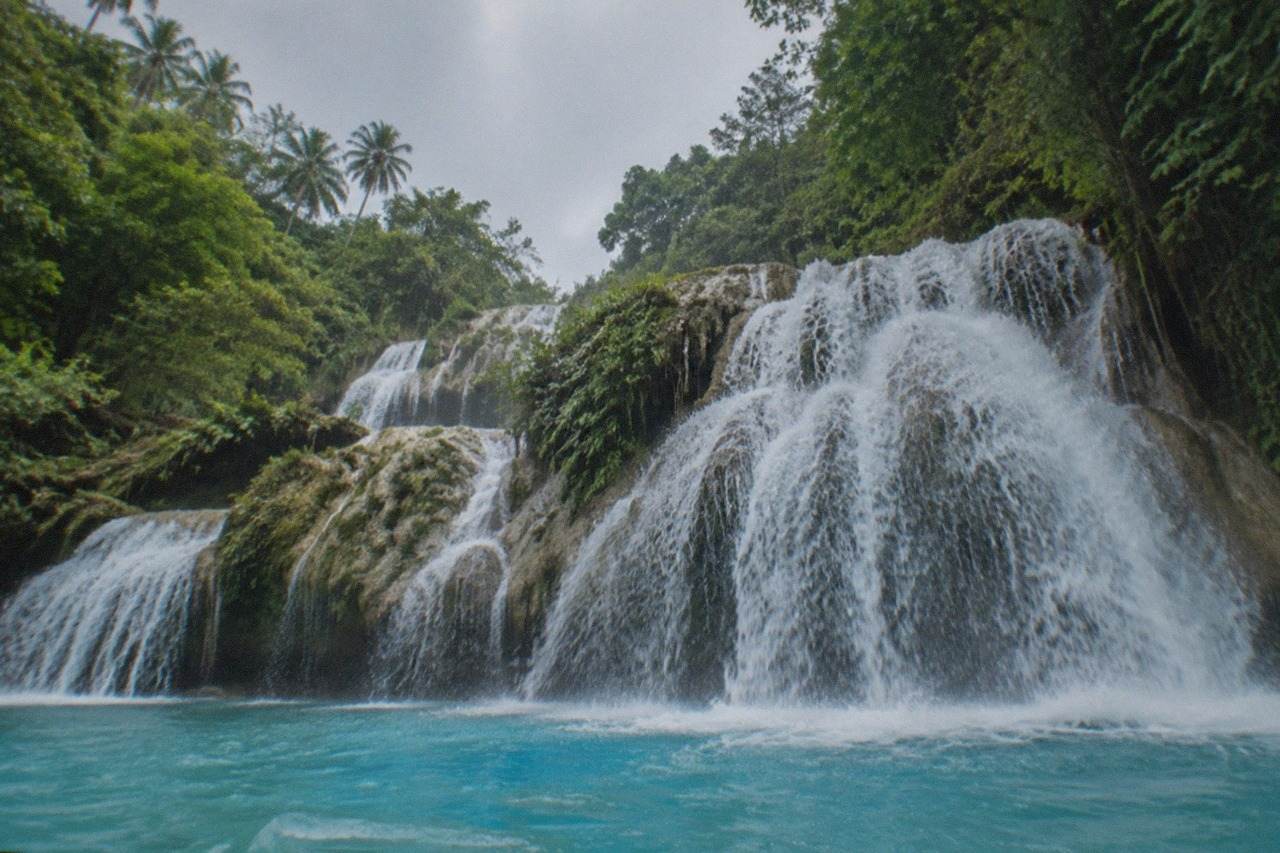
Why Kawasan Falls Is The Waterfall Cebu Is Famous For
Kawasan Falls in Badian is the most famous waterfall in Cebu because it combines a wide, swimming-friendly turquoise basin with the island's single biggest adventure activity: canyoneering down the Badian river gorge, which finishes at the falls. No other Cebu waterfall appears on as many tour itineraries, and none has produced as many of the jump-and-swim videos that spread the island's name online. The falls sit inside a protected area regulated by the Badian municipal government.
The falls are usually described in three levels. Level 1, the main basin with the big curtain of water and the bamboo rafts, is the part open to everyone who pays the entrance fee and walks in. The upper levels are reachable only as part of a canyoneering run, which is a deliberate policy: it keeps casual crowds concentrated at Level 1 and leaves the gorge above to guided groups. The Municipality of Badian regulates the canyoneering operation, and only the Badian route is currently authorised, the Alegria route has been suspended through 2025 and 2026 on safety grounds.
That municipal regulation is the reason the site still functions at all under its visitor load. Guides are accredited, gear and life jackets are mandatory, and in 2026 the town enacted a revised canyoneering ordinance covering conduct on the route. One guide was suspended in September 2026 under that ordinance, which tells you the rules have teeth. Cliff jumping at the main Level 1 basin is banned, and a rope barrier separates walk-in visitors from the raft area.
For planning the wider trip, our pieces on what Cebu is known for and on the best month to visit Cebu cover the context around a waterfall day, since river conditions and weather matter more here than almost anywhere else on the island.
What Is The Most Famous Waterfall In Cebu?
The most famous waterfall in Cebu is Kawasan Falls in Badian, a multi-tiered turquoise cascade about a half-day trip south of Cebu City, and it is the endpoint of the island's regulated canyoneering route. It outranks every other Cebu waterfall in visitor numbers and international recognition, and it is the one that appears on the overwhelming majority of organised tours from Cebu City and Moalboal. Its fame rests on two things together: the unreal blue of the water and the adrenaline route that finishes in it.
The question is worth asking precisely because Cebu has dozens of waterfalls, and several of them are genuinely beautiful. Tumalog Falls near Oslob is a curtain of fine white threads falling over mossy rock, and it is usually bundled into whale-shark itineraries. Aguinid Falls in Samboan is a multi-level climb up a limestone gorge. Dao Falls in Inambangan and the falls around Catmon and Tabuelan each have their followings. But none of them has the combination that made Kawasan the poster waterfall of the province: size, swimmability, accessibility and a whole adventure industry built on top of it.
Fame has a cost, and it is honest to name it. Kawasan is busy, especially on weekends and in the peak dry months when tour vans from Cebu City arrive in waves. The third Wednesday of every month is a cleanup day at the site, a schedule the community keeps to manage the litter and wear that heavy footfall produces. If your image of a famous waterfall is a solitary one, arrive on a weekday, go early, or accept that you are visiting Cebu's most popular natural attraction at the height of its popularity.
If you are building a trip around it, the falls pair naturally with the south-coast highlights covered in our guide to the number one tourist spot in Cebu, and with the whale-shark costs explained at what an Oslob swim costs, since many travellers combine Oslob, Tumalog and Kawasan into one southern loop.
How Much Does Kawasan Falls Cost To Visit?
Walking in to swim at Level 1 costs a modest per-person entrance and environmental fee, while the full guided canyoneering run costs considerably more, in a range reported by the town's own operators and local press, with the guide, gear, environmental fees, the habal-habal transfer and lunch all included. Those are the two realistic ways to visit. There is no single official price list published by the municipality, so treat the figures in the table below as the reported range rather than a fixed tariff.
In numbers, the Level 1 entrance runs about P200 (about US$3.2) per person for swimming only, while the Badian canyoneering package runs roughly P1,500 (about US$24) to P2,000 (about US$32) per person. The fee structure matters because it is not one price but several stacked ones. A swimmer pays the Level 1 entrance. A canyoneer pays that plus the activity package, and the package price varies with what the operator includes. SunStar reported in October 2025 that tourists typically pay around P2,000 (about US$32) for the full run, while guide sites list P1,500 (about US$24) as the floor, which is why this site prints the range rather than a single number.
| Item | Typical cost | Notes |
|---|---|---|
| Kawasan Falls Level 1 entrance | P200 (about US$3.2) per person | Swimming only, walk-in access |
| Canyoneering package (Badian route) | P1,500 (about US$24) to P2,000 (about US$32) per person | Guide, gear, fees, transfer, lunch included |
| Tumalog Falls entrance (for comparison) | P50 (about US$0.8) per person | Near Oslob, often combined with whale sharks |
| Osmeña Peak registration (for comparison) | P50 (about US$0.8) to P100 (about US$1.6) per person | Hike, not a waterfall, but commonly paired with Kawasan |
Two rules protect both the fee and the visitor. First, only the Badian canyoneering route is running; anyone selling you the Alegria route in 2026 is selling something that is not currently authorised. Second, life jackets are mandatory and the canyoneering session is time limited, both of which are municipal rules rather than operator preferences. Book through an established operator or accept the queue at the registration area in Badian.
Is Kawasan Falls Open In 2026?
Yes, Kawasan Falls is open in 2026, including during a phased multimillion-peso rehabilitation programme that began around mid-June 2026 after typhoon damage, with the site remaining open throughout the works. Operations have paused only for short weather and safety events, including a rockfall in late October 2025 that suspended canyoneering for two days before inspectors cleared the route. Check locally before you travel in the rainy season, June to November, when flash closures happen.
The rehabilitation is the biggest change at the site in years. Typhoon Tino (international name Kalmaegi) hit Cebu in early November 2025 with record rainfall and severe flooding across the province, and the Manila Times reported in June 2026 that the P110,000,000 (about US$1,752,820) rehabilitation effort at Kawasan would proceed while the falls stayed open to visitors. That is a deliberate choice: the site is the economic backbone of Barangay Matutinao, and closing it would idle the guides, habal-habal drivers and food stalls that depend on it.
The safety record deserves plain language. On 23 October 2025 a rockfall on the canyoneering route injured a guide, and the activity was suspended from 26 October while the route was inspected, reopening on 28 October. It was an isolated event, and the response, a two-day closure and inspection, is what a well-regulated site looks like. Weather closures are more common than geology closures: heavy rain shuts canyoneering regularly, sometimes for days, while the Level 1 basin often stays open to swimmers.
For timing, PAGASA's national rule puts the rainy season from June to November and the dry season from December to May, with the wettest months at the Mactan station being October and July. Water volume at Kawasan is dramatically higher after rain, and the turquoise colour is at its most photogenic in the dry months.
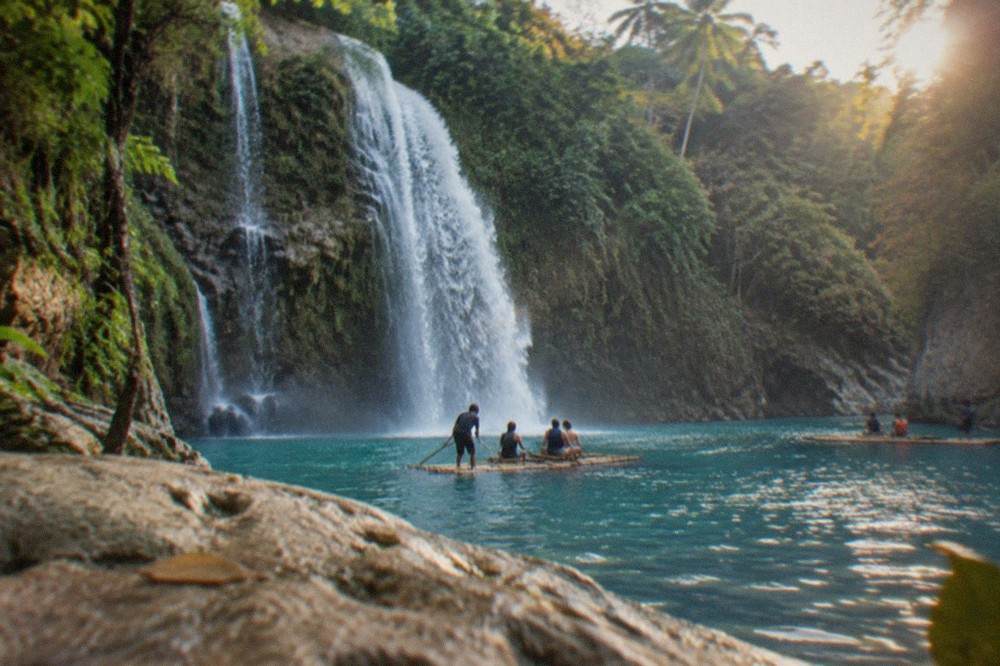
Which Other Cebu Waterfalls Are Worth The Trip?
After Kawasan, the Cebu waterfalls most worth visiting are Tumalog Falls near Oslob, a fine white curtain of water usually paired with whale-shark watching, and the multi-level Aguinid Falls in Samboan further down the south coast. Tumalog charges a small per-person entrance fee and sits a short habal-habal ride from the whale-shark area of Tan-awan. Neither matches Kawasan for scale, but both are far quieter, and both fit the same southern-Cebu route.
Tumalog's entrance runs about P50 (about US$0.8) per person, and it is the practical second waterfall for most travellers because it is already on the Oslob itinerary. The whale-shark interaction in Tan-awan runs roughly 6 AM to noon, and Tumalog is close enough that tours routinely add it in the same morning. The falls spread across a wide mossy wall rather than dropping into a deep pool, which makes it a photographic stop more than a swimming one.
The southern loop logic is worth spelling out. A traveller with two or three days commonly does Oslob and Tumalog on one day, then Kawasan and canyoneering from Moalboal on another, because Moalboal is the natural base for the Badian side. Our comparison of Oslob versus Moalboal and the piece on where to stay for a Cebu beach cover the trade-offs. If you are weighing Cebu against its neighbours first, the relative costs of Bohol make a common starting point for that comparison.
After a day on the river, for most travellers nothing tops Cebu's food, and the market walk below is the easiest way into it. The city's lechon and market stalls are covered in detail in our answer on the most famous food in Cebu, and Cebu Travel Guide keeps the full picture of the island in one place.
Common Questions About Cebu Waterfalls
What is the most famous waterfall in Cebu?
Kawasan Falls in Badian is the most famous waterfall in Cebu, a multi-tiered turquoise cascade that serves as the endpoint of the island's regulated canyoneering route. It draws the majority of waterfall-bound visitors to the province.
Can you swim at Kawasan Falls without canyoneering?
Yes. The Level 1 entrance fee of about P200 (about US$3.2) per person covers walk-in access and swimming in the main basin. The upper levels are reachable only with a canyoneering guide, and cliff jumping at the Level 1 basin is banned.
How much does canyoneering at Kawasan Falls cost?
Roughly P1,500 (about US$24) to P2,000 (about US$32) per person through a Badian-accredited operator, including guide, gear, environmental fees, the habal-habal transfer and lunch. The municipality does not publish a single official price list, so treat this as the reported range.
Is Kawasan Falls open during the 2026 rehabilitation?
Yes. The phased P110,000,000 (about US$1,752,820) rehabilitation that began around mid-June 2026 has proceeded with the site remaining open, because the falls anchor the local economy of Barangay Matutinao.
Which other waterfalls in Cebu are worth visiting?
Tumalog Falls near Oslob, at about P50 (about US$0.8) per person, is the most common second stop, usually bundled with whale-shark watching. Aguinid Falls in Samboan and the falls of Catmon and Tabuelan on the north coast are quieter alternatives.
When is the best time to visit Kawasan Falls?
The dry season, December to May under PAGASA's national classification, offers the clearest turquoise water and the lowest chance of activity closures. Canyoneering pauses for heavy rain at any time of year, and the site holds a cleanup day on the third Wednesday of each month.
Whether you walk in for a swim or commit to the full canyoneering descent, Kawasan Falls earns its fame honestly, and the rest of Cebu's waterfalls make a fine supporting cast for anyone with the days to spare.