What Is The Number One Tourist Spot In Cebu?
The number one tourist spot in Cebu is Magellan's Cross in Cebu City, the 1521 landmark at the heart of the Philippines' oldest city. Here is why it tops every list, and what ranks just behind it.
Ask ten guides for the number one tourist spot in Cebu, an island province in the Central Visayas region of the Philippines, and most will point to the same small pavilion in downtown Cebu City. Magellan's Cross, the wooden cross planted by Ferdinand Magellan's expedition in April 1521, anchors the historic quarter of the oldest chartered city in the country and draws a steady stream of visitors every day of the year. It costs nothing to see, it sits within walking distance of half a dozen other major landmarks, and no other single site in the province carries the same weight in Philippine history. This page explains why it tops the list, what sits just behind it, and how to build a day around the answer.
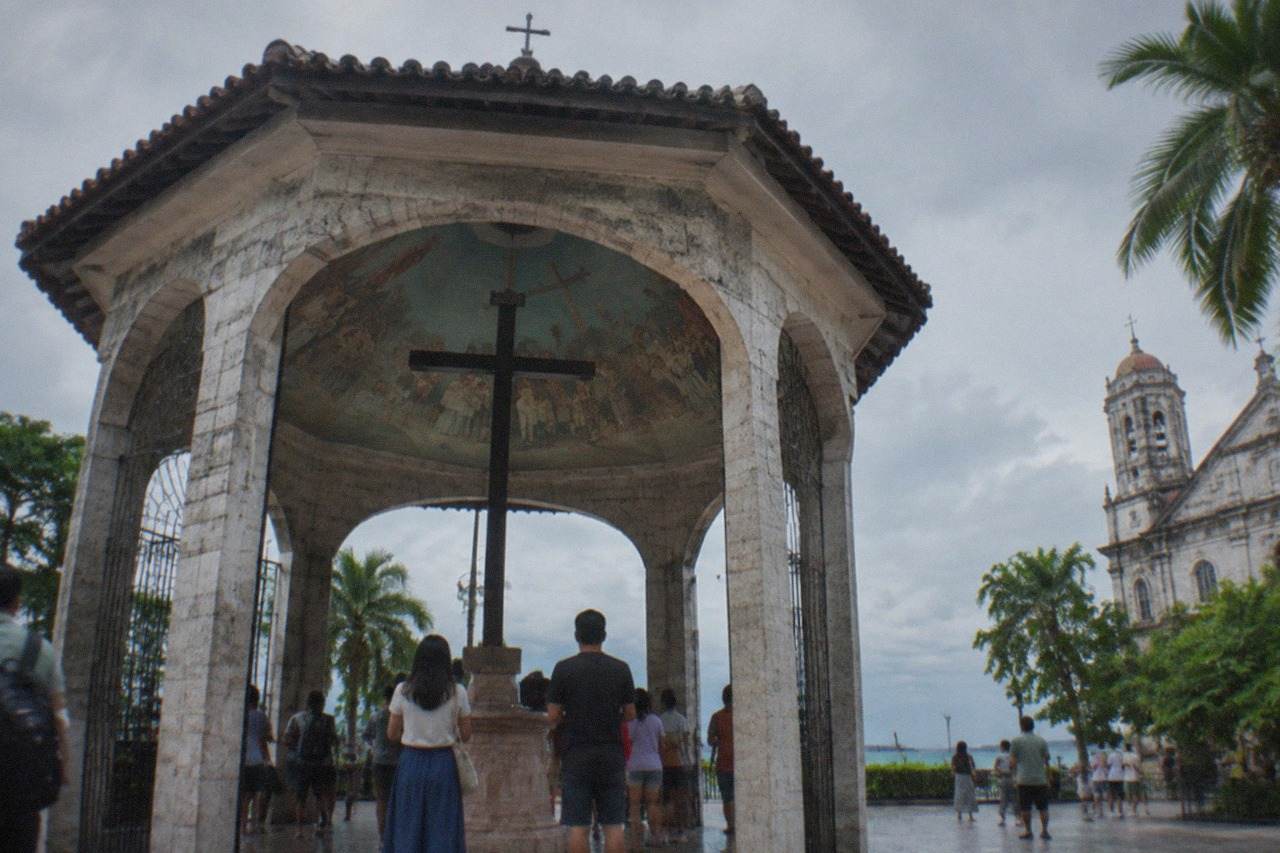
What Is The Number One Tourist Spot In Cebu?
The number one tourist spot in Cebu is Magellan's Cross in Cebu City, the landmark cross that Magellan's expedition planted in April 1521 after the baptism of Rajah Humabon and Queen Juana. It stands inside an open pavilion on Magallanes Street, entry is free, and it sits a few steps from the Basilica Minore del Santo Niño, making it the natural anchor for any first visit to the province.
The Basilica's own chronicles treat the cross as the physical symbol of the arrival of Christianity in the Philippines, and the site has been a place of pilgrimage for centuries. The wooden cross you see today is housed in a stone pavilion, and tradition holds that the original is encased inside a protective outer shell of tindalo wood. The ceiling above it carries murals of the 1521 planting and the baptism that followed.
Part of the spot's pull is location. Step out of the pavilion and you are inside Cebu City's heritage core: the Basilica Minore del Santo Niño, founded the day the Legazpi expedition landed in 1565, stands a short walk away, and the Basilica's own chronicles record that the Santo Niño image given to Queen Juana in 1521 was rediscovered on that same April day in 1565. Fort San Pedro, the country's oldest triangular bastion fort, lies a few minutes further on. For a fuller picture of everything the province is known for, see what Cebu is known for.
There is no ticket and no queue system to master. Visitors come and go through the open pavilion from morning to early evening, and the site is busiest on Sundays and during the Sinulog season in January, when the Grand Parade, held at the Cebu City Sports Center on the third Sunday of the month, fills the whole downtown area.
Why Does Magellan's Cross Rank First In Cebu?
Magellan's Cross ranks first because no other site in the province matches its combination of history, accessibility and recognition: it marks the 1521 arrival of the expedition, it stands free and open in the heart of Cebu City, and it appears on every official tourism introduction to the province, usually alongside the Santo Niño devotion that grew from the same events.
The dates alone explain the ranking. Magellan's fleet reached Cebu in April 1521, the cross was planted that same month, and the Battle of Mactan on 27 April 1521 claimed Magellan's life on the island just across the channel. Forty-four years later, on 28 April 1565, the Legazpi-Urdaneta expedition landed and founded the Church of the Santo Niño on the day the sacred image was found. That cluster of events, all within a few hundred metres of today's pavilion, is the founding story of the oldest city in the Philippines, chartered on 24 February 1937.
Practicality reinforces the ranking. The pavilion is free to enter, it is a short walk from Colon Street and the city's jeepney routes, and it can be seen in minutes or absorbed for an hour depending on your pace. First-time visitors with only a day ashore, including cruise passengers, can reach it easily from the port area. If you are deciding between the province's two headline south-coast attractions instead, the comparison in Oslob or Moalboal, which is better covers that choice in detail.
For travellers who want the heritage core unpacked by a guide rather than navigated alone, these are the bookable options that cover the city's historic quarter:
A guided walk changes what the pavilion means. The mural details, the dispute over whether the original cross survives inside its casing, and the route the baptismal party took in 1521 are the kind of context a local guide carries, and the food traditions of the surrounding streets, from lechon to dried fish stalls, grew up in the same quarter.
What Sits Just Behind The Number One Spot In Cebu?
The runners-up are the Basilica Minore del Santo Niño, Fort San Pedro and the heritage houses of the old quarter, all within a short walk of Magellan's Cross, followed beyond the city by the Oslob whale sharks and Kawasan Falls. The Basilica is the spiritual heart of the province, Fort San Pedro is its oldest fortification, and the south-coast sites are its most famous natural attractions.
The Basilica, founded on 28 April 1565 and standing in its present structure built between 1735 and 1740, draws the largest concentrated crowds of any site in the province during the Sinulog festival, when the Santo Niño image is carried through the streets. Fort San Pedro, begun as a wooden fort under Legazpi in 1565 and standing in its present stone form from 1738, charges P50 (about US$0.8) for regular entry, with students and seniors at P40 (about US$0.6), per the city's 2026 fee update reported by SunStar. Casa Gorordo Museum, a restored 19th-century house, is commonly listed at around P100 (about US$1.6) and is closed on Sundays.
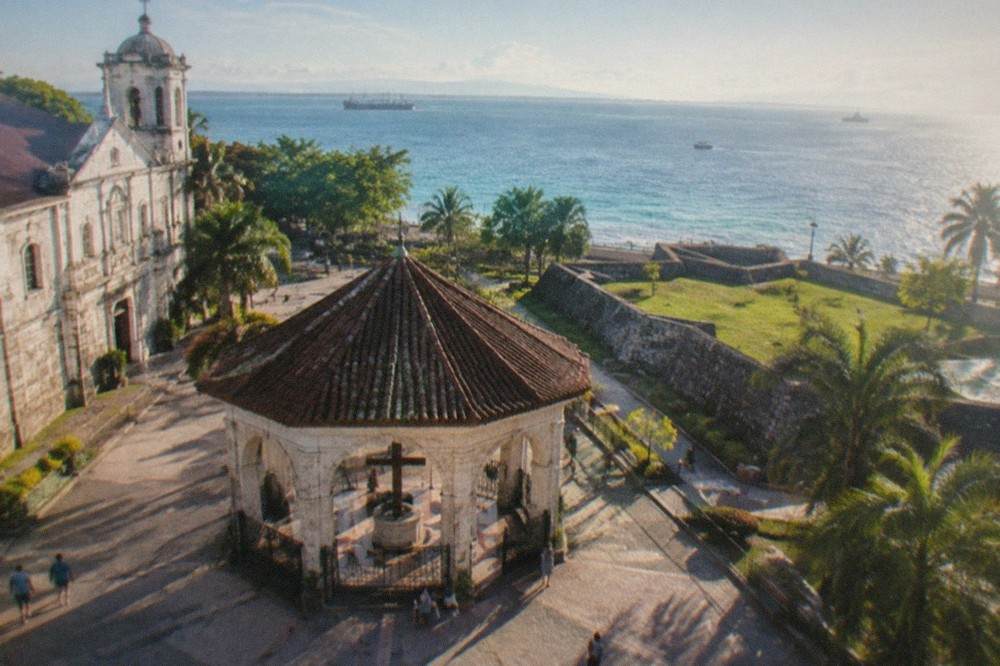
Here is how the top tier of Cebu's sights compares:
| Rank | Spot | Location | Entry cost | Why it ranks |
|---|---|---|---|---|
| 1 | Magellan's Cross | Cebu City, Magallanes Street | Free | The 1521 planting site, the symbolic heart of Philippine Christianity |
| 2 | Basilica Minore del Santo Niño | Cebu City, beside the cross | Free | Founded 28 April 1565, home of the Santo Niño image |
| 3 | Fort San Pedro | Cebu City, Plaza Independencia | P50 (about US$0.8) regular, P40 (about US$0.6) discounted | Oldest triangular bastion fort in the country, stone form from 1738 |
| 4 | Oslob whale shark watching | Oslob, 3.5-4.5 hours south by bus | P1,000 (about US$15.9) foreign tourists, P500 (about US$8.0) locals | The province's most famous wildlife encounter |
| 5 | Kawasan Falls | Badian, south coast | About P200 (about US$3.2) Level 1 entrance | The signature waterfall and canyoneering destination |
The order shifts by traveller. Families with young children often rate the Mactan island-hopping trips and resort waterparks above the heritage core, and divers rank the sardine run at Moalboal and the thresher sharks of Malapascua as the province's real headline attractions. For where to base yourself to reach any of these, see the best area to stay in Cebu.
Is The Number One Tourist Spot In Cebu Worth A Whole Day?
Magellan's Cross itself needs only fifteen minutes, but the quarter around it comfortably fills half a day or more: the Basilica, Fort San Pedro, Casa Gorordo, the Yap-Sandiego Ancestral House and the Carbon market area all sit within a compact, walkable radius, and a full day lets you add the Mactan shrines across the channel.
The practical pattern that many travelers settle on is a morning in the heritage core, lunch in the downtown food streets, and an afternoon across one of the three Mactan bridges or on a Mactan island-hopping boat. The Lapu-Lapu Shrine on Mactan, marking the 27 April 1521 battle, is the standard second stop for anyone following the Magellan story to its end.
A guided market and food walk is the most efficient way to see the quarter and eat well at the same time, since the streets around the heritage core hold the city's densest concentration of local food, from whole-roasted lechon to fresh puso rice parcels. The tour's operator does not publish its price on the live listing, so check the live listing for the current figure. Check availability
Which Spots Outside Cebu City Challenge The Number One Ranking?
The strongest challengers are the Oslob whale shark interaction area, roughly 3.5 to 4.5 hours south of the city by bus, and Kawasan Falls in Badian, both on the south coast, plus the sardine run at Moalboal, about 2.5 to 3.5 hours away. None matches Magellan's Cross for history, but each draws visitors who come to Cebu for wildlife and water rather than heritage.
Oslob's whale shark viewing, regulated by the municipal tourism office, runs from about 6 AM to noon and charges P1,000 (about US$15.9) for foreign tourists and P500 (about US$8.0) for Filipinos, boat and guide included. Sightings are not guaranteed: in late May 2026 the whale sharks were absent from the Tan-awan interaction area for about four days when the plankton they follow moved to a neighbouring barangay, and the town's tourism office confirmed operations resume with the sightings. The best months for the encounter are covered in the best month for whale sharks in Cebu.
Kawasan Falls stayed open through a phased rehabilitation programme that began in June 2026, though canyoneering on the Badian route pauses temporarily after heavy rain, and the Alegria route has been suspended through 2025 and 2026. Moalboal's sardine run is a resident school present year-round just off Panagsama Beach, with an environmental user fee of P100 (about US$1.6) to swim or snorkel under the 2021 municipal ordinance.
For the full spread of options across the province, the root guide at Cebu Travel Guide and the master list at things to do in Cebu cover every segment of a visit, from the heritage core to the far north islands.
If your priority is a guided version of the day rather than self-navigation, these are the current options that fit the same brief:
Common Questions About Cebu's Top Tourist Spots
What is the number one tourist spot in cebu?
Magellan's Cross in Cebu City, the landmark planted by Magellan's expedition in April 1521. It is free to visit, open daily, and surrounded by the Basilica Minore del Santo Niño and the rest of the city's heritage quarter.
Is Magellan's Cross the original cross from 1521?
Tradition holds that the original cross is encased inside a protective outer shell of tindalo wood, so the cross on display today is a casing around what is believed to be the 1521 original. The Basilica's own chronicles treat the site as the genuine planting location.
How much does it cost to visit Cebu's top spots?
Magellan's Cross, the Basilica and the Taoist Temple are free. Fort San Pedro charges P50 (about US$0.8) regular and P40 (about US$0.6) for students and seniors. Outside the city, Oslob charges P1,000 (about US$15.9) for foreign tourists and Kawasan Falls Level 1 entry is about P200 (about US$3.2).
Can you see the number one spot and the beach on the same day?
Yes. Magellan's Cross needs only a short visit, and Mactan's beach and island-hopping areas sit across the channel, roughly 30 to 60 minutes away by road depending on traffic on the bridges.
When is the best time to visit the heritage quarter?
Weekday mornings are quietest. Avoid the third Sunday of January unless you are coming for Sinulog itself, when the Grand Parade fills the Cebu City Sports Center and the downtown streets with enormous crowds.
The ranking is stable but the reasons shift: heritage travellers confirm the pavilion on Magallanes Street as the number one tourist spot in Cebu, wildlife travellers swap in Oslob, and families often give the crown to the water. Start downtown, see the cross and the Basilica early, and let the rest of the province compete for your second day.