How Many Days In Cebu Is Enough?
How many days in Cebu is enough? A practical answer for trips of three, five and seven days, with travel times, fees and what to skip.
Cebu, the island province in the Central Visayas region of the Philippines, is bigger than most first-time visitors expect, and the honest answer to how long you need depends almost entirely on how far you are willing to travel from Cebu City. The city itself, the Mactan airport strip and the heritage core can be seen in two full days. The famous draws, whale sharks in Oslob, the sardine run at Moalboal and canyoneering at Kawasan Falls, sit two to four hours south by road, and each eats most of a day. Add Bohol or Bantayan across the water and the math changes again.
How Many Days In Cebu Is Enough?
For most travelers, four days is the realistic minimum for Cebu: two for the city and Mactan, one for Oslob or Moalboal, and one spare day for weather or a second side trip. Five days is the comfortable sweet spot that adds Kawasan Falls canyoneering without rushing. Seven days suits visitors who also want Bohol, Bantayan or Malapascua, each of which is a full-day commitment with ferry or road time built in. Fewer than three days works only if you confine yourself to Cebu City and Mactan.
The single biggest mistake short-trip visitors make is underestimating transit. Cebu City to Oslob is a long haul each way by Ceres bus from the Cebu South Bus Terminal, and Moalboal is also a long haul. A "day trip" to either means a very early start, often a 3 AM pickup for organized whale shark tours, because Oslob's interaction window runs from about 6 AM to 12 PM and the sharks feed in the morning.
That geography is why the answer is not one number. The 3 days in Cebu itinerary works, but it forces a choice: the city or the south, not both at a relaxed pace. Stretch to 5 days in Cebu and the choice disappears.
Season matters too. PAGASA's national classification puts the rainy season from June to November and the dry season from December to May, and the Mactan station's 1991-2020 normals show October as the wettest month at 194.8 mm of rain against April's 48.1 mm. A three-day trip in October carries real disruption risk; the same trip in March almost none. If your dates are fixed in the wet half of the year, the spare day in a four- or five-day plan is not a luxury, it is insurance.
What Can You Realistically Fit Into Three Days In Cebu?
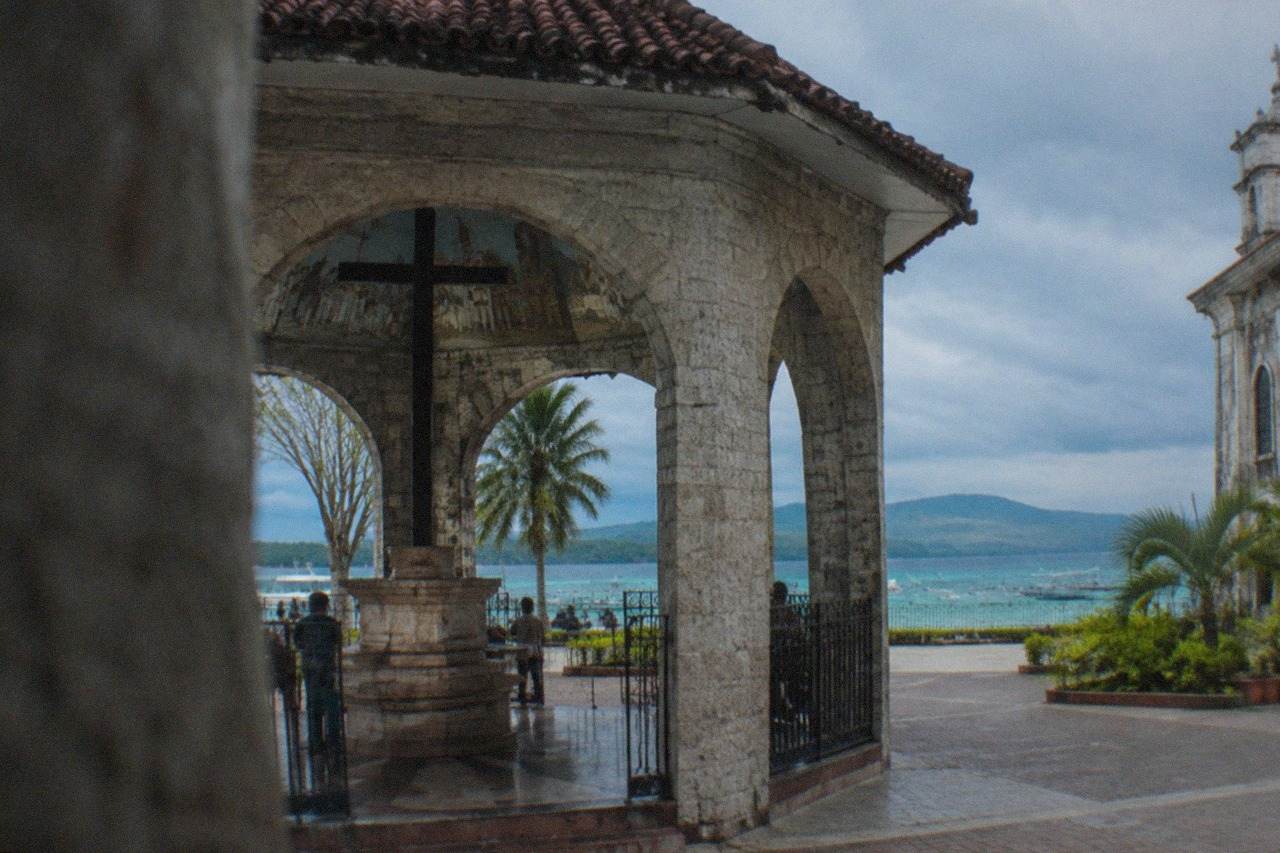
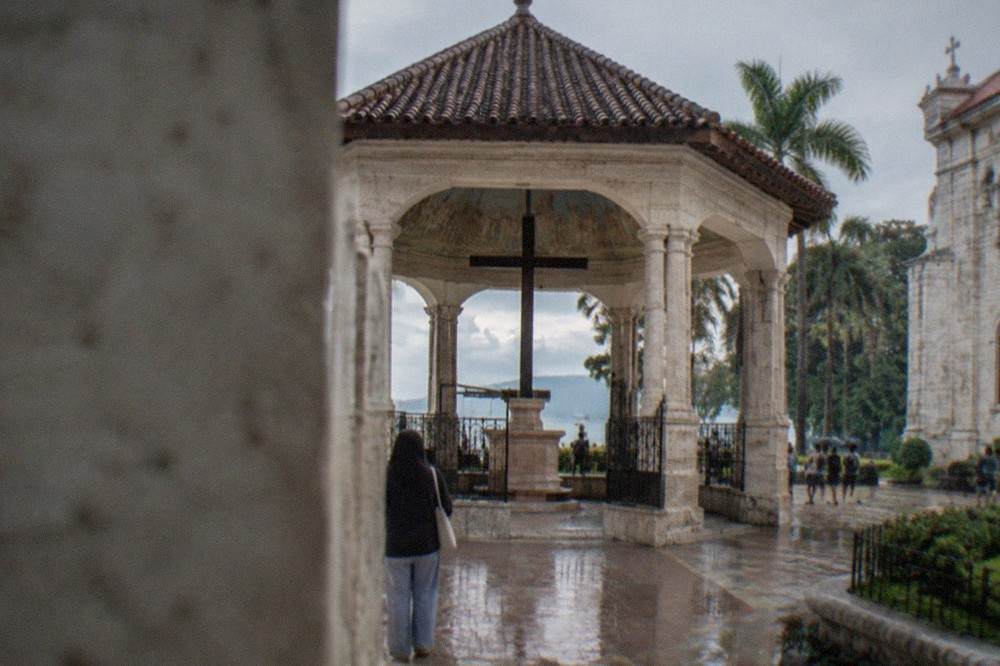
Three days in Cebu fits the heritage core, Mactan's beaches and exactly one south-coast excursion, most often the Oslob whale shark morning combined with Tumalog Falls. Day one covers Magellan's Cross, the Basilica Minore del Santo Niño and Fort San Pedro on foot. Day two crosses to Mactan for beach time and the Lapu-Lapu Shrine. Day three goes south before dawn for whale sharks, with the falls added if the schedule holds.
Day one costs almost nothing. Magellan's Cross is free, Fort San Pedro charges P50 (about US$0.8) regular admission, and the Basilica, founded on 28 April 1565 the same day the Legazpi expedition landed, asks no entry fee. All three sit within a few minutes' walk of each other in the downtown core, so a morning covers them with time left for Colon Street, often called the country's oldest street, in the afternoon.
Day three is the expensive one and the reason three-day trips feel compressed. The Oslob municipal fee is P1,000 (about US$15.9) per foreign tourist, boat and guide included, on top of transport. Tumalog Falls adds about P50 (about US$0.8) entrance. If whale sharks are the whole point of your trip, this structure works; if they are a nice-to-have, three days is too tight to risk a bad-weather morning on your only south-coast day.
There is a workaround worth knowing. Because the sardine run at Moalboal sits a few metres off Panagsama Beach and runs year-round, a three-day trip can swap the dawn Oslob departure for a later Moalboal start and still see a marine headline attraction. You trade the whale sharks for the sardines, and you gain two hours of sleep plus a shorter bus ride. Some travelers rate the sardine run higher anyway, since the school is resident rather than lured, and the interaction rules are simpler.
For a fuller breakdown of the compressed option, see 3 days in Cebu: what to do.
When Does Five Or Seven Days In Cebu Make Sense?
Five days makes sense once you want both Oslob and Moalboal, or whale sharks plus Kawasan Falls canyoneering, without stacking two dawn departures back to back. Seven days is the right length if Bohol, Bantayan or Malapascua are on the list, since each is a full day by ferry plus road. With seven days you can also absorb a typhoon-season rain day, which a rigid three-day plan cannot.
The five-day shape usually runs: city and heritage on day one, Mactan or a Camotes day on day two, Oslob on day three, Moalboal and the sardine run on day four, and canyoneering or a recovery morning on day five. The sardine run is the most schedule-friendly headline attraction in the province because it happens a few metres off Panagsama Beach, year-round, with a P100 (about US$1.6) environmental user fee to swim or snorkel. No dawn bus required.
Seven days is also the threshold where the 7 days in Cebu plan stops feeling like a checklist. Bohol across the Bohol Strait is the classic add-on: the OceanJet fastcraft from Pier 1 to Tagbilaran takes about two hours, with tourist-class fares at P960 (about US$15.3) since the 21 September 2026 fuel surcharge, and around thirteen sailings a day. A same-day Bohol countryside tour with the Loboc River cruise is a 14-hour round trip, so it belongs on a longer trip, not a short one.
The northern islands reward the same patience. Bantayan involves a bus north plus a ferry from Hagnaya, with a P25 (about US$0.4) terminal fee and a P30 (about US$0.5) ecological fee on arrival at Santa Fe. Malapascua, the thresher shark diving base, sits beyond Maya port and is really a two-night destination for divers rather than a day trip. Neither belongs on a plan shorter than six days.
How Do You Split Days Between Cebu City, Mactan And The South?
Base yourself in Cebu City for the heritage and food days, since the airport, the south bus terminal and the ferry piers all connect through it. Move to Mactan only if beaches and resorts are your priority and you accept a toll crossing each time you head into the city. Move south to Moalboal only for stays of five days or more, because it trades convenience for direct access to the sardine run and Kawasan.
The CCLEX toll bridge, opened in April 2022, carries cars between Cebu City and Cordova for a one-way Class 1 toll of P107 (about US$1.7), and the two older Mactan bridges remain free. Grab operates across Cebu City, Mandaue and Lapu-Lapu, and the MyBus airport service runs between Mactan-Cebu International Airport and SM City Cebu for P50 (about US$0.8). These are the connections that make a single Cebu City base viable for trips of any length.
One more wrinkle: Cebu City, Lapu-Lapu and Mandaue are highly urbanized cities administratively independent of Cebu Province, so a "Cebu" trip is really a trip across three city governments plus provincial towns, each setting its own fees. The Lapu-Lapu island-hopping environmental fee, for instance, was cut to P20 (about US$0.3) for local tourists in a July 2025 amendment while staying at P100 (about US$1.6) for foreigners. Budget with that fragmentation in mind.
For a deeper comparison of the two main bases, read Cebu City or Mactan: where to stay. If you are weighing the south-coast towns against each other, the choice between them hinges on whether whale sharks or sardines rank higher for you.
| Trip length | What fits comfortably | What you sacrifice |
|---|---|---|
| 2 days | Cebu City heritage core, Mactan beach afternoon | All south-coast attractions, all islands |
| 3 days | City, Mactan, one Oslob or Moalboal day trip | Kawasan canyoneering, Bohol, Camotes |
| 4 days | City, Mactan, Oslob, Moalboal | Bohol, Bantayan, Malapascua |
| 5 days | Everything above plus Kawasan Falls | Bohol overnight, northern islands |
| 7 days | South coast complete plus Bohol or Bantayan | Both Bohol and Bantayan in depth |
What Does Each Extra Day In Cebu Cost?
The marginal cost of a fifth, sixth or seventh day in Cebu is low, because the province's headline fees are modest: the Oslob whale shark interaction, Kawasan's Level 1 swimming entrance, the Moalboal environmental user fee and the basic jeepney hop all cost only a few hundred pesos each. The expensive items are organized day tours and diving, so a longer independent trip often costs little more per day than a compressed one that buys convenience.
| Item | Typical figure | Notes |
|---|---|---|
| Oslob whale shark fee (foreigner) | P1,000 (about US$15.9) | Boat and guide included, about 30 minutes in the water |
| Kawasan Falls Level 1 entrance | P200 (about US$3.2) | Swimming only; canyoneering costs more with a guide |
| Moalboal environmental user fee | P100 (about US$1.6) | Covers swimming and snorkeling at Panagsama |
| OceanJet Cebu to Tagbilaran (tourist) | P960 (about US$15.3) | About 2 hours, fares since 21 Sept 2026 |
| Jeepney first 4 km | P14 (about US$0.2) | Traditional jeepneys, LTFRB-approved fare |
| Fort San Pedro entry | P50 (about US$0.8) | Students and seniors P40 (about US$0.6) |
Two warnings on the money side. First, whale shark sightings are not guaranteed: in late May 2026 the sharks were absent from the Tan-awan interaction area for about four days when the plankton moved, so a one-shot three-day itinerary carries real schedule risk. Second, the Philippine travel tax does not apply to you as a foreign tourist staying under a year, and visa-free nationals get 30 days on arrival, so a longer Cebu stay has no paperwork penalty. If budget is the deciding factor, is Cebu expensive? breaks it down further.
A practical budgeting habit for longer stays: keep a small cash float for the municipal fees, because many are collected at beach kiosks and barangay desks that do not take cards. The Oslob fee, the Moalboal user fee and the Kawasan entrance are all cash-on-the-day items, and ATMs thin out fast once you leave the cities.
Common Questions About How Many Days In Cebu Is Enough
How many days in Cebu is enough?
Four days is the practical minimum for a trip that includes Cebu City, Mactan and one south-coast day trip. Five days is the comfortable standard, and seven days suits travelers adding Bohol, Bantayan or Malapascua.
Is three days in Cebu enough?
Three days covers the city, Mactan and a single south excursion such as Oslob whale shark watching. It is enough for a first taste, but too tight for both Oslob and Moalboal plus canyoneering.
Is one week in Cebu too long?
No. A week absorbs the full south coast, a Bohol day trip across the strait and a northern island such as Bantayan or Malapascua without rushing, and it leaves slack for weather disruption between June and November.
Can you see whale sharks on a short Cebu trip?
Yes, as a day trip from Cebu City, but expect a pre-dawn departure. Oslob's interaction window runs roughly 6 AM to 12 PM, and the bus journey south takes about 3.5 to 4.5 hours.
Where should first-time visitors base themselves in Cebu?
Cebu City, for trips of up to five days. It connects the airport, the south bus terminal and the ferry piers. Mactan suits beach-focused stays, and Moalboal only pays off on longer itineraries.
What is the best month to time a Cebu trip around?
The dry season runs December to May, with April the driest month at 48.1 mm of rain at the Mactan station. The rainy months, June to November, bring typhoon risk, so shorter trips are safer in the dry half of the year.
For the complete list of options once you have picked your length, start from the things to do in Cebu hub, and check the best month to visit Cebu before locking dates. This Cebu Travel Guide page was written by an editorial desk that plans from primary sources, from PAGASA rainfall normals to municipal fee notices, so the figures above reflect what operators and local governments actually publish.