Is Oslob Worth Visiting?
Is Oslob worth visiting? An honest answer for Cebu, Philippines: whale shark fees, rules, sighting odds, Tumalog Falls, Sumilon and how to judge the trip from Cebu City.
Oslob sits on the southeast coast of Cebu, the island province in the Central Visayas region of the Philippines, about three and a half to four and a half hours south of Cebu City by bus. Most people know it for exactly one thing: whale sharks, called butanding locally, that gather off the barangay of Tan-awan every morning. The question of whether the long trip down is worth it depends on how you feel about crowds, early starts and a wildlife encounter that is regulated, fed by licensed spotters and never guaranteed. This page lays out the real costs, the rules, the odds and the alternatives so the answer is yours, not a slogan, and it is one of the pieces Cebu Travel Guide publishes for travelers weighing the island's big day trips.
What Is Oslob Known For?
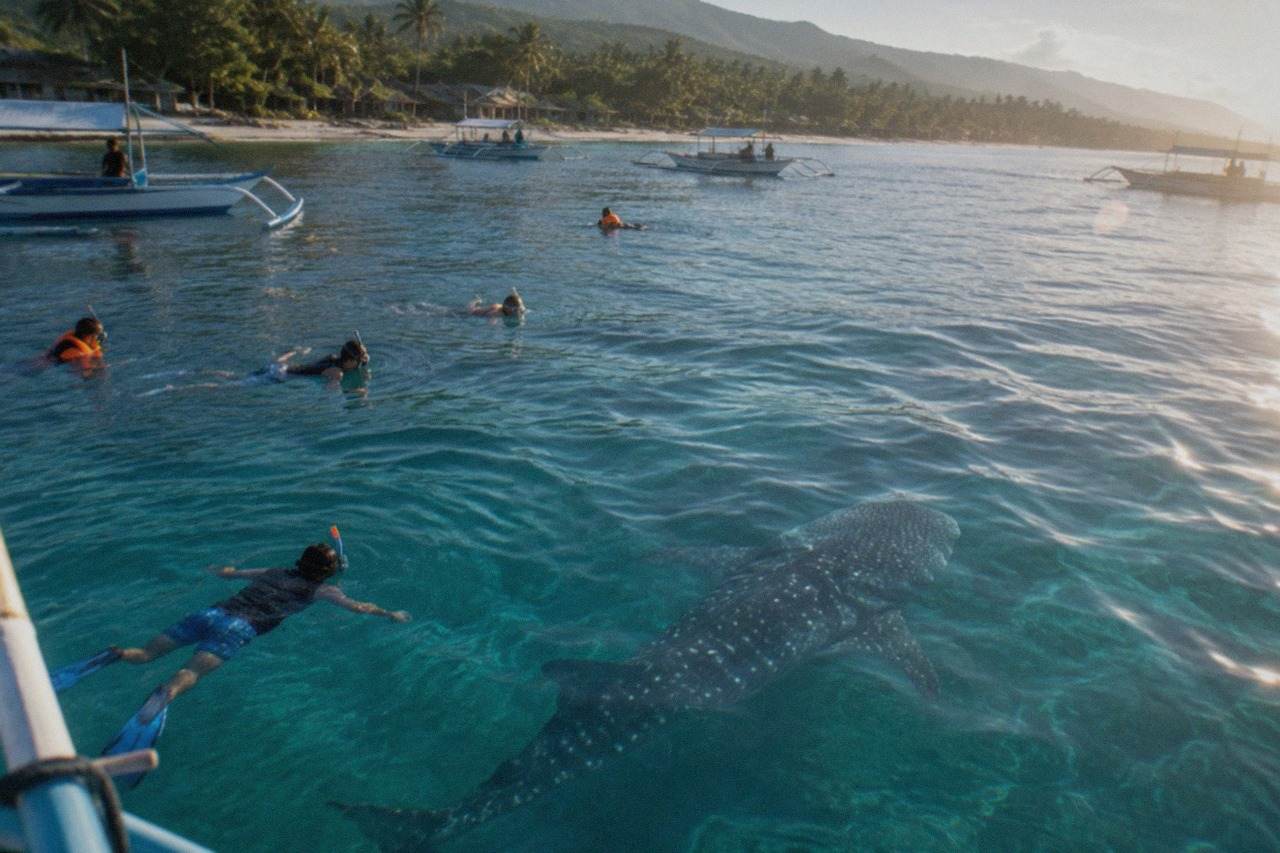
Oslob is known for its whale shark watching operation in Tan-awan, one of the most famous wildlife attractions in the Philippines, drawing roughly 800 to 900 visitors a day in the May 2026 season. The town also holds Tumalog Falls, Sumilon Island day trips and a stretch of quiet south-coast beaches, but the whale sharks are the reason the buses leave Cebu City before dawn. Everything else in Oslob is, honestly, a supporting act.
The whale shark interaction is run under municipal rules: a mandatory briefing, a minimum distance of about four meters from the animals, no touching, no sunscreen, no flash photography, and a session of about thirty minutes in the water. Feeding is done only by licensed spotters, a practice the town defends as a minor lure rather than the sharks' main food, and one that keeps the animals returning to the interaction area. The whole setup divides opinion. Some conservation writers argue hand-feeding habituates the sharks; the ethics of the encounter deserve their own reading before you decide. What is not in dispute is that the fees fund the town, and that the operation runs roughly 6 AM to 12 PM daily, with a registration cutoff around 11 AM.
Is Oslob Worth Visiting?
Yes, Oslob is worth visiting if whale sharks are a priority and you arrive early, budget the real fees and accept that sightings depend on the animals showing up. It is not worth it for travelers who dislike crowds, want a guaranteed encounter or expected a wild, remote experience: Tan-awan is a working tourism operation with hundreds of daily visitors, and in late May 2026 the sharks were absent for about four days straight. Go with clear eyes and it delivers something few places in the Philippines can.
The honest case for going: the encounter is close, shallow and accessible to strong swimmers and nervous ones alike, since life jackets are mandatory and the boats stay near shore. Thirty minutes in the water with the largest fish in the sea is a genuine memory. The honest case against: the 4 AM departure from Cebu City, the crowd of boats at peak hours, and the fact that the sharks are lured by feeding, which changes their natural behavior. Readers who want a fuller weighing of the two sides can start with whether Oslob is worth going to and the question of whether whale sharks are guaranteed at Oslob, which gets a plain no.
If you are building a wider south-coast day, some travelers pair the swim with canyoneering further west, though Kawasan is a separate destination with its own logistics. Others stay overnight in Oslob town and do Tumalog Falls the next morning before the crowds arrive. Both approaches beat the single-day crush if your schedule allows.
How Much Does An Oslob Trip Cost?
The core whale shark fee is P1,000 (about US$16) per foreign tourist or P500 (about US$8) for Filipinos, boat and guide included, and Tumalog Falls adds about P50 (about US$0.8) at the entrance. A do-it-yourself day from Cebu City with a bus, fees and lunch typically lands in the P1,500 (about US$24) to P2,500 (about US$40) range per person, while organized tours bundle the transport and charge accordingly. Only the municipal fee is fixed; everything else moves with your choices.
The bus is the budget backbone. Ceres Liner runs multiple daily departures from the Cebu South Bus Terminal toward Oslob, roughly 3.5 to 4.5 hours, with fares around P145 to P250 (about US$2 to US$4) depending on ordinary or air-conditioned service. Habal-habal motorbike transfers around Tan-awan and Tumalog run about P50 (about US$0.8) to P100 (about US$1.6) (about US$1 to US$2) each way. Here is the fee picture in one table.
| Item | Typical cost | Notes |
|---|---|---|
| Whale shark watching, foreign tourist | P1,000 (about US$15.9) | Boat and guide included, about 30 minutes |
| Whale shark watching, Filipino | P500 (about US$8.0) | Same session, local rate |
| Tumalog Falls entrance | P50 (about US$0.8) | Habal-habal from Tan-awan about P50-100 (about US$1-2) each way |
| Osmeña Peak registration | P100 (about US$1.6) | Reports range P50 (about US$0.8) to P100 (about US$1.6); guide often expected, about P200-300 (about US$3-5) |
| Ceres bus, Cebu City to Oslob | P250 (about US$4.0) | Ordinary fare from about P145 (about US$2.3); air-con higher |
| Sumilon Island day pass | P2,000 (about US$32) | Bluewater resort day-use offers run about P1,600 (about US$25) to P2,000 (about US$32) net per guest |
Two warnings on those numbers. First, Sumilon's day pass is a resort product with weekday consumable deals and weekend buffet versions, so confirm the current offer before you commit. Second, the whale shark fee reverts and gets amended by ordinance, as it did in March 2025, so treat the figures above as the current published rates rather than eternal constants. The full cost breakdown lives on the attraction page for the Oslob whale sharks, and the question pages on Oslob costs and what an Oslob swim costs go deeper on the money.
What Are The Rules At The Oslob Whale Sharks?
The rules are a four-meter minimum distance from the sharks, no touching, no sunscreen, no flash photography, mandatory life jackets and a session of about thirty minutes in the water, all delivered at a required briefing before you board. Feeding is done only by the licensed spotters, never by tourists. The hours run about 6 AM to 12 PM, and the earliest slots get calmer water and fewer boats.
The sunscreen rule surprises people, but it exists because chemical residues harm the sharks and the reef, and staff will make you wash it off. The distance rule is enforced by guides in the water with you; a shark swimming toward you is not a violation, chasing one is. Sessions can be extended for an extra fee if you want a second thirty minutes. The practical reading of all this: Oslob is a regulated attraction, closer to a national-park wildlife tour than a free-for-all swim, and visitors who follow the briefing get more out of it than those who treat it as a photo prop.
What Else Can You Do Around Oslob?
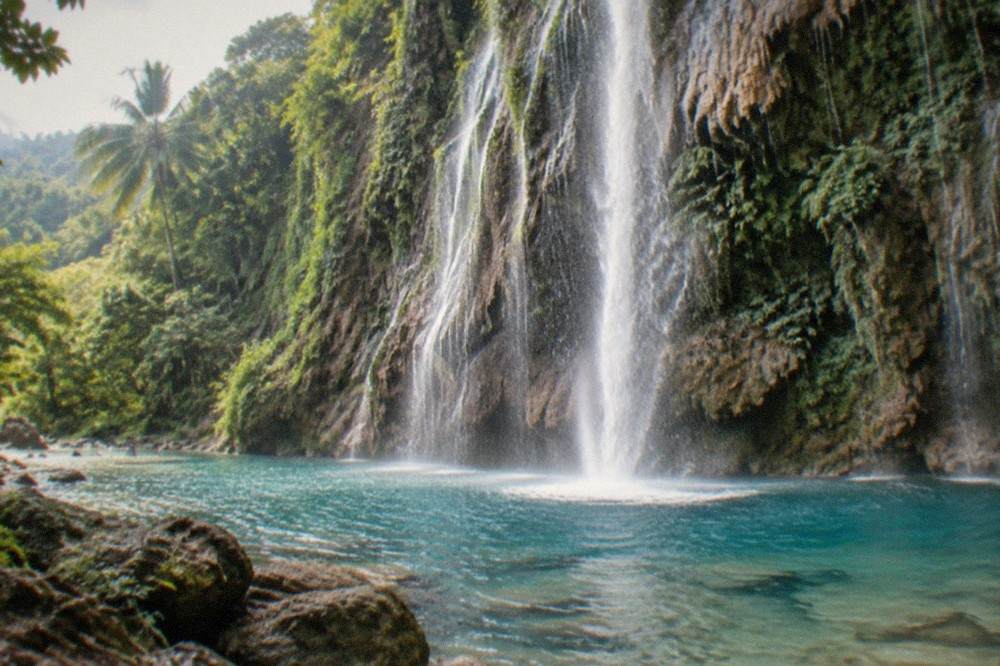
Tumalog Falls is the standard second stop, a tall thin cascade into a turquoise pool about ten minutes inland from Tan-awan with an entrance fee of about P50 (about US$0.8), and Sumilon Island offers a resort day pass with beach, lagoon and snorkeling. Osmeña Peak, the highest point on Cebu island, is a feasible add-on with registration around P50 to P100 (about US$1 to US$2). The town itself is small and quiet.
Tumalog is the one almost everyone does, and it earns its place: the falls drop as a wide curtain rather than a single plunge, and the pool is shallow enough for a relaxed swim. Go early, because midday tour groups arrive straight from the whale shark area. The Tumalog Falls guide covers the habal-habal ride and timing. Sumilon suits travelers who want a beach afternoon after a morning with the sharks; its sandbar and marine sanctuary are the draw. For hikers, Osmeña Peak in neighboring Dalaguete gives a short ridge walk with views down both coasts of Cebu, and it pairs naturally with an overnight in the south rather than a day trip.
If you would rather compare the two big south-coast towns before committing, the Oslob versus Moalboal comparison weighs whale sharks against the sardine run and canyoneering, and the question of Oslob or Moalboal for your stay does the same for overnight plans.
When Should You Go To Oslob?
Go between December and May, Cebu's dry season under PAGASA's national rule, and go in the earliest slot you can manage, because the whale shark operation runs about 6 AM to 12 PM and sea conditions are calmest before mid-morning. Whale sharks are present year-round at Tan-awan, so the season matters more for weather and road conditions than for the animals themselves. Avoid typhoon-season travel in June to November if your itinerary has no slack.
The sighting question is separate from the weather question. The sharks are residents, lured daily, but in late May 2026 plankton moved to a neighboring barangay and the Tan-awan interaction area had no sharks for about four days; the town paused operations and resumed when they returned. Build one buffer morning into your itinerary if the encounter is the centerpiece of your trip. The question of the best month for whale sharks has the fuller calendar discussion.
One planning note on the road: the south-coast highway is scenic but slow, and the payoff of arriving before the crowds is the single biggest lever on how much you enjoy the day. An overnight in Oslob town flips the whole experience, letting you do the first slot and Tumalog before the Cebu City day-trippers land at 9 AM.
Is The Trip From Cebu City Worth The Drive?
For most travelers, yes, provided the whale sharks are the point of the trip and you either take the earliest bus or stay overnight, because the drive from Cebu City runs roughly 3.5 to 4.5 hours each way and a same-day return makes for a 15-hour day. If your heart is not set on the sharks, the drive is a lot for a thirty-minute swim, and Moalboal or a Mactan island-hopping day would serve you better for less road time.
The day-trip math is the real decider. Organized Oslob day trips solve the 3 AM problem by bundling transport, briefing and often Tumalog into one early departure, which is why they are popular despite the price premium over the bus. Independent travelers with time should break the journey: the south coast holds enough, from Osmeña Peak to the falls of Badian, that two days south beats one marathon. And if you want a taste of the city before or after, a market food walk through Cebu City is a good bookend to a south-coast day. pairs a carb-heavy lechon culture with the produce markets that feed it, and makes the long bus ride down feel like the second half of a proper Cebu trip rather than the whole story.
Common Questions About Oslob
Is Oslob worth visiting?
Yes, if whale sharks are a priority and you go early with the real fees budgeted. It is not worth it if you want a guaranteed encounter or a crowd-free experience; Tan-awan handles hundreds of visitors a day and sightings paused for about four days in May 2026.
How much does Oslob whale shark watching cost?
P1,000 (about US$16) per foreign tourist and P500 (about US$8) per Filipino, boat and guide included, per the municipal ordinance rates effective 21 March 2025. A second thirty-minute session costs extra.
Are the whale sharks at Oslob guaranteed?
No. The sharks are fed by licensed spotters and are resident, but in late May 2026 they were absent from the Tan-awan area for about four days when plankton moved elsewhere. Operations pause and resume with the sightings.
What are the rules at Oslob whale sharks?
A mandatory briefing, about four meters minimum distance, no touching, no sunscreen, no flash, mandatory life jackets and about thirty minutes in the water. Feeding is done only by licensed spotters.
What else is there to do in Oslob besides the whale sharks?
Tumalog Falls about ten minutes inland for roughly P50 (about US$0.8), Sumilon Island resort day passes, quiet south-coast beaches, and, with an overnight, Osmeña Peak in Dalaguete with registration around P50 to P100 (about US$1 to US$2).
How far is Oslob from Cebu City?
Roughly 3.5 to 4.5 hours each way by Ceres bus from the Cebu South Bus Terminal, with fares around P145 to P250 (about US$2 to US$4). Most day tours leave the city around 3 AM to make the earliest slots.
The verdict, in the end, is personal but not mysterious. Oslob rewards early risers, rule-followers and anyone who has wanted to share water with a whale shark their whole life, and it disappoints anyone chasing solitude or guarantees. Plan the fees, respect the four meters, keep a buffer morning, and the southeast coast of Cebu earns its place on your itinerary.