Oslob Vs Moalboal: Which South Cebu Town Fits Your Trip?
Oslob and Moalboal are the two big names in south Cebu, and most visitors with limited days have to pick. This guide compares the two towns on cost, travel time, activities and character, using verified Cebu figures throughout.
Short answer
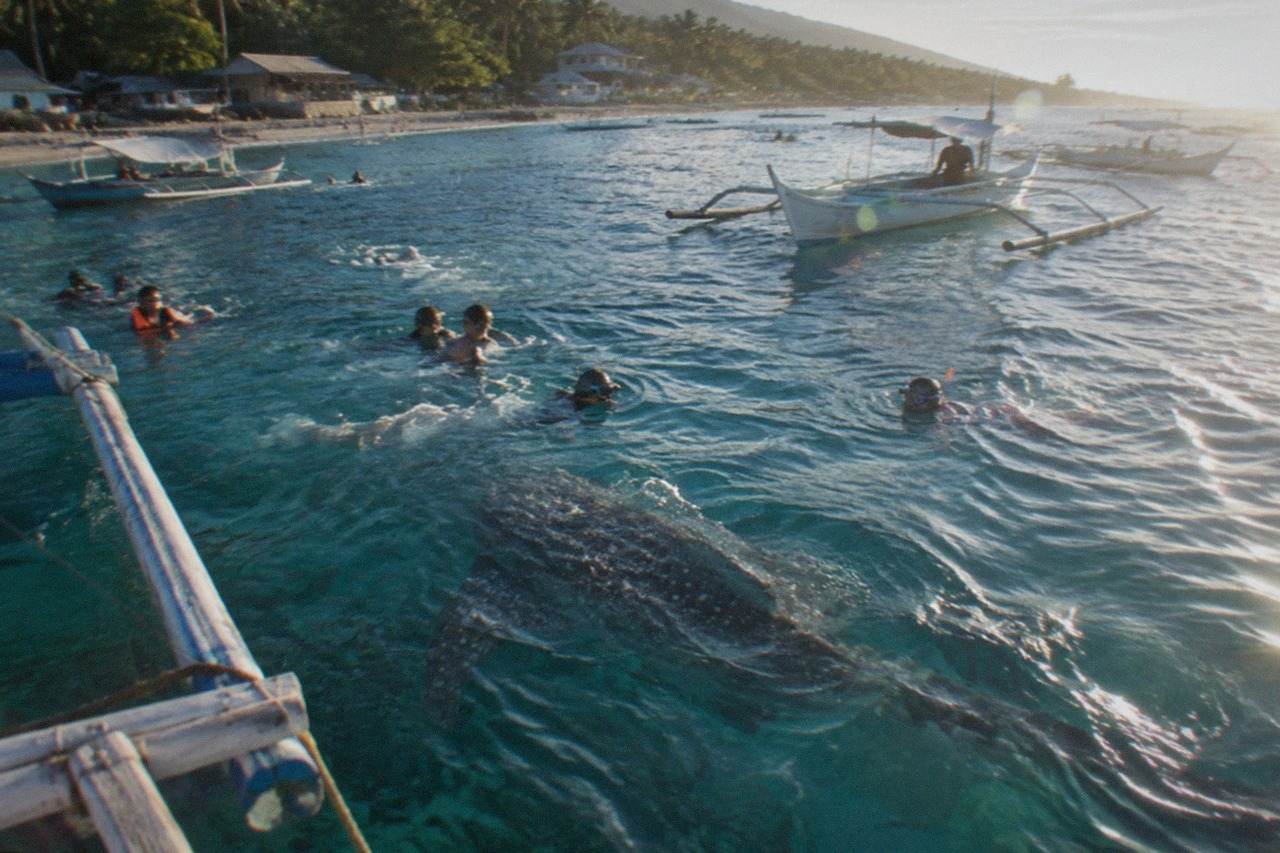
Oslob is a morning-only whale shark town best reached from Cebu City on a day tour; Moalboal is a stay-put beach base with the sardine run, Pescador Island and Kawasan canyoneering within reach. Most travellers enjoy Cebu more by sleeping in Moalboal and visiting Oslob as a single early-morning trip.
South Cebu has two headline acts, and travellers with a week or less usually have to choose between them. Oslob, on the island's southeastern coast, is the town where whale sharks surface beside bangka boats from roughly 6 AM to 12 PM. Moalboal, three hours up the same coast, is where a permanent school of sardines swirls just a few metres off Panagsama Beach. Both sit in Cebu, an island province in the Central Visayas region of the Philippines, about three to four hours south of Cebu City by bus. This comparison lays out what each town actually costs, what each one offers beyond its famous animal, and which kind of traveller each suits best, using figures verified for Cebu rather than guesswork. This page is part of the wider coverage at Cebu Travel Guide, where every south coast destination has its own detailed write-up.
Which Is Better For A Cebu Trip, Oslob Or Moalboal?
Moalboal is the better base for most trips to Cebu, because it rewards staying overnight with a full menu of activities, while Oslob works best as a single early-morning visit attached to a longer itinerary. Oslob's whale shark interaction runs only from about 6 AM to 12 PM, so a day there is short by design. Moalboal offers the sardine run from the shore, Pescador Island diving, White Beach and Kawasan Falls within reach. The strongest plan combines both: sleep in Moalboal, do Oslob as one dawn run.
The honest starting point is that these towns do different jobs. Oslob is a wildlife event; you drive three and a half to four and a half hours from Cebu City, sit through a briefing, spend about thirty minutes in the water beside the world's largest fish, and then the day is yours again. The municipality regulates the whole thing tightly: a minimum distance of about four metres from the animals, no touching, no sunscreen, no flash photography, and feeding only by licensed spotters. The ethics of that feeding program are genuinely debated, and travellers who want the full picture should read the whale shark ethics question before deciding.
Moalboal asks less of you and gives you more hours. The sardine run at Panagsama is a resident school, not a migration, so it is there in some form on any calm day, and the municipal tourism site says the best window is 7 to 9 AM. You can swim out to it on your own schedule, pay the environmental user fee, and be back on the beach for breakfast. When the sardines lose their appeal, Pescador Island, the canyoneering route at Kawasan Falls and the white sand of Basdaku are all within the same town's orbit.
If your Cebu trip is only two or three days long and you want one guaranteed-wow morning, either town delivers. If you have four days or more, the question answers itself: Moalboal is the base, Oslob is the excursion. For a deeper look at the overall ranking, see what Cebu is best known for.
What Does Each Town Cost To Visit In Cebu?
Oslob's headline fee is P1,000 (about US$16) per foreign visitor for the whale shark interaction, or P500 (about US$8) for Filipino passport holders, boat and guide included. Moalboal's sardine run costs a P100 (about US$1.60) environmental user fee to swim or snorkel. Oslob is a single expensive ticket; Moalboal is a cheap, repeatable activity. Tumalog Falls near Oslob adds about P50 (about US$0.80), and Kawasan Falls Level 1 entrance near Moalboal is about P200 (about US$3.20).
The fee structure matters because it shapes how people use each town. Oslob's whale shark ticket is a one-shot purchase: the session lasts about thirty minutes, a second session costs extra, and the whole operation wraps by noon. Everything else in Oslob is inexpensive by comparison. Tumalog Falls, the turquoise cascade about a habal-habal ride from the whale shark area, charges about P50 (about US$0.8) to enter, and the motorbike ride each way runs roughly P50 (about US$0.8) to P100 (about US$1.6).
| Cost item | Oslob | Moalboal |
|---|---|---|
| Headline activity fee | P1,000 (about US$15.9) foreign / P500 (about US$8.0) local, whale sharks | P100 (about US$1.6) environmental user fee, sardine run |
| Session length | About 30 minutes | Unlimited on the day you swim |
| Operating hours | About 6 AM to 12 PM | Anytime; best 7-9 AM |
| Nearby add-on | Tumalog Falls, about P50 (about US$0.8) | Pescador Island dive, about P100 (about US$1.6) per dive |
| Second big site | Sumilon Island day pass nearby | Kawasan Falls Level 1, about P200 (about US$3.2) |
Moalboal's costs are spread out rather than concentrated. The P100 (about US$1.6) environmental user fee under Municipal Ordinance 165-2021 covers swimming and snorkelling at Panagsama, and some sources note a P25 (about US$0.4) beach access variant, so carrying a little extra cash is wise since collection varies. Pescador Island's marine park fee runs about P100 (about US$1.6) per dive, collected through the dive shops. If you add canyoneering at Kawasan Falls, expect roughly P1,500 (about US$24) to P2,000 (about US$32) with a Badian-accredited guide, a package that includes the guide, gear, fees and lunch.
One warning that belongs in any honest cost section: Oslob's whale sharks are not guaranteed. In late May 2026 the sharks were absent from the Tan-awan interaction area for about four days because the plankton they follow moved to a neighbouring barangay. The town did not close, the program did not stop, but visitors on those days got a boat ride without the main event. Moalboal's sardines, being resident fish rather than visiting sharks, carry no comparable risk. The question of whether Oslob whale sharks are guaranteed deserves its own read.
For travellers who would rather not manage peso fees, habal-habal haggling and bus terminals alone, the tour options above bundle the south Cebu highlights with transport and logistics included. The private Pescador island hopping day is the Moalboal-centric pick, and the two Kawasan products cover the falls side from different starting points. Prices and ratings for each render on the cards from the operators' live listings.
How Far Are Oslob And Moalboal From Cebu City?
Oslob sits about 3.5 to 4.5 hours south of Cebu City by Ceres bus on the Bato via Oslob route, with roughly nine or more departures daily from the Cebu South Bus Terminal, while Moalboal is closer at about 2.5 to 3.5 hours, with buses leaving every 30 to 45 minutes. Bus fares run about P145 to P250 (about US$2.30 to US$4) to Oslob and about P120 to P210 (about US$1.90 to US$3.30) to Moalboal.
The distance gap is why whale shark tours leave Cebu City before dawn.
The practical consequence of those travel times is bigger than the numbers suggest. Oslob's interaction window closes at noon, so a day-tripper taking public transport must catch one of the earliest buses, around 3 AM on the current schedules, to arrive with margin. Many travelers instead book a tour with hotel pickup, which converts a brutal 3 AM terminal run into a seated van ride. The trade-off article on whether Oslob is worth going to usually comes down to exactly this: the animal is extraordinary, the journey is long.
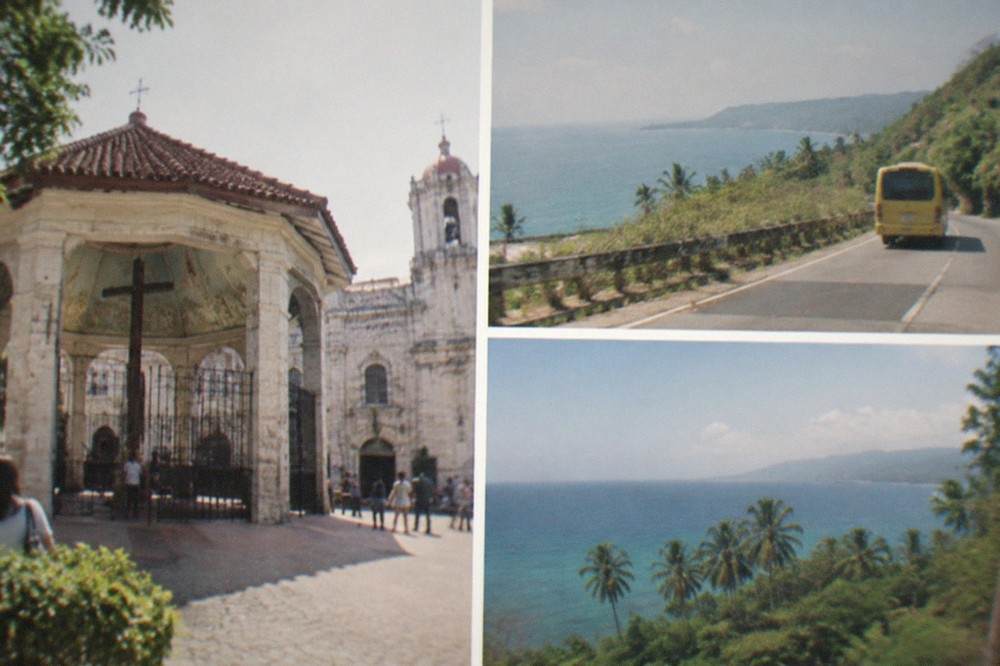
Moalboal's shorter, more frequent connection changes the town's whole character. You can leave Cebu City mid-morning and be swimming with the sardines by early afternoon, which is why Moalboal supports multi-day stays and Oslob mostly supports dawn raids. The town's own day trip guide covers the timing in detail, as does the equivalent Oslob day trip plan.
| Journey | Time | Frequency | Fare |
|---|---|---|---|
| Cebu City to Oslob | About 3.5-4.5 hours | Roughly 9+ daily | About P145 (about US$2.3)-P250 (about US$4.0) |
| Cebu City to Moalboal | About 2.5-3.5 hours | Every 30-45 minutes | About P120 (about US$1.9)-P210 (about US$3.3) |
| Oslob to Tumalog Falls | Habal-habal ride | On demand | About P50 (about US$0.8)-P100 (about US$1.6) each way |
| Moalboal to Kawasan Falls | Short drive from town | On demand | Via tour or habal-habal |
Note that the Oslob-to-Moalboal leg itself is short: the two towns are neighbours on the same southern coast, roughly an hour apart by road. That geography is what makes the combined itinerary work, and it is why so many Cebu itineraries chain Oslob, Tumalog and Moalboal into a single south loop.

What Is There To Do In Oslob And Moalboal?
Oslob's activity list is short and morning-bound: the whale shark interaction, Tumalog Falls, and Sumilon Island's day-use beach across the water, while Moalboal packs the sardine run, Pescador Island diving, Basdaku White Beach and the Kawasan Falls canyoneering route into one area. Oslob delivers one unforgettable animal and a pretty waterfall; Moalboal delivers a full activity menu that fills two or three days. Sumilon's Bluewater day pass runs 8 AM to 3 PM with boat transfers, which pairs naturally with an Oslob morning.
Start with Oslob's headline. The whale shark session is the reason the town appears on every Cebu itinerary: you watch from the boat or snorkel beside the animals under a guide's eye, for about thirty minutes, within rules the municipal government enforces. The full attraction guide to Oslob whale sharks covers the briefing, the rules and the booking mechanics, and the Tumalog Falls guide covers the waterfall that almost every visitor adds afterward.
Moalboal's sardine run needs less introduction and less logistics. The school lives year-round off Panagsama's reef wall, and the municipal site confirms the best viewing window is 7 to 9 AM. Snorkellers pay the environmental user fee at the beach kiosk, swim out a short distance, and watch a living tornado of fish reshape itself overhead. Turtles are regulars on the same reef. The sardine run attraction page has the details, and divers can push further out to Pescador Island, whose marine sanctuary fees run about P100 (about US$1.6) per dive.
| Activity | Town | Time needed | Best hours |
|---|---|---|---|
| Whale shark snorkeling | Oslob | About 30 min session | About 6 AM-12 PM |
| Tumalog Falls swim | Oslob | 1-2 hours | Morning |
| Sumilon Island day pass | Oslob area | 8 AM-3 PM window | Full day |
| Sardine run snorkel | Moalboal | 1-2 hours | Best 7-9 AM |
| Pescador Island dive | Moalboal | Half day | Morning |
| Kawasan canyoneering | Badian, near Moalboal | Full day, about 07:00-14:00 | Early start |
The canyoneering route deserves a flag here. Only the Badian route is currently running; the Alegria route has been suspended through 2025 and 2026, and cliff jumping is banned at the main Level 1 basin. A phased rehabilitation project at Kawasan began around June 2026 and the site has stayed open throughout. Anyone booking canyoneering should confirm the Badian route with their operator. More of these guides are collected on Cebu Travel Guide.
For visitors who want the marine side of Moalboal without assembling a dive shop, a boat and a fee schedule themselves, a private Pescador island hopping day bundles the logistics. The operator's live listing carries the current price, and free cancellation terms are shown at booking.

Where Should You Stay, Oslob Or Moalboal?
Moalboal is the better place to sleep for almost every traveller, because Panagsama and Basdaku support a real resort and hostel scene geared to multi-day stays, while Oslob's accommodation stock is thinner and oriented toward one-night whale shark departures. The stay question has a clear consensus among repeat visitors: base in Moalboal, and either day-trip to Oslob or spend a single night there to catch the earliest interaction slot. Travellers who want a beach holiday specifically should stay in Moalboal.
Panagsama Beach in Moalboal is a dive-town strip: hostels, dive shops, restaurants and bars within walking distance of the sardine run itself. Basdaku, the White Beach a short ride north, is the sandy, family-friendly alternative. Between the two, the town covers most budgets and travel styles, and the Moalboal area guide maps the neighbourhoods.
Oslob's lodging reality follows its activity clock. Since the whale shark session opens around 6 AM and the town empties by early afternoon, many visitors arrive the evening before, sleep near Tan-awan, and move on after their morning in the water. That is a legitimate strategy, and it is the only way to be first in the water without a pre-dawn drive from Cebu City. The Oslob area guide covers where the guesthouses cluster.
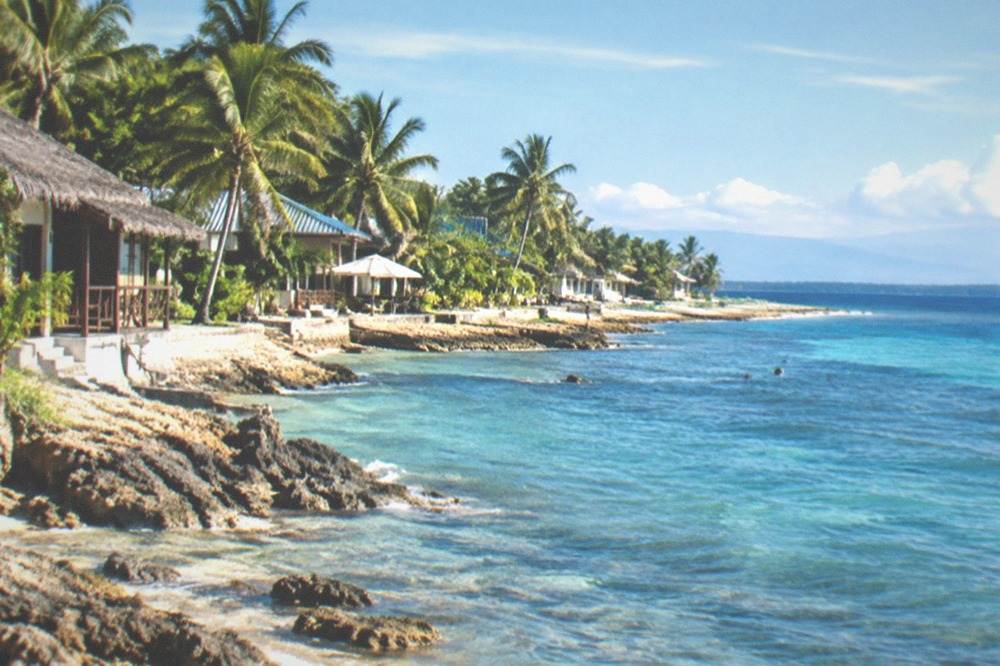
The dedicated comparison on whether to stay in Moalboal or Oslob lands on the same answer for most travellers, and the reverse question reflects the same logic from the other direction. The one profile that genuinely suits an Oslob base is the traveller doing a south loop: Oslob one night, then west along the coast toward Moalboal and Kawasan.
Which Has Better Weather, And When Should You Visit South Cebu?
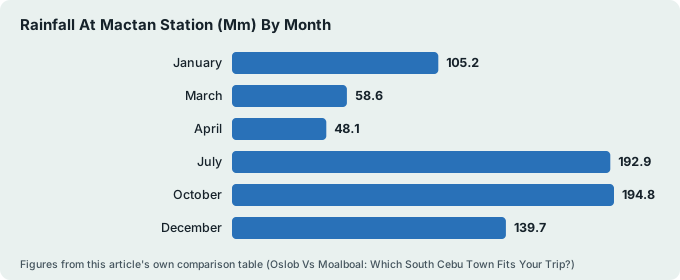
Both towns share the same climate, since they sit on the same coast of the same Cebu island: PAGASA's dry season runs December to May and the rainy season June to November, so the choice between Oslob and Moalboal is never a weather choice. The Mactan station's 1991-2020 normals show 1,685 mm of annual rain and a mean temperature of 28.1 C for Cebu overall. Whale shark operations in Oslob run year-round, and sardine visibility is best in the drier months.
The calendar matters more than the town. December through May is the drier, calmer window for both the whale shark interaction and the sardine run, and October is statistically the wettest month in the Mactan rainfall series. Typhoon season nationally runs June to November, with peak activity roughly July to October, and Visayas landfall risk runs high into November and December.
| Month | Rainfall at Mactan station (mm) | What it means for south Cebu |
|---|---|---|
| January | 105.2 | Dry season, prime visiting window |
| March | 58.6 | Among the driest months |
| April | 48.1 | Driest month in the series |
| July | 192.9 | Peak typhoon season, check advisories |
| October | 194.8 | Wettest month in the series |
| December | 139.7 | Dry season begins, Sinulog month approaches |
Two operational notes carry more weight than rainfall tables. First, Oslob's whale sharks follow plankton, and plankton moves: the May 2026 absence was seasonal, not a closure, and the town's tourism office said operations would resume with the sharks. Second, canyoneering at Kawasan pauses for heavy rain and debris events, which happened several times in 2025 and 2026, so wet-season visitors booking the Badian route should keep a flexible plan. The full seasonal breakdown lives in the best time to visit Cebu.
Can You Combine Oslob And Moalboal In One Cebu Trip?
Yes, and combining them is the strongest plan: the two towns sit about an hour apart on the same southern coast, so a standard south Cebu loop runs Cebu City to Oslob for a morning whale shark session and Tumalog Falls, then west to Moalboal for the sardine run, Pescador Island and Kawasan Falls, before returning to the city. Two nights in Moalboal plus one dawn in Oslob covers everything both towns offer. Most guided south Cebu day tours follow exactly this sequence.
The loop works because of geography. Oslob hangs off the island's southeast corner; Moalboal faces the Tañon Strait on the southwest coast; the road between them hugs the shoreline. A traveller leaving Cebu City at 3 AM can be in the water with whale sharks by 6, at Tumalog by 9, and checked into a Moalboal hostel by early afternoon, all on public transport if the buses line up kindly.
The order matters less than the timing. Whale sharks are a morning-only activity; sardines are flexible; canyoneering wants an early start and dry weather. So the sequence that keeps failing to the calendar is Oslob first, Moalboal second, with Kawasan on whichever Moalboal day has the best forecast. Travellers short on time can compress the whole loop into a single long guided day, while those with a full week should read the longer south Cebu itinerary before committing.
For divers, one more consideration tips the balance toward Moalboal as the base: Pescador Island's sanctuary dives, the sardines and the turtle population make it the richer underwater town, and the Cebu diving guide covers the sites in depth. Oslob's underwater world is essentially one animal, seen once.
The private Pescador day tour is the natural Moalboal anchor for the combined loop: it covers the island's marine sanctuary by boat while leaving your Oslob morning free for the whale sharks. The operator's listing shows current availability and terms.
From Moalboal, the full-day Kawasan canyoneering tour with its roughly 07:00 start slots cleanly into the second or third day of the loop, and the listing carries the live price and rating.
For travellers who want the falls without the full canyoneering descent, the Kawasan Falls tour from Cebu is the lighter alternative; its price is unpublished, so the listing is the place to check.
Common Questions About Oslob Vs Moalboal
Which is better, Oslob or Moalboal?
For most Cebu trips, Moalboal is the better base: its sardine run is shore-accessible on any day, and Pescador Island, White Beach and Kawasan Falls fill multiple days. Oslob is the better single excursion, because its whale shark interaction only runs from about 6 AM to 12 PM. The strongest itinerary uses both.
Is it worth going to Oslob?
For many travellers yes, if you accept two things: the P1,000 (about US$15.9) foreign fee buys about thirty minutes in the water, and sightings are not guaranteed, as the four-day shark absence in May 2026 showed. The ethics of the feeding program are also debated, so read both sides before booking.
How much does it cost to swim with whale sharks in Oslob?
The regulated fee is P1,000 (about US$15.9) per foreign tourist and P500 (about US$8.0) per Filipino passport holder, boat and guide included, set by the Oslob municipal government. A second session or scuba upgrade costs extra. Tumalog Falls nearby adds about P50 (about US$0.8).
Can you see whale sharks in Moalboal?
No. Moalboal's headline marine life is the sardine run, a resident school off Panagsama Beach, plus turtles and Pescador Island's reef. Whale sharks in Cebu are an Oslob activity, about an hour's drive east along the coast.
How many days do you need for Oslob and Moalboal together?
Two to three days covers both comfortably: one dawn in Oslob for the whale sharks and Tumalog Falls, then one or two nights in Moalboal for the sardine run, Pescador Island and, if the weather holds, Kawasan canyoneering. A compressed version fits into a single long day tour from Cebu City.
Is Moalboal or Oslob cheaper?
Moalboal is cheaper per day. Its headline activity costs a P100 (about US$1.6) environmental user fee and can be repeated, while Oslob's whale shark ticket is P1,000 (about US$15.9) for foreign visitors and the town offers less to fill the rest of the day.
The short version: Oslob is a morning you will never forget, Moalboal is a town you will not want to leave, and the coast road between them is short enough that a well-planned Cebu trip does not have to choose. Base yourself in Moalboal, give Oslob one early start, and let the sardines handle every other morning.