Tumalog Falls Oslob
Tumalog Falls is a tall, thin curtain of water on a limestone cliff in Tan-awan, Oslob, on the southern coast of Cebu province in the Philippines, a short habal-habal ride from the whale shark watching area and one of the two sights commonly combined on a single early morning in town.
Short answer
Tumalog Falls in Oslob, Cebu charges about P50 (about US$0.8) entrance per person, sits about 10 minutes by habal-habal from the Tan-awan whale shark area, and is best visited early morning, right after the whale shark session, when the light reaches the pool and the crowds are still thin.
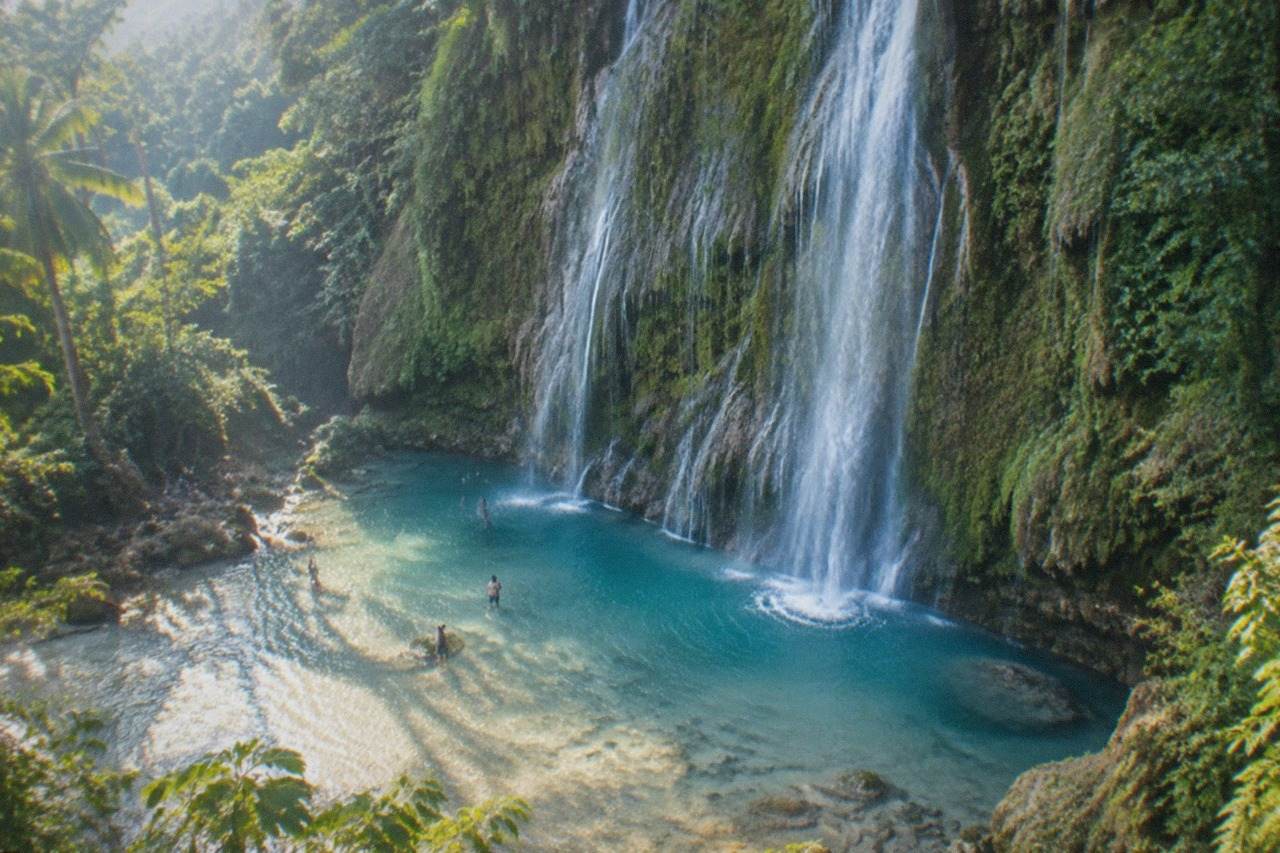
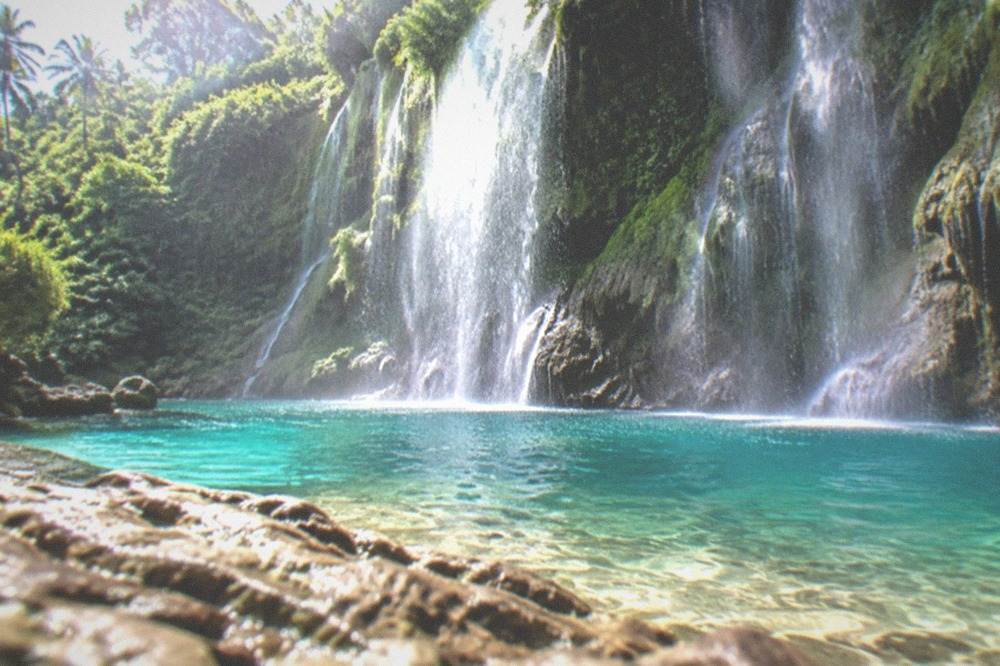
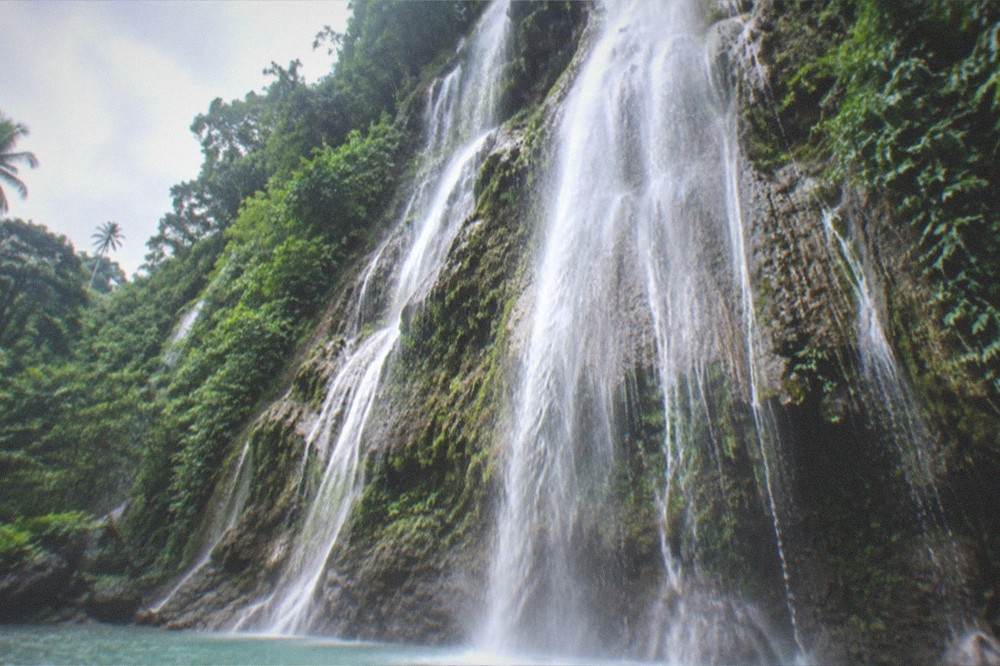
Tumalog Falls is a single, slender ribbon of water dropping roughly 100 feet down a limestone face covered in green moss, pooling in a shallow turquoise basin in Tan-awan, Oslob, on the southeastern coast of Cebu province in the Central Visayas region of the Philippines. The falls sit only a few minutes inland from the barangay where Oslob runs its famous whale shark watching sessions, which is why almost every itinerary on this coast pairs the two on the same early morning. The site is small, the pool is shallow enough to stand in most of the year, and the cliff itself, dripping and fern-fringed even when the main stream is thin, is the real spectacle. This guide covers the entrance fee, the habal-habal ride from Tan-awan, what swimming is actually like, and how to fit the falls into a day built around the Oslob whale sharks.
What Is Tumalog Falls In Oslob, Cebu?
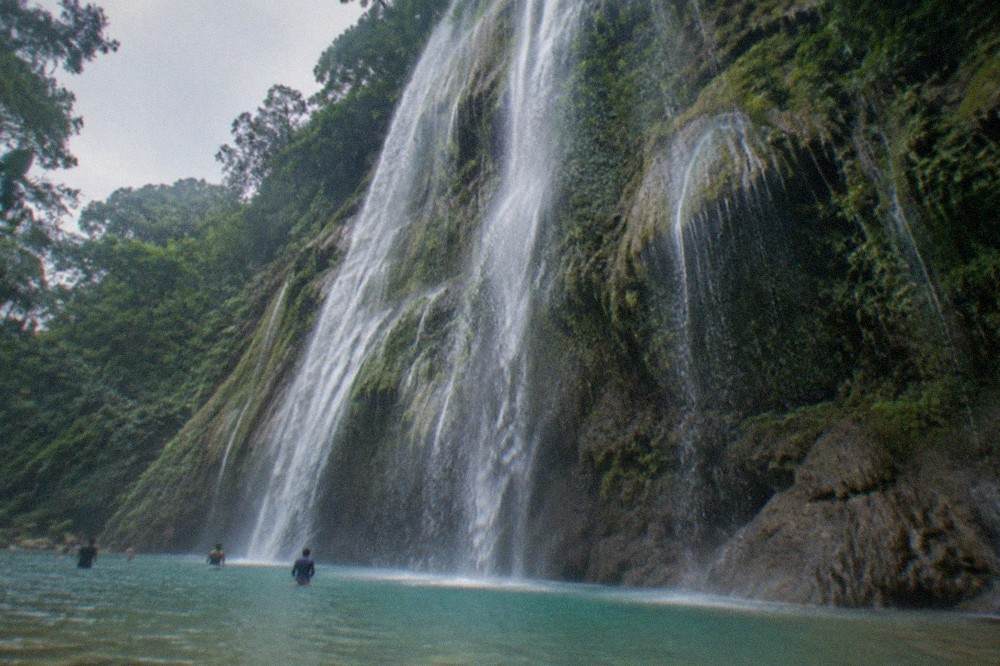
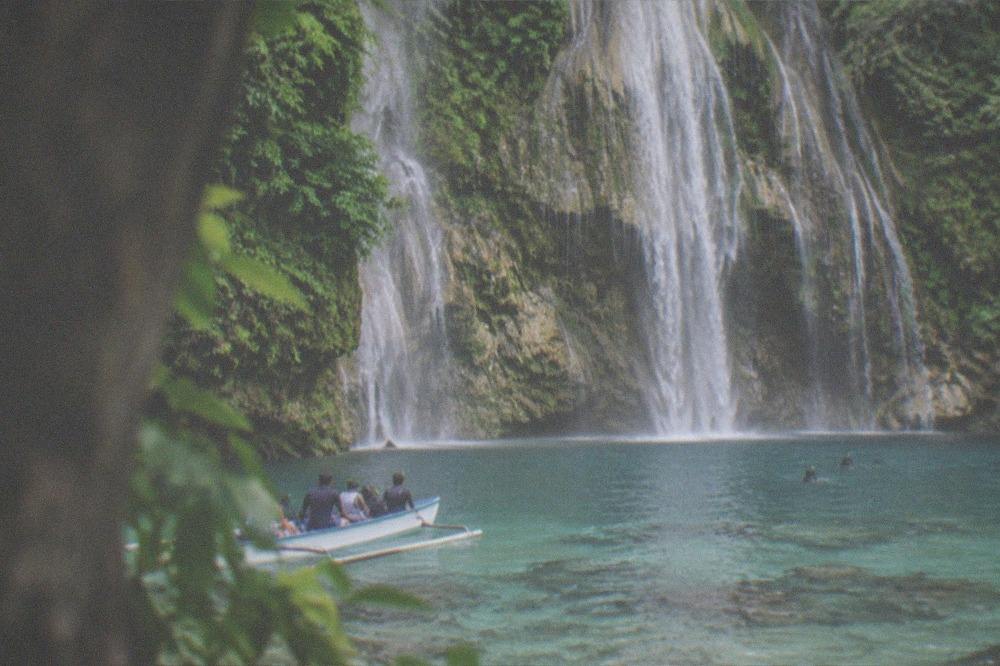
Tumalog Falls is a tall, narrow waterfall on a limestone cliff in Barangay Tan-awan, Oslob, on Cebu's southeastern coast, about 10 minutes by motorbike from the whale shark interaction area. The water fans out over a wide mossy rock face rather than falling in a single column, collects in a shallow turquoise pool, and the site is managed locally as a swimming and photo stop rather than a trekking destination. The cliff is the thing people remember. Where most Cebu waterfalls, like Kawasan Falls in Badian, pour into deep blue lagoons, Tumalog's water spreads across a curved wall of dripping limestone so the whole face glitters, and on a bright morning the pool catches the light through the spray. It keeps running through the dry months when some of the island's other waterfalls slow to a trickle, though the site's research could not confirm what feeds it.
The pool below is shallow, in most places waist-deep or less, with a sandy and pebbled bottom. That shallowness is part of why it works so well as a family stop: children can wade, and non-swimmers can stand in the water without any real depth to worry about. It also means the falls are a photography destination as much as a swimming one. The classic shot, the one that fills every Oslob album, is taken from the water's edge looking up at the full height of the green wall with a person small in the foreground for scale.
The barangay has built basic infrastructure around the falls: a rough vehicle track down from the coastal road, a small registration area where the entrance fee is collected, a few simple shelters and picnic tables, and rinse areas near the parking. None of it is elaborate. This is a municipal-level operation in a rural barangay of a town whose tourism economy, as the Oslob town guide explains, was transformed in barely a decade by the whale sharks a few hundred metres away.
How Much Does Tumalog Falls Cost And What Are The Hours?
Entrance at Tumalog Falls runs about P50 (about US$0.8) per person, collected at a small registration area at the top of the track, and the site is generally open in daylight hours, with mornings the busiest window because whale shark visitors come straight from the Tan-awan session. A habal-habal motorbike from the whale shark area costs about P50 (about US$0.8) to P100 (about US$1.6) each way, and some riders wait at the falls for the return leg. The entrance figure, P50 (about US$0.8) at the current pinned exchange rate, is the one carried consistently by current Cebu travel sources, and it is worth treating as a planning number rather than a fixed tariff: barangay-run sites on this coast adjust their fees by local decision, and the honest advice is to carry small peso notes and confirm at the registration desk.
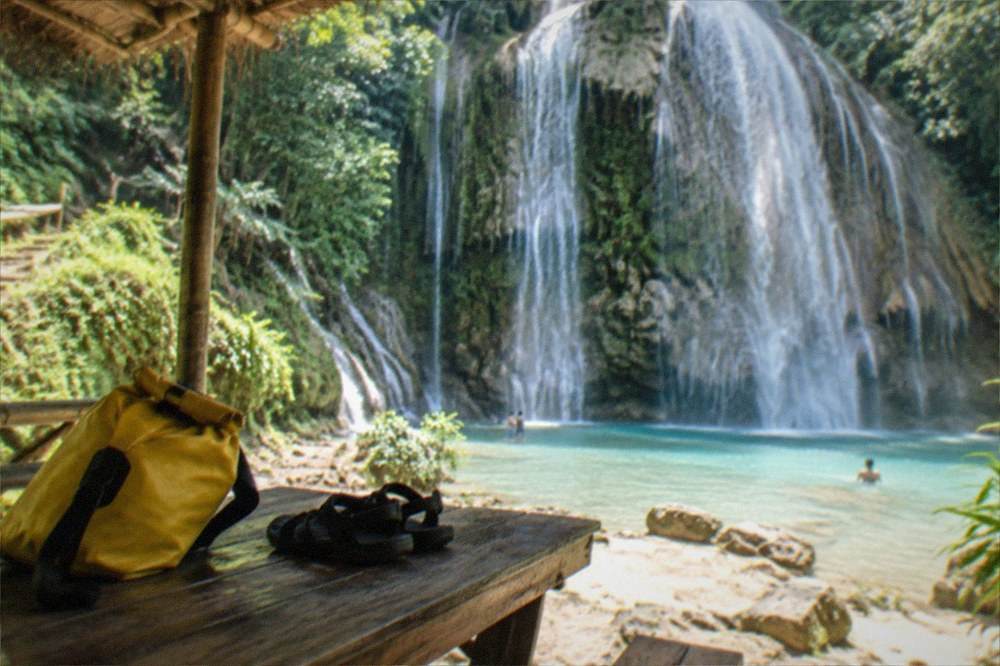
The fee buys you access to the track, the pool and the shelters. There is no separate swimming charge and no gear rental operation of any scale at the falls themselves; if a tour has not included it, you swim in whatever you brought. Changing is basic, so plan on a dry bag rather than expectations of locker rooms.
Here is how the money side of a Tumalog stop typically stacks up for a foreign visitor doing it independently:
| Item | Typical cost | Notes |
|---|---|---|
| Tumalog Falls entrance | P50 (about US$0.8) per person | Collected at the registration area; treat as a planning figure, confirm on site |
| Habal-habal, Tan-awan whale shark area to falls | P50 (about US$0.8) to P100 (about US$1.6) each way | Single motorbike with driver; some wait for the return leg |
| Oslob whale shark fee (foreign) | P1,000 (about US$15.9) per person | Boat and guide included, about 30 minutes in the water |
| Oslob whale shark fee (Filipino) | P500 (about US$8.0) per person | Same session, resident rate |
| Ceres bus, Cebu City to Oslob | P145 (about US$2.3) to P250 (about US$4.0) | From Cebu South Bus Terminal, roughly 3.5 to 4.5 hours |
If you are comparing the independent route against a booked day, the Oslob cost question breaks the full budget down, and the Oslob swim cost question covers what the whale shark session alone includes. One operator runs a join-in day tour from Cebu City that includes a Tumalog Falls stop alongside the whale shark session; the price is not published by the operator, so the listing is the place to check the current figure.
How Do You Get To Tumalog Falls From Cebu City?
From Cebu City, the standard independent route is a Ceres Liner bus from the Cebu South Bus Terminal towards Oslob, roughly 3.5 to 4.5 hours with multiple departures across the day, getting off at the Tan-awan whale shark area, then a habal-habal motorbike for the last stretch to the falls. From Tan-awan the falls are about 10 minutes away by motorbike, and the descent from the coastal road is a steep rough track that, for most visitors, is easier left to the habal-habal driver. The bus fare runs about P145 (about US$2.3) to P250 (about US$4.0) depending on whether the unit is ordinary or air-conditioned, and the route is frequent enough that you do not need to book anything ahead.
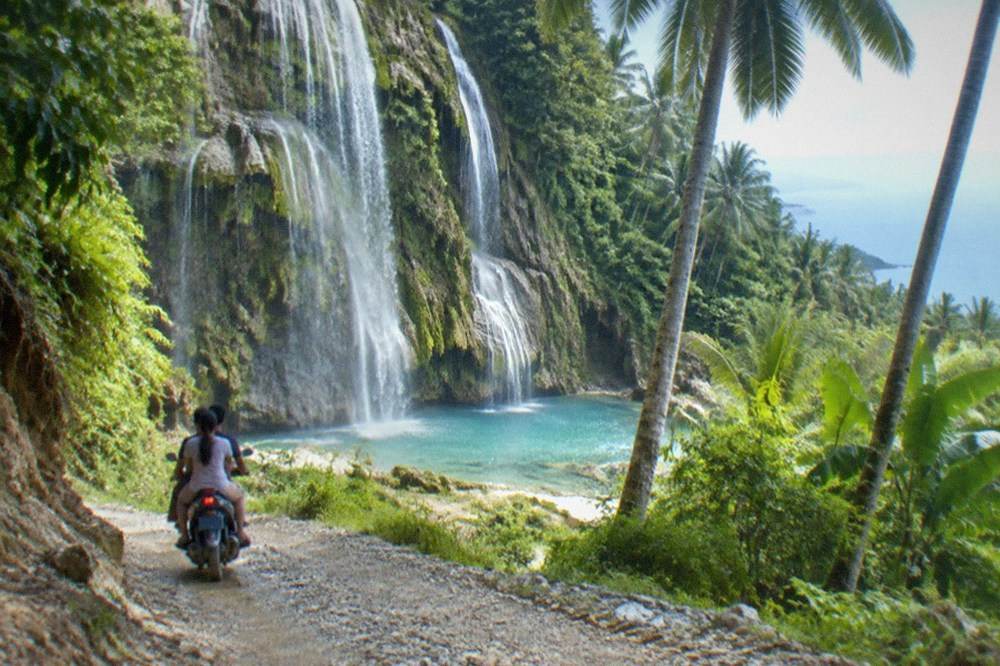
The steep track is the practical detail that surprises people. The falls sit below the level of the main coastal highway, and the road down is a short, pitched descent on gravel and concrete that is slippery after rain. Habal-habal drivers run it constantly and know the surface; walking it is possible but slow, and walking back up in the midday heat is the part people regret. If you arrive by private car or van, drivers usually park at the top and visitors take the short descent on foot or by habal-habal shuttle.
Most people do not build the day around the falls alone. The standard pattern, laid out step by step in the Oslob day trip guide, is a pre-dawn bus or van from Cebu City, the first whale shark session at Tan-awan at about 6 AM, then Tumalog Falls while the morning is still cool, then either the road back or a Sumilon Island stop. If you are weighing this coast against the other famous one, the Oslob versus Moalboal comparison covers the trade-offs honestly: Oslob is the guaranteed-structure morning, Moalboal is the sardine run and the stay-a-few-days town.
For anyone who would rather not coordinate a 3 AM bus, a whale shark briefing window and a habal-habal negotiation in the same morning, a booked tour solves exactly that problem:
The whale shark day tour from Cebu City is another option on the same pattern. Its price is on the live listing rather than published here, and it runs door to door with hotel pickup, the Tan-awan session and a falls stop sequenced for you. For a visitor weighing it against the bus, the arithmetic is simple: the tour price buys the 3 AM logistics, the briefing queue and the habal-habal haggling all at once.
Can You Swim At Tumalog Falls In Oslob, Cebu?
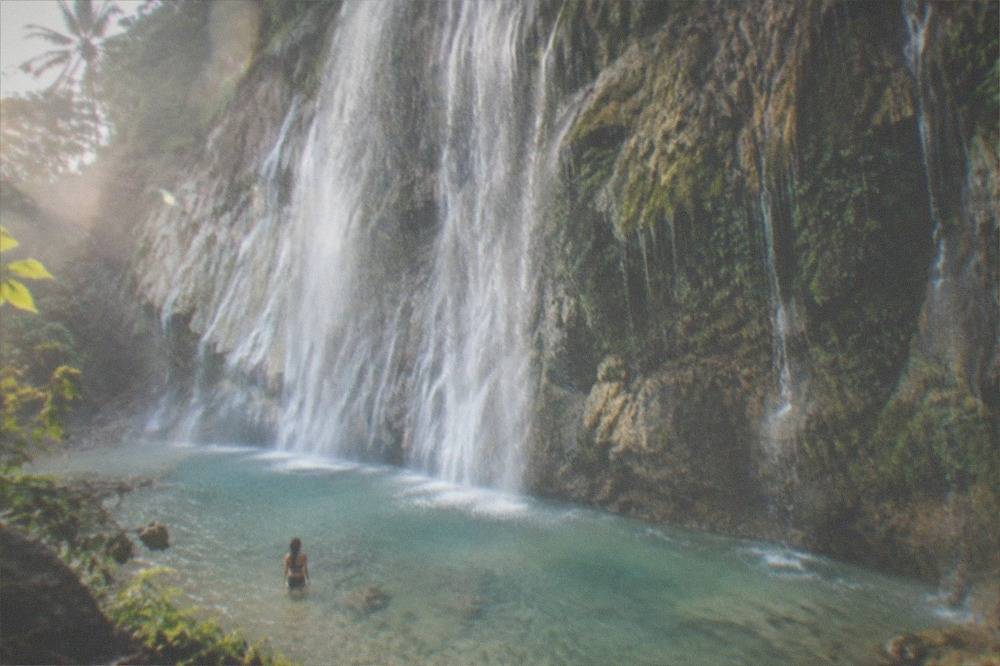
Yes, swimming is allowed and it is the main activity at Tumalog Falls, in a shallow pool that is mostly waist-deep or less, with a sandy and pebbled bottom and no jumping from the surrounding rocks. The pool is small enough that it feels busy once a van group arrives, and the water is cool rather than cold, shaded by the cliff for most of the morning. There are no lifeguards, no marked zones and no formal swim rules posted the way Oslob's whale shark operation runs its briefing, so the safety picture is entirely on the swimmer: the depth is genuinely modest, the rocks at the pool's edge are slick, and the cliff face itself is off-limits to climbers for obvious reasons.
What swimming here actually feels like is more wading than swimming. Because the basin is shallow, for most visitors the experience is standing in chest-deep water at most, letting the spray from the wall drift over them and taking photographs. That is not a limitation so much as the design of the place: the falls are a curtain you stand under, not a lagoon you swim across. Families with small children find this the single most workable waterfall stop in south Cebu for exactly this reason, a point the Oslob worth visiting question comes back to from the other direction.
A few practical rules of thumb make the swim better. Do not wear sunscreen into the pool: the same reef-safe logic that governs the whale shark area a kilometre away applies to a freshwater pool everyone shares, and the whale shark ethics guide covers why Oslob's operators are strict about it in the sea. Use the rinse areas before you leave rather than washing in the pool. And keep to the water rather than scrambling on the mossy ledges either side of the falls, which are the one genuinely easy place to slip here.
When Is The Best Time To Visit Tumalog Falls In Cebu?
The best time to visit Tumalog Falls is early morning, ideally between about 7 and 9 AM, right after the first whale shark sessions at Tan-awan, because the light reaches the pool and the cliff face at that hour and the crowds are still thin. On the calendar, Cebu's dry season runs December to May under PAGASA's national classification, with April the driest month at the Mactan station at 48.1 mm of rain, and the rainy season June to November with October the wettest at 194.8 mm. The falls flow year round, but the experience differs sharply by season: in the dry months the curtain thins and the mossy wall photographs at its green, glittering best, while after heavy rain the flow thickens, the pool churns milky, and the track down becomes slick.
The whale shark schedule anchors everything. Sessions run roughly 6 AM to 12 PM, with the heaviest visitor flow between about 7 and 10 AM, and that flow spills directly into the falls afterwards. Arrive at the falls before 8 AM and you will often share the pool with a handful of people; arrive at 10:30 AM and you may queue behind two vans. This timing logic, and the trade-off between the guaranteed-morning structure of Oslob and the more flexible Moalboal side of the coast, is what the Oslob or Moalboal question turns on.
| Period | Rain at Mactan station | What it means for Tumalog Falls |
|---|---|---|
| December to February | 69.6 to 139.7 mm per month | Cool, dry, clear water in the pool; thinnest curtain of the year |
| March to May | 48.1 to 95 mm per month | Driest stretch, April the low point; best light and photography conditions |
| June to August | 143.5 to 192.9 mm per month | Fuller flow, higher chance of a rained-out morning, slick track |
| September to November | 161.9 to 194.8 mm per month | Wettest stretch, October the peak; pool can churn cloudy after storms |
One seasonal caveat worth planning around: typhoon season on this coast runs June to November, and while Oslob sits on the sheltered southeast side of Cebu, heavy rain in the hills above Tan-awan raises the pool and muddies the water within hours. The falls do not close on a fixed seasonal schedule in the way the whale shark sessions pause when the sharks are absent, as they were for about four days in late May 2026, but a rain-soaked morning changes the visit completely. Check the sky, not just the calendar.
How Do You Combine Tumalog Falls With The Oslob Whale Sharks In One Day?
The classic Oslob morning pairs the first whale shark session at Tan-awan, starting from about 6 AM, with a habal-habal ride to Tumalog Falls immediately afterwards, putting you at the pool by about 8 AM and back on the road by 10, with the whole pairing fitting inside about four hours. The whale shark fee is charged per person with boat and guide included, the falls entrance is a small municipal fee, and the two sites sit about 10 minutes apart by motorbike. In full figures, the whale shark fee is P1,000 (about US$15.9) for foreign visitors and P500 (about US$8.0) for Filipinos, boat and guide included, and the falls entrance adds P50 (about US$0.8). This is the itinerary almost every day tour from Cebu City runs, and it works because both sights reward the same early start.
The order matters more than people expect. Whale shark sessions are morning-only, roughly 6 AM to 12 PM, and the sea is calmest earliest, so the sharks come first. The falls have no closing pressure, but their light and their crowd levels both favour the 7:30 to 9 AM window, which the shark session hands you on a plate. Doing it in reverse, falls first, means arriving at the shark area towards the back of the queue and the top of the heat.
| Time | Step | Cost element |
|---|---|---|
| About 5:30 AM | Arrive Tan-awan, briefing, gear up | Included in the whale shark fee |
| About 6 AM | First whale shark session, about 30 minutes in the water | P1,000 (about US$15.9) foreign / P500 (about US$8.0) local |
| About 7:30 AM | Habal-habal to Tumalog Falls | P50 (about US$0.8) to P100 (about US$1.6) each way |
| About 8 AM | Swim and photograph at the falls | P50 (about US$0.8) entrance |
| About 10 AM | Optional Sumilon Island stop, or the road back | Sumilon day pass is a separate operator product |
Whether the pairing is ethical is a fair question and one this site treats seriously: the whale shark ethics guide sets out the feeding programme, the distance rules and the debate around them, and the ethics question gives the short version. The falls themselves carry none of that weight: they are a small, locally managed freshwater site, and the only ethical burden on a visitor is the ordinary one of not trashing a pool that a barangay keeps clean by hand.
If you would rather have the whole chain, sharks, falls and a Sumilon Island stop, handled as one booking with transport from Cebu City, there is a tour built exactly around it:
The shorter round-trip whale shark experience from Cebu City is an alternative if Sumilon is not on your list, with activities included along the way.
What Should You Bring To Tumalog Falls In Oslob, Cebu?
Bring a dry bag, swimwear worn under your clothes, reef-safe or no sunscreen, water sandals with grip, small peso notes for the entrance and the habal-habal, and a change of clothes, because Tumalog Falls has basic rinse areas but no lockers, no towel service and no food operation of any scale. The packing list is short because the visit is short: most people spend between 45 minutes and 90 minutes at the pool, and everything on this list exists to make that window comfortable rather than to support a half-day base.
The footwear point deserves its own sentence. The track down is steep gravel, the rocks at the pool edge are slick with spray, and the combination punishes flip-flops. Sandals with a real sole, or any shoe you are happy to get wet, beat both bare feet and dry sneakers.
| Item | Why it matters at Tumalog Falls |
|---|---|
| Dry bag | No lockers at the falls; phones and cameras come to the water's edge |
| Grip sandals | Slick track and slick pool-edge rocks |
| Small peso notes | P50 (about US$0.8) entrance and P50 (about US$0.8) to P100 (about US$1.6) habal-habal legs, cash only |
| Swimwear worn under clothes | Basic changing, no proper facilities |
| Towel and change of clothes | Rinse areas exist, towel service does not |
| No sunscreen in the pool | Shared freshwater basin; the same rule the whale shark operation enforces at sea |
One last planning note: this coast rewards an early night before. The pairing day starts at about 3 or 4 AM if you are coming from Cebu City independently, and the difference between a 6 AM shark session and an 11 AM one is the difference this whole article is about. The Oslob worth going question is the honest place to start if you are still deciding whether the early alarm is worth it, and Cebu Travel Guide keeps the fee and schedule figures on this page current with the municipal notices.
If Oslob is only one stop on a longer Cebu trip, the same booking pattern covers the island's other full-day outings, from theme park and ocean park combos to cave and lake days on the Camotes Islands:
Common Questions About Tumalog Falls In Oslob, Cebu
How much is the entrance fee at Tumalog Falls?
About P50 (about US$0.8) per person, collected at the registration area at the top of the track. Treat it as a planning figure and confirm on site, since barangay-run fees on this coast change by local decision.
How far is Tumalog Falls from the Oslob whale shark area?
About 10 minutes by habal-habal motorbike from the Tan-awan whale shark interaction area, costing about P50 (about US$0.8) to P100 (about US$1.6) each way. The last descent to the falls is a steep rough track that, for most visitors, is easier to ride than walk.
Can you swim at Tumalog Falls?
Yes, swimming is the main activity, in a shallow pool that is mostly waist-deep or less with a sandy and pebbled bottom. There are no lifeguards, the surrounding rocks are off-limits, and the pool is small enough to feel busy when a van group arrives.
What time should you visit Tumalog Falls?
Between about 7 and 9 AM, right after the first whale shark sessions at Tan-awan, when the light reaches the cliff face and the crowds are still thin. On the calendar, Cebu's dry season runs December to May, with April the driest month at the Mactan station.
Do the whale sharks and Tumalog Falls fit in one day?
Yes, and that is the standard Oslob morning: a shark session from about 6 AM, a habal-habal to the falls by about 8 AM, and the whole pairing done inside about four hours. Day tours from Cebu City run exactly this sequence, often with a Sumilon Island stop added.
Does Tumalog Falls dry up in the dry season?
No, it runs year round, but the curtain thins in the dry months of December to May while the mossy cliff face photographs at its best. After heavy rain in the June to November season the flow thickens and the pool can churn cloudy.