Oslob Cebu
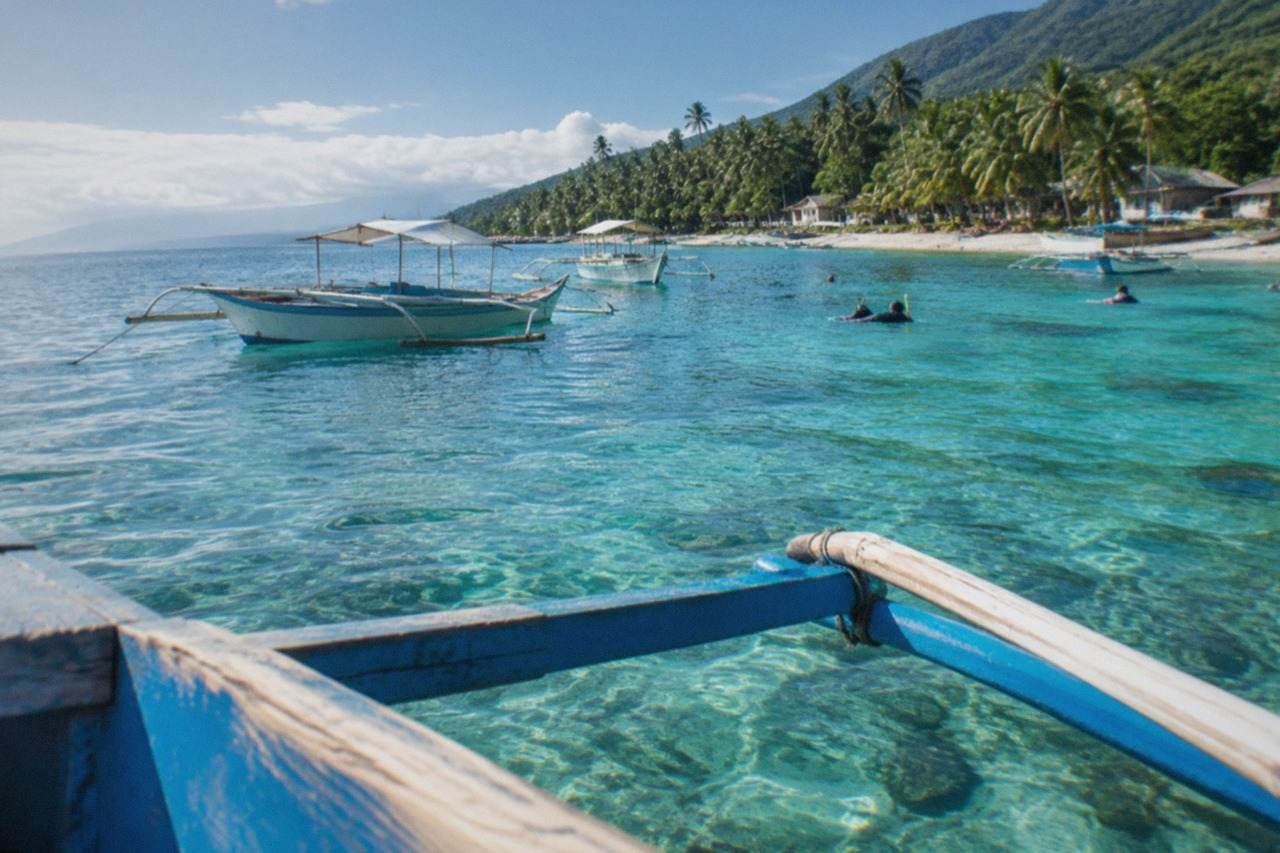
Oslob is a small coastal town at the southern end of Cebu island in the Philippines, and it holds one of the most reliable whale shark encounters in the country. This guide covers the current fees, the interaction rules, Tumalog Falls, Sumilon Island, and how to get there from Cebu City.
Short answer
Oslob sits on the southeast coast of Cebu province, about three to four hours by bus from Cebu City. Foreign visitors pay the whale shark viewing fee of P1,000 (about US$15.9), locals pay P500 (about US$8.0), and sessions run roughly 6 AM to 12 PM daily.
Oslob is a fishing municipality on the southeast coast of Cebu, an island province in the Central Visayas region of the Philippines, roughly 100 kilometres by road south of Cebu City. For most of its history it was a quiet stop on the highway between the provincial capital and the port of Bato. That changed when whale sharks began gathering reliably off the barangay of Tan-awan, and today Oslob is one of the most visited towns in the south of the island. The Cebu Travel Guide to the whale shark interaction covers the ethics in depth; this page is the practical town guide, with the current fees, the rules, the other things worth stopping for, and the transport math for doing it as a day trip.
Where Is Oslob Cebu And What Is It Known For?
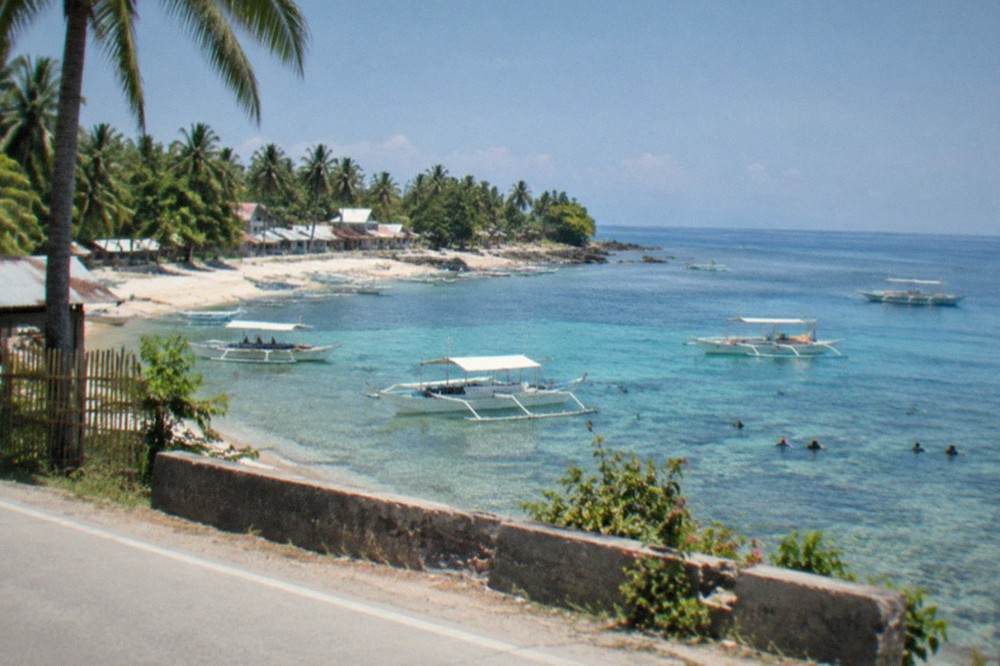
Oslob is a coastal town at the southern end of Cebu island in the Philippines, facing the Tañon Strait, about three to four hours south of Cebu City by bus. It is known above all for whale shark watching off barangay Tan-awan, where the municipal government runs a regulated interaction area with fixed fees, mandatory briefings and set hours of roughly 6 AM to 12 PM. Beyond the sharks, the town is a base for Tumalog Falls and boat trips to Sumilon Island.
The town itself is small and unhurried. The highway runs along the coast, with the municipal hall, a public market and a handful of eateries stretched between the sea and the hills. Tan-awan, the barangay where the whale shark operations are based, sits a few kilometres north of the poblacion. Almost everything a visitor needs, registration desks, boat operators and small restaurants, clusters within walking distance of the beach there.
The whale sharks changed the local economy profoundly. SunStar reported in May 2026 that 800 to 900 visitors a day were passing through Tan-awan at peak, and that sightings dictate operations: when the sharks move away, the boats pause. That dependence on a wild animal is worth understanding before you book anything, and the whale shark ethics guide lays out the feeding debate honestly.
What Does Oslob Whale Shark Watching Cost In 2026?
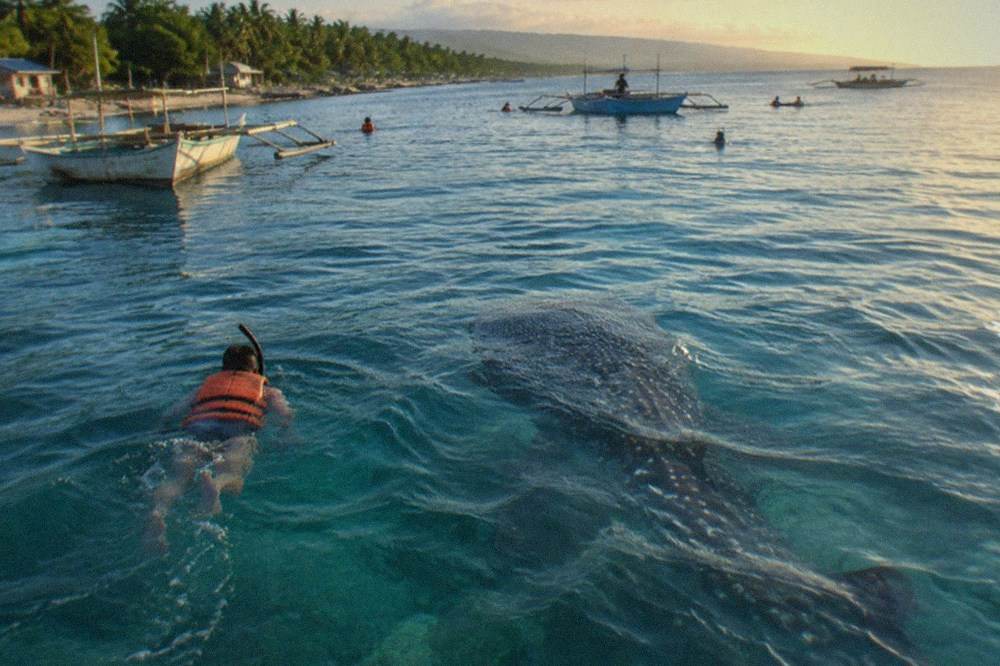
The municipal environmental fee is P1,000 (about US$17) for foreign tourists and P500 (about US$8) for Filipino citizens, boat and guide included, reverted to those rates by the Oslob LGU effective 21 March 2025 under Municipal Ordinance No. 010, s. 2020. Sessions run roughly 6 AM to 12 PM with a registration cutoff around 11 AM, and each in-water session lasts about 30 minutes. Sightings are not guaranteed: the sharks were absent from Tan-awan for about four days in late May 2026.
The fee structure is set by the local government, not by tour operators, so the price is the same whether you arrive independently or on a booked day tour. What the tour adds is the 3 AM-style departure from Cebu City, the transfers and the queue handling, which matters because the interaction area is busiest between roughly 7 and 9 AM. Snorkelling upgrades or scuba add-ons can cost extra, in the region of P200 (about US$3.2) to P500 (about US$8.0) on top of the base fee per local reports.
| Item | Foreign visitor | Filipino citizen |
|---|---|---|
| Whale shark viewing fee (boat and guide included) | P1,000 (about US$17) | P500 (about US$8) |
| Session length | About 30 minutes | About 30 minutes |
| Operating hours | About 6 AM to 12 PM | About 6 AM to 12 PM |
| Registration cutoff | About 11 AM | About 11 AM |
| Second session | Extra fee, paid locally | Extra fee, paid locally |
Booked tours from Cebu City wrap the whole morning into one reservation, which is the sensible route if you are staying in the city and do not want to arrange a 3 AM private car. The full whale shark rundown, including the ethics and the sighting-odds question, lives at Oslob whale sharks.
A good comparison to make before booking is Oslob against Moalboal, the other big south Cebu draw, and the Oslob vs Moalboal guide breaks down which suits a first trip better.
What Are The Rules For Swimming With Whale Sharks In Oslob?
The Oslob rules are municipal regulations, not suggestions: keep a minimum of about 4 metres from the shark's body, never touch the animals, wear a life jacket in the water, and use no sunscreen, no flash photography and no chasing. Feeding is done only by licensed spotters on the boats, and every visitor attends a mandatory briefing before boarding. The session is capped at about 30 minutes in the water, and the interaction area operates only in the morning.
The briefing is short and delivered in Cebuano and English. The 4-metre rule is the one most people break without meaning to, because the sharks swim toward the boats and a swimmer backpedalling slowly can end up closer than intended. The standard advice from the guides themselves is to move to the side rather than backwards, and to let the shark pass.
The no-sunscreen rule surprises more visitors than any other. Chemical sunscreens are considered harmful to the sharks and to the plankton they feed on, so apply reef-safe protection before you leave your accommodation, or wear a rash guard and accept the sun. Guides will ask you to wash off any lotion at the briefing area if they see it.
The feeding programme is the contested part. Licensed spotters ladle small amounts of krill to keep the sharks near the interaction area, which is what makes Oslob's encounters so reliable and what draws criticism from marine biologists. The mayor publicly defended the practice in May 2026 as a minor lure rather than the sharks' primary nutrition, and no DENR or LGU order to end it has been issued. If you want the full picture before deciding, read the whale shark ethics page and the plain answer to whether sightings are guaranteed, both linked in the questions at the end of this guide.
One practical note on timing before the pick below: the rules are enforced most strictly in the first hour, when the water is calm and the spotters are fresh, so a booked early slot buys you the best-behaved session of the day as well as the best light.
What Else Is There To Do In Oslob Besides Whale Sharks?
Oslob's other draws are Tumalog Falls, a wide curtain of water about ten minutes inland from Tan-awan by motorbike, and Sumilon Island, a small island sanctuary reached by boat where the Bluewater resort sells day passes. Add the town's Spanish-era church, the Cuartel ruins on the coast road, and the heritage houses near the poblacion, and the town fills a full day comfortably. A full day in Oslob can combine the sharks at dawn, Tumalog mid-morning and Sumilon after lunch.
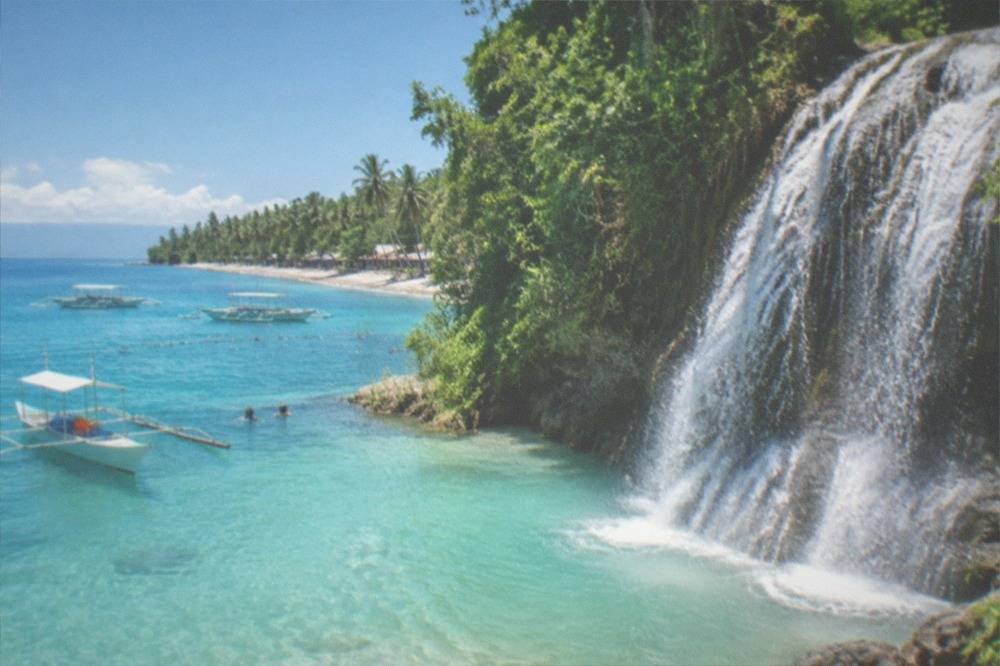
Tumalog Falls is the standard second stop. The falls drop as a wide, shallow curtain over mossy rock rather than a single plunge, and the pool at the base is swimmable. The entrance fee is about P50 (about US$0.8), and habal-habal motorbike rides from Tan-awan run around P50 (about US$0.8) to P100 (about US$1.6) each way. The road down is steep, which is why most people take the bike rather than walk.
Sumilon Island sits just off the Oslob coast and is managed as a private marine sanctuary by the Bluewater resort. The operator's own offers page lists day use from 8 AM to 3 PM with boat transfers included, and a 5+1 group offer for guests from Monday to Thursday, valid to 15 October 2026. The pass covers the beach, the lagoon, the pool and gear, with food credit or buffet depending on the day. Full detail is on the Sumilon Island guide.
The heritage stops are free and quick. The Immaculate Conception parish church in the poblacion dates to the Spanish period, and the Cuartel, an unfinished Spanish-era barracks of coral stone, stands on the coast road south of town. Neither takes more than a few minutes, but they explain why Oslob existed as a town long before the sharks arrived.
| Oslob attraction | Entry cost | Time needed | Best time of day |
|---|---|---|---|
| Whale shark interaction, Tan-awan | P1,000 (about US$17) foreign, P500 (about US$8) local | About 30 minutes in water | 6 AM to 8 AM |
| Tumalog Falls | About P50 (about US$0.8) | 1 to 2 hours | Mid-morning |
| Sumilon Island day pass | P2,000 (about US$32) weekday group offer | Half day | After whale sharks |
| Cuartel ruins | Free | 15 minutes | Any daylight hour |
| Oslob parish church and plaza | Free | 30 minutes | Late afternoon |
How Do You Get From Cebu City To Oslob?
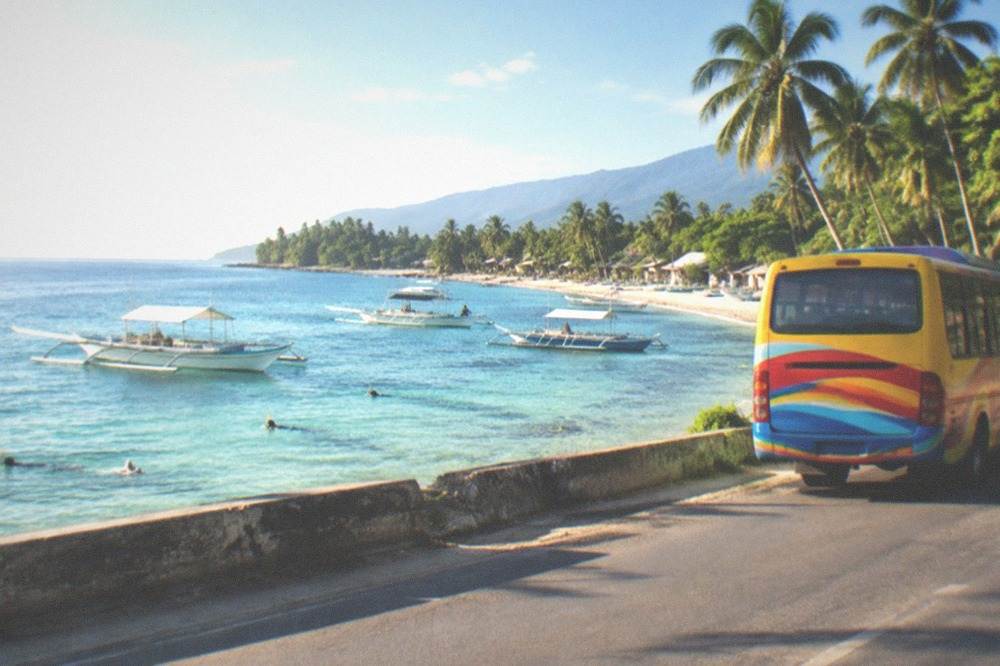
The standard public transport is the Ceres Liner bus from the Cebu South Bus Terminal, on the Bato via Oslob route, taking roughly 3.5 to 4.5 hours, running multiple times daily from early morning, paid onboard or at the terminal. Private transfers and booked tours handle the same road in a similar time, with the advantage of a pre-dawn departure. Bus fares run about P145 (about US$2.3) to P250 (about US$4.0) depending on the class of bus, and departures run roughly 03:00 to 19:00.
The bus is the budget answer and it works well, but the timing is the catch. To be at Tan-awan for a 6 AM session you need to be on one of the earliest departures, which is why most independent travellers now stay a night in Oslob or Moalboal and do the sharks from there. If you are set on a day trip from the city, a booked tour with hotel pickup solves the 3 AM logistics.
Ask for Tan-awan, not Oslob poblacion, when you board: the whale shark registration area is in Tan-awan, and the conductor will drop you on the highway within walking distance of the beach. Coming back, flag any northbound Ceres bus on the highway; seats are not guaranteed at midday, so an early-afternoon return is safer than a late one.
The full transport picture, including the airport connection and the CBRT partial service in Cebu City, is covered in the site's transport pages, and the city area guide covers where to base yourself before a southbound trip.
| Route | Mode | Time | Cost per person |
|---|---|---|---|
| Cebu City to Oslob (Tan-awan) | Ceres bus, Bato via Oslob | About 3.5 to 4.5 hours | About P145 (about US$2.3) to P250 (about US$4.0) |
| Cebu City to Oslob | Booked day tour with pickup | Full day, early start | Tour price, see listing |
| Tan-awan to Tumalog Falls | Habal-habal motorbike | About 10 minutes | About P50 (about US$0.8) to P100 (about US$1.6) each way |
| Tan-awan to Sumilon Island | Resort boat | About 15 minutes | Included in day pass |
When Is The Best Time To Visit Oslob Cebu?
The best months for Oslob are December to May, the PAGASA dry season, when the sea is calmest and the mornings most reliable; the wet season runs June to November with a peak of typhoon risk roughly July to October. The whale sharks themselves are resident year-round and the interaction area operates daily, so the season affects sea conditions and travel comfort more than shark presence. Arrive before 8 AM regardless of month, because the water is calmest and the crowds thinnest then.
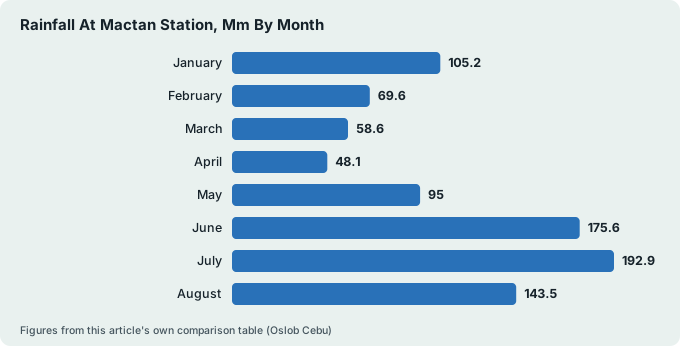
The rainfall numbers back this up. PAGASA's 1991-2020 normals for the Mactan station show October as the wettest month of the year at 194.8 mm and April as the driest at 48.1 mm. The south of Cebu sits in the same broad pattern, and heavy rain matters in Oslob more than in most towns because the whole experience depends on being in open water in the morning.
One seasonal caveat deserves its own sentence: the sharks feed on plankton, and plankton moves. In late May 2026 the animals were absent from the Tan-awan interaction area for about four days because the plankton had shifted toward a neighbouring barangay, and operations paused until the sharks returned. The LGU was clear that this was seasonal movement, not a collapse of the programme, but it is the reason no operator can promise a sighting. The best time to visit Cebu guide has the month-by-month detail.
| Month | Rainfall at Mactan station, mm | Oslob conditions |
|---|---|---|
| January | 105.2 | Dry, calm seas, peak season crowds |
| February | 69.6 | Dry season, good visibility |
| March | 58.6 | Hot and dry, excellent water clarity |
| April | 48.1 | Driest month of the year |
| May | 95.0 | Hot, dry season ending |
| June | 175.6 | Wet season begins |
| July | 192.9 | Rain frequent, typhoon peak begins |
| August | 143.5 | Wet season, humid |
| September | 179.6 | Wet season, typhoon peak |
| October | 194.8 | Wettest month, highest storm risk |
| November | 161.9 | Wet season ending, landfall risk high |
| December | 139.7 | Transition to dry, Sinulog crowds build |

Where Can You Stay And Eat In Oslob?
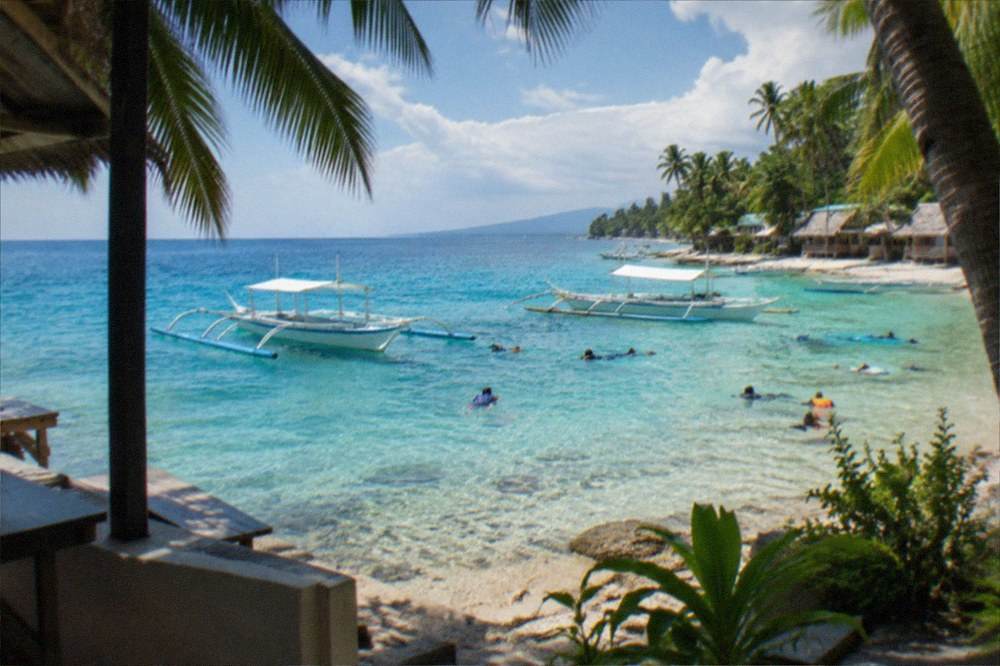
Oslob has a spread of small resorts and guesthouses concentrated in Tan-awan and along the coast road south toward Sumilon, from basic fan rooms to beachfront cottages, plus dive resorts that run their own shark-and-Sumilon packages. Eating is simple and local: carinderias near the registration area open at dawn for tour groups, and the public market in the poblacion is the place for cheap meals once the morning rush clears. Staying a night turns a brutal 3 AM day trip into a relaxed evening-and-dawn routine.
The case for staying overnight is arithmetic more than luxury. A day trip from Cebu City means a pickup around 3 AM and a return in evening traffic, ten hours of which perhaps one hour is in the water. A night in Tan-awan means you walk to registration at 5:30 AM, do the sharks at first light, and have the whole rest of the day for Tumalog and Sumilon while the day-trippers are still on the bus.
Food is honest and cheap rather than a destination. Grilled fish, pancit and rice dominate the Tan-awan menus, and the small restaurants along the highway serve breakfast from before 6 AM because the tour schedule demands it. For a proper food experience in the region, save your appetite for the city: the Cebu food and lechon guide covers the roast pork the province is famous for, and the market walk below is the best way to eat your way through Cebu City before or after your south trip.
Is Oslob Worth Visiting, And Should You Stay Or Day-Trip?
Oslob is worth visiting if you want a near-certain whale shark encounter and can accept the ethics debate around the feeding programme; it is skippable if a wild, unpredictable encounter matters more to you than a reliable one. As a day trip from Cebu City it works, but it is a long day, roughly three to four hours each way by road, and those who stay a night in Oslob or Moalboal enjoy the morning far more. The sharks, the falls and Sumilon together justify one full day.
The honest framing is this: Oslob offers reliability that almost nowhere else in the world matches, and the price of that reliability is a managed interaction rather than a wild one. SunStar's reporting on the four-day absence in May 2026 shows even this programme bends to nature, but four days off in a year is a far better bet than any free-swimming site. Travellers who weigh this differently should read the is Oslob worth going answer before committing.
The stay-versus-day-trip question usually resolves into where the rest of your trip is based. If you are anchored in Cebu City or Mactan, the booked day tour is the practical choice, and the Oslob day trip itinerary sequences the whole thing. If you are touring the south, sleep in Oslob or Moalboal town and let the sharks be a morning, not a mission.
Common Questions About Oslob Cebu
How much does it cost to swim with whale sharks in Oslob?
The municipal fee is P1,000 (about US$17) for foreign visitors and P500 (about US$8) for Filipinos, with boat and guide included, and the in-water session lasts about 30 minutes. Snorkelling or scuba add-ons can cost extra. The full breakdown is at what it costs to swim in Oslob.
Are whale shark sightings guaranteed in Oslob?
No. The sharks are resident and the encounter is one of the most reliable in the world, but they were absent from Tan-awan for about four days in late May 2026 when the plankton shifted. No operator can promise a sighting; the honest odds are at are sightings guaranteed in Oslob.
Can you do Oslob as a day trip from Cebu City?
Yes, and it is the most common way to do it. The road takes roughly 3.5 to 4.5 hours by bus, so booked tours leave the city around 3 AM to reach the 6 AM opening. The sequenced plan is on the Oslob day trip itinerary page.
Is Oslob or Moalboal the better base in south Cebu?
Oslob is the base if whale sharks are the priority; Moalboal suits divers and travellers who want the sardine run, Pescador Island and a livelier beach scene. Many people do both on one south loop. The comparison is at Moalboal or Oslob for your stay.
What else is there to see in Oslob besides the whale sharks?
Tumalog Falls, about P50 (about US$0.8) to enter, is ten minutes inland from Tan-awan; Sumilon Island sells day passes with boat transfers; and the Spanish-era Cuartel ruins and parish church are free stops in town. Many pair the sharks with the falls on the same morning.
Is the Oslob whale shark interaction ethical?
It is contested. The sharks are lured by licensed spotters feeding small amounts of krill, which keeps them near the boats; critics argue this alters natural behaviour, while the LGU and the mayor defend it as a minor lure. Read both sides at whether Oslob's whale sharks are ethical before you decide.
Plan the morning around the 6 AM opening, carry cash for the municipal fees and the falls entrance, and Oslob rewards the early start with calm water, thin crowds and the biggest fish in the sea a few metres from your goggles.