Is It Ethical To Swim With Whale Sharks In Oslob?
A straight answer on the ethics of swimming with whale sharks in Oslob, Cebu: how the feeding programme works, what the rules demand, and how to lower your impact if you go.
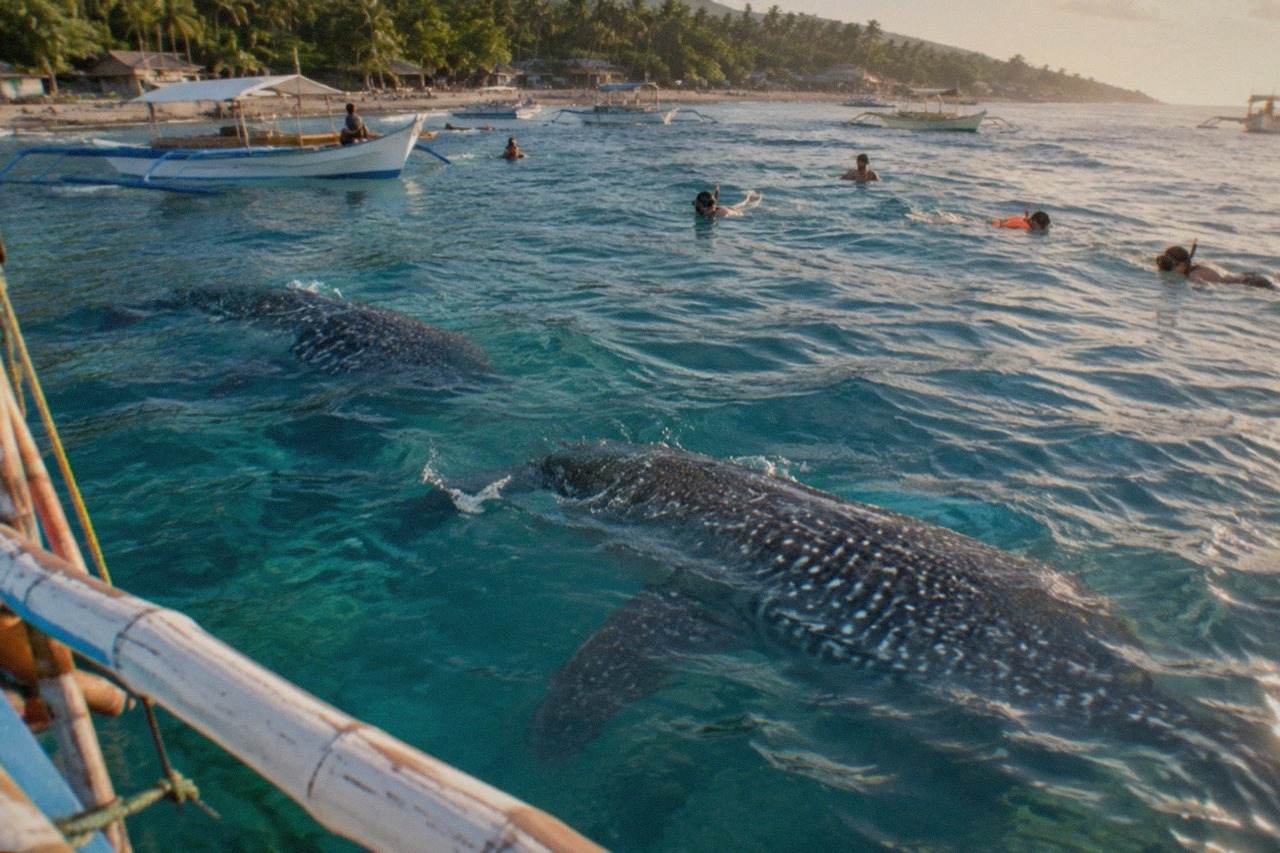
Oslob, on the southern coast of Cebu province in the Central Visayas region of the Philippines, has turned a fishing village called Tan-awan into one of the most debated wildlife attractions in Asia. Every morning from about 6 AM to 12 PM, visitors pay to enter the water with whale sharks that are lured close to the boats by licensed spotters feeding them small amounts of shrimp. The question of whether that is ethical has no simple yes or no, and this page does not pretend otherwise. What follows is how the programme actually works, what the rules demand of you in the water, and how to weigh the whole thing for yourself.
Is It Ethical To Swim With Whale Sharks In Oslob?
Swimming with the whale sharks in Oslob is not ethical in the way a truly wild encounter is, because the sharks are attracted by hand-feeding, which alters their natural behaviour, but it is a regulated, legal, LGU-run programme with enforced rules on distance, contact and sunscreen, and no ban or suspension has ever been issued by DENR or the town. Whether it is acceptable is a personal call: the honest answer is that it sits in a grey zone between a wildlife experience and a managed attraction.
That grey zone is worth unpacking rather than glossing. The core criticism is the feeding: brine shrimp is scooped to the surface by licensed spotters so the sharks stay near the interaction area instead of moving on along their normal migration. Critics argue this conditions the animals, keeps them in shallow water longer than is natural and exposes them to boat traffic and people every single day. Defenders, including Oslob's own mayor, said publicly in May 2026 that the feeding is a minor lure rather than the sharks' primary nutrition, and that the animals come and go as they please. Both things can be true at once. The sharks are free-roaming and unenclosed, yet their presence at Tan-awan is engineered daily.
The counterweight is what the money and the regulation have achieved. Tan-awan was a poor fishing barangay before the interaction programme became its livelihood; many of the men who now work as spotters and boat crew were subsistence fishermen, and some of them formerly hunted whale sharks for their meat. The interaction fee, P1,000 (about US$15.9) for foreign tourists and P500 (about US$8.0) for Filipinos with boat and guide included under Municipal Ordinance No. 010, s. 2020, reverted to those rates on 21 March 2025 and now funds the municipality's tourism operation. The sharks are a protected species under Philippine law, and the daily alternative to this programme, historically, was not a pristine wild ocean but a harpoon.
If you want the fuller background, the site's dedicated whale shark ethics guide for Oslob goes deeper into the research on both sides, and the Oslob whale sharks attraction page covers the practical mechanics of a visit.
How The Feeding Programme At Tan-Awan Actually Works
Every morning, licensed spotters in small outrigger boats scoop brine shrimp from the shallows and drip it into the water to keep whale sharks near the interaction zone, and only those licensed spotters may feed the sharks; tourists, guides and boat crew are forbidden from feeding, touching or chasing them. The sharks are not enclosed, not tagged into place and not captive in any physical sense, they arrive and leave of their own accord, and when they choose not to come, no amount of shrimp changes that.
The last point is not theoretical. In late May 2026 the whale sharks were absent from the Tan-awan interaction area for roughly four days because the plankton they feed on had drifted toward a neighbouring barangay. The town's tourism office and mayor were clear that operations were dictated by sightings, not by demand, and the sharks returned on their own. That episode is the single best evidence both for and against the operation: it shows the animals are free to leave, and it shows the whole local economy is built on their unpredictable choice to come back.
It also shows the scale of what has been built here. SunStar reported around 800 to 900 visitors a day passing through Tan-awan in the May 2026 season, each paying the fee, each taking a 30-minute session in the water. Multiply that out and Oslob's whale sharks generate more tourist revenue in a week than most Philippine dive sites see in a year. That money is exactly why the programme is defended so fiercely locally, and exactly why the rules matter: an operation this size with lax rules would be a disaster for the animals.
What The Rules Require From You In The Water
The mandatory rules at Oslob are a minimum distance of about four metres from a shark's body, no touching, no sunscreen or sunblock at all, no flash photography, no chasing or blocking a shark's path, a life jacket if you are snorkelling, and a session of about 30 minutes after a compulsory briefing, and these are enforced by guides in the water, not left to visitor goodwill. Breaking them can end your session and, for repeat or serious violations, carries local penalties.
The sunscreen rule surprises people more than any other, and it deserves a word. Reef-safe or not, any cream on your skin washes off onto an animal that filters thousands of litres of water through its gills, so Oslob bans it outright: cover up with a rash guard instead. The four-metre distance is the other one visitors underestimate. Whale sharks are gentle and slow, but they are the size of a bus, they can move faster than you swim when they want to, and a tail strike at close range is a genuine injury risk to you, not to them. The rule protects both parties. Other pages covering the same trip are gathered on Cebu Travel Guide.
Here is the rule set as it applies in the water, with the reason each rule exists:
| Rule at Tan-awan | What it means in practice | Why it exists |
|---|---|---|
| About 4 m minimum distance from the body | Stay back from the shark, further from the tail | Protects the shark's skin and your ribs |
| No touching, ever | Hands off, even if one swims at you | Contact transfers oils and can damage the skin's protective layer |
| No sunscreen or sunblock | Wear a rash guard or UV shirt instead | Chemicals wash onto a filter-feeding animal |
| No flash photography | Natural light only | Flash stresses the sharks and disorients them |
| Feeding only by licensed spotters | Tourists and crew never throw food | Keeps the feeding controlled and quantified |
| Life jacket while snorkelling | Worn for the whole session | Keeps you at the surface, away from the animals |
| About 30 minutes in the water | One session per fee, extra session costs more | Caps the sharks' daily exposure to people |
If you decide to go, the practical choice is between making your own way down and joining an organised day trip. A join-in tour handles the road transfer from Cebu City, the briefing and the boat in one booking, and the most-booked option on this site is the join-in day tour that also stops at Tumalog Falls:
The operator has not published a price for this one on its live listing, so the card above carries whatever the current figure is. If you would rather compare it against other booked options around Cebu, the band below shows the join-in whale shark tour beside two very different days out:
How Oslob Compares To Wild Whale Shark Encounters
A wild whale shark encounter, where animals are found feeding naturally and approached passively, is ethically cleaner than Oslob because nothing is fed and nothing is conditioned, but it is also far less reliable, often seasonal, and usually needs a boat, a spotter plane or luck, whereas Oslob runs daily and delivers an encounter close to every morning. The ethical gap between the two is real; so is the reliability gap.
The classic wild sites work differently. In Donsol, in Sorsogon, spotters search for sharks feeding naturally and swimmers enter only when one is found, with no feeding at all. Around Ningaloo in Australia, the sharks gather on their own annual aggregation and tours approach them under strict codes. In Cebu itself, whale sharks pass through the Tañon Strait between Cebu and Negros, and divers occasionally meet them by chance at sites around Moalboal and along the south coast, but there is no guarantee, no schedule and no promise. The trade is straightforward: wild means honest and unreliable; Oslob means reliable and engineered.
| Encounter type | Feeding involved | Reliability | Typical effort |
|---|---|---|---|
| Oslob, Tan-awan | Yes, licensed spotters lure with shrimp | Near-daily, sightings still not guaranteed | Shore-based, 30-minute session |
| Donsol-style wild search | None, sharks found feeding naturally | Seasonal, no guarantee | Boat search, may find nothing |
| Chance sightings in the Tañon Strait | None | Rare and unpredictable | Needs diving or snorkelling luck |
| Passive snorkelling at Moalboal (sardines, turtles) | None | Very reliable, shore access | Swim from Panagsama Beach |
That last row is worth a thought for anyone whose discomfort with Oslob is specifically the feeding. The sardine run at Moalboal is a genuinely wild, un-fed phenomenon: a permanent school of millions of sardines that lives year-round a few metres off Panagsama Beach, with green turtles grazing the reef flat nearby. You can swim with it any morning for the P100 (about US$1.6) environmental user fee and see a bait ball that dwarfs anything a feeding programme could stage. It is not a whale shark, but it is the most ethical big-animal snorkelling on the island, and the Moalboal or Oslob comparison covers how the two towns stack up for a visitor choosing between them.
How To Reduce Your Impact If You Decide To Go
If you go to Oslob, you lower your impact by going early in the 6 AM window before the crowd builds, wearing a rash guard instead of sunscreen, keeping four metres and your hands to yourself, choosing a licensed operator that follows the briefing rules, and treating the 30 minutes as a quiet observation rather than a chase, because every rule you keep makes the sharks' day slightly more normal and every one you break pushes the operation further from anything defensible.
Timing matters more than many people expect. The interaction runs from about 6 AM to noon, with registration typically cutting off around 11 AM, and the first hours are quieter, cooler and calmer: fewer boats, fewer people in the water, less stress on the animals, better light for photographs without flash. By mid-morning the bay can be busy, and a crowded session is harder on the sharks even when every individual visitor follows the rules. Going early is the single easiest ethical upgrade available to you.
The second upgrade is honesty about why you are there. The sharks are not there for you; you are a guest in their feeding ground. That sounds like a platitude until you see the difference in the water between people who float still and let a shark pass beneath them, and people who kick hard to keep pace with one. The former get a longer, closer, calmer encounter anyway. The rules cap you at about 30 minutes for exactly this reason: the session limit exists so the sharks get a break from people, not so you get your money's worth.
Third, pick your operator with the same care. A licensed join-in tour from Cebu City that runs the compulsory briefing, supplies the life jacket and includes the boat is the baseline; an unlicensed freelance boatman offering a cheaper rate on the beach is how the rules get broken. If you have weighed all of this and decided the experience is worth it to you, the join-in day tour below is the licensed option this site carries, and you can hold a booking without paying today:
The Oslob worth visiting question runs through the full decision for people still on the fence, and whether sightings are guaranteed at Oslob answers the practical follow-up: they are not, and the four-day absence in May 2026 proved it.
Common Questions About Whale Shark Ethics In Oslob
Is it ethical to swim with whale sharks in Oslob?
It is a managed encounter rather than a wild one, because licensed spotters lure the sharks with shrimp, which changes their natural behaviour. It is also legal, regulated and rule-enforced, with no ban from DENR or the local government, and it replaced shark hunting as the town's livelihood. Most observers land somewhere between: less ethical than a wild encounter, far better run than an unregulated one.
Do the whale sharks at Oslob get hurt by the feeding?
No injury from the feeding itself has been documented in 2025-2026 sources, and the sharks are free to leave, which they demonstrably do, as in the roughly four-day absence in late May 2026. The documented concerns are behavioural: altered movement patterns, longer time in shallow water and daily exposure to boats and people.
Is touching a whale shark at Oslob allowed?
No. Touching is banned, the minimum distance is about four metres from the body, and guides in the water enforce it. Sunscreen, flash photography and chasing are banned for the same reason: each one stresses or harms an animal that filters huge volumes of water through its gills.
Are the Oslob whale sharks captive?
No. There is no enclosure, net, pen or tag holding them at Tan-awan. They are free-roaming sharks that associate the area with an easy food source, and they leave when the plankton moves elsewhere, as the town itself confirmed when sightings dictated a pause in May 2026.
What is the most ethical way to see big marine life in Cebu?
Purely by ethics, the wild sardine run and turtle snorkelling at Moalboal, reachable from shore for the P100 (about US$1.6) environmental user fee, involves no feeding or conditioning at all. Whale sharks pass through the Tañon Strait naturally too, but chance encounters cannot be planned. Oslob remains the only reliable whale shark sighting on the island.
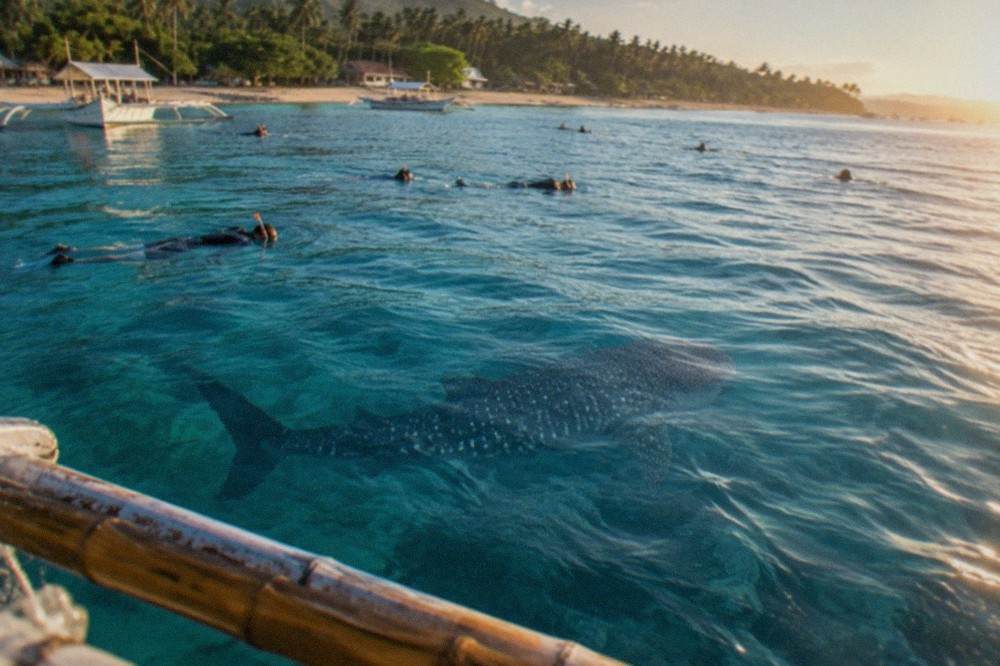
The honest closing position, and the one this site holds, is that Oslob is neither a sanctuary nor a scandal. It is a regulated compromise that pays an entire town to protect animals its fishermen once killed, at the cost of conditioning those same animals to approach boats. Whether that trade is one you can accept is yours to decide; if you go, the rules, the early start and the four metres are the part of the decision you still control.