Where Can I See Whale Sharks In The Philippines?
The main place to swim with whale sharks in the Philippines from Cebu is Oslob, on the island's southeast coast. This guide covers Oslob fees, rules, hours and how to get there from Cebu City.
Cebu, an island province in the Central Visayas region of the Philippines, is a common base for the country's best-known whale shark encounter. The site is Oslob, a small coastal town on Cebu's southeast shore, roughly three and a half to four and a half hours by bus from Cebu City. Whale sharks gather there year-round in the shallow water off the barangay of Tan-awan, and the interaction is run under municipal rules that set the price, the hours and the conduct expected of every swimmer. This page sets out where the site is, what it costs, what the rules are and how the trip works, with Cebu Travel Guide as the home for the rest of the island's planning questions.
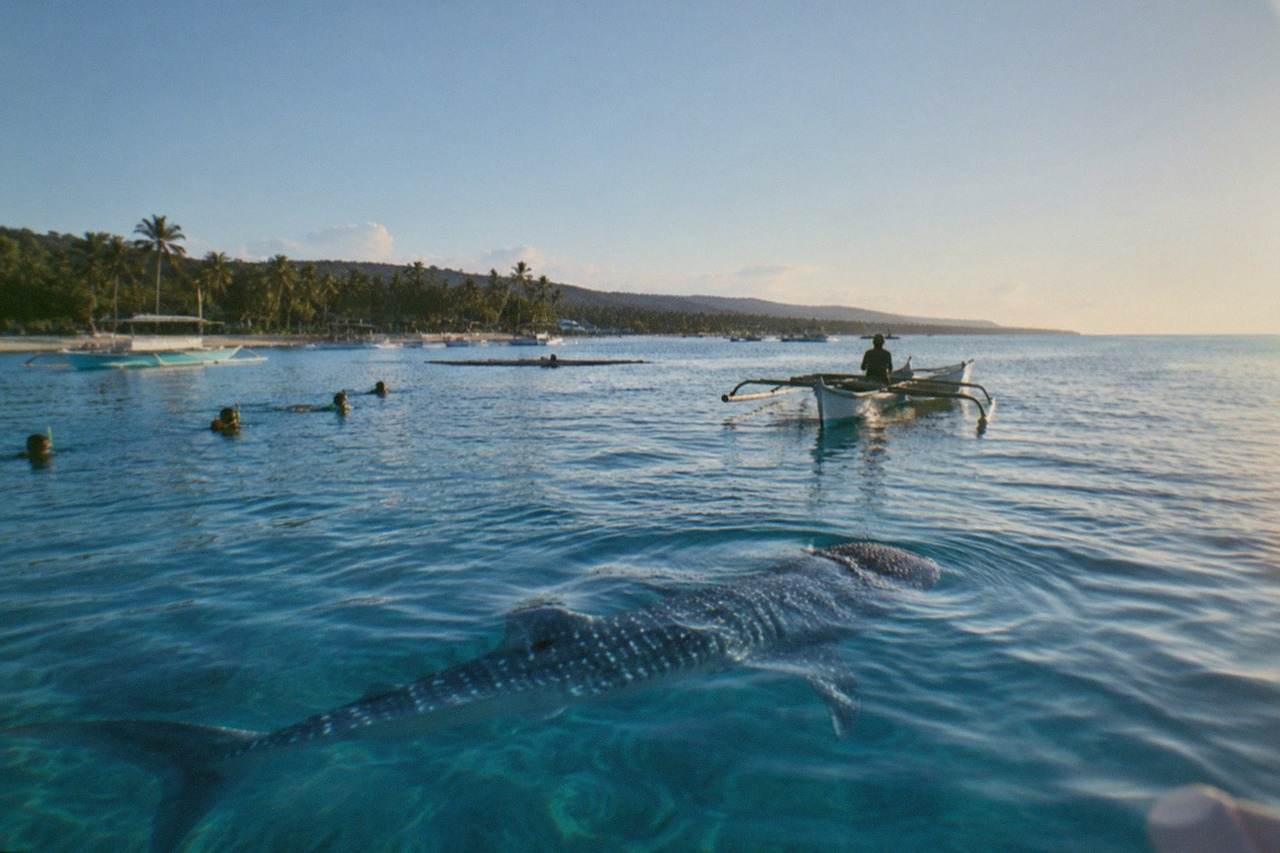
Where Can I See Whale Sharks In The Philippines?
The place travellers mean when they ask this question is Oslob, on the southeast coast of Cebu island in the Central Visayas. Whale sharks feed in the shallow water off Tan-awan barangay there year-round, watched under a municipal programme that runs roughly 6 AM to 12 PM daily. It is the only site in the Philippines where sightings are close to daily rather than seasonal, which is why nearly every whale shark itinerary in the country routes through Cebu.
That reliability has a trade-off, and it is worth knowing before you book. The Oslob programme is a feeding operation: licensed spotters lure the sharks with small amounts of shrimp to keep them near the interaction area. Conservationists debate the practice, and the site's own rules exist because the sharks are wild animals, not a trained show. The full history and the arguments on both sides are covered in Cebu's whale shark ethics discussion, which is worth reading before you decide whether the trip is for you.
The practical appeal is simple. Oslob is reachable as a day trip from Cebu City, the encounter lasts about thirty minutes in the water, and the fees are fixed by municipal ordinance rather than negotiated with a boatman on the beach. For travellers with only a few days on Cebu, it packs into one early morning what other whale shark sites elsewhere in the Philippines can only offer in a narrow seasonal window.
What Does Whale Shark Watching In Oslob Cost?
The Oslob environmental fee is set by municipal ordinance, not by tour operators, and it is the same whether you arrive independently or with an organised tour. Foreign tourists pay double the local rate, the boat and guide are included in the fee, and a session in the water runs about thirty minutes. Snorkelling and scuba upgrades cost extra on top of the base fee, paid locally at the site.
The exact figures: the fee is P1,000 (about US$15.9) per foreign tourist and P500 (about US$8.0) per Filipino visitor under the Municipal Ordinance No. 010 rates that took effect on 21 March 2025, and snorkelling or scuba add-ons can add P200 (about US$3.2) to P500 (about US$8.0). Because the price is municipal, no operator can undercut it or inflate it; what a tour adds is transport and timing. The drive from Cebu City is long, the sharks stop being fed around midday, and the registration desk closes about an hour before the water clears. A join-in tour handles the pre-dawn departure, the bus or van, and the queue at the briefing hall.
| Item | Fee | Notes |
|---|---|---|
| Foreign tourist, watch or snorkel | P1,000 (about US$15.9) | Boat and guide included, about 30 minutes in the water |
| Filipino visitor, watch or snorkel | P500 (about US$8.0) | Same session, same rules |
| Snorkelling or scuba upgrade | P200 (about US$3.2) to P500 (about US$8.0) | On top of the base fee, paid locally |
| Tumalog Falls entrance | P50 (about US$0.8) | Falls are a short habal-habal ride from Tan-awan |
Most day tours bundle Tumalog Falls, a tall thin cascade about twenty minutes inland from the whale shark area, because the timings line up: sharks first thing in the morning, falls before lunch. The falls sit in the same Oslob municipality, and the entrance is a few pesos on top of the whale shark fee. If you are weighing whether the whole morning is worth the money, whether snorkelling with whale sharks is worth it is the question other visitors ask most often.
What Are The Oslob Whale Shark Rules?
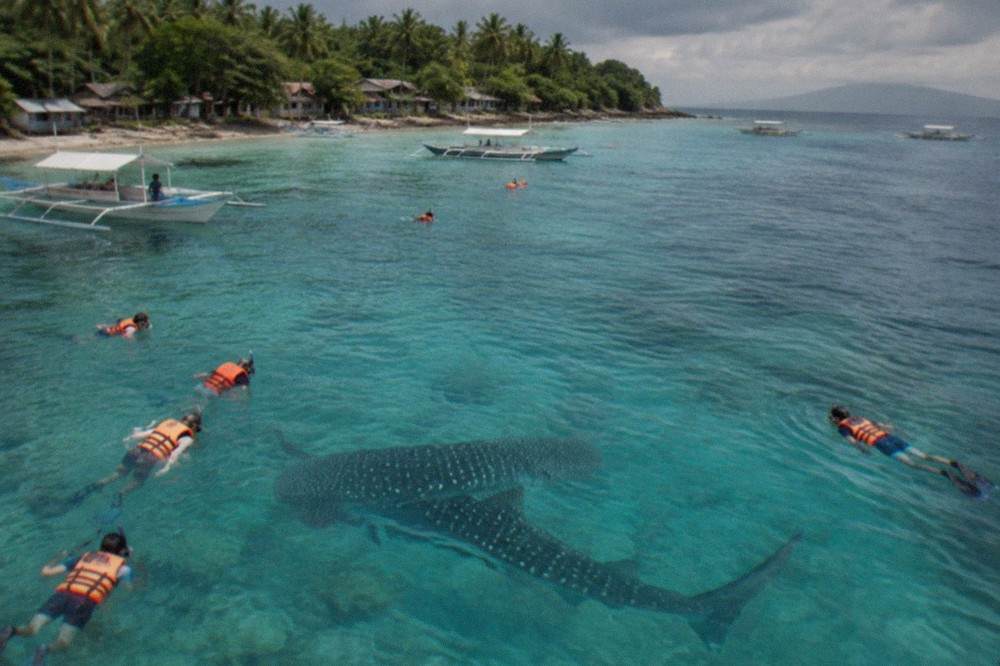
The rules are: keep about four metres from the shark's body and five metres from its tail, never touch the animal, wear a life jacket, use no sunscreen in the water, and no flash photography. Feeding is done only by licensed spotters, never by tourists. Every visitor attends a mandatory briefing before boarding, and the in-water session is capped at roughly thirty minutes, with a second session available for an extra fee.
The rules are municipal, not advisory. Oslob's tourism office runs the briefing hall, and guides on the boats are tasked with enforcing distances in the water. The no-sunscreen rule surprises people, but the reasoning is chemical: lotions wash off in the interaction area where the sharks feed, so reef-safe or not, they stay on the boat. Wear a rash guard instead.
| Rule | What it means in practice |
|---|---|
| Four-metre distance | Swim parallel to the shark, never reach out as it passes |
| Life jacket mandatory | Even strong swimmers wear one; it keeps you at the surface |
| No sunscreen | Applies in the interaction zone; cover up with clothing instead |
| No touching, no chasing | Guides will pull you back; repeat offenders leave the water |
| Feeding by spotters only | The shrimp boats are licensed; tourists never feed the sharks |
| About 30 minutes per session | Timed from when you enter the water, not from arrival |
The thirty-minute cap sounds short and feels shorter. The sharks pass close enough that you will spend the first stretch of the session recalibrating what a fish can be: the largest ones here run several metres, and they move faster in the water than their size suggests. The session limit exists so the animals are not followed all day by successive groups, which is part of the compromise the ethics debate keeps returning to.
When Is The Best Time To See Whale Sharks In Oslob?
Whale sharks are present at Oslob year-round, so the best time is early morning, any month: the interaction area opens about 6 AM and feeding winds down by noon, with registration closing around 11 AM. Visibility and conditions are steadiest in the dry season, December to May, but the sharks themselves do not follow a season. In late May 2026 the sharks were absent from Tan-awan for about four days when plankton moved, so sightings are close to daily, never guaranteed.
That May 2026 gap is the honest footnote to Oslob's reliability. Seasonal plankton shifts drew the sharks toward a neighbouring barangay for a few days, operations paused, and the local tourism office confirmed the sharks had not left the area, only moved with their food. The lesson for planning is not to build a tight itinerary around a single morning: if whale sharks are the whole point of your trip, give yourself a spare day on Cebu rather than a same-evening flight out.
Timing within the day matters more than timing within the year. The water is calmest and the light best before 9 AM, the queue is shortest at opening, and the boats stop going out once the spotters finish the morning feed. This is why every organised tour leaves Cebu City in the small hours: the drive down the east coast eats the early morning, so a pre-dawn departure puts you at the briefing hall for the first sessions. The month-by-month breakdown is in the best time for whale sharks in the Philippines.
How Do You Get To Oslob From Cebu City?
Ceres Liner buses run from Cebu South Bus Terminal to Oslob roughly nine or more times daily on the Bato via Oslob route, taking about three and a half to four and a half hours, with fares that vary by bus class. Many travellers skip the bus and take an organised day tour, purely because of the start time: the public-bus option means a very long day for a thirty-minute swim.
The bus fare runs about P145 (about US$2.3) to P250 (about US$4.0) depending on whether you take an ordinary or air-conditioned coach, paid onboard or at the terminal. The maths is blunt. The first useful buses leave before dawn, the sharks stop midday, and a round trip on public transport means you are travelling for eight hours to swim for thirty minutes. A join-in tour costs more but converts the whole logistics problem into one booking: hotel pickup, the coastal drive, the briefing, the boat and usually a Tumalog Falls stop on the way back. You can compare the two approaches in detail in the Oslob day trip guide, which covers both the independent and the tour route.
If you are staying on Mactan rather than in Cebu City, add the bridge crossing to your timing. The Cebu versus Mactan question matters here more than anywhere else, because every minute of the drive to Oslob happens before sunrise and traffic on the bridges is lightest then. Wherever you start from, book the night before, not the morning of.
The tour above is the join-in whale shark day tour from Cebu City, the operator's price is not published on the live listing, and the trip runs a full day with an early morning departure including a Tumalog Falls stop. Check availability if the timings work for your dates. For the full picture of what else the southeast coast offers, the South Cebu itinerary pairs Oslob with the other stops worth making on the same long drive.
The three options above cover the main ways to structure the day: a join-in whale shark tour from Cebu City, a longer private trip that pairs Oslob with the islands further north, and a city tour for travellers who would rather not leave Cebu at dawn. The join-in whale shark tour is a popular choice, and its operator has not published a price on the live listing, so check the live listing for the current figure.
Common Questions About Whale Sharks In The Philippines
Where can I see whale sharks in the Philippines?
The main site is Oslob, on the southeast coast of Cebu island in the Central Visayas. Whale sharks gather year-round in the shallow water off Tan-awan barangay, watched under a municipal programme running roughly 6 AM to 12 PM daily, and it is the country's most reliable place to swim with them.
How much does it cost to swim with whale sharks in Oslob?
The municipal environmental fee is P1,000 (about US$15.9) per foreign tourist and P500 (about US$8.0) per Filipino visitor, boat and guide included, for about thirty minutes in the water. Snorkelling or scuba upgrades can add P200 (about US$3.2) to P500 (about US$8.0). Organised tours from Cebu City cost more because they include the long transfer.
Are whale shark sightings in Oslob guaranteed?
No. Sightings are close to daily but not guaranteed: in late May 2026 the sharks were absent from the Tan-awan interaction area for about four days when seasonal plankton moved to a neighbouring barangay, and operations paused until they returned.
Is it ethical to swim with whale sharks in Oslob?
The programme is a regulated feeding operation: licensed spotters lure the sharks with small amounts of shrimp, and rules set distances, ban touching and cap sessions at about thirty minutes. Conservationists debate the feeding practice, so read the ethics discussion before deciding.
What time of day is best for whale sharks in Oslob?
Early morning. The interaction area opens about 6 AM, conditions are calmest before 9 AM, and feeding winds down by noon with registration closing around 11 AM. Every organised tour leaves Cebu City before dawn to hit the first sessions.
Can you take photos with the whale sharks?
Yes, but without flash. The municipal rules ban flash photography in the interaction area, along with touching, chasing and sunscreen. A guide on the boat enforces the distances, so keep about four metres from the shark's body and five metres from its tail.
Oslob is not the only reason to come to Cebu, but for most visitors it is the reason the island appears on the shortlist at all. Book the early tour, follow the four-metre rule, and the largest fish in the sea will pass close enough to change how you think about the word fish.