South Cebu Itinerary
South Cebu holds the island's three biggest draws: the Oslob whale sharks, the Moalboal sardine run and Kawasan Falls. This itinerary strings them together in the order that actually works, with the verified fees and travel times.
Short answer
The classic South Cebu itinerary is three days: Day 1 for Oslob's whale sharks and Tumalog Falls, Day 2 for the Moalboal sardine run and Kawasan Falls canyoneering, Day 3 for Sumilon Island and the drive back to Cebu City.
South Cebu is the stretch of the Philippine island province that runs south from Cebu City down the coast through Carcar, Oslob, Moalboal and Badian, and it concentrates the three signature experiences: swimming beside whale sharks in Oslob, snorkelling through the permanent sardine run off Moalboal's Panagsama Beach, and canyoneering down the river that feeds Kawasan Falls. Doing all three well is a logistics problem, not a sightseeing problem. The whale sharks feed only in the morning, the sardines are a few metres from shore at any hour, and the canyoneering route closes when it rains hard, so the order you visit in matters more than the list itself. This Cebu Travel Guide page lays out the route day by day, with the entrance fees and bus times that decide whether your plan survives contact with the road.
What Is The Best South Cebu Itinerary Route?
The best route runs south in the order Oslob, then Moalboal, then Kawasan Falls, done over three days with two nights in Moalboal. Starting from Cebu City, you take the first morning south to Oslob for the whale sharks and Tumalog Falls, continue west to Moalboal that afternoon, spend day two between the sardine run and Kawasan canyoneering, and use day three for Sumilon Island or a slow return north. Oslob is the farthest point east and Moalboal sits between the two, so every leg is a single ride.
The common mistake is treating south Cebu as a day trip. Operators do run a punishing same-day circuit out of Cebu City that touches Oslob and Kawasan in one go, and the south Cebu day tour page covers when that is worth it, but it puts six or more hours of the day inside a vehicle. With three days you see the same things at a fraction of the pace and you get the two morning windows the itinerary actually depends on: whale sharks feed in the morning in Tan-awan, and the sardine run is calmest early before the afternoon wind picks up the surface chop.
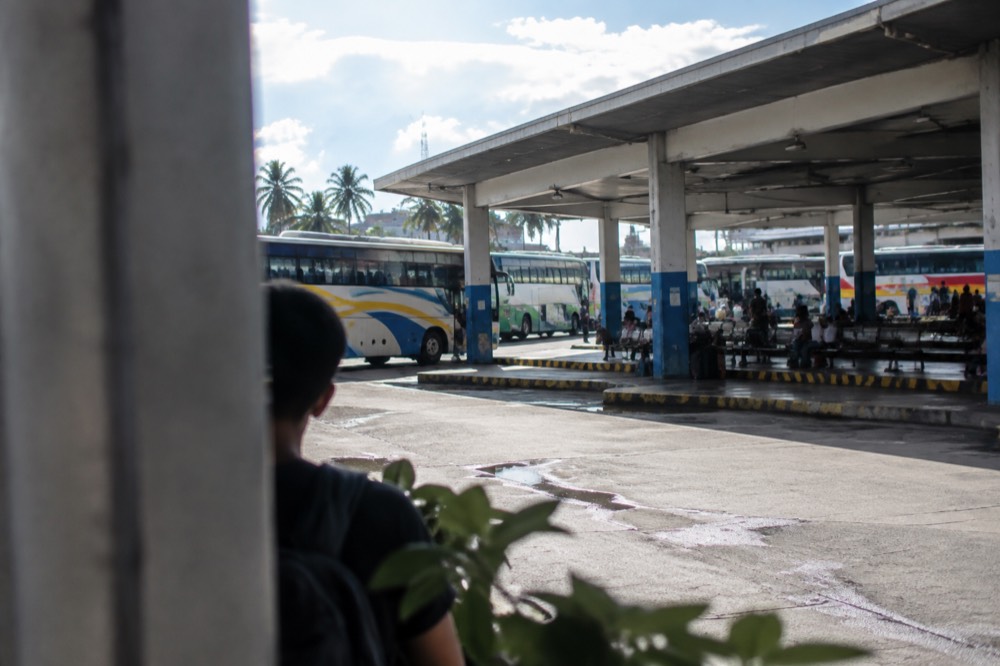
The route also runs one way, not out and back. Ceres Liner buses leave Cebu City's South Bus Terminal for Oslob on the Bato via Oslob route roughly every one to two hours from early morning, and the fare runs about P145 (about US$2.3) to P250 (about US$4.0) depending on the bus class. From Oslob you continue west over the island's southern coast road to Moalboal, a leg usually done by van or habal-habal motorcycle transfers arranged at your guesthouse. Moalboal then sits about an hour's ride from the Badian jump-off point for Kawasan, which is why it makes the natural base for two of the three nights.
If you are weighing the south against the island's other half, the south Cebu versus north Cebu comparison covers the trade-offs: the south has the marquee wildlife and waterfalls, the north has Bantayan Island's beaches and Malapascua's thresher shark dives, and almost nobody manages both well in one short trip.
How Many Days Do You Need For South Cebu?
Three days and two nights is the honest minimum for the full south Cebu itinerary, because the whale sharks, the sardine run and the Kawasan canyoneering route each consume half a day and they sit hours apart by road. Two days works only if you skip canyoneering and treat Sumilon Island as optional. Four days adds slack for weather, since canyoneering suspends after heavy rain and a buffer day is the only reliable fix.
The half-day-per-activity rule is the thing to internalise. Whale shark interaction in Oslob is capped at roughly thirty minutes in the water, but the briefing, boat queue and the Tumalog Falls stop that most people pair with it take up the rest of the morning. The Moalboal sardine run is the shortest of the three, a shore snorkel you can finish in ninety minutes, but getting there from Oslob eats the afternoon. Canyoneering at Kawasan is the longest: the Badian route runs from the first jump to the main basin, and the LGU-regulated packages include guide, gear, fees and lunch.
Where the days go, in rough blocks:
| Itinerary length | What fits comfortably | What you give up |
|---|---|---|
| 2 days / 1 night | Oslob whale sharks plus Tumalog Falls, Moalboal sardine run | Canyoneering, Sumilon, any rest time |
| 3 days / 2 nights | All three headline activities plus Tumalog Falls | Sumilon Island day pass, Osmeña Peak |
| 4 days / 3 nights | Everything above plus Sumilon and a weather buffer | Nothing, at the cost of pace |
| 5 days or more | Add Pescador Island diving or a Bantayan extension | Best paired with the 5 days in Cebu plan |
Travellers who arrive on a cruise call face a harder constraint, since the ship's hours rarely allow the full south; the Cebu cruise day itinerary covers what a single shore day can realistically hold. Families with small children should also read the Cebu with kids itinerary before committing to canyoneering, which has a minimum age and a fitness floor the whale shark swim does not.
How Much Does A South Cebu Itinerary Cost?
The three headline fees form the core of any south Cebu budget: the Oslob whale shark session, the Kawasan canyoneering package and the Moalboal environmental user fee. Filipino citizens pay a lower whale shark rate than foreign visitors, and the canyoneering price moves with the package tier you choose. Buses and van transfers add a modest amount on top, and the Sumilon Island day pass is the one significant optional extra that can move the total.
The single biggest line is the Oslob whale shark fee, and it is not negotiable: the Oslob municipal government set it at P1,000 (about US$15.9) per foreign tourist and P500 (about US$8.0) per Filipino, boat and guide included, when it reverted to its 2020 ordinance rates in March 2025. The fee buys roughly thirty minutes in the water after a mandatory briefing. Sightings are close to reliable but genuinely not guaranteed: in late May 2026 the sharks were absent from the Tan-awan interaction area for about four days when the plankton they follow moved to a neighbouring barangay, and operations simply paused until they returned.
| Cost item | Verified figure | Notes |
|---|---|---|
| Oslob whale sharks, foreign tourist | P1,000 (about US$15.9) | Boat and guide included, about 30 minutes |
| Oslob whale sharks, Filipino | P500 (about US$8.0) | Same session, local rate |
| Tumalog Falls entrance | P50 (about US$0.8) | Habal-habal from Tan-awan about P50 (about US$0.8) to P100 (about US$1.6) each way |
| Kawasan Falls Level 1 entrance | P200 (about US$3.2) | Swimming only, no guide needed |
| Kawasan canyoneering package | roughly P1,500 (about US$24) to P2,000 (about US$32) | LGU-regulated, includes guide, gear, fees, lunch |
| Moalboal environmental user fee | P100 (about US$1.6) | Covers swim and snorkel at Panagsama |
| Pescador Island marine park fee | about P100 (about US$1.6) per dive | Collected through dive shops |
| Ceres bus, Cebu City to Oslob | about P145 (about US$2.3) to P250 (about US$4.0) | Ordinary or aircon class |
Booked tours change the arithmetic rather than the activities. A join-in day tour that bundles the whale sharks with a Tumalog Falls stop is listed by the operator, and its price is not published by
Day 1 Of The South Cebu Itinerary: Cebu City To Oslob
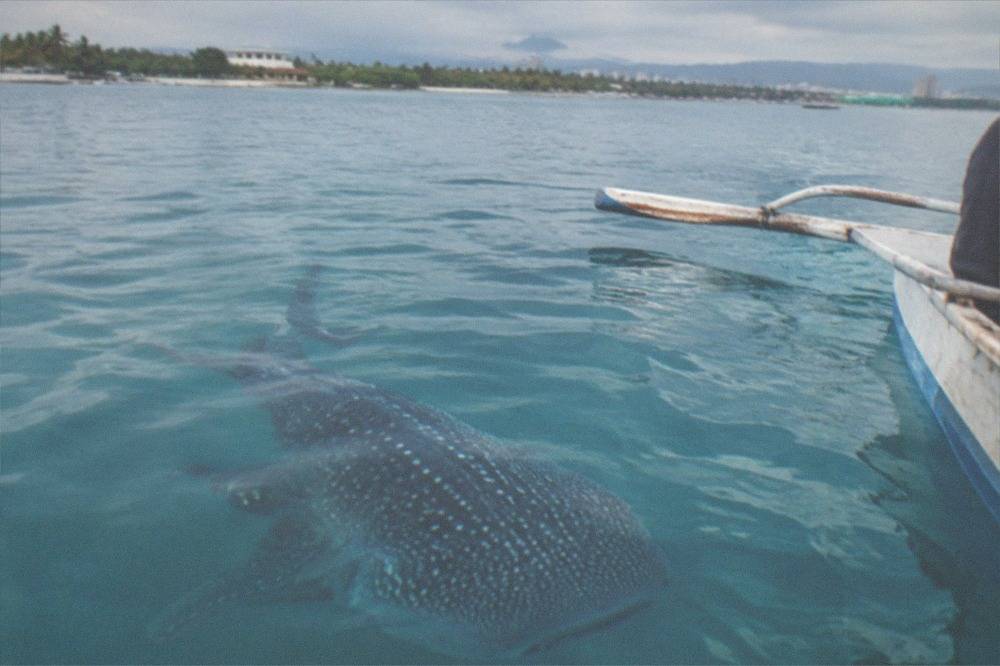
Day 1 starts before dawn, because the whale shark interaction window in Tan-awan runs from about 6 AM to 12 PM and the best water is earliest. Take a first Ceres bus from the South Bus Terminal toward Bato via Oslob, or a private van transfer that leaves on your schedule. Swim with the whale sharks in the first session, visit Tumalog Falls before the midday heat, then continue west to Moalboal for the night.
The 6 AM to 12 PM window is set by the Oslob operation, not by the sharks' appetite; the licensed spotters who feed them a small lure work the morning, and registration generally closes around 11 AM. The rules are enforced at the briefing: keep about four metres from the body and five from the tail, no touching, no sunscreen (it washes off onto the animals), no flash photography, life jackets mandatory for swimmers, and only the licensed spotters feed. The Oslob whale sharks guide covers the full rule set and the ethics debate around the feeding programme, which is worth reading before you decide the activity is for you.
Tumalog Falls is the standard second stop, about a habal-habal ride inland from Tan-awan at about P50 (about US$0.8) entrance. It is a tall, thin ribbon of a falls that drops into a shallow pool, and it works precisely because it is a thirty-minute stop, not a half-day one. Eat lunch in Tan-awan before leaving; the strip of carinderias along the main road is built for the tour traffic and turns over fast.
The afternoon leg from Oslob to Moalboal is the one part of the itinerary where independent travel is genuinely awkward: there is no single direct bus, so most people take a van transfer arranged the day before, or a habal-habal to the junction and a bus from there. Budget two to three hours for it and you will not be wrong. Check in at Panagsama, walk down to the beach to see the sunset, and sleep early, because day two is the long one.
Day 2 Of The South Cebu Itinerary: Sardine Run And Kawasan Canyoneering
Day 2 splits cleanly in two: snorkel the sardine run at Panagsama Beach in the early morning, when the municipal site says the school is best between 7 and 9 AM, then ride about an hour to Badian for the afternoon canyoneering descent into Kawasan Falls. The sardine run is a shore entry, a few metres from the sand, so it costs no boat time; canyoneering ends at the falls' main basin.
The sardine run is the most under-sold thing in Cebu. It is not a seasonal migration: the school is a permanent resident of the reef wall just off Panagsama, present year-round, and it is close enough to shore that you can be floating inside a rotating column of fish shortly after leaving your guesthouse. The municipal tourism site for Moalboal lists it as the town's headline activity and flags the 7 to 9 AM window as the best water. The environmental user fee is P100 (about US$1.6) per person to enter the water, collected at a beach kiosk, and gear rental runs about P150 (about US$2.4) to P250 (about US$4.0) if you do not carry your own mask. The Moalboal sardine run page goes deeper on where the school sits and how the dive shops run it.
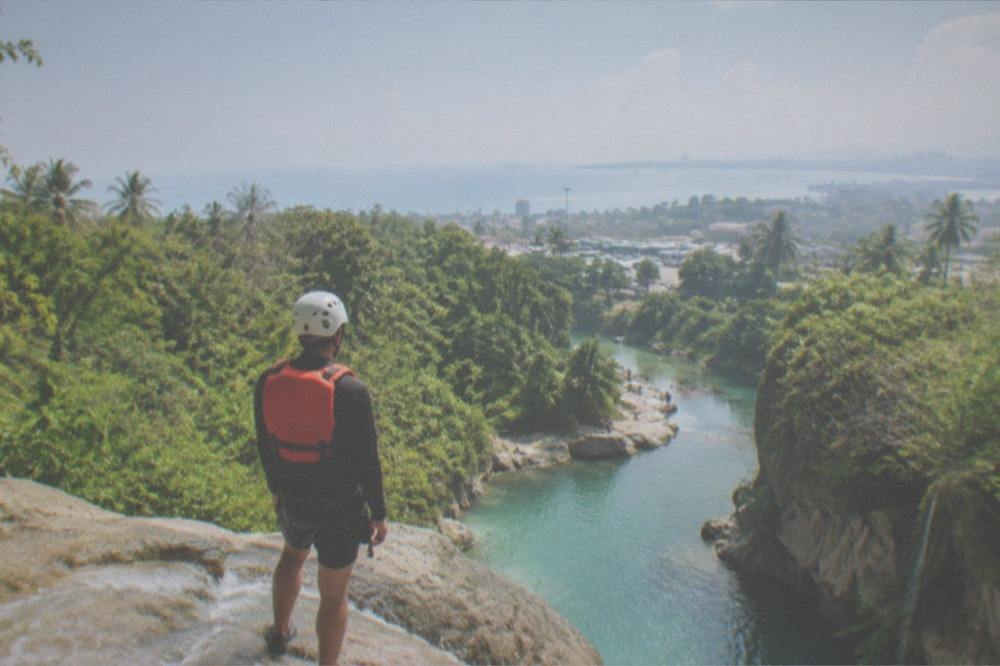
Canyoneering in the afternoon is a choice with a caveat: the Badian route runs through a river canyon, jumps and slides included, and it suspends after heavy rain. The 2025 and 2026 seasons saw multiple short weather closures, and after a rockfall in October 2025 the route shut for two days of inspection before reopening. Only the Badian route operates; the Alegria route has been suspended through 2025 and 2026. Cliff jumping is banned at the main Level 1 basin, life jackets are mandatory, and independent visitors are limited to Level 1, where the entrance fee is P200 (about US$3.2) for swimming only. The full Kawasan Falls guide covers the route, the 2026 rehabilitation works that kept the site open, and the rules that changed after the rockfall.
If canyoneering is more than your group wants, the fallback is the falls themselves: ride to the Level 1 basin, swim, and be back in Moalboal for a late afternoon on the sand. That version costs P200 (about US$3.2) and a motorcycle transfer, and it is the right call for anyone travelling with children under the canyoneering age floor.
Day 3 Of The South Cebu Itinerary: Sumilon Island And The Return North
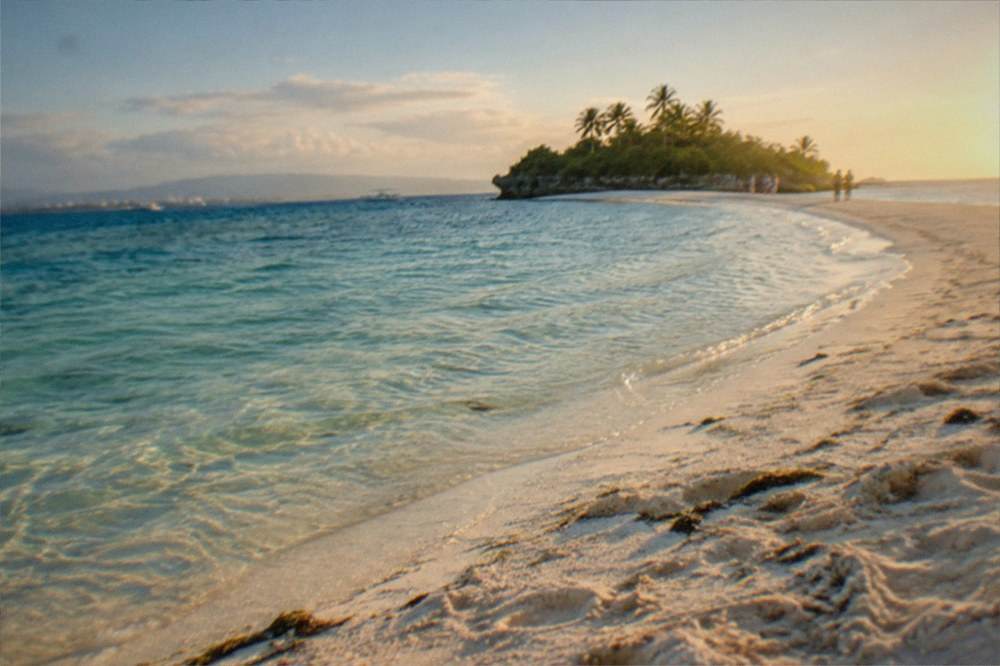
Day 3 is the flexible day, and the strongest use of it is the Sumilon Island day pass on the way back east, since the island sits just off Oslob and breaks the return drive naturally. The Bluewater Sumilon day-use package runs from 8 AM to 3 PM with boat transfers, and the resort's own offers page lists a weekday group rate for parties of six. Without Sumilon, day 3 is simply the bus ride back to Cebu City, about 2.5 to 3.5 hours from Moalboal.
The current group offer on the resort's own page works out to P2,000 (about US$32) net per guest from Monday to Thursday, valid to 15 October 2026, and the general day-pass range runs about P1,600 (about US$25) to P2,000 (about US$32) net per person. The pass includes the transfers, gear and access to the beach, pool and marine sanctuary, with weekday rates consumable against food and drinks and weekend rates running to a buffet; the offers page is the source for the current split. A separate guided snorkel on the sanctuary side is billed hourly, about P250 (about US$4.0) to P440 (about US$7.0) per hour. The logistics only work in the Oslob-first, Moalboal-second order this itinerary uses, because Sumilon is off Oslob, and doubling back to it from Moalboal on the final morning wastes the very hours you need for the drive north.
The alternative third day is Osmeña Peak, the highest point on the island at the head of the same mountain range that feeds Kawasan. Registration runs about P50 (about US$0.8) to P100 (about US$1.6), and a guide is strongly recommended at roughly P200 (about US$3.2) to P300 (about US$4.8). The Osmeña Peak guide covers the trail, which is short but steep, and the pairing that some travellers prefer: the peak at dawn, then the long ride north with the whole afternoon free in Cebu City. The Osmeña Peak and Kawasan combo tour exists for exactly this, with its price on the live listing only.
Whichever way day 3 ends, plan to be back in Cebu City by evening and use the last night there rather than in Moalboal, especially if you have a morning flight: Mactan-Cebu International Airport sits on the Mactan side of the channel, and the Cebu airport guide on this site covers the MyBus and taxi options for the final leg.
Where To Stay On A South Cebu Itinerary?
Stay two nights in Moalboal, at Panagsama Beach if you want the sardine run at your doorstep, and split the remaining nights between Oslob and Cebu City depending on your route direction. In Oslob, Tan-awan beachfront guesthouses put you a five-minute walk from the whale shark briefing site, which matters when the first session is at 6 AM. In Moalboal, Panagsama beats White Beach for this itinerary because the sardine school sits off Panagsama's reef wall.
The Oslob decision is purely about the clock. The interaction area is in Tan-awan, and the operation starts at about 6 AM; staying anywhere else means a pre-5 AM transfer on a road you do not know. The trade-off is that Tan-awan's accommodation is functional rather than charming, built for one-night whale shark traffic.
| Night | Best base | Why it wins |
|---|---|---|
| Night before Day 1 | Cebu City or Tan-awan, Oslob | Cebu City for the evening; Tan-awan if you can complete the drive the prior afternoon |
| Night 1 | Moalboal, Panagsama | Sardine run is a shore entry here; canyoneering pickups run from Moalboal |
| Night 2 | Moalboal or Oslob | Moalboal for a slow morning; Oslob if Sumilon is the Day 3 plan |
| Final night | Cebu City or Mactan | Airport access; the where to stay in Cebu guide covers the districts |
If the south is only one leg of a longer trip, the 3 days in Cebu and 7 days in Cebu plans show how this route slots into a full island circuit, and honeymooners should check the honeymoon Cebu itinerary for the resort-heavy version of the same geography.
When Is The Best Time Of Year For A South Cebu Itinerary?
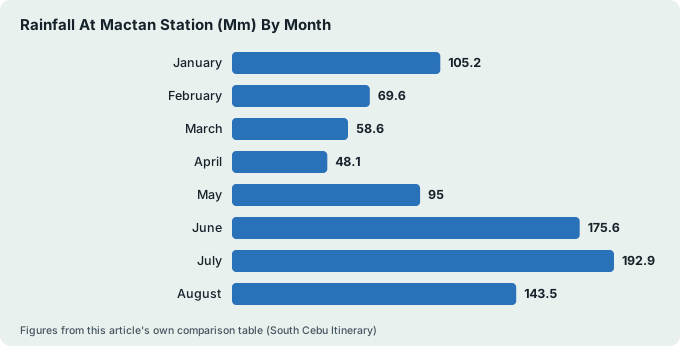
The best months for a south Cebu itinerary are December to May, PAGASA's dry season, and the single best stretch within them is March to May, when Mactan station's normals show the year's lowest rainfall, from 48.1 mm in April to 95 mm in May. June to November is the rainy season, with October the wettest month at 194.8 mm, and that matters here more than on most Cebu pages because canyoneering suspends after heavy rain.
The climate table for the Mactan station is blunt: the dry months run from 48.1 mm to 105.2 mm of rain, the wet months from 143.5 mm to 194.8 mm, and the annual total is 1,685.0 mm spread over 138 rain days. Cebu sits in a part of the country where rain is more evenly distributed than in Manila or the north, so the wet season is not a washout, but the canyoneering route in Badian is the one activity on this itinerary that hard-stops for weather, and typhoon season peaks roughly July to October. Typhoon Tino in November 2025 brought record rainfall and severe flooding to Cebu before the province was declared open to tourists again within days, which is the pattern: disruption measured in days, not weeks, but a buffer day is cheap insurance if you travel in the wet half of the year.
| Month | Rainfall at Mactan station (mm) | Season | Itinerary impact |
|---|---|---|---|
| January | 105.2 | Dry | Sinulog month in Cebu City; book Oslob early |
| February | 69.6 | Dry | Excellent across the whole route |
| March | 58.6 | Dry | Excellent; peak whale shark visitor season |
| April | 48.1 | Dry | Driest month of the year |
| May | 95 | Dry | Hot; good water at Panagsama |
| June | 175.6 | Rainy | Canyoneering closures possible |
| July | 192.9 | Rainy | Peak typhoon months begin |
| August | 143.5 | Rainy | Sardine run still runs; canyon risk |
| September | 179.6 | Rainy | Check advisories before booking |
| October | 194.8 | Rainy | Wettest month; highest closure risk |
| November | 161.9 | Rainy | Late-season storms; shoulder prices |
| December | 139.7 | Dry begins | Festive crowds; weather turning |
One timing note that cuts the other way: the whale sharks are a year-round operation, and the best-month question for them is really about plankton and water clarity, not migration. The best month for whale sharks question is answered in detail elsewhere on this site, and the short version is that the sharks are fed daily year-round, so the calendar that matters is the rain calendar, not the shark calendar.
Common Questions About South Cebu Itineraries
Can you do Oslob and Kawasan Falls in one day from Cebu City?
It is possible but it is a very long day, with the whale shark session in the morning and a transfer of several hours to Badian for the afternoon canyon descent. Those who try it often report more time in the vehicle than at either site. The three-day version in this itinerary covers both plus the sardine run at a sane pace.
Is the south Cebu itinerary good for beginners and non-swimmers?
Mostly yes. The whale shark swim requires life jackets, which are mandatory, and the sardine run is a shore snorkel in water you can stand up in at low tide. Canyoneering is the exception: it demands sustained swimming, scrambling and jumping, and the operators screen for it. Non-swimmers should substitute the Level 1 falls basin, where entrance is P200 (about US$3.2) and no guide is needed.
Do you need to book the whale shark session in advance?
Walk-in registration works at Tan-awan, but the first sessions have the best water and fill first in high season, and a booked join-in tour from Cebu City, rated 4 from 257 reviews with the price on the operator's listing only, secures both the session and the pre-dawn transfer. Independent travellers can simply arrive early.
What is the best base for a south Cebu itinerary?
Moalboal, specifically Panagsama Beach, for the middle nights. It sits between Oslob and Kawasan, the sardine run is a shore entry there, and the canyoneering pickups run from the town. Split the outer nights between Tan-awan in Oslob and Cebu City or Mactan at the end for airport access.
Are the south Cebu attractions open year-round?
The whale shark operation runs daily from about 6 AM to 12 PM, and the sardine school is permanent. Kawasan Falls stays open even during its 2026 rehabilitation, but canyoneering closes temporarily after heavy rain and after safety incidents, so check locally the day before if the forecast looks wet.
Is south Cebu safe to visit now?
Yes. The Philippines carries a Level 2 exercise-increased-caution advisory from the US State Department, with no Cebu-specific restrictions, and the UK and Australian advisories name only Mindanao and the Sulu archipelago. After the September 2025 earthquake and November 2025 typhoon, the Department of Tourism confirmed Cebu's core tourist zones open, and the south coast was largely unaffected.
The south is the part of Cebu that justifies the flight for most first-time visitors, and three days is all it asks. Book the whale shark morning before you book anything else, hold a spare afternoon for the canyon, and let the sardines take care of the rest.