Temple Of Leah
The Temple of Leah sits on a hillside in Busay, high above Cebu City in the Philippines, and it looks like nothing else on the island. This guide covers the current entry fees, the shortened opening hours in force since April 2026, how to reach it, and what to pair it with.
Short answer
The Temple of Leah in Busay, Cebu charges a modest adult fee that is higher on weekends, plus a small parking charge, and there is no official price list so figures come from recent visitor reports. Opening hours were shortened from April 2026, so confirm the current schedule before travelling up the hill.
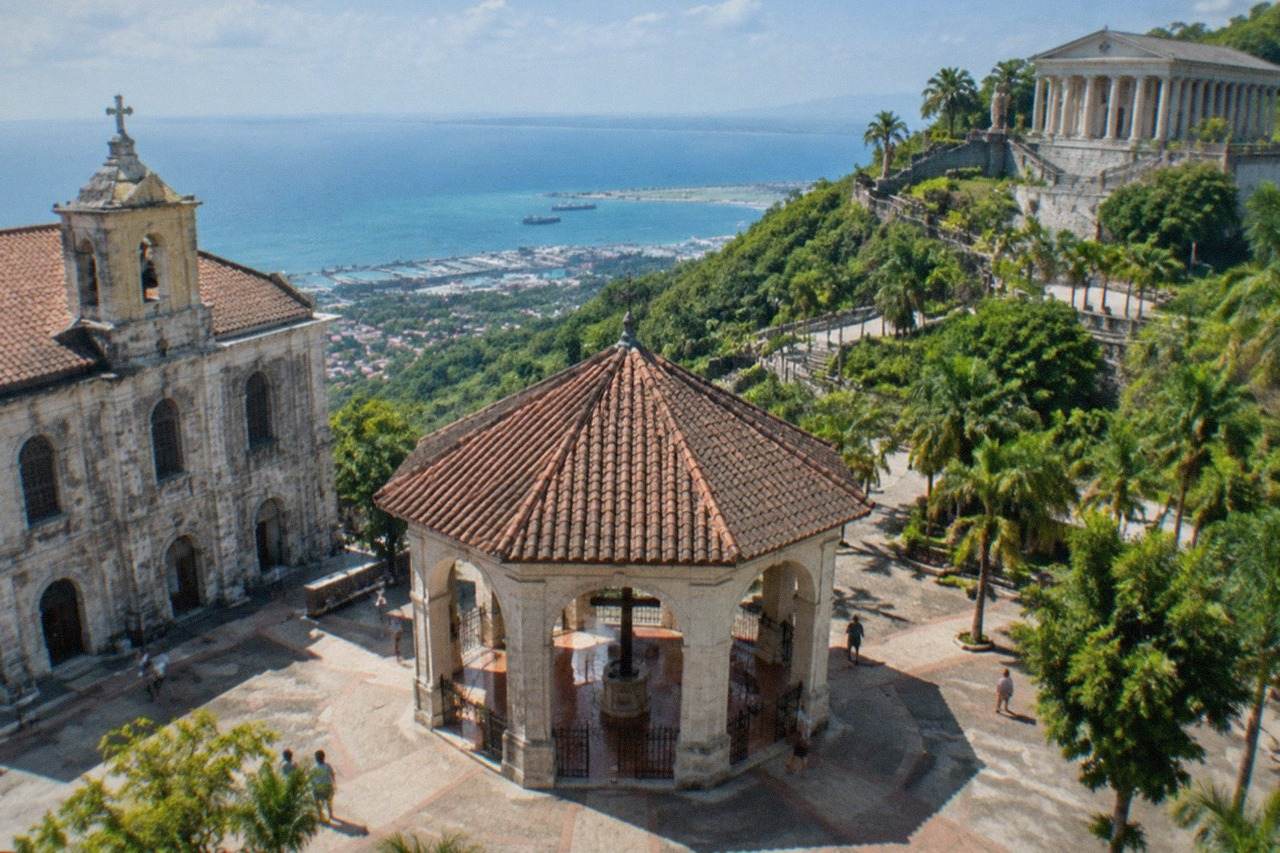
The Temple of Leah stands on a ridge in Busay, roughly 30 minutes' drive uphill from central Cebu City in the Central Visayas region of the Philippines, and it is the most theatrical building on the island. It is often nicknamed Cebu's own Taj Mahal, because it was raised as a grand tribute rather than a place of worship, and its marble floors, wide staircases and rows of lion statues look out over the city and the Mactan Channel below. It is a modern construction, not a colonial relic, and that is exactly why it divides opinion among visitors. Some find the concrete-and-marble grandeur stirring, others find it over the top, and almost everyone photographs it anyway. This guide covers what the temple is, what it costs under the current fee setup, the shortened hours in force since April 2026, how to get there, and what else belongs on the same Busay afternoon.
What Is The Temple Of Leah In Cebu?
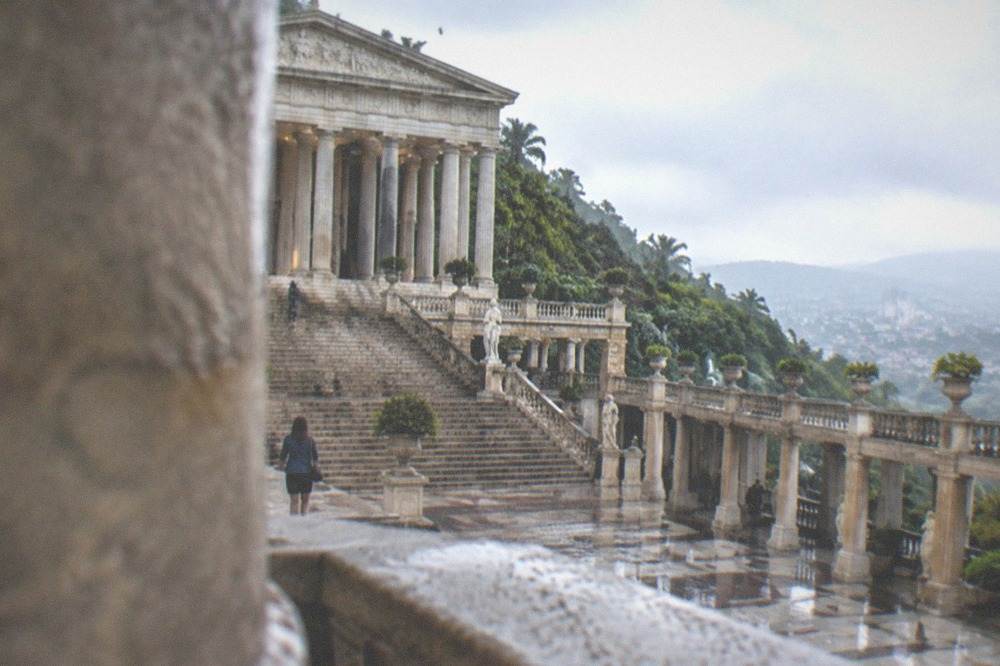
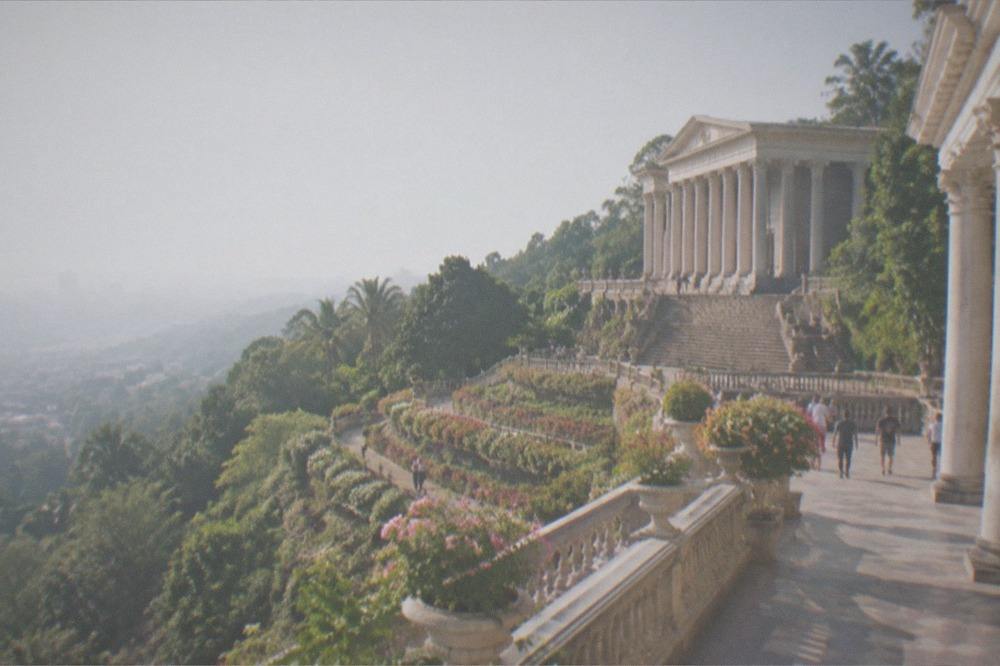
The Temple of Leah is a large, privately built temple-style monument in the mountain barangay of Busay, about 30 minutes above Cebu City in the Philippines, modelled on classical Greco-Roman architecture and raised as a tribute to a much-loved wife rather than as a religious building. It is often called Cebu's Taj Mahal, a comparison that captures both its purpose and its scale. The structure uses tall columns, stepped terraces, brass and stone statues, and polished interiors, and it dominates the ridge it stands on. Unlike the colonial churches of downtown Cebu City, it has no parish, no regular congregation and no liturgical calendar. It is, functionally, a monument that welcomes the public, and that shapes everything about how you visit.
The comparison to the Taj Mahal is the detail that travels fastest, but the more useful frame for a visitor is architectural. The temple borrows from ancient Greek and Roman design, with a symmetrical facade, a broad staircase and statue-lined approaches that photograph best in the low light of late afternoon. The site was not built as a museum, yet it functions like one for most of the day, with a modest entry fee, managed parking and a small shop. There is no official published price list for the temple, which is unusual for an attraction of this size, so every figure quoted on this page comes from recent visitor reports rather than an operator tariff.
Its position matters as much as its architecture. Busay is the highland barangay directly above Cebu City, the same ridge that carries the road toward Tops Lookout and the flower farms of Sirao. From the terraces you look down over the city, the coastal plain and, on clear days, the water toward Mactan. That view is the reason the temple anchors so many highland itineraries, and it is the reason the late-afternoon hours are the busiest.
How Much Does The Temple Of Leah Cost, And When Is It Open?
Entry to the Temple of Leah runs a modest adult fee that is noticeably higher on weekends than on weekdays, with discounted rates reported for seniors, children and persons with disabilities, and a small separate charge for parking, but there is no official published price list, so every figure comes from recent visitor reports and should be confirmed at the gate. Opening hours are the bigger moving part: reports from 2025 gave long hours into the late evening, but from April 2026 the temple shortened its hours until further notice, and recent accounts list closing anywhere between 8 and 9 PM. Before you plan a night visit, confirm the current schedule through the temple's hotline or its social media page.
Concretely, recent reports put the adult fee at about P120 (about US$1.9) per person on weekdays and about P150 (about US$2.4) on weekends, with the discounted categories reported around P80 (about US$1.3) to P100 (about US$1.6), and parking on the site at about P50 (about US$0.8). The temple's own contact point for schedule questions is hotline 0933-1131755 and its social media page, which is also where private-event closures get announced.
The shortened hours matter because this used to be one of Cebu's reliable evening viewpoints. If the gates now close at 8 PM, the sunset crowd has to arrive earlier, and the terrace that was once near-empty at midday fills up faster in the golden hour. The temple also closes temporarily for private events, as it did for several days in March 2026, so a same-day check is genuinely worthwhile before you commit to the drive uphill.
Here is the practical picture in one table:
| Item | Reported figure | Notes |
|---|---|---|
| Adult entry, weekday | about P120 (about US$1.9) | Recent visitor reports, no official tariff |
| Adult entry, weekend | about P150 (about US$2.4) | Same reports, weekend rate |
| Senior / child / PWD | about P80 (about US$1.3) to P100 (about US$1.6) | Discounted category, confirm with ID |
| Parking | about P50 (about US$0.8) | On-site lot |
| Opening hours | Shortened from April 2026 | Reports vary between 8 and 9 PM close; confirm via hotline 0933-1131755 or social media |
| Private-event closures | Occasional | March 2026 closure lasted several days |
Budget a little more than the entry fee alone. Visitors arrive by taxi, habal-habal motorbike or a booked highland tour, and the uphill fare is part of the real cost of the visit. The temple itself keeps its charges modest by attraction standards in the region, which is one reason it appears on nearly every Cebu highland itinerary alongside the pricier private gardens further along the ridge.
If you are building a wider Cebu plan around the visit, the sea-and-highlands pairing is the classic move, and the whale shark tours from Cebu City are the most-booked complement to a Busay afternoon.
How Do You Get To The Temple Of Leah From Cebu City?
The Temple of Leah sits on the Busay ridge above Cebu City, roughly a 30 to 40 minute drive from the downtown area, reached by the uphill Transcentral Highway road that also serves Tops Lookout and Sirao, and the realistic options are a taxi or Grab car, a chartered habal-habal motorbike, a rented self-drive car, or a booked highlands tour that bundles the ridge's stops. There is no rail link and no scheduled bus to the temple itself. Cebu's partially operating bus rapid transit runs a single route between the South Road Properties and IT Park, well away from the highlands, so it is no help for Busay.
A taxi or Grab from downtown is the simplest choice, and Grab lists Cebu among its Philippine coverage cities with designated pickup zones. The catch is the return leg: the temple is uphill from the city, and while drivers bring visitors up all day, finding a free car on the ridge for the trip down can take longer than the visit itself. Many travellers ask their driver to wait, agree a round-trip fare in advance, or plan the descent to coincide with the sunset rush at Tops Lookout, where transport gathers anyway.
The habal-habal, the local motorcycle taxi, is the fastest and cheapest way up and the most exposed one. The road is paved and winding, and in the rainy season from June to November the afternoon showers can make the ridge wet and misty within minutes. If you ride one, agree the fare before mounting, and expect to pay separately for each leg. Self-drive rental cars and booked highland tours are the comfortable middle path; the tour option has the added benefit of sequencing the temple with the other Busay stops so you are not doubling back on the ridge road.
| Transport option | Realistic use | What to watch |
|---|---|---|
| Taxi or Grab car | Simplest door-to-door option | Confirm the return leg; cars are scarcer up the ridge |
| Habal-habal motorbike | Cheap, quick, common with locals | Exposed to rain; agree fare first |
| Self-drive rental car | Flexible ridge itinerary | Winding road; wet afternoons in rainy season |
| Booked highlands tour | Bundles Temple, Tops and Sirao stops | Fixed schedule; book ahead for peak dates |
Timing the drive matters more than the mode. The ridge road carries both tourist traffic and farm vehicles, and late afternoon is when everyone heads up for the view. Leave the city before 3 PM if you want the temple terraces to yourself, or accept the crowd and arrive after 4 PM for the light.
If your Cebu trip is short and the highlands are competing with the sea for your one free day, a whale shark morning out of the city is the most common pairing with an afternoon in Busay, and the round-trip experience from Cebu handles the long southern transfer for you.
For anyone weighing that pairing, the operator's live listing carries the current price, the departure time and the cancellation terms, and the tour's own page on this site goes deeper on what the morning involves. The reassurance worth knowing up front is that these listings are bookable with free cancellation, so a weather wobble in the rainy season does not lock you in.
What Can You See Inside The Temple Of Leah?
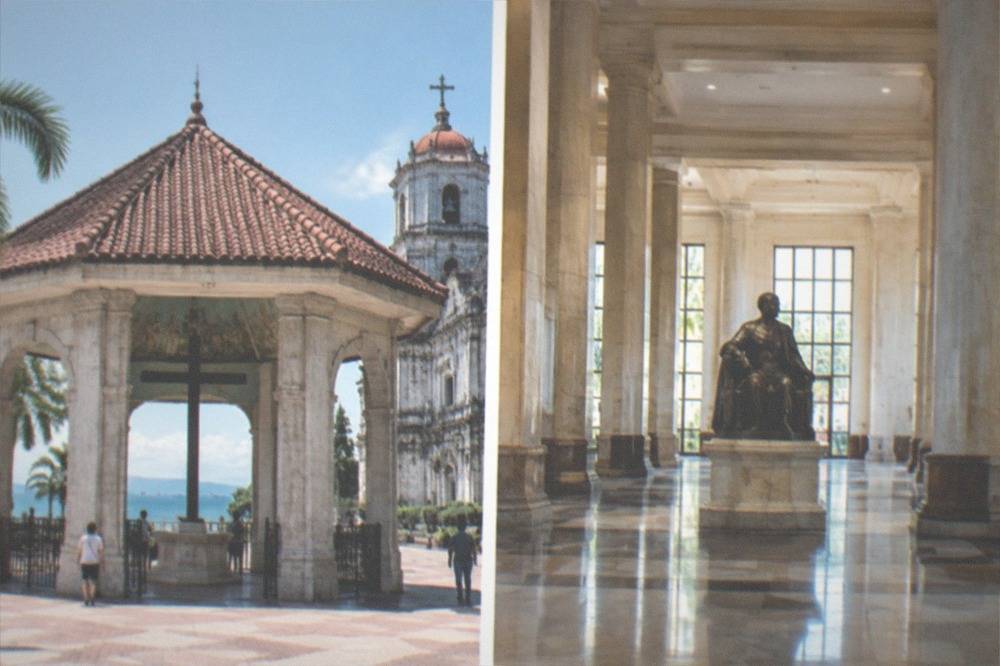
Inside the Temple of Leah you walk up a grand exterior staircase into halls built around a central atrium, where the highlights are the polished marble floors, the seated bronze statue at the heart of the building, the sphinx- and lion-lined terraces, and the panoramic viewing decks over Cebu City and the channel toward Mactan. The interiors borrow openly from classical antiquity, with high columns, coffered ceilings and museum-style display cases, while the exterior terraces do the heavy lifting photographically. The seated statue is the emotional centre of the monument, the figure the whole building was raised around, and visitors tend to spend the bulk of their time between it and the viewing deck.
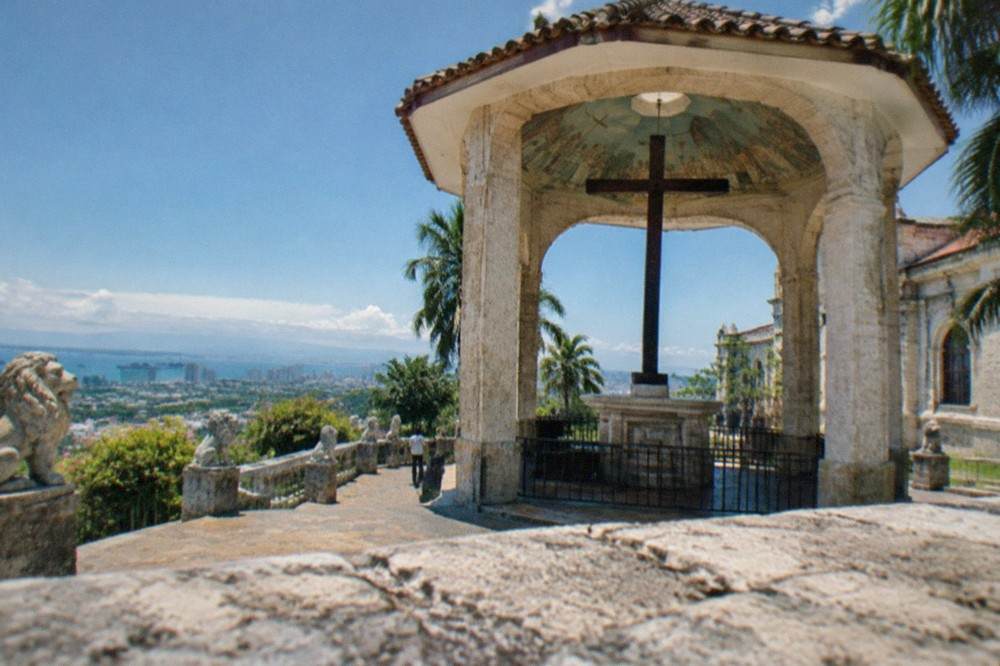
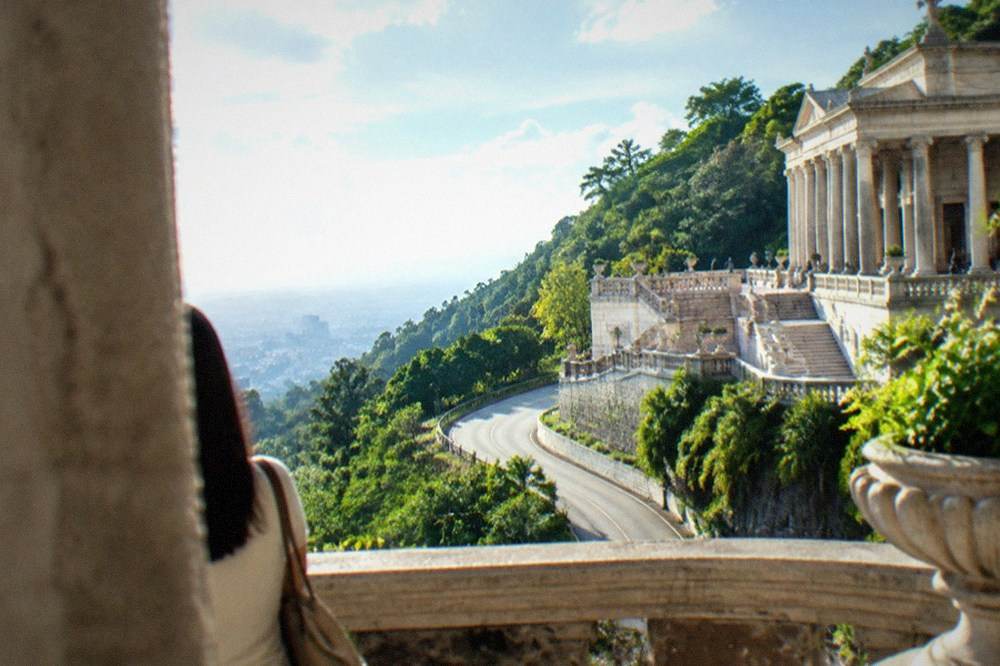
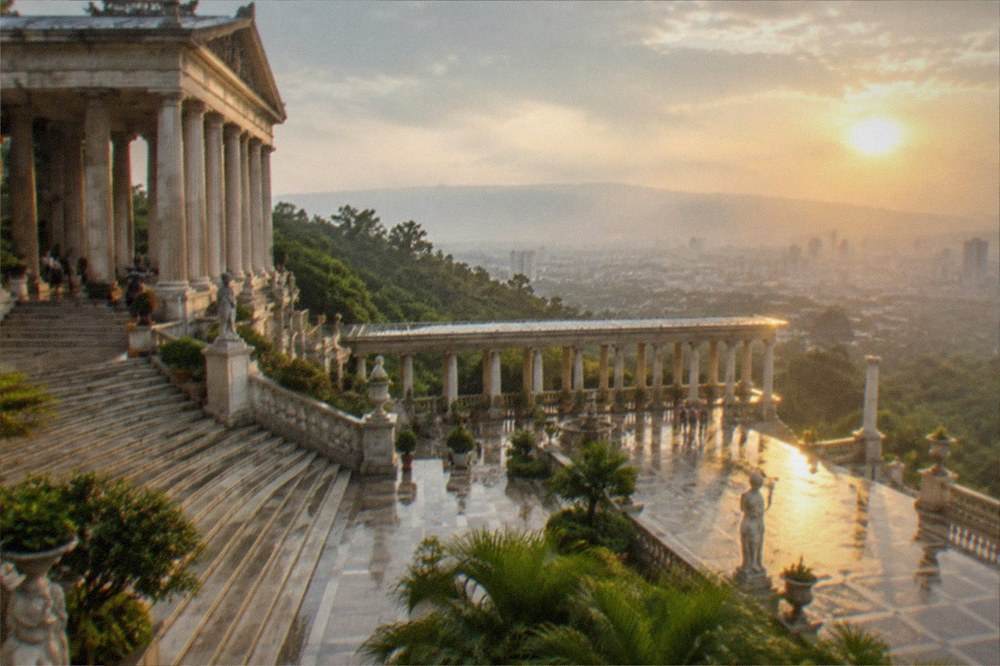
The terraces are where the temple earns its entry fee. Statues of lions and classical figures line the walkways, and the stepped platforms give you three or four different sightlines over the city below. On a clear dry-season afternoon you can trace the coastline from the city centre out toward Mactan; when the mist rolls in during the rainy months, the temple itself becomes the subject, its columns cutting into low cloud. Photographers who know the site aim for the hour before sunset, when the stone warms up and the city lights begin underneath you.
Inside, the halls are cooler and quieter than the terraces. The atrium arrangement means you circle the central statue rather than pass through rooms in sequence, which keeps visits compact: a visit of between 45 minutes and 90 minutes on the site is typical, longer if you wait for the light. There is a small shop and basic facilities, but the temple is not a full-day attraction, and it does not pretend to be. Its scale is best appreciated from the outside staircases anyway, which is why the approach road gives you the postcard view before you even enter.
Is The Temple Of Leah Worth Visiting With Kids Or Older Travellers?
The Temple of Leah works well for families and for older visitors who can manage stairs, because the main terraces and viewing decks are reachable by vehicle and on mostly level walkways, but the grand exterior staircase and the stepped platforms mean anyone with limited mobility will see the site from the upper level rather than explore every tier. The parking area sits close to the entrance, so the walk from car to first terrace is short. The trade-off is vertical: the terraces are stacked, and the full circuit includes a lot of steps.
For children, the temple is more fun than it sounds. The lion statues, the wide stairs and the open terraces give kids plenty to look at, and the drive up through the hills is itself part of the outing. The site is privately managed and orderly, which makes it easier to supervise a family visit than at some of the busier public viewpoints. Keep the shortened post-April 2026 hours in mind, though: an evening visit with tired children needs a schedule check first, because the gates now close earlier than they did in 2025.
For older travellers, the honest advice is to treat the temple as a two-level visit. The upper level, reached by vehicle, delivers the statue, the atrium and the best view with minimal stair work. The lower terraces and the grand frontal staircase are the strenuous part, and there is no shame in admiring them from above. If your group includes anyone who struggles with steps, plan the same afternoon around Tops Lookout instead, which offers a comparable city panorama from a deck with far less vertical effort, and is open around the clock.
| Visitor type | How the temple fits | Practical note |
|---|---|---|
| Families with kids | Statues, stairs and terraces to explore | Check the shortened hours before an evening trip |
| Older travellers | Upper level is reachable with few steps | Grand staircase is skippable; view is from the deck |
| Photographers | Best light in the hour before sunset | Terraces face the city and the sea |
| Short-stay visitors | Compact 45 to 90 minute circuit | Pairs naturally with Tops and Sirao |
What Else Can You Combine With The Temple Of Leah In Busay?
The natural companions to the Temple of Leah are the other Busay-ridge stops on the same road, chiefly Tops Lookout and the Sirao flower gardens, all of which sit within a short drive of the temple and together make a single highland afternoon, with the Taoist temple further down toward the city as a workable bookend if you want one more stop. This is the standard highlands circuit that nearly every visitor to Cebu City with a free half-day ends up doing, and the sequencing matters: the temple first, the gardens in the middle, Tops last, so that the sunset finds you at the lookout with the widest view.
Tops Lookout is the anchor of the circuit and the easiest to plan, because its operator publishes its fees and its round-the-clock hours: entry there is P100 (about US$1.6) regular with P70 (about US$1.1) for seniors and PWDs, and children under 2 enter free. Sirao's flower gardens charge about P100 (about US$1.6) per person on recent reports. The Cebu Taoist Temple, in the Beverly Hills subdivision nearer the city, is a different flavour of temple entirely, free to enter though donations are appreciated, and it fits at the start or end of the ridge route. If you want to stretch the day further, the highlands guided tours that cover temples, gardens and viewpoints in a half-day package are the efficient option, since they handle the driving on the winding road and the timing at each gate.
The table below puts the highland and city options side by side:
| Stop | Reported entry | Hours | Fit with the temple |
|---|---|---|---|
| Temple of Leah | about P120 (about US$1.9) weekday / P150 (about US$2.4) weekend | Shortened from April 2026, confirm before going | The core stop |
| Tops Lookout | P100 (about US$1.6) regular, P70 (about US$1.1) senior/PWD | Open 24 hours | Same ridge road; best at sunset |
| Sirao flower gardens | about P100 (about US$1.6) | Roughly 8 AM to 5 or 6 PM | Mid-circuit stop, closes earlier |
| Cebu Taoist Temple | Free, donations appreciated | Reports vary; confirm locally | Different district; start or end of route |
| Magellan's Cross | Free | Roughly 8 AM to 6 PM | Downtown; belongs to a separate city day |
Two cautions on the circuit. First, the shortened temple hours mean the old habit of ending the ridge run at the temple after dark no longer works; put Tops last instead. Second, the Sirao gardens close earlier than the viewpoints, so if flowers are on your list they need to come before the sunset stop, not after.
For a fuller plan of the city sites, our guide to Cebu City covers the downtown heritage walk, and the Magellan's Cross and Fort San Pedro pages detail the colonial core that pairs with a different day.
When Is The Best Time Of Day To Visit The Temple Of Leah?
The best time to visit the Temple of Leah is the late afternoon, roughly 3 PM to 5 PM in the dry season, when the low sun warms the stone terraces, the haze over Cebu City thins, and you can finish at the temple and still reach Tops Lookout for sunset, though the shortened hours in force since April 2026 mean you must confirm the closing time before committing to an evening plan. Midday works if you want the site quiet, but the light is flat and the terraces hold the heat. Mornings are the freshest option and the safest one in the rainy season, because afternoon showers between June and November regularly wrap the ridge in mist.
The seasonal angle is straightforward. Cebu's dry season runs December to May under PAGASA's national classification, and those months give the ridge its clearest views over the city and the channel. The rainy season from June to November does not make the temple unvisitable, far from it, but it makes the timing gamble real: a 2 PM visit in July can end in cloud with no view at all. The Mactan climate station's 1991-2020 normals record 138 rain days a year, so the odds of a wet afternoon are never remote. If you are visiting in the wet months, go in the morning and keep the afternoon flexible.
The crowd pattern is equally predictable. Weekends charge the higher entry fee for a reason: the terraces fill with local families and photographers, and the parking lot with tour vans. Weekday mornings are the quiet slot. The temple's occasional private-event closures, like the multi-day shutdown in March 2026, tend to be announced on short notice, which is the final argument for the same-day check before you drive up.
| Time slot | Light and view | Crowds | Best for |
|---|---|---|---|
| Morning, 8 to 11 AM | Fresh and clear, soft light | Quietest | Rainy-season visits, photographers |
| Midday | Flat light, hot terraces | Light | Quick stops on a tour |
| Late afternoon, 3 to 5 PM | Golden light, city haze thinning | Building | The classic visit |
| Sunset into evening | Best panorama | Peak | Only if hours allow; confirm post-April 2026 closing time |
How Does The Temple Of Leah Fit Into A Longer Cebu Trip?
The Temple of Leah is a half-day highland stop that slots into almost any Cebu itinerary, most naturally as the afternoon half of a first full day: heritage sites downtown in the morning, the Busay ridge in the late afternoon, and then, on following days, the big southern draws like the whale sharks of Oslob or the sardine run at Moalboal that need a full day each. The mistake travellers make is trying to fold the highlands into a southern day-trip schedule; the temple sits above the city while Oslob and Moalboal sit hours to the south, and the two directions do not combine well in one day.
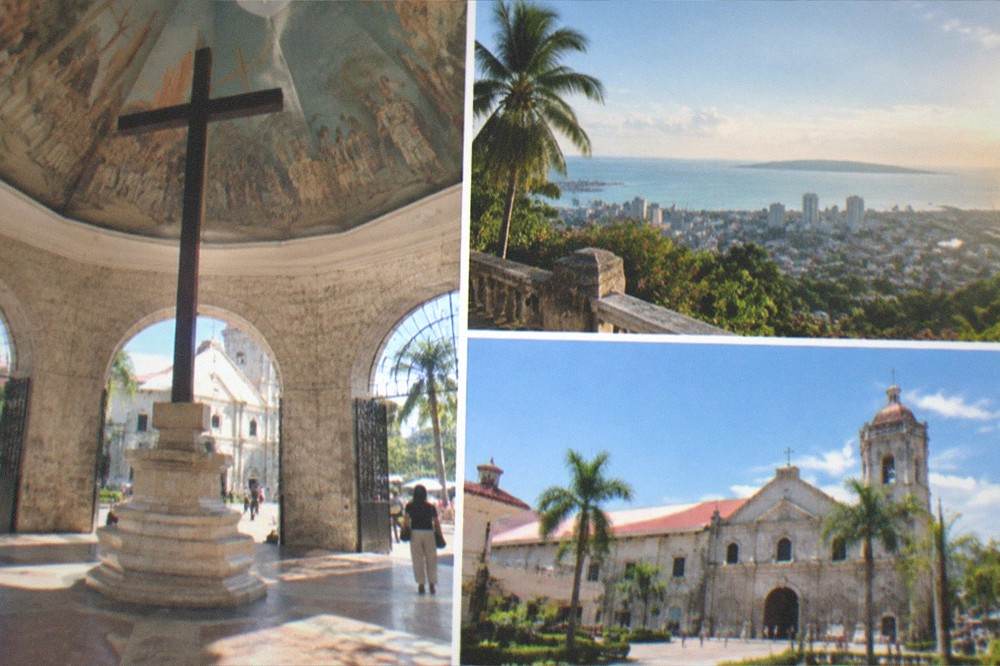
A three-day shape works like this. Day one stays in the city: the Basilica del Santo Niño, Magellan's Cross and Fort San Pedro in the morning, the Taoist temple or the city museums after lunch, and the Busay ridge for the late afternoon and sunset. Day two goes south to Oslob for the whale sharks, with Tumalog Falls and often Sumilon Island on the same route. Day three goes west or stays high: Moalboal for the sardines and Pescador Island, or a slower second highland day if the ridge left you wanting more. Our 3 days in Cebu and south Cebu itinerary pages lay these out in detail.
The honest positioning of the temple within that plan is as the view over everything else. From its terraces you can see the city you walked in the morning and the water you will cross or dive in the days after, which is why so many itineraries put it on day one. It is also the one major Cebu attraction with no official price list and shortened hours, so it rewards the traveller who checks the schedule and treats the figures as reported rather than guaranteed.
For the full list of options across the island, from the highlands to the sea, start with our things to do in Cebu overview, and for the deeper planning questions, Cebu Travel Guide is the hub.
If the southern days are what decided your trip, these are the three most-booked experiences that pair with a highland afternoon:
Between those three, the Moalboal combo is the one that competes most directly with a highland day for your single free afternoon, because it packs the sardine run snorkel, a turtle stop and canyoneering into one long southern day out. Travellers who have already booked their whale shark morning usually pick this one next, since it covers the other half of south Cebu's underwater draw in a single booking.
The third option in that band, the half-day joiner city tour, is the one that pairs most neatly with the temple itself rather than with the sea: it covers the downtown heritage stops in a compact guided circuit, leaving your late afternoon free for the drive up the ridge in the same pattern this page recommends for a first day in Cebu.
Common Questions About The Temple Of Leah In Cebu
How much is the entrance fee at the Temple of Leah?
Recent reports put adult entry at about P120 (about US$1.9) on weekdays and P150 (about US$2.4) on weekends, with discounted rates around P80 (about US$1.3) to P100 (about US$1.6) for seniors, children and PWDs, and parking at about P50 (about US$0.8). There is no official published price list, so confirm at the gate.
What are the Temple of Leah opening hours?
Hours were shortened from April 2026 until further notice, with recent accounts listing a closing time between 8 and 9 PM, and the site also closes occasionally for private events. Confirm the current schedule through the temple's hotline or social media before your visit.
How do I get to the Temple of Leah from Cebu City?
The temple sits in Busay, roughly 30 to 40 minutes' drive uphill from downtown Cebu City. Realistic options are a taxi or Grab car, a habal-habal motorbike, a self-drive rental or a booked highlands tour; there is no scheduled bus to the ridge.
Is the Temple of Leah a real temple?
It is a temple in architecture only. The building borrows from classical Greco-Roman design and was raised as a grand private tribute, which is why it is often nicknamed Cebu's Taj Mahal, but it holds no religious congregation and functions as a paid monument and viewpoint.
Can you combine the Temple of Leah with Tops Lookout and Sirao?
Yes, and that is the standard highlands circuit. All three sit on or near the same ridge road above Cebu City. Do the temple first, Sirao in the middle while its gardens are still open, and Tops Lookout last, since it operates 24 hours and has the best sunset deck.
When is the best time to visit the Temple of Leah?
Late afternoon, around 3 PM to 5 PM, gives the best light on the terraces and the clearest view over the city, especially in the dry season from December to May. In the rainy season from June to November, a morning visit is safer, since afternoon showers and mist are common on the ridge.