Fort San Pedro
Fort San Pedro in Cebu City, in the Central Visayas region of the Philippines, is the country's oldest triangular bastion fort: work started under Legazpi in 1565 and the present stone structure dates from 1738. Here is what it costs, when it opens and what you actually see inside.
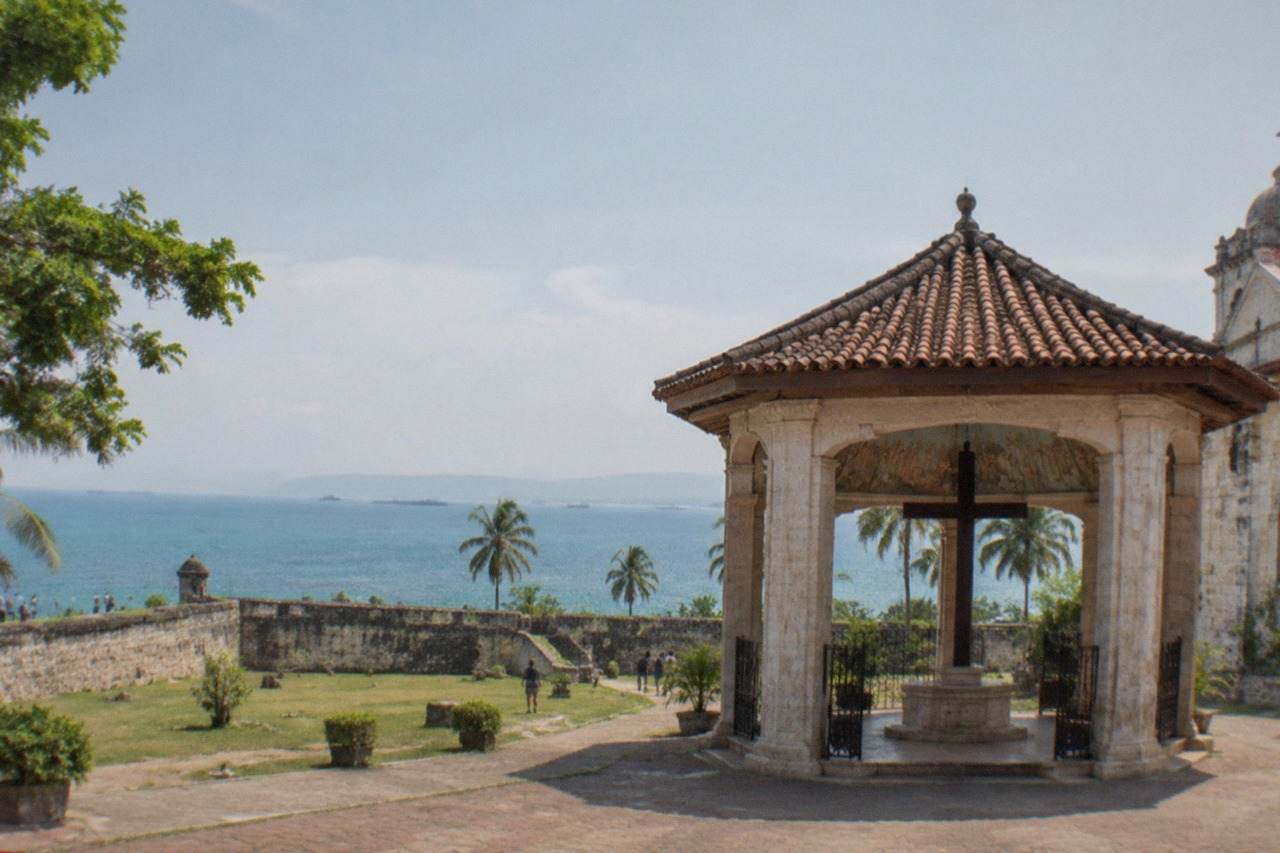
Short answer
Fort San Pedro in Cebu City charges P50 (about US$0.80) regular entry and P40 (about US$0.64) for students and seniors, and is open roughly 8 AM to 7 PM daily. It is the oldest triangular bastion fort in the Philippines, started in wood in 1565 and rebuilt in stone by 1738.
Fort San Pedro in Cebu City, on the island of Cebu in the Central Visayas region of the Philippines, is the oldest triangular bastion fort in the country. Work began in wood under Miguel López de Legazpi in 1565, the year the Spanish settlement of Cebu was founded, and the coral-stone structure standing today dates from 1738. It sits at the edge of the Plaza Independencia, a short walk from the pier area where Magellan's expedition first anchored, and it is one of the few Spanish-era military buildings in the Philippines that survives in a walkable, low-rise form. For many visitors it is a one-to-two-hour stop that pairs naturally with the heritage strip along the old downtown.
What Is Fort San Pedro In Cebu?
Fort San Pedro is a triangular Spanish colonial fort at the waterfront edge of Cebu City, begun in wood by Legazpi's forces in 1565 and completed in its present coral-stone form in 1738, making it the oldest triangular bastion fort in the Philippines. Built to defend the first Spanish settlement in the country, it later served as a garrison, a prison and even a zoo before becoming a museum park.
Today it is a heritage attraction a few minutes on foot from Magellan's Cross and the Basilica del Santo Niño.
The fort's shape is its signature. Three bastions, named La Concepción, Ignacio de Loyola and San Miguel, form the points of the triangle, with walls enclosing a central lawn. The design follows the trace italienne style of coastal fortification adapted to a small garrison: low, thick walls suited to repelling seaborne raiders rather than enduring a siege. Cebu's own history explains why that was the threat. The settlement founded in 1565, the Villa del Santísimo Nombre de Jesús, was the first Spanish town in the Philippines, and its harbor needed protection from the start.
What survives is genuinely old. The stone structure dates from 1738, and the site's history as a fortification runs continuously from 1565, the same year the Church of the Santo Niño was founded on 28 April 1565. That makes the fort and the Basilica twin anchors of Cebu's Spanish-era core, both within a few hundred metres of each other. The fort was later used for purposes its builders never imagined: American colonial forces used it as a barracks, it served as a prison, and it later housed a municipal zoo for a period before restoration returned it to a heritage park.
For planning a visit, the fort belongs to a compact heritage cluster. The Basilica del Santo Niño, Magellan's Cross and the Yap-Sandiego Ancestral House are all walkable from the fort gate, and the whole strip can be covered in a morning. Cebu City itself is one of three highly urbanized cities on the island, independent of Cebu Province administratively but grouped with it geographically, which is why addresses and travel advice for "Cebu" often mean the metro area rather than the island as a whole.
What Are The Entry Fees And Opening Hours At Fort San Pedro?
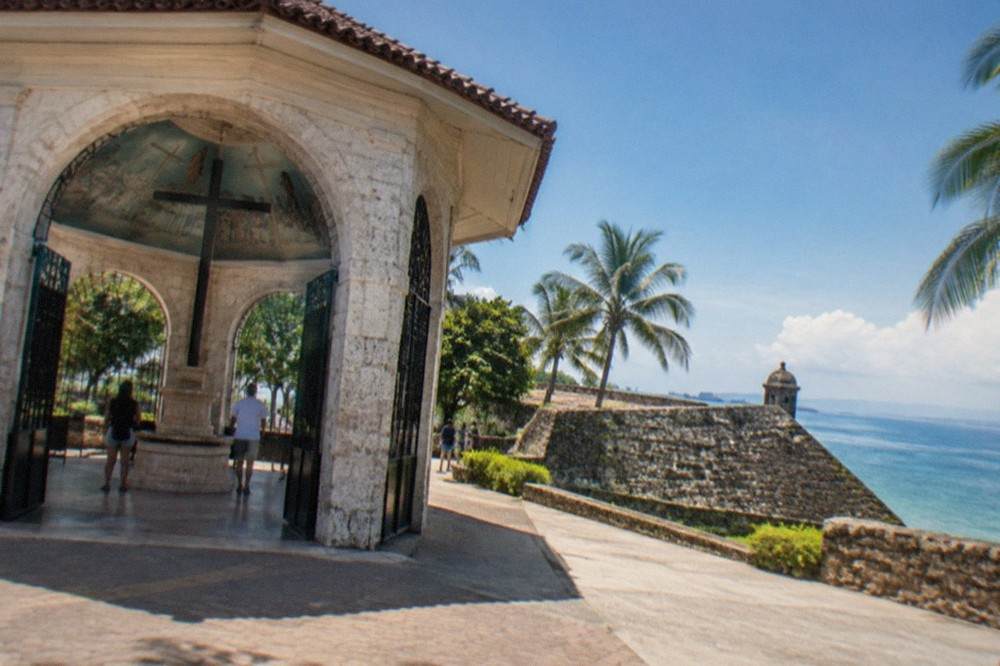
Entry to Fort San Pedro is P50 (about US$0.80) for regular visitors and P40 (about US$0.64) for students and seniors, and the fort is open roughly 8 AM to 7 PM daily. The fee figures were confirmed by a March 2026 Cebu City update that revised event rental rates but left entrance fees unchanged after 17 years. Hours are reported by local guides rather than by an official page, so treat 8 AM to 7 PM as the working assumption and confirm on arrival.
The fee is one of the cheapest heritage entries on the island. For comparison, a day of Cebu's better-known attractions quickly outpaces it: Tops Lookout charges P100 (about US$1.6) per adult, the Temple of Leah runs about P120 (about US$1.9) on weekdays, and the whale shark interaction at Oslob costs P1,000 (about US$15.9) for foreign visitors. The fort's P50 (about US$0.8) ticket buys access to the walls, the bastions, the central lawn and the small museum displays inside, and there is no separate charge for photography.
One caveat from the recent record: the 30 September 2025 magnitude 6.9 earthquake off northern Cebu damaged buildings across the province, and Fort San Pedro was mentioned among the affected structures in Cebu City. The quake's worst effects were in the north, near Bogo and Daanbantayan, and the Department of Tourism declared Cebu open to visitors in late October 2025, but a heritage coral-stone building warrants a quick check before a long trip. The same applies to the heritage houses nearby: Casa Gorordo and Yap-Sandiego were flagged for post-earthquake inspection in early October 2025 and their current status is not fully confirmed, so hedge your itinerary rather than assuming every stop is open.
| Visitor category | Fee | Notes |
|---|---|---|
| Regular adult | P50 (about US$0.8) | Confirmed by the March 2026 fee update |
| Students and seniors | P40 (about US$0.6) | Discounted rate, ID typically checked |
| Children | No verified separate rate | Confirm at the gate |
| Photography | Included | No separate camera fee reported |
| Nearby heritage site | Fee | Hours |
|---|---|---|
| Fort San Pedro | P50 (about US$0.8) regular, P40 (about US$0.6) discounted | Roughly 8 AM-7 PM |
| Magellan's Cross | Free | About 8 AM-6 PM |
| Cebu Taoist Temple | Free, donations welcome | Daytime hours vary by source |
| Casa Gorordo Museum | About P100 (about US$1.6) | Monday to Saturday, status to confirm |
If the fort and the heritage strip fill your morning, the afternoon is where Cebu earns its reputation, and the most popular full-day trips from the city sell out first.
What Can You See Inside Fort San Pedro?
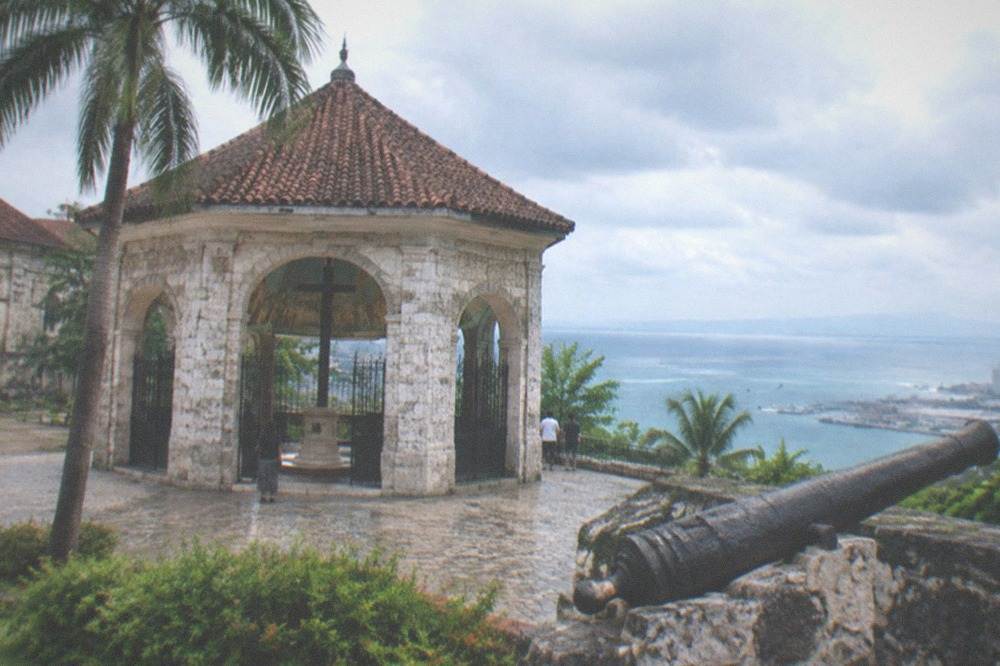
Inside Fort San Pedro you can walk the perimeter walls, climb into the three triangular bastions, cross the central lawn, and view small museum displays of Spanish-era artefacts, cannons and photographs inside the former barracks rooms. The fort's scale is modest, roughly a city block, so the visit is more about texture and history than exhibits: coral stone, low arched gateways, and views over the plaza and the port area from the ramparts. Most of the interest is architectural rather than curated.
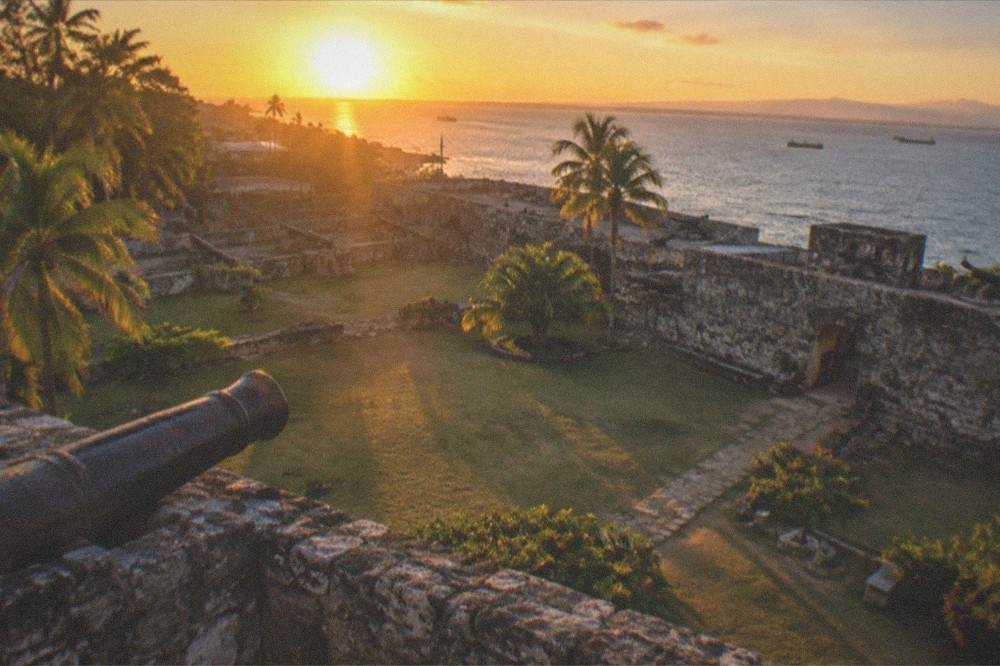
The walls are the main draw. They are built of coral stone, the same material as Cebu's colonial churches, and their thickness and low profile read clearly as a coastal defense work. The three bastions at the triangle's points give the fort its plan, and the rampart walk connects them along two sides facing what was once open water and is now the reclaimed port district. From the walls you look out over Plaza Independencia, the old post office area and the modern ferry piers, a layered view that compresses centuries of Cebu's waterfront history into one glance.
The interior rooms, arranged along the walls, hold the museum function. Displays reported by local guides include Spanish-era ceramics, cannon and armament pieces, and photographs and plans documenting the fort's restoration. The collection is modest compared with Museo Sugbo, the provincial museum that reopened on 29 August 2025 after nearly two years closed and charges P50 (about US$0.8) general entry, but it is on-site and included in the ticket. Treat the displays as context for the building rather than a destination in themselves.
The central lawn is the part many visitors remember. It is a quiet green space inside the walls, used for shade and photographs, and it makes the fort a rare breathing space in a dense downtown. The fort's stint as a zoo is long gone; what remains is a walled garden with a military plan.
How Much Time Do You Need At Fort San Pedro?
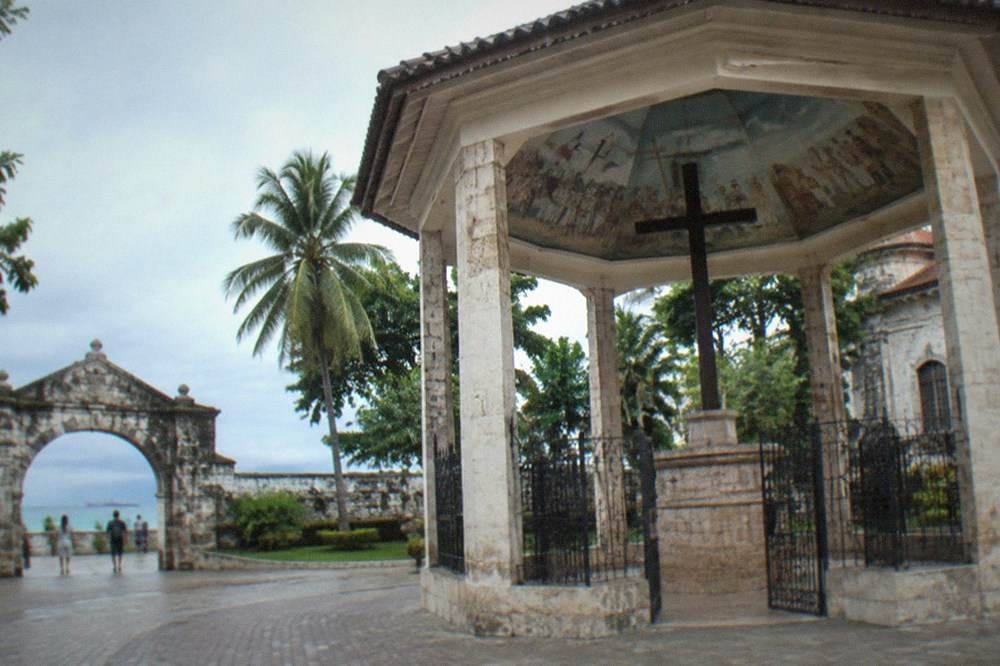
A relaxed walk of the walls, the bastions and the museum rooms inside Fort San Pedro takes only a short while. The fort is compact, roughly a city block in footprint, so it does not reward a half-day on its own. The efficient plan is to bundle it with the surrounding heritage strip into a single two-to-three-hour walking circuit of old Cebu.
The walking circuit is the standard first-timer pattern. Fort San Pedro, Plaza Independencia, Magellan's Cross and the Basilica del Santo Niño sit within a few minutes of one another, and the Yap-Sandiego Ancestral House and Colon Street, often called the oldest street in the country, extend the walk northward. A morning covers all of it comfortably, with time for a lechon lunch afterward, Cebu's most famous dish, before the afternoon heat peaks.
Timing within the day matters less here than at Cebu's outdoor attractions. The fort is shaded in part by its own walls, and the museum rooms are covered, so midday visits are workable year-round. What Cebu's climate does dictate is the season: PAGASA's national rule puts the rainy season from June to November and the dry season from December to May, with the Mactan station's 1991-2020 normals showing 1,685.0 mm of annual rain spread over 138 rain days. A wet-afternoon fallback like the fort, the Basilica and the museums is a sensible hedge for a June-to-November trip.
| Stop on the heritage walk | Typical time | Fee |
|---|---|---|
| Fort San Pedro | 45-90 minutes | P50 (about US$0.8) |
| Magellan's Cross | 10-15 minutes | Free |
| Basilica del Santo Niño | 30-45 minutes | Free |
| Plaza Independencia | 15 minutes | Free |
| Yap-Sandiego Ancestral House | 20-30 minutes | No verified fee published |
For travelers with more than a day, the fort is the warm-up act. Cebu's headline experiences, the whale sharks at Oslob, the sardine run at Moalboal and the canyoneering at Kawasan Falls, are all in the south of the island and need full days. The join-in whale shark day tour from Cebu is the single most booked trip of that set, and it pairs well with a heritage morning the day before or after.
How Do You Get To Fort San Pedro?
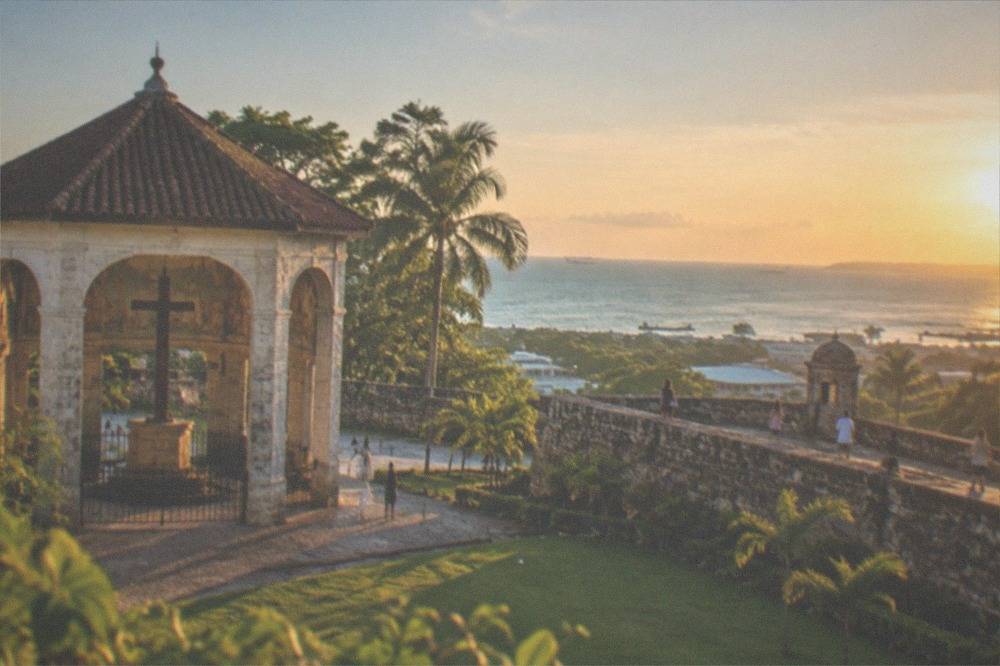
Fort San Pedro sits at the western edge of Plaza Independencia in Cebu City's old downtown, reachable in about 10 to 20 minutes by taxi or ride-hailing app from the IT Park and business district areas, and a few minutes more from most city hotels. From Mactan-Cebu International Airport the drive is about 13 to 15 km and typically 25 to 60 minutes depending on bridge traffic. Jeepneys running the downtown routes pass within a short walk of the plaza.
The airport run is the most variable. The airport sits on Mactan Island, across the channel from Cebu City, and every crossing depends on one of three bridges. The official airport transport guide lists the MyBus service between the airport and SM City Cebu at a fare of P30 (about US$0.5) to P50 (about US$0.8) depending on destination, running from 6 AM to 9 PM toward the airport and 7 AM to 10 PM back toward the city. From SM City Cebu, the fort is a short taxi or jeepney hop south to the plaza.
Within the city, the fort's address is the easiest landmark in old Cebu: Plaza Independencia, at the foot of the pier district. The Cebu City area guide covers the neighborhood structure in detail, but in short, the fort anchors the southern end of the heritage walk, with the Basilica and Colon Street to its north and the ferry piers to its west. If you are staying in IT Park or on Mactan, budget extra time for afternoon traffic on the bridges and the downtown streets.
Two practical notes. First, jeepney fares rose in late September 2026 under a national fare adjustment, with the traditional minimum at P13 (about US$0.2) to P14 (about US$0.2) for the first 4 km, though coverage of Region 7 was not explicitly confirmed in the announcement, so expect small changes and carry coins. Second, the Cebu Bus Rapid Transit has run only partial operations since 13 March 2026, a single Il Corso to IT Park route mixing a short dedicated corridor with regular traffic, so do not plan around it as a network.
| From | To Fort San Pedro | Typical time | Notes |
|---|---|---|---|
| Mactan-Cebu International Airport | Taxi, Grab or MyBus plus hop | 25-60 minutes | About 13-15 km; bridge traffic varies |
| IT Park, Cebu City | Taxi or ride-hail | 10-20 minutes | Worse in afternoon peak |
| SM City Cebu | Jeepney or taxi | 10-15 minutes | MyBus from airport terminates here |
| Cebu South Bus Terminal | Taxi or jeepney | 15-25 minutes | Departure point for Oslob and Moalboal buses |
How Does Fort San Pedro Compare With Other Cebu Attractions?
Fort San Pedro is the cheapest and most compact of Cebu's major heritage attractions, needing under two hours and one of the lowest entry fees on the island, which makes it the natural first stop of a city heritage day rather than a standalone destination. Against Cebu's outdoor headline acts, the highlands viewpoints and the Oslob whale sharks, the fort is the low-cost, low-commitment anchor of the downtown circuit.
The comparison matters because visitors tend to underestimate how split Cebu is between two kinds of day. The city heritage day, the fort, the Basilica, Magellan's Cross, the museums, is walkable, cheap and weather-tolerant. The outdoor day, whale sharks, waterfalls, highlands, is a full-day commitment with early starts and fees that stack quickly. A well-built itinerary alternates them, and the fort is the most flexible piece of the city day because it needs no booking and no guide.
| Attraction | Entry fee | Time needed | Booking needed |
|---|---|---|---|
| Fort San Pedro | P50 (about US$0.8) regular | 45-90 minutes | No |
| Magellan's Cross | Free | 10-15 minutes | No |
| Tops Lookout | P100 (about US$1.6) adult | 1-2 hours | No, 24 hours open |
| Temple of Leah | About P120 (about US$1.9) weekday | 1-2 hours | No |
| Sirao Flower Garden | About P100 (about US$1.6) | 1 hour | No |
| Oslob whale sharks | P1,000 (about US$15.9) foreign, P500 (about US$8.0) local | Full morning plus travel | Recommended |
The highlands cluster, the Temple of Leah, Sirao Flower Garden and Tops Lookout, sits in Busay above the city and works as a half-day loop; the Temple of Leah guide and the Tops Lookout guide cover those in detail. The fort pairs with none of them geographically but complements all of them thematically: it is the military counterweight to Cebu's religious and domestic colonial architecture, and the only one of the three built to defend rather than to display.
For families, the fort is the easiest sell in the old downtown. Walls to walk, cannons to find, a lawn to run on, and a ticket price that makes an early exit painless if attention spans fail. The wider family options, including the eco-adventure park day pass further north, are covered by the trio below.
What Is The History Of Fort San Pedro?
Fort San Pedro's history begins on 8 May 1565, when Legazpi's forces started a wooden fort on the Cebu waterfront, and the present coral-stone structure dates from 1738, making it the oldest triangular bastion fort in the Philippines. It was built to protect the first Spanish settlement in the country, and it later served as a garrison, a prison, an American barracks and even a zoo before its restoration as a heritage park.
The founding year ties the fort to the moment the Spanish Philippines began. Legazpi's expedition landed on 28 April 1565, the Church of the Santo Niño was founded the same day by Fr. Andrés de Urdaneta, and the wooden fort followed within weeks. The settlement it defended was the first Spanish town in the archipelago, predating Manila, and Cebu's later charter as a city came on 24 February 1937. The fort's 1565 start date and the Basilica's founding are the two anchors of Cebu's claim to be the country's oldest city.
The 1738 stone structure reflects a later era of Spanish coastal defense, when coral stone replaced timber across the colony's key installations. The three-bastion triangle was the standard economical plan for a small garrison facing seaborne raiders, and Cebu's position as the gateway between the Visayas and the western Pacific made it worth fortifying in stone. The walls that visitors walk today are substantially that 1738 work, restored after long periods of neglect and repurposing.
The modern chapters are less glorious but part of the record. Under American rule the fort served as a barracks; in the Japanese occupation period it was used as a prison; and after the war it decayed until a restoration campaign returned it to public use, including its odd stint housing a zoo. The 2013 Bohol earthquake, a magnitude 7.2 event on 15 October 2013, damaged the Basilica's belfry nearby, and the 30 September 2025 magnitude 6.9 quake off northern Cebu again put heritage structures across the province under inspection, with the fort among the Cebu City buildings checked. The Department of Tourism declared Cebu open to visitors in late October 2025.
| Date | Event |
|---|---|
| 8 May 1565 | Wooden fort begun under Legazpi |
| 28 April 1565 | Legazpi lands; Santo Niño church founded the same day |
| 1738 | Present coral-stone structure completed |
| 1937 | Cebu chartered as a city, 24 February |
| 15 October 2013 | M7.2 Bohol earthquake damages the Basilica belfry nearby |
| 30 September 2025 | M6.9 earthquake off northern Cebu; fort among buildings checked |
What Should You Know Before Visiting Fort San Pedro?
Before visiting Fort San Pedro you should know three things: the entry fee is low with a discounted student and senior rate, the hours to plan around are roughly 8 AM to 7 PM, and the fort is best visited as part of the downtown heritage walk rather than as a destination on its own. Bring water and sun protection for the exposed walls, and confirm the status of the neighboring heritage houses, whose post-earthquake reopening is not fully confirmed. No booking is needed for the fort itself.
Practicalities first. The fort is cash-friendly territory; the ticket is cheap, and the surrounding downtown is a jeepney-and-coin environment rather than a card one. The walls offer little shade, so the standard tropical kit, hat, water, sunscreen applied before you arrive since some Cebu marine attractions ban it on site, applies. Footwear can be ordinary street shoes; the terrain is paved lawn and stone ramparts, not trail.
Photography is straightforward. The ramparts and the central lawn are the classic shots, with the bastion angles framing the port skyline. Morning light comes off the water and lights the eastern walls; late afternoon is softer and cooler. The fort's compact scale means a wide lens earns its keep, and the low archways inside reward a walk-through frame.
The honest limitation is depth. The fort is superb for a short visit and thin for a half-day. If your Cebu time is short, the higher-value commitments are the full-day trips south, and the falls-and-peak combination below is the standard counterweight to a heritage morning. Check availability on the operator's live listing before you lock a date, since south-coast day tours are the first thing to fill on busy weeks.
For families who want a single base with activities bundled in, the eco-adventure park day pass north of the city is the usual alternative to a second long drive south, and it pairs well with a fort-and-Basilica morning the day before.
How Does Fort San Pedro Fit Into A Cebu Itinerary?
Fort San Pedro fits into a Cebu itinerary as the anchor of the first morning in the city, bundled with Magellan's Cross, the Basilica and the heritage houses into a two-to-three-hour walk, before the trip pivots to the island's full-day attractions. In a three-day plan, day one covers the city heritage strip including the fort, day two goes south to Oslob or Moalboal, and day three takes the highlands or Mactan.
The fort needs no booking, so it absorbs schedule slack better than any other stop.
The reason it works first is directional. The heritage strip is downtown and walkable; everything else on the island involves a vehicle and a clock. Whale shark tours at Oslob leave the city before dawn because the interaction window runs from about 6 AM to noon, and the bus or van ride south takes hours. The fort, by contrast, opens at a civilized hour and stays open into the evening, so it fills whatever slot the day leaves.
For the fuller picture, the Cebu City area guide covers where to stay relative to the heritage strip, and the wider itinerary options on Cebu Travel Guide break down three, five and seven day plans. The short version: stay downtown or in IT Park if the heritage walk and the port are your priorities, and stay on Mactan if beach time dominates, accepting the bridge commute for city days.
Seasonality matters less for the fort than for the water-based days. The whale shark operation at Oslob runs year-round in the morning window, but sea conditions and typhoon season, June to November with peak activity roughly July to October, affect boat trips more than a walled garden. If you are traveling in the wet season, keep the fort, the Basilica and the museums as your movable pieces and book the water days with cancellation flexibility in mind.
Common Questions About Fort San Pedro
How much does Fort San Pedro cost?
Entry is P50 (about US$0.8) for regular visitors and P40 (about US$0.6) for students and seniors. A March 2026 Cebu City fee update revised event rental rates but left these entrance fees unchanged after 17 years. Photography is included in the ticket.
What are the opening hours of Fort San Pedro?
Roughly 8 AM to 7 PM daily. These hours are reported consistently by local guides rather than published on an official page, so treat them as the working assumption and confirm at the gate, especially following the September 2025 earthquake inspections of Cebu City heritage buildings.
How old is Fort San Pedro?
Work started in wood on 8 May 1565 under Legazpi, and the present coral-stone structure dates from 1738. It is the oldest triangular bastion fort in the Philippines and was built to defend the first Spanish settlement in the country.
How long does a visit to Fort San Pedro take?
Between 45 and 90 minutes covers the walls, the three bastions, the central lawn and the small museum rooms. The fort is often bundled with Magellan's Cross and the Basilica del Santo Niño into a single morning heritage walk.
Is Fort San Pedro worth visiting?
Yes, as part of the downtown heritage circuit. At P50 (about US$0.8) it is one of the cheapest major heritage entries on the island, and its walls, bastions and plaza-side position make it the architectural counterweight to the Basilica. On its own it is a short stop; combined with the surrounding strip it is a satisfying half-day.
Was Fort San Pedro damaged by the 2025 earthquake?
The fort was mentioned among Cebu City buildings affected by the 30 September 2025 magnitude 6.9 earthquake off northern Cebu, and heritage structures across the province were inspected afterward. The Department of Tourism declared Cebu open to visitors in late October 2025, but a quick check before a dedicated trip is prudent.
Fort San Pedro is the quiet constant of Cebu City's heritage strip: cheap, unhurried, open most of the day, and old in a way few buildings in the Philippines can claim. Walk the walls early, pair it with the Basilica and Magellan's Cross before the afternoon heat, and save the island's big water days for the bookings that need them.