3 Days In Cebu Itinerary
Three days is enough to see Cebu's Spanish-era heritage in Cebu City, swim with whale sharks in Oslob, and end with waterfalls or island hopping off Mactan, if the days are planned in the right order.
Short answer
Day 1 covers Cebu City heritage and food, Day 2 goes south to Oslob whale sharks and Kawasan Falls, and Day 3 stays close to the city with Mactan island hopping or a highlands afternoon.
Cebu, an island province in the Central Visayas region of the Philippines, rewards a tight schedule more than almost any other destination in the country. Three days is the minimum that works: one for the Spanish-era heritage and food of Cebu City, one for the whale sharks and waterfalls of the south coast, and one for the islands and beaches of Mactan. This itinerary is built around verified fees, current transport realities and the seasons, and it links out to the deeper guides on Cebu Travel Guide wherever a stop deserves more than a paragraph.
What Can You Realistically See In Cebu In 3 Days?
Three days in Cebu covers the city's heritage core, the south coast's whale sharks and Kawasan Falls, and one island or highlands day near Cebu City, but not the far north. Malapascua and Bantayan each need an overnight, so a 3-day trip should treat them as a reason to come back. The workable shape is one city day, one long south day with a very early start, and one flexible day split between Mactan's islands and the Busay highlands.
The geography decides the plan. Cebu City sits in the middle of the island's east coast, Oslob is roughly three and a half to four and a half hours south by bus, and Mactan, connected by two bridges plus the CCLEX toll road, is minutes from the airport. Trying to see the north and the south in one trip means losing whole days to bus seats, and the island's biggest attractions sit at opposite ends of a long, traffic-heavy road.
Here is the shape of the three days at a glance:
| Day | Base | Focus | Key stops |
|---|---|---|---|
| Day 1 | Cebu City | Heritage and food | Magellan's Cross, Basilica del Santo Niño, Fort San Pedro, Carbon Market, Tops Lookout |
| Day 2 | South Cebu | Whale sharks and waterfalls | Oslob whale shark viewing, Tumalog Falls, Kawasan Falls |
| Day 3 | Mactan or Busay | Islands or highlands | Island hopping off Mactan, or Temple of Leah, Sirao and Tops |
If you have more time, the 5 days in Cebu itinerary adds Moalboal properly, and the 7 days in Cebu itinerary reaches Bantayan or Malapascua without the rush.
Day 1 In Cebu: Heritage Downtown And A Food Walk?
Day 1 stays inside Cebu City and walks the colonial core: Magellan's Cross, the Basilica del Santo Niño next door, Fort San Pedro, then Colon Street and a market food walk in the afternoon, ending at Tops Lookout, everything within a short walk or jeepney ride of the others. Magellan's Cross is free and open roughly 8 AM to 6 PM, Fort San Pedro charges P50 (about US$0.8) regular entry, and Tops Lookout is open 24 hours at P100 (about US$1.6) entry.
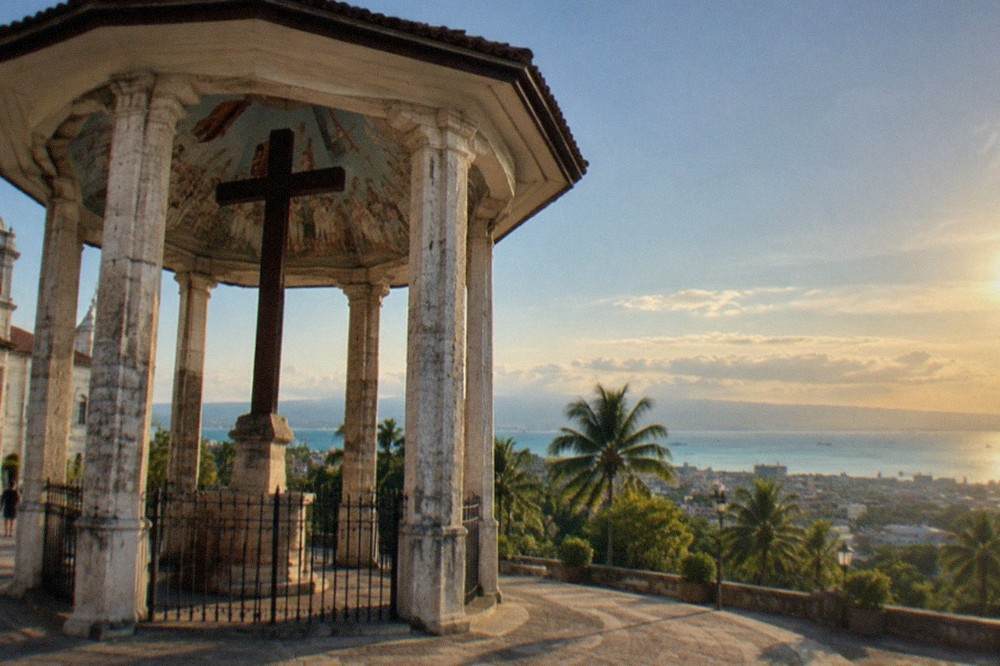
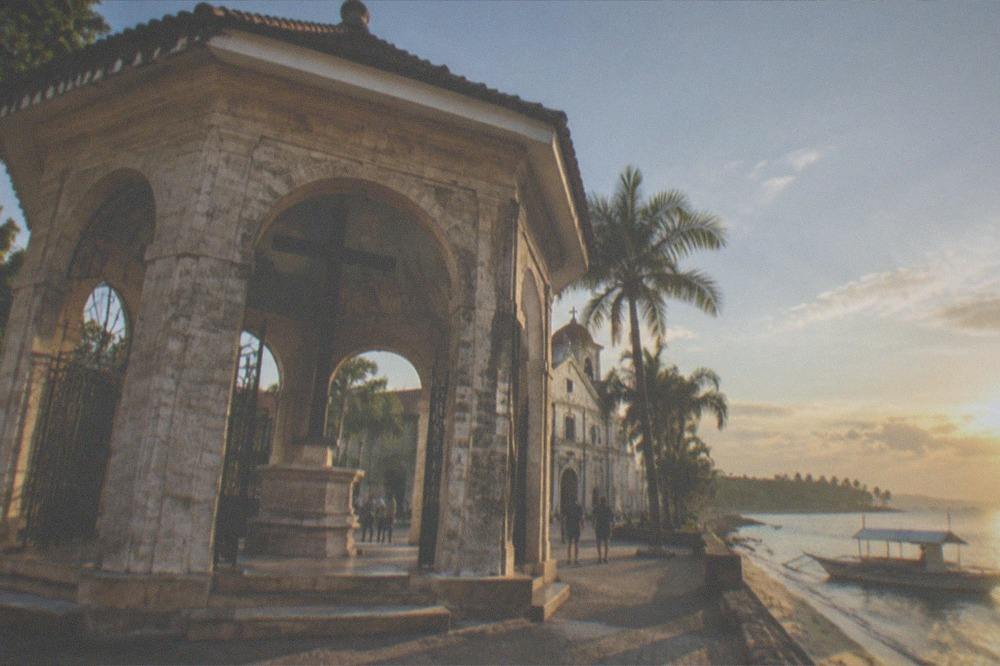
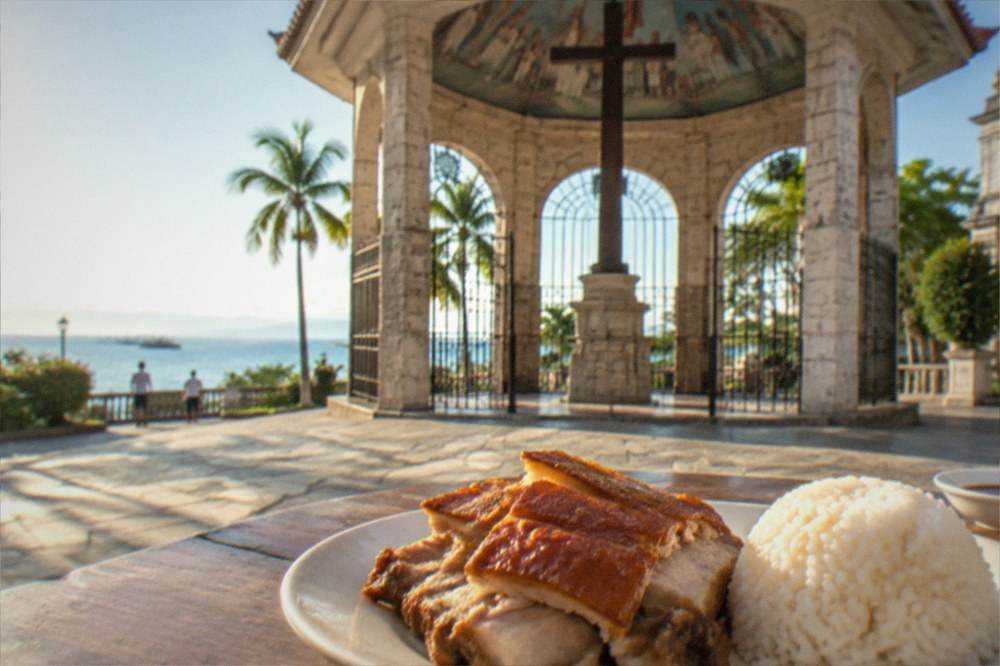
Start at the Magellan's Cross pavilion, where the Basilica's own chronicles say a cross was planted in April 1521 after Magellan's fleet arrived. The painted ceiling above it depicts that arrival. A minute away stands the Basilica del Santo Niño, founded on 28 April 1565 on the day the Santo Niño image was found; the current stone structure dates from roughly 1735 to 1740. Its belfry collapsed in the October 2013 Bohol earthquake and was later rebuilt, and the pre-pandemic mass schedule was restored in November 2024, so weekday and Sunday masses now run from early morning into the evening.
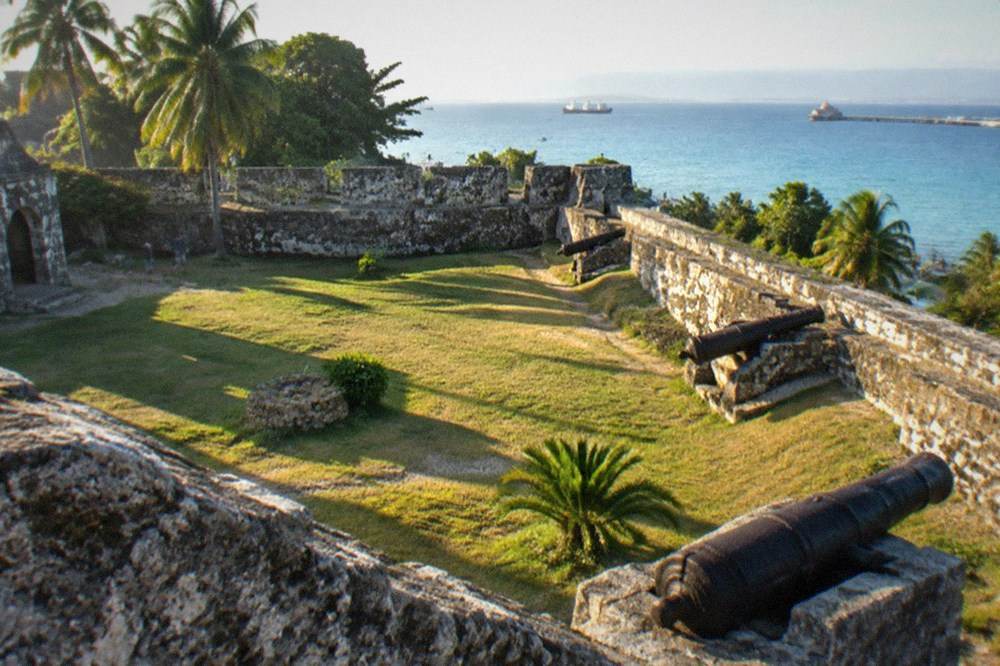
From there it is a short walk to Fort San Pedro, the oldest triangular bastion fort in the country. Work started in 1565 under Legazpi and the present stone form dates from 1738. The March 2026 fee review left entrance fees unchanged, so the SunStar report still stands: P50 (about US$0.8) regular, P40 (about US$0.6) for students and seniors. Hours run about 8 AM to 7 PM, and the shaded courtyard is a reasonable place to wait out the midday heat before the food walk.
Afternoon belongs to food. Cebu is the home of lechon, the slow-roasted pig that locals and visitors alike treat as the island's signature dish, and the markets around Colon Street are where the everyday version is eaten. A guided walk through the markets turns the afternoon into the best-value part of the trip, because a local guide knows which stalls are worth the queue and which dishes are worth trying once.
The Cebu Market & Food Tour runs with a local guide; its price is not published by the operator, so check the live listing. Prefer a city overview first? The half-day joiner tour below hits the heritage stops with a guide and transport included.
End the day in Busay. Tops Lookout is open 24 hours, entry P100 (about US$1.6) regular and P70 (about US$1.1) for seniors and PWD holders with ID, per the operator's own site. A shuttle plus entry combination from IT Park is listed at P200 (about US$3.2). The view over the city at dusk is the payoff for a walking-heavy day, and the late opening means there is no need to rush dinner to catch it.
Day 2 In Cebu: Oslob Whale Sharks And Kawasan Falls In One Day?
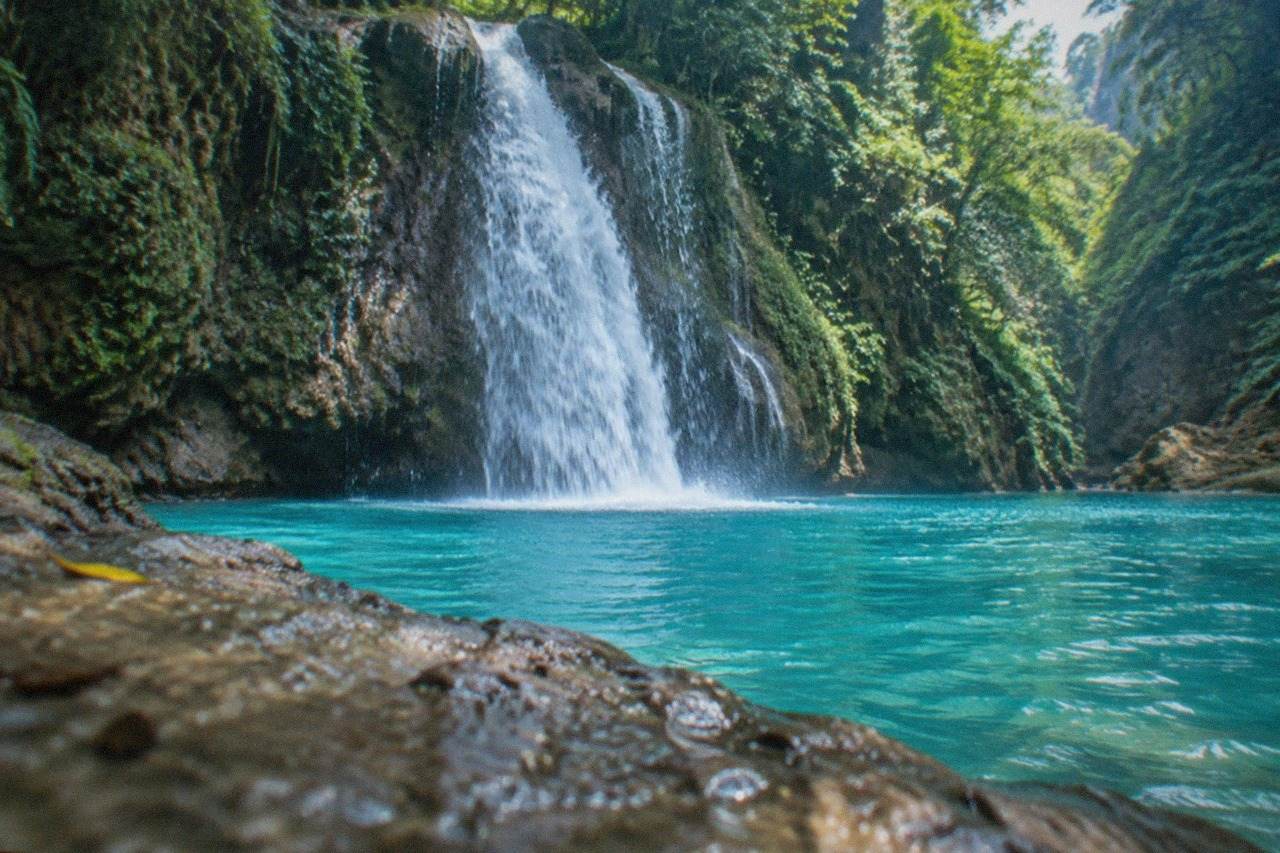
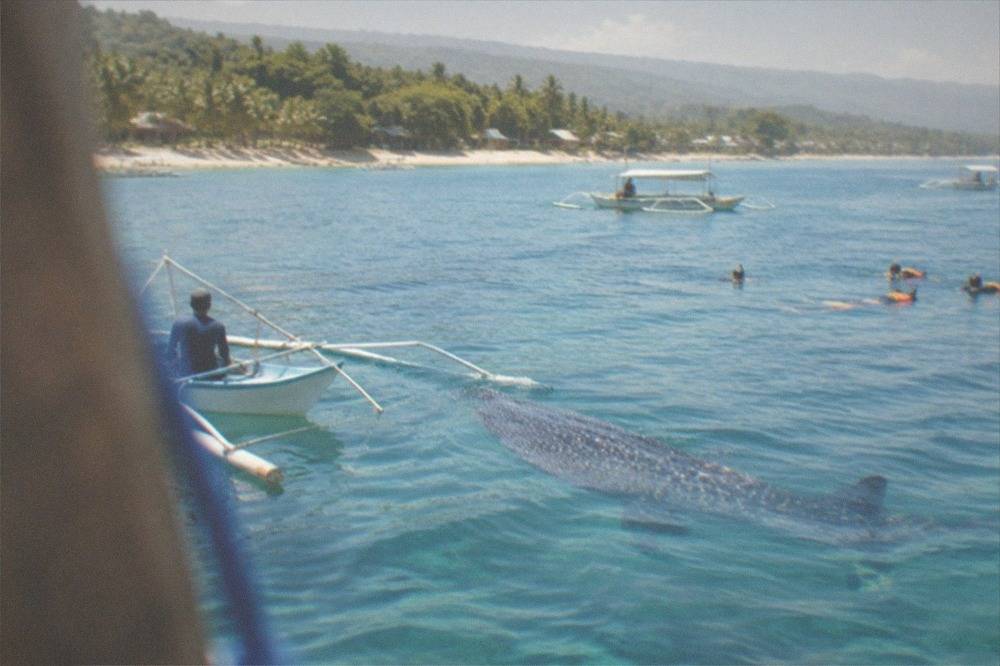
Day 2 is the long south day: be at Oslob's Tan-awan viewing area between 6 AM and noon for the whale sharks, then Tumalog Falls, then Kawasan Falls Level 1, with canyoneering an option for those staying longer at the falls. The Oslob LGU fee is P1,000 (about US$15.9) for foreign tourists and P500 (about US$8.0) for locals including boat and guide, Tumalog Falls charges about P50 (about US$0.8) entry, Kawasan Falls Level 1 about P200 (about US$3.2), and canyoneering with a Badian-accredited guide runs roughly P1,500 (about US$24) to P2,000 (about US$32).
This is the day that punishes late starts. Whale shark viewing in Oslob runs from about 6 AM to noon, with a registration cutoff around 11 AM, and the whales are wild: in late May 2026 they were absent from the Tan-awan interaction area for about four days when plankton moved to a neighboring barangay. Sightings are not guaranteed, and the SunStar reporting on that absence is worth reading before you book anything non-refundable.
The rules are set by the municipal government: a mandatory briefing, a minimum distance of about 4 meters from the body, no touching, no sunscreen, no flash, roughly 30 minutes in the water, and feeding only by licensed spotters. Life jackets are required. The ethics of the feeding program are genuinely debated, and the question deserves honest treatment rather than a shrug.
After the interaction, Tumalog Falls is a short habal-habal ride from Tan-awan, at about P50 (about US$0.8) to P100 (about US$1.6) each way and about P50 (about US$0.8) entrance, though barangay management varies, so confirm locally. The falls themselves are a wide, thin curtain of water dropping into a cold pool, and the stop rarely takes more than an hour.
Then the decision: swim or canyoneer at Kawasan Falls. Level 1 entrance is about P200 (about US$3.2) for swimming only. Canyoneering down the Badian route is LGU-regulated; SunStar reported in October 2025 that tourists typically pay about P2,000 (about US$32), while guide sites list P1,500 (about US$24) inclusive of guide, fees, gear and lunch, so plan on roughly P1,500 (about US$24) to P2,000 (about US$32). Two things changed recently that older guides miss: cliff jumping is banned at the main Level 1 basin, and the Alegria route is suspended, so only the Badian route runs. A P110 (about US$1.8) million rehabilitation has been underway since June 2026 and the site stayed open during the works.
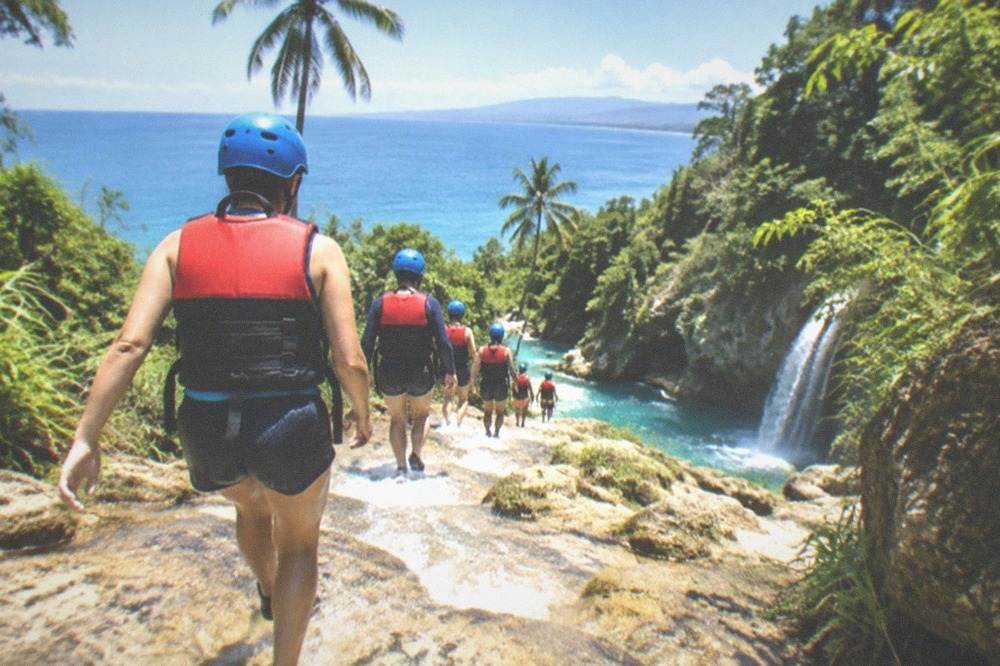
Doing both Oslob and Kawasan in one day is possible but brutal from Cebu City; travelers typically either join an organized day tour or split the south over two days with the South Cebu itinerary. If a one-day south trip is what fits your three days, the join-in whale shark tour and the small-group islands-plus-falls combo below are the two products that handle the logistics.
Day 3 In Cebu: Island Hopping Off Mactan Or The Busay Highlands?
Day 3 splits into two good options: island hopping off Mactan to marine sanctuaries such as Hilutungan, Nalusuan and Caohagan, or the highlands alternative pairing Temple of Leah with Sirao Flower Garden, both options sitting within a short drive of downtown Cebu City. Sanctuary fees run roughly P150 (about US$2.4) to P300 (about US$4.8) per island plus a Lapu-Lapu environmental fee of P100 (about US$1.6) for foreign tourists, while Temple of Leah charges about P120 (about US$1.9) to P150 (about US$2.4) and Sirao Flower Garden about P100 (about US$1.6).
The island option is the classic third day. Boats leave from Mactan for the sanctuaries, and the fee stack matters: the Lapu-Lapu environmental fee for island hopping is P100 (about US$1.6) for foreign tourists (locals pay P20 (about US$0.3) after a July 2025 amendment), and each sanctuary charges its own entrance, roughly P150 (about US$2.4) to P300 (about US$4.8) per person at Hilutungan and Nalusuan. Snorkeling gear and lunch are usually part of the package.
The highlands option suits anyone whose legs are done with boats. Temple of Leah in Busay charges about P120 (about US$1.9) on weekdays and P150 (about US$2.4) on weekends, with no official published price list, and its hours were shortened from April 2026, so confirm before heading up. Sirao Flower Garden is about P100 (about US$1.6) per person. Casa Gorordo, about P100 (about US$1.6) regular and closed Sundays, rounds out a quieter cultural day.
There is also a middle path: a small-group tour that combines the Moalboal islands with Kawasan Falls in a single day from Cebu. It is a long day, but it buys back your Day 2 if the whale shark morning ran short, and it removes the need to arrange two separate south-coast logistics chains yourself.
Whichever way Day 3 goes, the same advice holds: book the boat or the driver the evening before, confirm the weather at sunrise, and keep the afternoon loose enough that a squall does not wreck the plan.
How Much Does 3 Days In Cebu Cost?
A 3-day Cebu trip on a mid-range budget runs on attraction fees that stay modest, with the Oslob whale shark fee and any organized day tour standing out as the two biggest line items on the whole trip. Most attraction fees sit under P200 (about US$3.2) each, and the Oslob fee is P1,000 (about US$15.9) for foreign visitors; independent travel is cheap at the attraction level, and the costs that add up are intercity transport, meals, accommodation, and one or two booked day tours.
Here is the verified fee schedule for the stops in this itinerary:
| Stop | Entry fee | Notes |
|---|---|---|
| Magellan's Cross | Free | About 8 AM to 6 PM |
| Basilica del Santo Niño | Free | Masses restored to pre-pandemic schedule Nov 2024 |
| Fort San Pedro | P50 (about US$0.8) | P40 (about US$0.6) students and seniors |
| Tops Lookout | P100 (about US$1.6) | Open 24 hours; P70 (about US$1.1) senior/PWD |
| Temple of Leah | About P120 (about US$1.9) to P150 (about US$2.4) | No official price list; hours shortened from Apr 2026 |
| Sirao Flower Garden | About P100 (about US$1.6) | Hours vary by garden |
| Oslob whale sharks | P1,000 (about US$15.9) foreign; P500 (about US$8.0) local | Boat and guide included; 6 AM to noon |
| Tumalog Falls | About P50 (about US$0.8) | Habal-habal P50 (about US$0.8) to P100 (about US$1.6) each way |
| Kawasan Falls Level 1 | About P200 (about US$3.2) | Canyoneering roughly P1,500 (about US$24) to P2,000 (about US$32) |
Getting around is the other cost layer. MyBus between the airport and SM City Cebu runs P30 (about US$0.5) to P50 (about US$0.8) depending on destination, per the airport's own transport guide. The CCLEX toll road between Cebu City and Cordova charges P107 (about US$1.7) one way for cars under the full LTRC matrix in force since October 2025.
Two money facts that surprise visitors: foreign tourists staying under a year are exempt from the Philippine travel tax, and the eTravel registration required within 72 hours of arrival is free at the official site. Neither should appear on your bill, and any site charging for eTravel registration is a fake.
When Is The Best Time For A 3-Day Cebu Itinerary?
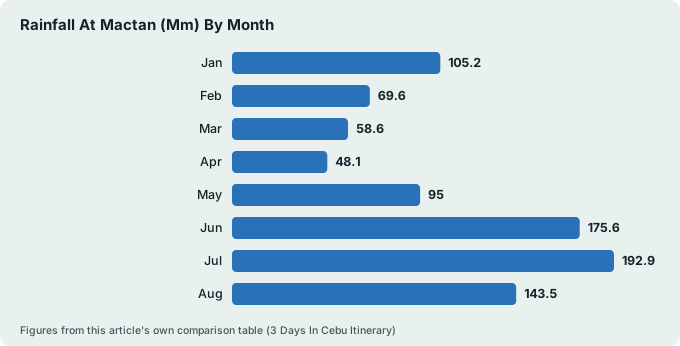
The best months for a 3-day Cebu trip are December to May, the dry season under PAGASA's national rule, with April the driest month at 48.1 mm of rain at the Mactan station. June to November is the rainy season, October is the wettest month at 194.8 mm, and typhoon risk peaks roughly July to October, so a tight three-day plan is most exposed to weather in that window.
The Mactan station's 1991-2020 normals give the month-by-month picture:
| Month | Rainfall at Mactan (mm) | Season |
|---|---|---|
| Jan | 105.2 | Dry |
| Feb | 69.6 | Dry |
| Mar | 58.6 | Dry |
| Apr | 48.1 | Dry |
| May | 95.0 | Dry |
| Jun | 175.6 | Rainy |
| Jul | 192.9 | Rainy |
| Aug | 143.5 | Rainy |
| Sep | 179.6 | Rainy |
| Oct | 194.8 | Rainy |
| Nov | 161.9 | Rainy |
| Dec | 139.7 | Dry |
One event can outweigh the weather entirely: Sinulog, held on the third Sunday of January, with the 2027 Grand Parade set for 17 January 2027 at the Cebu City Sports Center. The city fills completely that week. Book far ahead or avoid it, but do not stumble into it.
Weather is also why Day 2 needs slack. Typhoon Tino in early November 2025 brought severe flooding to Cebu, and the September 2025 earthquake damaged northern churches, though the Department of Tourism confirmed Cebu City and Mactan stayed open through both. Whale shark sightings and canyoneering both pause for safety after heavy rain, so a flexible Day 3 is your insurance.
If your dates are fixed inside the rainy season, swap the order: keep the city day movable, because the heritage core is walkable under an umbrella, and hold the south day for the clearest forecast window in your three.
Where Should You Stay For 3 Days In Cebu?
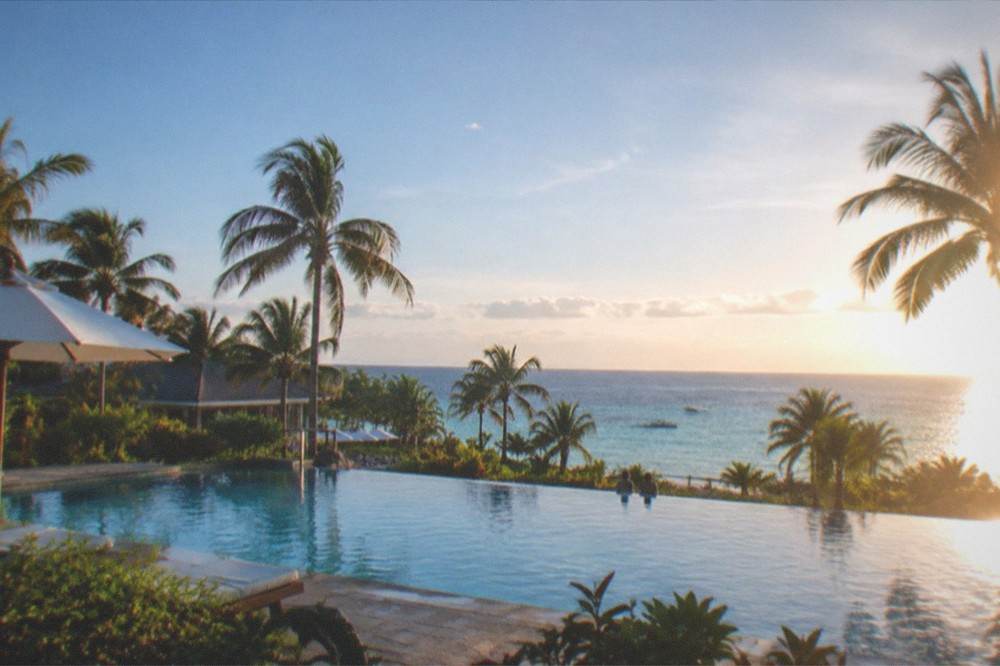
For a 3-day Cebu itinerary, stay in Cebu City for the first two nights, near Fuente Osmeña or IT Park, so the heritage core, the south-bound buses and the airport are all reachable, then optionally move to Mactan for the final night if Day 3 is island hopping. Splitting the stay saves the worst of the traffic across the Mactan Channel, which the CCLEX toll road and two older bridges only partly relieve.
Cebu City is the operational base: the Cebu South Bus Terminal for Oslob and Moalboal routes, the heritage core, and the food scene are all here. Mactan, home to the airport and most resort beaches, is a 25 to 60 minute drive depending on traffic, so a final night on the island means a relaxed last morning before flying out.
If the trip is really a food-and-heritage trip with one island day, the weekend Cebu itinerary compresses this same plan into two days, and the 1-day Cebu City itinerary covers Day 1 in expanded form.
Common Questions About A 3-Day Cebu Itinerary
Is 3 days in Cebu enough?
Three days covers the city heritage core, the Oslob whale shark morning, Kawasan Falls and one island or highlands day. It is not enough for Malapascua or Bantayan, which each need an overnight because of travel time to the north of the island.
Can you do Oslob and Kawasan Falls in one day?
Yes, and many tours do, but it means a very early start. Whale shark viewing runs from about 6 AM to noon in Oslob, and Kawasan is further south in Badian, so the day works best with an organized tour or a private driver rather than public buses.
How much is the Oslob whale shark fee?
The municipal fee is P1,000 (about US$15.9) per foreign tourist and P500 (about US$8.0) per Filipino, including boat and guide, under Municipal Ordinance No. 010 rates restored in March 2025. The session lasts about 30 minutes and sightings are not guaranteed.
Do I need a visa for 3 days in Cebu?
Nationals of the United States, the United Kingdom, Australia and EU countries get an initial 30-day visa-free stay, which covers a 3-day trip many times over. You need a passport valid at least six months, an onward ticket, and free eTravel registration within 72 hours before arrival.
What is the best month for a 3-day Cebu trip?
April is statistically the driest, at 48.1 mm of rain at the Mactan station, inside the December-to-May dry season. January is popular for Sinulog on the third Sunday, but the city is at its fullest that week.
Is Cebu safe for tourists right now?
Advisories for the Philippines, including the US Level 2 notice and the UK FCDO guidance, carry no Cebu-specific restrictions, and the Department of Tourism confirmed Cebu remained open to tourists after both the September 2025 earthquake and Typhoon Tino in November 2025. Normal city precautions apply.
Three days in Cebu, spent this way, delivers the heritage, the whale sharks, the waterfalls and one proper beach day without a single wasted morning, and it leaves the far north as the reason to plan the return trip.