Camotes Islands Cebu
The Camotes Islands sit in the Camotes Sea east of Cebu island, a low-key island group that trades the crowds of Mactan for caves, a freshwater lake and long quiet beaches, all reachable as a day trip from Cebu City.
Short answer
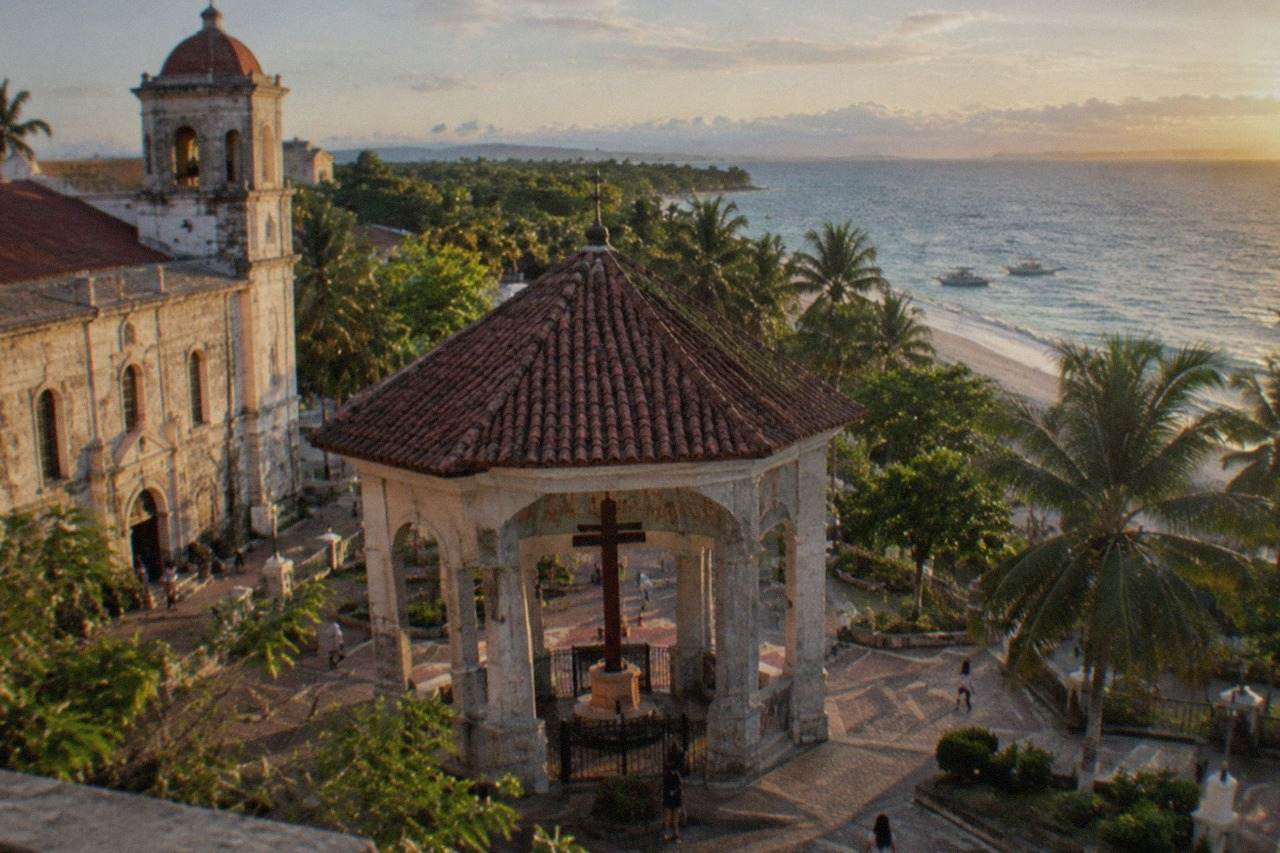
The Camotes Islands are a small island group in Cebu Province, Philippines, reached by ferry from the east coast of Cebu island. A full-day organized tour covers the caves, Lake Danao and the beaches in one loop; independent travelers can also ferry out and explore on their own.
Cebu, an island province in the Central Visayas region of the Philippines, keeps its most famous day trips in the south: the whale sharks of Oslob, the canyoneering at Kawasan Falls, the sardine run at Moalboal. The Camotes Islands go the other way. This small island group lies in the Camotes Sea off the east coast of Cebu island, and it earns its keep with things the southern circuit cannot offer: limestone caves you can swim in, a large freshwater lake, and long stretches of sand that never feel crowded. A full-day Camotes tour is one of the more relaxed ways to spend a day out of Cebu City, and this guide covers what the islands actually involve, how to reach them, and when to go.
Where Are The Camotes Islands And What Makes Them Different From Cebu's Other Day Trips?
The Camotes Islands are a group of small islands in the Camotes Sea, administratively part of Cebu Province in the Central Visayas region of the Philippines, lying off the northeastern coast of Cebu island and reached by ferry rather than by road. Unlike the southern day trips, which are all road journeys down Cebu island's west and south coasts, the Camotes involve a sea crossing, which is why the day feels more like proper island hopping and less like a long bus ride with a beach at the end.
That geography shapes everything about a visit. The southern circuit from Cebu City, whether that is a Moalboal day trip or an Oslob day trip, runs down the same coastal highway and back. The Camotes route crosses open water, so the day has a natural rhythm: the crossing, the islands, the crossing home. Weather matters more, too. A rough Camotes Sea in the typhoon months can slow or suspend crossings in a way a bus journey never is.
The islands themselves are low and green rather than mountainous. There are no peaks to climb here, nothing to compare with Osmeña Peak in the south. What the Camotes offer instead is water in three forms: sea, in the bays and beach coves; freshwater, in Lake Danao and the smaller inland pools; and underground water, in the caves that give the biggest island much of its character. For a traveler who has already done the whale sharks and the waterfalls, that variety is the point.
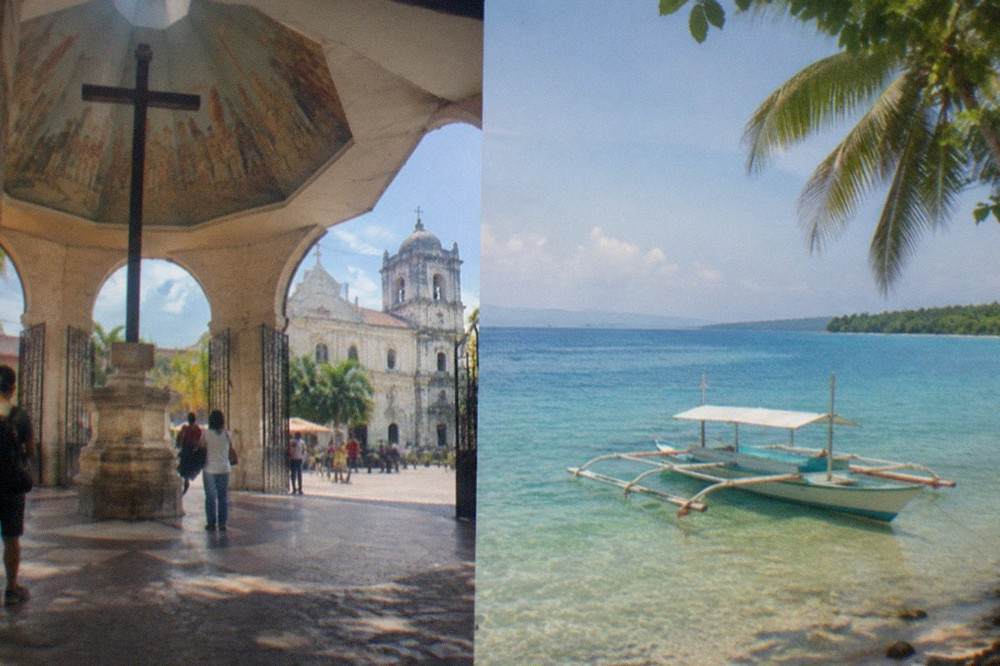
For context, here is the Cebu that the Camotes belong to, using figures from the Philippine Statistics Authority's 2020 census and the city's official charter date:
| Fact | Figure | Note |
|---|---|---|
| Cebu City population (2020 census) | 964,169 | Highly urbanized city, independent of the province |
| Cebu Province population excluding the three HUCs (2020) | 3,325,385 | Excludes Cebu City, Lapu-Lapu and Mandaue |
| Cebu City charter date | 24 February 1937 | The oldest chartered city in the Philippines |
| Region | Central Visayas | The Camotes Islands fall under Cebu Province |
What Can You Actually Do On The Camotes Islands In One Day?
A one-day Camotes visit realistically covers three things: a cave, a lake and a beach. The standard loop pairs a swim in one of the island's limestone caves with a stop at Lake Danao, the large freshwater lake at the center of the group, and finishes with time on a white-sand beach before the return ferry. Add a rented motorbike or a habal-habal driver and the whole circuit fits inside a single day, which is exactly how the organized tours structure it.
The caves come first for most visitors, and they are the islands' signature. The best known of them is a swimming cave, a collapsed limestone chamber where daylight drops through an opening onto a pool of cool, still fresh water. You descend steps, you swim, you look up at the ferns hanging over the rim. It is a short experience, maybe half an hour of the day, but it is unlike anything on the Cebu mainland, and it is the thing visitors mention first.
Lake Danao is the second stop on almost every itinerary. It is the large inland lake that gives the islands their agricultural character, ringed by coconut land and stilt fishing structures. Some tours cross part of it by boat; others stop at a viewpoint. Either way it reads as a landscape stop rather than an activity, a slow hour in the middle of the day when the sun is at its highest and a freshwater breeze is welcome.
The beaches close the loop. The Camotes are not short of sand, and the main swimming bays are wide, shallow and calm for most of the year, with the kind of gradient that lets you walk out fifty meters and still stand. A sunset on the west-facing shore, before the ferry or the drive back, is the standard ending. If your day runs long, there is usually time for a late afternoon swim and a snack from a beachside stall before the boat.
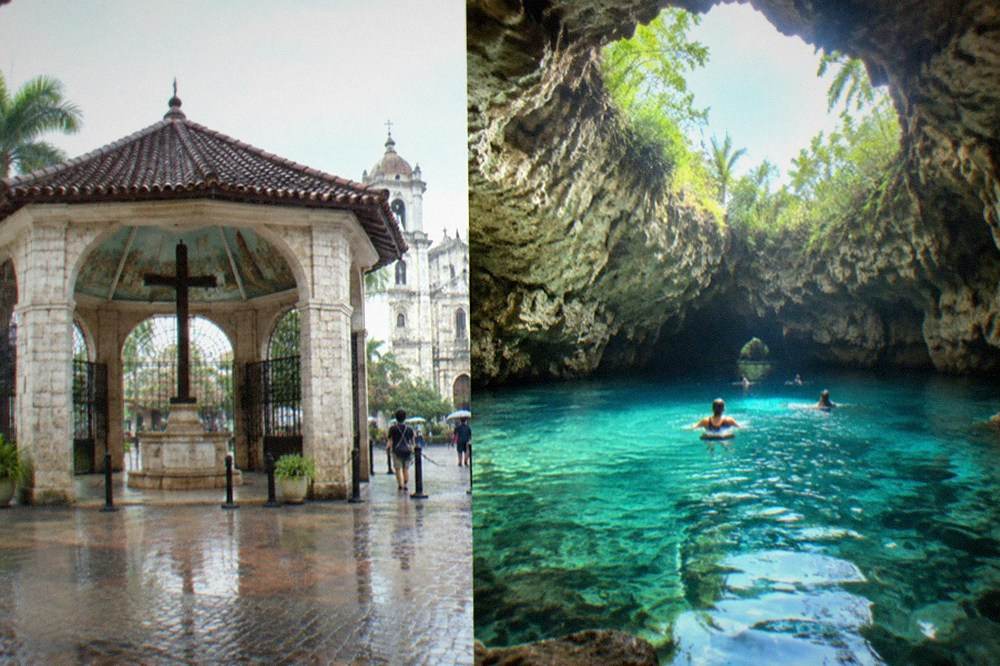
The organized option handles all of this in one booking. The full-day Camotes tour from Cebu runs the caves, lake and beach circuit with transport and lunch handled, which matters because the islands' attractions are spread across two municipalities and a private boat transfer, and stitching them together independently eats hours. Check availability on the operator's live listing for current dates and inclusions. For travelers who prefer to build the day themselves, the sections below cover the pieces one at a time.
How Do You Get To The Camotes Islands From Cebu City?
The Camotes Islands are reached by ferry from a port on the east coast of Cebu island, roughly a drive of two to three hours north of Cebu City depending on traffic, followed by a crossing of the Camotes Sea that takes around two hours on the conventional boats and less on the faster craft. There is no bridge and no road link, so every visitor, tour group or independent, makes the same sea crossing, and every itinerary is built backwards from the ferry timetable.
The practical consequence is that an independent day trip is an early start and a firm plan. You leave Cebu City before dawn to reach the port in time for a morning sailing, you have a fixed window on the islands, and you catch an afternoon or early evening return. Miss the last boat and the day trip becomes an overnight, which some travelers decide to embrace on purpose. Schedules and fares change often enough that the only reliable approach is to check current sailings before you commit, and the site's ferries from Cebu guide covers the ports and operators in detail.
The organized tour exists largely to delete this friction. The full-day Camotes tour from Cebu bundles the transfers, the boat, the cave, the lake and the beach into one itinerary, and its listing carries the current price and inclusions.
One comparison worth making before you book anything: the Camotes crossing is the same order of commitment as the ferry to Bohol on the Bohol day trip, but the reward is different. Bohol trades a long day for the Chocolate Hills and the tarsiers; the Camotes trade it for quiet water and a slower pace. If your priority is marine life rather than landscape, a Malapascua day trip or the Bantayan route on the Bantayan day trip page sit on the same northern side of the province.
When Is The Best Time To Visit The Camotes Islands?
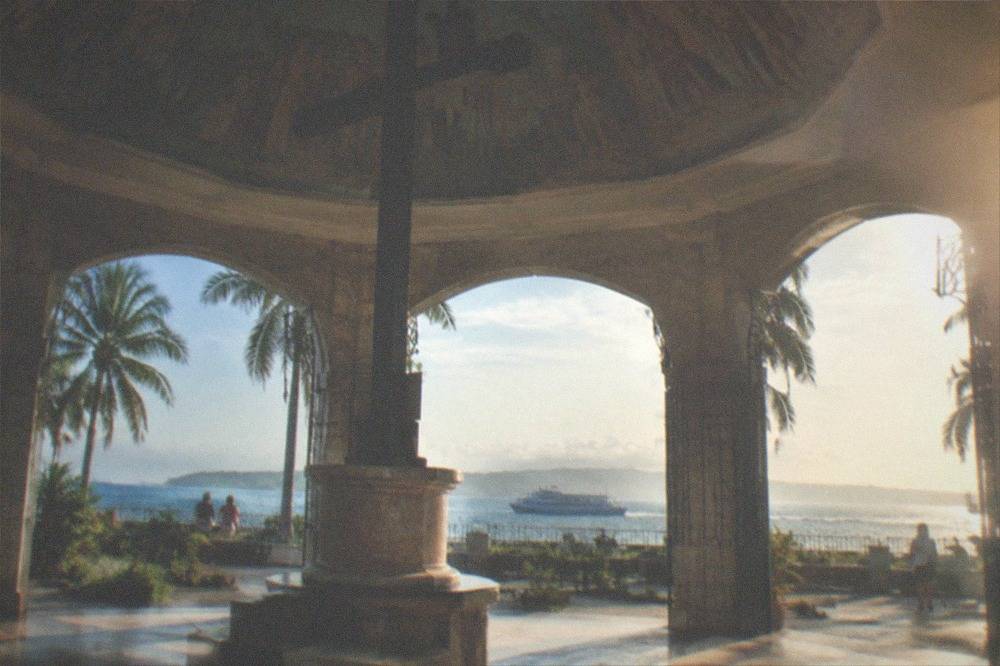
The best months for the Camotes Islands are the dry season stretch of December to May, when PAGASA's national classification puts Cebu outside the rainy season and the Camotes Sea is at its calmest for the crossing and the swimming. Within that window, March to May brings the hottest, driest weather, while December to February is slightly cooler and still reliably dry, which many visitors find the better combination for a day that includes a ferry ride and a lot of sun.
The climate here is tropical, not temperate, and PAGASA's 1991-2020 normals for its Mactan station give the hard numbers: 1,685.0 mm of rain across the year, spread over 138 rain days, with a mean temperature of 28.1 C. Rain falls in every month, but the distribution is strongly seasonal. Here are the monthly rainfall normals for the Mactan station, the closest long-run record to the Camotes Sea:
| Month | Rainfall (mm) | Month | Rainfall (mm) |
|---|---|---|---|
| January | 105.2 | July | 192.9 |
| February | 69.6 | August | 143.5 |
| March | 58.6 | September | 179.6 |
| April | 48.1 | October | 194.8 |
| May | 95.0 | November | 161.9 |
| June | 175.6 | December | 139.7 |
Two readings jump out of that table. April is the driest month at 48.1 mm, and October is the wettest at 194.8 mm, more than four times as much. The June to November rainy season is not a washout, and the islands do not empty in those months, but the crossing gets lumpier and cave and lake stops can be rained off. The typhoon risk follows the same curve, with PAGASA's guidance putting peak cyclone activity in the July to October range and elevated landfall risk for the Visayas in November and December.
A simple planning calendar for the year:
| Period | Season (PAGASA) | What It Means For The Camotes |
|---|---|---|
| December to February | Cool dry | Driest, calmest seas, most comfortable heat for a full day outside |
| March to May | Hot dry | Best underwater visibility, strongest sun, book boats ahead |
| June to August | Rainy | Short afternoon downpours, fewer crowds, watch sea conditions |
| September to November | Rainy, typhoon peak | Highest rain and storm risk, crossings can be delayed or suspended |
Which Beaches And Bays Should You Target On The Camotes?
The Camotes Islands' main swimming beaches are broad, west-facing bays of pale sand with shallow, calm water, and the practical choice is less about which named beach and more about which side of the island you are on when the afternoon arrives. The organized tours time their beach stop for the late afternoon on a west-facing shore, which puts the sunset behind the water rather than behind the land, and independent visitors should plan the same way around.
The swimming itself is gentle. The bays shelve gradually, the water stays waist-deep well out from shore, and the sea stays calm enough for swimming even in the shoulder months. This is family water, not surf water. If your Cebu beach frame of reference is the resort strip on Mactan, the Camotes bays are similar in gradient but far emptier, with none of the jet ski traffic. Snorkelers should set expectations accordingly: the draw here is sand and calm, not coral walls. For serious reef snorkeling, the sites covered on the Moalboal day trip page or the sanctuaries around the Mactan boat circuit are the better fit.
For travelers weighing the Camotes against the province's other island day trips, the honest split is this: the Camotes win on landscape variety, with the caves and the lake that no other Cebu day trip offers, while the Mactan-based island-hopping circuit wins on pure snorkeling and ease, since it never leaves the immediate Cebu City orbit. If you want both in one trip, the Mactan boat circuit is the easier add-on to a short stay, and the Camotes are the better single big day out.
Is One Day Enough For The Camotes, Or Should You Stay Overnight?
One day is enough to see the core Camotes circuit of a cave, Lake Danao and a beach, because those three stops are exactly what the organized full-day tours complete with time to spare, but one day does not allow for the islands' slower rewards, which are the empty early mornings, the cliffside and lakeside walks, and the second beach you never reach. Travelers with two spare days get a noticeably different, calmer trip; travelers with one get the highlights and a long but worthwhile day.
The arithmetic is the constraint. Between the drive from Cebu City to the port and the sea crossing each way, a day tripper spends roughly half the day in transit, and the island time that remains is enough for the loop but not for lingering. An overnight converts the same journey into a relaxed two-day stay: you arrive with the whole afternoon free, you get the beach to yourself the next morning, and you return on a midday boat instead of racing the last sailing. Basic accommodation exists around the main bays, aimed squarely at weekenders from Cebu City, so the overnight option does not require planning far ahead outside peak weekends.
The trade-off is worth naming plainly. If your Cebu itinerary is short and your must-do list already includes the whale sharks or the canyoneering, the Camotes as a day trip are the right shape: one long day, three distinct experiences, done. If your list is already short and you have the flexibility, the overnight version of the same islands is one of the better-value slow days in the province. For help sequencing the whole week, the itineraries collected on Cebu Travel Guide and the master list of things to do in Cebu put the Camotes in context against the southern and northern circuits.
What Should You Know Before You Go: Entry Rules, Money And Practicalities?
Visa-free nationals, including those from the United States, the United Kingdom, Australia and every EU state, get an initial stay of 30 days in the Philippines, and foreign tourists staying under a year are exempt from the Philippine travel tax, so a Camotes day trip involves no visa paperwork beyond a passport valid six months, an onward ticket and a free eTravel registration.
The currency is the Philippine peso, the power supply is 230 V at 60 Hz, and the whole country sits on UTC+8 with no daylight saving.
The entry rules are the ones travelers most often get wrong, so here they are in one place, drawn from the official eTravel and TIEZA pages:
| Requirement | Rule | Who It Applies To |
|---|---|---|
| Visa-free stay | 30 days initial stay for tourism | Nationals of the 157-country list, including US, UK, Australia, all EU states |
| Passport validity | At least 6 months beyond the stay | All arriving foreign visitors |
| Onward ticket | Return or onward ticket required | All arriving foreign visitors |
| eTravel registration | Free, within 72 hours before arrival | All arriving passengers, foreigners and Filipinos |
| Travel tax | Exempt for non-immigrant foreigners staying under 1 year | Foreign tourists; the tax falls on Filipinos and residents |
Two warnings from the official sources. First, eTravel is free at the official government site, and the Bureau of Immigration repeatedly warns about fake lookalike sites that charge a fee; if a site asks for payment, it is not the real one. Second, ignore any blog still claiming 21 days visa-free; the current figure is 30 days, and it is extendable through the Bureau of Immigration if a Camotes overnight turns into a longer stay. The eTravel registration must be completed within 72 hours before arrival.
The practical basics for the day itself:
| Item | Detail |
|---|---|
| Currency | Philippine peso (PHP); bring cash, as card acceptance on the islands is limited |
| Electricity | 230 V, 60 Hz, plug types A, B and C |
| Time zone | UTC+8, no daylight saving |
| Climate | Tropical; mean 28.1 C at the Mactan station, 138 rain days a year |
| What to pack | Swimwear, dry change of clothes for the cave, reef-safe sun protection, cash |
One packing note specific to the caves: you will swim in fresh water, in a semi-enclosed chamber, so a dry bag for your phone and a change of clothes are worth carrying, and the same no-sunscreen discipline that applies to Cebu's marine sanctuaries is good practice in the cave pools too. Water shoes help on the steps. For the ferry, motion sickness tablets are cheap insurance on the return leg if the sea has picked up.
How Does A Camotes Day Trip Compare With Cebu's Other Big Day Trips?
The Camotes day trip is Cebu's most varied single-day circuit after the southern combo tours, because it is the only one that combines a cave swim, a freshwater lake and sea beaches in one itinerary, whereas Oslob is an animal encounter, Kawasan is a canyoneering workout and the Mactan boat circuit is pure snorkeling. The Camotes are also the gentlest of the four, which makes them the best fit for families and for travelers who want scenery over adrenaline, and the worst fit for anyone chasing underwater marine life.
The adrenaline alternative is the south. Canyoneering at Kawasan Falls is the province's signature active day: a guided descent through a river gorge with jumps, slides and a swim under the main waterfall, run on the LGU-regulated Badian route. It is a harder day than anything on the Camotes, and the two trips appeal to opposite travelers.
Between those poles, the honest ranking for a first-time visitor with limited days is usually: whale sharks at Oslob if the animals are the priority, Kawasan if the activity is the priority, the Camotes if the pace and the variety are the priority, and the Mactan island-hopping circuit if the travel time needs to stay short. The Camotes' weakness is simply the transit, the same long drive-plus-ferry that gives the day its shape. Its strength is that the day never repeats itself: underground, freshwater and sea, each stop a different kind of water, which no other day trip from Cebu City can say.
Common Questions About The Camotes Islands In Cebu
Are the Camotes Islands part of Cebu?
Yes. The Camotes Islands are administratively part of Cebu Province in the Central Visayas region of the Philippines, lying in the Camotes Sea off the east coast of Cebu island. They are reached by ferry, not by road, so every visit involves a sea crossing.
Can you do the Camotes Islands as a day trip from Cebu City?
Yes. A full-day tour from Cebu covers the cave swim, Lake Danao and a beach stop with all transfers and the boat crossing handled. Independent day trips are also possible with an early start, but the itinerary has to be built around the ferry timetable.
What is there to do on the Camotes Islands?
The core attractions are a swimmable limestone cave, the freshwater Lake Danao and the islands' broad, shallow, calm beaches. The standard day combines all three. There is no mountain hiking and no significant coral diving, so the islands suit travelers after landscape and relaxation rather than adrenaline.
When is the best time to visit the Camotes Islands?
December to May, which PAGASA classifies as the dry season, with the calmest seas and the least rain. April is the driest month in the Mactan station's 1991-2020 normals at 48.1 mm of rain, and October the wettest at 194.8 mm. Typhoon risk peaks from July to October, when crossings can be affected.
Do I need a visa for the Camotes Islands?
No separate visa applies, since the islands are part of the Philippines. Visa-free nationals, including those from the US, UK, Australia and the EU, get an initial 30-day stay, with a passport valid six months, an onward ticket and a free eTravel registration within 72 hours of arrival.
Is one day enough for the Camotes Islands?
One day covers the cave, the lake and a beach, which is the full core circuit. It does not allow for the islands' slower pleasures, the empty morning beaches and the longer walks, so travelers with spare time often stay one night and return on a midday ferry instead.