Bantayan Island Day Trip From Cebu Philippines: Ferries, Beaches And What It Costs
Bantayan Island sits off the northern tip of Cebu Province in the Philippines, and its Santa Fe beaches are the quiet, powdery counterpoint to the busier day trips down south. Here is how the ferry, the fees and the day actually work out.
Short answer
A Bantayan Island day trip from Cebu means a bus or van north from Cebu City to Hagnaya port in San Remigio, a ferry across to Santa Fe, and a day of white-sand beaches, island seafood and a laid-back town that most day trippers have nearly to themselves. Terminal and eco fees are small, and the island is confirmed open after the 2025 earthquake.
Bantayan Island lies off the northern tip of Cebu, an island province in the Central Visayas region of the Philippines, and it is the day trip you take when the goal is sand rather than schedules. Santa Fe, the beach-facing town on the island's southeast corner, holds some of the finest white sand in the province, and unlike the whale shark and canyoneering runs in the south, nothing on Bantayan needs you at a registration desk before sunrise.
The trade-off is distance. Bantayan sits at the far northern end of Cebu, reached through Hagnaya port in San Remigio, and the journey up from the city is long enough that many visitors split it into an overnight stay. A day trip is still perfectly workable, and this guide runs through the fees, the beaches, the food and the realistic plan for doing it in one day. For comparison with other island outings, our Cebu budget costs guide breaks down what the rest of the province tends to run.
Where Is Bantayan Island In Cebu, And How Far Is The Trip?
Bantayan Island sits off the northwestern coast of Cebu Province, in the Visayan Sea between Cebu and the island of Panay, roughly opposite the northern Cebu towns of San Remigio and Daanbantayan. The access point for every visitor is Hagnaya port in San Remigio, on Cebu's north coast, where ferries run across to Santa Fe on Bantayan's southeast corner. It is the longest of the standard island day trips from Cebu City, which is why most people who go also read up on an overnight plan.
The island is administratively part of Cebu Province, split into the municipalities of Bantayan (the main town), Madridejos at the southern tip and Santa Fe where the ferries land and the best beaches sit. The crossing from Hagnaya arrives into Santa Fe's port, and the beach strip starts essentially at the pier: tricycles meet the boat and the main sand is minutes away, so the moment you step off you are functionally on holiday.
That geography matters for planning. Where Oslob day trips leave the city before dawn and Moalboal is a solid bus ride south, Bantayan's route is all northern: north up the coastal road through towns like Balamban or the eastern route through Danao and Daanbantayan country, then west along the San Remigio coast to Hagnaya. There is no fast tourist shuttle for the whole way; you are riding the same transport locals ride, which is part of the island's appeal.
What Does A Bantayan Island Day Trip Cost From Cebu?
Getting to Bantayan is cheap by design. Two small fixed fees, the Hagnaya port terminal fee and the Santa Fe ecological fee, are the only charges every visitor pays without choice, and both are collected at the points you would expect: the terminal building on the Cebu side and the arrival area in Santa Fe. Everything else, tricycle hops, island food and any boat you hire, is where you control the budget.
The two fees are the honest skeleton of the island's cost structure. The terminal fee at Hagnaya port is P25 (about US$0.4) per person, and on arrival in Santa Fe there is a municipal ecological fee of P30 (about US$0.5) per person that goes toward the island's environmental programs. Neither is negotiable, both are small, and they are the fixed costs of the crossing rather than of the beach itself.
Everything else depends on how you build the day. A tricycle from Santa Fe port to your chosen beach stretch costs a modest local fare, a seafood lunch on the sand runs what island kitchens charge, and renting a banca for sandbar or snorkel stops is negotiated per boat rather than per person in most cases. The table below is a planning sketch of what a self-run day looks like, with the two fixed fees shown exactly as collected and the rest as typical ranges you confirm on the day.
| Item | Typical cost (PHP) | Notes |
|---|---|---|
| Hagnaya terminal fee | P25 (about US$0.4) per person | Collected at the port terminal |
| Santa Fe ecological fee | P30 (about US$0.5) per person | Municipal eco fee on arrival |
| Tricycle, port to beach strip | Small local fare per ride | Negotiated per trip |
| Beach club day pass | Varies by resort | Day-use rates, often consumable |
| Seafood lunch for two | Mid-range island price | Confirm the day's catch price |
| Boat for sandbar or snorkel stop | Per-boat negotiated rate | Split across your group |
That structure is why Bantayan reads as a budget island. Compare it with the marine fees further south, where the Moalboal day trip carries its own environmental user fee and Oslob's whale shark interaction charges by person, and Bantayan's fixed costs are almost invisible. The money goes into the journey and the day itself.
Is Bantayan Island Open After The 2025 Earthquake?
Yes, Bantayan Island is open. The Philippine Department of Tourism confirmed on 28 October 2025, after the magnitude 6.9 offshore northern Cebu earthquake of 30 September 2025, that Bantayan Island and Malapascua are open to tourists, with the Santa Fe, Maya and Kawit ports fully operational and no major cancellations on record. The quake's worst damage hit northern Cebu's coral-stone churches, including a damaged facade at Bantayan's own Sts. Peter and Paul church, but beaches and ports kept running.
The earthquake detail is worth knowing in both directions. The quake's epicentre sat off Bogo City in northern Cebu, and the heritage churches nearest the fault line took the damage: at least five 19th-century coral-stone churches across the north were assessed as damaged, and Bantayan's Sts. Peter and Paul Parish in the main town was among them, with facade damage reported. If you plan to visit the old church on your trip, expect it to be a repair-in-progress sight rather than a pristine one, and treat any interior access as uncertain.
What did not close is what you are going for. The Department of Tourism's late-October 2025 statement put Bantayan, Malapascua and their ports firmly in the open column, and by March 2026 northern Cebu tourism was reporting steady bookings and recovery, with visitors flowing to Daanbantayan and Malapascua daily. Bantayan's beaches, resorts and food operations never needed the rescue narrative some headlines implied: the disruption was concentrated in old stone buildings, not on the sand.
The honest planning note is timing. The quake hit a region still processing the flooding of Typhoon Tino in early November 2025, which cut across Cebu more broadly, so the north of the province has had a rough two-year stretch in the news. The tourism office message in both cases was the same: the islands are open, book the trip.
What Are The Best Beaches And Stops On A Bantayan Day Trip?
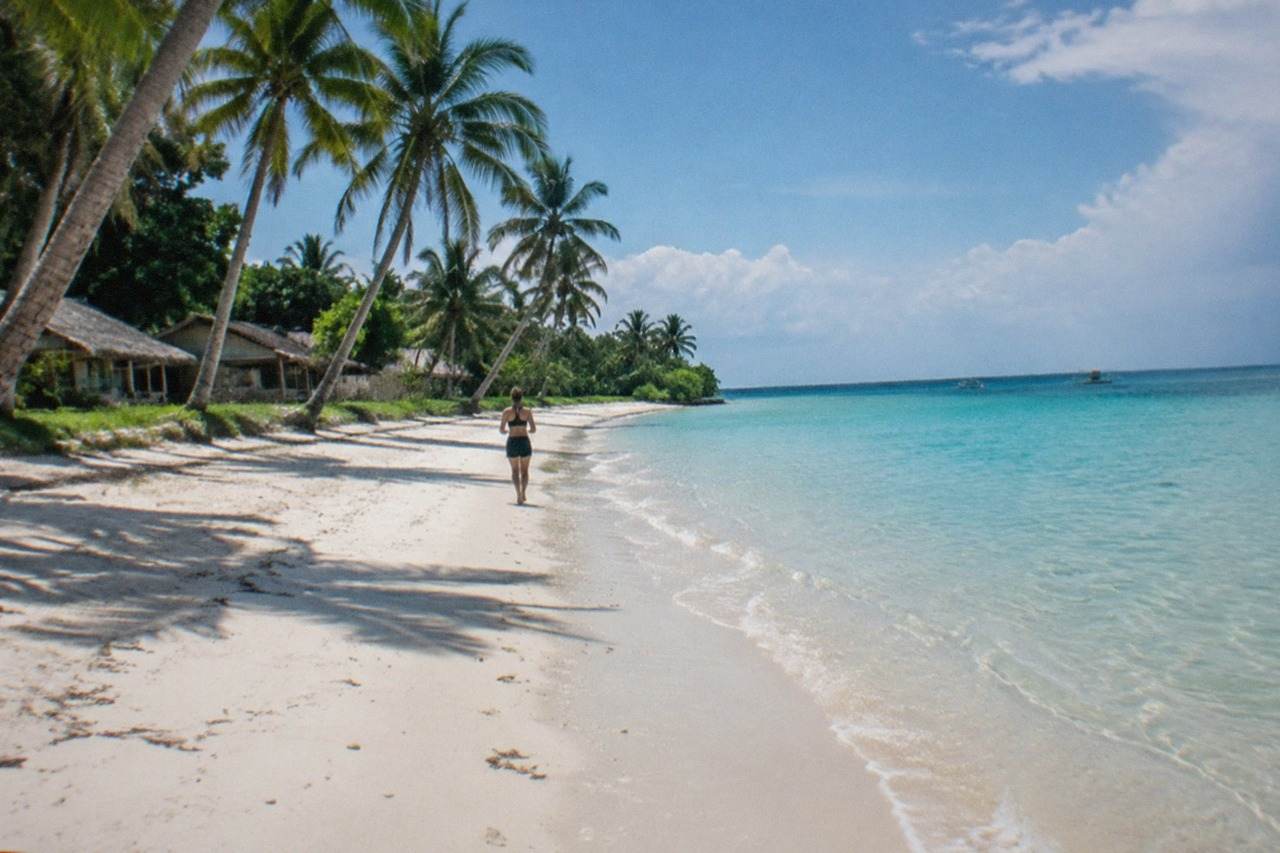
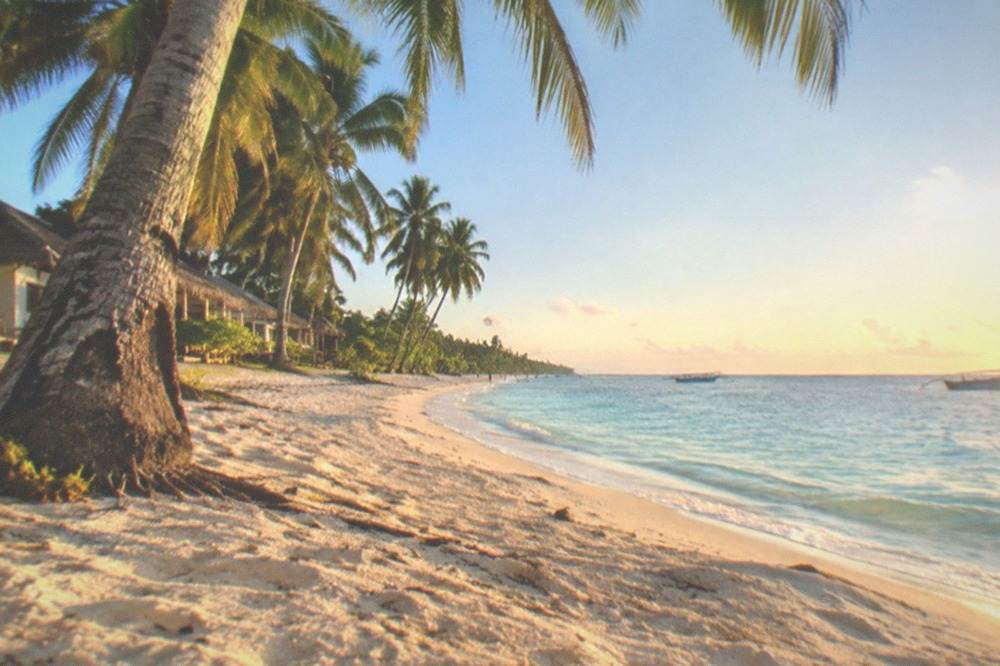
Santa Fe's beach strip, stretching along the island's southeast coast from the port area toward the sandbars and quieter coves, is the core of any Bantayan day: wide white sand, calm shallow water on the protected side, and beachfront food spots you reach on foot or by tricycle. A day tripper's realistic loop covers the main Santa Fe strip in the morning, a seafood lunch on the sand, and an afternoon stop at a sandbar or quieter stretch before the return ferry.
The main Santa Fe beach is the island's headline. The strip runs along the coast facing the small islets offshore, and the sand is the powdery white kind that Cebu's more famous beaches get judged against. Because the ferry lands at the edge of it, the port-to-beach transition is as short as it gets anywhere in the province, and the beachfront businesses, resorts offering day use, small kitchens grilling the day's catch, are lined up along the sand rather than hidden away.
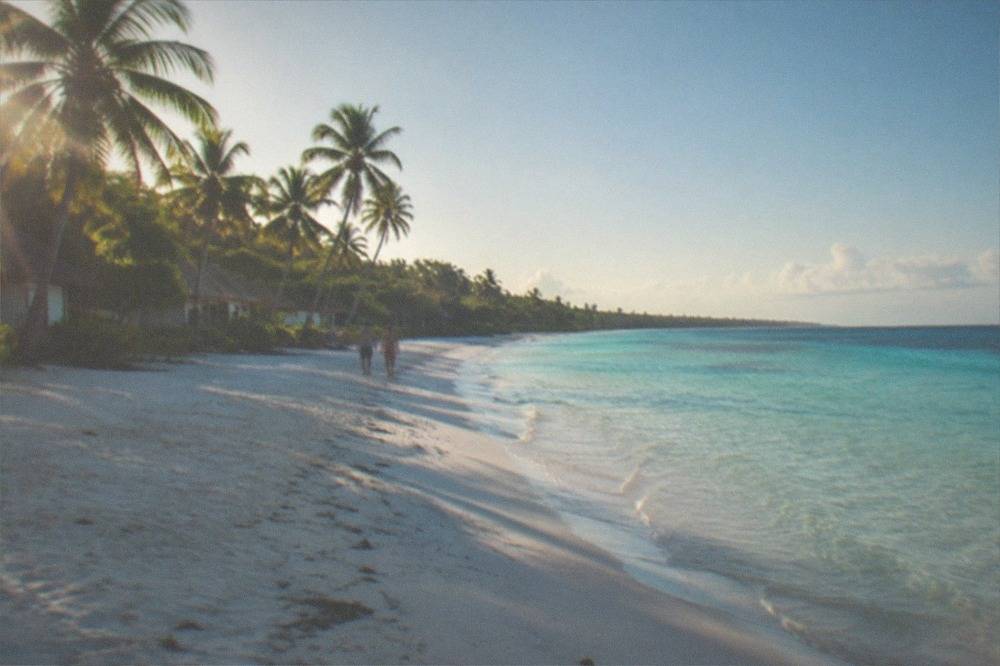
The sugar-sand character is what people come for, and it is worth saying plainly: Bantayan's Santa Fe beaches are consistently rated among the best sand in Cebu, and the island's smaller counterparts on Mactan feel busier by comparison. The offshore shallows stay calm through most weather, which makes the swimming easy, and the afternoon light across the water is a genuine photographer's hour.
Beyond the main strip, the island day takes in a few set pieces. A sandbar or shallow-water stop by hired banca is the classic add-on, letting you stand on a strip of sand in the middle of the sea at the right tide. The main town of Bantayan, a short ride from Santa Fe, holds the old Sts. Peter and Paul church, where the 2025 quake damage is being assessed, plus the island's everyday markets. Madridejos at the far south end has its own laid-back coastal character and old watchtower history, though a day trip rarely stretches that far.
A realistic one-day loop, with times you adjust to the ferry schedule, looks like this:
| Stop | What it is | Time to allow |
|---|---|---|
| Santa Fe main beach strip | Wide white sand, calm water, beachfront food | Morning through lunch |
| Sandbar or islet stop by banca | Shallow sandbar swim offshore | 1-2 hours, tide dependent |
| Bantayan town and old church | Coral-stone church, quake-damaged facade, local markets | 1-2 hours |
| Beachfront seafood lunch | Grilled catch on the sand | Long unhurried lunch |
| Quiet cove afternoon | Calmer stretch away from the port | Late afternoon |
If a beach-first day sounds right but the distance to Bantayan is too much for your dates, the Bohol day trip and the southern run described in the South Cebu day tour are both beach-weighted alternatives reachable in a long day from the city.
How Do You Get To Bantayan Island From Cebu City?
You travel by land from Cebu City to Hagnaya port in San Remigio, on Cebu's north coast, and then take the ferry across to Santa Fe on Bantayan. The standard pattern is a bus or van from the Cebu City terminals bound north, then the crossing from Hagnaya, and a tricycle from Santa Fe port to your beach. It is a two-leg journey with no short-cuts, and most day trippers start early and treat the ride up as part of the day.
The northern route from Cebu City runs through the province's northern towns toward San Remigio, and Hagnaya is the port of record for Bantayan: it is the same northern coastal corridor that serves Malapascua-bound travelers at nearby Maya, and the whole stretch is a single long chain of towns, causeways and ferry points. Buses and vans leave from the city's north-bound terminals on schedules set for morning departures, and the fare structure is ordinary provincial transport pricing rather than tourist pricing. Other pages covering the same trip are gathered on Cebu Travel Guide.
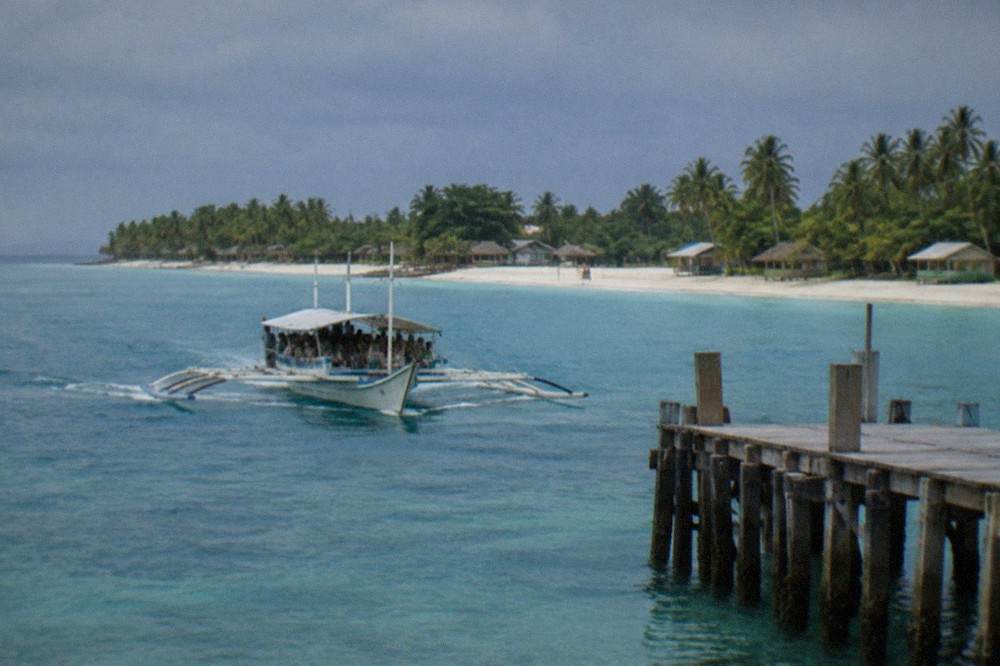
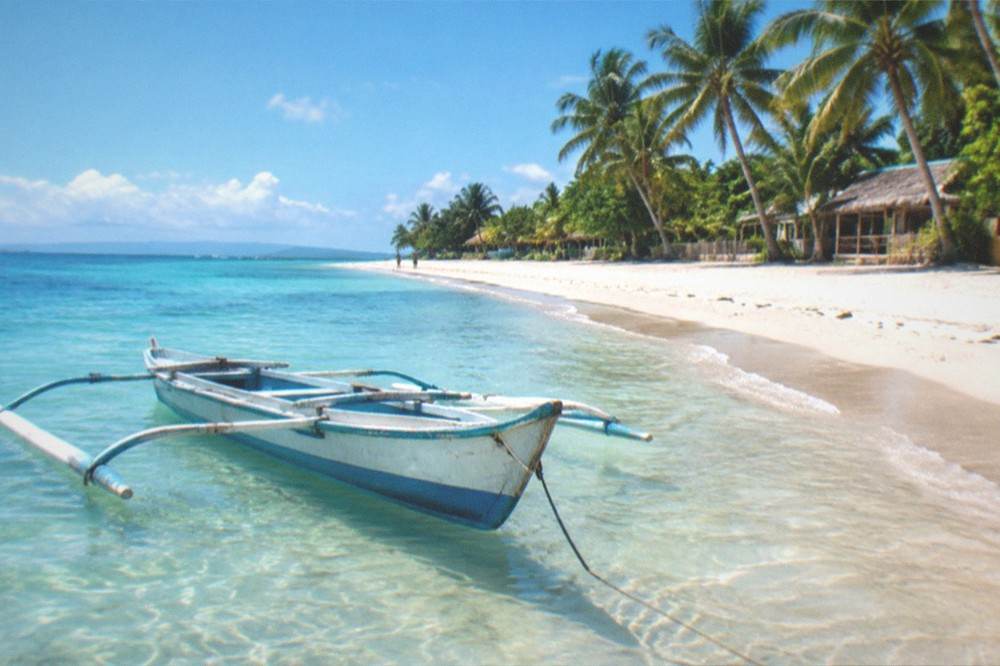
The ferry leg is where the day changes character. You pay the terminal fee at Hagnaya, board the vessel bound for Santa Fe, and the crossing is the sea passage that defines the island: open Visayan Sea water, small craft sometimes, big slow RORO sometimes, and arrival into the port at the edge of the beach strip. In Santa Fe the ecological fee is collected, and the tricycles waiting at the port put you on the sand within minutes.
A few practical notes that make the day easier:
If you arrive too late for a same-day return, Santa Fe has overnight resorts, which is how many visitors end up doing Bantayan.
Is A Day Trip Realistic, Or Should You Stay Overnight?
An overnight stay is the better plan for most travelers. The land leg from Cebu City to Hagnaya and the return ferry windows eat most of a single day, and Santa Fe's beach life, food and sandbars reward the hours that a rushed round trip deletes. A day trip is realistic if you start very early, accept a long road day and keep the itinerary to Santa Fe and one church stop, but one night on the island is the standard advice.
The math is straightforward. Two land legs and two ferry legs bracket the day, and unlike the Malapascua day trip or the shorter southern runs, Bantayan's road distance north is long enough that the ferry schedule becomes the day's spine. Day trippers who start early get the beach strip, a long lunch and the church in reasonable comfort; day trippers who start late get an expensive beach sprint and a stressful return.
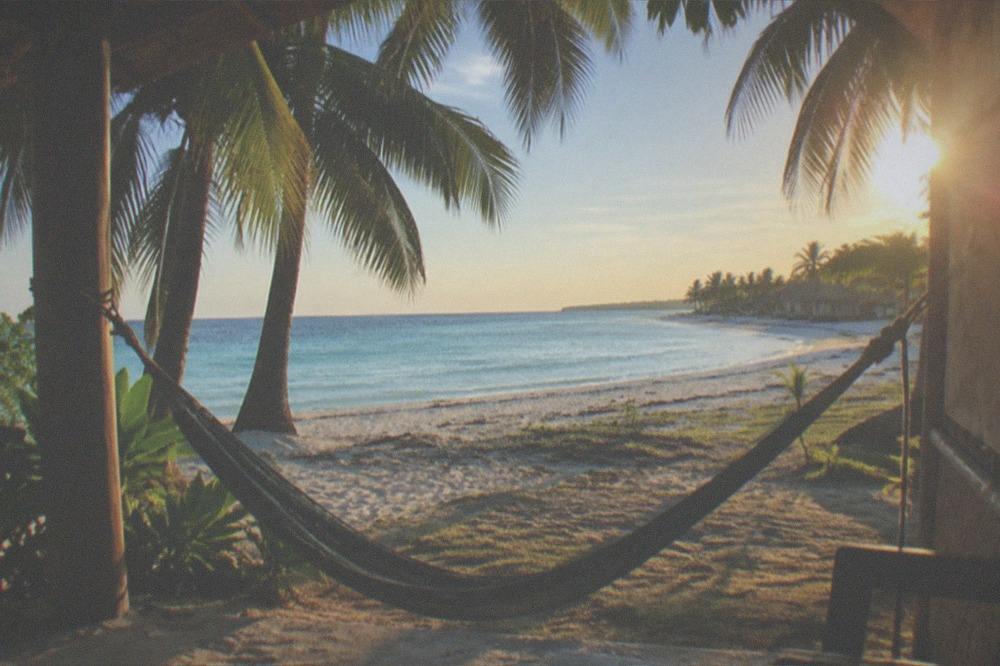
The overnight case is stronger than most first-time visitors expect. Santa Fe's accommodation runs from budget cottages to mid-range resorts, the island's food scene turns on fresh catch and simple kitchens, and the late-afternoon and early-morning hours on the beach, which the ferry schedule confiscates from day trippers, are exactly when the island is at its best. The cost of a night is modest against the value of unhurried sand.
If your dates only allow one day and you want island water rather than pure beach, a booked boat day is the alternative: an operator-run island-hopping trip packs the transfers, boat and lunch into a single ticket, and the operator's live listing carries the current details, times and prices for exactly that kind of outing.
What Should You Eat On Bantayan Island?
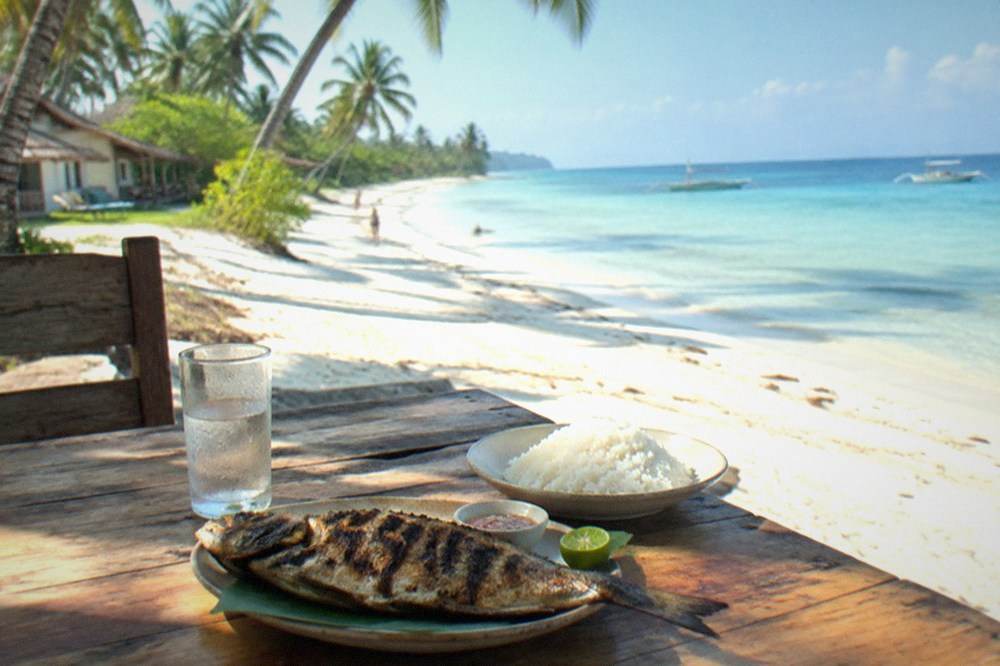
Fresh seafood is the island's whole cuisine: grilled or soured catch-of-the-day, from whole fish to shellfish, served beachfront in Santa Fe's kitchens alongside the standard Philippine staples of rice, grilled pork and kinilaw-style raw fish in vinegar, and the island's dried fish and danggit industry means breakfast on Bantayan tastes like the sea. A long unhurried lunch on the sand, with the day's catch picked and priced on the spot, is the meal that defines the trip.
The island's food identity is tied to its geography. Bantayan sits in rich fishing water between Cebu and Panay, and its economy has always run on the sea: fresh catch for the local kitchens, and a longstanding dried-fish trade that supplies the wider region. For a visitor that means two experiences: the beachfront grill, where you point at the fish and it comes out whole with rice and vinegar dips, and the everyday eateries where the dried fish and salted products of the island show up as ulam.
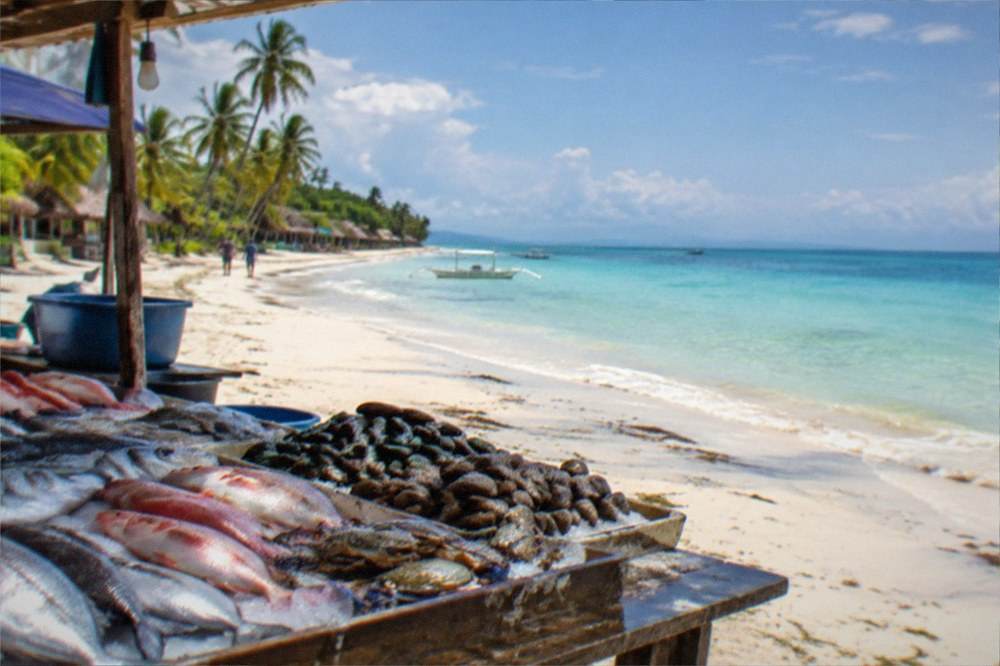
The lunch plan practically writes itself. Pick a Santa Fe beachfront kitchen, ask what came in that morning, agree the price for the whole grilled fish or the shellfish pot, and let it come with garlic rice, a vinegar-and-chili dip and a cold drink. It is the same pattern that defines coastal eating across the Visayas, and Bantayan does it as well as anywhere in the province.
The table below is a typical day of eating, with the two fixed fees included so the food sits in context rather than as the whole budget.
| Meal or snack | What you get | Typical spend level |
|---|---|---|
| Island breakfast | Dried fish or danggit, garlic rice, egg | Budget, local eatery price |
| Beachfront seafood lunch | Whole grilled catch, rice, dips, drinks | Mid, priced per fish on the day |
| Fresh buko (coconut) | Straight from a roadside stall | A few pesos each |
| Island halo-halo or dessert | Local shops around Santa Fe | Light spend |
| Afternoon snacks | Grilled scallops or shellfish at a shack | Per-basket local price |
For travelers building a full food-focused trip around the province, the dried-fish pasalubong from Bantayan is a genuine souvenir: vacuum-packed, travels well, and a piece of the island's economy you can take home.
How Does Bantayan Compare With Cebu's Other Island Day Trips?
Bantayan is the sand-and-silence pick: it trades the wildlife and cliffs of the southern day trips for the widest, calmest white-sand beach day in the province, and its cost profile is the flattest, with two small fixed fees and the rest decided by your lunch and boat choices. Against Malapascua's dive-first agenda, Moalboal's sardine run or Oslob's whale sharks, Bantayan is the trip for travelers whose priority is a beach day, not a checklist.
The comparison matters because Cebu's day-trip menu is genuinely varied. The southern runs are activity-first: you wake in the dark, you register for a time slot, you move. Bantayan is the opposite of that. You ride north, you land beside a beach, and nothing on the island needs you at a particular hour.
The table below places Bantayan in the province's day-trip field, with the two figures we verify for Bantayan and honest character notes for the rest.
| Day trip | Island character | Fixed fees | Best for |
|---|---|---|---|
| Bantayan Island | Sand, calm water, church town | P25 (about US$0.4) terminal plus P30 (about US$0.5) eco fee | Beach-first travelers |
| Malapascua | Diving island at Cebu's north tip | Diving and dive fees apply | Divers and thresher shark fans |
| Camotes Islands | Caves, lake and beaches east of the city | Varies by site | Mixed inland-and-beach day |
| Moalboal run | Sardine run, Pescador and waterfalls | Environmental user fee to swim | Snorkelers and canyoneers |
| Oslob run | Whale shark interaction plus Tumalog | Whale shark fee per person | Wildlife-first visitors |
Choosing between them is usually about energy. If your Cebu trip already includes a booked wildlife day, the Oslob and Moalboal pages cover those bases, and Bantayan becomes the recovery day: the trip where the only requirement is a towel. If you are doing a longer circuit of the province, the Bantayan Island area guide goes deeper on the island itself, and our Camiguin from Cebu guide covers the bigger island crossing for multi-day planners.
For travelers who would rather book a fully handled island day than self-run the north, an operator tour solves the transport problem entirely. A booked trip such as the Cebu Smile Hopping day runs transfers, boat and lunch into one ticket, and the operator's live listing carries the current price, times and inclusions. The pick below is the island-hopping option we would point a Bantayan-minded traveler at first.
If your dates only stretch to a boat-and-lunch day that leaves the province entirely, the Bohol countryside run is the strongest booked alternative: a same-day ferry outing with a river-cruise lunch built in, and one of the most heavily reviewed day tours operating out of Cebu.
For visitors who want history rather than sea on their one guided day, the full-day city and Mactan tour covers the heritage core of Cebu City and Lapu-Lapu's island in a single outing, which pairs well with an island day on the other end of the trip.
What Should You Pack And Know Before You Go?
Bring cash in small notes, sun protection that is reef-aware where you plan to swim, dry bags for the ferry legs, and enough schedule flexibility to lose a planned stop if the weather shifts: the practical kit for Bantayan is cash, sun and patience, because the island's systems, ferries, tricycles and beach kitchens, run on cash and daylight. Every fee on the island is paid in pesos and none of it is online, so the day starts at an ATM in Cebu City.
The cash point deserves emphasis. Hagnaya's terminal fee, Santa Fe's ecological fee, every tricycle, every lunch and every boat rental is a cash transaction, and the amounts are small enough that large notes are awkward. Withdraw in the city, break the notes on the way north, and carry more small bills than feels necessary.
Weather flexibility is the second habit. Bantayan sits in open Visayan Sea water and is exposed to the same weather systems as the rest of Cebu, and crossings can be suspended when the seas are rough, particularly in the rainy-season months of June to November. A day trip with a rigid return window is the one that suffers when weather moves; an overnight plan absorbs a delayed crossing without drama.
The last practical note is the church. If the Sts. Peter and Paul church in Bantayan town is on your list, go expecting a building in post-earthquake assessment and repair rather than a finished heritage sight, and treat interior access as day-of information. The beaches, which are the reason for the trip, needed no such repair.
Common Questions About Bantayan Island Day Trips From Cebu
Is A Bantayan Island Day Trip From Cebu Worth It?
For travelers whose priority is a white-sand beach day, yes: Santa Fe's beach strip is among the finest sand in Cebu Province, and the port-to-beach transition is the shortest in the region. The trade-off is the long land leg up to Hagnaya, which is why overnight stays are the standard advice.
What Fees Do You Pay On A Bantayan Island Day Trip?
The two fixed fees are the Hagnaya port terminal fee of P25 (about US$0.4) per person and the Santa Fe ecological fee of P30 (about US$0.5) per person, collected on arrival. Tricycle rides, boat rentals and food are negotiated or priced locally on top of those.
Is Bantayan Island Open After The 2025 Cebu Earthquake?
Yes. The Department of Tourism confirmed on 28 October 2025 that Bantayan Island and Malapascua are open, with Santa Fe, Maya and Kawit ports fully operational. The quake damaged northern Cebu's old coral-stone churches, including the facade of Bantayan's Sts. Peter and Paul, but beaches and ports continued operating.
Can You Swim On Bantayan Island's Main Beach?
Yes. Santa Fe's beach strip faces protected shallow water, with the calmest conditions typical on the island's sheltered side, and the main strip is a walk-on, swim-anywhere beach rather than a boat-access-only one.
Bantayan Or Malapascua: Which Cebu Island Day Trip Is Better?
Bantayan for sand and a town-and-beach day, Malapascua for diving and thresher sharks. Both sit off Cebu's north coast and both were confirmed open after the 2025 earthquake, so the choice is activity: beach time versus dive boats.
How Much Does A Bantayan Island Day Trip Cost?
The fixed public fees are small, P25 (about US$0.4) at the Hagnaya terminal and P30 (about US$0.5) at the Santa Fe eco-fee point, so your day is priced by transport, lunch and any boat rental rather than by entrance charges.