Moalboal Day Trip From Cebu City
Moalboal sits on Cebu's southwest coast, roughly three hours by bus from Cebu City, and packs a sardine run you can swim to from shore, sea turtles, Pescador Island and the Kawasan Falls canyoneering route into one long day.
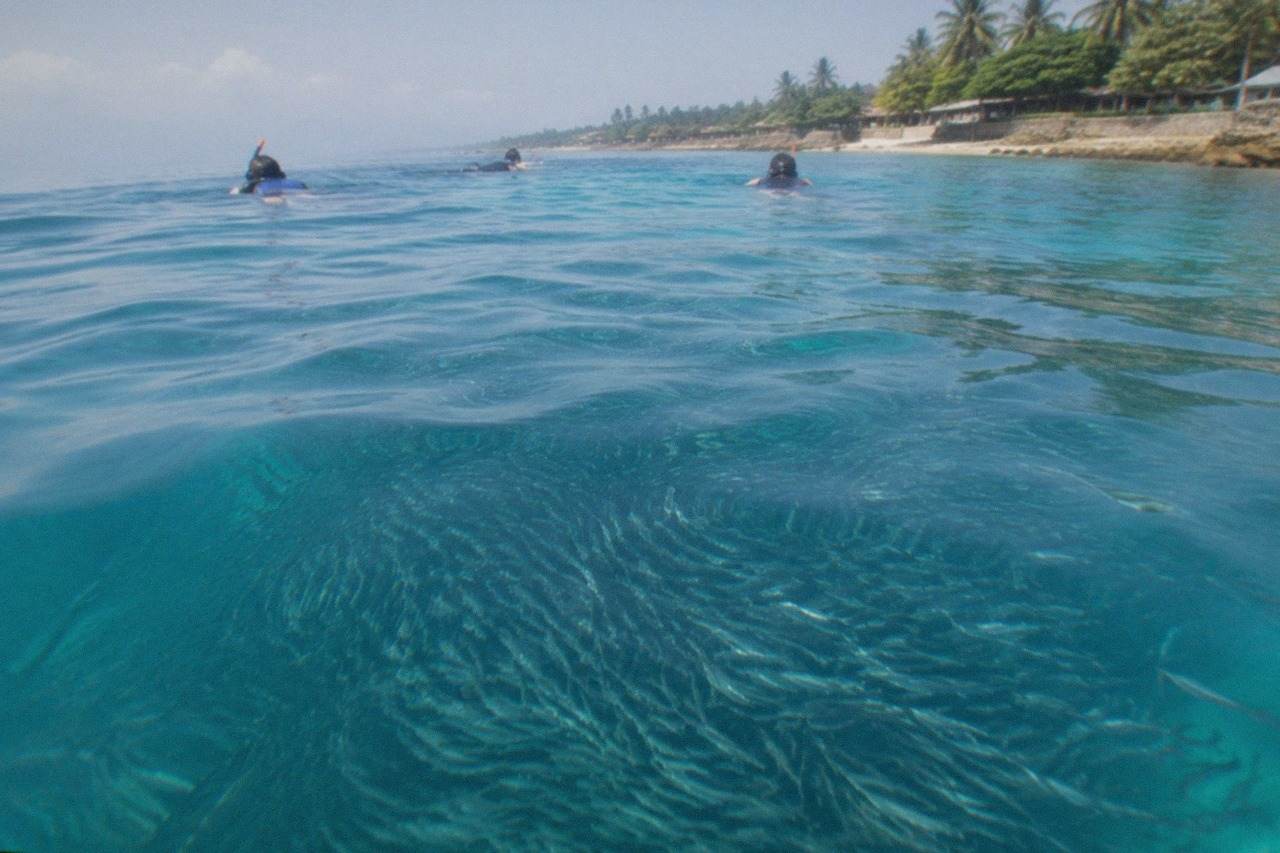
Short answer
Yes, Moalboal works as a day trip from Cebu City. Ceres buses run from the Cebu South Bus Terminal, the sardine run at Panagsama Beach is a few metres from shore, and the P100 (about US$1.6) environmental user fee covers swimming and snorkelling.
Moalboal, on the southwest coast of Cebu island in the Central Visayas region of the Philippines, has become the day trip that Cebu City locals argue about most. Not because it is hard to reach, roughly three hours each way by bus, but because the rewards are stacked so tightly together: a permanent school of sardines that swirls a few metres from Panagsama Beach, sea turtles grazing the same reef, Pescador Island's marine sanctuary a short boat ride out, and the Kawasan Falls canyoneering route up the coast in Badian. The town itself is small and spread along two beaches, Panagsama (also called Basdiot) and the wider White Beach (Basdaku), and everything a day tripper needs sits within a fifteen minute tricycle ride of the main road.
This guide lays out the whole journey: how the buses work, what the sardine run actually costs, whether you can bolt on Kawasan Falls, what the whole day should set you back, and when to go. The municipal tourism pages and the Cebu Travel Guide fact base carry the figures quoted here, and where a fee is set by local ordinance, the ordinance is named. Prices in pesos carry their US dollar equivalents throughout.
How Do You Get From Cebu City To Moalboal?
The standard route is a Ceres Liner bus from the Cebu South Bus Terminal direct to Moalboal, taking roughly 2.5 to 3.5 hours depending on traffic and the number of stops, with air-conditioned buses at the top of the fare range and ordinary buses at the bottom. Services leave frequently, roughly every 30 to 45 minutes through the day, and you pay on board or at the terminal.
Get off at the Moalboal junction on the national road and take a tricycle the last stretch to Panagsama Beach.
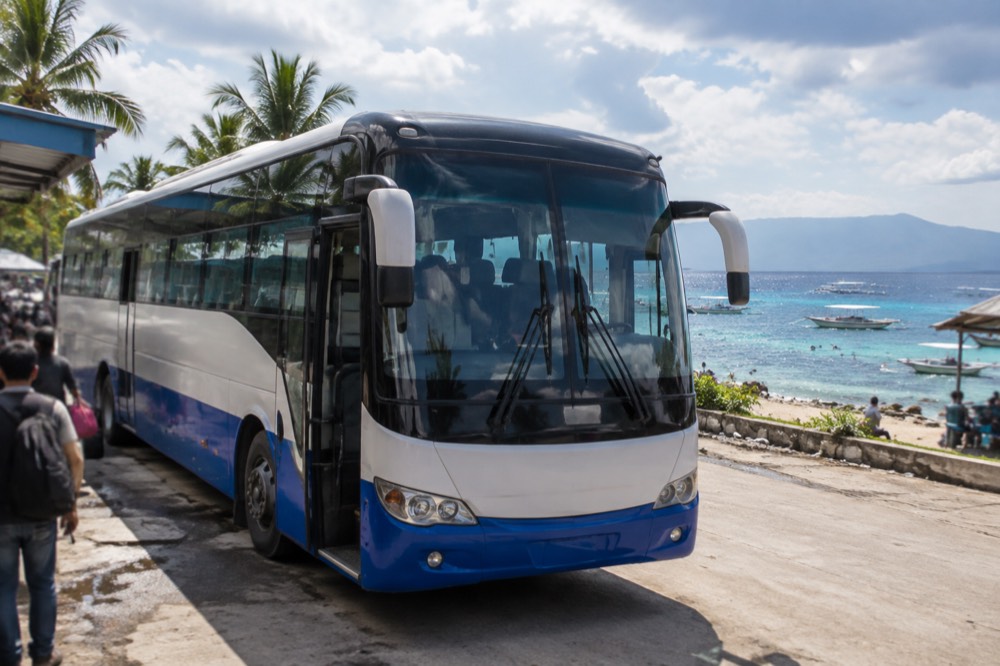
The Cebu South Bus Terminal sits on N. Bacalso Avenue in Cebu City, south of the downtown core and reachable by jeepney or taxi from anywhere in the city. The Moalboal buses share the terminal with the Bato via Oslob services, so confirm the destination printed on the windscreen before boarding: Moalboal buses are marked for Moalboal, some continuing to Badian. The fare runs about P120 (about US$1.9) to P210 (about US$3.3) each way depending on service class, with ordinary buses at the cheaper end and air-conditioned at the top.
The first bus of the day leaves very early, with services running from around 3 AM through to early evening, which matters enormously for a day trip. To swim with the sardines in the best light and still have the afternoon for Kawasan Falls, you want to be on a bus leaving before 7 AM, ideally earlier. The ride heads south along the coastal road through Carcar, over the highlands, and down to the western coast at Barili and Alegria before reaching the Moalboal junction.
From the junction, tricycles run the few kilometres down to Panagsama Beach, where most of the dive shops, snorkel rental and restaurants cluster. If you are heading to White Beach instead, the tricycle fare is a little higher; agree the price before getting in, since meters do not exist on tricycles. For the return, the same junction has buses back to Cebu City through the evening, but the last comfortable connections leave earlier than you might hope, so plan to be at the junction by late afternoon.
For a deeper look at the town itself, the two beaches and where to base overnight, see Moalboal town and beaches.
What Can You See And Do On A Moalboal Day Trip From Cebu City?
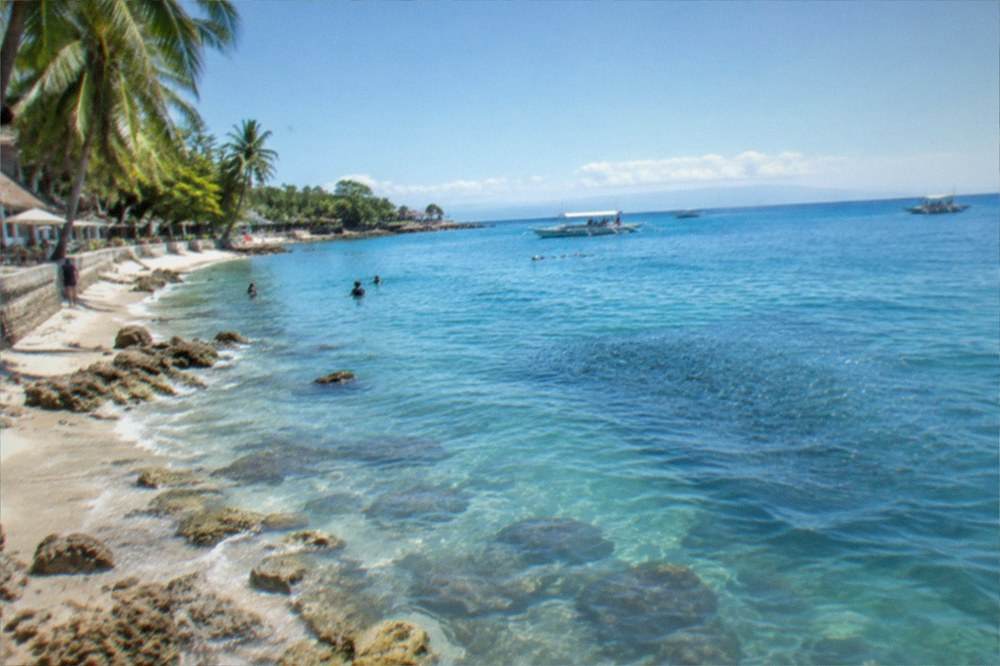
The four anchors of a Moalboal day are the sardine run at Panagsama Beach, snorkelling with resident sea turtles on the same reef, a boat trip to Pescador Island's marine sanctuary, and, if your legs allow it, the Kawasan Falls canyoneering route in Badian about an hour up the coast. The sardine run is the headline: the school is permanent, resident year-round, and sits roughly 20 to 30 metres from shore, so you can swim out to it without a boat.
The municipal tourism office puts the best viewing window at 7 to 9 AM.
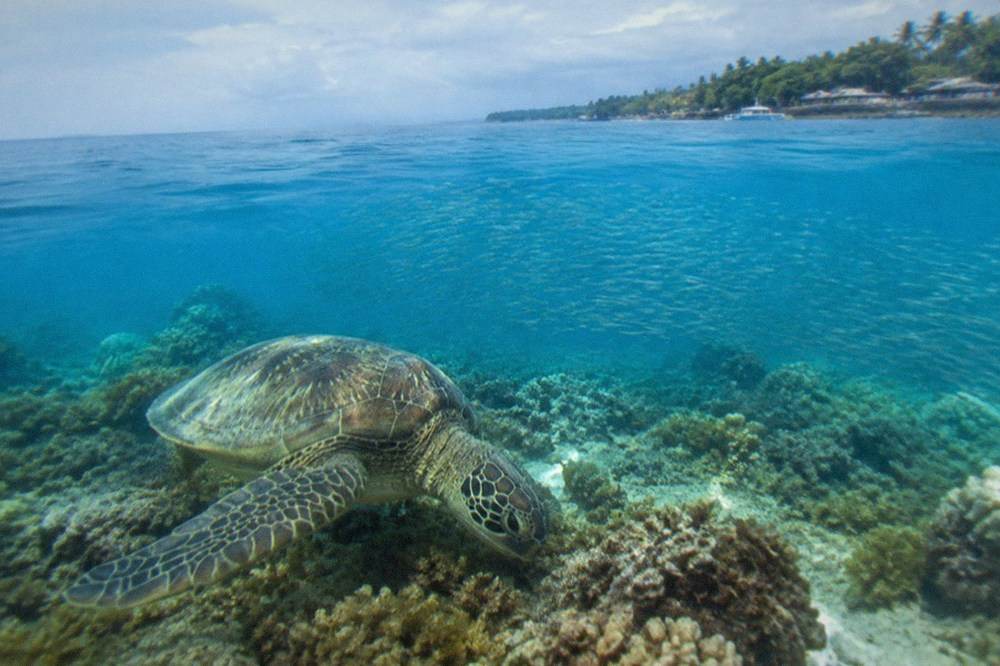
The sardine run deserves its fame. This is not a seasonal migration but a resident school that stays at the Panagsama reef wall, a swirling silver baitball that shifts and folds as trevally hunt its edges. Because it is so close to shore, the barrier to entry is low: walk into the water from the beach, swim out, and float above it. A P100 (about US$1.6) environmental user fee applies to anyone entering the water to swim or snorkel at Panagsama, set under Municipal Ordinance 165-2021 and collected at a beach kiosk; some visitors report a separate P25 (about US$0.4) beach access variant, so carrying a little extra cash is wise. Gear rental, mask and snorkel and fins, runs roughly P150 (about US$2.4) to P250 (about US$4.0) from the beachfront shops.
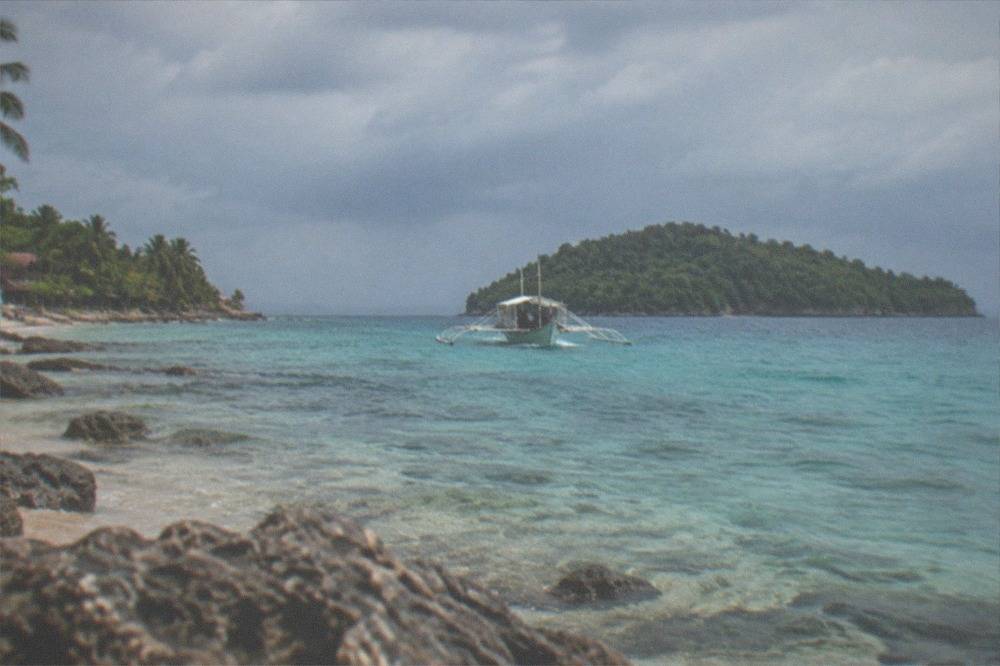
Turtles are the second act. Green sea turtles graze the seagrass and reef along the same stretch, and local snorkel guides know their resting spots. Pescador Island, the small island sanctuary visible from the beach, is the third: dive shops run boat trips out, and the marine park fee is about P100 (about US$1.6) per dive or per activity, collected through the shops. The island's wall drops away sharply and the water clarity is usually excellent in the dry season. The full picture of the sardine run, including the rules and the reef etiquette, is in the Moalboal sardine run guide.
If you would rather have the logistics handled, two bookable options cover the Moalboal coast from Cebu City. One pairs the sardine snorkel with canyoneering:
The other is a full small-group day combining the falls with the islands:
A realistic day looks like this, assuming a pre-dawn bus:
| Time | Activity | Notes |
|---|---|---|
| 4:30-5:30 AM | Bus from Cebu South Bus Terminal | First services leave around 3 AM; aim for the earliest air-con bus |
| 8:00-8:30 AM | Arrive Moalboal junction, tricycle to Panagsama | Agree tricycle fare first |
| 8:30-10:30 AM | Sardine run and turtle snorkel | Best window 7-9 AM per the municipal site; pay the EUF at the kiosk |
| 11:00 AM-1:00 PM | Lunch on the Panagsama strip | Simple Filipino and international kitchens, fast service |
| 1:00-5:00 PM | Pescador Island boat trip or Kawasan Falls | Falls need 2 hours of travel plus activity time |
| 5:00-6:00 PM | Tricycle to junction, bus back | Last comfortable buses run early evening |
How Much Does A Moalboal Day Trip Cost?
A do-it-yourself day trip from Cebu City is cheap by international standards: the bus fare each way, the Panagsama environmental user fee, snorkel gear rental and a tricycle at each end add up to a modest sum before lunch, and even with a Pescador Island boat trip, the marine park fee and food thrown in, a full day remains one of the most affordable marine day trips in the Visayas. Guided packages cost more but bundle transfers, gear and lunch.
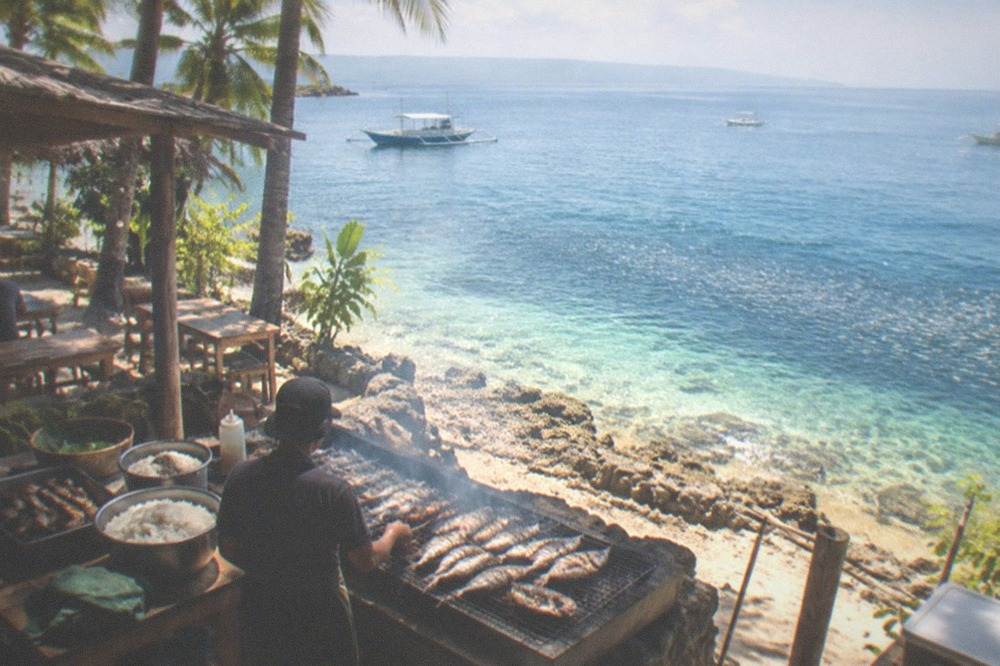
The fee stack, item by item, with the peso figures spelled out:
| Item | Fee (PHP) | Who charges it |
|---|---|---|
| Cebu City to Moalboal bus | P120 (about US$1.9)-P210 (about US$3.3) each way | Ceres Liner, on board or terminal |
| Junction to Panagsama tricycle | Local rate, agree first | Tricycle drivers |
| Panagsama environmental user fee | P100 (about US$1.6) | Moalboal LGU, Ord. 165-2021 |
| Beach access variant | P25 (about US$0.4) | Collected at the beach in some setups |
| Snorkel gear rental | P150 (about US$2.4)-P250 (about US$4.0) | Beachfront shops |
| Pescador marine park fee | About P100 (about US$1.6) per dive or activity | Collected via dive shops |
| Kawasan Falls Level 1 entrance | About P200 (about US$3.2) | Badian LGU |
| Kawasan canyoneering with guide | Roughly P1,500 (about US$24) to P2,000 (about US$32) | Badian-accredited guides, all-in |
Two honesty notes. First, fee collection at Panagsama is reported as inconsistent, so some visitors are asked for the EUF and others slip through; the ordinance is real either way, and paying it funds reef conservation. Second, the canyoneering figure is deliberately a range: a SunStar report from October 2025 says tourists typically pay around P2,000 (about US$32), while guide sites quote P1,500 (about US$24), and the verified guidance for this site is to print the range rather than a single number. The Badian route includes guide, environmental fees, gear, lunch and habal-habal transfer at that price.
If the DIY arithmetic feels like work, a fully guided day from the city removes every line of that table from your morning. The operator's live listing carries the current price and the exact inclusions:
For the canyoneering add-on specifically, the half-day package from Moalboal is the one most day trippers book, and it is worth checking its availability before you commit to the early bus:
For budgeting the wider trip, including lodging tiers and what a full week in the province costs, see Cebu budget and costs.
Can You Combine Moalboal With Kawasan Falls Or Oslob In One Day?
Moalboal plus Kawasan Falls works as one long day, because Badian is roughly an hour up the coast by bus or habal-habal, and the falls' Level 1 entrance carries a modest local fee, with canyoneering sold as an all-in package through Badian-accredited guides. Moalboal plus Oslob in a single day from Cebu City is far harder, since Oslob sits on the opposite, southeast coast, and travellers who try it risk seeing neither properly. Pick one coast per day.
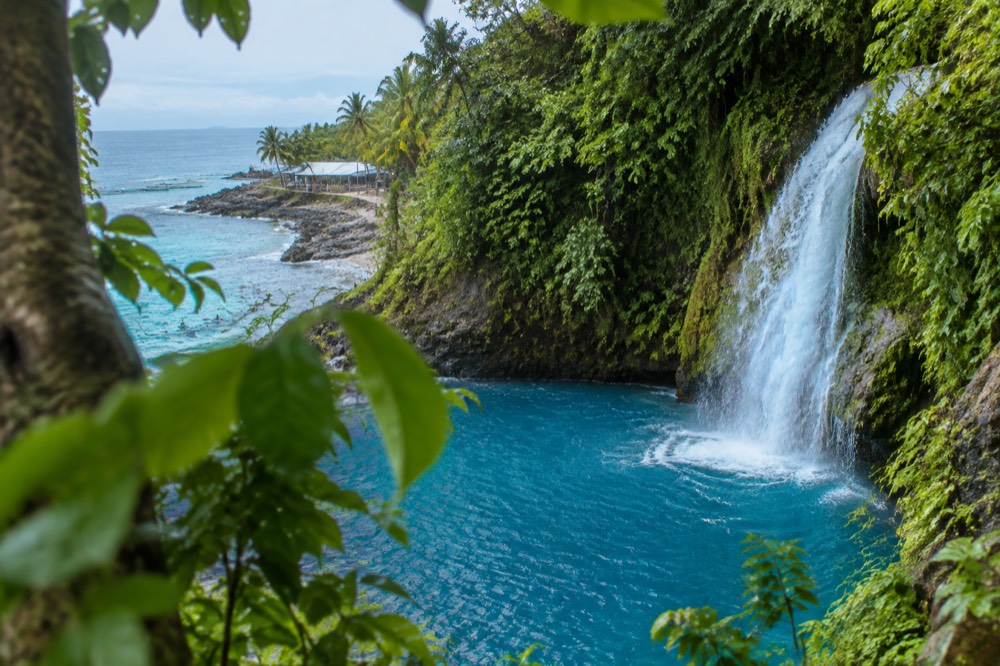
The Moalboal-Kawasan pairing is the classic south Cebu double. Kawasan Falls in Badian is the famous multi-tiered turquoise waterfall, and since 2025 the rules have tightened in ways day trippers should know: cliff jumping is banned at the main Level 1 basin, life jackets are mandatory, there is a three-hour limit, and only Level 1 is open to independent visitors, with the upper levels accessible only on a canyoneering run. The Alegria canyoneering route remains suspended through 2025 and 2026, so the Badian route is the only one operating. The Level 1 entrance is about P200 (about US$3.2), and canyoneering runs roughly P1,500 (about US$24) to P2,000 (about US$32) all-in.
Timing matters. If you want both the sardine run and canyoneering in one day, you need the earliest bus, a fast morning snorkel, and then a habal-habal or bus north to Badian after 11 AM. That is doable but tight, and the guided canyoneering packages from Moalboal exist precisely because the self-managed version eats your margins. The Kawasan Falls guide covers the route in detail, and the full south coast plan, including where to sleep if you split it over two days, is in the south Cebu day tour page.
The Oslob question deserves a direct answer. Oslob's whale shark interaction runs roughly 6 AM to 12 PM, and the fees are P1,000 (about US$15.9) for foreign tourists and P500 (about US$8.0) for Filipinos, boat and guide included, with a minimum 4 metre distance, no touching, no sunscreen and no flash. But Oslob is on the southeast coast and Moalboal on the southwest, and the road between them crosses the highlands; doing both in one day from Cebu City means skipping the sardine run or the whale sharks, and often both. The honest options are laid out in Oslob versus Moalboal and the dedicated Oslob day trip page, and the perennial "which should I stay in" debate is covered in Moalboal or Oslob: where to stay.
What Is The Best Time Of Year For A Moalboal Day Trip?
The best months for a Moalboal day trip are December through May, Cebu's dry season under PAGASA's national classification, with the calmest seas, the clearest water at Panagsama and Pescador Island, and the lowest risk of a washed-out bus ride over the highlands. June through November is the rainy season, with typhoon risk peaking roughly July to October; the sardine school stays put year-round, but visibility and boat access suffer after heavy rain.
The climate data backs this up. PAGASA's 1991-2020 normals for the Mactan station record 1,685.0 mm of rain annually across 138 rain days, with the wettest months concentrated in the June-November window: October averages 194.8 mm, July 192.9 mm and September 179.6 mm, against 48.1 mm in April, the driest month. The annual mean temperature is 28.1 C, so the question is never heat, it is rain and sea state. For snorkelling the sardine run, calm conditions matter more than anything else, because the school sits just off the beach and chop ruins the view from the surface.
| Month | Rainfall at Mactan (mm, 1991-2020 normals) | Day trip verdict |
|---|---|---|
| January | 105.2 | Good; dry season, Sinulog crowds in Cebu City mid-month |
| February | 69.6 | Good; dry and calm |
| March | 58.6 | Excellent; driest stretch begins |
| April | 48.1 | Excellent; driest month, best visibility |
| May | 95.0 | Very good; hot but usually calm |
| June | 175.6 | Risky; rainy season starts |
| July | 192.9 | Risky; peak typhoon window opens |
| August | 143.5 | Mixed; storms possible |
| September | 179.6 | Risky; heavy rain likely |
| October | 194.8 | Worst month on paper; wettest |
| November | 161.9 | Improving late; typhoon tail risk |
| December | 139.7 | Good; dry season returns |
One recent history lesson is worth knowing. In early November 2025, Typhoon Tino (international name Kalmaegi) brought record rainfall to Cebu and severe flooding, and a month earlier, on 30 September 2025, a magnitude 6.9 earthquake struck offshore northern Cebu. The Department of Tourism confirmed by late October 2025 that Cebu remained open to tourists, and Moalboal, on the southwest coast, was outside the worst-affected northern zone. The practical takeaway is not to avoid the region but to check PAGASA advisories during the rainy season and to build a spare day into any November trip. The full picture is in Cebu weather and typhoon season.
Where Do You Eat And What Else Should You Know For The Day?
Panagsama Beach's strip holds most of the eating options for a day trip, a walkable line of open-air restaurants serving grilled fish, Filipino staples and Western comfort food at modest prices, with no reservation needed outside peak season. White Beach has resort-side kitchens if you end the day there. Bring cash: card acceptance is patchy, the environmental fee kiosk takes cash, and tricycle and habal-habal drivers take nothing else.
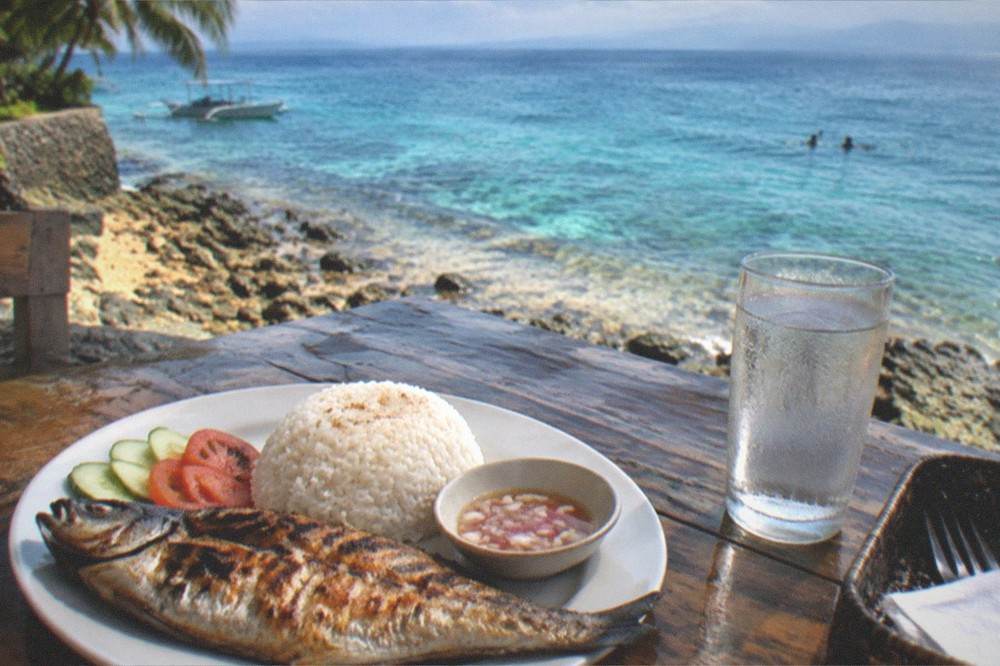
Budget roughly P150 (about US$2.4) to P350 (about US$5.6) per meal on the strip, where grilled fish and rice plates dominate the menus and the kitchens turn food over fast. A few practical notes that first-time visitors consistently ask about: reef-safe sun protection matters here, and not only in Oslob, because ordinary sunscreen damages coral and the dive shops on the strip sell mineral alternatives. Water shoes help on the Panagsama entry, which is shallow and a little rocky. There is no ATM problem in Moalboal town proper, but the beach strip's machines are unreliable, so withdraw in Cebu City before the bus. Phone signal is decent on the main road and patchy on the beach.
If the day trip format leaves you wanting more, the honest advice is that Moalboal rewards an overnight. The sardine run at dawn, before the day trippers arrive, is a different experience from the 10 AM version, and an overnight opens the canyoneering route without the race back to the junction. The trade-offs between basing in Cebu City and basing on the coast are argued out in stay in Cebu or Moalboal.
For travellers weighing Moalboal against the province's other big day trips, here is how they stack up on time and character:
| Day trip from Cebu City | One-way travel time | Signature experience | Best suited to |
|---|---|---|---|
| Moalboal | Roughly 2.5-3.5 hours by bus | Sardine run from shore, turtles, Pescador | Snorkellers, divers, wildlife watchers |
| Oslob | Roughly 3.5-4.5 hours by bus | Regulated whale shark interaction, 6 AM-12 PM | Whale shark seekers, early risers |
| Kawasan Falls (Badian) | Roughly 3-4 hours by bus | Turquoise falls, canyoneering route | Adventurous swimmers, groups |
| Bohol (via ferry) | About 2 hours by fastcraft plus touring | Chocolate Hills, Loboc River, tarsiers | First-time visitors, families |
| Bantayan Island | Bus plus ferry via Hagnaya | Quiet white-sand beaches, slow pace | Beach loungers, second trips |
| Malapascua | Bus plus boat via Maya | Thresher shark dives at Kimud Shoal | Certified divers |
Each of those has a full page of its own: the Bohol day trip, the Bantayan day trip and the Malapascua day trip. If you are building a longer route around the province, the 3 days in Cebu itinerary slots Moalboal into a fuller plan.
One last pairing worth considering if your energy outlasts the coast: the guided canyoneering package that starts from Moalboal itself, which removes the hardest logistics of the day, the junction connection and the gear rental, and leaves you with just the swimming:
And if you would rather trade the highlands for the sea, the island-hopping alternative covers the Mactan side of the province:
Common Questions About A Moalboal Day Trip From Cebu City
Is A Moalboal Day Trip From Cebu City Worth It?
Yes, if wildlife in the water is your priority. Moalboal's sardine run is one of the few world-class marine spectacles you can reach by swimming from shore, and the turtles and Pescador Island reef sit in the same stretch. The trade-off is travel: roughly 2.5 to 3.5 hours each way by bus, so expect 5 to 7 hours of the day on the road. Travellers who want a slower pace should consider an overnight in Panagsama instead.
How Much Does The Moalboal Sardine Run Cost?
The environmental user fee to swim or snorkel at Panagsama is P100 (about US$1.6), set by Moalboal Municipal Ordinance 165-2021 and collected at the beach. Gear rental, mask, snorkel and fins, runs roughly P150 (about US$2.4) to P250 (about US$4.0). The sardine school itself is free to swim to; it sits about 20 to 30 metres from shore, so no boat is needed.
Can You Do Moalboal And Kawasan Falls In One Day?
Yes, and it is the most popular pairing on the south coast. Kawasan Falls is roughly an hour up the coast from Moalboal by bus or habal-habal, and the Level 1 entrance is about P200 (about US$3.2). Canyoneering with a Badian-accredited guide runs roughly P1,500 (about US$24) to P2,000 (about US$32) all-in, covering guide, fees, gear, lunch and transfer. Take the earliest bus from Cebu City and snorkel the sardines before 10 AM to make the timing work.
What Time Do Buses To Moalboal Leave Cebu City?
Ceres buses leave the Cebu South Bus Terminal frequently, roughly every 30 to 45 minutes, with services starting around 3 AM and running into the early evening. For a day trip, aim for a departure before 7 AM to hit the best sardine run window, which the municipal tourism office puts at 7 to 9 AM. Fares run about P120 (about US$1.9) to P210 (about US$3.3) each way.
Are The Sardines At Moalboal Guaranteed?
The school is resident year-round, not migratory, so it is as close to guaranteed as marine wildlife gets. However, visibility and sea state vary, and heavy rain in the June-November wet season can murk the water. Sightings are weather-dependent rather than presence-dependent; the fish are there, the question is whether you can see them clearly.
Do You Need A Guide For The Moalboal Sardine Run?
No. The school sits close enough to Panagsama Beach that you can swim out independently after paying the environmental user fee. Guides add value for the turtle resting spots and for Pescador Island, where sanctuary rules require guide accompaniment in the protected zones, and boats to the island are run through the dive shops.
The short version: leave Cebu City before dawn, pay the P100 (about US$1.6) fee at the kiosk, swim with the sardines while the sea is still calm, and let the afternoon decide between Pescador Island and the falls. Moalboal is the rare day trip where the hardest part is the bus ride, and everything after the junction delivers.