Should You Stay In Cebu Or Moalboal?
Should you base your trip in Cebu City or in Moalboal on the island's south-west coast? A plain comparison of what each base gives you, with verified fees and travel times.
Cebu, the island province in the Central Visayas region of the Philippines, presents travelers with the same dilemma: sleep in Cebu City, the regional capital on the Mactan Channel, or head three hours down the coast to Moalboal, the small dive town whose sardine run sits a few metres from shore. The two bases serve different trips. Cebu City stacks heritage sites, restaurants and ferry links within a compact downtown; Moalboal puts the water first and everything else a long bus ride away. This page compares them on what you actually do each day, what the verified fees cost, and how the logistics of the island shape the decision.
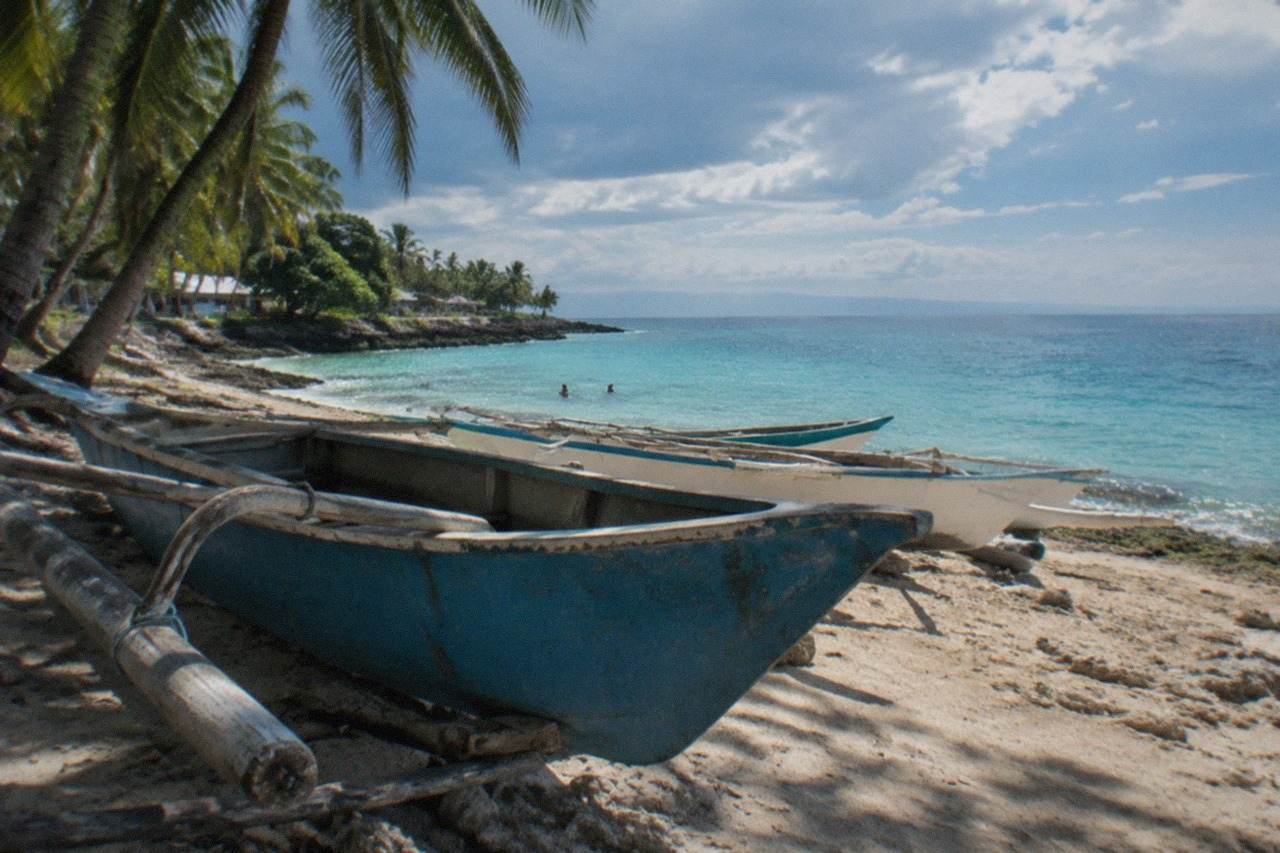
Should You Stay In Cebu Or Moalboal?
Stay in Cebu City if your trip is three days or shorter, if you want heritage sites, city food and easy ferry or airport connections, or if you are booking tours that depart from the city. Stay in Moalboal if your trip is four days or longer, swimming and diving are the main point, and you would rather wake up beside the sardine run than commute to it. Many travellers split the stay: city first, then the south coast.
The honest answer for most first-time visitors is both, in that order. The Cebu Travel Guide itinerary pages exist because the island rewards splitting: the airport and the heritage core sit in and around Cebu City, while Moalboal, Oslob and Kawasan Falls cluster at the southern end of a long island. Basing only in Moalboal means every arrival and departure day loses hours to the road; basing only in Cebu City means every water day starts with a bus. Neither base is wrong, but each one quietly charges you a tax of lost hours for what the other one offers on foot.
What Does Staying In Cebu City Give You?
Cebu City gives you the island's transport hub, its Spanish-era heritage core and its biggest food scene inside one stay. Magellan's Cross, the Basilica Minore del Santo Niño, Fort San Pedro and Colon Street all sit within a short walk of each other, the airport is roughly 13 to 15 km away, and fastcraft ferries to Bohol leave from Pier 1 downtown.
That density is the city's real advantage. You can see the Basilica, the Cross and Fort San Pedro in a single morning, with the verified entrance fee at the fort at P50 (about US$0.8) regular and P40 (about US$0.6) for students and seniors, then spend the afternoon eating. The city's food reputation is not decorative: a guided market walk such as the Cebu Market & Food Tour is the quickest way into lechon, ngohiong and the dried-fish stalls that visitors tend to walk past. The tour's price is not published by the operator, so check the live listing rather than any figure quoted elsewhere.
The city also owns the island's connections. OceanJet fastcraft to Tagbilaran in Bohol runs about two hours, with tourist-class fares at P960 (about US$15.3) since the September 2026 fuel surcharge, and buses to the south coast leave from the Cebu South Bus Terminal throughout the day. If Bohol, Oslob or Kawasan Falls are on your list, a city base puts every departure point within reach. That matters more than it sounds: the south coast's headline experiences all start before dawn, and a city base puts you beside the terminal rather than three hours up the island from it.
The trade-off is simple: Cebu City is a working city of nearly a million people. Traffic on the Mactan Channel bridges is real, the beaches are not, and the nearest good swimming is a boat ride away on Mactan or a drive down the coast. The things to do in Cebu round-up makes the pattern obvious: the city's strengths are heritage, food and logistics, not sand. If your mental picture of the trip is a beach towel and mask, the city will fight you on it every morning.
What Does Staying In Moalboal Give You?
Moalboal gives you the water, every day, without a commute. The sardine run at Panagsama Beach sits a few metres from shore and is best between 7 and 9 AM, the environmental user fee to swim or snorkel is P100 (about US$1.60) under Ordinance 165-2021, and Pescador Island's marine sanctuary is a short boat trip out. You trade city variety for a small dive town geared around one thing.
That one thing is genuinely unusual. The municipal tourism office confirms the sardine school is resident, not migratory: it is there year-round, close enough to shore that you can swim over it from the beach. The Moalboal sardine run page covers the practical details, and the Moalboal town guide explains the split between Panagsama, the backpacker strip on the reef, and Basdaku, the long white-sand beach a tricycle ride north.
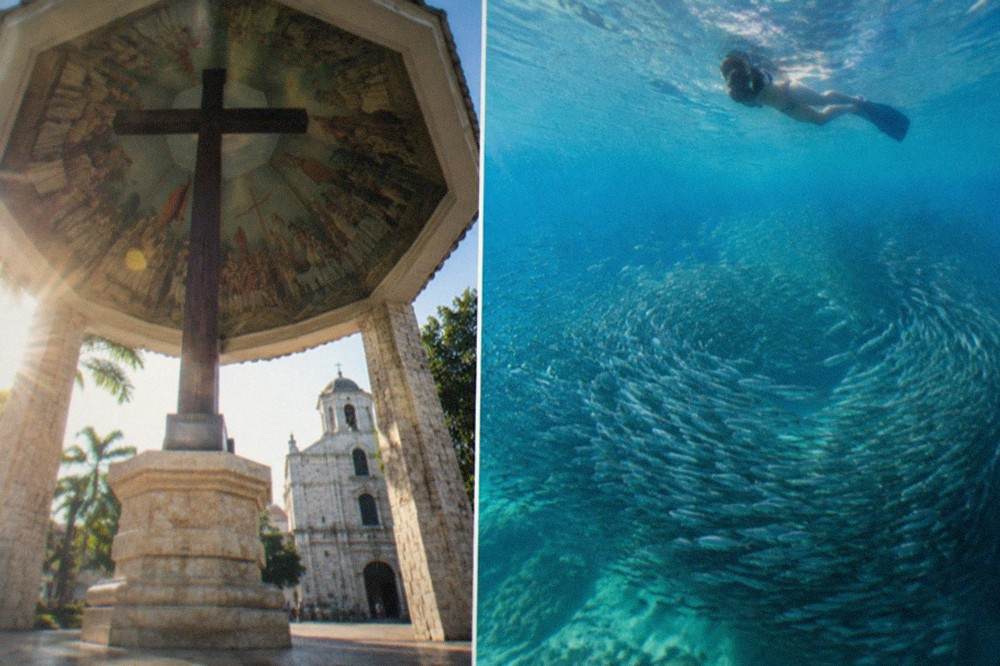
Moalboal also positions you for the south coast's other draws. Kawasan Falls in Badian is roughly an hour further south by road, with Level 1 entrance at about P200 (about US$3.2) and canyoneering with a Badian-accredited guide at roughly P1,500 (about US$24) to P2,000 (about US$32). Oslob's whale shark interaction, at P1,000 (about US$15.9) for foreign visitors and P500 (about US$8.0) for locals with boat and guide included, is reachable as a long day trip. The Moalboal day trip page covers the timing if you would rather not move hotels.
The town's limits are the mirror of its strengths. There is no heritage core, no mall-scale shopping, and the road back to the airport takes about 2.5 to 3.5 hours by Ceres bus, with fares around P120 (about US$1.9) to P210 (about US$3.3). If your flight leaves early, a Moalboal base means either a very early transfer or a final night near the airport. ATMs and pharmacies exist but are thin on the ground compared with the city, so top up cash before you leave Cebu City.
Still weighing the two bases?
How Do The Costs And Logistics Compare?
Neither base is expensive, but the money goes to different places. In Cebu City you spend on entrances, food and tours; in Moalboal you spend on environmental fees, dive trips and boat hire. The verified fees below are the ones you will actually pay at the gate or kiosk, in pesos with their dollar equivalents, and none of them includes accommodation, which no verified public figure covers.
| Cost item | Where it applies | Verified fee |
|---|---|---|
| Fort San Pedro entrance | Cebu City | P50 (about US$0.8) regular, P40 (about US$0.6) students and seniors |
| Tops Lookout entry | Busay, above Cebu City | P100 (about US$1.6) adult, P70 (about US$1.1) senior or PWD |
| Moalboal environmental user fee | Panagsama Beach swim or snorkel | P100 (about US$1.6) |
| Pescador Island marine sanctuary | Per dive, Moalboal | about P100 (about US$1.6) |
| Kawasan Falls Level 1 entrance | Badian | about P200 (about US$3.2) |
| Oslob whale shark watching | Tan-awan, Oslob | P1,000 (about US$15.9) foreign, P500 (about US$8.0) local |
The transport picture matters as much as the fees. The comparison below is the practical one travellers actually face:
| Factor | Cebu City base | Moalboal base |
|---|---|---|
| Airport access | About 13-15 km, 25-60 minutes by road | About 2.5-3.5 hours by bus |
| Signature experience | Heritage core: Basilica, Magellan's Cross, Fort San Pedro | Sardine run a few metres from shore, best 7-9 AM |
| Best for trip length | 1-3 days | 4 days or more |
| Food scene | City-wide, including market walks and lechon | Small-town, dive-resort scale |
| Day trips within reach | Bohol by fastcraft, Oslob, Mactan islands | Kawasan Falls, Pescador Island, Oslob |
One planning note that surprises people: the whale sharks are not guaranteed anywhere. In late May 2026 the sharks were absent from Oslob's Tan-awan interaction area for about four days when the plankton moved, and local officials confirmed operations pause and resume with sightings. Whichever base you choose, build a spare day around the wildlife stops rather than scheduling them against a flight.
Which Base Suits Which Trip?
Choose Cebu City for a first visit of three days or less, for Sinulog in January, for a Bohol day trip, or for any trip built around heritage and food. Choose Moalboal for a diving or snorkelling holiday of four days or more, for a slower pace with kids who swim, or as a second base after the city. The wrong choice is usually Moalboal for one night: the transfer eats the day you came for.
The seasonal angle favours neither base strongly. PAGASA's national rule puts the rainy season from June to November and the dry season from December to May, with the Mactan station's 1991-2020 normals showing 1,685 mm of annual rain and a mean temperature of 28.1 C. Both bases sit on the same island under the same weather. What differs is what rain does to your day: in the city you retreat to museums and malls, in Moalboal you retreat to a resort bar, and canyoneering stops in heavy rain regardless of where you sleep.
If you are still deciding between the south coast towns specifically, the Moalboal or Oslob stay comparison covers that narrower question, and the where to stay in Cebu guide maps the full set of bases including Mactan and Lapu-Lapu City.
For a taste of the city before you commit to a split itinerary, the market food walk is the natural first booking:
Common Questions About Staying In Cebu Or Moalboal
Should you stay in Cebu or Moalboal?
Stay in Cebu City for short trips, heritage, food and transport links; stay in Moalboal for longer trips built around snorkelling and diving. Many travellers split the stay, city first, then the south coast.
How far is Moalboal from Cebu City?
Ceres buses from the Cebu South Bus Terminal take about 2.5 to 3.5 hours to Moalboal, running roughly every 30 to 45 minutes, with fares around P120 (about US$1.9) to P210 (about US$3.3).
Can you swim with the sardines without a tour in Moalboal?
Yes. The sardine run at Panagsama Beach sits a few metres from shore and is best between 7 and 9 AM. You pay the P100 (about US$1.6) environmental user fee to swim or snorkel and enter the water from the beach.
Is one night in Moalboal worth it?
Rarely. The transfer from Cebu City takes about 2.5 to 3.5 hours each way, so a single night leaves you roughly one usable afternoon and one morning. Two nights is the practical minimum.
Is Cebu City near the beach?
Not really. The city sits on the Mactan Channel without a swimmable city beach. Good swimming is on Mactan across the bridge, or down the coast, which is why beach-focused trips move base.
Which base is closer to the whale sharks in Oslob?
Neither is close. Oslob is roughly 3.5 to 4.5 hours from Cebu City by bus and a further drive from Moalboal. Visitors typically reach it on an organised day tour from either base, starting very early.
Whichever way you split the trip, the pattern that works for most visitors to this Central Visayas island is city first, coast second: use Cebu City for arrival, heritage and food, then move south so the water days start at the shoreline instead of the bus terminal.