Moalboal Town Cebu
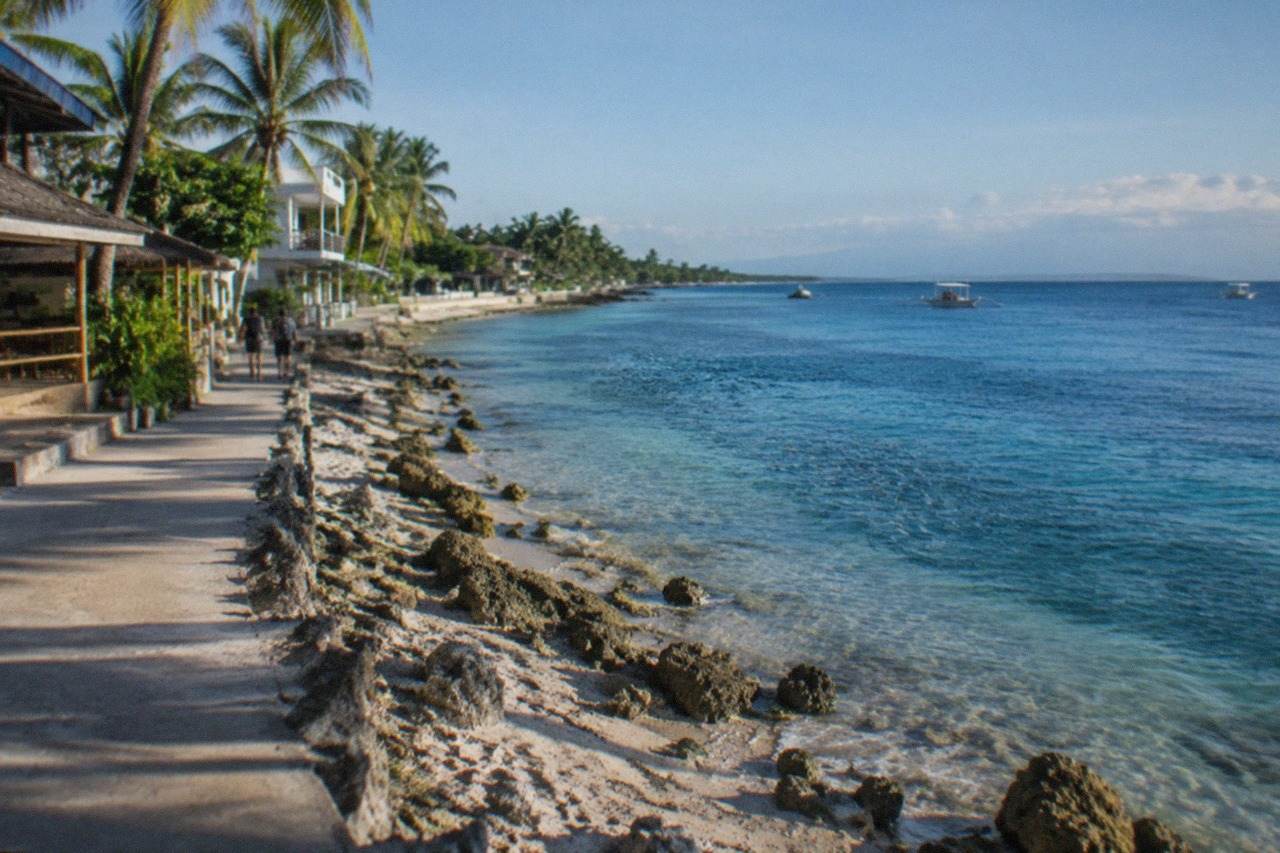
Moalboal is a small town on Cebu's southwest coast in the Central Visayas region of the Philippines, and the reason most travellers make the three-hour trip from Cebu City is swimming with the sardine run just off Panagsama Beach.
Short answer
Moalboal town in Cebu Province is the base for the Panagsama sardine run, Pescador Island diving and day trips to Kawasan Falls, reached by Ceres bus from Cebu South Bus Terminal in about three hours.
Moalboal is a small municipality on the southwest coast of Cebu, an island province in the Central Visayas region of the Philippines, about three hours by road south of Cebu City. The town itself is modest: a grid of streets around a public market, a church and a bus stop on the national highway, with the sea never more than a few minutes away. What pulls travellers here sits just offshore, a permanent school of sardines massed off Panagsama Beach that you can swim over from the sand, plus a marine sanctuary at Pescador Island and the canyoneering country of Kawasan Falls an hour up the coast. This guide covers what the town offers, how to get there, what it costs and how to plan the days.

Where Is Moalboal Town In Cebu?
Moalboal sits on the southwest coast of Cebu Province, roughly 85 kilometres by road from Cebu City, fronting the Tañon Strait that separates Cebu from Negros Island. The town proper sits slightly inland on the national highway, while the tourist strip is three kilometres west at Panagsama Beach and the quieter sand beach of Basdaku lies a short tricycle ride north. Ceres buses run south from Cebu South Bus Terminal and take about two and a half to three and a half hours.
The geography matters when you plan. The "town" and the "beach" are two different places, and almost everything a visitor wants is at the beach strip, not in the town proper. Panagsama, also called Basdiot, is where the dive shops, hostels and restaurants cluster along a rocky shoreline. Basdaku, the White Beach of Moalboal, is the long stretch of sand locals and families favour on weekends.
The municipal government's own tourism page describes the sardine run as the town's signature attraction, positioned just off Panagsama in shallow water. Beyond the coast, the mountains rise fast: the town is a convenient staging point for Osmeña Peak, Cebu's highest point, and for the canyoneering runs that end at Kawasan Falls in Badian.
What Is Moalboal Known For?
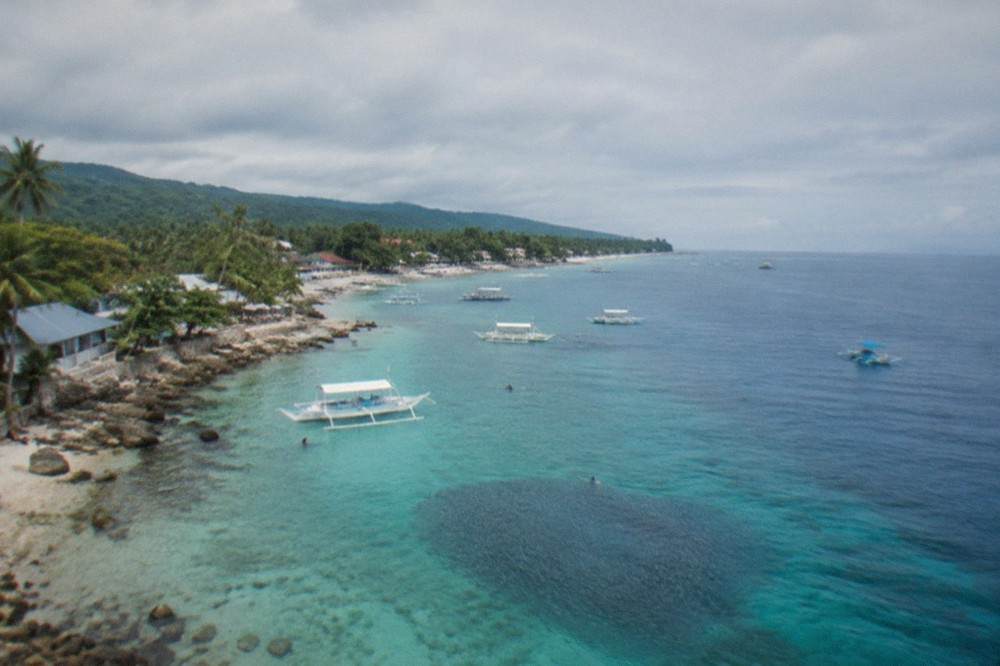
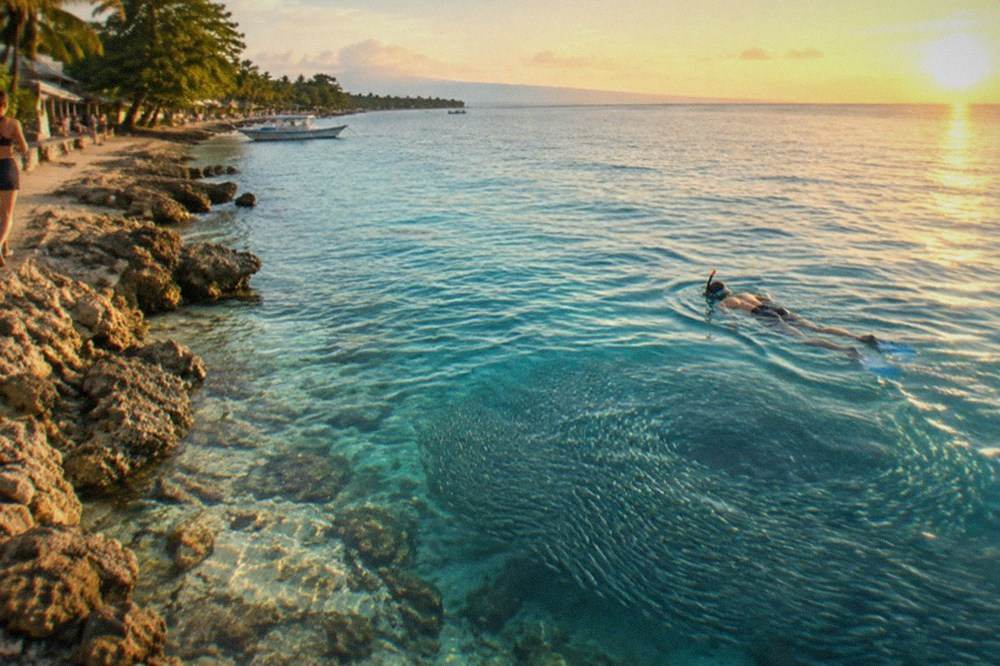
Moalboal is known for the sardine run at Panagsama Beach, a resident school of millions of sardines that stays a few metres from shore year round, which you can snorkel over any morning for a P100 (about US$1.6) environmental user fee. The same coastline gives access to Pescador Island's marine sanctuary, famous among divers for its coral walls and frogfish, and the town serves as the main base for canyoneering trips down the Badian river gorge to Kawasan Falls.
The sardine run is the headline, and the detail that surprises most first-time visitors is how accessible it is. This is not a boat-based phenomenon you chase offshore: the municipal site notes the school sits at Panagsama, and local guides describe it as a short swim from the beach. The best light and calmest water are in the morning, roughly 7 to 9 AM, before afternoon wind roughens the surface.
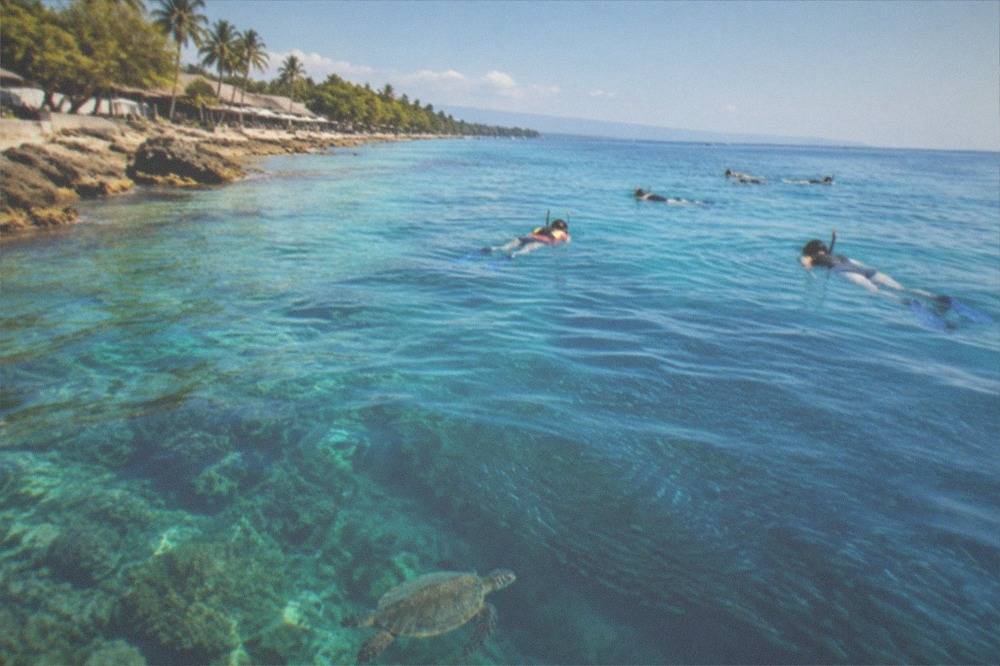
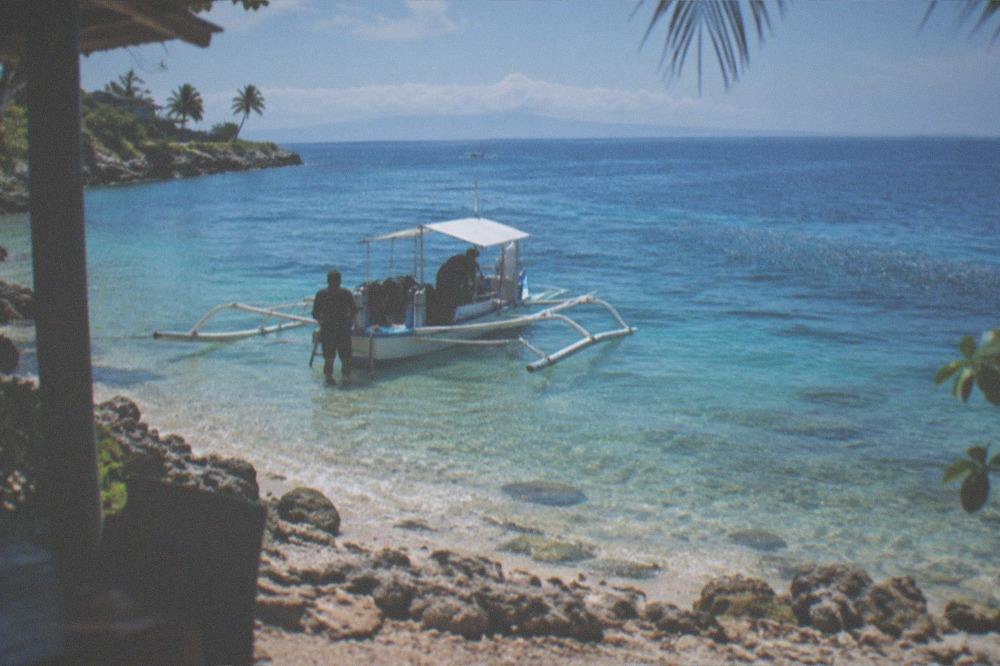
Pescador Island, twenty minutes out by banca, is the second draw. Divers pay about P100 (about US$1.6) per dive in sanctuary fees, collected through the dive shops, and the island's wall drops into deep blue water with schooling jacks, turtles and occasional whale sharks in season. Snorkellers can also visit on island-hopping boats that combine Pescador with the sardine run and a stop at Basdaku.
Third, and increasingly the reason people stay several nights rather than one, is canyoneering. The Badian route downstream to Kawasan Falls is the only one operating, the Alegria route having been suspended through 2025 and 2026 on safety grounds. A full rundown of the gorge, the jumps and the rules lives in the Kawasan Falls guide.
If you are building a wider Cebu trip around Moalboal, the south Cebu itinerary strings the town together with Oslob and the whale sharks, and the Moalboal versus Oslob comparison works through which suits your travel style better.
How Do You Get To Moalboal From Cebu City?
The standard route is a Ceres Liner bus from Cebu South Bus Terminal heading for Bato via Moalboal, taking roughly two and a half to three and a half hours and costing about P120 (about US$1.9) to P210 (about US$3.3) depending on the class of bus; buses run frequently through the day and you pay on board. From the Moalboal bus stop on the highway, a tricycle or habal-habal covers the last few kilometres to Panagsama or Basdaku.
Ordinary and air-conditioned buses both serve the corridor, and the air-conditioned ones are worth the small premium in the middle of the day. Sit on the left side travelling south for sea views over the Tañon Strait once the road turns coastal after Carcar. If you are coming from the airport instead of the city, the airport's MyBus connects to SM City Cebu, from which it is a short taxi or jeepney hop to the South Bus Terminal; the full route is worked through in the Cebu airport guide.
Private transfer is the other option. Many dive shops and resorts arrange a van pickup from Cebu City or from Mactan-Cebu International Airport, useful if you arrive on a late flight or travel with gear. Shared vans also run south, though schedules are looser than the buses.
The reverse journey matters for day trippers: the last comfortable buses back to Cebu City leave in the late afternoon, so anyone planning a Moalboal day trip from the city should take an early morning bus down or book a tour with transport included.
| Route | Typical mode | Journey time | Fare (approx.) |
|---|---|---|---|
| Cebu City to Moalboal | Ceres bus (ordinary/AC) | 2.5-3.5 hours | P120 (about US$1.9) to P210 (about US$3.3) |
| Moalboal highway stop to Panagsama | Tricycle/habal-habal | 10-15 minutes | short local hop |
| Moalboal to Badian (Kawasan) | Bus or van | about 1 hour | short local fare |
| Moalboal to Oslob | Bus via Bato | 2.5-3.5 hours | short local fare |
What Are The Best Things To Do Around Moalboal Town?
The four anchors are snorkelling the sardine run at Panagsama, diving or snorkelling Pescador Island, canyoneering the Badian gorge to Kawasan Falls, and hiking Osmeña Peak for the highest viewpoint in Cebu; a common plan is to combine the first two on one day and pick one of the mountain or gorge activities for the next. Everything sits within an hour of the town, which is why three nights is the natural stay.
Start with the sardines. The P100 (about US$1.6) environmental user fee under Municipal Ordinance 165-2021 covers swimming and snorkelling at Panagsama, collected at a beach kiosk, and gear rental runs about P150 (about US$2.4) to P250 (about US$4.0) if you do not have your own. Local guides describe the school as a permanent resident population, present daily when weather permits, not a seasonal migration, so you are not gambling on timing the way you do elsewhere.
Pescador Island trips usually bundle three stops: the island wall, the sardine run and a sandbank or Basdaku swim. The sanctuary fee of about P100 (about US$1.6) per dive applies to divers; snorkellers on the same boats pay the same rate per activity. Rules on the island are strict about anchoring, boats use mooring buoys, and guides accompany visitors in sanctuary zones.
Canyoneering is the big-water day. The Badian route runs from a gorge entry above the falls down through jumps, slides and rappels to the main basin at Kawasan. Entrance to Level 1 of the falls alone is about P200 (about US$3.2), while the canyoneering packages with a Badian-accredited guide run roughly P1,500 (about US$24) to P2,000 (about US$32) including gear, guide, fees and lunch. Cliff jumping is banned at the main Level 1 basin, life jackets are mandatory, and only Level 1 is open to independent walkers; the upper levels are canyoneering-only.
Osmeña Peak, in Dalaguete on the road back north, is the half-day alternative: registration is about P50 (about US$0.8) to P100 (about US$1.6), and a guide is strongly recommended at around P200 (about US$3.2) to P300 (about US$4.8). The ridge walk takes in jagged peaks that read like a mini chocolate hills, with the sea on one side and the Badian mountains on the other.
Where Should You Stay In Moalboal?
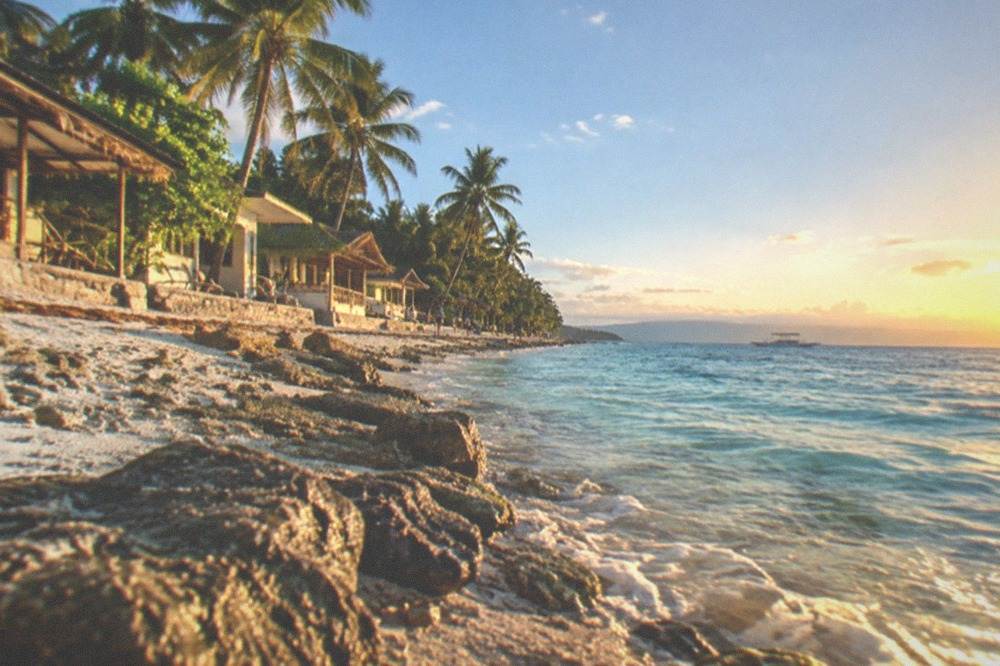
Panagsama Beach is where many visitors stay, because the sardine run, the dive shops and the restaurants are all walkable there; Basdaku White Beach suits families and sand seekers who want a proper beach rather than a rocky shore, and the town proper itself has little tourist accommodation and no reason to book it. Budget dorms cluster at the Panagsama strip's south end, mid-range resorts sit on the bluffs either side, and a handful of dive resorts front the water directly.
Panagsama's shore is coral and rock rather than sand, which is the trade-off for having the sardines on your doorstep. If your picture of a beach holiday involves lounging on sand, base at Basdaku and commute the few kilometres south for the snorkelling. The best beaches in Cebu guide covers Basdaku in detail alongside the island's other sand.
For divers, staying at a dive resort on Panagsama means the boats leave from your doorstep and early morning Pescador trips are painless. The Cebu diving guide ranks Moalboal against Malapascua and Mactan for different certification levels and interests.
| Area | Shore type | Best for | Walk to sardine run |
|---|---|---|---|
| Panagsama (Basdiot) | Rocky, boats | Divers, snorkelers, nightlife | Yes, in-water access |
| Basdaku (White Beach) | Sand | Families, beach days | No, short ride away |
| Town proper | N/A, inland | Market, buses, local food | No, 3 km away |
How Many Days Do You Need In Moalboal?
Two nights is the minimum that works, giving you one full day for the sardine run and Pescador Island and a second for either canyoneering or Osmeña Peak; three nights is the comfortable standard because it absorbs weather delays, which matter more here than almost anywhere in Cebu, and lets you add a rest morning on Basdaku. Travellers combining Moalboal with Oslob in one south Cebu loop usually give the town two or three nights.
Weather is the honest reason to pad the schedule. The southwest coast catches rain year round, and canyoneering suspends after heavy downpours while the sea trips get bumpy. A three-night stay gives you a spare morning if day one washes out.
A sample split:
| Day | Morning | Afternoon |
|---|---|---|
| 1 | Bus from Cebu City, check in at Panagsama | Sardine run swim, sunset at a beach bar |
| 2 | Pescador Island boat trip (divers: two-tank) | Rest, explore Basdaku |
| 3 | Canyoneering to Kawasan Falls | Return bus to Cebu City |
If you are fitting Moalboal into a longer route, the multi-day plans on this site, from a tight three-day circuit to a full week, all include a south coast leg, and the weekend itinerary shows how to do the town with only two days total.
When Is The Best Time To Visit Moalboal?
The dry season from December to May is the most reliable window for Moalboal, with the calmest seas for Pescador trips and the best underwater visibility, and the sardines are present year round so there is no migration season to chase; the rainy months of June to November bring typhoon risk across the Visayas, rougher water and occasional canyoneering suspensions, offset by fewer crowds and lower rates.
PAGASA's national classification puts the rainy season from June to November and the dry season from December to May. The Mactan station's 1991-2020 normals, the nearest long-term record for the region, show the wettest months clustered from June through October, with October the single wettest at 194.8 mm of rain, and April the driest at 48.1 mm. Local dive operators report the best underwater visibility from December to May.
The sardine school's permanence is the town's trump card: unlike whale shark seasons elsewhere in the Philippines, there is no month when the sardines are categorically absent, only days when wind or plankton shifts visibility. The best time to visit Cebu guide and the Cebu weather and typhoon season page cover the regional picture, including the November 2025 Typhoon Tino flooding that briefly disrupted the province.
| Period | Season | Notes for Moalboal |
|---|---|---|
| December-February | Cool dry | Calm seas, best visibility, peak crowds |
| March-May | Hot dry | Warmest water, good visibility |
| June-August | Rainy | Afternoon storms, canyoneering can pause |
| September-November | Rainy, typhoon peak | Rough seas possible, lowest rates |
What Does A Moalboal Trip Cost?
A realistic independent budget runs to roughly P1,500 (about US$24) to P2,500 (about US$40) per person per day covering a dorm or basic double share, three local meals, the P100 (about US$1.6) environmental user fee on beach days and tricycle transport, with the big add-ons priced separately: canyoneering about P1,500 (about US$24) to P2,000 (about US$32) with a Badian-accredited guide, Pescador dives about P100 (about US$1.6) in sanctuary fees per dive plus the dive shop's rate, and the bus to and from Cebu City about P120 (about US$1.9) to P210 (about US$3.3) each way.
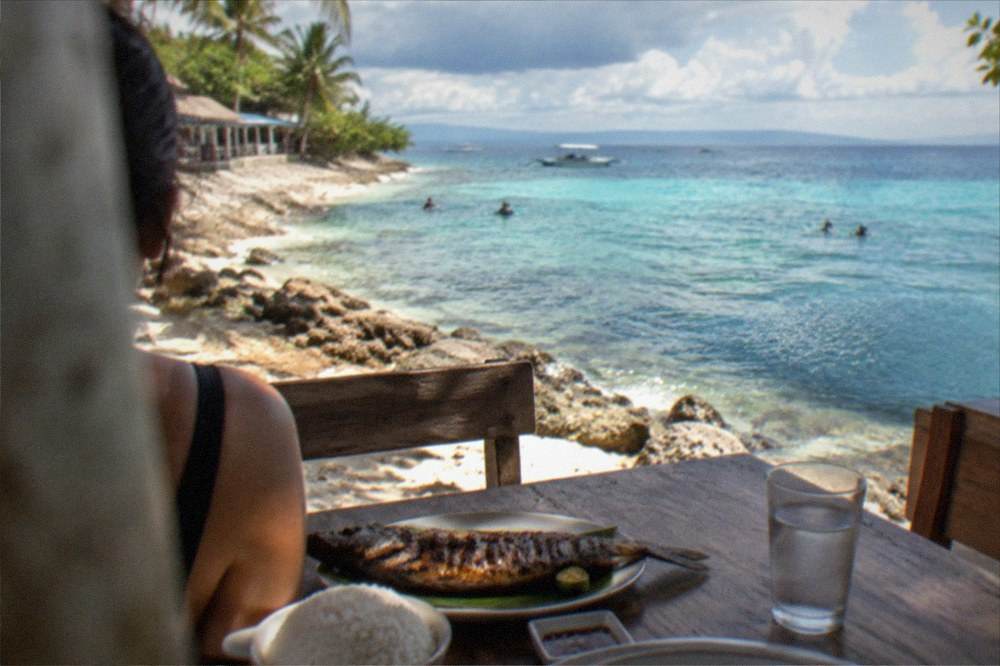
The town is one of Cebu's better value bases. Meals at carinderias around the market and the Panagsama strip cost a fraction of Cebu City restaurant prices, and the headline attraction, the sardine run, needs nothing more than the user fee and a mask. The full cost picture for the province, including what budget and mid-range travellers should plan overall, is broken down in the Cebu budget and costs guide.
| Item | Typical cost (approx.) |
|---|---|
| Environmental user fee, swim/snorkel | P100 (about US$1.6) |
| Gear rental (mask, fins) | P150 (about US$2.4) to P250 (about US$4.0) |
| Kawasan Level 1 entrance | P200 (about US$3.2) |
| Canyoneering package with guide | P1,500 (about US$24) to P2,000 (about US$32) |
| Pescador sanctuary fee per dive | P100 (about US$1.6) |
| Osmeña Peak registration | P50 (about US$0.8) to P100 (about US$1.6) |
Fees are set by municipal ordinance and can change; the figures above reflect the 2021 ordinance rates and 2025-2026 local reports, and collection at the beach kiosks is not always consistent, so carry small notes.
Moalboal Or Oslob: Which Suits You Better?
Moalboal suits travellers who want a multi-day base with diving, beaches and canyoneering, while Oslob suits those making a single early-morning pilgrimage to swim with whale sharks before moving on; the two are three hours apart by road, and the classic south Cebu loop does both, but if you must choose one, Moalboal rewards a longer stay and Oslob rewards a tight schedule.
The whale shark interaction at Oslob runs from about 6 AM to noon, costs P1,000 (about US$15.9) for foreign visitors and P500 (about US$8.0) for Filipinos with boat and guide included, and sightings, while usually reliable, are genuinely not guaranteed: in late May 2026 the sharks were absent from the Tan-awan interaction area for roughly four days when the plankton moved. The ethics of the hand-feeding program are real and worth reading before you decide, which the whale shark ethics page does in full.
Moalboal's sardine run carries none of that controversy: it is a wild resident school, you swim alongside rather than in a feeding interaction, and the town around it supports several days of activity. The trade-off is distance, since Moalboal sits at the end of a three-hour bus ride while Oslob is on the same highway with more tour transport options from Cebu City.
The question of where to sleep on a south Cebu trip is argued out on the Moalboal or Oslob stay page, and the broader choice between basing in Cebu City or heading straight to the coast is covered at stay in Cebu or Moalboal.
Is Moalboal Town Safe For Tourists?
Moalboal is a low-risk, laid-back destination where the main hazards are environmental rather than criminal: rough seas on Pescador trips, flash conditions in the canyoneering gorge after rain, and sun exposure on long boat days, so book with accredited operators, respect canyoneering suspensions and carry reef-safe protection. The national advisories for the Philippines, including the US State Department's Level 2 and the UK FCDO guidance, carry no Cebu-specific warnings, and the advisory picture for the province is summarised in the Cebu safety guide.
The practical rules are simple. Swim the sardine run in the morning when boats are fewer and the water calmer. Only canyoneer with Badian-accredited guides, who operate under the municipal ordinance governing the route, and never enter the gorge if operators have suspended trips after rain, the rockfall of October 2025 that briefly closed the activity is the standing example of why. On Pescador, stay with your guide inside sanctuary zones.
Medical facilities in Moalboal town are basic; anything serious means the trip back to Cebu City, another reason travel insurance that covers diving and canyoneering is worth having before you leave home.
Evenings in Moalboal are quiet by design, and travellers who want a show or a theme-park day usually save those for the Cebu City or Mactan end of the trip, before or after the bus ride south.
Common Questions About Moalboal Town Cebu
How far is Moalboal from Cebu City?
By road it is roughly 85 kilometres, and Ceres buses from Cebu South Bus Terminal take about two and a half to three and a half hours depending on traffic and the class of bus, with fares around P120 to P210 (about US$2-3).
Can you swim with the sardines without diving experience?
Yes. The sardine run at Panagsama is a snorkelling activity from the surface in shallow water, a few metres from shore, and no certification is needed, only the P100 (about US$1.60) environmental user fee and basic swimming confidence.
Is the Moalboal sardine run seasonal?
No. The school is a permanent resident population off Panagsama Beach, present year round weather permitting, which is what makes Moalboal different from seasonal wildlife interactions elsewhere in the Philippines.
Which is better, Moalboal or Oslob?
Moalboal is better for a multi-day base with diving, beaches and canyoneering; Oslob is better for a single-morning whale shark trip from Cebu City. Many travellers do both on one south Cebu loop.
Do you need a guide for Kawasan Falls?
For the Level 1 basin, no: independent visitors pay the about P200 (about US$3.2) entrance and walk in. For canyoneering, yes: the Badian route is LGU-regulated, guides are mandatory, and only the accredited packages running roughly P1,500 (about US$24) to P2,000 (about US$32) include the required gear, fees and insurance framework.
Is there a beach at Moalboal town itself?
The town proper is inland on the highway. The tourist shore is at Panagsama, which is rocky, and the sand beach is Basdaku (White Beach), a short tricycle ride north, so pick your base according to whether you want sand or snorkelling on your doorstep.
Plan the rest of your trip with Cebu Travel Guide, from the things to do in Cebu hub to the itineraries that fold Moalboal into a longer south coast route.