What Is The Underrated Beach In Cebu?
The underrated beach in Cebu, Philippines is Bantayan Island: why it stays quiet, what it costs, how to plan a trip and which other Cebu beaches fly under the radar.
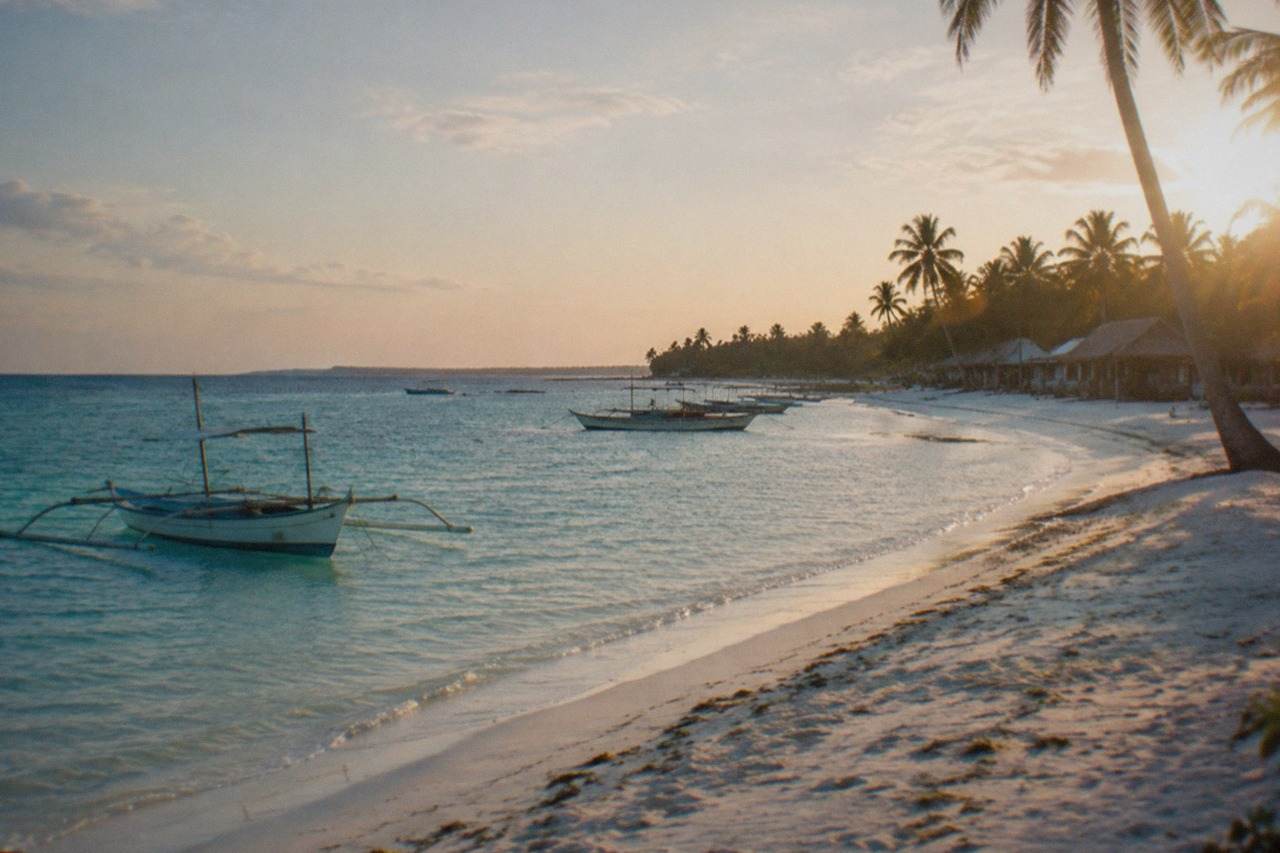
Bantayan Island, off the north coast of Cebu Province in the Central Visayas region of the Philippines, is the beach that many travelers to Cebu never reach, and that is precisely its charm. While the crowds funnel south to Oslob and the whale sharks or stay put on the resort beaches of Mactan, Bantayan keeps the wide, white sand and shallow turquoise water that first made Cebu famous, at a fraction of the foot traffic. The island was back on its feet and officially open to tourists within weeks of the September 2025 earthquake that hit northern Cebu, and its fees remain among the smallest you will pay anywhere in the province.
What Is The Underrated Beach In Cebu?
The underrated beach in Cebu is Bantayan Island, specifically the stretch of Santa Fe on its southern coast, where wide white sand meets calm, shallow water and the crowds have never arrived. Arriving costs a terminal fee of P25 (about US$0.40) at Hagnaya and an ecological fee of P30 (about US$0.50) on arrival in Santa Fe, among the lowest beach fees in the province. The island sits off Cebu's north coast and stayed officially open to tourists after the September 2025 earthquake.
Why does Bantayan stay quiet when it has the sand? Distance is the honest answer. The island sits at the far north end of Cebu, and every visitor has to commit a chunk of a day to getting there. That filter is exactly what protects it. The travelers who do make the trip are rewarded with a shoreline that locals compare favorably to the country's famous beach destinations, without the wall-to-wall sun loungers.
Santa Fe is the beach municipality, and its arrival fee is genuinely small: P30 (about US$0.5) per person, collected on arrival. Add the Hagnaya terminal fee of P25 (about US$0.4) and your total island overhead is less than the price of a bottled water in most hotel minibars. Compare that with the P1,000 (about US$16) environmental fee a foreign visitor pays to swim with the whale sharks at Oslob, and the economics of an underrated beach start to look very good indeed.
The Department of Tourism cleared Bantayan for visitors in late October 2025, a month after the M6.9 earthquake off northern Cebu, noting that the Santa Fe port was fully operational. The quake did leave a mark on the island's heritage: the coral-stone Sts. Peter and Paul Parish church, dating from 1863, suffered facade damage. The beaches themselves were untouched, and by spring 2026 local reporting described steady visitor numbers returning.
Why Bantayan Stays Under The Radar
Bantayan stays under the radar because it sits at the far north of Cebu Island, roughly half a day of travel from Cebu City, and Cebu's biggest draws all pull in the opposite direction. Oslob, Kawasan Falls and Moalboal are south, Mactan's resorts are minutes from the airport, and Bantayan simply loses the argument for anyone on a tight schedule. The island also lacks a single famous attraction, so it never trends.
The geography of Cebu's tourism is lopsided, and that is worth understanding before you plan. The province's headline experiences, whale sharks in Oslob, canyoneering at Kawasan Falls, the sardine run at Moalboal, all sit on the south coast, a few hours from the city by bus or tour van. Mactan, right beside the airport, absorbs everyone who wants a beach without a journey. That leaves the north as Cebu's quiet half, and Bantayan as its quietest reachable corner.
There is a second, quieter reason the island stays underrated: it has no single postcard moment. There is no whale shark, no waterfall, no thresher shark dive. What Bantayan offers is the beach itself, long, walkable, calm and largely empty, plus an island rhythm built around fishing rather than tourism. Travelers chasing highlights scroll past it. Travelers chasing stillness end up staying a week.
That is not to say the island is difficult. It is simply honest about what it asks: a ferry crossing and a willingness to slow down. If your Cebu trip is short, the best month to visit Cebu matters more than the itinerary, because Bantayan's shallow water and flat sand are at their best in the dry season from December to May.
If your Cebu plan pairs the beaches with the city, this trio covers the urban side of the trip well:
What A Bantayan Beach Day Actually Costs
A Bantayan beach day costs almost nothing in official fees: P25 (about US$0.40) for the Hagnaya terminal and P30 (about US$0.50) for the Santa Fe ecological fee, both per person, plus whatever you spend on food, a tricycle and accommodation. There is no entrance gate on the main beaches of Santa Fe, so the sand itself is free. Realistically, fees are the smallest line in any Bantayan budget.
The island's fee structure is refreshingly short. Here is what the fees look like:
| Fee | Amount | When you pay it |
|---|---|---|
| Hagnaya terminal fee | P25 (about US$0.4) per person | At the port before the crossing |
| Santa Fe ecological fee | P30 (about US$0.5) per person | On arrival at the island |
| Main Santa Fe beaches | Free | No gate, no ticket |
Everything beyond those fees is your own choice: a tricycle between the port and your guesthouse, a plate of fresh fish, a night in a beachfront cottage. The island has long attracted budget travelers precisely because the mandatory costs are close to zero, and because its fishing economy means seafood is local and cheap rather than imported and marked up.
For comparison, Cebu's headline marine fees run much higher. The Oslob whale shark interaction charges foreign tourists P1,000 (about US$16) per person for roughly thirty minutes in the water. Moalboal charges P100 (about US$1.6) as an environmental user fee to swim or snorkel off Panagsama. Sumilon Island, the small sanctuary island off Oslob, sells day access through the Bluewater resort, which offers weekday group rates for guests. Bantayan delivers a comparable white sand experience for the price of a ferry terminal ticket.
One honest caveat: the September 2025 earthquake hit northern Cebu hardest, and Bantayan's tourism recovery took a real knock before bouncing back. The DOT's clearance in late October 2025 and the resumption of steady visitor flows by March 2026 mean the island is open and functioning, but it is worth checking current conditions close to your travel date, especially for anything beyond the beaches.
A city day before or after the ferry pairs nicely with the island, and the market walk below is the most Cebu way to spend it:
How To Get To Bantayan From Cebu City
Bantayan is reached by road north from Cebu City to Hagnaya port, then a ferry across to Santa Fe, with the terminal fee of P25 (about US$0.40) paid at Hagnaya and the ecological fee of P30 (about US$0.50) collected on the island side. The crossing is the only fixed cost in the journey; buses and ferries both run on local schedules that shift with demand and weather.
The route is simple even though it is long: north along the coastal road through towns like Danao and Bogo to Hagnaya at the tip of Cebu Island, then the short hop across to Santa Fe. The September 2025 earthquake was centered off Bogo, and recovery in that city was still described as slow eight months later, so the final stretch of the road trip passes through communities still rebuilding. Travelers report the route itself is open and functioning. The full index of guides sits on Cebu Travel Guide.
Because the island depends on a ferry, typhoon season matters more here than anywhere in the south. PAGASA's rule for the Philippines is a rainy season from June to November and a dry season from December to May, and coast guard suspensions during storms are a normal part of Visayas ferry life. If you travel between June and November, build a spare day into the plan. In the dry season the crossing is routine.
Where you base yourself shapes the whole trip. Many travelers split a Cebu stay between the city and the beach, and the question of where to stay for a beach trip in Cebu is worth settling before you book anything.
Thinking about your base before the ferry? This is the moment to lock in the city side of the trip:
Other Quiet Beaches In Cebu Worth The Trip
Bantayan is not the only underrated beach in Cebu Province: the Camotes Islands east of the city offer caves, a lake and quiet beaches on a full-day loop, and Olango Island beside Mactan pairs a wildlife sanctuary with empty sand. Sumilon Island off Oslob is a small, curated alternative. Each costs a different mix of time and fees, and none of them is crowded.
The Camotes Islands are the closest thing Cebu has to a second Bantayan: a low-key island group with caves, a lake and beaches, reached from the east coast. A full-day Camotes tour is one of the few organized ways to see them without renting transport, and it makes a genuinely underrated day out for travelers based in Cebu City.
Olango Island, a short hop from Mactan, is better known for its wildlife sanctuary than its sand. The sanctuary is a Ramsar site, designated in July 1994 as the first in the Philippines, covering some 5,800 hectares of intertidal flats that host over sixty migratory bird species between September and March. Entrance runs P100 (about US$1.6) for foreign visitors and P30 (about US$0.5) for Filipino adults. The beaches on its quiet side see a fraction of Mactan's traffic.
Sumilon Island, the small sanctuary island off Oslob, is the polished option: day use runs from 8:00 AM to 3:00 PM with boat transfers included, and the Bluewater resort's weekday group offer prices day access at a flat net rate per guest. It is not budget, but it is uncrowded by design, with a sandbar, a lagoon and a marine sanctuary in a package you can do in a day from the south coast.
For a broader comparison of the whole shoreline, the rundown of the nicest beach in Cebu covers the famous names too, and the best beach in south Cebu question settles the southern alternatives if Bantayan is too far for your dates.
Here is how the quiet options stack up on the figures the site has verified:
| Beach or island | Best for | Verified fee | Catch |
|---|---|---|---|
| Bantayan Island (Santa Fe) | Long empty white sand, slow island life | P25 (about US$0.4) terminal + P30 (about US$0.5) eco fee | Half a day of travel from Cebu City |
| Camotes Islands | Caves, lake and beaches in one loop | Tour-based, see the live listing | Full day committed |
| Olango Island | Birds, flats and quiet sand near Mactan | P100 (about US$1.6) foreigner, P30 (about US$0.5) Filipino | Sanctuary is the draw, not swimming |
| Sumilon Island | Curated sandbar and sanctuary day | P2,000 (about US$32) weekday day pass | Resort pricing, day use ends 3:00 PM |
When To Plan A Cebu Beach Trip
The best time for a Bantayan beach trip is the dry season from December to May, when PAGASA's rainfall at the Mactan station drops to its lowest, bottoming out at 48.1 mm in April. June through November is the rainy season, with October the wettest month at 194.8 mm, and ferry-dependent islands like Bantayan are the first place storm suspensions bite. Book dry season, and keep June trips flexible.
The rainfall pattern from PAGASA's 1991-2020 normals for Mactan tells the story plainly. The dry months, December through May, are also the months with the clearest water and the calmest crossings, which matters twice as much on an island you reach by ferry. April is the driest month on record at 48.1 mm; October is the wettest at 194.8 mm.
If your dates are fixed in the rainy season, the trip is still doable, but plan around two risks: typhoon-related ferry suspensions, which the coast guard imposes without apology, and murkier water after heavy rain. A flexible return day is the single best insurance. Travelers pairing the island with a south Cebu swing should also check the best month for whale sharks if that is on the list, since the two seasons do not perfectly overlap.
And if the whole question of Cebu's beaches has you reconsidering the budget, the honest answer on costs is in is Cebu expensive: the island fees above are the cheap end of a trip that scales up mainly through hotels and tours.
Wherever the itinerary lands, the city deserves at least a day, and these are the three easiest ways to spend it:
Common Questions About Underrated Beaches In Cebu
What is the underrated beach in Cebu?
Bantayan Island, and specifically the Santa Fe coastline, is Cebu's underrated beach: wide white sand, shallow calm water, and official fees of just P25 (about US$0.4) at the Hagnaya terminal plus P30 (about US$0.5) on arrival. It stays quiet because it sits at the far north of the province, half a day from Cebu City.
Is Bantayan Island open after the 2025 earthquake?
Yes. The Department of Tourism cleared Cebu for visitors in late October 2025 and named Bantayan Island and its Santa Fe port as open and operational. The island's 1863 coral-stone church suffered facade damage in the quake, but the beaches were unaffected and visitor numbers had recovered by March 2026.
How much does Bantayan Island cost to visit?
The mandatory fees are tiny: P25 (about US$0.4) per person at the Hagnaya terminal and P30 (about US$0.5) per person as the Santa Fe ecological fee. The main beaches have no entrance gate. Your real costs are the ferry, food, local transport and a place to stay.
What other quiet beaches are there in Cebu?
The Camotes Islands east of Cebu City offer caves, a lake and quiet beaches; Olango Island beside Mactan pairs a Ramsar bird sanctuary, P100 (about US$1.6) for foreign visitors, with largely empty sand; and Sumilon Island off Oslob sells a curated day pass with transfers and sanctuary access.
When should you visit Bantayan Island?
December to May, Cebu's dry season. PAGASA's Mactan normals show April as the driest month at 48.1 mm of rain and October as the wettest at 194.8 mm. Because Bantayan depends on a ferry, storm suspensions in the June to November rainy season are the main risk, so keep your dates flexible if you travel then.
The short version: if you want the beach that Cebu locals save for themselves, point north, pay your P25 (about US$0.4) at the Hagnaya terminal, and give Bantayan the two days it deserves.