Sumilon Island
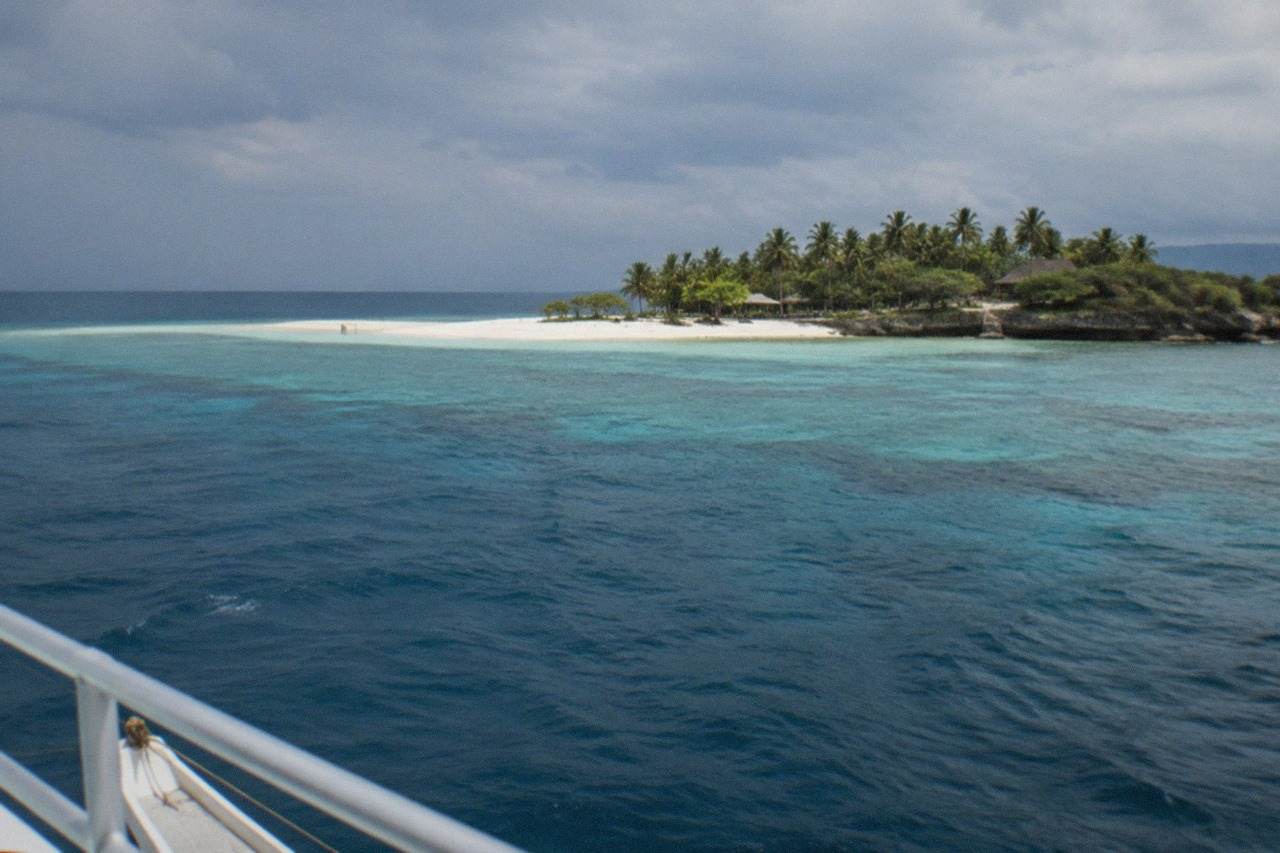
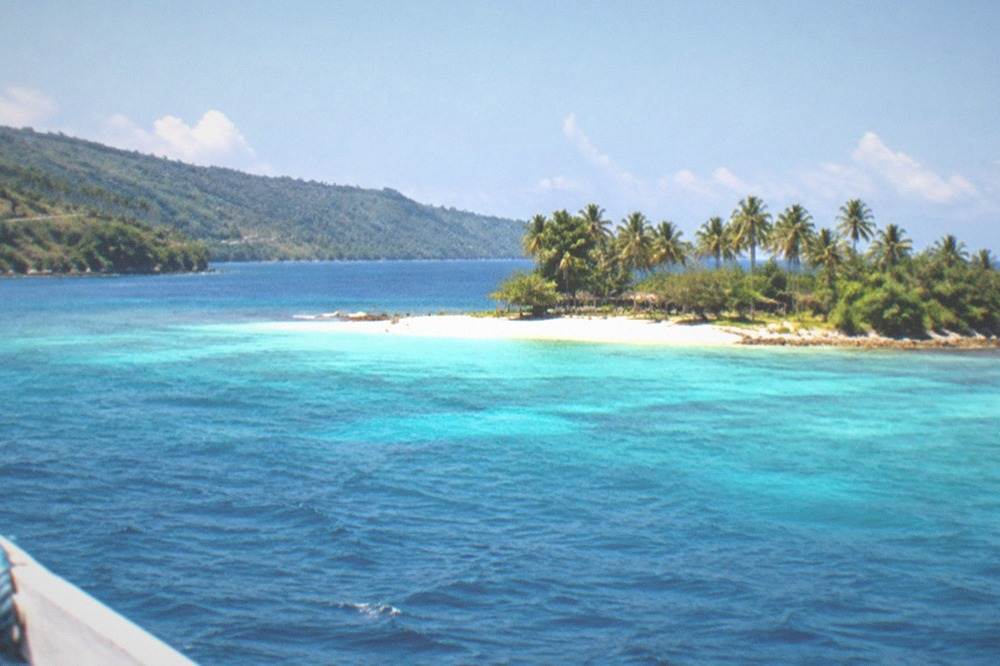
Sumilon sits off the coast of Oslob in southern Cebu, a small resort-managed coral island that day visitors can reach on a boat transfer and swim over a marine sanctuary.
Short answer
Sumilon Island is a small coral island off Oslob in southern Cebu, Philippines, managed as a resort and marine sanctuary. Day visitors buy a day pass from the resort that includes transfers, gear and access to the beach, pool and lagoon, and many combine it with whale shark watching in Oslob the same morning.
Sumilon Island is a small coral island off the coast of Oslob, at the southern end of Cebu province in the Central Visayas region of the Philippines, and it is one of the few Cebu islands that a visitor can experience as a day guest on a managed schedule rather than as an independent beachcomber. The island is best known for its white sandbar that shifts shape with the season, a marine sanctuary ring that holds fish and turtle life within swimming distance of the shore, and a single resort, Bluewater Sumilon, which controls access, sells the day passes and runs the boat transfers from the Oslob mainland.
That last detail matters more than most first-time visitors expect. Sumilon is not a public beach you can walk onto with a towel and a sandwich. It is a privately managed island where everything, the transfer, the gear, the lunch, the swim zones, runs through the resort's day pass system, and the resort's own offers page is the source for what is included and what it costs. This guide sets out what a day on Sumilon actually looks like, what the fees run, how the island fits with the whale shark interaction in nearby Tan-awan, and how to decide between Sumilon and the other island options around Cebu.
Where Is Sumilon Island And What Is It Known For?
Sumilon Island lies just off the coast of Oslob town in southern Cebu, opposite the Tan-awan barangay where the whale shark interaction area operates, and it is known for three things: a shifting white sandbar, a marine sanctuary where fish and turtles gather close to shore, and the fact that the whole island is managed as a single resort destination rather than a public beach. The operator's day-use window for boat transfers runs from 8:00 AM to 3:00 PM, which shapes every visit.
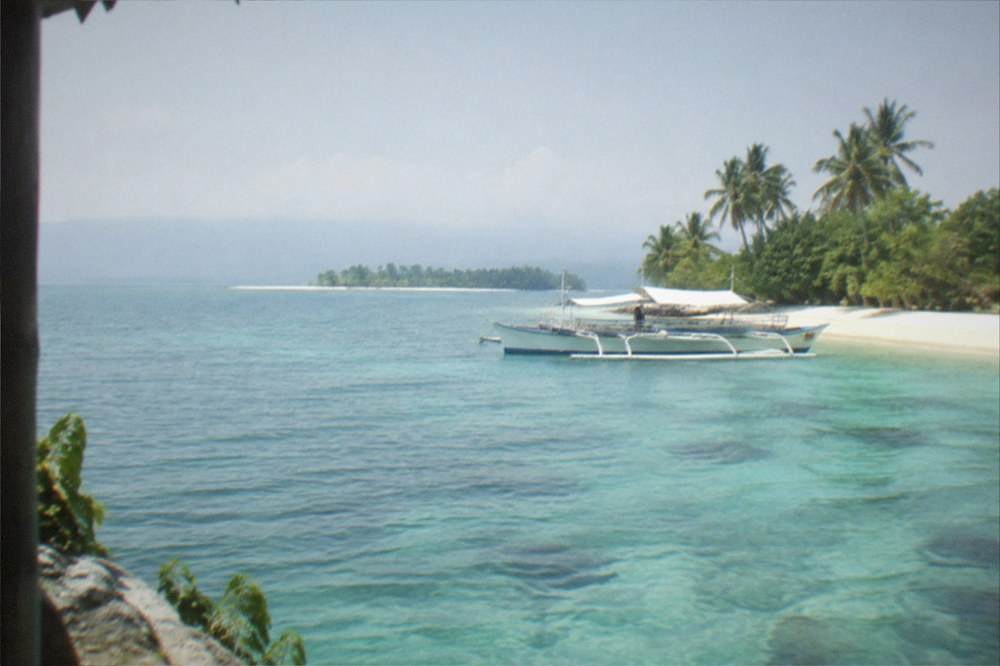
The geography is the island's biggest selling point. Because Sumilon sits so close to the Oslob mainland, the crossing is a short hop, which means a visitor who starts the morning with the whale sharks in Tan-awan can realistically be on Sumilon's sandbar by early afternoon, on the same day, without a second long drive. Unlike the sandbars of northern Cebu's Bantayan Island, Sumilon's sandbar sits inside a managed access system, so the experience is organised around the resort's transfer windows and day use hours.
The sandbar itself changes with the wind and the season. On some days it is a long narrow spit of white sand that seems to walk out into the sea; on others it is a rounded bank. Neither shape is guaranteed on any given date, and the resort's photography is taken on the good days, so visitors building an itinerary around a perfect sandbar photograph should build in some tolerance for what the tide and the weather actually deliver.
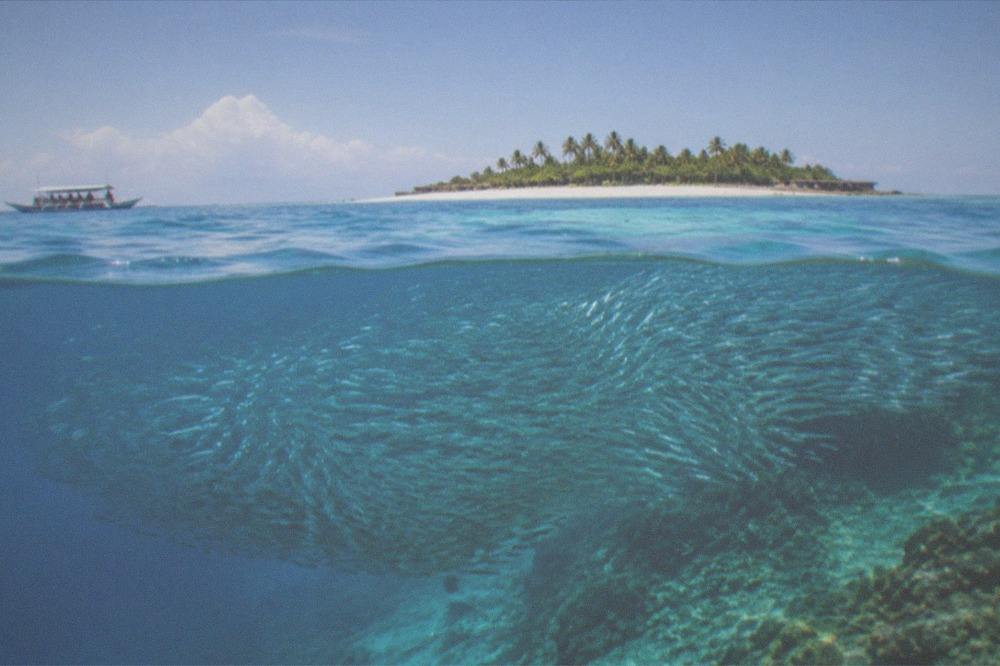
The marine sanctuary is the second draw. The reef ring around Sumilon has been managed as a sanctuary area for years, and the fish life inside it is noticeably denser than on unprotected reefs elsewhere in southern Cebu. Guided snorkeling inside the sanctuary runs on the resort's schedule, and the sanctuary rules, mooring rather than anchoring, no touching or standing on coral, are enforced by the resort's guides.
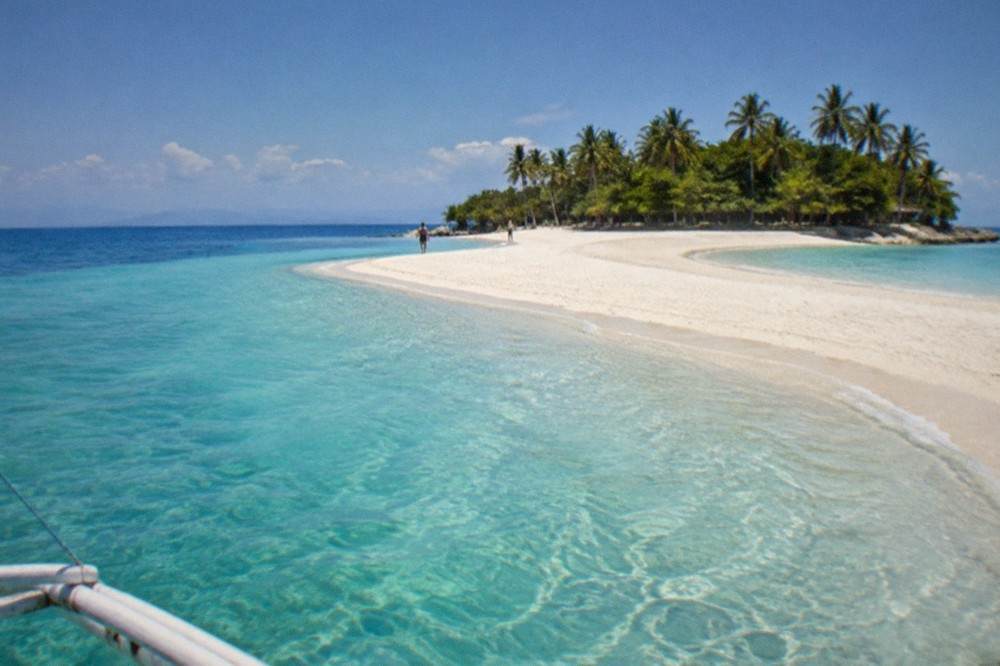
The third thing to know about Sumilon is what it is not. It is not a party island, it is not a backpacker base, and it is not the kind of place where you pitch a tent. There is one resort on the island, and if you are not staying overnight there, your visit is a day-use visit on the resort's terms. That structure is exactly what some travelers want: a controlled, easy, low-stress island day with gear and food handled. Travelers who want to wander, island-hop freely or keep costs minimal will be happier elsewhere in Cebu.
How Much Does A Sumilon Island Day Pass Cost?
A Sumilon Island day pass through the island's resort operator runs in the low thousands of pesos per person, and the weekday and weekend versions differ: weekday passes are generally consumable, meaning the amount is credited against food and drinks on the island, while weekend passes are built around a buffet with free-flowing drinks. Both versions cover boat transfers, snorkeling gear and access to the beach, pool and lagoon. The operator's own offers page is the source for the live price.
In published figures, the weekday day pass runs around P1,600 (about US$25) to P2,000 (about US$32) net per person, while the separate guided snorkeling inside the marine sanctuary adds roughly P250 (about US$4.0) to P440 (about US$7.0) per hour on top. The weekday-versus-weekend split is the detail that trips people up, so it deserves a plain explanation. A consumable pass means the peso amount you pay comes back to you as credit at the island's food and beverage outlets: you are paying for access, transfer and gear, then eating and drinking against the credit. The weekend buffet version trades that flexibility for volume, an all-you-can-eat spread with drinks included. Which one is better depends on how much you eat and how much you like being handed a plate rather than choosing one.
The resort also publishes a group offer, a 5+1 arrangement at P2,000 (about US$32) net per guest from Monday to Thursday, which the operator's offers page listed as valid until 15 October 2026. For a group of exactly the right size, that can undercut the regular arrangement, though the offer terms and validity window should be checked on the operator's page before counting on it.
| Day pass type | Rough cost per person | What it covers |
|---|---|---|
| Weekday day pass | P1,600 (about US$25) to P2,000 (about US$32) net | Transfers, gear, beach and pool access, consumable credit for food and drinks |
| Weekend day pass | P2,000 (about US$32) net area | Transfers, gear, beach and pool access, buffet and free-flowing drinks |
| Group offer, 5+1 | P2,000 (about US$32) net per guest | Monday to Thursday arrangement, listed valid to 15 Oct 2026 |
| Guided sanctuary snorkel | P250 (about US$4.0) to P440 (about US$7.0) per hour | Guided snorkeling inside the marine sanctuary |
Two cautions on those numbers. First, they are resort prices, and resort prices move: the figures above reflect the operator's published offers, and the live price on the day you book is the one that counts. Second, the day pass is not the only peso cost on a Sumilon day. If you come through Oslob, the whale shark interaction in Tan-awan carries its own municipal fee, P1,000 (about US$15.9) per foreign visitor and P500 (about US$8.0) per Filipino, set by the Oslob local government, and a side stop at Tumalog Falls adds roughly P50 (about US$0.8) per person. None of those are included in any Sumilon pass.
One more way to pay for the day exists, and for many visitors it is the cheapest in practice: booking a combined tour that bundles the whale sharks, Tumalog Falls and Sumilon into a single price from Cebu City. The tour roster below shows the joined product that does exactly this route; its price is unpublished by the operator, so the live listing is the only place to see it.
The combined-tour route deserves a sentence of honest comparison before you commit. A booked bundle buys convenience: one price, one pickup, one schedule, no negotiation at the Oslob wharf. Buying the pieces separately buys flexibility and sometimes a lower cash total, at the cost of standing in the whale shark registration line at dawn and arranging your own Sumilon transfer. Families and short-stay visitors tend to favor the bundle; slow travelers and tight budgets tend to piece it together.
What Can You Actually Do On Sumilon Island In One Day?
A one-day Sumilon visit is built around four activities: swimming and sunbathing on the shifting sandbar, guided snorkeling or diving inside the marine sanctuary where fish and turtle life concentrates near the drop-off, kayaking or paddleboarding across the calm lagoon inside the reef, and lounging at the resort's pool and beachfront areas. Lunch is eaten either from the weekday consumable credit or as the weekend buffet. The day-use transfer window opens at 8:00 AM and closes at 3:00 PM.
The sandbar is the first stop for almost everyone. At low tide it is a walkable strip of white sand with water on both sides, waist-deep and bathtub-warm, which makes it the safest swimming area on the island for children and nervous swimmers. Photographers should aim for mid-morning to early afternoon, when the sun is high enough to light the water on both sides of the strip, and should remember that the sandbar's shape is a weather product, not a fixed landmark.
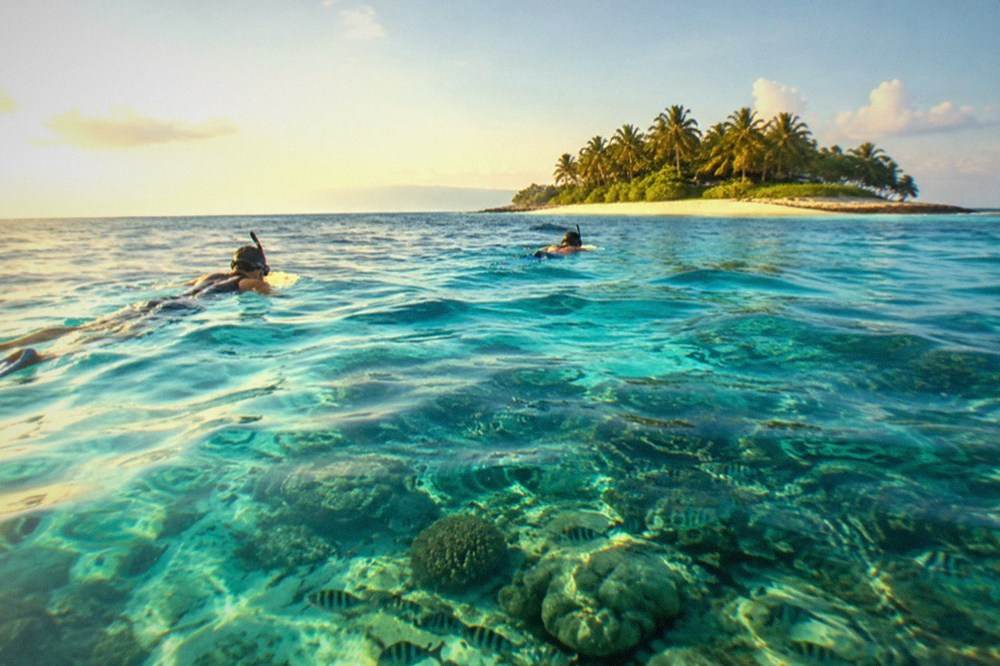
The sanctuary snorkel is the second activity and the reason many serious swimmers make the trip. The reef ring around Sumilon drops off on the outside into deeper water, and the fish life along that edge is the densest in the area: expect clouds of reef fish, the occasional turtle, and the kind of coral cover that comes from years of protected status. The guided snorkel runs about P250 (about US$4.0) to P440 (about US$7.0) per hour, and the guide's role is not decoration: sanctuary rules on where to swim, how to behave over coral and where the interesting animals are sitting that day are part of what the fee buys. Visitors who want more than the surface can arrange diving with the resort's dive operation, whose prices are not in the verified pack for this page and should be checked directly.
The lagoon activities fill the calm middle of the day. The inside of the reef ring is protected water, flat and shallow, which is where the kayaks and paddleboards live, and where the resort sets up its beach games. It is the part of the island that works best for families with small children, and for anyone whose open-water confidence is a work in progress.
| Activity on Sumilon | Where it happens | Who it suits | Extra cost beyond the day pass |
|---|---|---|---|
| Sandbar swimming | The shifting sandbar, best at low tide | Families, photographers, all swimmers | None |
| Guided sanctuary snorkel | The reef ring and drop-off | Confident swimmers | P250 (about US$4.0) to P440 (about US$7.0) per hour |
| Kayak or paddleboard | The protected lagoon | Beginners, children | Typically via the day pass gear access |
| Pool and beach lounging | The resort's beachfront areas | Everyone, all day | Covered by the pass |
| Weekend buffet lunch | The resort dining area | Weekend day guests | Included in weekend pass |
| Diving | Outside the reef ring | Certified divers | Not verified; arrange with the resort |
The day's rhythm is worth planning rather than drifting into. The whale shark interaction in Tan-awan runs in the morning, roughly 6 AM to noon with a registration cutoff that visitors should treat as mid-morning, so a same-day combination means an early start in Oslob, the whale shark session, then the Sumilon transfer while the afternoon transfer window is still open. The reverse order does not work: doing Sumilon first in the morning and the whale sharks after lunch means arriving in Tan-awan after the interaction area has wound down.
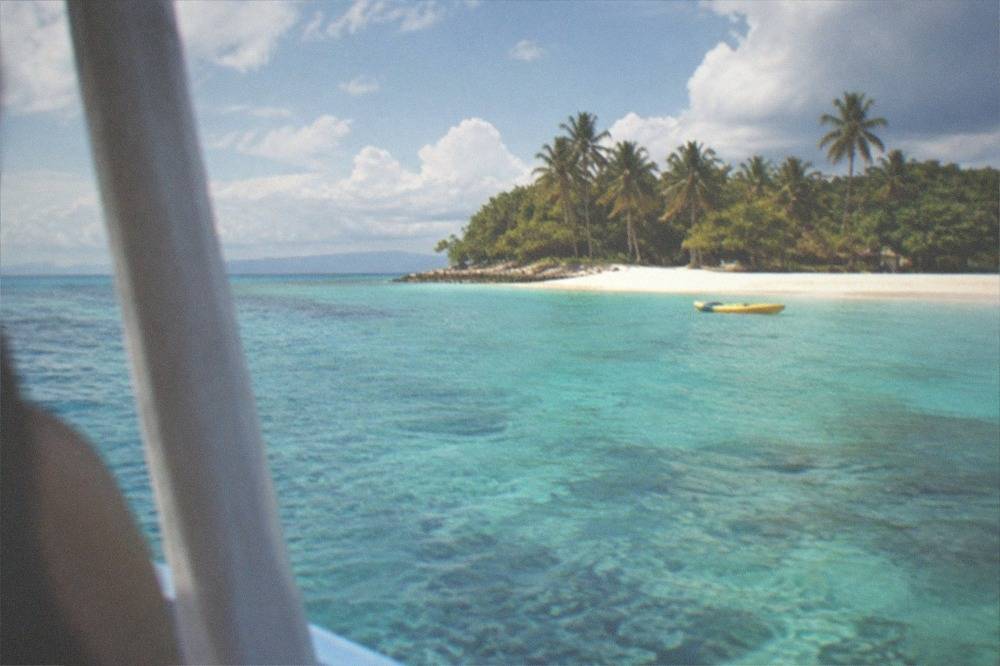
That combination day, whale sharks in the morning, Sumilon in the afternoon, is common enough that it has its own booked product on this site's roster. The listing below is the tour that runs exactly that route from Cebu City, with the falls stop included; its price is unpublished by the operator, so the live listing carries it.
If that combination day is the plan you are leaning toward, the box below puts the booking question in one place before the rest of the guide covers seasons and routes.
When Is The Best Time Of Year To Visit Sumilon Island?
The best months for a Sumilon Island day are the Cebu dry season stretch of December to May, when rain is lowest, seas are calmest and visibility over the reef is at its best, with March to May the most reliably sunny window before the June to November rainy season arrives.
Cebu's climate is tropical: the PAGASA national rule puts the rainy season from June to November and the dry season from December to May, and the Mactan station's annual mean is 28.1 C, so Sumilon is a year-round warm-water destination.
The monsoon shape matters for a boat-dependent day. Sumilon is reached by a short crossing from the Oslob mainland, and short crossings are cancellable: when a storm system or a sustained heavy rain period sits over the Visayas, operators suspend small-boat transfers, and a canceled transfer cancels the day. The June to November window carries that risk, with the peak typhoon threat to the Visayas roughly July to October and a high landfall risk into November and December.
| Month group | Season per PAGASA | What it means for a Sumilon day |
|---|---|---|
| December to February | Dry season, cooler stretch | Calm seas, clear water, busiest around holidays |
| March to May | Dry season, hottest stretch | Best visibility, highest sun, good sandbar light |
| June to August | Rainy season begins | Afternoon storms possible, transfers can pause |
| September to November | Rainy season peak | Highest typhoon risk, check advisories before booking |
Two calendar notes belong here even though they are not weather. The Oslob whale shark interaction runs year-round in the morning hours, but sightings are not guaranteed: in late May 2026 the sharks were absent from the Tan-awan interaction area for about four days when the plankton moved toward a neighboring barangay, and the local government clarified that operations follow the sightings. Anyone booking a combination day should know that the morning half of the day is wildlife-dependent while the afternoon half is not.
The second note is crowd timing. Weekends bring Filipino family groups to the Oslob coast in volume, and the weekend Sumilon pass is built around a buffet for a reason. Midweek days, Monday to Thursday, are quieter, cheaper in structure because of the consumable arrangement, and the only days the 5+1 group offer runs. Travelers with date flexibility should take the midweek option without much deliberation.
How Do You Get To Sumilon Island From Cebu City?
The standard route from Cebu City runs south to Oslob, roughly a three and a half to four and a half hour Ceres bus ride from the Cebu South Bus Terminal, followed by a short boat transfer to the island that runs through the resort's day-pass system rather than as a public ferry. Booked day tours from Cebu City cover the whole journey with hotel pickup, and for most short-stay visitors that is the practical option, since the independent route demands a pre-dawn start.
The independent route is real and saves money, but it demands commitment. The Ceres buses to the Bato via Oslob route run multiple times daily, with fares in the P145 (about US$2.3) to P250 (about US$4.0) range depending on the class of bus, and the ride puts you in Oslob town, from which Tan-awan, the whale shark area, is a short local hop by habal-habal motorcycle or tricycle. For Sumilon specifically, the transfer is arranged through the resort's own day-use system; independent walkers-up should not assume a public boat, and should confirm transfer arrangements with the resort before traveling down.
The timing logic of the independent route is unforgiving. The whale shark interaction area operates in the morning, and the practical cutoff for registering is before noon, with the best water earliest. A bus that leaves Cebu South Bus Terminal at 4 or 5 AM arrives in Oslob in time for a late-morning whale shark session and an afternoon Sumilon transfer inside the 3:00 PM closing window. A bus that leaves at 8 AM arrives too late for the sharks and turns the day into Sumilon only.
For travelers who prefer not to run that clock, the booked combination tours absorb the logistics. The listing below is the same-day route that bundles the whale sharks, Tumalog Falls and Sumilon from Cebu City; check the live listing for the current price and pickup details.
A note on staying near the route: an overnight in Oslob or the nearby coast turns the two-attraction sprint into two relaxed half-days, and the area around Tan-awan has a spread of small resorts and guesthouses aimed exactly at whale shark visitors. The trade is simple: two days of cost and time against no pre-dawn alarm and no transfer-window pressure.
Is Sumilon Island Worth It Compared With Other Cebu Island Trips?
Sumilon Island is worth its day pass for travelers who want a single managed island day with a marine sanctuary, a sandbar and all logistics handled, especially as an add-on to the Oslob whale shark morning, but it is not the best choice for variety seekers: the Mactan-based island hopping routes cover several sanctuary and beach stops in one booked day, and the Moalboal coast offers a shore-accessible sardine run with no resort pass at all. A week that already includes Oslob makes Sumilon the natural pairing.
The honest comparison is against the other ways to spend an island day in Cebu. The Mactan island hopping route from Lapu-Lapu City visits the Hilutungan and Nalusuan marine sanctuaries plus beach stops, in one packaged day, with lunch usually included; its Lapu-Lapu environmental fee for island hopping is P100 (about US$1.6) for foreign visitors, with sanctuary fees of roughly P150 (about US$2.4) to P300 (about US$4.8) per person at the islands, on top of whatever the boat and package cost. That route trades Sumilon's single-island depth for variety and a shorter transit from the city.
For travelers weighing that Mactan route seriously, the picked product below is the Rakso-run hopping day trip that covers the city-side islands in one booked outing; its live listing carries the current price.
The Moalboal sardine run is the budget traveler's counter-argument: a permanent school of sardines that lives a few meters off Panagsama Beach, reachable from the shore with a P100 (about US$1.6) environmental user fee to enter the water, no boat and no resort pass required. Pair that with the canyoneering routes at Kawasan and the Moalboal coast makes a strong two-day southern Cebu alternative to the Oslob-Sumilon pairing, especially for travelers who dive or snorkel seriously.
| Island day option in Cebu | Main draw | Transit from Cebu City | Access structure |
|---|---|---|---|
| Sumilon Island | Managed sanctuary, sandbar, resort day use | Long south transit via Oslob | Resort day pass with transfers |
| Mactan island hopping (Lapu-Lapu) | Multiple sanctuaries and beach stops in one day | Short, from Lapu-Lapu | Booked boat packages plus fees |
| Moalboal coast | Shore-accessible sardine run, nearby falls | South transit to Moalboal | Public beaches plus environmental fees |
| Bantayan or Malapascua | Open beaches, laid-back island stays | Longest transits, north Cebu | Independent travel plus small local fees |
For whale-shark-centered itineraries, the pairing logic is hard to beat. The Oslob interaction, Tumalog Falls and Sumilon sit within a few kilometers of each other along the same southern coast, and the combined tour route covers all three from Cebu City with hotel pickup; the listing's price is unpublished by the operator, so the live page is the source. A second strong southern-Cebu option is the Kawasan canyoneering route from Moalboal with lunch included, picked below for travelers comparing the two southern itineraries; its price sits on the live listing rather than here.
Travelers with a full week rather than three days should also look north: Bantayan Island and Malapascua offer the open, independent island experience that Sumilon deliberately does not, and a combined southern-and-northern itinerary is the classic Cebu first-visit structure.
What Should You Know Before You Book A Sumilon Island Day?
Before booking a Sumilon Island day, know five things: the day pass is a resort product priced on the operator's live offers page, the transfer window closes at 3:00 PM which forces an early start on the Oslob route, the whale shark half of a combination morning is sightings-dependent, sanctuary snorkeling runs on a guided hourly basis rather than free roaming, and the June to November rainy season can pause small-boat transfers entirely.
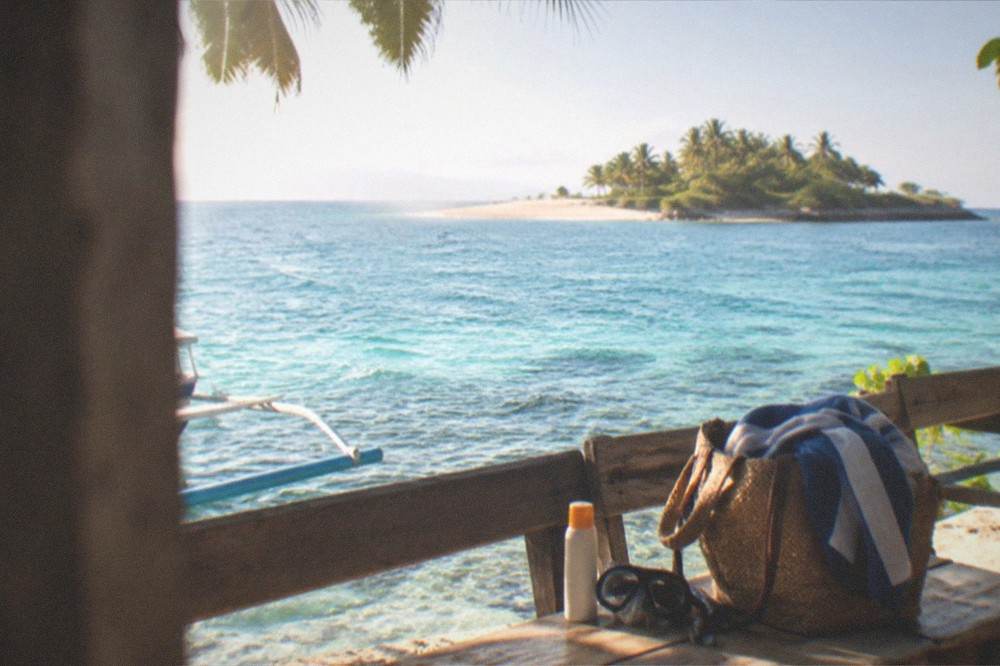
Packing for the day is simple but specific. Reef-safe sun protection matters because ordinary sunscreen is discouraged or banned in sanctuary waters across the Oslob coast, a rule the whale shark area enforces explicitly with its no-sunscreen policy for the interaction itself. Bring cash: the resort transactions and the Oslob municipal fees are peso-denominated, the environmental and sanctuary fees along this coast are collected in cash, and assuming card payment anywhere south of the city is a mistake.
Ethics deserves a paragraph here too. The whale shark feeding program in Oslob is a regulated lure-feeding operation run by licensed spotters under municipal rules, and the debate around it is genuine: critics argue the practice alters natural behavior, defenders note the municipal framework, the distance rules and the local livelihoods it sustains. This site covers the question in detail on the whale shark ethics page; visitors pairing the sharks with Sumilon should read it and decide with their eyes open rather than by default. Sumilon itself carries no equivalent controversy: its sanctuary is a conventional no-take protected reef, and the main footprint question is ordinary reef etiquette.
For planning a whole Cebu stay around this southern day, the broader Cebu Travel Guide hub and the 3 days in Cebu itinerary lay out how the Oslob-Sumilon route fits with the city heritage stops, Magellan's Cross and the Basilica del Santo Niño, plus the highland lookouts like Tops, in a realistic first-visit week.
Common Questions About Sumilon Island
Can you visit Sumilon Island without staying at the resort?
Yes. Sumilon is managed by a single resort, but the resort sells day passes that cover boat transfers, gear and access to the beach, pool and lagoon areas, with day-use transfers running in a window that opens 8:00 AM and closes 3:00 PM. Overnight stays are a separate product; a day pass is the standard way for non-guests to see the island.
How much does a Sumilon Island day pass cost?
The resort operator's published offers put the day pass in the range of P1,600 (about US$25) to P2,000 (about US$32) net per person: weekday passes are generally consumable against food and drinks, weekend passes are built around a buffet with free-flowing drinks, and both include transfers, gear and access. The operator's own offers page is the source for the live price and terms.
Can you combine Sumilon Island with the Oslob whale sharks in one day?
Yes, and it is the most common way to do both. The whale shark interaction in Tan-awan runs in the morning, Sumilon's transfer window runs into mid-afternoon, and the two sites sit on the same short stretch of Oslob coast. Booked combination tours from Cebu City run exactly this route, adding Tumalog Falls between them.
Is snorkeling on Sumilon Island good?
The reef ring around Sumilon is a managed marine sanctuary, and the fish life along its drop-off is among the densest in southern Cebu, with turtles seen regularly. Guided snorkeling inside the sanctuary runs about P250 (about US$4.0) to P440 (about US$7.0) per hour, and diving can be arranged with the resort's dive operation.
When is the best time to visit Sumilon Island?
The Cebu dry season from December to May is the best window, with March to May the most reliably sunny stretch for sandbar light and water visibility. The June to November rainy season brings a real chance of paused small-boat transfers, and the peak typhoon threat to the Visayas runs roughly July to October, so dry-season booking is the lower-risk plan.
How do you get to Sumilon Island from Cebu City?
Independently, take a Ceres bus from the Cebu South Bus Terminal on the Bato via Oslob route, a ride of roughly three and a half to four and a half hours, then arrange the boat transfer through the resort's day-use system. Booked day tours from Cebu City cover the journey with hotel pickup, and for most short-stay visitors that is the practical choice given the early start the whale shark window demands.