How Much Is Whale Shark Watching In Oslob In 2025?
Oslob whale shark watching in Cebu, Philippines costs P1,000 (about US$15.9) for foreign visitors and P500 (about US$8.0) for locals in 2025, boat and guide included. Here is the full fee breakdown and what to budget for.
Oslob, a small municipality on the southeast coast of Cebu island in the Central Visayas region of the Philippines, runs its whale shark interaction as a locally regulated operation, and the price of getting in the water is set by municipal ordinance rather than by private operators. That matters for anyone budgeting a trip, because the figure you pay at the briefing center in Tan-awan is the same whether you arrive on an organized day tour or make your own way down the coast. What changes is everything around it: transport from Cebu City, optional side trips such as Tumalog Falls, and whether a tour operator has already folded the municipal fee into a package price. This site, Cebu Travel Guide, tracks the verified numbers below.
How Much Is Whale Shark Watching In Oslob In 2025?
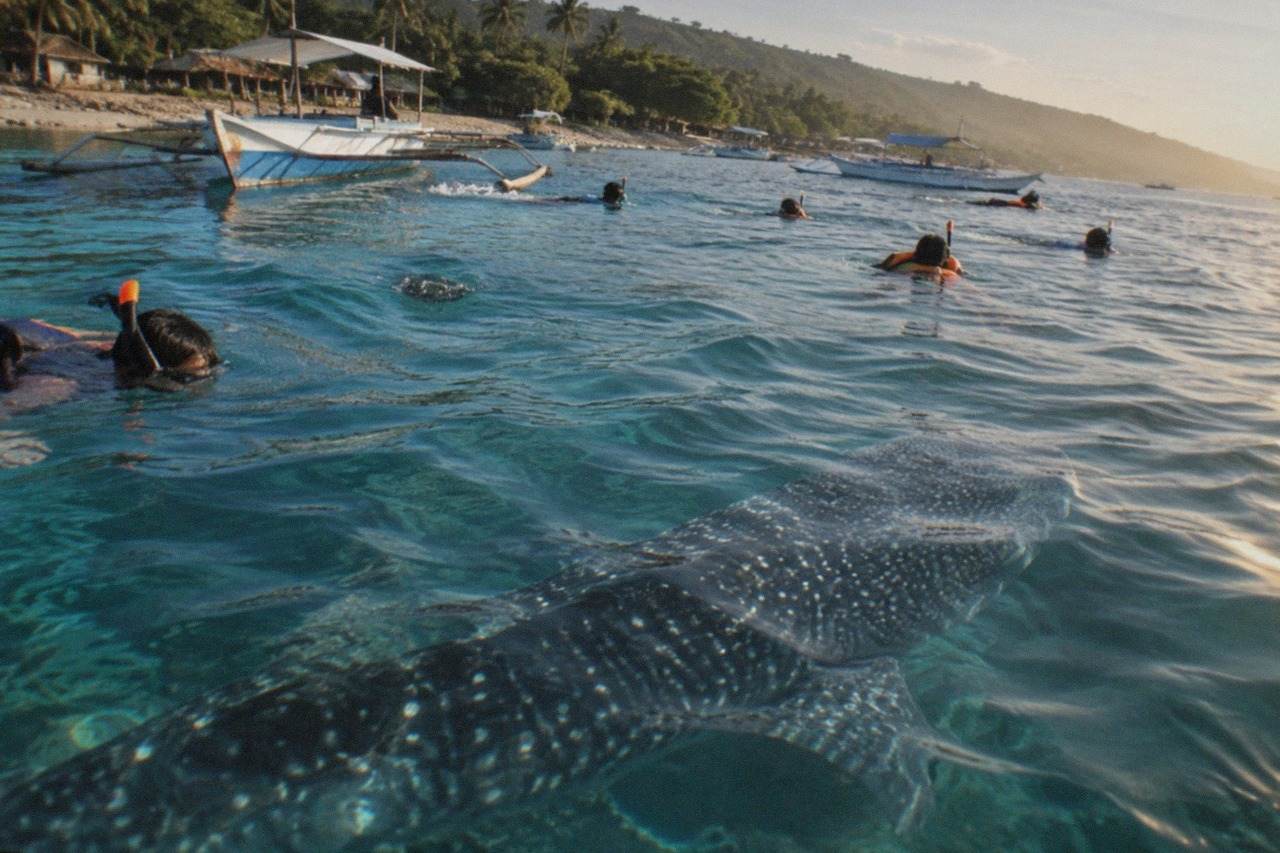
Whale shark watching in Oslob in 2025 costs P1,000 (about US$15.9) per foreign tourist and P500 (about US$8.0) per Filipino visitor, with the boat and a guide included, under the rates the Oslob municipal government reverted to on 21 March 2025 under Municipal Ordinance No. 010, series of 2020.
The session runs for a stretch in the water, the interaction area operates from about 6 AM to 12 PM, and the fee is paid at the LGU registration center in Tan-awan, not to any private company.
Those two tiered rates are the headline numbers, and they are worth understanding before anything else. In early 2025 Oslob charged different, higher figures for a period, then the municipal government formally reverted to the Ordinance 010 rates with an announcement that took effect on 21 March 2025, restoring the P1,000 (about US$15.9) foreign and P500 (about US$8.0) local price points. The Oslob Tourism Office published the reversion on its official channels, and regional press confirmed it. So a page you may have read from 2024 or early 2025 quoting a different figure is describing a window that has since closed.
What the fee buys is specific. It covers the mandatory briefing, a spot on a paddle boat with a licensed boatman, a guide in the water, and roughly half an hour of snorkeling near the feeding area off Tan-awan. It does not cover snorkel gear rental beyond what the basic setup provides, a second session if you want to go back in, or scuba diving, which is priced separately and can add a few hundred pesos on top. Watching from the boat without swimming is also a distinct, cheaper option at the same registration center, priced below the in-water rates.
The fee structure at a glance:
| Item | Foreign tourist | Filipino visitor | Notes |
|---|---|---|---|
| Whale shark watching fee (2025 rates) | P1,000 (about US$15.9) | P500 (about US$8.0) | Boat, guide and briefing included; reverted 21 March 2025 |
| Approximate session length | ~30 minutes | ~30 minutes | Extra fee for a second session |
| Operating hours | ~6 AM to 12 PM | ~6 AM to 12 PM | Registration cutoff around 11 AM |
| Scuba diving upgrade | Additional fee | Additional fee | Priced separately at the center |
One more thing the fee does not buy: a guarantee. Whale sharks are wild animals, and in late May 2026 they were absent from the Tan-awan interaction area for about four days when the plankton they follow drifted toward a neighboring barangay. The municipal government kept operations formally open and resumed normal sessions once the sharks returned, but the episode is a useful reminder that the fee is for access and handling, not for a sighting. More on that in the whale shark sightings question.
What Does The Oslob Fee Actually Include?
The P1,000 (about US$15.9) foreign and P500 (about US$8.0) local fees include the mandatory pre-swim briefing, a paddle boat with a licensed boatman, an in-water guide, and a set period of snorkeling in the interaction zone, all regulated by the Oslob municipal government. They do not include transport to Oslob, snorkel gear upgrades, a second session, food, or side trips such as Tumalog Falls, each of which is priced separately.
The briefing is not a formality. Oslob's rules are enforced on the water: swimmers must stay about four meters from the shark's body and about five meters from its tail, touching is prohibited, sunscreen is banned because it harms the animals, flash photography is banned, and life jackets are mandatory for swimmers. Only licensed spotters employed by the operation may feed the sharks, a practice the municipal government has publicly defended as a minor lure rather than the animals' primary food source. The rules exist because the sharks gather at Tan-awan largely due to that regulated feeding, which is also why the ethics of the experience get debated. The whale shark ethics guide covers that debate in full, and the Oslob whale sharks attraction page has the practical details.
Around the core fee, a typical day builds up a handful of smaller charges. Tumalog Falls, the turquoise cascade a short drive inland that, for most visitors, is paired with the swim, charges an entrance fee of about P50 (about US$0.8), and the motorbike shuttle between Tan-awan and the falls trailhead runs about P50 (about US$0.8) to P100 (about US$1.6) each way. None of these are collected at the whale shark center, so it pays to carry small bills.
| Add-on around Oslob | Typical cost | Paid where |
|---|---|---|
| Tumalog Falls entrance | About P50 (about US$0.8) | Falls registration point |
| Motorbike shuttle to Tumalog | About P50 (about US$0.8) to P100 (about US$1.6) each way | Direct to the driver |
| Second whale shark session | Extra fee at the center | Tan-awan registration |
| Snorkel gear beyond the basic setup | Small rental fee | Tan-awan rental counters |
If you are weighing the experience itself rather than just the price, the is snorkeling with whale sharks worth it question gathers what past visitors say, and the Oslob worth visiting question looks at whether the town earns its place on a Cebu itinerary at all.
How Much Does An Oslob Day Tour From Cebu City Cost?
An organized Oslob day tour from Cebu City bundles the municipal whale shark fee with early-morning transport, a guide and usually a Tumalog Falls stop, and the join-in tour this site tracks does not publish its price on the operator's live listing, so the figure to check is the tour's own page rather than any number quoted secondhand. The tour is rated 4 from 257 reviews and runs as a full day with an early departure.
The reason to check the listing rather than a blog figure is that tour pricing moves with fuel costs and season, and the municipal fee reversion in March 2025 changed what operators had to pass through. The join-in tour from Cebu City is the most popular format: a coach or van leaves Cebu City in the small hours, arrives at Tan-awan before the crowds, handles the registration and briefing for the group, then continues to Tumalog Falls before returning north. Its current price is not published by the operator, so treat any number you see quoted elsewhere with suspicion and check the live listing instead.
The tour's page also carries an inline booking link: Check availability. Booking the tour rather than going independently makes most sense for visitors staying in Cebu City or Mactan without a rental car, since the drive to Oslob is roughly three and a half to four and a half hours each way and the interaction area effectively closes at noon. The Oslob day trip planner walks through the full independent alternative, including bus routes from the Cebu South Bus Terminal.
What Rules Come With The Oslob Fee?
Paying the Oslob fee commits you to the municipal rules: a mandatory briefing before boarding, a minimum distance of about four meters from the shark's body and five meters from its tail, no touching, no sunscreen, no flash photography, mandatory life jackets, and only licensed spotters feeding the sharks. Violations can end your session on the spot, and the rules are enforced by the guides in the water.
The sunscreen rule catches the most people by surprise. Reef-safe or not, all sunblock is banned in the interaction zone because the sharks ingest it at the surface; the practical workaround is to apply it well before arriving and to wear a rash guard for sun protection instead. The no-touching rule is enforced physically, with guides positioning swimmers away from the animals, and the distance rules exist because whale sharks are filter feeders that swim close to the surface and are easily disturbed by contact.
The session structure is also fixed by the LGU. Each swimmer gets a set stretch of time in the water with the boat and guide, and a second session costs an additional fee at the same center. Hours run from about 6 AM to 12 PM daily with registration closing around 11 AM, and the whole operation is sightings-dependent: the sharks are resident but not captive, and as the four-day absence in May 2026 showed, the municipality pauses the activity rather than running empty boats. Whether the experience sits right with you ethically is a fair question, and the are Oslob whale sharks ethical question addresses it head on.
When Is The Best Time Of Year For Whale Shark Watching In Oslob?
Whale sharks are present at Oslob year-round, which is what makes the town unusual among whale shark sites worldwide, but the best conditions come in the dry season from December to May, when seas are calmer, visibility is better and the roughly 6 AM to 12 PM operating window is least likely to be disrupted by rain. The busiest single week is around Sinulog in January, when the whale shark center shares the island with festival crowds.
Cebu's climate follows the national Philippine pattern: a dry season from December to May and a rainy season from June to November, with the Mactan station's 1991-2020 normals showing 1,685.0 mm of rain spread over 138 rain days a year and a mean temperature of 28.1 C. Oslob sits on the island's southeast coast and gets the same regime. The sharks themselves do not migrate away, because the regulated feeding keeps a resident population at Tan-awan, so a rainy-season visit is entirely possible, just with choppier water and a higher chance of a weather-related pause.
Within any given day, earlier is better. The center opens around 6 AM, the sharks are typically most active feeding in the morning, and the queue at the briefing area builds through mid-morning as the day tours from Cebu City arrive. A visit in the first hour of operations usually means calmer water, fewer boats and a longer effective session.
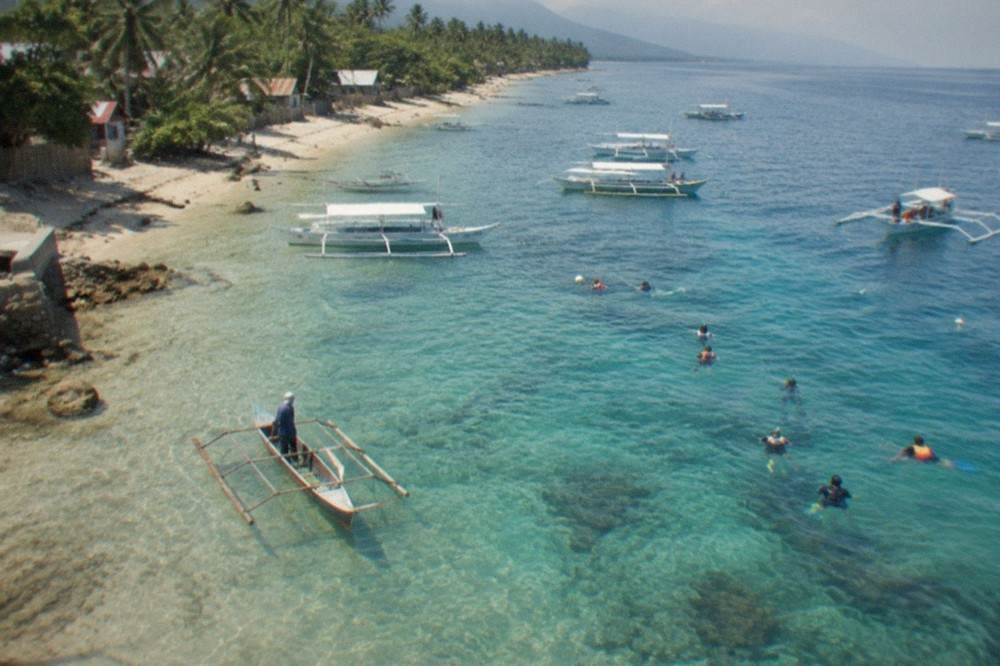
If you are still shaping the wider trip, the Oslob or Moalboal comparison helps decide whether to base yourself in the south, and the best place in the world for whale sharks question puts Oslob alongside the other major sites.
Common Questions About Whale Shark Watching In Oslob
How much is whale shark watching in Oslob in 2025?
The official municipal fee is P1,000 (about US$15.9) per foreign tourist and P500 (about US$8.0) per Filipino visitor, effective 21 March 2025, with the boat, guide and briefing included. The session lasts about 30 minutes and the interaction area operates from about 6 AM to 12 PM.
Is the Oslob whale shark fee the same for everyone?
No. The fee is tiered by nationality: P1,000 (about US$15.9) for foreign passport holders and P500 (about US$8.0) for Filipinos, under Municipal Ordinance No. 010, series of 2020, which the Oslob LGU reverted to on 21 March 2025. Boat-only watching without swimming is priced separately and cheaper at the same registration center.
Does the Oslob fee guarantee I will see a whale shark?
No. The sharks are wild and resident, not captive. In late May 2026 they were absent from the Tan-awan interaction area for about four days when the plankton they follow drifted elsewhere, and operations paused until they returned. The fee covers access, boat and guide, not a sighting.
What is not included in the Oslob whale shark fee?
Transport to Oslob, a second in-water session, scuba diving upgrades, snorkel gear beyond the basic setup, food, and side trips such as Tumalog Falls, which charges its own entrance fee of about P50 (about US$0.8). Everything beyond the municipal fee is paid separately.
Is it cheaper to visit Oslob independently than on a tour?
Going independently saves the tour margin but adds logistics: the municipal fees are identical either way, and you would need to arrange the roughly three and a half to four and a half hour bus journey from the Cebu South Bus Terminal and an arrival before the noon cutoff yourself. A join-in tour folds transport, timing and registration into one price, which the operator's live listing carries.
Can I wear sunscreen while swimming with the whale sharks?
No. All sunscreen and sunblock are banned in the Oslob interaction zone, regardless of formulation, because the sharks feed at the surface and ingest it. Wear a rash guard for sun protection instead and apply sunscreen well before arriving if you need it.
Budgeting the day comes down to three numbers: the municipal fee, the falls add-ons, and whatever the day tour you choose charges on its live listing. The municipal side is fixed and published, the extras are small, and the tour side is a single check before you book. Whether you go independently or with a group, the earlier you are on the water at Tan-awan, the more of your fee's thirty minutes you will actually spend beside the sharks.