Where To Stay In Lapu-Lapu, Cebu?
Where to stay in Lapu-Lapu, Cebu: the best Mactan areas for beach resorts, airport access and island hopping, plus verified fees and transport facts.
Lapu-Lapu City is the city that covers Mactan Island, the flat coral island just across the channel from Cebu City on Cebu, the island province in the Central Visayas region of the Philippines. It is one of the three highly urbanized cities, together with Cebu City and Mandaue, that sit inside Metro Cebu but are administratively independent of Cebu Province. For a visitor, the practical meaning is simple: nearly every beach resort in the immediate Cebu City area is actually in Lapu-Lapu, on Mactan's east and northeast coast, and Mactan-Cebu International Airport, the second-busiest gateway in the Philippines, sits on the same island. Deciding where to stay inside the city is mostly a decision about which stretch of that coast you want, and how much you plan to leave it.
Is Lapu-Lapu The Right Base For A Cebu Trip?
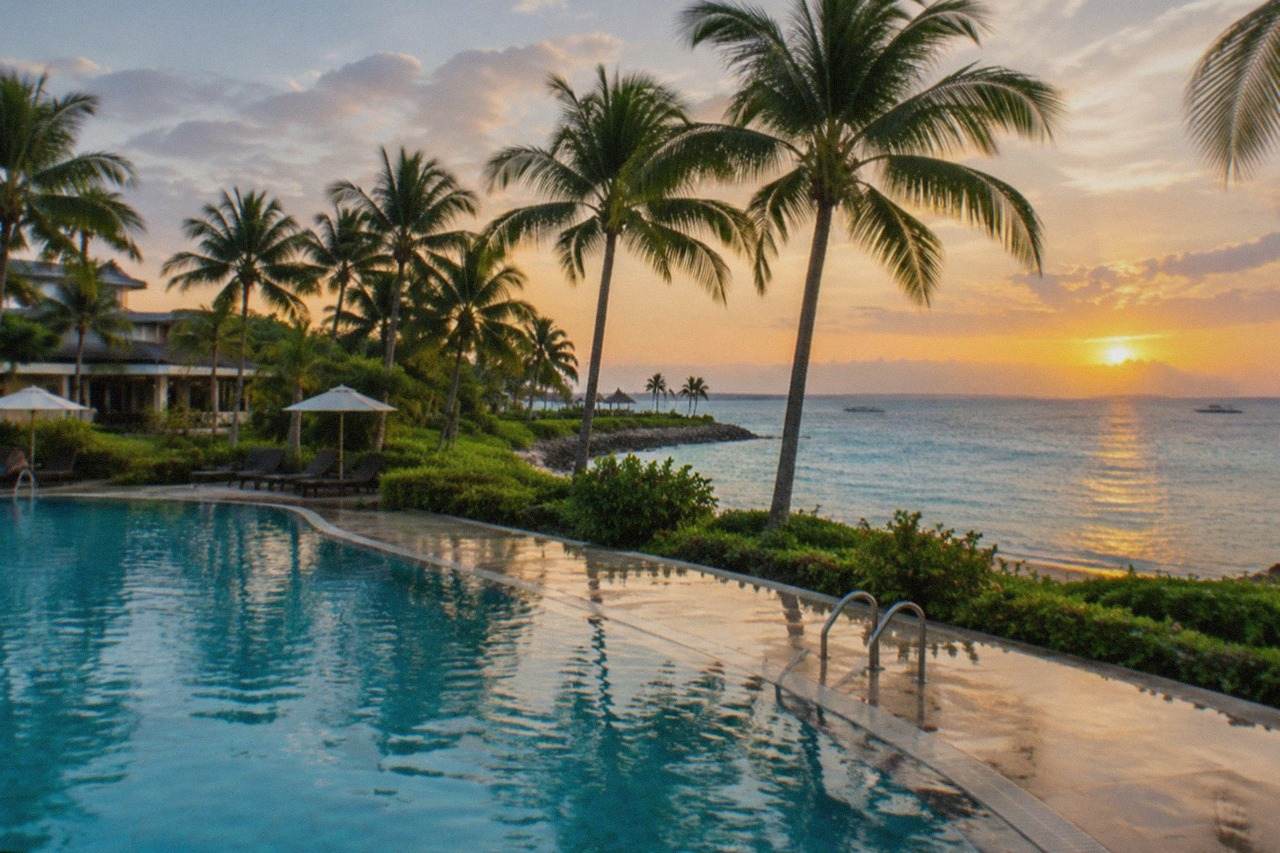
Lapu-Lapu is the right base if your priority is the beach, the airport or island hopping, because Mactan holds the resort coast, the international airport and the boat trips to the marine sanctuaries, all within one city. It is the wrong base if your days will be spent in Cebu City's heritage sites, markets and nightlife, because the channel crossing adds time and fare to every trip. The 2020 census counted 497,604 residents in Lapu-Lapu City, and the city's economy runs on tourism, shipping and the airport rather than on the offices and heritage quarter of the mainland.
The trade-off is geographic. Cebu City's attractions, from Magellan's Cross to Carbon Market, sit across the Mactan Channel, reached over one of the bridges or the Cebu-Cordova Link Expressway. A stay in Lapu-Lapu buys you a swim before breakfast and a fifteen-minute ride to your departure gate, at the cost of a crossing whenever you want colonial churches, lechon or the night markets. Plenty of visitors split the difference: a few nights on Mactan for the beach, then a move into the city. The comparison is laid out in detail in where to stay in Cebu overall and in the head-to-head on Mactan versus a Cebu City stay.
If your answer to "beach or city" is firmly beach, read on. The areas below are all inside one city but they feel very different.
Where To Stay In Lapu-Lapu, Cebu?
Stay along the northeast coast, around Maribago and Mactan Newtown, for the classic beach-resort trip; stay near Punta Engaño for diving, the Lapu-Lapu Shrine and quieter resorts; stay on the Cordova side, near the CCLEX bridge, for cheaper, more local accommodation with fast access to Cebu City; and stay near the airport only for a one-night layover. Maribago and the adjoining barangays hold the densest run of resorts and water-sports operators on the island. Mactan Newtown is the newer, walkable strip with its own small beach. Punta Engaño, the northern tip, faces the Hilutungan Channel and the dive sites. Cordova, at the southern end of the CCLEX bridge, is the least touristy and the cheapest base for commuting into the city.
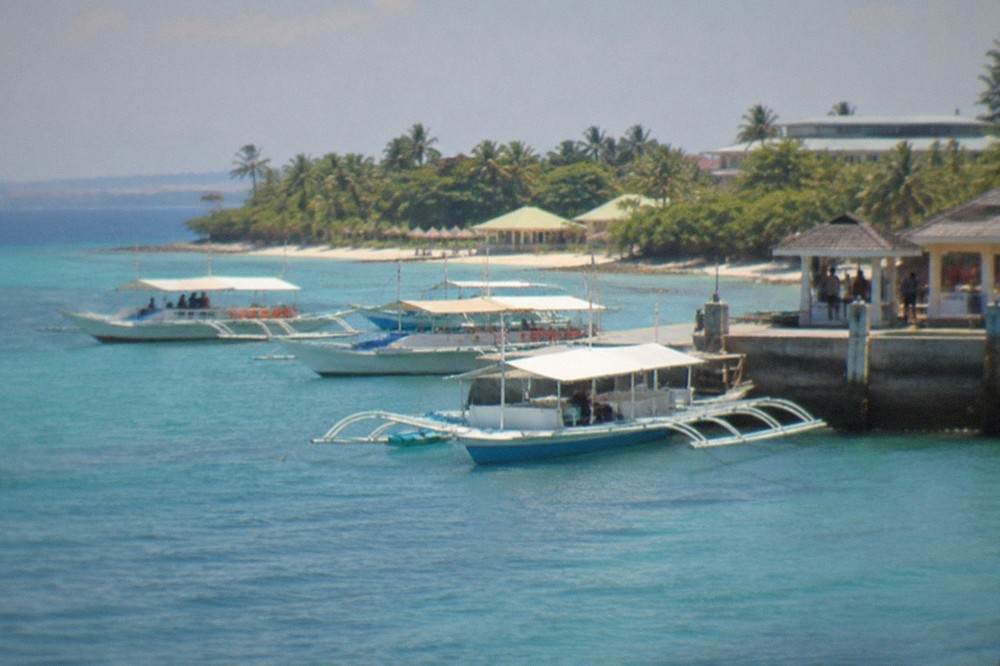
Each area earns its description from what is actually on the ground there, and the choice between them is really a choice about what your days look like. Families and swimmers gravitate to Maribago, where the resorts front shallow, calm water and the boat operators for island hopping cluster at the jetties. Divers and snorkelers prefer Punta Engaño, the closest launch point for the Hilutungan and Nalusuan marine sanctuaries, where entrance fees typically run P150 (about US$2.4) to P300 (about US$4.8) per person at the islands themselves. Budget travelers and anyone working or studying in Cebu City tend to pick Cordova or the inland barangays, trading the beachfront for lower room rates and a bridge crossing measured in minutes.
The one thing not to do is treat "Lapu-Lapu" as a single place when booking. A hotel near the airport and a resort in Maribago share a city name but sit a half-hour drive apart in traffic. Check the barangay, not just the city, before you book anything.
Which Part Of Mactan Suits Your Trip?
Match the area to the trip: Maribago for resort families and first-timers, Mactan Newtown for a walkable modern strip, Punta Engaño for divers and shrine visitors, the airport belt for single-night layovers, and Cordova for budget stays and city commuters. All five are inside Lapu-Lapu City, all five are coastal or near-coastal, and none of them requires crossing to the mainland for a swim. The table below is the short version of the decision.
| Area of Lapu-Lapu | Best for | What is actually there | Watch out for |
|---|---|---|---|
| Maribago and northeast coast | Beach resort stays, families, island hopping | Dense run of resorts, water-sports operators, jetties to the sanctuaries | Resort prices cluster at the top of the island's range |
| Mactan Newtown | Walkable modern strip, restaurants | Newer development with its own small beach and mall-style dining | More concrete than coconut; the beach is modest |
| Punta Engaño | Divers, snorkelers, history | Closest launch to Hilutungan and Nalusuan sanctuaries; the Lapu-Lapu Shrine | Quietest at night, fewer dining choices |
| Airport belt (Basak, Ibo side) | One-night layovers | Minutes from Terminal 1 and Terminal 2 | Not a destination; planes overhead, no real beach |
| Cordova | Budget stays, city commuters | Southern end of the CCLEX bridge, fast crossing to Cebu City | Working town, not a resort strip |
Two of these deserve a little more explanation. Punta Engaño's dive orientation comes from geography: the Hilutungan Channel protects a string of marine sanctuaries, and the city's environmental fee for island hopping, P100 (about US$1.6) for foreign tourists, is collected alongside the sanctuary entrances. Cordova's appeal is the bridge: the Cebu-Cordova Link Expressway, opened in April 2022, runs 8.9 km from Cordova to Cebu City, and its Class 1 car toll is P107 (about US$1.7) one way, so the crossing is cheap and fast outside rush hour.
For a fuller portrait of the island itself, including the shrine and the resort coast, see the Lapu-Lapu City area guide.
What Does Staying In Lapu-Lapu Cost Beyond The Room?
The room is the big number, but the add-ons are small and predictable: an island-hopping environmental fee charged by the city, sanctuary entrances at Hilutungan and Nalusuan charged per person at the islands, and a modest entrance at the Olango Island Wildlife Sanctuary that drops for Filipino adults. None of these figures includes a boat, guide or gear, which are negotiated with the operator. This site never quotes hotel nightly rates, because they move constantly; check the property's live listing for the room itself.
In numbers: the island-hopping environmental fee is P100 (about US$1.6) for foreign tourists and P20 (about US$0.3) for locals, the sanctuary entrances run roughly P150 (about US$2.4) to P300 (about US$4.8) per person, and Olango charges P100 (about US$1.6) for foreign visitors and P30 (about US$0.5) for Filipino adults. The fee that changed most recently is the environmental fee itself. In July 2025 the Lapu-Lapu City Council approved an amendment cutting the fee for local tourists from P100 (about US$1.6) to P20 (about US$0.3), while the foreign rate stayed at P100 (about US$1.6). The change applies to trips run by accredited city boat operators, and it is the single most useful fee fact for a domestic group planning a hopping day.
| Fee around Lapu-Lapu | Foreign visitor | Filipino visitor |
|---|---|---|
| Island-hopping environmental fee (city ordinance) | P100 (about US$1.6) | P20 (about US$0.3) |
| Olango Island Wildlife Sanctuary entrance | P100 (about US$1.6) | P30 (about US$0.5) |
| Hilutungan / Nalusuan sanctuary entrance (typical) | P150 (about US$2.4)-P300 (about US$4.8) | varies by site |
Olango deserves its line in the table even though it is a separate island: it sits a few kilometers offshore, it is a Ramsar wetland, designated in July 1994 as the first in the Philippines, and its bird season runs roughly September to March, when more than sixty migratory shorebird species rest and feed there. A stay in Punta Engaño or Maribago puts the Olango boats within a short ride.
If you want to fold a food walk into a Mactan-based trip, the Cebu Market & Food Tour runs in Cebu City across the channel; the operator has not published a price on its listing, so check availability for the current figure.
How Do You Get Around From A Lapu-Lapu Base?
Getting around Lapu-Lapu means jeepneys and habal-habal motorbikes for short hops, Grab for anything door-to-door, the MyBus airport service into Cebu City, and the two older Mactan bridges plus the CCLEX for the channel crossing between the cities. The airport's own transport guide lists the MyBus between Mactan-Cebu International Airport and SM City Cebu at a fare of P50 (about US$0.8), running from the airport roughly 7 AM to 10 PM, which makes it the cheapest civilized connection between a Mactan base and the city's downtown mall district.
Jeepneys are the workhorse on Mactan itself, linking the airport, the resort coast and the Mandaue bridges along fixed routes for the standard minimum fare; routes are painted on the windscreen and payment is handed to the driver. Grab, the dominant ride-hailing app in the Philippines, lists Cebu among its covered cities and works well from the resorts, with designated pickup zones at both airport terminals. For the crossing, drivers choose between the Mactan-Mandaue Bridge, the Marcelo Fernan Bridge and, from the Cordova side, the CCLEX; which one is fastest depends entirely on the hour, and bridge traffic in the morning and late afternoon is the single biggest time cost of a Mactan stay.
A fourth bridge between Mandaue and Lapu-Lapu has been planned for years, with construction repeatedly delayed by right-of-way issues, so do not build an itinerary around it opening. The realistic planning assumption is the three existing crossings, plus patience at rush hour.
Should You Stay In Lapu-Lapu Or In Cebu City?
Stay in Lapu-Lapu if the beach, diving or an early flight dominates your plan; stay in Cebu City if heritage, food and nightlife dominate it; and split the stay, Mactan first then the city, if the trip is five days or longer and you want both without daily bridge crossings. The question is asked constantly, and the honest answer is that neither side is objectively better, they are better for different itineraries. The full arguments sit on Cebu City or Mactan for your stay, and the budget angle, including how a Mactan base changes your daily costs, is covered on is Cebu expensive.
The pattern that works for most first-time visitors is two or three nights on Mactan, using them for the resort, the sanctuaries and Olango, then a move into Cebu City for the heritage walk, the markets and the evenings. Doing it in that order also puts you closer to the airport on arrival day, when the flight lands late and the last thing anyone wants is a bridge crossing in traffic. Cebu Travel Guide keeps area-by-area lodging detail in its where-to-stay guide, and it is worth skimming before you commit to a barangay.
Common Questions About Staying In Lapu-Lapu, Cebu
Where to stay in lapu-lapu, cebu?
Maribago and the northeast coast for the classic resort trip, Mactan Newtown for a walkable modern strip, Punta Engaño for diving and the Lapu-Lapu Shrine, the airport belt for a single layover night, and Cordova for budget stays with the fastest bridge crossing into Cebu City.
Is Lapu-Lapu the same as Mactan?
For a traveler, effectively yes. Lapu-Lapu City is the local government unit, and Mactan is the island it covers; the airport, the resorts and the sanctuaries all sit on the same landmass.
How far is Lapu-Lapu from Cebu City?
Across the Mactan Channel by one of three crossings. The drive varies mainly with bridge traffic; the CCLEX from the Cordova side is 8.9 km end to end, and the older Mandaue bridges serve the northern side of the island.
Can you swim on Mactan beaches?
Yes. The resort coast faces calm, shallow water, and the marine sanctuaries at Hilutungan and Nalusuan are short boat rides away. Sanctuary entrances typically run P150 (about US$2.4) to P300 (about US$4.8) per person, and the city's island-hopping environmental fee is P100 (about US$1.6) for foreign tourists.
Is one night near the airport enough?
For a layover, yes: the airport belt is minutes from both terminals, and the MyBus to SM City Cebu costs P50 (about US$0.8) if you want a quick city look before flying. For anything longer, pick the coast instead.