Mactan Shrine Lapu-Lapu
The Mactan Shrine in Lapu-Lapu City, Cebu, the Philippines, marks the spot where chieftain Lapu-Lapu defeated Magellan's forces on 27 April 1521, and it remains the most important monument on Mactan Island.
Short answer
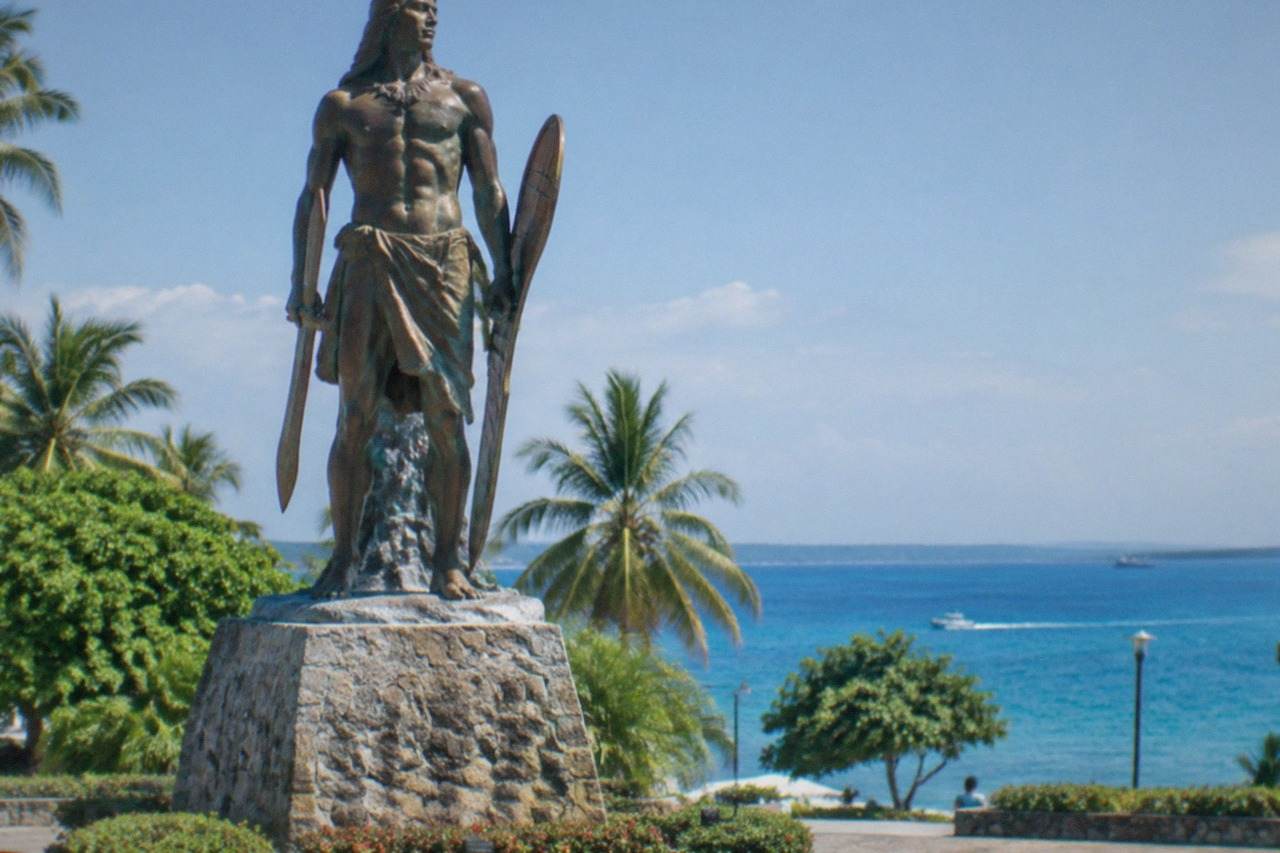
The Mactan Shrine (also called the Lapu-Lapu Shrine) is a seaside memorial park in Lapu-Lapu City on Mactan Island, Cebu, the Philippines, commemorating the Battle of Mactan of 27 April 1521, when the local chieftain Lapu-Lapu defeated the expedition of Ferdinand Magellan. The centrepiece is a large statue of Lapu-Lapu himself, set in a landscaped park facing the Mactan Channel, and it pairs naturally with the beach resorts and island-hopping departure points of Mactan.
The Mactan Shrine, usually called the Lapu-Lapu Shrine by locals, stands on the northeastern shore of Mactan Island in Lapu-Lapu City, Cebu, an island province in the Central Visayas region of the Philippines. It is the country's principal monument to the Battle of Mactan, fought on 27 April 1521, when the local chieftain Lapu-Lapu and his warriors defeated the landing party of Ferdinand Magellan, who died in the fighting. For many visitors the shrine is a half-hour stop on the way between Mactan-Cebu International Airport and the resorts of Mactan, but the story it commemorates, Europe's first recorded clash in the archipelago ending in defeat, is the reason the site exists at all. This guide covers the history, the practical visit, and how the shrine fits into a wider Mactan and Cebu itinerary, with the help of Cebu Travel Guide.
What Is The Mactan Shrine Lapu-Lapu In Cebu?
The Mactan Shrine is a public memorial park in Lapu-Lapu City on Mactan Island, Cebu, the Philippines, built around a monumental statue of the chieftain Lapu-Lapu, who on 27 April 1521 defeated the forces of Ferdinand Magellan in the Battle of Mactan. The park sits on the shoreline where the battle is traditionally placed, facing the waters of the Mactan Channel, and it is the namesake monument of the highly urbanized city that grew up around it.
Lapu-Lapu City is one of Metro Cebu's three highly urbanized cities, administratively independent of Cebu Province, alongside Cebu City and Mandaue City. The 2020 census counted 497,604 residents, and the city occupies most of Mactan Island, the flat coral island connected to mainland Cebu by two road bridges and the newer CCLEX expressway crossing. The shrine is the city's flagship heritage site, and the city itself took the name of the chieftain in his honour.
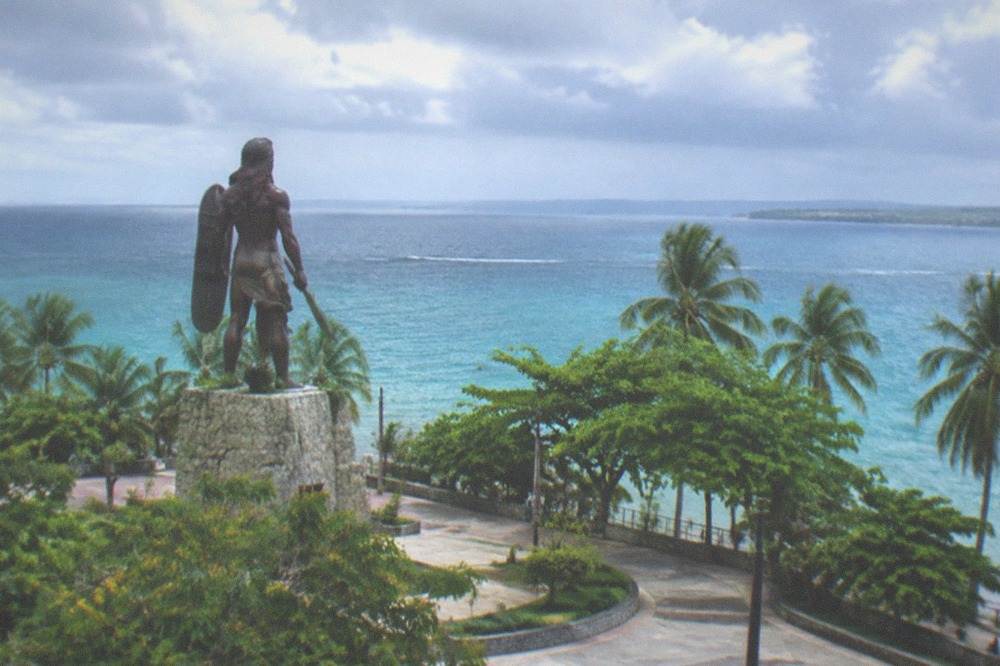
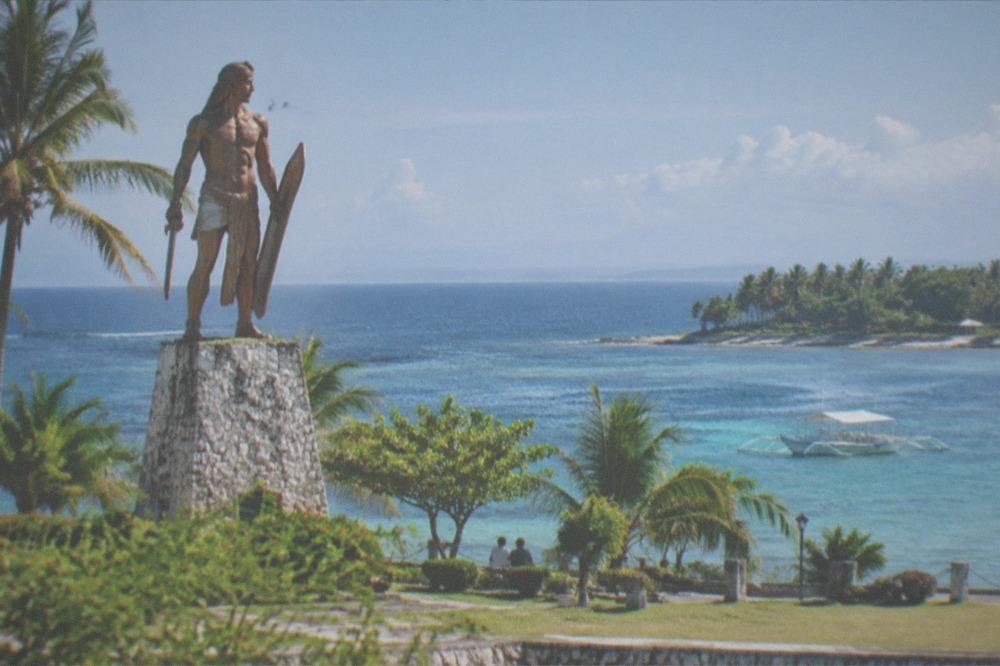
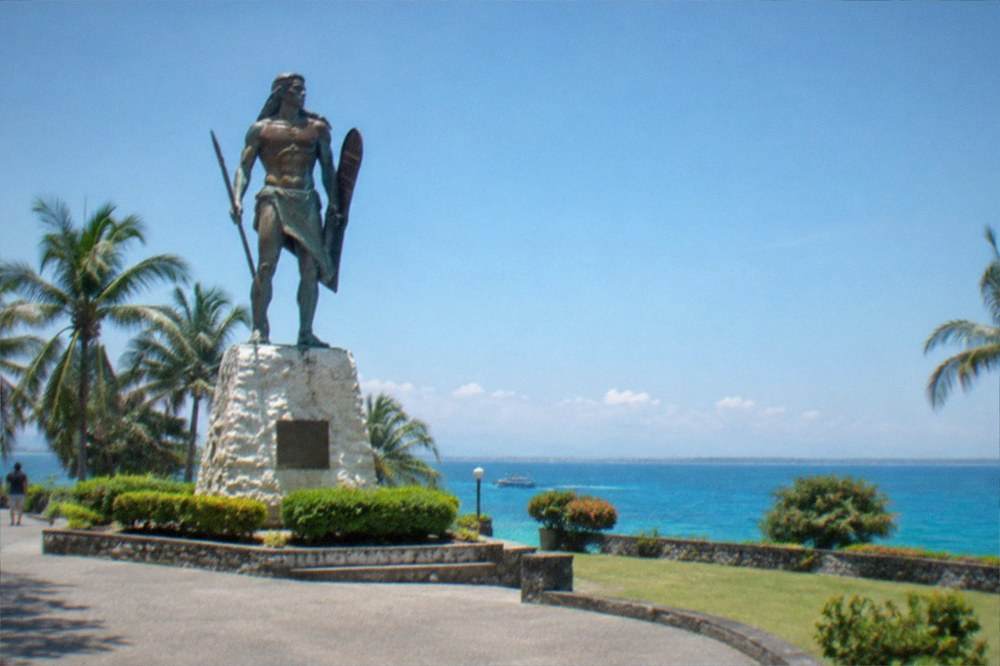
The park's centrepiece is the towering statue of Lapu-Lapu, weapon raised, mounted on a platform above a landscaped plaza. Around it stand a mural wall depicting the battle, commemorative markers, and a small museum pavilion on the battle's history. The seaward edge looks out over the Mactan Channel toward mainland Cebu, and the grounds are planted with shade trees that make the visit bearable even at midday. The site is also called the Mactan Shrine, and it hosts the annual Kadaugan sa Mactan reenactment each April.
What surprises many first-time visitors is how much of the visit is outdoors and free-roaming. This is not a ticketed museum but an open civic park, closer in feel to a seafront plaza than to a fort such as Fort San Pedro in Cebu City. You walk in, walk around, read the markers, and leave when you are done, which makes it one of the easiest heritage stops in the province to fit into a tight schedule.
Where Is The Lapu-Lapu Shrine And How Do You Get There From Cebu City?
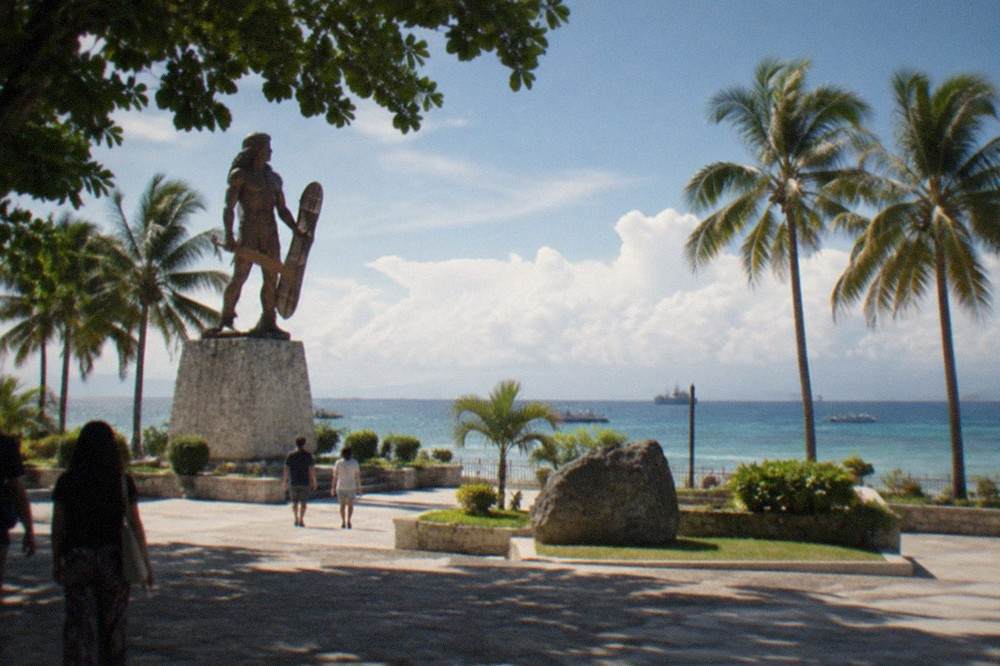
The Mactan Shrine sits in Barangay Mactan, on the northeastern coast of Mactan Island in Lapu-Lapu City, roughly 20 to 30 minutes by road from Mactan-Cebu International Airport and about 45 to 60 minutes from central Cebu City depending on bridge traffic. There is no direct ferry or rail link; every visitor arrives by road vehicle, whether a private car, a taxi, a ride-hailing booking or a guided tour vehicle, across one of the three Mactan crossings.
Mactan Island connects to mainland Cebu through the Mactan-Mandaue (Osmeña) Bridge, the Marcelo Fernan Bridge, and the Cebu-Cordova Link Expressway (CCLEX), an 8.9 km crossing that opened in 2022. From Cebu City's central districts the two older bridges are usually the fastest approach to the shrine's side of the island. Bridge traffic is the single biggest variable in your journey time: the crossing can take ten minutes in the mid-morning lull or the better part of an hour at the weekday peaks, so locals plan Mactan trips for after 9:00 AM or late afternoon.
The airport angle matters because the airport sits on Mactan itself. Mactan-Cebu International Airport, Terminal 1 domestic and Terminal 2 international, sits only a short drive from the shrine, which makes the monument a natural first or last stop on any Cebu trip. The official airport transport guide lists MyBus as the budget option, with fares of P50 (about US$0.8) on the SM City Cebu route and P30 (about US$0.5) on shorter segments, plus a separate 24/7 Lapu-Lapu Public Market route, which puts you in the city but still needing a jeepney or taxi hop to the shrine itself. Taxis are the practical choice from the terminal: the yellow airport taxis flag down at about P70 (about US$1.1), and the white metered city taxis at about P40 (about US$0.6) plus roughly P14 (about US$0.2) per kilometre, figures that come from transport guides rather than an official tariff sheet, so treat them as planning ranges.
| Route | Typical way | Rough time | Notes |
|---|---|---|---|
| Mactan airport to the shrine | Taxi or ride-hail | 20-30 min | Shortest approach; airport sits on the same island |
| Cebu City centre to the shrine | Taxi, ride-hail or tour van via Osmeña or Fernan bridge | 45-60 min | Bridge traffic can double this at peak |
| Cordova side to the shrine | Via CCLEX | 30-40 min | Toll applies; useful from the south |
| Lapu-Lapu Public Market to the shrine | Jeepney or short taxi hop | 15-20 min | MyBus runs to the market 24/7 |
Ride-hailing through Grab works across Cebu City, Mandaue and Lapu-Lapu, with designated airport pickup zones, and the app shows the fare before you book. Jeepneys run the length of Mactan's main roads for the minimum fare, though the traditional jeepney minimum was adjusted in late September 2026, so check the current rate locally. If you would rather leave the transfers to someone else, a guided day tour that includes Mactan and the Cebu City side is the low-friction option.
If you are weighing up where to sleep before you plan the drive, the Mactan versus Cebu City stay comparison breaks down the trade-offs, and the question of whether Mactan is worth visiting comes up often from travellers who only know the island as the airport's location.
What Happened At The Battle Of Mactan On 27 April 1521?
On 27 April 1521, warriors of the Mactan chieftain Lapu-Lapu defeated a Spanish landing force under Ferdinand Magellan, who was killed in the fighting. Magellan's fleet had reached Cebu on 7 April 1521, converted the local ruler Rajah Humabon to Christianity, and then sailed to Mactan to punish Lapu-Lapu for refusing Spanish authority, a decision that turned the first European expedition through the Philippines into its commander's last battle.
The background is the part visitors tend to skim and shouldn't. Magellan's expedition arrived in Cebu in early April 1521 and was received by Rajah Humabon, who, together with his wife Hara Amihan (baptized Queen Juana), accepted baptism; the Santo Niño image the expedition presented to her is the same image rediscovered in 1565 and enshrined today at the Basilica Minore del Santo Niño. The wooden cross Magellan's party erected is preserved nearby under the pavilion at Magellan's Cross. Humabon's alliance with the Spaniards set the scene for the confrontation across the channel.
Lapu-Lapu, the chief of Mactan, refused submission. Spanish accounts of the battle describe a morning assault on the shore of Mactan, hampered by offshore coral reefs that kept the ships' cannon out of effective range and forced the armored Spaniards and their allies to wade ashore in shallow water. Outnumbered and fighting on ground of the defenders' choosing, the landing party was driven back, and Magellan was killed among the retreating soldiers. The date, 27 April 1521, is the one fixed point every source agrees on, and it is reenacted at the shrine every year in the Kadaugan sa Mactan festival.
| Date | Event | Where |
|---|---|---|
| 7 April 1521 | Magellan's fleet arrives in Cebu and is received by Rajah Humabon | Cebu harbour |
| Mid-April 1521 | Baptism of Rajah Humabon and Hara Amihan (Queen Juana); Santo Niño image presented | Cebu |
| 27 April 1521 | Battle of Mactan; Lapu-Lapu's warriors defeat the landing force and Magellan is killed | Mactan shore |
| 28 April 1565 | Legazpi-Urdaneta expedition lands; Church of the Santo Niño founded the same day | Cebu |
| 1937 | Lapu-Lapu City chartered as a city, later taking the chieftain's name | Mactan Island |
The battle's place in Philippine memory is enormous precisely because of what it represents: the first recorded indigenous victory over a European expedition in the archipelago. Lapu-Lapu became the national symbol of pre-colonial resistance, which is why his statue dominates the park and why his name now labels the island's city, its airport approach roads and countless restaurants. Standing at the shoreline markers, with the channel in front of you and the mural wall behind, the geography of the fight, a shallow reef approach, a narrow beach, defenders on home ground, explains itself.
The Battle of Mactan also frames every other heritage stop in Cebu. Magellan's Cross and the Basilica tell the Spanish arrival's religious side; Fort San Pedro tells the military occupation that followed forty-four years later; the Mactan Shrine tells the day the arrival was stopped. If you want the full arc of that story in one day, a guided tour covering the city's heritage sites handles the sequence and the parking.
What Can You See At The Mactan Shrine Today?
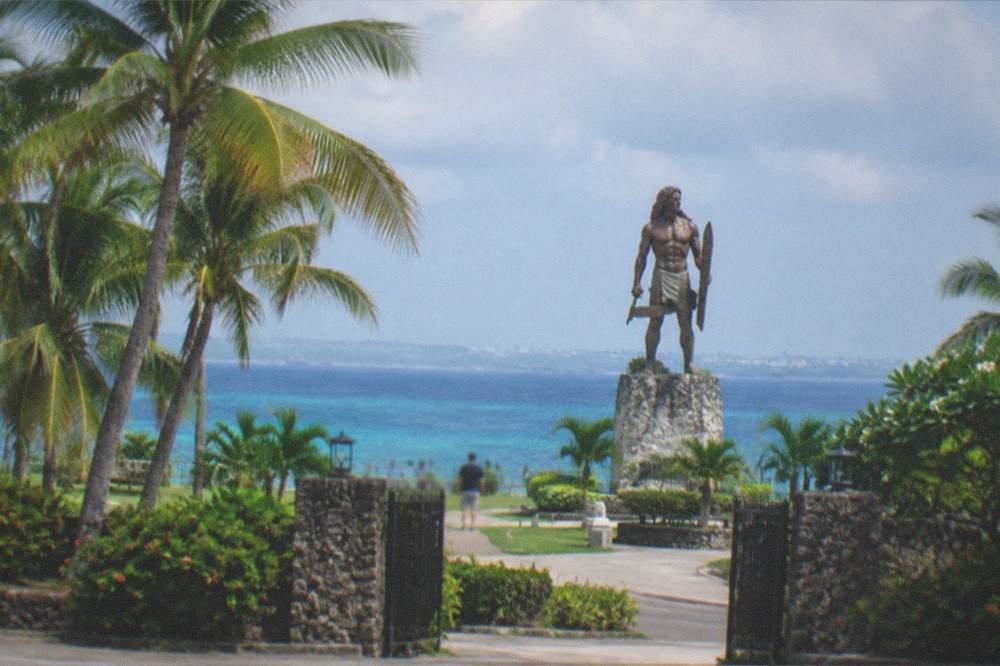
The Mactan Shrine's grounds hold the monumental Lapu-Lapu statue on its raised platform, the battle mural wall, commemorative markers and a small museum pavilion on the fight of 27 April 1521, all arranged around a shaded seaside plaza facing the Mactan Channel. The park is compact enough to see fully on foot, and the statue platform and seafront edge are the two spots every visitor photographs.
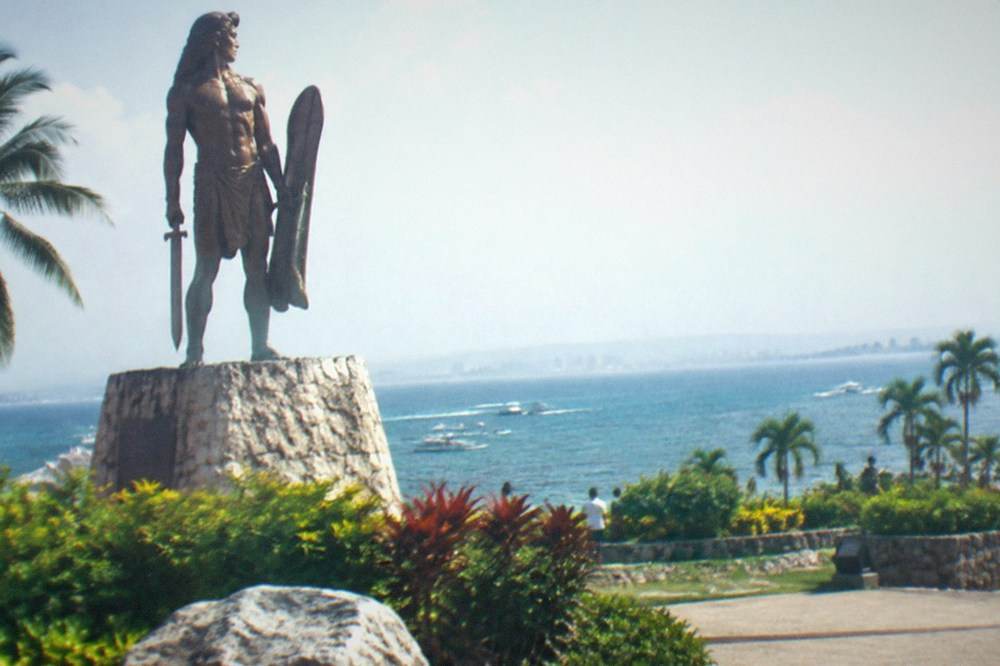
The statue is the reason most people come. The bronze warrior, bolo raised, stands on a pedestal decorated with reliefs, and the viewing platform around its base gives the best angle across the plaza. Early morning and late afternoon light both flatter it, and the seaward side of the park frames the statue against water rather than concrete, which is the shot that ends up in most articles about Cebu. The mural wall nearby carries carved depictions of the battle in a style that reads clearly even without a guide's commentary.
The museum pavilion adds the context the outdoor markers only sketch: the expedition's route, the battle's sequence, and Lapu-Lapu's place in Philippine historiography. It is small, so temper expectations, but it is the only air-conditioned stop on the site and worth ten minutes in the midday heat. Around the edges of the park, commemorative plaques record the site's formal dedications, and the seafront rail marks the traditional battle shoreline, where the reenactment lands each April during the Kadaugan sa Mactan festivities.
| Feature in the park | What it is | Time needed |
|---|---|---|
| Lapu-Lapu statue and platform | Monumental bronze of the chieftain, the park's centrepiece | 10-15 min |
| Battle mural wall | Carved scenes of the 27 April 1521 clash | 5-10 min |
| Museum pavilion | Small indoor exhibit on the battle and its context | 10 min |
| Seafront markers | Shoreline rail and plaques marking the traditional battle site | 5 min |
| Kadaugan sa Mactan grounds | Festival reenactment arena used each April | Visible from the plaza |
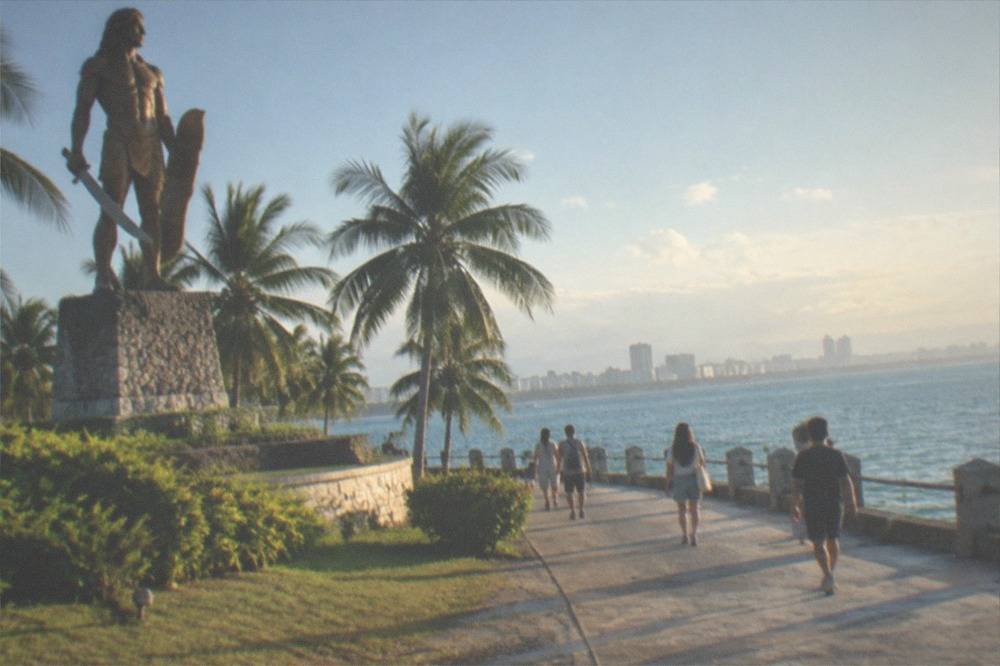
Practical notes for the visit itself: the park is outdoors and largely unshaded on the plaza side, so a hat and water matter more than they would at an indoor museum. The ground is flat paved walkway throughout, which makes the shrine one of the more accessible heritage stops in the province, and the surrounding barangay has sari-sari stores and small eateries for refreshments. Vendors near the gate sell souvenirs and shell crafts, standard for a Philippine public monument, and a firm polite no is enough if you are not buying.
What Are The Opening Hours And Entrance Fees At The Lapu-Lapu Shrine?
The Mactan Shrine operates as an open public memorial park in Lapu-Lapu City, and no verified current schedule or entrance tariff for it is published in the sources this guide trusts, so treat any fee you see quoted on older blogs as unconfirmed and check locally on the day. The practical pattern for Philippine civic shrines of this type is daytime access with the museum pavilion keeping shorter hours than the outdoor grounds, and the visit itself costs little or nothing beyond transport to Mactan.
The honest position matters here because plenty of stale pages quote exact figures for the shrine's entry and hours. The verified facts pack for Cebu carries confirmed fees for Fort San Pedro, Tops Lookout, Museo Sugbo and several other sites, but no verified fee or timetable for the Mactan Shrine, and a guide that invents one is worse than a guide that says check locally. What can be said with confidence is that the park's outdoor areas are freely walkable public space, that the statue plaza and mural wall need no ticket, and that the museum pavilion is the only element likely to keep restricted hours.
| Item | Status | Guidance |
|---|---|---|
| Park grounds access | Open public memorial park | Walk in; daytime visits are the norm |
| Museum pavilion | Hours not verified in current sources | Check on arrival; allow for it being closed |
| Entrance fee | No verified current tariff published | Do not trust old blog figures; confirm locally |
| Kadaugan sa Mactan (April) | Annual reenactment at the site | Expect crowds on the battle anniversary |
| Guided commentary | Available via city tours | Not required to enjoy the site |
Budgeting the wider Mactan day is easier to pin down. If you continue from the shrine to island hopping off Mactan, the Lapu-Lapu City environmental fee for island-hopping tours stands at P100 (about US$1.6) for foreign tourists, while the fee for local tourists was cut to P20 (about US$0.3) by a city council amendment in July 2025, a change confirmed in local reporting. The marine sanctuaries at Hilutungan and Nalusuan, common first stops on Mactan island-hopping routes, charge their own sanctuary fees that typically run in the P150 (about US$2.4) to P300 (about US$4.8) range per person depending on the site, so carry cash in small denominations for a day that combines the shrine with a boat trip. For the fuller cost picture across the province, the practical pages on Mactan's beaches cover what a boat day adds up to.
What Else Is There To Do Near The Mactan Shrine On Mactan Island?
Mactan Island packs beach resorts, marine sanctuaries, dive shops, waterpark day passes and watersports bases into the strip between the shrine and the airport, so the monument pairs naturally with a half-day on the water or a resort afternoon. The island-hopping departure points for Hilutungan, Nalusuan and neighbouring reefs sit within a short drive of the shrine, and the two can easily be combined in a single day.
The strongest pairing is shrine in the morning, boat in the afternoon. Island-hopping trips out of Lapu-Lapu City call at the Hilutungan and Nalusuan marine sanctuaries, where snorkelling over coral flats is the standard itinerary, with the environmental and sanctuary fees described above payable in cash. The sanctuary waters are the reason Mactan has a beach-holiday reputation at all, and the question of whether Mactan has nice beaches is one this site answers in detail: the best swimming near the island is off the sandbars and sanctuary islets rather than the industrial shoreline close to the bridges.
For families, the waterpark and aquarium attractions on the island sell day passes that turn the shrine stop into a full kid-friendly loop, and the Mactan area guide maps the options. Divers use Mactan as a convenient base because the dive shops sit minutes from resort strips, though the headline Cebu dive sites, the sardine run at Moalboal, the thresher sharks of Malapascua, lie further afield and need their own overnight plans. If you are deciding how many days the whole province deserves, the master things to do in Cebu page is the place to start.
| Activity near the shrine | Where | Verified fee figure |
|---|---|---|
| Island hopping to Hilutungan and Nalusuan | Departures across Lapu-Lapu City | Env. fee P100 (about US$1.6) foreign / P20 (about US$0.3) local; sanctuaries roughly P150 (about US$2.4)-P300 (about US$4.8) |
| Snorkelling at marine sanctuaries | Hilutungan, Nalusuan | Included in sanctuary fees above |
| Waterpark day pass | Mactan resort strip | From US$55.81 per person on the live listing |
| Beach resort day use | Mactan's east coast | Varies by resort; check directly |
| Kadaugan sa Mactan festival | The shrine grounds, each April | Free public event |
History lovers should also budget the short hop across the channel. The shrine is the third point of a colonial triangle whose other two corners, Magellan's Cross and the Santo Niño Basilica, stand within a few minutes' walk of each other in downtown Cebu City, and Fort San Pedro closes the set at the old Spanish plaza. Doing all four in one loop, with a driver or a guided tour, is the single best heritage day available in the province.
When Is The Best Time To Visit The Mactan Shrine In Cebu?
The best time to visit the Mactan Shrine is in the dry season months of December to May, arriving in the early morning or late afternoon to avoid both the midday heat and the tour-bus crowds, with the third week of April offering the unique draw of the Kadaugan sa Mactan reenactment on the battle anniversary. PAGASA's national classification puts Cebu's rainy season from June to November, so the dry months give the most reliable weather for an outdoor monument.
The climate data backs the rule of thumb. PAGASA's 1991-2020 normals for the Mactan station, the closest official record to the shrine, put annual rainfall at 1,685.0 mm across 138 rain days, with a mean temperature of 28.1 C. The monthly rainfall curve bottoms out in April at 48.1 mm and peaks in October at 194.8 mm, which makes the battle-anniversary month of April, falling in the driest and sunniest stretch of the year, a genuinely good time to stand on the battle shore. The trade-off is heat: March to May is the hot dry period, so the shaded morning hours matter more, not less.
| Month | Rainfall at Mactan station (mm) | What it means for the shrine visit |
|---|---|---|
| January | 105.2 | Dry season, comfortable, Sinulog crowds in Cebu City mid-month |
| February | 69.6 | Dry, good light, fewer festivals |
| March | 58.6 | Hot dry; visit early |
| April | 48.1 | Driest month; Kadaugan sa Mactan reenactment on the anniversary |
| May | 95.0 | Hot; sea breezes help on the plaza |
| June | 175.6 | Rainy season begins; carry rain gear |
| July | 192.9 | Wet; afternoon downpours likely |
| August | 143.5 | Wet season, some dry windows |
| September | 179.6 | Wet; typhoon season peak approaches |
| October | 194.8 | Wettest month; outdoor visits least reliable |
| November | 161.9 | Wet, improving late in the month |
| December | 139.7 | Dry season returns; festive but showery |
Within any given day, the timing choice is simple. The park faces east over the channel, so morning light hits the statue front-on and the air is still cool before 9:00 AM. Late afternoon, from about 4:00 PM, the heat drops and the plaza fills with local families, which is its own kind of atmosphere. Avoid the 11:00 AM to 2:00 PM window in March and April unless you are combining the shrine with an air-conditioned museum stop, because the plaza's shade cover is thinner than it looks from the gate.
Crowds follow the festival calendar. The Kadaugan sa Mactan reenactment each April fills the grounds with spectators, costumed warriors and food stalls, and it is the one day a year the shrine is the centre of the province's attention; if you want quiet photographs, avoid that week, and if you want the spectacle, build your trip around it. The rest of the year the park is busiest mid-morning with tour groups doing the heritage loop, which is another argument for the early start.
How Does The Mactan Shrine Fit Into A Longer Cebu Itinerary?
The Mactan Shrine works best as either the first or last stop of a Cebu trip, because it sits minutes from the island's airport and needs under an hour on the ground, and it slots naturally into a heritage day with Magellan's Cross, the Santo Niño Basilica and Fort San Pedro across the channel. Travellers staying on Mactan for the beaches can walk the shrine into any morning, while city-based visitors should pair it with the downtown heritage loop and allow for bridge traffic each way.
For a first-time visitor flying into Cebu, the sequence writes itself. Land at Mactan, stop at the shrine while the luggage is still fresh, then cross to Cebu City for Magellan's Cross, the Basilica and the downtown heritage district, and you have covered 500 years of the province's story in one afternoon. The Lapu-Lapu City area guide covers where to eat and stay on the island side, and the question of where to stay in Lapu-Lapu is answered in depth elsewhere on this site.
For longer trips, the shrine is the doorway to the province's bigger draws. South of the city lie the whale sharks of Oslob, the sardine run of Moalboal and the canyoneering courses of Kawasan Falls, each a full day's commitment from either Cebu City or Mactan. Guided day tours bundle the logistics, which matters on the southern routes where public transport runs on rural schedules, and the picks below are the ones this site rates for combining with a Mactan or city base.
The whale shark route deserves its own note. The join-in day tour from Cebu to Oslob runs a full day with an early morning departure and a stop at Tumalog Falls, and the operator has not published a price, so the live listing is the only place to check the current figure. The Oslob interaction itself is regulated by the municipal government: the environmental fee runs P1,000 (about US$15.9) for foreign visitors and P500 (about US$8.0) for Filipinos, boat and guide included, with a mandatory briefing, a minimum distance from the animals, no sunscreen in the water and roughly thirty minutes in the interaction area. Sightings are not guaranteed, and in late May 2026 the whale sharks were absent from the Tan-awan area for about four days when the plankton moved, so build schedule flexibility into any Oslob day.
The Bohol option runs the other direction, by sea. The fastcraft from Cebu City's Pier 1 to Tagbilaran takes about two hours, with the tourist-class fare at P960 (about US$15.3) following a fuel surcharge applied in September 2026, and the countryside tour pairs the Loboc River cruise with the Chocolate Hills before the same-day ferry back. It is a long day, but it is the single most popular overnight-free excursion from Cebu, and the guided version handles the ferry timing that trips up independent travellers.
Common Questions About The Mactan Shrine Lapu-Lapu
What is the Mactan Shrine Lapu-Lapu?
It is a public memorial park in Lapu-Lapu City on Mactan Island, Cebu, the Philippines, commemorating the Battle of Mactan of 27 April 1521, in which the chieftain Lapu-Lapu defeated the landing force of Ferdinand Magellan. Its centrepiece is a monumental statue of Lapu-Lapu overlooking the Mactan Channel.
Is the Mactan Shrine the same as the Lapu-Lapu Shrine?
Yes. The site is called both the Mactan Shrine and the Lapu-Lapu Shrine; both names refer to the same park in Barangay Mactan, Lapu-Lapu City. The city itself was named after the chieftain commemorated there.
Where is the Lapu-Lapu statue in Cebu?
The statue stands in the Mactan Shrine on the northeastern coast of Mactan Island, in Lapu-Lapu City, roughly 20 to 30 minutes by road from Mactan-Cebu International Airport and about 45 to 60 minutes from central Cebu City depending on bridge traffic.
Is there an entrance fee at the Mactan Shrine?
No verified current entrance tariff for the shrine is published in reliable sources, and older blogs quoting exact figures should not be trusted. The outdoor grounds operate as an open public memorial park; treat any fee as unconfirmed and check locally on the day of your visit.
Who won the Battle of Mactan?
Lapu-Lapu and his warriors won. On 27 April 1521 they defeated the Spanish-led landing party on Mactan's shore, and Ferdinand Magellan was killed in the fighting. The battle is remembered as the first recorded indigenous victory over a European expedition in the Philippines.
What is Kadaugan sa Mactan?
It is the annual festival and battle reenactment held at the Mactan Shrine around the 27 April anniversary of the Battle of Mactan, featuring costumed warriors, commemorations and food stalls. April is also the driest month at the nearby Mactan weather station, with a monthly rainfall average of just 48.1 mm, making it a reliable time to visit.