Lapu-Lapu City
Lapu-Lapu City covers Mactan Island in Cebu, the Philippines, and pairs resort beaches and island hopping with the site of the 1521 Battle of Mactan.
Short answer
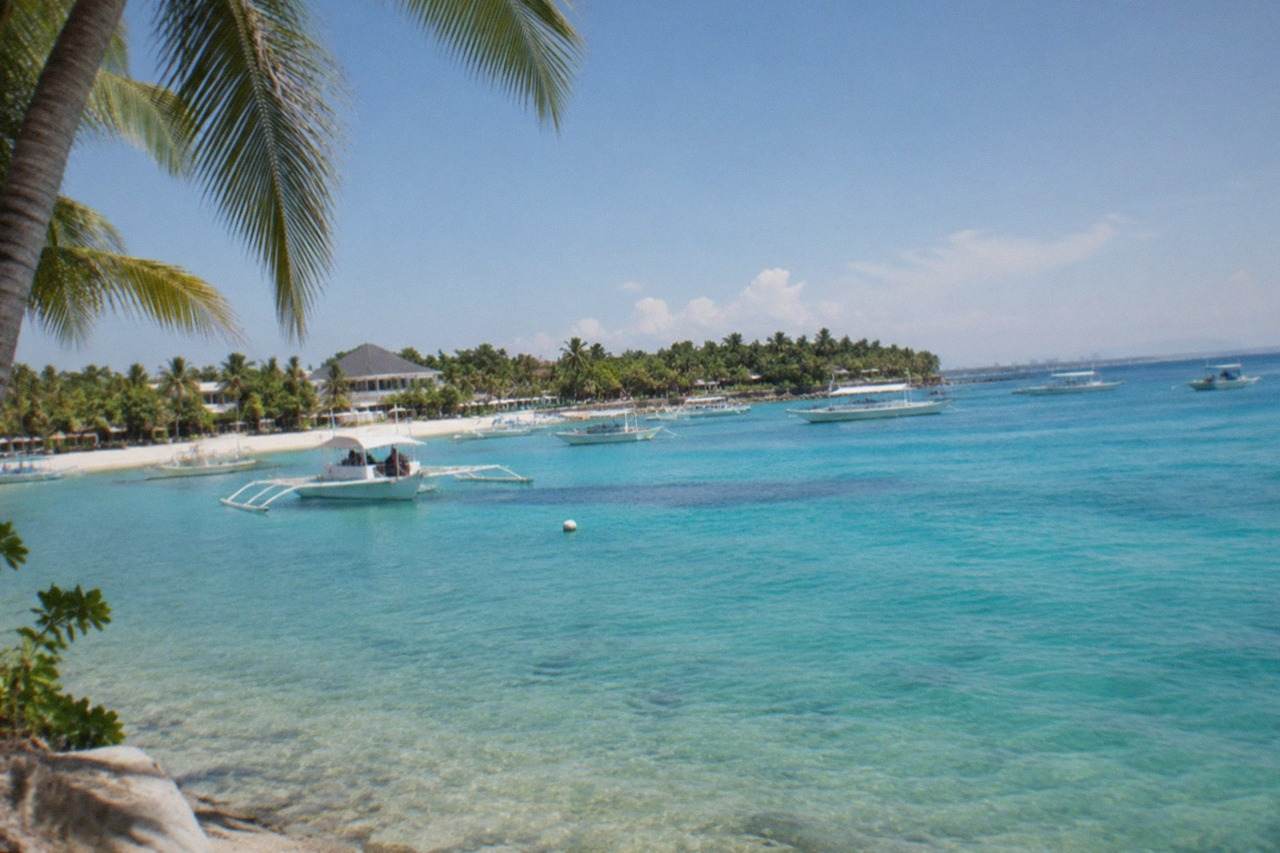
Lapu-Lapu City is the highly urbanized city on Mactan Island, beside Mactan-Cebu International Airport, known for beach resorts, island hopping to Hilutungan and Nalusuan, the Lapu-Lapu Shrine, and the Olango Island bird sanctuary.
Lapu-Lapu City is the city that covers Mactan Island in Cebu, an island province in the Central Visayas region of the Philippines, and it is commonly the part of metro Cebu that visitors touch first, whether they mean to or not: Mactan-Cebu International Airport sits on the island, and the city's resort strip lines the east coast. The city is administratively independent of Cebu Province, one of three highly urbanized cities, alongside Cebu City and Mandaue City, that face each other across the Mactan Channel. Its name carries the weight of the archipelago's most famous battle, and its waters carry most of Cebu's island-hopping traffic. This page is part of Cebu Travel Guide, the site's full coverage of the province.
Where Is Lapu-Lapu City And What Is It Known For?
Lapu-Lapu City occupies Mactan Island, separated from Cebu City by the narrow Mactan Channel and linked to the mainland by three road crossings, with a 2020 census population of 497,604. It is known for four things above all: Mactan-Cebu International Airport, the beach and dive resorts along its east coast, the island-hopping trips that leave for Hilutungan, Nalusuan, Caohagan and Pandanon, and the Lapu-Lapu Shrine, the monument at the site of the 27 April 1521 Battle of Mactan.
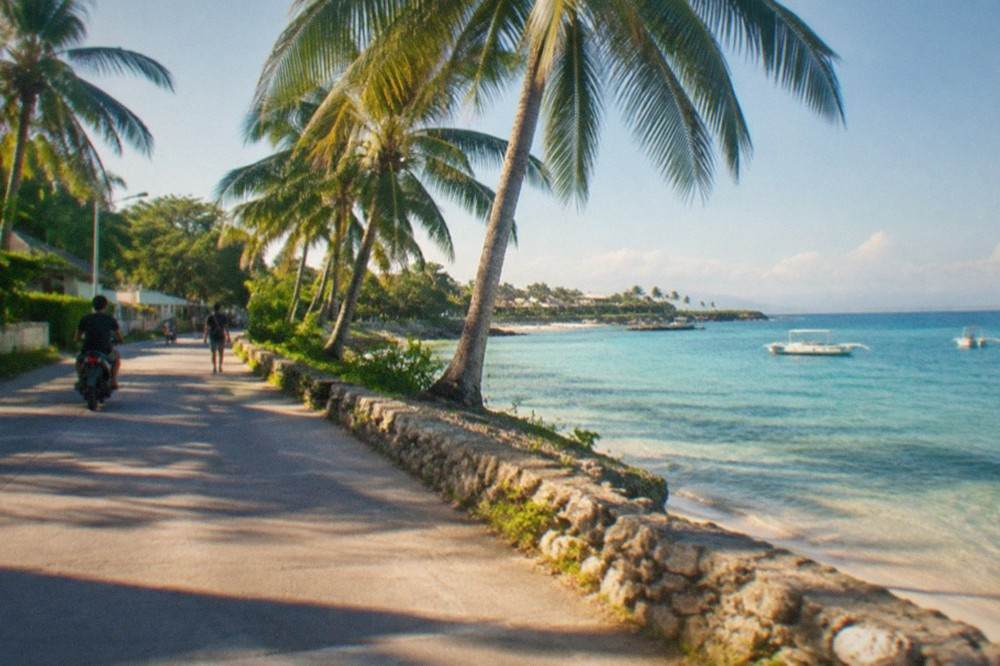
The city is one of the most densely touristed pieces of ground in the Visayas, and not only because every international arrival lands on it. The island's east and southeast coasts hold the largest concentration of resort hotels in the province, most of them inside the barangays of Marigondon, Mactan and Punta Engaño, and the boat trips to the marine sanctuaries of the Mactan Channel leave from jetties between them. The Mactan Channel side, by contrast, is working waterfront: shipyards, a fishing port and the fast-growing CCLEX bridge approach.
Administratively, the city is a highly urbanized city, which means it is governed independently of Cebu Province even though it sits inside the metro area that most people simply call Cebu. The 2020 census counted 497,604 residents, and the 2024 census of population put the figure at 497,813, a city that has effectively stopped growing on land but keeps building seaward. For a fuller picture of the island itself, see the Mactan area guide, and for the historic core across the channel, start with Cebu City.
What Are The Top Things To Do In Lapu-Lapu City And Mactan Island?
The top draws inside Lapu-Lapu City are the Lapu-Lapu Shrine and the Mactan Shrine park at Punta Engaño, the beach and watersports fronts of the resort strip, the island-hopping trips to Hilutungan, Nalusuan and Caohagan, the Olango Island bird sanctuary across the channel, and the themed attractions on the island, including a waterpark day pass and an ocean park. Visitors often combine the shrine and a boat trip in one day, since both sit on the water's edge.
The shrine itself is the anchor. The monument marks the beach where, on 27 April 1521, the chieftain Lapu-Lapu's forces defeated and killed Ferdinand Magellan, the event that makes this small island a fixture in every Philippine history book. The park around it looks across to Olango and the open Camotes Sea, and it is free to wander. The full story of the site is in the Lapu-Lapu Shrine guide.
Beyond the shrine, the island splits into two kinds of day. On the water: island hopping, snorkelling over the Hilutungan marine sanctuary, and diving. On land: resort day passes, the waterpark at Jpark, and increasingly the evening attractions that have opened on the Cebu City side of the channel, a short bridge away. Families planning a whole trip around the island will find the Cebu with kids itinerary useful, and the question of whether to sleep on Mactan or in the city has its own answer page: where to stay in Lapu-Lapu.
For a taste of the city's own cooking rather than the resorts' buffet, cross the bridge: a market food walk in Cebu City is the standard introduction to Cebuano cooking, and the island's restaurants, for all their polish, are not where the lechon lives.
How Much Does Island Hopping From Lapu-Lapu City Cost?
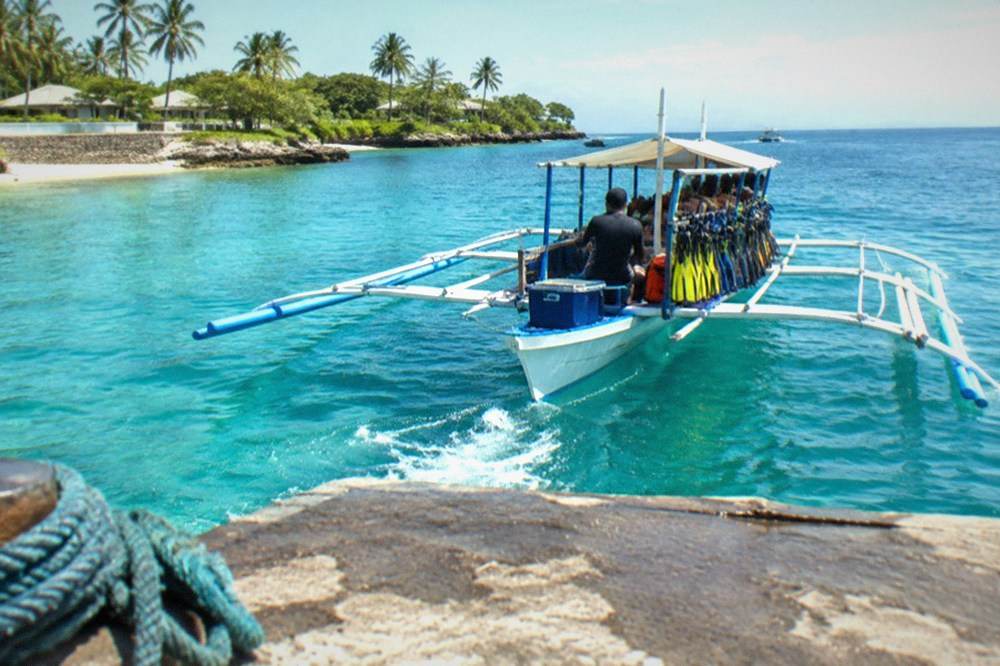
Island hopping from Lapu-Lapu City carries two separate charges: the boat tour itself, whose price is set by the operator, and the fees on the water, which are fixed by city ordinance. Foreign tourists pay a higher environmental fee than locals, the local rate was cut in a July 2025 amendment, and the marine sanctuaries at Hilutungan and Nalusuan charge their own entrance fees on top of both. Boat, environmental fee and sanctuary entrance are three different things, and all of them apply.
The fee structure trips up a lot of first-time visitors, because the number quoted by a boat operator usually covers the boat, the crew and lunch, and nothing else. The environmental fee is collected separately, and so are the sanctuary entrances on the islands themselves. The July 2025 amendment to the city ordinance halved nothing for foreigners, it only cut the local rate from P100 (about US$1.6) to P20 (about US$0.3), so international visitors should budget the full P100 (about US$1.6).
| Fee | Amount | Who pays | Where collected |
|---|---|---|---|
| Lapu-Lapu environmental fee (foreign tourist) | P100 (about US$1.6) | All foreign guests on island-hopping boats | Operator or city kiosk |
| Lapu-Lapu environmental fee (local tourist) | P20 (about US$0.3) | Filipino guests, from July 2025 amendment | Operator or city kiosk |
| Hilutungan marine sanctuary entrance | about P150 (about US$2.4) to P300 (about US$4.8) | All swimmers and snorkellers | Sanctuary station on the water |
| Nalusuan marine sanctuary entrance | about P100 (about US$1.6) to P300 (about US$4.8) | All visitors to the sandbar island | Island registration |
The classic half-day circuit calls at Hilutungan for snorkelling over the sanctuary, Nalusuan for its sandbar and lunch, and sometimes Caohagan. The operator's live listing for the standard tour with lunch is the place to check what is included: the Cebu Smile hopping day trip page carries the current price, rating and inclusions, and Check availability before you commit to a date, because boats fill on weekends.
The tour above is the most-reviewed hopping option on this roster, but it is not the only shape of day available from the island. A food walk, a highlands half-day or a second boat trip all slot into a Mactan-based plan, and the trio below is the shortlist this site recommends for visitors sleeping on the island.
How Do You Get From Lapu-Lapu City To Cebu City?
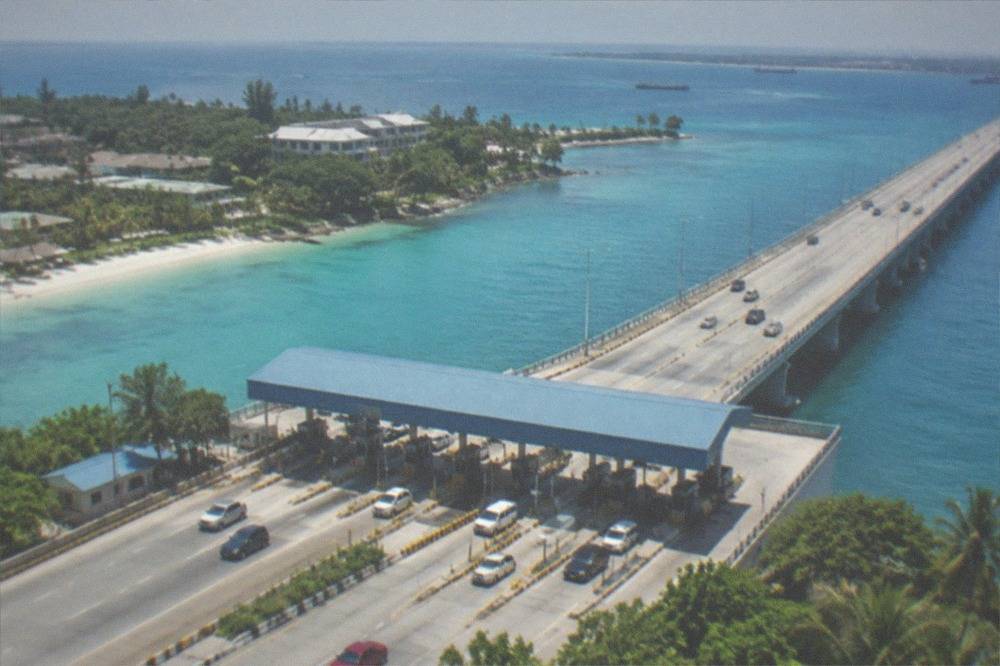
Three road crossings link Mactan to the mainland: the first Mactan-Mandaue Bridge, the Marcelo Fernan Bridge, and the CCLEX sea bridge to Cordova, which is the only one that charges a toll. The airport sits on the island, so most journeys start there: the MyBus to SM City Cebu runs from 7 AM to 10 PM, a yellow airport taxi flags down at a higher rate than the white city cabs, and Grab operates with designated pickup zones at both terminals.
The drive across the older bridges takes in some of the worst traffic in the Visayas at peak hours, and locals plan their crossings around it. CCLEX, opened on 30 April 2022, is 8.9 km long and gives the island's south a direct link to the Cebu City South Road Properties, which has made the SM Seaside and Il Corso waterfront a realistic evening trip from a Mactan resort. The MyBus fare to SM City Cebu runs P30 (about US$0.5) to P50 (about US$0.8) depending on destination, and the yellow airport taxi flags down at about P70 (about US$1.1).
| Crossing | Toll, Class 1 car | Notes |
|---|---|---|
| Mactan-Mandaue (Osmeña) Bridge | free | Oldest link, heaviest traffic |
| Marcelo Fernan Bridge | free | Second crossing, also carries pedestrians |
| CCLEX (Cebu-Cordova Link Expressway) | P107 (about US$1.7) one way | Opened 30 April 2022, 8.9 km; Class 1M motorcycle P68 (about US$1.1), Class 2 P214 (about US$3.4), Class 3 P321 (about US$5.1) |
A fourth bridge between Paknaan in Mandaue and Ibo in Lapu-Lapu is in planning, with construction targeted but relocation of about 205 families in Paknaan still unresolved as of 2026, so do not plan around it. For the full picture of buses, jeepneys and ride-hailing on the mainland side, the getting around Cebu guide covers fares and the partial bus rapid transit line that began running in March 2026.
Where Should You Stay In Lapu-Lapu City?
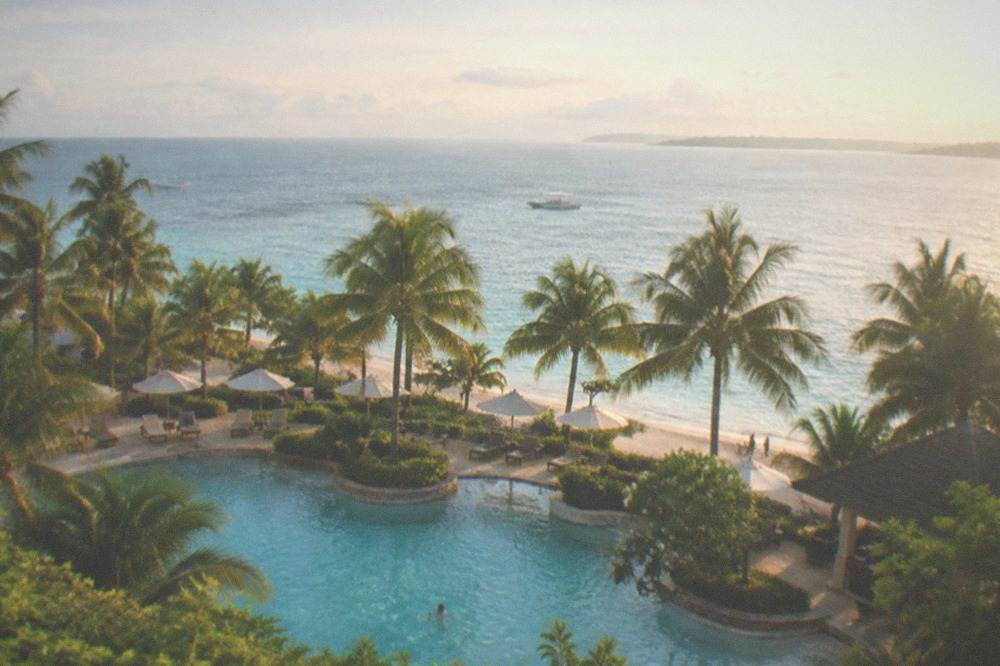
Visitors tend to stay on the island's east coast resort strip, in the barangays from Mactan and Marigondon to Punta Engaño, where the dive resorts and beach hotels cluster closest to the island-hopping jetties. The trade is simple: Mactan gives you the beach, the airport and the boats, while Cebu City across the channel gives you the heritage sites, the restaurants and the nightlife, and the bridge traffic between them decides which base suits your trip.
The resort strip is genuinely walkable in pieces, not as a whole, and the practical question is whether any given day's plans sit on the island or across the water. A trip built around diving, island hopping and late flights answers itself: stay on Mactan. A trip built around the Basilica, Colon Street, the museums and the food scene belongs in the city, and the where to stay in Cebu guide breaks the neighbourhoods down, while the head-to-head is argued out at Mactan versus a Cebu City stay.
Budget travellers should know that Mactan is the expensive side of the metro. The cheapest accommodation clusters in Cebu City around Colon Street, and the commute across the bridge is the price you pay for it.
What And Where Is Olango Island's Bird Sanctuary?
The Olango Island Wildlife Sanctuary, a 5,800-hectare Ramsar wetland across the Hilutungan Channel from Mactan, is the Philippines' first Ramsar site, designated on 1 July 1994, and the country's most important stopover for migratory shorebirds travelling the East Asian-Australasian flyway. Entrance is charged per person at different local and foreign rates, and the bird season runs roughly September to March, peaking between October and February.
The sanctuary's flat tidal flats lie a short boat ride from the Angasil jetty on Mactan's north coast, close enough that a half-day trip fits comfortably between a morning's island hopping and dinner. Over 60 migratory species have been recorded, and the birds are the reason the island holds international protection rather than any local attraction. Entrance is about P100 (about US$1.6) for foreign visitors and P30 (about US$0.5) for Filipino adults, and the full ecology, the seasons and the practicalities are in the Olango Island birds guide.
| Item | Figure | Notes |
|---|---|---|
| Ramsar designation | 1 July 1994 | First Ramsar site in the Philippines, site no. 656 |
| Area | 5,800 hectares | Tidal flats and shallow lagoon |
| Entrance, foreign adult | about P100 (about US$1.6) | Collected at the sanctuary |
| Entrance, Filipino adult | about P30 (about US$0.5) | Student rate about P15 (about US$0.2) |
| Bird season | September to March | Migratory shorebirds on the East Asian-Australasian flyway |
Timing matters more here than anywhere else on Mactan: outside the migration window the flats are quiet, and a trip in, say, June will show you the habitat and very few of its famous residents. The ferry fare to Olango rose to P60 (about US$1.0) in April 2026 on the back of fuel costs, with a temporary subsidy following in May and June, so check the current fare at the jetty.
What Is The History Behind Lapu-Lapu City?
The city takes its name from the chieftain Lapu-Lapu, whose forces defeated the expedition of Ferdinand Magellan on 27 April 1521 at the beach now marked by the Mactan Shrine, making the island the site of the first recorded Filipino resistance to European colonisation. Magellan had arrived in Cebu weeks earlier, planted the cross now venerated as Magellan's Cross, and was killed here when he pressed his campaign onto Mactan itself.
The battle is the founding story, and the city leans on it: the shrine, the annual reenactment, and the name itself, which the city adopted when the old municipality of Opon was converted into a chartered city. What followed the battle is less often told. Spain returned under Legazpi in 1565, and the islands were absorbed into the colonial project anyway, but Mactan kept its association with the man who said no first. The Magellan's Cross and Basilica del Santo Niño pages carry the Cebu City side of that same 1521 story.
In the modern era the island's history is economic. The bridge era began with the first Mactan-Mandaue crossing, the airport opened its domestic terminal in 1990 and the international Terminal 2 in 2018, and the resort industry grew around both. Since 16 January 2025 the airport has been operated by Aboitiz InfraCapital Cebu Airport Corporation under a public-private partnership with the MCIAA, and a second runway opened on 30 January 2025.
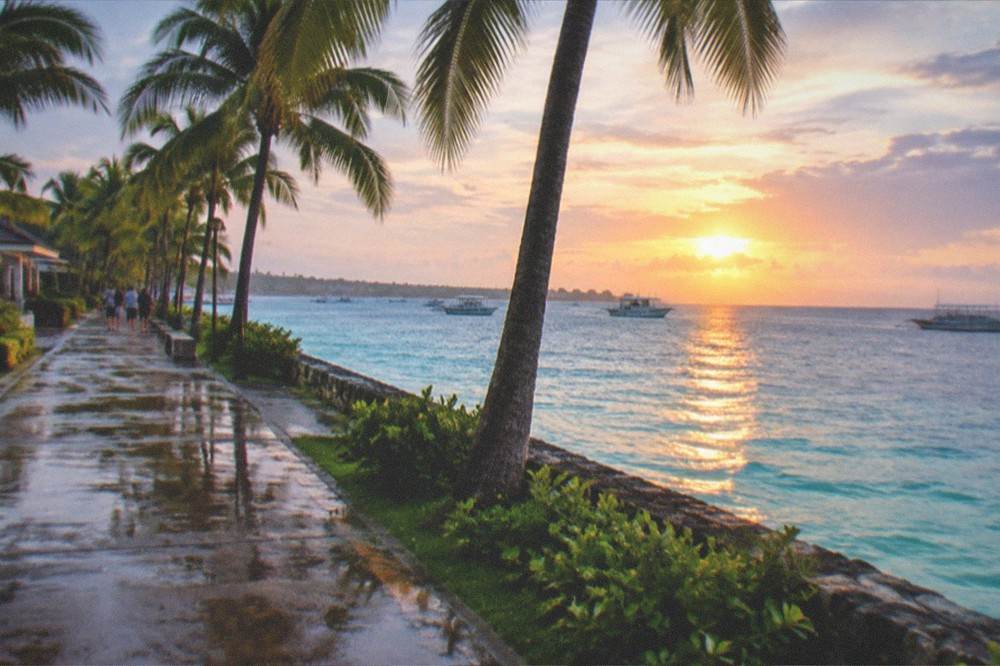
When Is The Best Time To Visit Lapu-Lapu City?
The best months for Lapu-Lapu City are December to May, Cebu's dry season under PAGASA's national classification, with the calmest seas and best underwater visibility usually in the same window. The rainy season runs June to November, with typhoon risk across the Visayas peaking roughly July to October, and November the month when the region's landfall risk is highest. Sinulog, on the third Sunday of January, falls in the sweet spot and pulls the year's biggest crowds.
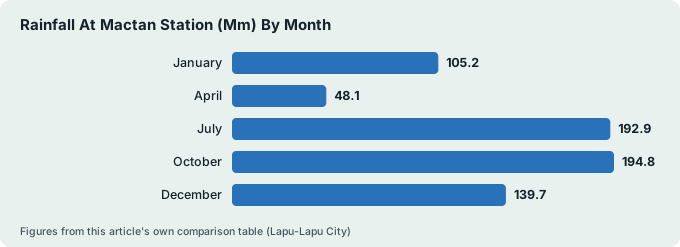
The Mactan station's 1991-2020 normals put annual rainfall at 1,685.0 mm across 138 rain days, with a mean temperature of 28.1 °C, which is to say: it is always warm, and the question is only how wet. October is the wettest month in the station's monthly series at 194.8 mm and April the driest at 48.1 mm. For island hopping specifically, sea state matters more than rain, and operators suspend trips when the coast guard raises warnings.
| Month | Rainfall at Mactan station (mm) | What it means for a visit |
|---|---|---|
| January | 105.2 | Dry season, Sinulog crowds in the middle |
| April | 48.1 | Driest month in the series, peak diving visibility |
| July | 192.9 | Rainy season, typhoon peak begins |
| October | 194.8 | Wettest month in the series, trips can suspend |
| December | 139.7 | Dry season returns, high-season rates begin |
The best time to visit Cebu guide works through the whole calendar. One recent note: Typhoon Tino in early November 2025 brought severe flooding to parts of Cebu, though the Department of Tourism stated the core tourism zones of Cebu City and Mactan were largely unaffected and open within days.
Is Lapu-Lapu City Safe For Tourists?
Lapu-Lapu City and Mactan Island sit inside Cebu's main tourism zone, which carries no country-specific travel restriction from the UK, Australian or US advisories beyond the Philippines-wide caution levels. The practical risks are the ordinary ones of a busy resort area: petty theft in crowds, and, far more importantly, weather, because typhoon season from June to November is the only recurring natural hazard that meaningfully disrupts travel plans on the island.
The US State Department's advisory for the Philippines stands at Level 2, Exercise Increased Caution, applied country-wide, with its highest warnings reserved for the Sulu Archipelago and parts of Mindanao, not the Visayas. The UK FCDO and Australia's Smartraveller both advise general caution for the Philippines without naming Cebu at all. After the 30 September 2025 magnitude 6.9 earthquake off northern Cebu, the Department of Tourism declared the province safe and open for tourists, with Bantayan and Malapascua ports operational and the damage concentrated in the northern mainland towns, not on Mactan.
On the water, the rules that matter most are the operators' own: the coast guard suspends island hopping when conditions warrant, and the marine sanctuaries enforce no-anchoring and mooring-buoy rules at Pescador and elsewhere.
What Can You Do Near Lapu-Lapu City On A Day Trip?
The realistic day trips from a Lapu-Lapu base are island hopping in the Mactan Channel, the Olango bird sanctuary, and the Cebu City heritage quarter across the bridge, all inside an hour. Anything further, the whale sharks of Oslob, the falls of Badian, the sardine run at Moalboal, means a long early start, roughly 3.5 to 4.5 hours by bus to Oslob or 2.5 to 3.5 hours to Moalboal from the Cebu South Bus Terminal, which is why many visitors move hotels rather than commute.
The classic compromise is to spend the first half of a trip on Mactan for the beach and the boats, then relocate to the city for the heritage and food days. The itineraries handle this split well: the 3 days in Cebu plan sequences the island and the city sensibly, and the Oslob versus Moalboal comparison helps when the south calls.
For travellers who want the highlands rather than the sea, the temples and gardens of the Busay ridge above Cebu City make a half-day contrast to Mactan's flat resort landscape, and the operator's listing carries the current price and rating.
Whichever way you split the days, the trio below is the shortlist that pairs best with a Mactan base: one food walk, one boat day and one highlands half-day.
Common Questions About Lapu-Lapu City
Is Lapu-Lapu City the same as Cebu City?
No. Lapu-Lapu City covers Mactan Island, across the Mactan Channel from Cebu City. Both are highly urbanized cities, administratively independent of Cebu Province, and both sit inside the metro area commonly called Metro Cebu.
Is Lapu-Lapu City on Mactan Island?
Yes, the city covers the whole of Mactan Island, plus several small islands in the channel including Hilutungan and Olango's group. The airport, Mactan-Cebu International, is on the island, so travelers arriving by air land in Lapu-Lapu City before they see anywhere else in Cebu.
How far is Lapu-Lapu City from Cebu City?
The two cities face each other across the Mactan Channel, linked by three crossings, two free bridges and the tolled CCLEX. Journey time depends heavily on bridge traffic, so plan around peak hours rather than a fixed figure; the crossing is short but congestion on the two free bridges is the norm at rush hour.
Do you pay the environmental fee for island hopping in Lapu-Lapu City?
Yes. Foreign tourists pay P100 (about US$1.6) and, since a July 2025 amendment, local tourists pay P20 (about US$0.3). Sanctuary entrance fees at Hilutungan and Nalusuan, roughly P150 (about US$2.4) to P300 (about US$4.8) per person, are charged separately from the boat tour price.
Can you visit Olango Island from Lapu-Lapu City?
Yes, the Olango Island Wildlife Sanctuary is a short boat ride from the Angasil jetty on Mactan. The bird season runs roughly September to March, entrance is about P100 (about US$1.6) for foreign visitors, and a half day is enough for the visit.
What is Lapu-Lapu City famous for?
The 27 April 1521 Battle of Mactan, in which the chieftain Lapu-Lapu defeated Magellan's expedition, plus the beach resorts, the dive sites of the Mactan Channel and Mactan-Cebu International Airport. The city was called Opon before it adopted the chieftain's name.
Whether you land on Mactan for a night before heading south or build your whole trip around its resorts, Lapu-Lapu City rewards a slow pass: the shrine in the morning, a boat to the sanctuaries at midday, and the bridge to the city for dinner.