Pescador Island
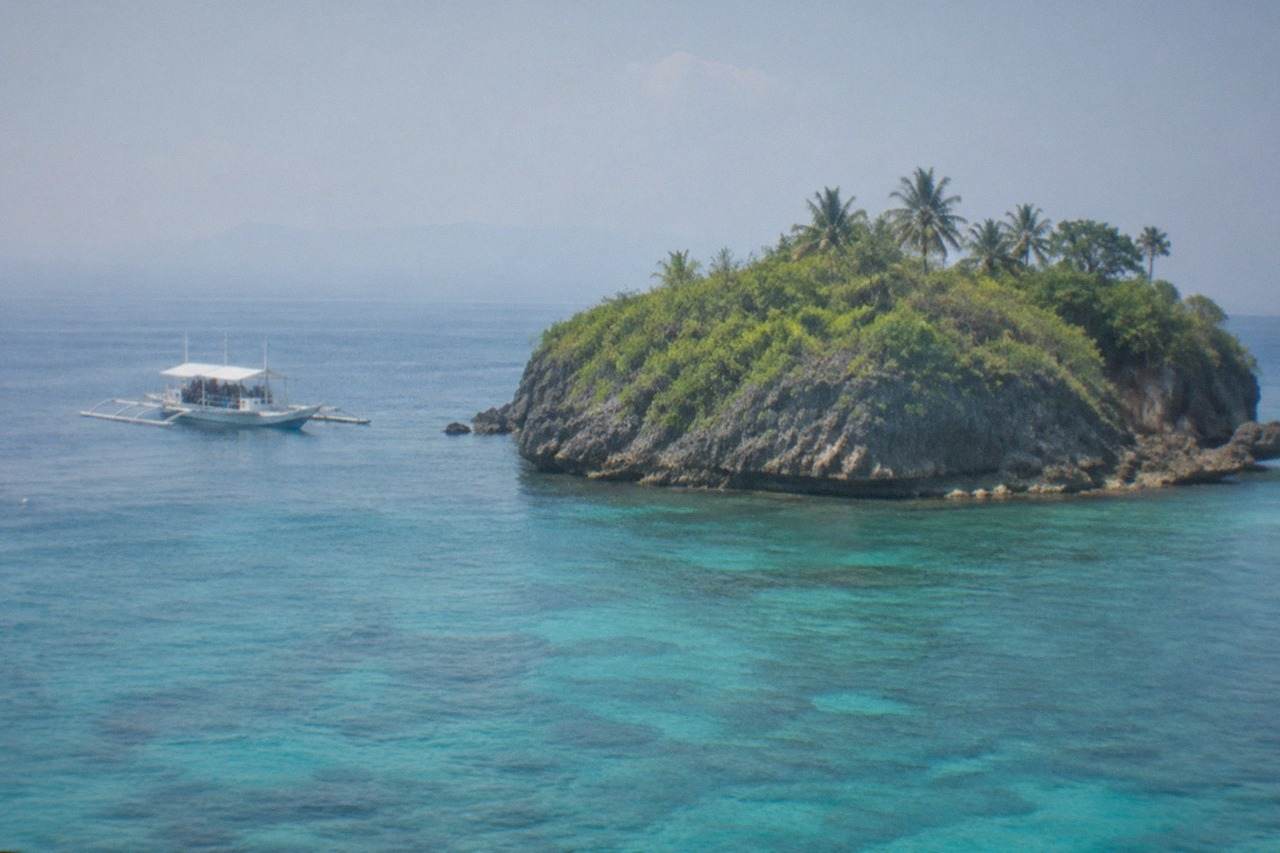
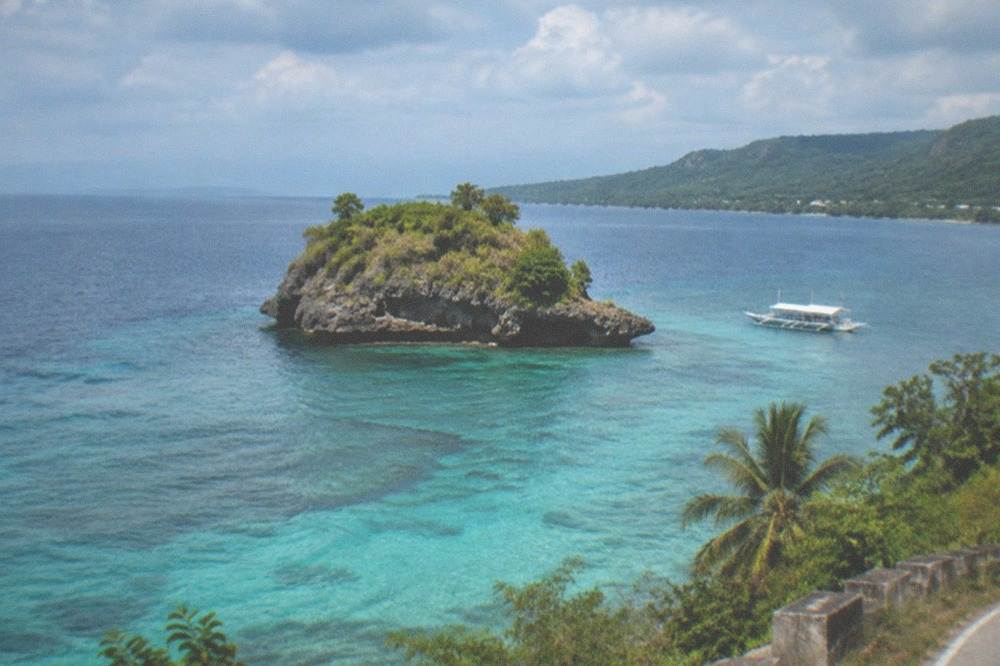
Pescador Island is a small, protected marine sanctuary in the Tañon Strait off Moalboal, on the southwest coast of Cebu in the Philippines, and it sits beside one of the most famous shore-snorkeling scenes in Asia.
Short answer
Pescador Island is a dive and snorkel destination reached by boat from Panagsama Beach in Moalboal, Cebu. Divers pay about P100 (about US$1.6) per dive in sanctuary fees, boats leave from the beach, and the island itself is a protected zone where guides accompany visitors and anchoring is prohibited.
Pescador Island is a small, mostly bare limestone island in the Tañon Strait, a short boat ride from Panagsama Beach in Moalboal on the southwest coast of Cebu, an island province in the Central Visayas region of the Philippines. The name means "fisherman" in Spanish, a leftover from the island's colonial-era charting, but today the island earns its name from what swims around it rather than who works from it. The surrounding waters form a protected marine sanctuary, and the island sits in the same stretch of coast as the famous Moalboal sardine run, where millions of sardines mass a few metres from shore. This guide covers the fees, the boat logistics, what you actually see underwater, and how the island fits into a wider South Cebu trip.
What Is Pescador Island And Where Is It?
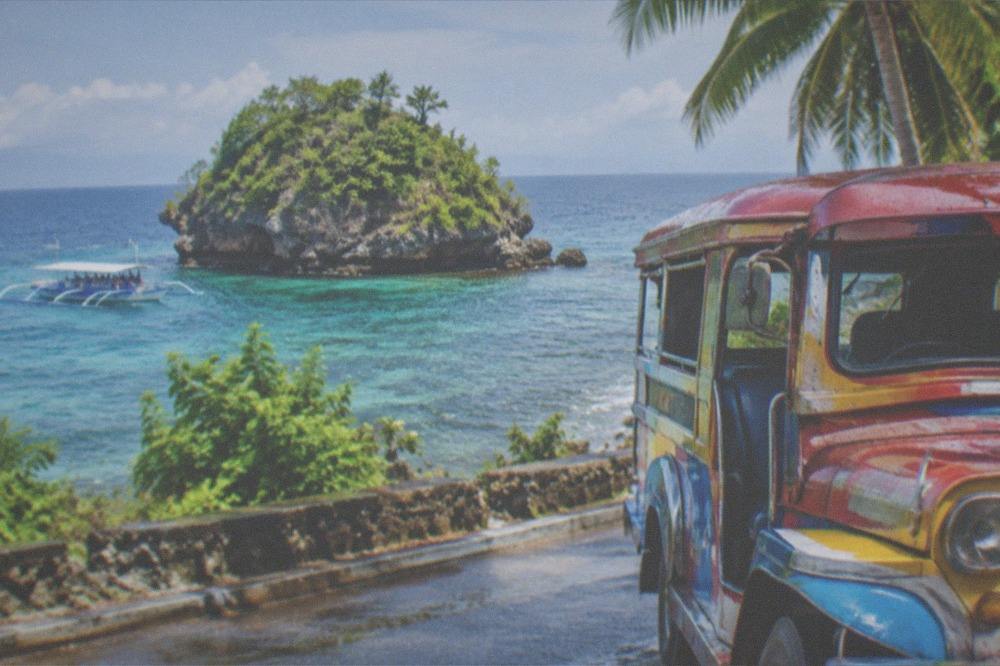
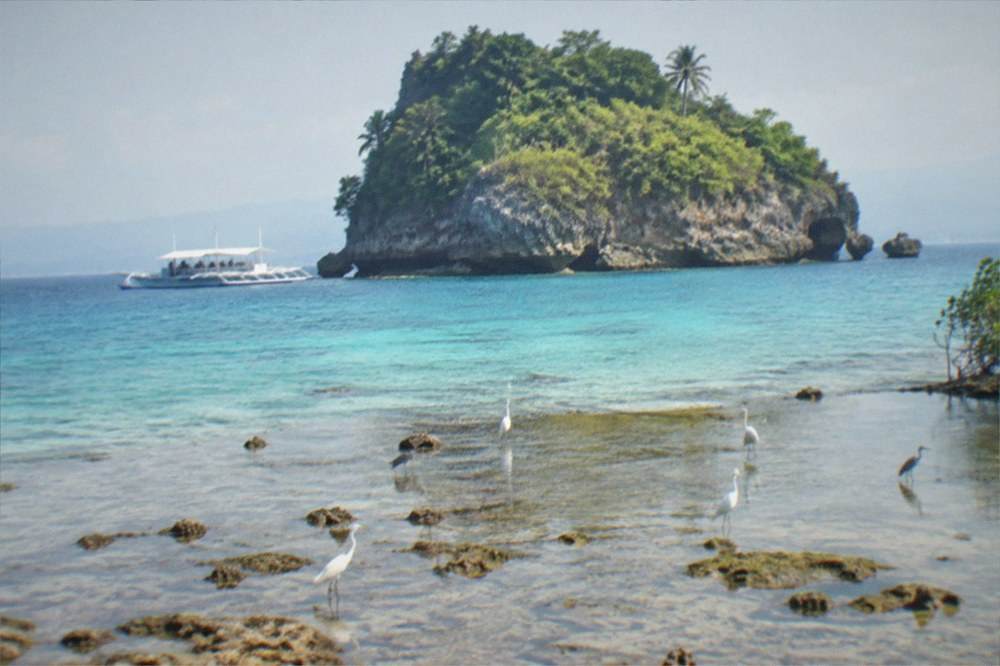
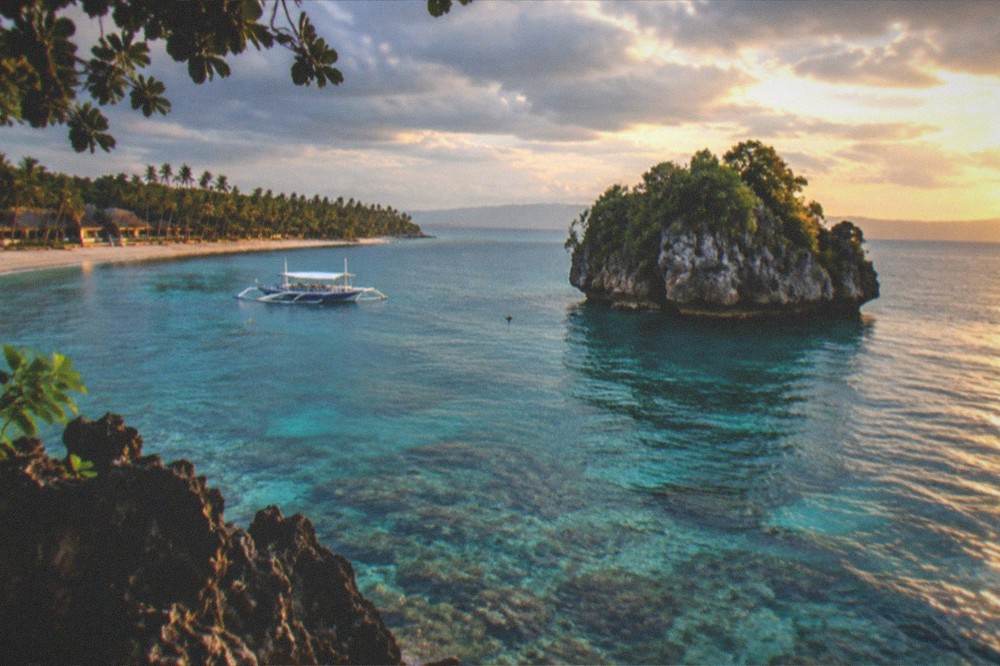
Pescador Island is a protected marine sanctuary island in the Tañon Strait, administratively part of Moalboal in Cebu Province, Philippines, reached only by boat from the Panagsama Beach area. The island itself is a low limestone outcrop with no residents and no facilities, and the entire reason to visit is the reef around it: steep coral walls, big schools of fish, and the sanctuary rules that come with a regulated dive site. Boats leave from the Moalboal coast, and dive shops in Panagsama run trips throughout the day.
The island sits within the Tañon Strait, the deep channel that separates Cebu from Negros. That geography matters more than it first appears. The strait funnels nutrient-rich water between two islands, which is why the reefs here support such dense fish life, and why the same stretch of coast hosts the sardine run at Panagsama Beach, where the municipal tourism office says the schools sit a few metres from shore and are best seen between 7 and 9 in the morning.
The sanctuary is actively managed rather than just declared. Local rules require guide accompaniment inside the sanctuary zones, anchoring is prohibited and boats use mooring buoys instead, so the reef is not damaged by dropped hooks. That regulatory frame is what keeps the walls of Pescador in noticeably better condition than many unprotected sites in the Visayas, and it is also why a visit involves more paperwork than a casual beach swim: fees, briefings and licensed operators are all part of the deal.
What Does It Cost To Visit Pescador Island?
Divers pay a per-dive sanctuary fee at Pescador Island, collected through the dive shops, and the Moalboal environmental user fee applies to anyone entering the water to swim or snorkel under Municipal Ordinance 165-2021. Gear rental adds a modest daily amount. Boat costs depend on how you book, either through a dive shop, a haggled banca charter, or an organized day tour, and organized tour prices are listed on the operator's live listing rather than fixed by the municipality.
The fee structure is genuinely local. The environmental user fee comes from a 2021 municipal ordinance and covers entering the water to swim or snorkel around Moalboal; some visitors report a separate P25 (about US$0.4) beach-access variant in places, so carrying a little more cash than the headline figure suggests is sensible. The per-dive sanctuary fee at Pescador itself is collected by dive shops as part of the ticketing system, and the funds are directed to conservation. Collection consistency varies, but you should budget for both fees regardless of whether every kiosk asks.
| Cost item | Typical figure | Notes |
|---|---|---|
| Pescador Island dive fee | P100 (about US$1.6) per dive | Collected via dive shops; funds conservation |
| Moalboal environmental user fee (swim/snorkel) | P100 (about US$1.6) per person | Municipal Ordinance 165-2021 |
| Gear rental | P150 (about US$2.4) to P250 (about US$4.0) | Mask, fins, snorkel or dive gear as needed |
| Pescador Island sanctuary access | Requires guide | Guide accompaniment inside sanctuary zones |
| Anchoring | Prohibited | Boats use mooring buoys |
One point worth stressing: do not treat the fee schedule as optional. The sanctuary only works if the revenue funds enforcement, and the dive shops are the collection mechanism. If a boat operator offers to skip the fees, that is not a discount, it is a violation of the rules that protect the site you came to see.
For travelers who would rather not assemble boats, guides and fees themselves, organized options exist. The private day tour below handles the logistics end to end.
The same booking conversation covers a common question: whether to combine Pescador with other stops. Many do, pairing the island with the sardine run and a waterfall or two in the same long day, and the tours below show how operators bundle the coast's highlights.
What Can You Actually See Around Pescador Island?
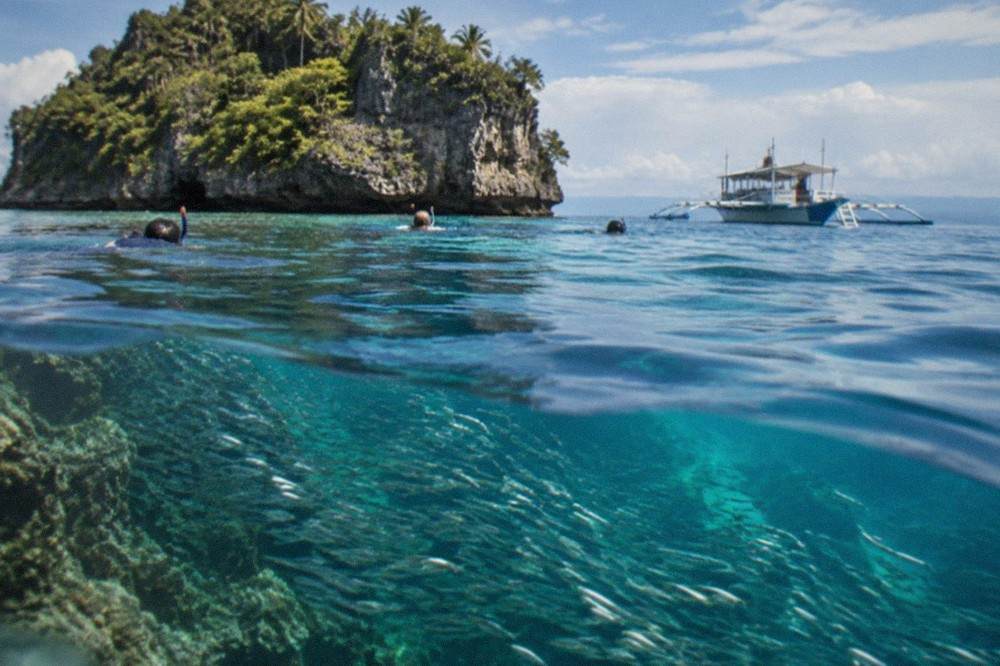
The signature sights at Pescador Island are steep coral walls dropping into deep blue water, large schools of jacks and barracuda, sea turtles grazing the reef flats, and the sardine baitballs that also mass off nearby Panagsama Beach. Divers describe wall dives with soft coral and gorgonian fans, while snorkelers stay on the shallower reef shoulders where the light reaches. Visibility is best in the dry months, roughly November to May, and the municipal site notes the sardines are present daily, weather permitting.
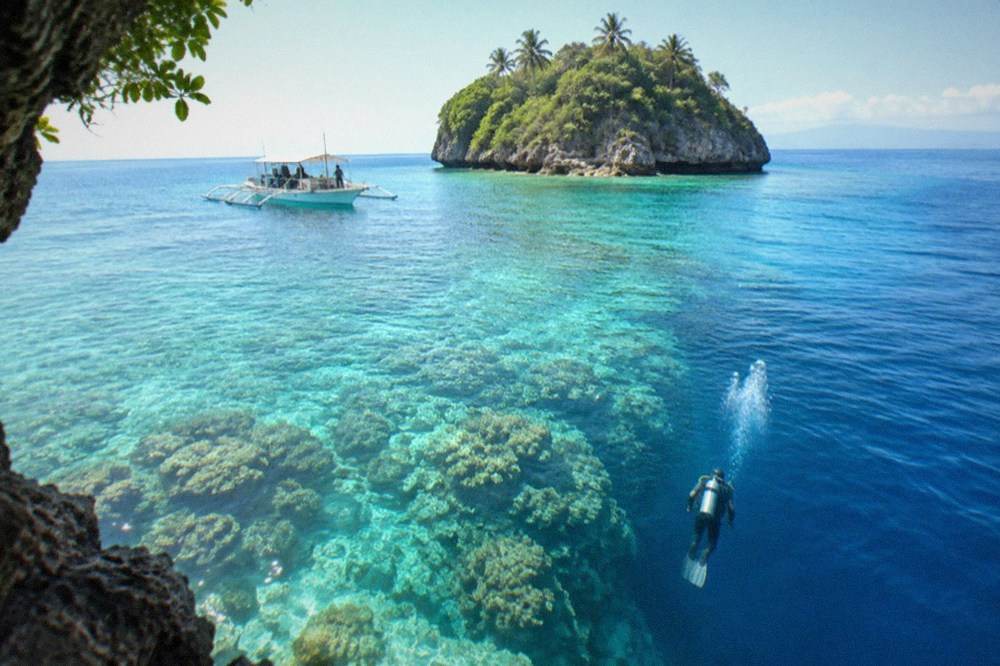
The island's underwater profile is a diver's shape rather than a beachgoer's. The reef forms a shallow shelf around the island and then falls away sharply, which is why so much of the marine life concentrates along the drop-off. Snorkelers get the top of the wall; divers get the full vertical face. The mooring buoys are placed so boats tie up above the wall without touching coral, and the guide requirement keeps groups spread out.
What you see depends on depth and season, but the reliable categories are these:
| Marine life | Where around Pescador | How commonly seen |
|---|---|---|
| Sardine schools (baitballs) | Water column off the wall; also off Panagsama | Daily, weather permitting |
| Sea turtles | Reef flats and seagrass patches | Common |
| Jacks and barracuda | Blue water along the drop-off | Common on wall dives |
| Soft coral and gorgonian fans | The wall itself, mid depths | Permanent reef structure |
| Reef fish (fusiliers, anthias, butterflyfish) | Shallow reef shoulder | Abundant |
The sardine run deserves its own paragraph because it is the region's headline act. Unlike migratory spectacles elsewhere, the sardine school at Moalboal is a permanent resident population, not a seasonal visitor, which is why the municipal tourism office can promote it year-round. The fish mass along the reef wall close to shore, and predators occasionally drive them into the tight spinning baitballs that photographers chase. Pescador adds the wall-dive dimension to the same ecosystem, so a combined day, sardines in the morning, island in the afternoon, is the classic Moalboal itinerary.
Is Pescador Island Good For Snorkelers Or Only For Divers?
Pescador Island works for both snorkelers and divers, but the experience differs sharply: snorkelers see the reef shoulder, the turtles and often the upper edge of the sardine schools, while the wall dives and the deep-schooling fish are diver territory. Snorkelers must still pay the environmental user fee and follow the guide and buoy rules, and the swim from a moored boat to the reef is short. Weak swimmers should use a life jacket, which guided tours generally require anyway.
The honest comparison is that Pescador is a dive site first. The wall is the attraction, and the wall belongs to divers. But the reef shoulder is not a consolation prize: turtles, dense reef fish and clear shallows make for a genuinely good snorkel, and the sardines are often visible from the surface when they school high in the water column. Families and mixed groups routinely split the day, with some diving and some snorkeling from the same boat.
Practical points for the snorkeling half of the group:
| Snorkel factor | What to expect |
|---|---|
| Access | By boat from Panagsama; short swim from mooring |
| Fees | Environmental user fee applies, about P100 (about US$1.6) |
| Guiding | Required inside sanctuary zones |
| Best light | Morning, before afternoon wind chop |
| Safety | Life jackets often required on guided tours |
If you are weighing Pescador against other Cebu water experiences, the coast offers alternatives. The sardine run at Moalboal is the shore-based option, whale shark watching at Oslob is the big-animal option on the other side of the argument, and Sumilon Island offers a resort day-pass version of island waters with its own sanctuary and lagoon. Each suits a different traveler, and the ethics and logistics differ too.
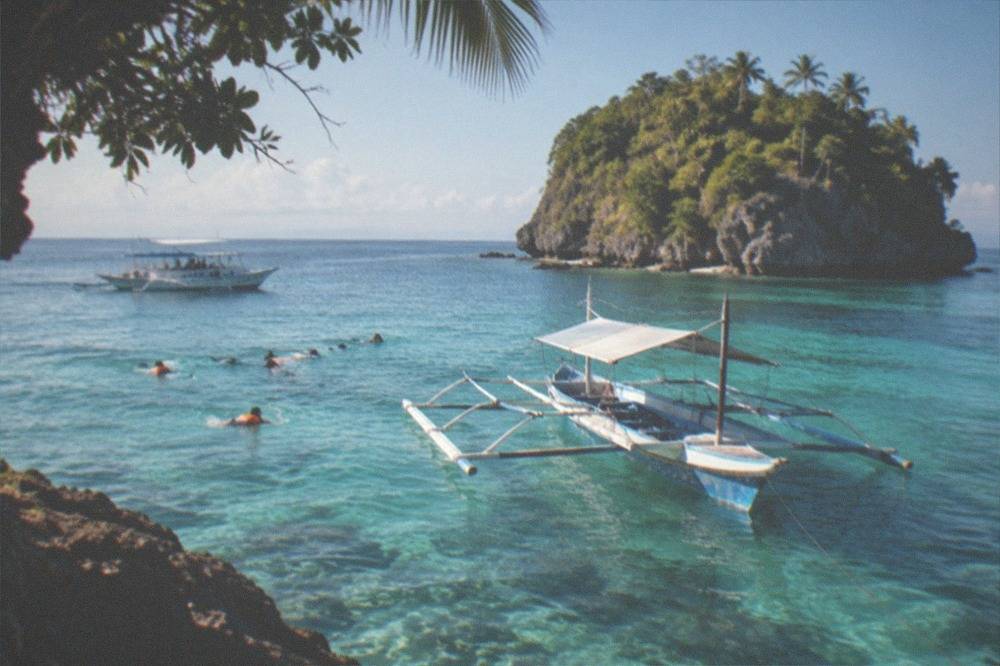
If arranging a private boat and guide for the day sounds better than piecing together fees and operators, there is a tour built exactly for that.
When Is The Best Time To Visit Pescador Island?
The best months for Pescador Island are the dry season, December through May, when PAGASA's national rule puts Cebu outside the rainy season and sea visibility around Moalboal is at its best, roughly November to May in local diving accounts. The wet season runs June to November, with typhoon risk peaking roughly July to October, and rough seas can cancel boat trips entirely. The sardines stay year-round, so the fish are not the constraint; the weather and the boat schedule are.
Cebu's climate is tropical, and the numbers behind that word matter for planning. The PAGASA Mactan station's 1991-2020 normals record 1,685.0 mm of rain annually across 138 rain days, with a mean temperature of 28.1°C. That rain is not spread evenly: the monthly totals swing from a low of 48.1 mm in April to a high of 194.8 mm in October, and the table below shows why spring is the sweet spot for underwater visibility. More of these guides are collected on Cebu Travel Guide.
| Month | Rainfall at Mactan station (mm) | What it means for Pescador |
|---|---|---|
| January | 105.2 | Dry season; good visibility |
| February | 69.6 | Dry season; good visibility |
| March | 58.6 | Dry season; very good visibility |
| April | 48.1 | Driest month; peak conditions |
| May | 95.0 | Dry season ending; still good |
| June | 175.6 | Rainy season begins |
| July | 192.9 | Wet; boat trips weather-dependent |
| August | 143.5 | Wet; storms possible |
| September | 179.6 | Wet; typhoon peak approaching |
| October | 194.8 | Wettest month; trips often disrupted |
| November | 161.9 | Late rainy season; improving late in the month |
| December | 139.7 | Transition to dry; visibility recovering |
Two caveats keep that table honest. First, rain on land does not always mean bad visibility at sea, since the deciding factor is wind and swell in the Tañon Strait rather than the rainfall itself; but the two correlate strongly enough that the dry months are the safe planning window. Second, typhoon season in the Visayas runs June to November, with landfall risk in the region highest in the November-December period, and Coast Guard suspensions of small-craft operations are a real possibility in those months. Check conditions locally the day before, not the month before.
The other calendar factor is crowding, and it cuts the other way from visibility. Domestic tourism peaks in the Philippine summer months and around Sinulog in January, when Cebu City fills for the festival held on the third Sunday of the month. A January or February trip can pair festival days in the city with excellent sea conditions in Moalboal, which is one of the better one-two combinations this province offers.
How Do You Get To Pescador Island From Cebu City?
The standard route from Cebu City to Pescador Island is a Ceres bus from the Cebu South Bus Terminal to Moalboal, taking roughly 2.5 to 3.5 hours, then a short hop to Panagsama Beach where dive shops and boat operators run trips to the island. Buses run frequently, roughly every 30 to 45 minutes, and you pay onboard or at the terminal. From Panagsama, boats are arranged through your accommodation, a dive shop, or a pre-booked tour.
The bus is the budget backbone of South Cebu travel and it works well for Moalboal. The Ceres Liner services from the South Bus Terminal are frequent enough that you do not need a timetable, only a starting time, and the fare range reflects the difference between ordinary and air-conditioned buses, around P120 (about US$1.9) to P210 (about US$3.3). Tell the conductor or driver your destination is Panagsama, since the bus stops along the national highway and the beach area is a tricycle or habal-habal ride inland from the road.
| Step | Mode | Time | Cost |
|---|---|---|---|
| Cebu City to Moalboal | Ceres bus from South Bus Terminal | About 2.5 to 3.5 hours | About P120 (about US$1.9) to P210 (about US$3.3) |
| Highway to Panagsama Beach | Tricycle or habal-habal | Short ride | Local rate, agree first |
| Panagsama to Pescador Island | Banca boat, arranged via dive shop or tour | Boat trip, weather permitting | Varies by operator and group size |
| Fees at the site | Dive fee and environmental user fee | Paid on arrival day | About P100 (about US$1.6) each |
The alternative to self-assembly is a day tour with private transportation, which removes the bus entirely and is often chosen by visitors with limited time. A private island-hopping tour from Cebu covers the road transfer, the boat and the guide in a single booking, and the operator's live listing carries the current price, which is not published in a fixed public tariff.
For drivers, the route is the coastal highway south through Carcar and around the island's western flank to Moalboal, and the same road continues toward Oslob on the other side of the south. That geography is why so many itineraries chain the south coast together: Kawasan Falls, the sardine run, Pescador and the whale sharks sit along one drivable arc, and the south Cebu day tour pattern exists because of it.
What Rules Apply At The Pescador Island Sanctuary?
The binding rules at Pescador Island are guide accompaniment inside the sanctuary zones, a prohibition on anchoring with boats using mooring buoys instead, the payment of the per-dive sanctuary fee and the Moalboal environmental user fee, and reef-safe conduct including no feeding and no touching of marine life. Life jackets are often required on guided snorkel tours. These rules come from the municipal framework around Ordinance 165-2021 and later local ordinances regulating snorkel guides and uniform rates.
The regulatory history is worth knowing because it explains why Moalboal feels more organized than some Philippine beach towns. The 2021 ordinance established the environmental user fee structure. In 2024, the municipality went further, passing an ordinance regulating snorkel guides, setting uniform rates and penalties, and then amending it later the same year. None of this changed the headline fees, but it professionalized the guide layer, which is the layer you actually interact with at Pescador.
Reef etiquette is not optional decoration here. The no-feeding rule matters because fed fish change behavior and the sardine run's natural dynamics are the attraction. The no-sunscreen-in-the-water principle applies as it does at Oslob's whale shark interaction: chemical sunscreen damages coral, and at a sanctuary the expectation is reef-safe products or none. Touching turtles, standing on coral and chasing fish all fall under guide enforcement, and a guide who lets a group do these things is breaking the same ordinance that licenses them.
The honest framing is that Pescador is a working conservation success with a fee-and-guide system that keeps it that way. Visitors who engage with the rules rather than resent them get a better site to dive, and the modest cost is the mechanism, not a toll.
How Does Pescador Island Compare With Other Cebu Island Experiences?
Pescador Island is the dive-and-wall-reef option among Cebu's island experiences: it beats the beach islands for underwater density, loses to them on sand and lounging, and sits closest to the sardine run, which is its natural pairing. Sumilon offers a resort-managed sanctuary day, Olango offers birdwatching and snorkeling on flat water near Mactan, and Malapascua offers thresher shark dives much further north. Choosing between them is choosing between wall diving, wildlife watching and beach comfort.
The comparison table keeps the differences concrete:
| Island or site | Main draw | Water activity | Best for |
|---|---|---|---|
| Pescador Island | Wall dives, fish schools | Diving and snorkeling | Divers, keen snorkelers |
| Sumilon Island | Resort day pass, lagoon, sanctuary | Snorkeling, swimming | Families, relaxed day trips |
| Olango Island | Ramsar bird sanctuary | Birdwatching, snorkeling | Wildlife watchers |
| Malapascua | Thresher shark dives | Diving | Dedicated divers |
| Panagsama shore | Sardine run | Shore snorkeling | Everyone, minimal logistics |
Two of those deserve a link rather than a summary sentence, because they answer different questions. Olango Island is the birdwatching alternative, a Ramsar wetland with over 60 migratory species resting there September to March, reachable on a day trip from the Mactan side of the metro area. Sumilon is the polished day, with the Bluewater resort's day-use window running 8:00 AM to 3:00 PM including boat transfers, which suits travelers who want sanctuary water without the dive-shop register.
For travelers building a full trip rather than a single day, the pairing question is usually Pescador versus the whale shark side of the south. The two experiences are not in conflict, they sit on the same stretch of coastline, and tours exist that bundle the whale sharks, Tumalog Falls and Sumilon into one long day for those who want the south compressed.
And for the flat-water wildlife alternative closer to the city, the bird-and-snorkel combination on Olango covers a completely different ecosystem in a single day trip.
What Should You Bring And How Should You Plan The Day?
A Pescador Island day needs reef-safe sunscreen or a rash guard, cash for the sanctuary and environmental fees, snorkel or dive gear either brought or rented, a dry bag for the boat, and an early start, since the sardine run is best between 7 and 9 AM and morning light beats afternoon wind chop at the island. Book the boat the day before, confirm the weather, and plan the return bus to Cebu City with the long journey in mind.
The early start is the single most consequential planning decision. The municipal guidance on the sardines is explicit about the 7 to 9 AM window, and the same logic applies at Pescador: the Tañon Strait tends to build wind and surface chop through the afternoon, which degrades both visibility and comfort. A boat on the water by 8 AM gets the calm window; a 1 PM departure often gets bounced-around snorkelers and a shorter session.
A practical packing and planning list:
| Item or decision | Why it matters |
|---|---|
| Cash, small notes | Fees are paid in pesos at kiosks and shops |
| Reef-safe sunscreen or rash guard | Coral protection, sanctuary expectation |
| Gear brought or rented | Rental about P150 (about US$2.4) to P250 (about US$4.0) locally |
| Dry bag | Boats are open banca style, spray happens |
| Motion-sickness remedy | The strait can roll, even on fair days |
| Booked boat or tour, day before | Morning slots fill in high season |
| Return bus timing | 2.5 to 3.5 hours back to Cebu City |
Where you sleep shapes the day in ways that are easy to underestimate. Staying in Moalboal itself, around Panagsama or the White Beach area, puts you minutes from the boat. Staying in Cebu City and doing the whole thing in one push means roughly five to seven hours of road time around the water time, which is feasible but changes the character of the day entirely. The Mactan area is a middle option, closer to the airport but still a serious drive south.
Common Questions About Pescador Island
How much does it cost to dive at Pescador Island?
Divers pay about P100 (about US$1.6) per dive in sanctuary fees, collected through dive shops, plus the Moalboal environmental user fee of P100 (about US$1.6) per person to enter the water. Gear rental adds roughly P150 (about US$2.4) to P250 (about US$4.0). The full cost of a dive package or boat depends on the operator; organized tour prices appear on the operator's live listing.
Can you snorkel at Pescador Island or is it divers only?
Snorkeling is allowed and worthwhile. Snorkelers see the reef shoulder, turtles and often the upper edge of the sardine schools, while the wall itself is diver territory. Guides are required inside the sanctuary zones and life jackets are often mandatory on guided tours.
How do you get to Pescador Island from Cebu City?
Take a Ceres bus from the Cebu South Bus Terminal to Moalboal, roughly 2.5 to 3.5 hours with fares around P120 (about US$1.9) to P210 (about US$3.3), transfer to Panagsama Beach, then arrange a boat through a dive shop, your accommodation, or a pre-booked tour.
When is the best time of year to visit Pescador Island?
The dry season, December through May, offers the best sea conditions, with local accounts putting peak visibility roughly November to May. The rainy season runs June to November and boat trips can be disrupted by weather, though the sardine schools are present year-round.
Is Pescador Island the same as the Moalboal sardine run?
No. The sardine run happens off Panagsama Beach, a few metres from shore, and is a shore-based snorkel. Pescador Island is a separate boat trip to a protected island sanctuary with wall dives and reef snorkeling. Many visitors combine both in one day.
Are there rules about anchoring and guides at Pescador Island?
Yes. Anchoring is prohibited and boats use mooring buoys, guides are required inside the sanctuary zones, and reef-safe conduct rules apply, including no feeding and no touching marine life. The framework stems from Municipal Ordinance 165-2021 and later local ordinances regulating guides.
Pescador Island rewards exactly the kind of traveler who reads a fee table before a trip: the site is regulated, the rules are enforced, and the underwater payoff, from the sardine baitballs to the wall's schooling jacks, is the direct return on that small bureaucratic effort.