What Time Of Year Are Whale Sharks In The Philippines?
Whale sharks swim off Cebu all year. This guide explains the viewing season in Oslob, the best months, the daily timing window and what weather means for your trip.
Whale sharks swim off the coast of Cebu, an island province in the Central Visayas region of the Philippines, in every month of the year. That single fact separates Cebu from most whale shark destinations on earth. In many famous spots, the giants pass through on a migration and the season closes for half the year. At Oslob, the small coastal barangay of Tan-awan on Cebu's southeast shore, the local government's tourism office runs the whale shark interaction daily, with the viewing window reported consistently as roughly 6:00 AM to 12:00 PM, year-round. The question for a visitor is therefore not whether the sharks will be there in a given month, but which month gives the calmest seas, the best visibility and the fewest weather disruptions.
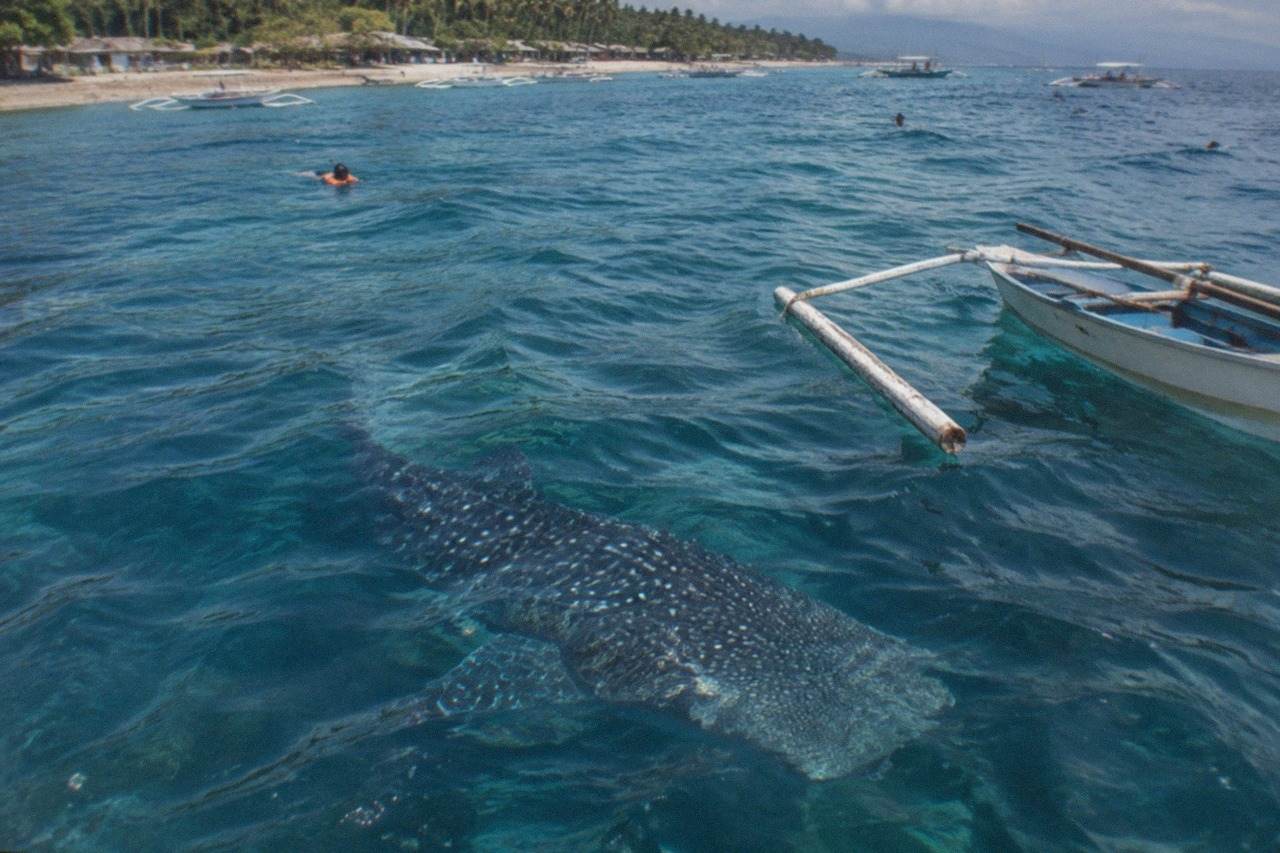
The distinction matters because the Philippines has two named seasons, not four. PAGASA, the national weather service, classifies the year into a dry season from December to May and a rainy season from June to November. Both seasons have whale sharks in Oslob. What changes is the experience around them: sea state, crowds, water clarity and the risk that a typhoon warning scrubs a planned day trip. This guide walks through the calendar, the daily clock and the practical planning that turns a good month into a good morning.
What Time Of Year Are Whale Sharks In The Philippines?
Whale sharks are present in the Philippines in every month of the year, and at Oslob in Cebu the regulated interaction runs daily with a viewing window of roughly 6:00 AM to 12:00 PM, closing around noon. There is no closed season and no migration gap. The choice of month is about weather, sea conditions and crowd levels rather than shark presence, and the dry season from December to May generally offers the calmest water for the visit.
The reason Oslob can operate continuously is unusual. The whale sharks that gather at Tan-awan are drawn by a regulated feeding program run under municipal rules: only licensed spotters may feed the animals, and tourists watch and snorkel from boats beside them. Because the sharks associate the area with that food source, they return reliably rather than passing through on a fixed migratory route. The Municipality of Oslob's tourism office regulates the whole operation, sets the briefing rules and collects the environmental fees.
Reliably is not the same as guaranteed. In late May 2026, the whale sharks were absent from the Tan-awan interaction area for roughly four days because seasonal plankton movement drew them toward a neighboring barangay. The local government was explicit that operations had not been suspended, only paused by the sharks' own movements, and the activity resumed when the animals returned. Anyone planning a trip around a single fixed date should build in a spare morning. The deeper dive into that question lives in are whale sharks guaranteed at Oslob.
When Is The Best Month For Whale Sharks In Oslob, Cebu?
The best months for whale sharks in Oslob are within the dry season, December to May, when seas are calmer and rain disruptions are least likely, with the shoulder months of March to May offering warm, clear conditions before the rainy season builds. June to November still has whale sharks, but typhoon risk peaks and rough seas can pause boat trips on any given day. December and January add the Sinulog festival crowd factor to the whole island.
PAGASA's Mactan station normals give the numbers behind that advice. The station's 1991-2020 record shows annual rainfall of 1,685.0 mm spread over 138 rain days, with the wettest stretch of the year falling from June through November. The monthly rainfall figures below show why the calendar matters even when the sharks do not.
| Month | Typical Rainfall At Mactan Station (mm) | Season | Whale Shark Viewing At Oslob |
|---|---|---|---|
| January | 105.2 | Cool dry | Daily, Sinulog crowds mid-month |
| February | 69.6 | Cool dry | Daily, popular with festival-season visitors |
| March | 58.6 | Hot dry | Daily, calm seas common |
| April | 48.1 | Hot dry, driest month | Daily, strong visibility |
| May | 95.0 | Hot dry, building humidity | Daily, plankton shifts possible |
| June | 175.6 | Rainy season begins | Daily, rain risk rising |
| July | 192.9 | Rainy season | Daily, typhoon season peak |
| August | 143.5 | Rainy season | Daily, storms possible |
| September | 179.6 | Rainy season | Daily, storms possible |
| October | 194.8 | Rainy season, wettest month | Daily, highest disruption risk |
| November | 161.9 | Rainy season, landfall risk high | Daily, Typhoon Tino hit Nov 2025 |
| December | 139.7 | Dry season begins | Daily, holiday crowds |
Two cautions sit under that table. First, rainy-season months do not mean constant rain: mornings in the Visayas are frequently clear even in July, and the 6:00 AM start of the viewing window is deliberately early to beat both wind and heat. Second, the typhoon season runs June to November with peak activity roughly July to October, and the Visayas carry a high landfall risk in November and December. Typhoon Tino in early November 2025 brought severe flooding to Cebu, though the Department of Tourism stated afterward that core tourism zones including Cebu City and Mactan were largely unaffected and open. The full seasonal breakdown is in the best time to visit Cebu.
For travelers who want to line up the shark trip with the rest of a Cebu itinerary, the month-by-month detail for the sharks specifically continues in the best month for whale sharks in Cebu.
How Does The Daily Timing Window Shape A Whale Shark Trip In Cebu?
The whale shark interaction at Oslob runs from roughly 6:00 AM to 12:00 PM daily, with registration reported to cut off around 11:00 AM, so the real season question inside each day is how early you can arrive. Boats go out in short sessions of about thirty minutes, briefings are mandatory, and the calmest, clearest water is almost always in the first hours after opening. Most guided tours from Cebu City therefore leave before dawn.
The early start is not a marketing flourish. Tan-awan sits roughly 3.5 to 4.5 hours from Cebu City by road on the Ceres bus routes that run from the Cebu South Bus Terminal, and day tours typically build the whole schedule backwards from the 6:00 AM opening. Arriving for the first sessions means flatter water for snorkeling, better light for photographs and a shorter wait, since 800 to 900 visitors a day were reported at the site in May 2026. By late morning the queue is longer, the wind has often picked up and the sharks' behavior can shift as the feeding sessions accumulate.
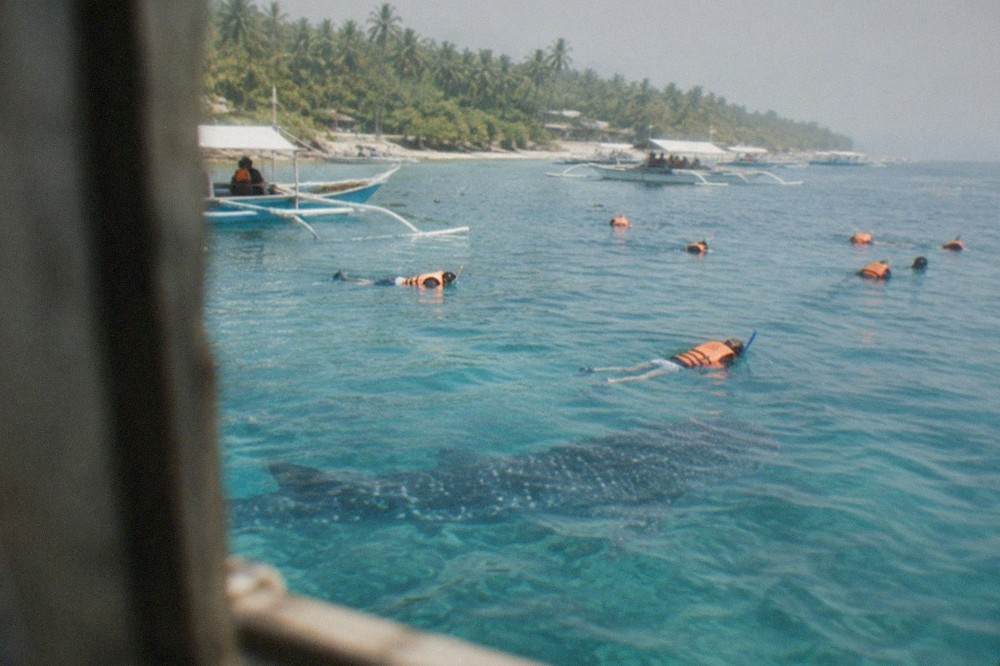
The rules that govern each session are set by the municipal government: a mandatory briefing before boarding, a minimum distance of about four meters from the body of the shark, no touching, no sunscreen in the water, no flash photography, life jackets required and feeding performed only by licensed spotters. A standard session lasts about thirty minutes, with a second session available for an additional fee. The ethics of the feeding program deserve their own reading, and the whale shark ethics discussion at Oslob covers it honestly.
A join-in day tour solves the timing problem in one booking. The Oslob Whale Shark Watching Join In Day Tour from Cebu handles the pre-dawn departure, the briefing queue and the onward stop at Tumalog Falls, whose entrance runs about P50 (about US$0.8) per person, without you having to negotiate a habal-habal motorbike transfer or read a Ceres timetable by headlamp. Check availability if that structure appeals; the operator's live listing carries the current price and departure details.
The reason this particular product suits a seasonal question is that its schedule already assumes the constraints above. It departs Cebu City in the early morning, arrives for the opening of the viewing window and folds in the Tumalog Falls stop on the way back, which means the dry-season advantages of calm water and the rainy-season risk of a rough crossing are handled by the operator rather than by you. In the wet months, that buffer matters more: a join-in tour that runs daily knows which mornings the boats go out and which mornings they hold.
What Does A Whale Shark Trip Cost In Oslob, Cebu?
The whale shark interaction at Oslob is priced by municipal ordinance rather than by season, and the current rates have applied since 21 March 2025, when the Oslob local government unit restored the Ordinance No. 010 fee schedule. Foreign visitors pay roughly double the local rate for the same boat, guide and thirty-minute session, and optional snorkeling, scuba or second-session upgrades add to the base fee. These are municipal fees, not tour prices, and they apply year-round.
The current numbers work out as follows: the environmental fee is P1,000 (about US$15.9) per foreign visitor and P500 (about US$8.0) per Filipino visitor, boat and guide included. Snorkeling or scuba upgrades can add roughly P200 (about US$3.2) to P500 (about US$8.0), and a second thirty-minute session costs extra. The fee structure reverted in March 2025 when the Oslob local government unit published notice that the Ordinance No. 010 (s. 2020) rates were back in force, ending a period of different charges. The fee is paid at the municipal registration area in Tan-awan before the briefing, and it covers the boat, the guide and the interaction session itself. It does not cover transport from Cebu City, food, or the add-on stops that visitors pair with the sharks.
| Item | Typical Cost | Notes |
|---|---|---|
| Whale shark environmental fee, foreign visitor | P1,000 (about US$15.9) per person | Boat and guide included, Ord. 010 rates |
| Whale shark environmental fee, Filipino visitor | P500 (about US$8.0) per person | Same inclusions, local rate |
| Snorkeling or scuba upgrades | Roughly P200 (about US$3.2) to P500 (about US$8.0) | On top of the standard viewing fee |
| Tumalog Falls entrance | About P50 (about US$0.8) per person | Common same-day stop, habal-habal from Tan-awan about P50 (about US$0.8) to P100 (about US$1.6) each way |
| Ceres bus, Cebu South Bus Terminal to Oslob | Roughly P145 (about US$2.3) to P250 (about US$4.0) | Ordinary or air-conditioned, about 3.5 to 4.5 hours |
Booked tours price themselves separately and the figures render on each operator's live listing. A fuller cost breakdown for the experience, including what tour packages add over the municipal fee, is in what it costs to swim with whale sharks in Oslob.
Which Cebu Whale Shark Season Mistakes Should You Avoid?
The three costliest timing mistakes are assuming the sharks are guaranteed on a single fixed date, planning a rainy-season trip without a backup morning, and arriving at Oslob after mid-morning when the window is closing. Sightings are not guaranteed, the viewing window ends around noon with registration reported to cut off around 11:00 AM, and typhoon-season storms can pause boat operations even while the site itself stays open. Build one spare morning into any fixed-date plan.
The May 2026 absence is the clearest recent illustration. For roughly four days the sharks followed plankton away from the Tan-awan interaction area, and tour operations paused while the municipal government publicly explained that the animals had not left Oslob permanently and that activity would resume with sightings. It did. But a traveler with a single non-negotiable morning that week went home without a shark encounter. The practical answer is flexibility: a second morning in Oslob or a schedule that can shift a day.
The second mistake is treating the rainy season as a monolith. June to November carries the typhoon risk, but the peak of activity is roughly July to October, and the Visayas landfall risk runs highest in November and December. Mornings are frequently workable even in the wet months, and the sharks are present regardless. Travelers who can only come between June and November should not cancel the idea, they should insure the date: check PAGASA advisories, keep the morning free and hold the afternoon loosely. Whether the experience justifies the effort is a fair question, and the honest weighing of it depends on how much the calm, close encounter means to you against the early start and the municipal rules.
The third mistake is the quietest one: forgetting that the sharks are the morning and everything else is the day. Tumalog Falls, a short habal-habal ride inland, is a natural second stop and its basin is at its most photogenic before the crowds arrive. Many join-in tours bundle the two precisely because the timings interlock. If the whole south coast is on your list rather than just the sharks, the wider question of where else in the Philippines the animals gather, and how the Philippine locations compare, is covered in the dedicated guide on where to see whale sharks in the Philippines.
Common Questions About Whale Shark Timing In The Philippines
What time of year are whale sharks in the Philippines?
In Cebu, whale sharks are present at Oslob in every month of the year. The regulated interaction runs daily with a viewing window of roughly 6:00 AM to 12:00 PM, and there is no closed season. The choice of month is about weather and crowds: the dry season from December to May generally brings the calmest seas.
Are whale sharks guaranteed to appear at Oslob?
No. Sightings are not guaranteed. In late May 2026 the sharks were absent from the Tan-awan interaction area for roughly four days because seasonal plankton movement drew them toward a neighboring barangay, and operations paused until they returned. Build a spare morning into any fixed-date plan.
What time of day is the whale shark interaction at Oslob?
The viewing window runs from roughly 6:00 AM to 12:00 PM daily, with registration reported to cut off around 11:00 AM. Sessions last about thirty minutes after a mandatory briefing. The calmest water and shortest queues are in the first hours after opening.
Does the rainy season close Oslob whale shark watching?
No. The interaction runs year-round, including the rainy season from June to November. What changes is disruption risk: typhoon season peaks roughly July to October, and rough seas can pause boat trips on individual days even while the site stays open.
How much does whale shark watching cost at Oslob?
The municipal environmental fee is P1,000 (about US$15.9) per foreign visitor and P500 (about US$8.0) per Filipino visitor, boat and guide included, under rates that took effect again on 21 March 2025. Snorkeling or scuba upgrades can add roughly P200 (about US$3.2) to P500 (about US$8.0).
Is Cebu the best place in the Philippines for whale sharks?
Cebu's Oslob site is the most accessible and the only one running a regulated daily interaction with a fixed viewing window, which makes it the most reliable for a short trip. The wider comparison of Philippine whale shark locations is covered in the dedicated guide on where to see whale sharks in the Philippines.
Whale sharks in the Philippines are a year-round fact, and Cebu is where the calendar bends to you. Pick a dry-season month if you can, pick any month if you cannot, and in every case pick the earliest boat of the morning. More seasonal planning for the island as a whole continues with Cebu Travel Guide's best-time-to-visit coverage, and the sharks will still be at Tan-awan when you get there.