Best Time To Visit Cebu
The best time to visit Cebu is the dry season from December to May, with December to February the coolest and most comfortable months for city sightseeing, whale sharks and island hopping.
Short answer
December to May is Cebu's dry season and the best time to visit, with December to February offering the coolest temperatures. Whale sharks swim at Oslob year round, and Sinulog falls on the third Sunday of January.
Cebu, an island province in the Central Visayas region of the Philippines, sits close to the equator, so its year is shaped by two seasons rather than four: a dry stretch from December to May and a rainy stretch from June to November. PAGASA, the national weather service, classifies the country this way, and its Mactan station normals for 1991 to 2020 put annual rainfall at 1,685.0 mm spread over 138 rain days, with a mean temperature of 28.1 C. That single set of numbers explains almost everything about when to fly in, when the whale sharks are most reliable, and when the crowds and prices peak around the Sinulog festival. This guide from Cebu Travel Guide breaks the year down so a first-time visitor can pick the right month with confidence.
What Is The Best Time To Visit Cebu Overall?
The best time to visit Cebu is the dry season from December to May, and the sweet spot within it is December to February, when the northeast monsoon keeps temperatures at their coolest and rainfall at its lowest. March to May stays dry but turns hot, while June to November brings the rainy season and typhoon risk. For festivals, the third Sunday of January is Sinulog, the single busiest weekend of the year.
PAGASA's national rule divides the Philippine year cleanly: rainy season June to November, dry season December to May, with a cool dry phase from December to February and a hot dry phase from March to May. Cebu's Mactan station, whose 1991-2020 normals are the reference data for this island, records a mean maximum of 31.3 C and a mean minimum of 24.9 C, so even the "cool" months are warm by temperate standards. What changes most across the year is rain, not heat.
For a first trip that mixes the city heritage sites, the south coast and a beach day or two, the December to February window is the safest bet. The Cebu itinerary guide works in any month, but its island-hopping days are far more dependable when the seas are calm. A five-day plan is usually enough to combine the Basilica Minore del Santo Niño, Magellan's Cross and Fort San Pedro in the city with one south-coast day and one Mactan beach day, and the pacing suits the short dry-season days perfectly.
How Does Cebu's Rainfall Change Month By Month?
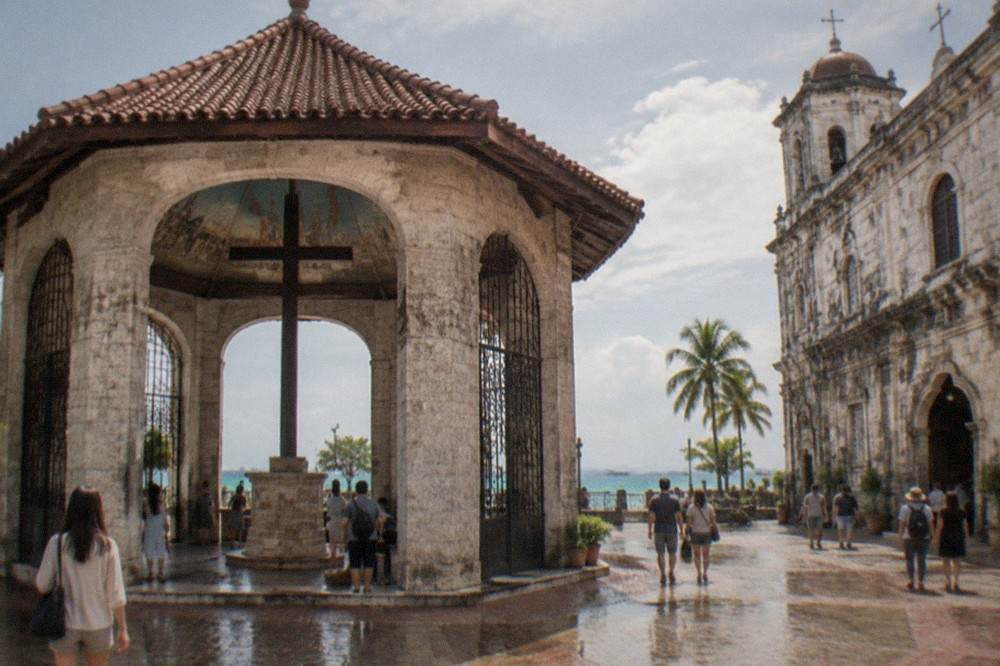
Cebu's wettest month is October at 194.8 mm of rain and its driest is April at 48.1 mm, according to PAGASA's Mactan station normals for 1991 to 2020. Rainfall climbs steeply from May's 95 mm into the June-to-November rainy season, then falls back through December and January. February and March sit in a comfortable middle, drier than the monsoon but greener than the April peak of the dry heat.
The table below gives the full monthly series. These are climatological averages, not forecasts: an individual October day can be dry and an individual January day can pour, but the pattern holds over a whole month of travel.
| Month | Average rainfall (mm) | Season |
|---|---|---|
| January | 105.2 | Cool dry |
| February | 69.6 | Cool dry |
| March | 58.6 | Hot dry |
| April | 48.1 | Hot dry |
| May | 95.0 | Hot dry |
| June | 175.6 | Rainy |
| July | 192.9 | Rainy |
| August | 143.5 | Rainy |
| September | 179.6 | Rainy |
| October | 194.8 | Rainy |
| November | 161.9 | Rainy |
| December | 139.7 | Cool dry |
Two readings fall out of this table. First, the rainy season is not a wall of water: August averages less rain than June or September, so a low-season trip in August is a defensible gamble. Second, December is a transition month, still wetter than January or February, which is worth knowing for anyone planning a Christmas trip. The deeper detail on storms, advisories and what a typhoon actually does to a Cebu holiday lives in the Cebu weather and typhoon season guide.
Whenever a traveler lands, the airport logistics are the same, and the Cebu airport guide covers the transfer options from Mactan-Cebu International into the city, from the MyBus to SM City Cebu to the taxi queues at arrivals.
Food is the one part of a Cebu trip that does not care about the weather at all, and the city's markets and lechon stalls run twelve months a year. Rain or shine, the grill fires at Carbon Market start before dawn, and a guided walk through the stalls is the fastest way to learn what to order and how to order it.
When Is Typhoon Season In Cebu?
Typhoon season in Cebu runs from June to November, with peak activity roughly July to October and landfall risk in the Visayas highest in November and December. The most recent severe event was Typhoon Tino (international name Kalmaegi) in early November 2025, which brought record rainfall, deadly flooding across Cebu and a provincial state of calamity. Outside these months, direct typhoon hits are rare.
Tino is the case study worth knowing. It formed on 31 October 2025, crossed the Visayas around 4 to 5 November, and dropped a record 428 mm of rain in 24 hours, causing the worst flash flooding officials could recall in Cebu. Rappler's year-end tally counted 253 deaths across the Philippines from the storm. Crucially for travelers, the Department of Tourism stated within a week that the core tourism zones, Cebu City and Mactan, were largely unaffected and open.
That pattern repeats: a typhoon disrupts a week, not a season, and the island's tourism infrastructure recovers fast. The practical rules for a June-to-November trip are simple.
| Typhoon-season topic | What the record shows |
|---|---|
| Season window | June to November (PAGASA national rule) |
| Peak months | Roughly July to October |
| Visayas landfall risk | Highest November to December |
| Worst recent storm | Typhoon Tino, early November 2025 |
| Tino's 24-hour rainfall in Cebu | 428 mm, a record |
| Core zones after Tino | Cebu City and Mactan open within days |
Book refundable rates, keep one flexible day in a week-long plan, and watch PAGASA advisories rather than canceling outright. The Cebu safety guide covers the same ground for the whole trip, including the September 2025 earthquake recovery in the north of the island.
When Is The Best Time To See Whale Sharks In Oslob?
Whale sharks swim at Oslob year round, every morning, because the interaction is a regulated feeding program rather than a migration, so there is no closed season. The viewing runs roughly 6 AM to 12 PM daily, and the fee is charged per person with boat and guide included. The trade-off is crowds: 800 to 900 people a day visit in peak season, so the earliest slots are calmest.
The current fee is P1,000 (about US$15.9) for foreign visitors and P500 (about US$8.0) for Filipinos, set by the Oslob municipal ordinance that took effect on 21 March 2025. The year-round reliability is the single most useful fact about Oslob, and it removes the biggest timing pressure from a Cebu trip. Sightings are not guaranteed in the strictest sense: in late May 2026 the whale sharks were absent from the Tan-awan interaction area for about four days when plankton moved to a neighboring barangay, and the local government confirmed operations simply paused and resumed. Four days in a year is a good record.
Timing within the day matters more than timing within the year. The Oslob whale sharks guide covers the rules, which include a minimum distance of about 4 m, no sunscreen in the water, no touching and a session of about 30 minutes. Month-by-month advice is in best time for whale sharks in the Philippines.
For most visitors, Oslob is reached on a day tour from Cebu City, which typically adds Tumalog Falls, about P50 (about US$0.8) to enter, and sometimes Sumilon Island. The Oslob day trip guide covers the logistics, and the south Cebu itinerary shows how to chain Oslob with Moalboal and Kawasan Falls in a single multi-day loop along the island's west and south coasts.
When Is Sinulog, And Should You Plan Around It?
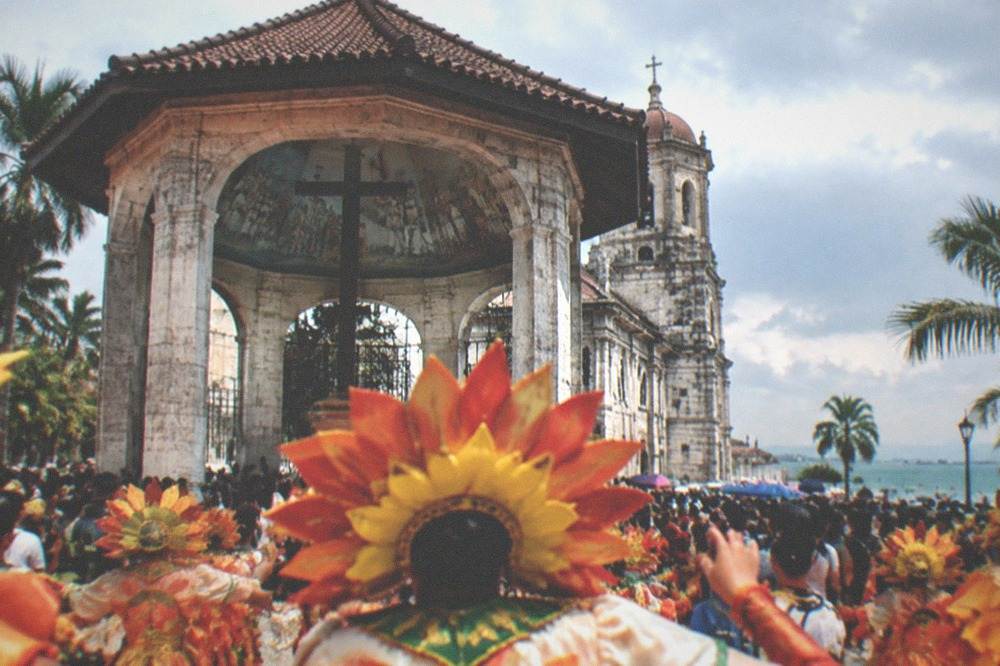
Sinulog, Cebu's grand festival, falls on the third Sunday of January: the 2027 Grand Parade is set for 17 January 2027, with the opening salvo on 7 January. It is the busiest, loudest and most expensive weekend of Cebu's year, and the main venue is the Cebu City Sports Center, not the South Road Properties used in 2023 and 2024. Anyone who wants the festival should book months ahead; anyone who does not should avoid the week entirely.
Sinulog honors the Santo Niño, the image given to Queen Juana at her baptism in 1521 and found again in 1565, and it is the reason January is both Cebu's coolest month and its most crowded. Hotel rates spike, streets close, and the Grand Parade fills the city with dancers in sequined costumes. The Sinulog festival guide has the full schedule and viewing advice.
The venue detail matters for planning. After two years at the South Road Properties, the parade returned to the Cebu City Sports Center in 2025 and stays there for 2027, which puts the action back in the central city near the Basilica Minore del Santo Niño rather than out on reclaimed land. Visitors staying in the central city grid will be within walking distance of the route, while those based out on Mactan should plan for heavy bridge traffic all weekend.
What Is The Cheapest Or Quietest Time To Visit Cebu?
The cheapest and quietest time to visit Cebu is the shoulder stretch from late May to early June, and again in September, when the dry-season crowds have left, hotel rates soften and the rainy season has not yet reached its peak. June and August average less rain than July, September, October or November, so a low-season trip is a genuine bargain rather than a washout. The trade-off is a typhoon plan and flexible bookings.
Low season in Cebu is not like low season in a temperate country. The sea stays warm, the whale sharks keep feeding, and the rain, when it comes, tends to arrive in heavy afternoon bursts rather than all-day drizzle. The Cebu budget and costs guide shows what a trip costs at each price level, and the pattern is consistent: the same guesthouse that fills at Sinulog prices in January is negotiable in June.
The table below summarizes the whole year at a glance.
| Period | Weather | Crowds and cost | Best for |
|---|---|---|---|
| December to February | Cool dry, lowest rain | Peak crowds, highest rates around Sinulog | First trips, festivals, everything |
| March to May | Hot dry, April driest | Busy but softer than January | Beaches, diving, island hopping |
| June to August | Rainy season builds | Low season, best value | Budget trips, flexible travelers |
| September to November | Peak typhoon risk, October wettest | Quietest, cheapest | Repeat visitors, city-focused trips |

Which Season Suits Beaches, Diving And Island Hopping In Cebu?
For beaches, diving and island hopping around Cebu, March to May is the best window: the seas are at their calmest, underwater visibility peaks and April's 48.1 mm average rainfall is the driest month on record for the island. December to February is nearly as good and cooler. June to November brings rougher seas, and boat operators suspend trips when the coast guard posts gale warnings.
The sea state, not the air temperature, is what a beach itinerary should be planned around. Island-hopping trips from Mactan to Hilutungan, Caohagan and Nalusuan, and the Moalboal sardine run, all depend on boats running, and rough-water cancellations cluster in the typhoon months.
Fees are the same year round. The Lapu-Lapu environmental fee for island hopping is P100 (about US$1.6) for foreign tourists, the Moalboal environmental user fee to swim or snorkel at Panagsama is P100 (about US$1.6), and Kawasan Falls' Level 1 entrance is P200 (about US$3.2). None of these change with the season, so the only timing cost of a low-season trip is weather risk.
| Activity | Best months | Why |
|---|---|---|
| Island hopping from Mactan | December to May | Calm seas, reliable boat departures |
| Moalboal sardine run | December to May | Best visibility; school is resident year round |
| Oslob whale sharks | Year round | Regulated feeding program, daily 6 AM to 12 PM |
| Kawasan Falls and canyoneering | December to May | Rain-related suspensions cluster in wet months |
| Malapascua thresher shark dives | October to April | Calmer crossing to the shoal |
| Sinulog festival | Third Sunday of January | 17 January 2027, CCSC venue |
One genuinely seasonal event worth planning around is bird migration. Olango Island Wildlife Sanctuary, a Ramsar site since 1 July 1994 and the first in the Philippines, hosts over 60 migratory species that rest and feed there from September to March, peaking around October to March. A birding trip makes the rainy-season edge months suddenly interesting, and the entrance fee is about P100 (about US$1.6) for foreign visitors against P30 (about US$0.5) for Filipino adults.
What Should A Month-By-Month Cebu Calendar Look Like?
A practical Cebu calendar splits into four blocks: January and February for cool dry sightseeing and Sinulog, March to May for hot dry beach and diving trips, June to August for low-season value with building rain, and September to November for the quietest months at the price of typhoon risk. October is the wettest month at 194.8 mm and April the driest at 48.1 mm, so the shoulder choice is really between February and June.
The month-by-month summary below turns the rainfall table and the season rules into a decision aid.
| Month | Rainfall (mm) | What to expect in Cebu |
|---|---|---|
| January | 105.2 | Coolest month; Sinulog on the third Sunday; peak crowds |
| February | 69.6 | Dry, comfortable, still busy; excellent all-round month |
| March | 58.6 | Hot and dry; great for beaches and diving |
| April | 48.1 | Driest month; hottest stretch begins |
| May | 95.0 | Hot, first rains returning; shoulder pricing starts |
| June | 175.6 | Rainy season starts; low rates, whale sharks uncrowded |
| July | 192.9 | Peak typhoon season; flexible plans required |
| August | 143.5 | Wet but often better than July; quietest city sights |
| September | 179.6 | Typhoon risk; Olango bird migration begins |
| October | 194.8 | Wettest month; peak bird season at Olango |
| November | 161.9 | Late typhoon risk, Tino's anniversary month; birds peak |
| December | 139.7 | Rains easing; Christmas crowds build toward January |
Getting around in any of these months is covered by the getting around Cebu guide, and onward trips by sea by the ferries from Cebu guide, which notes that coast guard typhoon suspensions are the main seasonal disruption to ferry schedules. The OceanJet fastcraft to Tagbilaran runs about 13 times a day in normal weather, so a Bohol side trip is easy to slot into any dry-season week.
For travelers pairing Cebu with another island, the timing question extends to the whole country, and the Philippines visa and eTravel guide covers the entry rules that apply in every season, including the 30-day visa-free stay for most Western nationals and the free eTravel registration required within 72 hours of arrival.
The short version of all of this: December to February for the best all-round trip, March to May for the sea, June to November for the budget, and the third Sunday of January only if the noise is the point.
Common Questions About The Best Time To Visit Cebu
What is the best month to visit Cebu?
February is the best single month: it is dry, cooler than March to May, comfortably outside the typhoon season and past the Sinulog crowds of mid-January. PAGASA's Mactan normals put February rainfall at 69.6 mm against October's 194.8 mm peak.
What is the rainy season in Cebu?
The rainy season runs June to November, per PAGASA's national classification, with typhoon risk peaking roughly July to October. October is Cebu's wettest month at 194.8 mm on the 1991-2020 Mactan normals.
Is there a typhoon season in Cebu?
Yes, June to November, with the most recent severe event Typhoon Tino in early November 2025, which caused record flooding in Cebu. Outside that window direct typhoon hits are rare, and the core tourism zones of Cebu City and Mactan reopened within days even after Tino.
When can you see whale sharks in Oslob?
Year round. Oslob's whale shark interaction is a regulated daily feeding program running roughly 6 AM to 12 PM, not a migration, so there is no closed season. The fee is P1,000 (about US$15.9) for foreign visitors and P500 (about US$8.0) for Filipinos, boat and guide included.
When is Sinulog held in Cebu?
On the third Sunday of January. The 2027 Grand Parade is set for 17 January 2027 at the Cebu City Sports Center, with the opening salvo on 7 January. Expect peak crowds and peak hotel rates that week.
What is the cheapest time to fly to Cebu?
The low season from June to September brings the softest hotel rates and the fewest crowds, at the cost of rain and typhoon risk. June and August average less rain than July, September or October, making them the best-value rainy-season months.