What Is The Best Tour In Cebu?
The best tour in Cebu depends on what you want from the island: a market food walk in Cebu City, whale sharks in Oslob, canyoneering at Kawasan Falls or island hopping off Mactan. Here is how to choose.
Cebu, an island province in the Central Visayas region of the Philippines, is the rare destination where a heritage city founded in 1565, whale sharks, waterfalls and coral sanctuaries all sit within a day trip of each other. That range is exactly why "the best tour" is such a loaded phrase here: the right answer for a first-time visitor is not the right answer for a diver, and neither matches what a family with young children should book. This page from Cebu Travel Guide sorts the island's strongest tour categories against each other, names a single overall winner for most travelers, and shows what each option actually delivers.
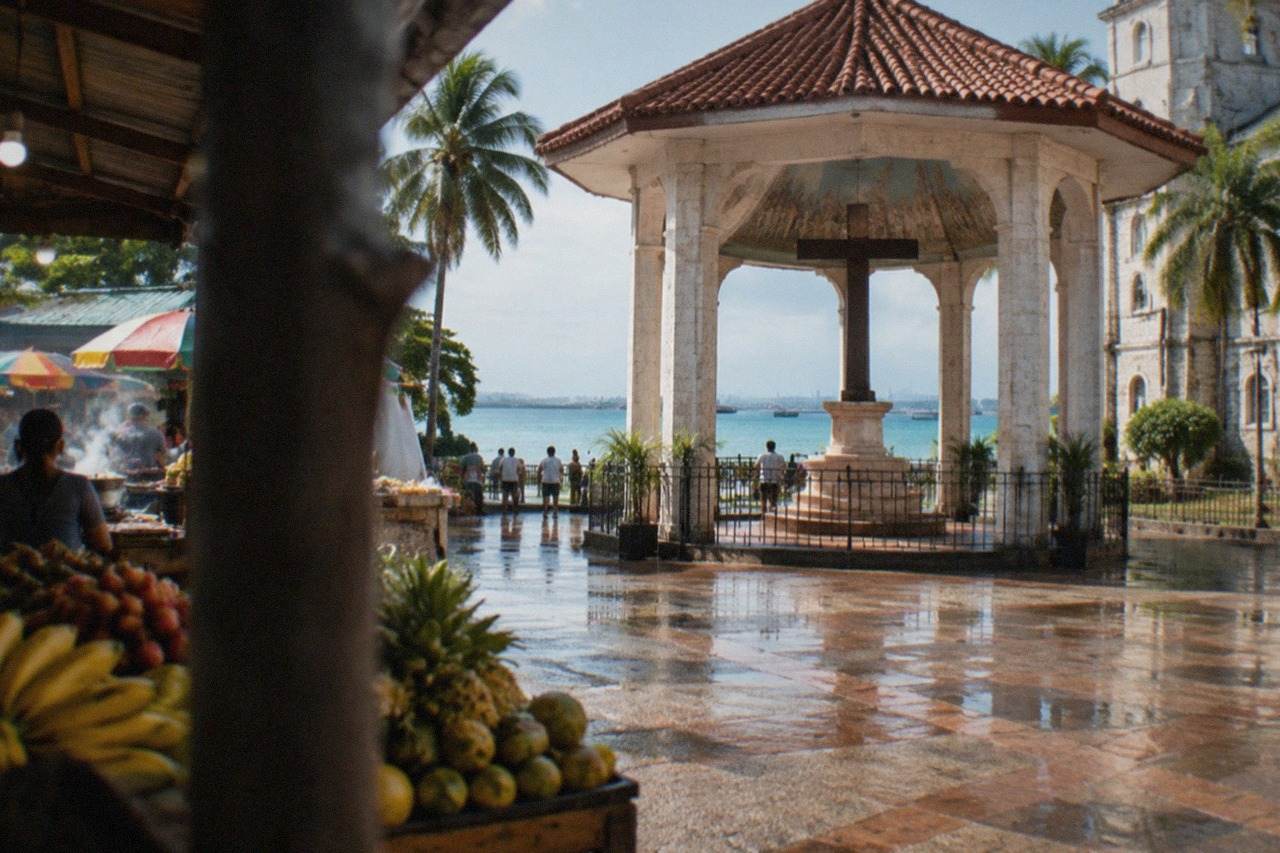
What Is The Best Tour In Cebu?
For most travelers the best tour in Cebu is a guided market and food walk through Cebu City, because it delivers the island's strongest single asset, its food culture, without a long transfer, and it works in any season. If your priority is wildlife rather than food, the Oslob whale shark morning session is the alternative answer, and it is the one experience visitors travel to Cebu specifically for.
Those two answers cover most people. A market food tour costs a few hours and stays inside the city, which matters if your trip is short or your flight lands late. The whale shark session in Oslob, by contrast, is a pre-dawn commitment: the municipal interaction area in Tan-awan runs roughly 6 AM to 12 PM, and the environmental fee is P1,000 (about US$15.9) for foreign tourists or P500 (about US$8.0) for Filipinos, boat and guide included. Sightings are not guaranteed either. In late May 2026 the whale sharks were absent from the Tan-awan interaction area for about four days because seasonal plankton moved to a neighboring barangay, and operations paused until they returned.
Neither of those facts is an argument against going. They are an argument for sequencing: book the food walk for the day you want low effort, and book the whale shark morning for the day you are willing to wake up early. The question of what Cebu is known for has the same two-part answer, food and whale sharks, and the tour market reflects it.
Why A Market Food Walk Beats The Big-Sight Day Trips
A market food walk wins on density: in three to four hours you taste the dishes Cebu is famous for, meet the vendors who make them, and spend the whole time within the city rather than on a bus. The competing day tours each demand four to seventeen hours door to door. A food walk also fits the weather, since Cebu's rainy season runs June to November and a covered market shrugs off an afternoon shower that cancels a boat trip.
The practical case is about hours. Ceres buses from the Cebu South Bus Terminal take roughly 3.5 to 4.5 hours to reach Oslob, and about 2.5 to 3.5 hours to reach Moalboal, so a DIY south-coast day is mostly transport. Organized tours compress that with early pickups, but you are still surrendering most of a day. A city food walk starts mid-morning, ends early afternoon, and leaves the evening free for the food Cebu is most famous for eaten at a proper restaurant, or for the nightlife around IT Park.
The food walk also matches how Cebu's cuisine actually works. Lechon, dried fish, hanging rice, fresh mangoes and sutukil stalls are market foods, and a guide who knows the stalls converts a confusing wet market into a tasting menu. The city's heritage sites, Magellan's Cross, the Basilica Minore del Santo Niño, Fort San Pedro, sit within a short ride of the market districts, so a food walk pairs naturally with a half day of history.
Here is how the main tour categories compare on time commitment and what the entry fees look like:
| Tour category | Typical reach from Cebu City | On-the-ground fee to budget | Best suited to |
|---|---|---|---|
| Market food walk, Cebu City | Within the city | Meal money only | First-time visitors, food lovers, short trips |
| Whale shark watching, Oslob | About 3.5-4.5 hours by bus | P1,000 (about US$15.9) foreign, P500 (about US$8.0) local | Wildlife priorities, early risers |
| Canyoneering, Kawasan Falls | About 3-4 hours by bus | P200 (about US$3.2) Level 1 entrance, roughly P1,500 (about US$24) to P2,000 (about US$32) with an accredited guide | Adventurous travelers, strong swimmers |
| Island hopping off Mactan | Under 1 hour to the pier | P100 (about US$1.6) environmental fee for foreigners, sanctuary fees P150 (about US$2.4) to P300 (about US$4.8) per site | Families, beach days, snorkelers |
| Sardine run and Pescador, Moalboal | About 2.5-3.5 hours by bus | P100 (about US$1.6) environmental user fee to swim or snorkel | Divers, snorkelers, repeat visitors |
One caution on the canyoneering line: only the Badian route is running, the Alegria route has been suspended through 2025 and 2026, and cliff jumping is banned at the main Level 1 basin. A phased rehabilitation of the Kawasan site began in June 2026 and the falls stayed open throughout, but check conditions before you commit a full day.
The operator's live listing carries the current price and availability for the market walk, so treat that as the source of truth rather than any figure quoted secondhand. The walk itself is the anchor of the trio above: the other two cover the private-vehicle version of a Bohol countryside day and a Moalboal island-hopping day, which are the two upgrades worth considering once the city portion of your trip is sorted.
Which Cebu Tour Is Best For Wildlife And Islands?
If wildlife is the priority, the best tour in Cebu is a whale shark morning in Oslob, and if islands are the priority it is a Mactan or Moalboal hopping day. Oslob is the only place in the region with a regulated, year-round whale shark interaction, and Moalboal's sardine run sits a few metres from shore at Panagsama Beach, visible to any swimmer who pays the environmental user fee.
The two sit three to four hours apart by road, which is why visitors tend to choose one as a base rather than both in a single day. The whale shark session is tightly regulated by the Oslob municipal government. The rules include a mandatory briefing, a minimum distance of about four metres from the animals, no touching, no sunscreen, no flash photography, mandatory life jackets and roughly thirty minutes in the water, with feeding performed only by licensed spotters. The fee reversion to P1,000 (about US$15.9) for foreign tourists took effect on 21 March 2025 under Municipal Ordinance No. 010, s. 2020, so older blog prices are wrong. On the ethics question, the practice is contested and the whale shark ethics debate in Oslob is worth reading before you decide; the regulated program continues with municipal oversight.
Moalboal is the quieter alternative. The sardine school at Panagsama is a permanent resident population, not a migration, so it is present year-round when visibility allows, and the municipal environmental user fee of P100 (about US$1.6) covers swimming and snorkeling under the local ordinance. Pescador Island's marine sanctuary adds a per-dive fee of about P100 (about US$1.6), collected through the dive shops. For timing, the best month to see whale sharks and the broader question of the best month to visit Cebu both point the same way: the dry season, December to May, gives calmer water and clearer visibility, though the animals in Oslob are fed year-round.
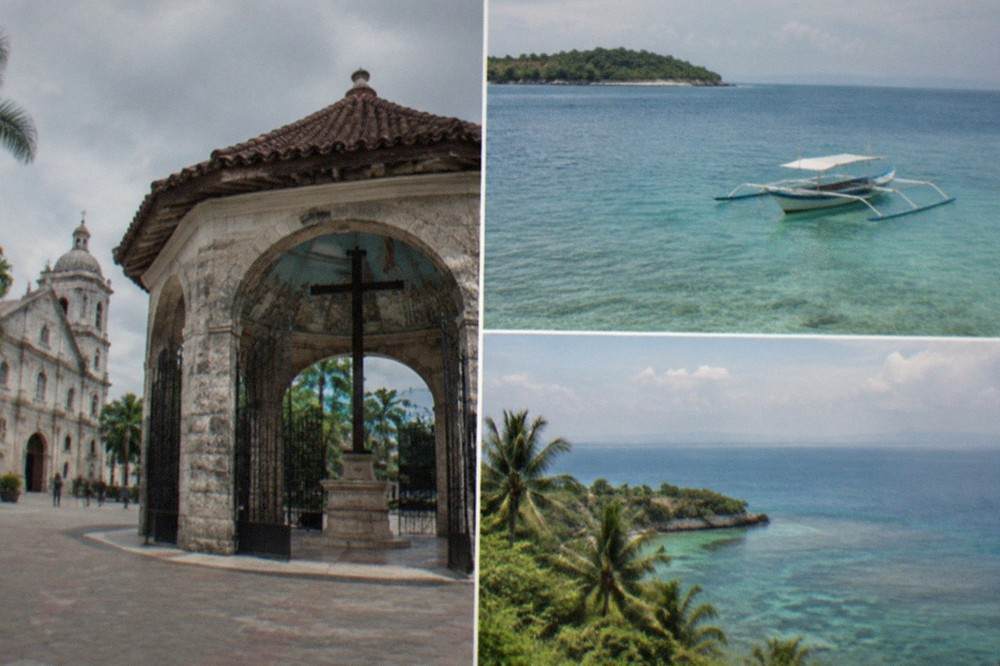
How Much Should You Budget For Cebu Tours?
Budget the tour price itself plus the local fees stacked on top, because Cebu's attraction fees are charged separately from any booking. A whale shark morning, Kawasan Falls, Moalboal swimming and Mactan island hopping each carry their own environmental or entrance charges, none of which are included in a typical tour booking. A day that looks cheap upfront rarely is, so carry cash in small notes for the fee kiosks.
The fee structure is genuinely fragmented, and it changes. Lapu-Lapu City cut the island-hopping environmental fee for local tourists from P100 (about US$1.6) to P20 (about US$0.3) in a July 2025 amendment, but the foreign rate stayed at P100 (about US$1.6). Olango Island's wildlife sanctuary, a Ramsar site since 1 July 1994 and the first in the Philippines, charges about P30 (about US$0.5) for Filipino adults and P100 (about US$1.6) for foreigners, and its bird season runs roughly September to March with over 60 migratory species. Sumilon Island's resort day pass, which includes transfers and sanctuary access, runs in the P1,600 (about US$25) to P2,000 (about US$32) range depending on the day.
None of this makes Cebu expensive. The question of whether Cebu is expensive answers itself at the fee level: even the headline wildlife experience costs less than a dinner in most Western cities. What it does mean is that you should carry cash in small notes, because the environmental fee kiosks at Panagsama, Oslob and the Mactan piers are cash-only, and tour drivers cannot always break large bills.
Which Cebu Tour Fits Your Travel Style?
Choose by what you would regret missing, not by what tops a popularity list. Food-first travelers should book the market walk and let the city fill the rest of the day. Wildlife-first travelers should book the Oslob morning and accept the early start. Adventure travelers should book accredited Badian canyoneering, and beach-first travelers should book a Mactan hopping day with lunch included.
Families with children do best on the Mactan route, since the boat rides are short and the water is calm, while divers should skip general tours entirely and go straight to Moalboal or Malapascua. The pairing logic matters more than any single ranking. A three-day trip covers the city plus one south-coast day, either Oslob or Moalboal, and a well-built three-day Cebu itinerary alternates them so no two days demand the same wake-up time. Longer trips can add Bohol, which is a same-day return by fastcraft from Cebu's Pier 1, with OceanJet running about two hours each way and around thirteen sailings a day. The Bohol countryside tour is the strongest cross-province option precisely because the ferry logistics are already handled.
For the decision itself, the trio below is the shortlist this site would put in front of visitors: the market walk for the city, the private Bohol day for the countryside, and the Moalboal hopping day for the water. Pick the one that matches the day you have, not the day you wish you had.
Common Questions About Cebu Tours
What is the best tour in cebu?
For most travelers the best tour in Cebu is a guided market and food walk in Cebu City, because it delivers the island's famous food culture in three to four hours with no long transfer. If wildlife matters more than food, the regulated whale shark morning in Oslob is the alternative answer, with the foreign environmental fee at P1,000 (about US$15.9) and sightings not guaranteed.
Is a tour better than doing Cebu independently?
For the city, no: jeepneys, taxis and ride-hailing make independent sightseeing easy, and the heritage sites sit close together. For the south coast, yes: the bus to Oslob takes roughly 3.5 to 4.5 hours and the whale shark session starts at 6 AM, so a tour with an early pickup is the only realistic way to do it as a day trip.
Can you do whale sharks and Kawasan Falls in one day?
It is possible with an organized tour but punishing, since Oslob and Badian sit in the same southern corridor and tours chain the two with a pre-dawn start. A more comfortable plan is one south-coast day for whale sharks and Tumalog Falls, whose entrance is about P50 (about US$0.8), and a separate day for Kawasan, whose Level 1 entrance is P200 (about US$3.2).
Do Cebu tours include the entrance fees?
Usually not. Environmental and entrance fees in Cebu are charged on site by local governments and sanctuaries, separate from the tour booking. Carry cash for the whale shark fee, sanctuary fees at P150 (about US$2.4) to P300 (about US$4.8) per island off Mactan, and the Moalboal environmental user fee of P100 (about US$1.6).
What is the best tour in Cebu for families?
A Mactan island-hopping day with lunch included is the best fit for families, because the boat rides are short, the water is calm, and the route covers Gilutungan, Caohagan and Nalusuan within about six hours. The whale shark session is also family-friendly but demands a very early start and a strict thirty-minute interaction window.
The honest summary is that Cebu rewards travelers who book one strong city experience and one strong south-coast experience rather than stacking every headline tour into a single exhausting week. Start with the market walk, add the wildlife or waterfall day that matches your energy, and let the island's fee kiosks, not a booking page, tell you what the extras cost.