What Is Cebu Best Known For?
Cebu, in the Central Visayas region of the Philippines, is best known for whale shark watching in Oslob, Kawasan Falls, the sardine run at Moalboal, lechon, and the Sinulog Festival. Here is what the island province is famous for.
Cebu, an island province in the Central Visayas region of the Philippines, is best known for whale shark encounters at Oslob, the turquoise falls of Badian, the sardine run off Moalboal, roast pig known as lechon, and the Sinulog Festival that fills Cebu City every third Sunday of January. Few destinations pack this much range into one province: Spanish-colonial churches and forts in the city, thresher sharks and white sandbars at the northern and southern tips, and a domestic airport hub that makes nearly all of it a day trip away.
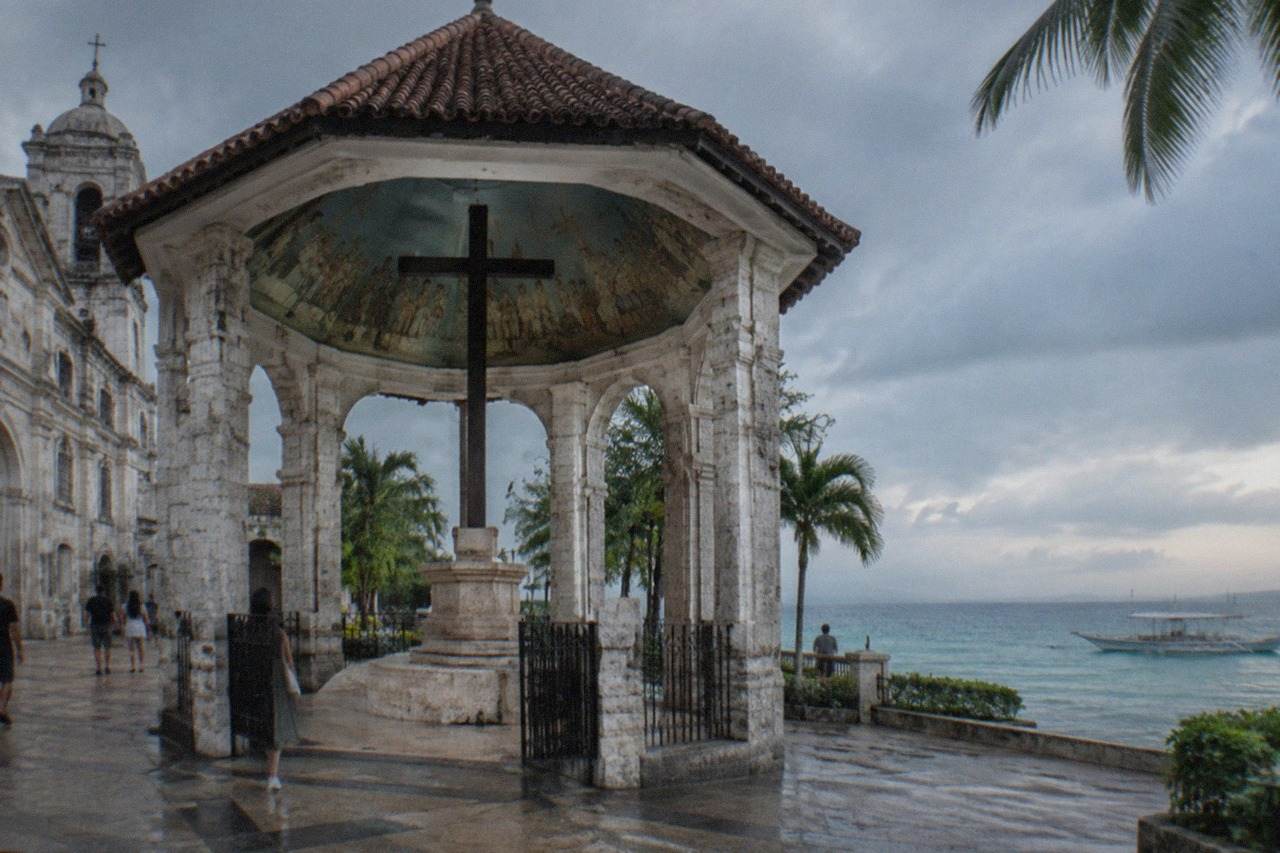
This is the island where Ferdinand Magellan's expedition planted a cross in 1521 and where Lapu-Lapu's forces defeated him at Mactan a few weeks later, which is why almost every Philippine history textbook opens here. It is also where the tourism economy runs on the water: whale sharks, waterfalls, coral sanctuaries and island hopping. The sections below break the island's reputation into its parts, with the current fees and rules for each.
What Is Cebu Best Known For?
Cebu is best known for four things: swimming with whale sharks at Oslob in the island's south, the blue waterfalls of Kawasan and the Moalboal sardine run, roast pig called lechon that many Filipinos consider the country's best, and the Sinulog Festival, the grandest religious street parade in the Philippines, held in Cebu City every third Sunday of January. Each one draws visitors on its own; together they define the island.
Start with the whale sharks, because no other single sight has put Cebu on international travel lists as fast. In the barangay of Tan-awan in Oslob, on the island's southeast coast, whale sharks are fed by licensed spotters close to shore, and visitors watch and snorkel beside them in roughly thirty-minute sessions. The municipality regulates the whole operation: the Oslob tourism office's current tariff, effective 21 March 2025, charges P1,000 (about US$15.9) per foreign tourist and P500 (about US$8.0) per Filipino, boat and guide included, with the interaction area open in the mornings from about 6 AM to 12 PM. Sightings are overwhelmingly reliable but not guaranteed; in late May 2026 the sharks moved away from Tan-awan for about four days when the plankton shifted, and operations paused until they returned.
Second is the water. Kawasan Falls in Badian, a three-tiered turquoise waterfall in the jungle south of Moalboal, anchors the canyoneering scene: visitors trek, jump and rappel down the river canyon above the main cascade with accredited guides. The Level 1 basin, the big blue pool most photographs show, charges about P200 (about US$3.2) per person to enter and swim. Further north along the same coast, the sardine run at Panagsama Beach in Moalboal is a permanent, resident school of millions of sardines that sits a few dozen metres from shore, so you can swim out over it with just a mask; the municipal environmental user fee to enter the water is P100 (about US$1.6) per person.
Third is the food. Cebu's lechon, whole roast pig stuffed with lemongrass and spices, is the dish Filipinos argue about by region, and Cebu is the side that usually wins. The island's roast pig has been praised on international television food programmes, and the dish has become the one food item that visitors plan entire days around. Dried fish (danggit), grilled scallops, sutukil seafood stalls and mangoes, which the island markets aggressively, round out the plate. If you want the full picture of why the island's cooking carries this reputation, the question what is Cebu known for beyond the beaches has a food-first answer.
Fourth is Sinulog. The festival honours the Santo Niño, the centuries-old image of the Child Jesus that Magellan's expedition gave to Queen Juana at her baptism in 1521 and that a soldier found again in 1565 when Legazpi's expedition arrived. The grand parade, a whole-day procession of dancers in bright costumes, is held on the third Sunday of January; the 2027 edition is set for 17 January 2027 at the Cebu City Sports Center.
Why Do Foreign Visitors Know Cebu's Name?
Foreign visitors know Cebu mostly through its airport and its history: Mactan-Cebu International Airport is the Philippines' second-busiest gateway with direct international routes, and the island holds the country's oldest city and oldest Spanish-colonial landmarks, including Magellan's Cross, the Basilica Minore del Santo Niño and Fort San Pedro. Lapu-Lapu, the chieftain who defeated Magellan at Mactan in 1521, is a national hero whose name the airport's home city carries.
The history is unusually concentrated. Magellan's fleet reached Cebu in April 1521 and planted a cross that is now enshrined in a small pavilion on Magellan's Cross Street, one of the most visited spots in the country. The Basilica Minore del Santo Niño beside it, founded in 1565 and rebuilt in its present form between 1735 and 1740, houses the Santo Niño image and anchors the Sinulog devotion. Fort San Pedro, a triangular bastion fort begun in 1565 and completed in its stone form by 1738, is the oldest of its kind in the Philippines; entry is P50 (about US$0.8) regular and P40 (about US$0.6) for students and seniors. The city's charter dates to 24 February 1937, which is why Cebu City styles itself the oldest city in the country.
The airport magnifies all of this. Mactan-Cebu International Airport sits on Mactan Island, about 13 to 15 km from central Cebu City, and its operator has added a string of international routes since late 2025, including direct services to Kuala Lumpur, Hanoi and Brisbane. That connectivity is a big part of why foreign visitors land here before anywhere else in the Visayas. The question of why Cebu is famous for foreigners digs into that airport-and-itinerary effect in detail.
For travellers who want the history without self-guiding it, guided city walks cover the heritage core efficiently, and a market-and-food walk pairs the colonial district with the island's cooking in one outing.
What Food Is Cebu Famous For?
Cebu is famous above all for lechon, whole roast pig rubbed with salt, pepper, lemongrass and spices and roasted over charcoal until the skin shatters, which is widely considered the best version in the Philippines. Around it sit danggit dried fish for breakfast, grilled sutukil seafood, otap biscuits, dried mangoes and the island's claim to the sweetest mangoes in the country.
Lechon is the headline. The Cebuano method skips the sauce entirely, on the argument that a properly roasted pig needs nothing but its own crisp skin and juice, and that argument is the one the rest of the country keeps conceding. Lechon shops around Carcar and Talisay, south of the city, roast pigs from before dawn, and the dish appears at every celebration on the island. The dedicated food question, what is the most famous food in Cebu, covers where to eat it and what to order alongside.
The markets are the other half of the story. Carbon Market in downtown Cebu City, the island's oldest and largest public market, is where the restaurant supply chain becomes a tourist attraction: dried fish stalls, fruit vendors with pyramid stacks of mangoes, and grilled skewer stands in the surrounding streets. A guided walk through those stalls explains what you are looking at, which vendors matter and what the island's cooks actually do with each ingredient, which is the kind of context a self-guided wander rarely delivers. The rest of the planning pages sit on Cebu Travel Guide.
The Cebu Market & Food Tour is the natural fit here: a guided walk through the market and the street food around it, with the operator's listing showing a five-star rating across its published reviews. The operator has not published a price for this walk, so check the live listing for the current rate and departure times. Check availability
Which Natural Sights Made Cebu Famous?
The natural sights that made Cebu famous are the whale sharks of Oslob, Kawasan Falls and its canyoneering route in Badian, the Moalboal sardine run, the thresher sharks of Malapascua, and the island-hopping circuits around Mactan, Camotes and Bantayan. All sit within a few hours of the city, which is the island's real advantage over bigger destinations.
The geography is the point. From Cebu City you can reach Oslob in roughly three and a half to four and a half hours by bus, Moalboal in about three, and the Mactan island-hopping docks in under an hour, so a single week on the island can cover mountains, waterfalls, pelagic marine life and sandbars without an internal flight. Malapascua, at the northern tip, is the only place in the world where thresher sharks are seen reliably, on early-morning dives at the offshore shoals; the island recovered quickly after the September 2025 earthquake, and the Department of Tourism declared Bantayan and Malapascua open to visitors by late October 2025.
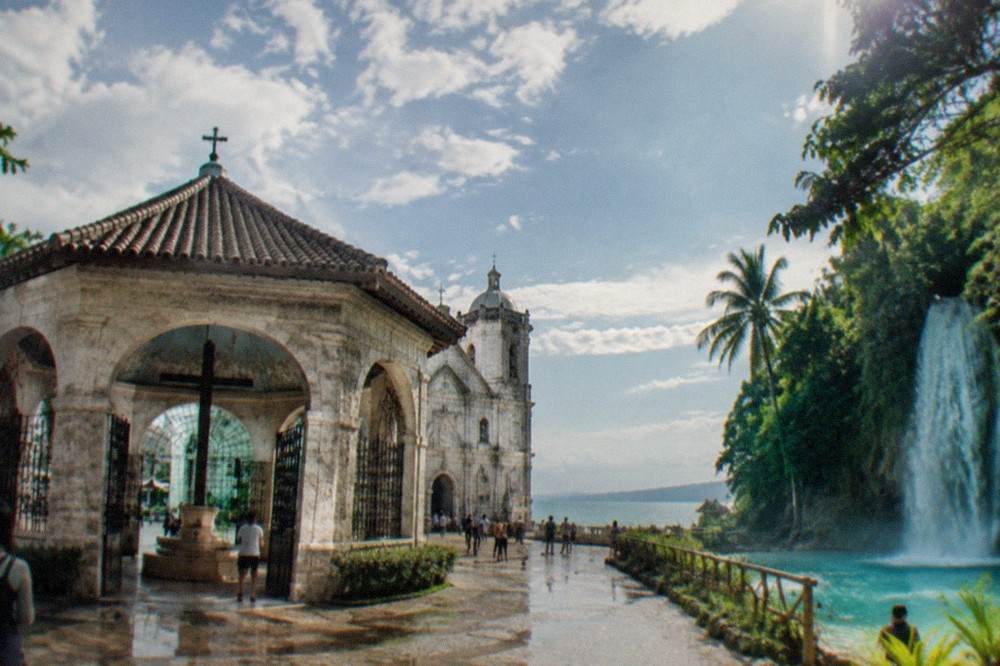
The fees are local and modest, which surprises visitors who expect resort pricing for world-class sights. The table below shows the headline ones.
| Sight | What it is known for | Current fee (foreign visitor) |
|---|---|---|
| Oslob whale sharks, Tan-awan | Snorkelling beside feeding whale sharks, mornings only | P1,000 (about US$15.9) per person, boat and guide included |
| Kawasan Falls, Badian | Turquoise falls, swimming at Level 1, canyoneering above | About P200 (about US$3.2) entrance; canyoneering roughly P1,500 (about US$24) to P2,000 (about US$32) with a Badian-accredited guide |
| Moalboal sardine run, Panagsama | Resident school of millions of sardines a few metres from shore | P100 (about US$1.6) environmental user fee to swim or snorkel |
| Magellan's Cross, Cebu City | The 1521 cross pavilion beside the Basilica | Free |
| Tops Lookout, Busay | Hilltop night view over Cebu City, open 24 hours | P100 (about US$1.6) regular entry |
One rule worth knowing before you plan: the Alegria canyoneering route has been suspended through 2025 and 2026, so only the Badian route runs, and cliff jumping is banned at the main Level 1 basin. If a canyoneering itinerary you are offered mentions Alegria, it is out of date. The dedicated pages on Oslob and the island's number one sight go deeper on each.
What Is Cebu City Itself Known For?
Cebu City is known for the oldest Spanish-colonial core in the Philippines, the Basilica Minore del Santo Niño, Magellan's Cross, Fort San Pedro and Colon Street, often called the oldest street in the country, plus a modern business skyline around the Cebu IT Park. It is the regional capital of the Central Visayas and, with a 2020 census population of 964,169, the largest city in the Visayas.
The colonial core is walkable in a morning. Magellan's Cross, the Basilica and the Cebu Metropolitan Cathedral sit within a few blocks of each other in the downtown parish district, and Fort San Pedro anchors the plaza at the port end. Colon Street, laid out under Legazpi's 1565 settlement, runs from the heritage area toward the modern shopping district and is a compressed lesson in the city's five centuries, even if today it is mostly commerce and traffic. The Heritage of Cebu Monument, a sculpted tableau of the city's history, stands at the Parian end.
The modern city matters too. The IT Park and Business Park districts hold the call centres, condos and restaurants that make Metro Cebu the Philippines' second metropolitan economy, and the SM Seaside complex on the South Road Properties added a 25,000-seat indoor arena in July 2026. Visitors usually split their stay between this urban base and the beaches of Mactan, and the question of where to stay in Cebu is really a question of which of those two halves you want outside your window.
For a first visit, the practical split is simple: two or three nights in the city for the heritage core and the food, then the south coast for whale sharks, falls and sardines. The three signature experiences below cover both halves in a single booking each.
Common Questions About What Cebu Is Best Known For
What is Cebu best known for?
Cebu is best known for whale shark watching at Oslob, Kawasan Falls and canyoneering, the Moalboal sardine run, lechon roast pig, and the Sinulog Festival in Cebu City each January. It is also the site of the Philippines' oldest city and oldest Spanish-colonial landmarks.
Is Cebu known more for beaches or for culture?
Both, and the island sells them together. The culture sits in Cebu City's 1565-era heritage core, while the beaches and marine life, from Mactan's island-hopping circuits to Bantayan's sandbars, sit within a few hours by road or boat. Most itineraries split time between the two.
What is the most famous food in Cebu?
Lechon, whole roast pig roasted over charcoal with lemongrass and spices, is the island's signature dish and is widely considered the best version in the Philippines. Danggit dried fish, dried mangoes and grilled sutukil seafood sit close behind it.
When is Sinulog held?
The Sinulog grand parade is held on the third Sunday of January at the Cebu City Sports Center. The 2027 edition is set for 17 January 2027, with the opening salvo on 7 January.
Can you swim with whale sharks in Cebu?
Yes, at Oslob on the island's southeast coast. Sessions run from about 6 AM to 12 PM, cost P1,000 (about US$15.9) per foreign visitor with boat and guide included, and follow LGU rules including a minimum distance from the sharks and a ban on sunscreen in the water.
Is Cebu the oldest city in the Philippines?
Cebu City claims that title. The Spanish settlement was founded in 1565 and the city was chartered on 24 February 1937, which the city government describes as antedating Manila by seven years.
Whatever draws you to the island first, the lechon or the whale sharks, the history or the water, plan around the distances: the city and the south coast are hours apart, and the island rewards a schedule that treats them as two separate days rather than one rushed one.