Why Is Cebu Famous To Foreigners?
Why foreign visitors flock to Cebu in the Philippines: whale sharks, sardine runs, colonial history, lechon and easy 30-day visa-free entry, with current fees and facts.
Cebu, an island province in the Central Visayas region of the Philippines, is famous to foreigners for one of the most complete packages in Southeast Asian travel: guaranteed-warm tropical water, snorkeling with whale sharks thirty minutes from a fishing village, a sardine run you can swim to from the beach, the oldest Spanish colonial city in the country, and a roast pig dish, lechon, that national food writers have repeatedly called the best in the Philippines. Add 30-day visa-free entry for most Western nationals and an international airport with direct flights from cities such as Brisbane, Kuala Lumpur and Hanoi, and the island's pull becomes easy to explain.
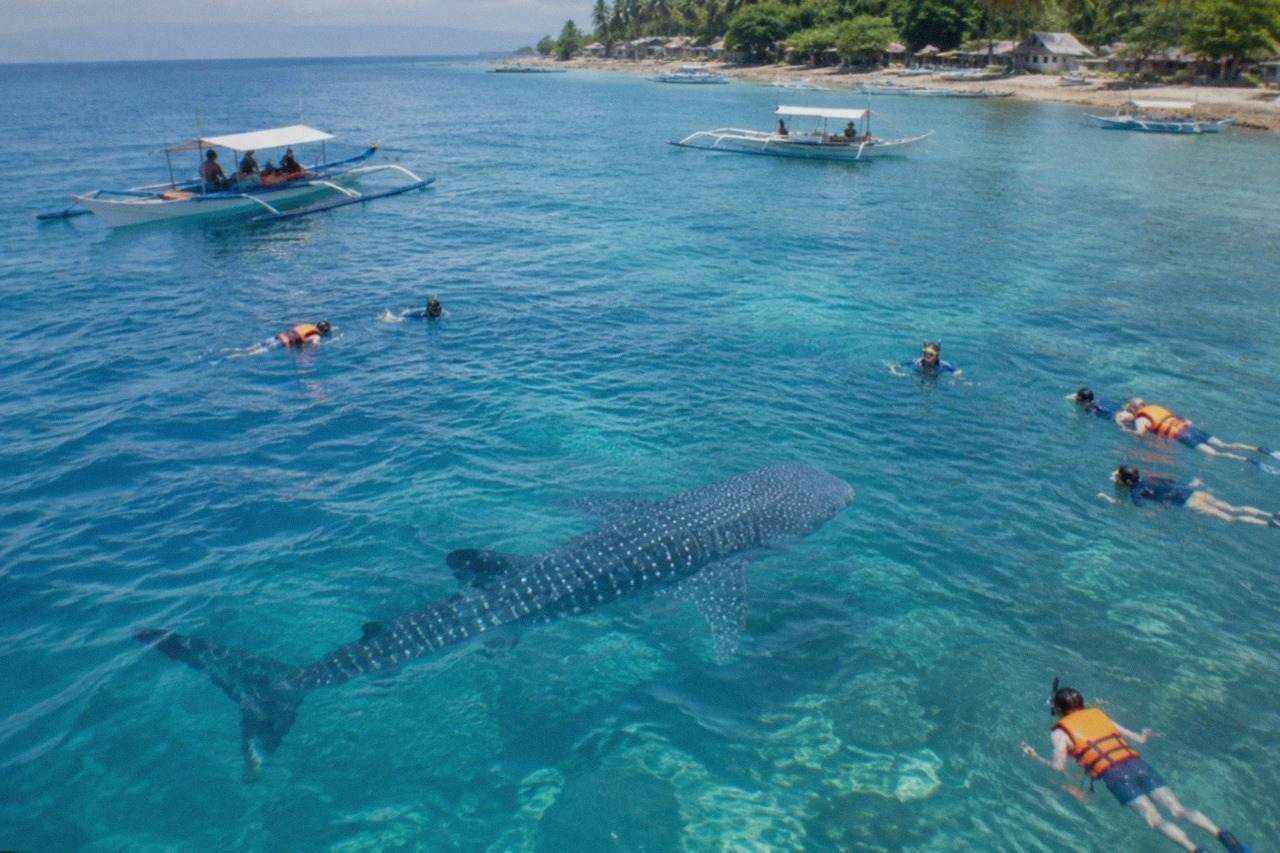
Why Is Cebu Famous To Foreigners?
Cebu is famous to foreigners because it concentrates the Philippines' biggest draws onto one island: swimming with whale sharks in Oslob, the year-round sardine run at Moalboal, thresher shark dives off Malapascua, white-sand beaches around Mactan and Bantayan, and the country's oldest city, founded in 1565, all supported by easy visa-free entry, widespread English and an international airport. Few islands of comparable size offer both world-class marine wildlife and 500 years of visible colonial history within a three-hour drive of each other.
That combination is what turns first-time visitors into repeat visitors. A traveler can stand at Magellan's Cross in the morning, planted in 1521 according to the Basilica's own chronicles, and be in the water with a whale shark the next morning after a roughly three-and-a-half to four-and-a-half hour bus ride south. The Cebu Travel Guide hub covers each of these in depth; this page answers the broader question of why the island ranks so highly with foreign tourists in the first place.
The numbers back the reputation. Oslob's whale shark interaction area alone reported 800 to 900 daily visitors in May 2026, per SunStar's reporting on the municipal tourism office. The Department of Tourism declared the province open and safe for tourists in late October 2025 even after a major offshore earthquake, because the core zones around Cebu City and Mactan were largely unaffected.
What Makes Cebu's History And Heritage Stand Out?
Cebu holds the oldest Spanish settlement in the Philippines, founded in 1565 as the Villa del Santisimo Nombre de Jesus, and its city charter dates to 24 February 1937, which the DILG's own LGU page calls the first and oldest city in the country, antedating Manila by seven years. Magellan's fleet arrived in 1521, and both Magellan's Cross and the Basilica Minore del Santo Niño still stand within a few hundred metres of each other in downtown Cebu City.
The Basilica's own site records that the Santo Niño image was found on 28 April 1565 by Juan de Camus, in a house near where the church now stands. That image, given to Queen Juana at her baptism in 1521, anchors the Sinulog festival, held on the third Sunday of January; the 2027 Grand Parade is set for 17 January 2027 at the Cebu City Sports Center. Fort San Pedro, started as a wooden fort under Legazpi in 1565 with the present stone structure dating from 1738, completes a walkable colonial core that most foreign visitors can cover in half a day.
The heritage layer is not confined to the city either. The 30 September 2025 magnitude-6.9 earthquake off northern Cebu damaged several 19th-century coral-stone churches in towns like Bogo, Daanbantayan and San Remigio, a reminder that the island's historic fabric extends well up the coast. Cebu City's own sites, by contrast, came through largely intact, and the museums that closed briefly for inspection, including Museo Sugbo and Casa Gorordo, were cleared to reopen, with Museo Sugbo formally reopening on 29 August 2025 after a longer closure.
| Heritage site, Cebu City | Entry fee | Notes |
|---|---|---|
| Magellan's Cross | Free | Open roughly 8 AM to 6 PM |
| Basilica Minore del Santo Niño | Free | Pre-pandemic mass schedule restored November 2024 |
| Fort San Pedro | P50 (about US$0.8) regular, P40 (about US$0.6) students and seniors | Hours roughly 8 AM to 7 PM |
| Casa Gorordo Museum | About P100 (about US$1.6) | Monday to Saturday |
| Museo Sugbo | P50 (about US$0.8) general, P25 (about US$0.4) students | Reopened 29 August 2025, Monday to Friday |
For more on the island's identity beyond the colonial layer, see what Cebu is known for.
Why Do Foreign Divers And Snorkelers Choose Cebu?
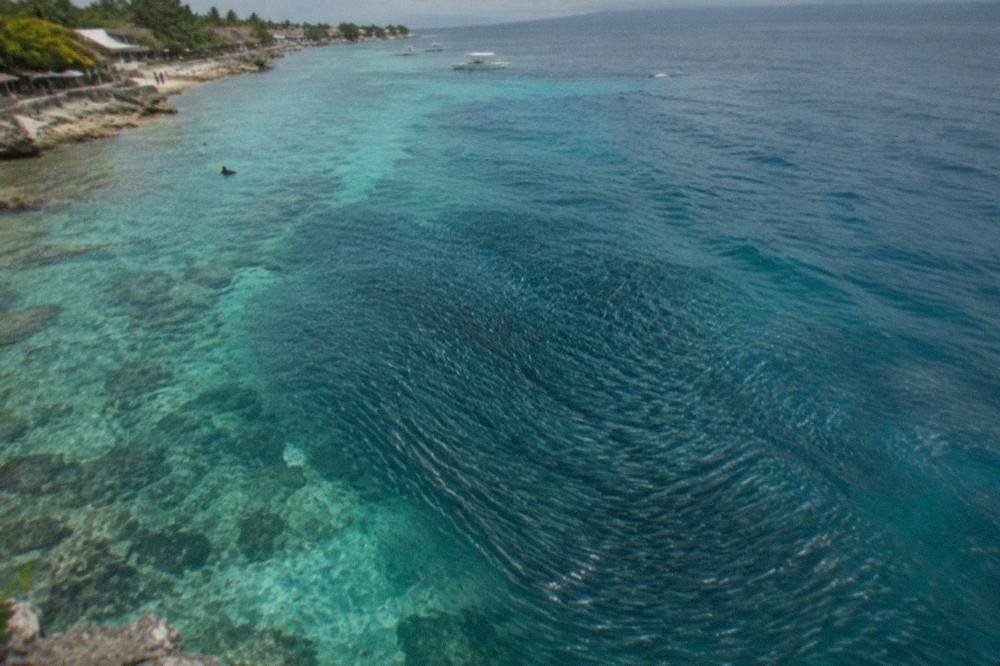
Foreign divers and snorkelers choose Cebu because three of the Philippines' signature marine encounters sit on or just off the island: whale sharks at Oslob, a permanent sardine school a few metres off Panagsama Beach in Moalboal, and thresher sharks at Kimud Shoal off Malapascua, now the primary site for that species. None of the three requires a liveaboard or an advanced certification, which is rare for experiences of this scale.
The Oslob interaction is the most regulated. The municipal rate, effective 21 March 2025, is P1,000 (about US$15.9) per foreign tourist and P500 (about US$8.0) per Filipino, boat and guide included, with sessions running roughly 6 AM to noon and rules that keep swimmers about four metres from the animals, ban sunscreen and allow feeding only by licensed spotters. Sightings are sightings, not certainties: in late May 2026 the sharks were absent from the Tan-awan area for about four days when the plankton moved, and operations paused accordingly. Moalboal's sardine run, by contrast, is a resident school present year-round, reachable from shore after paying the P100 (about US$1.6) environmental user fee. Details on costs are in what an Oslob swim costs, and timing advice is in the best month for whale sharks.
Birders arrive for a different reason: the Olango Island Wildlife Sanctuary, a Ramsar site since 1 July 1994 and the first in the Philippines, hosts over 60 migratory species resting and feeding from September to March, with entrance at about P100 (about US$1.6) for foreign visitors. The sanctuary sits a short boat ride from Mactan, which makes it one of the few places in Asia where a morning of shorebird watching and an afternoon of reef snorkeling fit into a single day trip from a major city.
What Food Is Cebu Famous For Among Foreign Visitors?
Cebu is famous among foreign visitors for lechon, the whole roast pig that celebrity food writers have repeatedly ranked above all other versions in the Philippines, and for a street and market food culture built around dried fish, grilled seafood, ngohiong and the island's distinctive puso, rice cooked in woven coconut leaves. The island's markets are where that reputation is earned daily, long before any restaurant plate.
The market angle matters because the food fame is not confined to restaurants. Carbon Market and the surrounding streets carry the dishes that locals actually eat, and a guided walk is the efficient way for a foreign visitor to navigate them. The Cebu Market & Food Tour, a walk reviewed 4 times, covers exactly that ground; the operator's live listing carries the current price, which is not published here. Its price is on the live listing, and Check availability shows it directly.
A market walk also answers a question every foreign visitor eventually asks: what do people here eat when they are not eating for tourists? The answer runs through tuhog-tuhog skewers, fresh kinilaw and the breakfast staples that never make it onto resort menus, and it costs a fraction of a hotel meal. That is the practical reason food walks have become one of the island's most-booked formats for first-time visitors.
For the restaurant side of the island's food fame, start with Cebu's most famous food, which covers where lechon's reputation comes from and which styles of it to seek out.
How Easy Is Cebu For Foreign Visitors To Reach And Enter?
Cebu is among the easiest Philippine destinations for foreign visitors: nationals of the United States, the United Kingdom, Australia and every EU state receive a 30-day initial visa-free stay for tourism, eTravel registration is free within 72 hours before arrival, and Mactan-Cebu International Airport added direct routes in 2025-2026 including Cebu-Brisbane, Cebu-Kuala Lumpur and Cebu-Hanoi. Foreign tourists staying under a year are also exempt from the Philippine travel tax on departure.
The airport itself, operated by Aboitiz InfraCapital Cebu Airport Corporation under a public-private partnership since 16 January 2025, splits domestic traffic into Terminal 1 and international traffic into Terminal 2, connected by walkway. The MyBus runs between the airport and SM City Cebu for P50 (about US$0.8), and Grab operates with designated pickup zones outside arrivals. English is an official language nationwide, so the practical friction for most Western visitors is close to zero.
Getting around once you are there has improved too. The Cebu Bus Rapid Transit began partial operations on 13 March 2026 on a single Il Corso to IT Park route, with free rides offered at launch, and the CCLEX bridge, opened in April 2022, gives a third road crossing between Cebu City and Mactan with a Class 1 toll of P107 (about US$1.7).
| Entry and arrival fact, Philippines / Cebu | Detail |
|---|---|
| Visa-free stay, US / UK / EU / Australia | 30 days initial, extendable via the Bureau of Immigration |
| Passport validity | At least six months beyond the stay |
| eTravel registration | Free, within 72 hours before arrival, QR code at boarding |
| Travel tax | Exempt for foreign tourists staying under one year |
| Airport bus, MCIA to SM City Cebu | P50 (about US$0.8), roughly 7 AM to 10 PM from the airport |
Where to base yourself is the next decision, and it splits by travel style: where foreigners stay in Cebu and the Cebu City or Mactan question cover the trade-offs between city access and beach access.
When Is The Best Time For Foreigners To Visit Cebu?
The best time for foreigners to visit Cebu is the dry season from December to May, PAGASA's national rule for the country, with the driest months at Cebu's Mactan station falling between February and April and the rainy season running June to November with peak typhoon risk roughly July to October. The Sinulog festival on the third Sunday of January adds a strong reason to visit in the coolest part of the dry season.
The Mactan station's 1991-2020 normals put annual rainfall at 1,685.0 mm across 138 rain days, with a mean temperature of 28.1 C, so even wet-season visits are workable; they simply carry a higher chance of disruption. The one recent caution is Typhoon Tino in early November 2025, which caused severe flooding across the province, though the Department of Tourism reported the core tourism zones of Cebu City and Mactan largely unaffected and open. The best month to visit Cebu breaks the trade-offs down month by month.
Common Questions About Cebu
Why is Cebu famous to foreigners?
Cebu is famous to foreigners for whale shark snorkeling in Oslob, the year-round sardine run at Moalboal, thresher shark dives off Malapascua, the oldest Spanish colonial city in the Philippines, and lechon, all reachable on a 30-day visa-free stay with direct international flights into Mactan-Cebu.
Is Cebu safe for foreign tourists?
Western advisories for the Philippines apply country-wide cautions but name no Cebu-specific restriction, and the Department of Tourism declared the province open and safe for tourists in late October 2025. Standard precautions apply as in any large city.
How many days do foreign visitors need in Cebu?
Most foreign visitors plan three to five days: one or two for the city, heritage sites and food, and one to three for a south-coast trip combining Oslob whale sharks, Tumalog Falls and Moalboal, or a north-co trip to Bantayan or Malapascua.
Do foreigners need a visa for Cebu?
Nationals of the United States, the United Kingdom, Australia and every EU state receive a 30-day initial visa-free stay for tourism, extendable through the Bureau of Immigration, plus free eTravel registration within 72 hours before arrival.
What is the number one tourist spot in Cebu?
The whale shark interaction at Oslob is the single biggest draw, reported at 800 to 900 daily visitors in May 2026, followed closely by Kawasan Falls and the Magellan's Cross and Basilica complex in Cebu City.
What food should foreigners try in Cebu?
Lechon, the island's roast pig, is the must-try dish, followed by puso rice pouches, ngohiong spring rolls, dried fish from the markets and fresh grilled seafood along the coasts.