What Is Oslob Cebu Known For?
Oslob, on the southeast coast of Cebu in the Philippines, is known for whale shark watching, Tumalog Falls and Sumilon Island. This guide covers the fees, the rules and how to get there.
Oslob, on the southeastern coast of Cebu island in the Central Visayas region of the Philippines, is known for one thing above all others: whale shark watching. The municipality, roughly a four-hour bus ride south of Cebu City, turned a quiet fishing barangay called Tan-awan into one of the most visited marine wildlife sites in the country. But the town is more than a single attraction. On the same short stretch of coast sit Tumalog Falls, the historic cuartel ruins by the sea, and the boat jump-off points for Sumilon Island, a small marine sanctuary just offshore. This guide from Cebu Travel Guide covers what Oslob is known for, what each part costs, and how the local rules work.
What Is Oslob Cebu Known For?
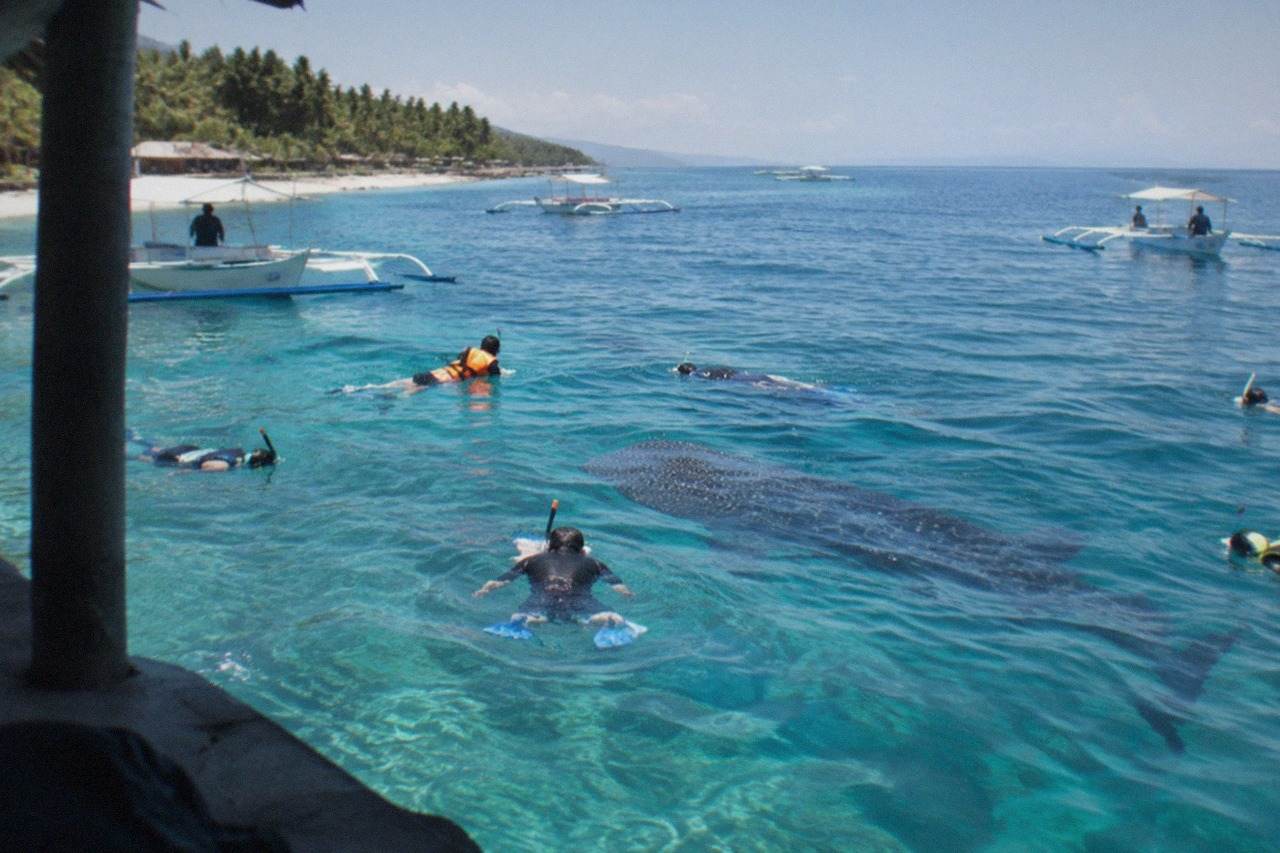
Oslob, a municipality on the southeast coast of Cebu island in the Philippines, is known for whale shark watching at Tan-awan, where visitors snorkel beside the world's largest fish in a regulated, ticketed interaction area. Beyond the whale sharks, the same town is known for Tumalog Falls, the coral-stone cuartel ruins on the shore, and boat trips to Sumilon Island, a small marine sanctuary island sitting just off the coast.
The whale shark operation is the engine of the whole local economy. The sharks are drawn to the Tan-awan interaction area by licensed spotters who hand-feed them small amounts of shrimp, a practice the municipal government regulates and publicly defends as a minor lure rather than the sharks' primary food source. Because the animals are fed close to the surface, sightings are usually reliable, which is exactly why the site became famous: nowhere else in the Philippines offers this consistency. SunStar reported in May 2026 that whale shark sightings dictate tourism operations in Oslob, with roughly 800 to 900 daily visitors during that period.
That fame has a schedule attached. Operations run in the morning only, roughly 6 AM to 12 PM, because the feeding and interaction happen in daylight and the boats stop at midday. Almost every visitor therefore arrives before dawn, either on an organized tour from Cebu City or on an overnight stay in one of Tan-awan's small resorts. The early start is not a suggestion; it is how the site works. For the full picture of the town itself, see the Oslob town area guide.
How Much Does Whale Shark Watching In Oslob Cost?
The Oslob whale shark watching fee is P1,000 (about US$15.9) per foreign tourist and P500 (about US$7.9) per Filipino local, boat and guide included, under the rates the municipal government reverted to on 21 March 2025. Watching from the boat is the standard ticket; snorkeling upgrades and scuba options can add roughly P200 to P500 (about US$3.2 to US$7.9) on top. Sessions last about 30 minutes in the water, and a second session costs extra.
The two-tier pricing comes from Municipal Ordinance No. 010 (s. 2020), which the Oslob local government unit reinstated by official notice effective 21 March 2025. The fee covers the mandatory briefing, the boat out to the interaction area, and a guide in the water with each group. The rules are strict and enforced: keep about 4 meters from the shark's body and about 5 meters from its tail, no touching, no sunscreen or sunblock in the water, no flash photography, and life jackets are mandatory for swimmers. Feeding is done only by the licensed spotters, never by visitors.
Here is what the rest of an Oslob day typically costs, using the fee figures currently reported for the area:
| Item | Fee (peso) | Notes |
|---|---|---|
| Whale shark watching, foreign tourist | P1,000 (about US$15.9) | Boat and guide included; about 30 minutes |
| Whale shark watching, Filipino local | P500 (about US$8.0) | Same inclusions |
| Tumalog Falls entrance | P50 (about US$0.8) | Varies by barangay management; confirm locally |
| Habal-habal ride, Tan-awan to Tumalog | P50 (about US$0.8) each way | Motorbike taxi; up to P100 (about US$1.6) per ride |
| Ceres bus, Cebu City to Oslob | P145 (about US$2.3) | Ordinary class, one way; air-conditioned about P250 (about US$4.0) |
Sightings are the one thing the fee does not buy. In late May 2026 the whale sharks were absent from the Tan-awan interaction area for about four days when the plankton they feed on drifted toward a neighboring barangay. The mayor and the municipal tourism officer both clarified that operations were not suspended, only paused by the sharks' movement, and the animals returned. The practical lesson: book with some schedule flexibility if you can, and read the are whale sharks guaranteed at Oslob page before committing to a tight itinerary.
What Else Is Oslob Known For Beyond The Whale Sharks?
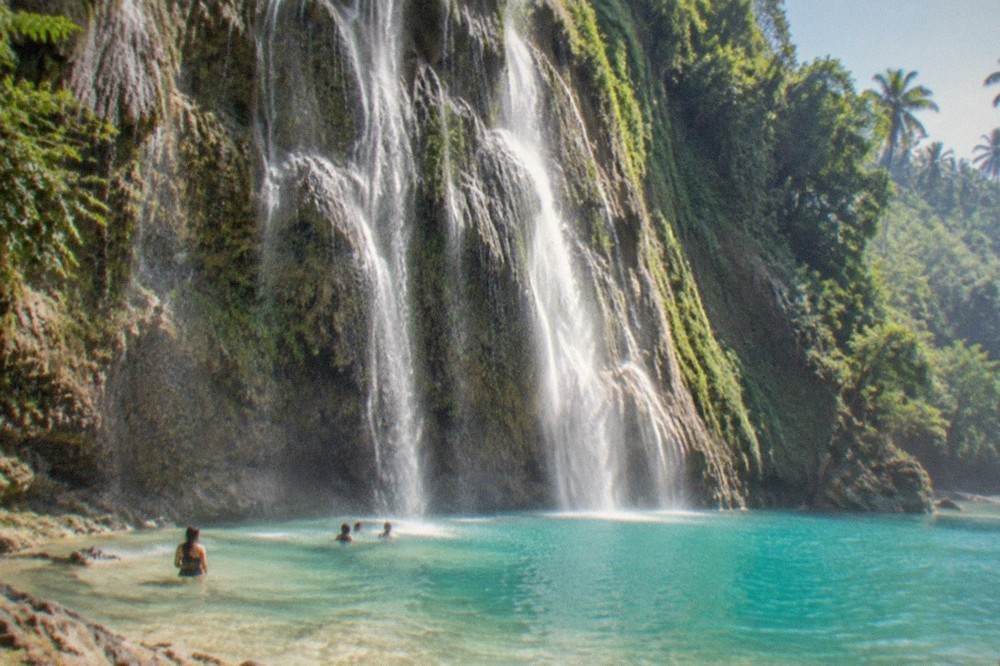
Oslob is also known for Tumalog Falls, a wide curtain of water dropping into a turquoise pool about fifteen minutes inland from Tan-awan, and for Sumilon Island, a small sanctuary island with a sandbar, lagoon and reef that sits just off the Oslob coast. The town's seafront cuartel ruins, the unfinished coral-stone barracks from the Spanish era, give Oslob a heritage layer that many drive past without noticing.
Tumalog Falls is the standard second stop on any Oslob morning, and it earns the slot. The falls fan out across a mossy limestone face so the water arrives as a soft spray rather than a pounding column, and the entrance fee runs about P50 (about US$0.8), though collection varies by barangay management and is worth confirming on arrival. A habal-habal, the local motorbike taxi, covers the steep road from the highway for roughly P50 (about US$0.8) to P100 (about US$1.6) each way. The Tumalog Falls attraction page has the full practical detail.
Sumilon Island belongs to a private resort, Bluewater Sumilon, which sells day access. The resort's own offers page lists day use from 8:00 AM to 3:00 PM with boat transfers included, and a group offer per guest from Monday to Thursday, valid through 15 October 2026, with food and drink credit on weekdays. A guided snorkel on the sanctuary reef is sold separately. The island is small enough that a half day covers the sandbar, the lagoon and a swim over the reef, and the boat ride from Oslob is short.
The cuartel is the free one. The unfinished coral-stone structure on the shore was begun as Spanish-era barracks and never completed, and today it is a photo stop where the sea crashes directly against the old walls. Between the cuartel, the falls and the sharks, the town has three distinct experiences within a few kilometers of each other, which is precisely why a full Oslob day trip works so well as a single long day from Cebu City.
When Is The Best Time To See Oslob's Whale Sharks?
Whale sharks are present at Oslob year-round, because the Tan-awan operation runs every day from roughly 6 AM to 12 PM and the sharks are drawn to the feeding area rather than to a migration. The practical timing constraints are the morning-only schedule, the calmer seas of the December-to-May dry season, and the crowd logic that the earlier you arrive, the more time you get before the midday cutoff.
PAGASA's national rule gives Cebu a dry season from December to May and a rainy season from June to November, and the Mactan station's 1991-2020 normals put annual rainfall at 1,685.0 mm. None of that shuts the whale shark operation, which runs daily, but rough seas in the rainy months can make the boat ride bumpier and the water less clear. Visibility for snorkeling is at its best in the dry months, and the sharks themselves do not follow a season; the May 2026 absence was a short plankton drift, not a pattern.
The clock matters more than the calendar. Registration at Tan-awan effectively stops around 11 AM, and tour groups from Cebu City arrive between 6 and 9 AM, so independent travelers who arrive at the front of that window get calmer water and shorter queues. If you are planning a wider trip around the sharks, the best-month trade-offs come down to sea state and crowd levels rather than shark presence, since the feeding program keeps the animals at Tan-awan in every month of the year.
How Do You Get To Oslob From Cebu City?
Oslob sits on Cebu's east coast roughly a three-and-a-half to four-and-a-half hour bus ride south of Cebu City, on the Ceres Liner services that depart the Cebu South Bus Terminal throughout the day, with fares of about P145 (about US$2.3) in an ordinary bus and up to about P250 (about US$4.0) air-conditioned.
Many travelers skip the logistics entirely and take an organized tour with hotel pickup, which is why the pre-dawn convoy south is part of the Oslob experience.
The buses run the Bato via Oslob route with more than nine departures a day starting as early as 3 AM, and the conductor collects the fare onboard. The ride is long but simple: one road, the coastal highway, all the way down. The trade-off for independent travelers is the return leg. The last useful buses back north leave in the late afternoon, and a whale shark morning plus Tumalog plus Sumilon can easily overrun them, so many people overnight in Tan-awan and bus back the next day.
The organized alternative removes every decision. A join-in day tour from Cebu City handles the 3 AM pickup, the briefing, the boat and usually a Tumalog Falls stop on the way back, returning to the city by early evening. The Oslob whale sharks attraction guide compares the two approaches in detail. One thing worth deciding in advance is whether to pair Oslob with Moalboal, the sardine-run town further down the coast, rather than rushing both in a single day; the Oslob or Moalboal comparison lays out the routing.
Is Oslob Worth The Long Day Trip From Cebu City?
Oslob is worth the long day trip if whale sharks are a priority for your Cebu visit, because the town offers the most reliable snorkeling encounter with them in the Philippines and stacks Tumalog Falls and Sumilon Island into the same morning. It is less worth it for travelers who dislike pre-dawn departures or who would rather spend those hours on a beach, since the total round trip from Cebu City runs ten hours or more.
The honest case against is the pace. You leave in the dark, spend about 30 minutes in the water with the sharks, and spend up to nine hours in a vehicle. The honest case for is that those 30 minutes are with the largest fish on the planet, at arm's length, in warm water, on a schedule that works. The math lands on the side of going, and the town's whole tourism infrastructure exists to make the long day painless.
The ethics question deserves a look before you book, not after. The feeding practice that makes Oslob so reliable is debated, and the whale shark ethics at Oslob guide sets out both sides plainly, including what the municipal rules do and do not address. If you go, following the 4-meter rule and skipping sunscreen in the water is the minimum a visitor owes the animals.
Common Questions About Oslob Cebu
What is Oslob Cebu known for?
Oslob, a municipality on the southeast coast of Cebu island in the Philippines, is known for whale shark watching at Tan-awan, plus Tumalog Falls, Sumilon Island and the Spanish-era cuartel ruins on the shore.
How much does it cost to swim with the whale sharks in Oslob?
The municipal fee is P1,000 (about US$15.9) per foreign tourist and P500 (about US$8.0) per Filipino local, boat and guide included, with about 30 minutes in the water. Snorkeling or scuba upgrades can add roughly P200 (about US$3.2) to P500 (about US$8.0).
What time do the whale shark sessions start in Oslob?
Operations run roughly 6 AM to 12 PM daily, with registration effectively closing around 11 AM. Arriving early means calmer water and fewer crowds.
Are whale shark sightings guaranteed in Oslob?
No. In late May 2026 the sharks were absent from the Tan-awan area for about four days when their plankton food drifted to a neighboring barangay, and operations paused until they returned.
Can you visit Tumalog Falls and Sumilon Island on the same day as the whale sharks?
Yes, and many visitors do. Tumalog Falls is about fifteen minutes from Tan-awan with an entrance fee of about P50 (about US$0.8), and Bluewater Sumilon sells day access to Sumilon Island from 8:00 AM to 3:00 PM with boat transfers included.
Is Oslob worth visiting if you are not sure about the whale sharks?
The falls, the island and the coastal scenery stand on their own, but the whale sharks are the reason the town is on the map. If the long day trip does not appeal, weighing the alternatives before booking is the sensible move, since the round trip from Cebu City runs ten hours or more.