Cebu Metropolitan Cathedral
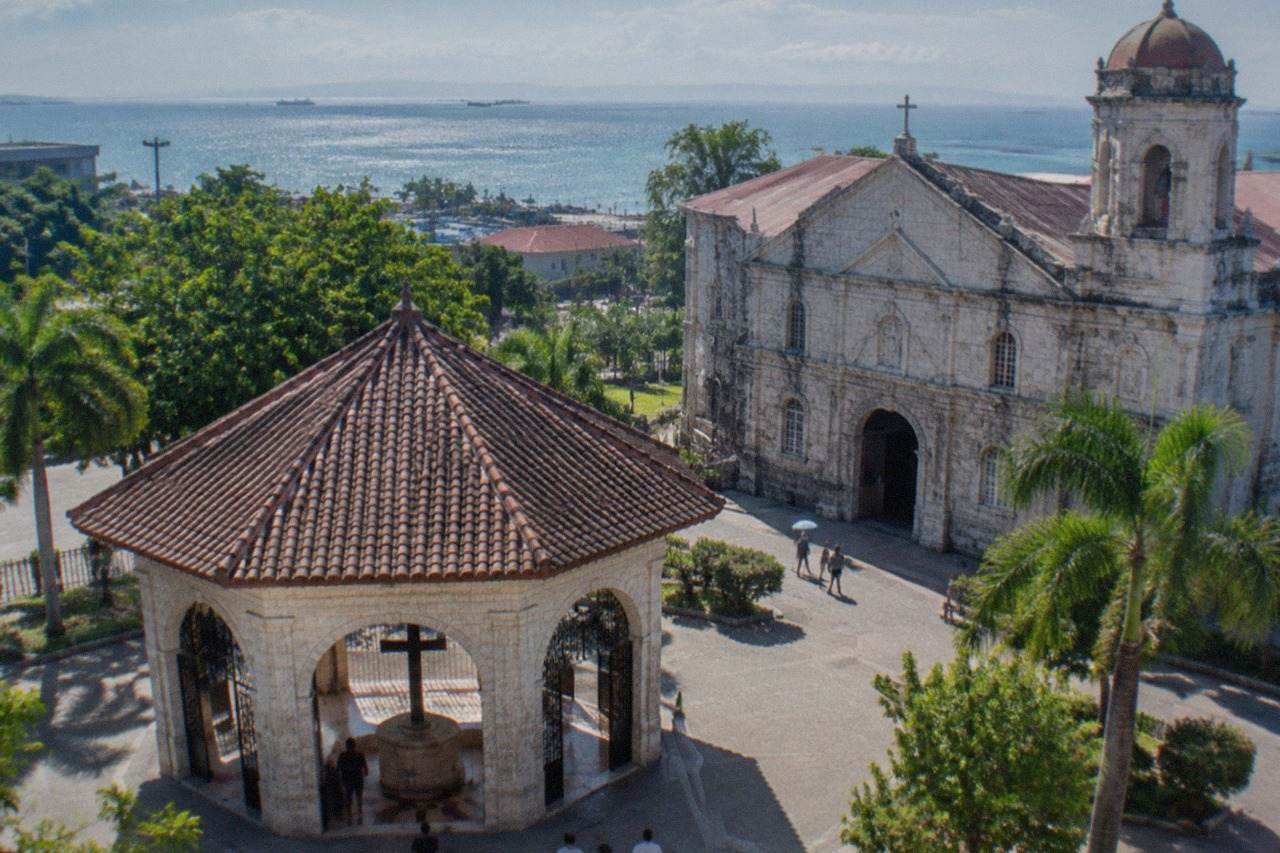
The Cebu Metropolitan Cathedral is the seat church of the Archdiocese of Cebu, standing in the old downtown core of Cebu City in the Central Visayas region of the Philippines, a short walk from Magellan's Cross and the Basilica del Santo Niño.
Short answer
The Cebu Metropolitan Cathedral is the ecclesiastical seat of the Archdiocese of Cebu and one of the key churches of downtown Cebu City, Philippines. It is free to enter, sits within walking distance of the Basilica del Santo Niño, Magellan's Cross and Fort San Pedro, and is easiest to reach by jeepney or taxi from the Mactan airport side of the city.
The Cebu Metropolitan Cathedral is the seat of the Archdiocese of Cebu, the mother church of Catholicism in a province that is effectively its cradle in the Philippines, and it stands in the old downtown core of Cebu City on the island of Cebu in Central Visayas. It sits a few minutes on foot from Magellan's Cross, the Basilica del Santo Niño and Fort San Pedro, which makes it a natural stop on any walking tour of the city's colonial quarter. This guide from Cebu Travel Guide covers what the church is, what a visit costs, how to reach it, and how to fold it into a day in the city.
What Is The Cebu Metropolitan Cathedral?
The Cebu Metropolitan Cathedral is the ecclesiastical seat of the Archdiocese of Cebu, the church from which the archbishop governs the oldest Catholic jurisdiction in the Philippines, and it serves as the mother church of the Cebuano faithful. It is a cathedral in the strict sense, the bishop's church rather than a parish devotion site, which is what separates it from the more famous Basilica del Santo Niño two blocks away, where the Santo Niño image is kept and venerated.
That distinction matters to visitors. The Basilica holds the image and draws the pilgrimage crowds; the Metropolitan Cathedral holds the diocesan machinery, the formal seat, and a quieter, more local kind of churchgoing. Both belong to the same walkable heritage cluster in downtown Cebu City, along with Magellan's Cross and the coral-stone walls of Fort San Pedro, so in practice almost nobody visits one without seeing the others within the same hour.
The cathedral belongs to the broader story of Spanish-era Cebu. The province's church history runs through the 1521 arrival of the Magellan expedition, the planting of a cross that tradition commemorates at Magellan's Cross, and the 1565 foundation of the Church of the Santo Niño by Fr. Andres de Urdaneta on the day the Legazpi expedition landed, 28 April 1565. The Archdiocese of Cebu, as a formal jurisdiction, is the country's oldest, and its seat church carries that seniority. The building you see today is a reconstruction-era structure rather than untouched colonial-era stone, which is the honest way to describe nearly every old church in this typhoon- and earthquake-prone country, and it is precisely why the nearby sites are usually visited together rather than judged individually.
Where Is The Cathedral Located Within Cebu City?
The Cebu Metropolitan Cathedral stands in the old downtown core of Cebu City, the capital of the island province of Cebu in Central Visayas, Philippines, within a short walk of the Basilica del Santo Niño, Magellan's Cross and Colon Street, often called often called the country's oldest street by local tradition. Cebu City itself is a highly urbanized city of 964,169 residents at the 2020 census, independent of the surrounding province administratively, and the heritage quarter sits near the waterfront where the Spanish settlement first took root.
The practical geography is simple. The cathedral, the Basilica and Magellan's Cross form a tight triangle in the barangay-level downtown around the Basilica complex, with Fort San Pedro a few minutes further toward the port. A visitor staying anywhere in the city center reaches the whole cluster on foot in under an hour, and a driver from the Mactan airport side crosses the channel bridges into the city in well under an hour in normal traffic, roughly 13 to 15 km from the terminal.
Cebu City's three-city metro context is worth one sentence of orientation. Cebu City, Lapu-Lapu City, where the airport sits, and Mandaue City are all highly urbanized cities administratively independent of Cebu Province, and the airport at Mactan serves the whole island. If you want the full picture of where to sleep and how the districts fit together, the Cebu City area guide and the Mactan area guide cover the two most common bases.
A guided visit is the shortcut if you would rather not piece the heritage quarter together yourself. A small-group city tour covers the cathedral, the Basilica and Fort San Pedro in one sweep, with transport and timing handled by a local operator.
If your Cebu trip is longer than a city day, the same operators who run city tours also run the big island day trips, and the trio above shows the natural pairing: a city heritage walk, a countryside escape across the channel, and a food-focused stroll through Cebu's famous markets and hole-in-the-wall eateries.
How Much Does It Cost To Visit The Cebu Metropolitan Cathedral?
Entry to the Cebu Metropolitan Cathedral is free, as it is at the Basilica del Santo Niño and Magellan's Cross nearby; Philippine cathedrals and basilicas do not charge admission, and the only cash you should plan for in the heritage quarter is transport, an optional museum ticket or two, and small donations, which are appreciated at Catholic sites but never mandatory. Budget travelers routinely do the entire downtown heritage circuit, cathedral, Basilica, Magellan's Cross and the outside of Fort San Pedro, for jeepney fares plus one museum fee.
The one charge in the immediate cluster is Fort San Pedro, at P50 (about US$0.8) regular and P40 (about US$0.6) for students and seniors. Magellan's Cross outside the Basilica is free, and the Basilica itself is free to enter for prayer and visits outside mass times. A little further out, the fees start to appear, and the table below shows what a full day of city heritage actually costs.
| Site | Distance from cathedral | Entry fee | Notes |
|---|---|---|---|
| Basilica del Santo Niño | A few minutes on foot | Free | Santo Niño image, mass schedule restored to pre-pandemic times in Nov 2024 |
| Magellan's Cross | A few minutes on foot | Free | Open-air pavilion beside the Basilica |
| Fort San Pedro | Short walk toward the port | P50 (about US$0.8) regular, P40 (about US$0.6) students/seniors | Oldest triangular bastion fort in the country |
| Casa Gorordo Museum | Short taxi or jeepney ride | About P100 (about US$1.6) | Mon-Sat, heritage house museum |
| Museo Sugbo | Further, in the Capitol area | P50 (about US$0.8) general, P25 (about US$0.4) students | Reopened 29 Aug 2025, Monday to Friday |
| Cebu Taoist Temple | Busay side, up the hill | Free, donations | Quieter morning visits |
One honesty note that most printed guides skip: several downtown museums, including Casa Gorordo and the Yap-Sandiego Ancestral House, were flagged for structural inspection after the 30 September 2025 M6.9 earthquake off northern Cebu, and their current status is not fully confirmed. Check locally before counting on a specific museum being open on your day. The cathedral and Basilica cluster were not reported damaged, and the tourism department declared Cebu open to visitors in late October 2025.
How Do You Get To The Cathedral From The Airport Or Your Hotel?
The easiest route from Mactan-Cebu International Airport is the MyBus airport service to SM City Cebu in the city center, followed by a short taxi or jeepney hop to the downtown heritage quarter; the bus runs from the airport roughly 7 AM to 10 PM and back from about 6 AM to 9 PM, while a taxi or Grab car covers the roughly 13 to 15 km into the center in 25 to 60 minutes depending on bridge traffic.
Once you are in the city center, the heritage cluster is walkable, and jeepneys remain the cheapest way to close any gap. The national minimum jeepney fare, effective 28 September 2026, is P14 (about US$0.2) for the first 4 km on traditional jeepneys plus P2 (about US$0.0) per succeeding km, and P17 (about US$0.3) for the first 4 km on modern units plus P2 (about US$0.0) per succeeding km, though you should confirm at the terminal whether the Region 7 adjustment has been applied locally.
| Transport | Approximate cost | Notes |
|---|---|---|
| MyBus airport to SM City Cebu | P50 (about US$0.8) regular, lower on some segments | Airport service, roughly every 20 minutes |
| Traditional jeepney | P14 (about US$0.2) first 4 km, then P2 (about US$0.0)/km | Cheapest local hop around the city |
| Modern jeepney | P17 (about US$0.3) first 4 km, then P2 (about US$0.0)/km | Fare approved Sept 2026 |
| Grab ride-hailing | App-priced, changes with demand | Available citywide, designated airport zones |
| Metered taxi | Metered | Agree the meter before setting off |
For a full orientation on the airport side of the metro, the Mactan area guide and the Cebu City area guide break down the districts, the beaches and the stay options on both sides of the channel.
If you would rather leave the route-planning to someone who does it daily, a small-group city tour is the low-friction option.
When Is The Best Time Of Year To Visit The Cathedral And The Heritage Quarter?
The best months to visit the cathedral and downtown Cebu City are the dry-season months of December to May, with the driest stretch running roughly February to April, while June to November is the rainy season, when typhoons are possible and the peak landfall risk for the Visayas falls in November and December.
Cebu is tropical, not temperate: the Mactan station's 1991-2020 normals record 1,685.0 mm of rain and 138 rain days a year, so even in the dry season an afternoon shower is never a surprise.
One festival timing cuts across everything: Sinulog, held on the third Sunday of January, fills Cebu City with the year's biggest crowds and the grand parade at the Cebu City Sports Center, confirmed as the main venue again for 17 January 2027. The cathedral and the Basilica sit at the devotional heart of that festival, and the city is at once at its most electric and its most congested in that week. Come for Sinulog if you want the spectacle; come any other dry month if you want the churches to yourself.
| Month | Average rainfall at Mactan station |
|---|---|
| January | 105.2 mm |
| February | 69.6 mm |
| March | 58.6 mm |
| April | 48.1 mm |
| May | 95.0 mm |
| June | 175.6 mm |
| July | 192.9 mm |
| August | 143.5 mm |
| September | 179.6 mm |
| October | 194.8 mm |
| November | 161.9 mm |
| December | 139.7 mm |
The figures come from PAGASA's 1991-2020 climatological normals for the Mactan station, and they tell the story plainly: October is the wettest month of the series at 194.8 mm and April the driest at 48.1 mm. The transition months either side of the dry peak, December and May, sit mid-range, which is why most itineraries aim for the February-to-April window when both rainfall and crowd pressure ease off.
What Can You See Inside And Around The Cathedral?
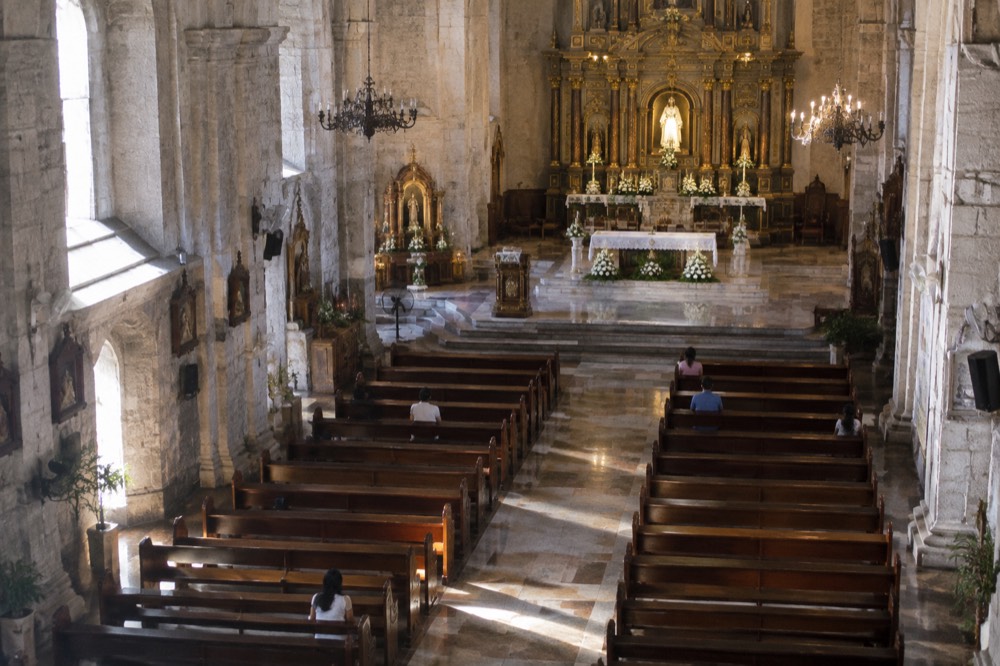
Inside the Cebu Metropolitan Cathedral the visitor sees a working cathedral rather than a museum: a nave used for regular archdiocesan masses, a sanctuary where major liturgical events are held, and the quiet, functioning seat of the country's oldest archdiocese; around it, within a few minutes' walk, sit the Basilica del Santo Niño with the venerated Santo Niño image, the pavilion of Magellan's Cross, Fort San Pedro, and a cluster of heritage houses and museums that together form the country's most complete Spanish-era quarter outside Manila.
The Basilica deserves the longest share of any heritage morning. The present structure was built in the 1735-1740 period on the site where the Santo Niño image was found on 28 April 1565, and the church was elevated to a minor basilica in 1965 for the fourth centennial. The image itself is the roughly eleven-inch Flemish-origin wooden statue presented at the baptism of Hara Amihan, Queen Juana, in 1521 and rediscovered in 1565, a history the Basilica's own chronicles document in detail.
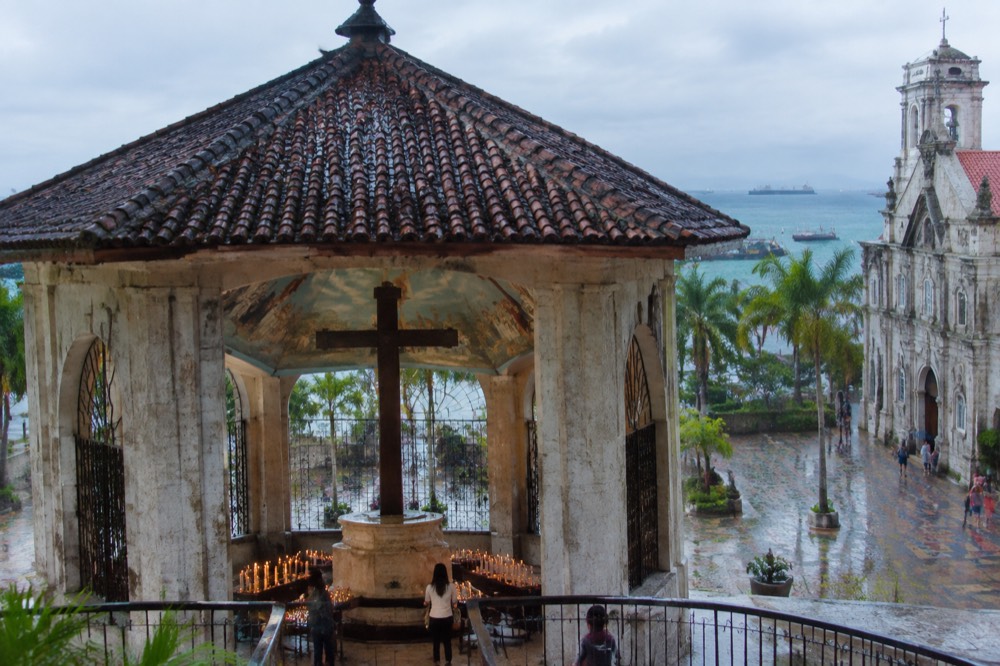
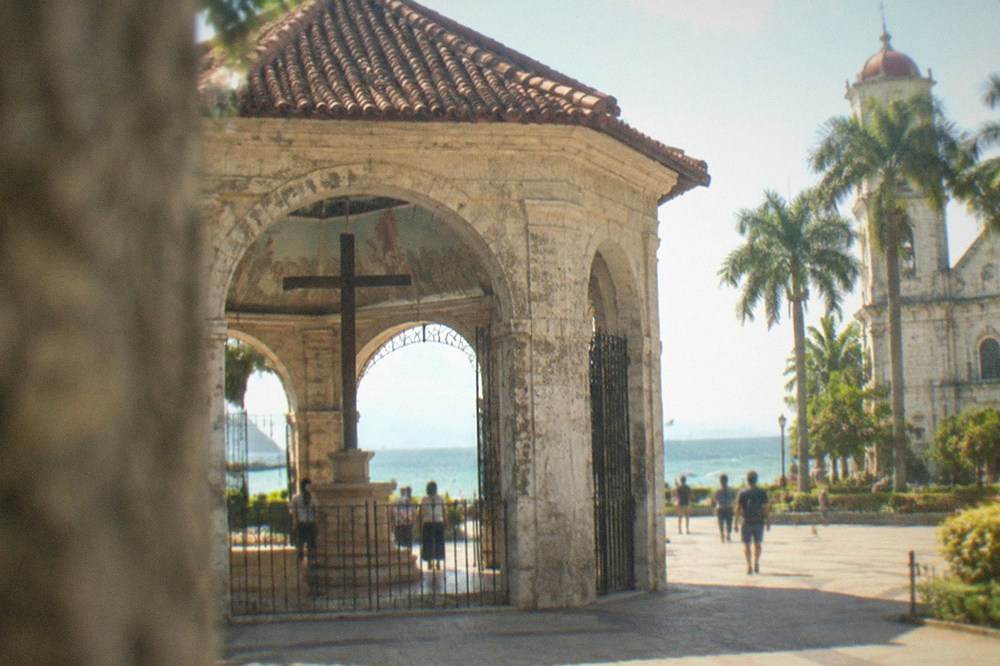
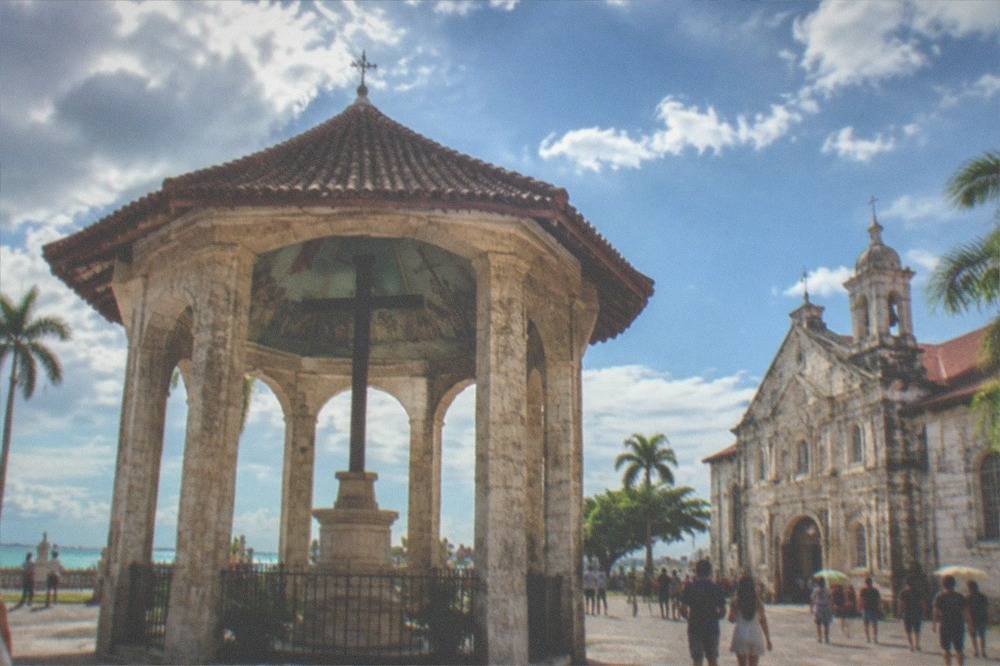
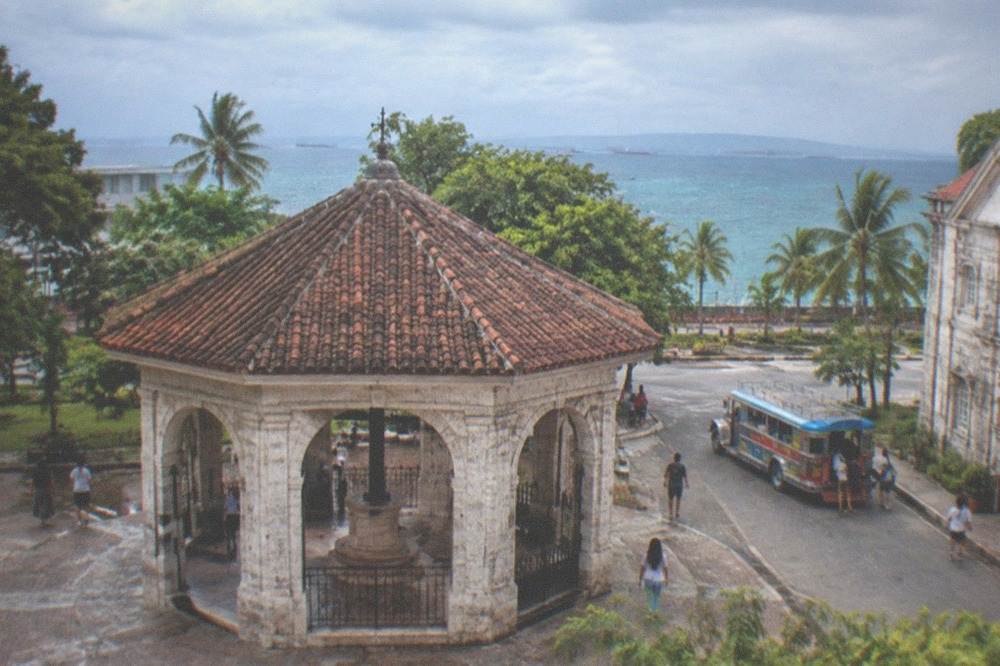
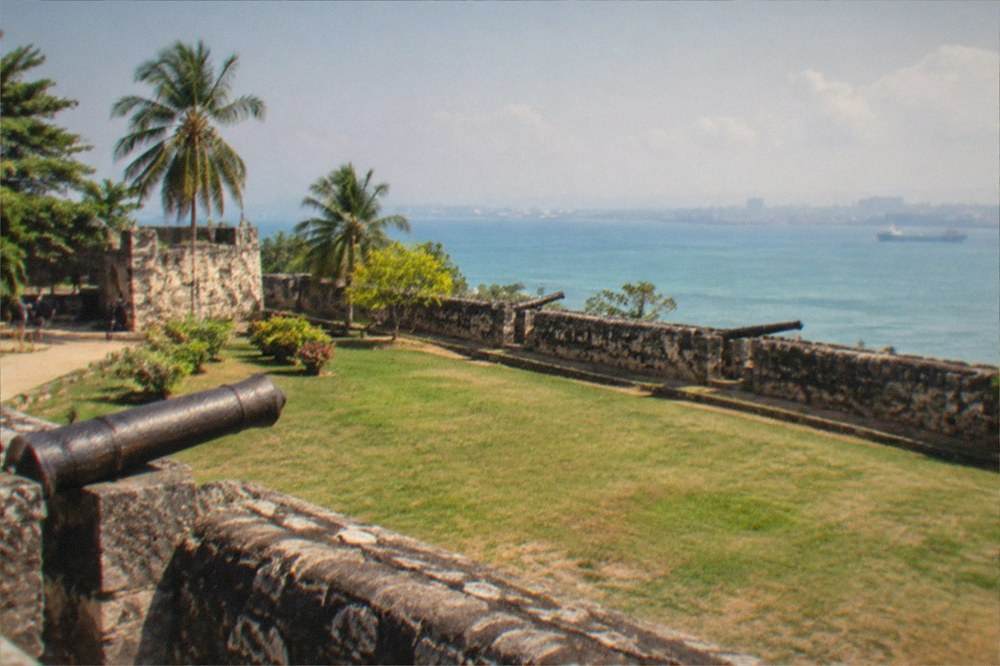
Fort San Pedro, meanwhile, is the country's oldest triangular bastion fort, with work first started in 1565 under Legazpi and the present stone form dating to 1738. Magellan's Cross is free and open-air, with the tradition that the cross commemorates the planting of a cross at the baptism events of April 1521, in a pavilion whose current structure dates to 1834. For individual deep dives, see the Basilica del Santo Niño guide, the Magellan's Cross guide, the Fort San Pedro guide and the Casa Gorordo Museum guide.
Around the churches, downtown Cebu City rewards the walker who looks up. The heritage quarter sits minutes from Colon Street, and the whole cathedral-Basilica-fort walk is flat, shaded in patches, and genuinely doable in a half day even in the heat, provided you start early. A combined look at what the wider city and island offer, from the hillside temples to the highlands viewpoints, is in the main things to do in Cebu roundup.
How Does The Cathedral Fit Into A Longer Cebu Trip?
The Cebu Metropolitan Cathedral works best as the anchor stop of a morning in downtown Cebu City, paired with the Basilica, Magellan's Cross and Fort San Pedro, and it slots naturally into day one of almost any Cebu itinerary; with three to five days on the island, the standard pattern is one heritage day in the city, then island-hopping or whale-shark and waterfall days to the south, then a beach or dive extension on the coast.
The southern day trips are a popular draw after the city, and the fee picture there is well documented. Oslob whale-shark watching, under Municipal Ordinance No. 010, s. 2020, reverted from 21 March 2025 to P1,000 (about US$15.9) per foreign tourist and P500 (about US$8.0) per Filipino, boat and guide included, with no guaranteed sightings, as the late-May 2026 four-day absence of the sharks from Tan-awan showed. Kawasan Falls charges about P200 (about US$3.2) for Level 1 entrance, with canyoneering through a Badian-accredited guide running roughly P1,500 (about US$24) to P2,000 (about US$32) per person all-in. Tumalog Falls entrance is about P50 (about US$0.8).
| Day trip from Cebu City | Headline activity | Typical fee picture |
|---|---|---|
| Oslob | Whale sharks, viewing from boat, P1,000 (about US$15.9) foreign / P500 (about US$8.0) local | 30-minute interaction window, no touching, no sunscreen |
| Kawasan Falls (Badian) | Waterfalls and canyoneering | About P200 (about US$3.2) entrance; canyoneering roughly P1,500 (about US$24)-2,000 guided |
| Tumalog Falls (Oslob) | Waterfall stop beside the whale-shark sites | About P50 (about US$0.8) entrance |
| Moalboal | Sardine run from Panagsama Beach | P100 (about US$1.6) environmental user fee to swim or snorkel |
| Olango Island | Bird sanctuary, Ramsar site since 1994 | P100 (about US$1.6) foreigner, P30 (about US$0.5) Filipino adult |
Planning detail worth knowing: only the Badian canyoneering route at Kawasan is currently running, as the Alegria route has been suspended, and cliff jumping is banned at the Level 1 basin. The full southern picture, including dedicated deep dives, is in the Kawasan Falls guide, the Oslob whale sharks guide and the Moalboal sardine run guide.
The trio above covers the three directions most Cebu trips actually take: the city heritage morning that includes this cathedral, a private countryside day if you decide to cross to Bohol, and a food walk for the city's market and lechon culture. For the Bohol crossing, the ferry picture as of September 2026 is OceanJet fastcraft from Pier 1 to Tagbilaran, about two hours, at P960 (about US$15.3) tourist class and P1,440 (about US$23) business with the fuel surcharge applied from 21 September 2026, with Lite Ferries running a slower RORO alternative of about four hours.
A private Bohol countryside day is the comfortable version of that crossing, with early pickup, a same-day return and the countryside highlights arranged for you.
Back on Cebu itself, if waterfalls call louder than churches, the guided canyoneering half-day from Moalboal is the highest-rated water option in the roster.
Common Questions About The Cebu Metropolitan Cathedral
What Is the Cebu Metropolitan Cathedral?
It is the seat of the Archdiocese of Cebu, the mother church and the bishop's church of the country's oldest Catholic jurisdiction, standing in downtown Cebu City in the Philippines.
Is There an Entrance Fee at the Cebu Metropolitan Cathedral?
No, entry is free. The nearby Basilica del Santo Niño and Magellan's Cross are also free; the only charge in the heritage cluster is Fort San Pedro at P50 (about US$0.8) regular and P40 (about US$0.6) for students and seniors.
How Far Is the Cathedral From the Basilica Del Santo Niño?
A few minutes on foot. The cathedral, the Basilica, Magellan's Cross and Fort San Pedro form one walkable downtown cluster, and all four can be covered in a single morning.
When Is the Best Time of Year to Visit Cebu City?
December to May is the dry season, with February to April the driest stretch on the Mactan station normals. Sinulog, on the third Sunday of January, brings the year's biggest crowds to the cathedral quarter.
How Do I Get to the Cathedral From Mactan Airport?
Take the MyBus airport service to SM City Cebu for about P50 (about US$0.8) or less, then a short taxi or jeepney hop to the heritage quarter; a Grab or taxi ride covers the roughly 13 to 15 km in 25 to 60 minutes depending on traffic.
Are the Downtown Museums Open After the 2025 Earthquake?
Several downtown museums were flagged for structural inspection after the 30 September 2025 quake off northern Cebu, and their current status is not fully confirmed, so check locally before planning a museum-heavy day. The cathedral and Basilica cluster were not reported damaged, and the tourism department declared Cebu open to visitors in late October 2025.
Whether you come for the architecture, the archdiocesan history or simply because it stands between two better-known landmarks on the same square, the Cebu Metropolitan Cathedral rewards twenty unhurried minutes, and it gives the downtown heritage walk its proper anchor. Pair it with the Basilica in the early morning, walk the triangle while the air is still cool, and let the rest of Cebu, the waterfalls to the south and the beaches of Mactan, fill the days after.