What Is Mactan Island Known For?
Mactan Island in Cebu, Philippines is known for the Battle of Mactan, Lapu-Lapu, beach resorts, island hopping sanctuaries and the international airport. A full answer for visitors.
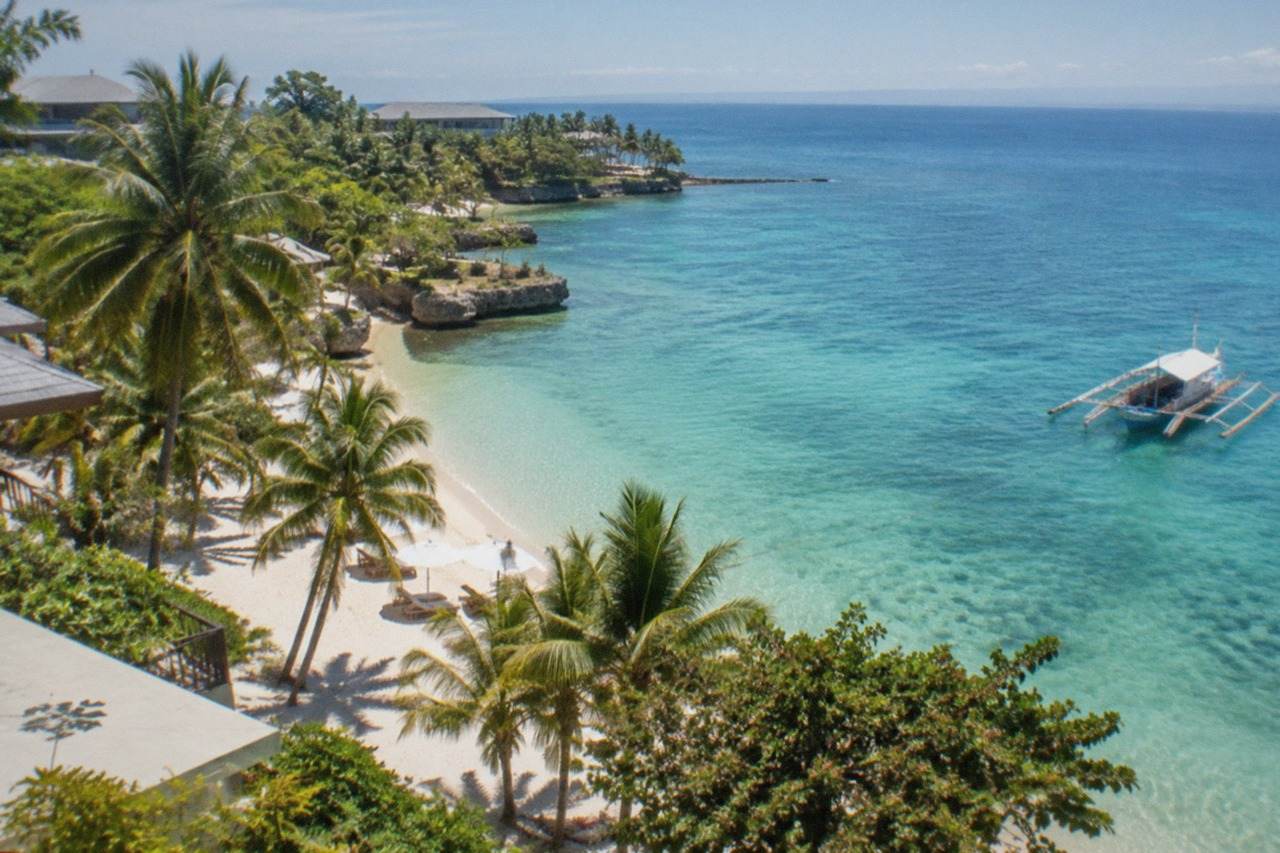
Mactan Island, in the Philippines province of Cebu, is known for three things above all: the 1521 Battle of Mactan and its hero Lapu-Lapu, the beach and island-hopping playground that sits within an hour of Cebu City, and Mactan-Cebu International Airport, the main gateway into the Central Visayas. Many people arrive on Mactan before they realise they are on it. The island is administratively its own city, Lapu-Lapu City, one of the three highly urbanized cities that sit alongside but independently of Cebu Province, and it is connected to mainland Cebu by three road bridges.
What Is Mactan Island Known For?
Mactan Island is known for the Battle of Mactan on 27 April 1521, when the local chief Lapu-Lapu defeated and killed Ferdinand Magellan; for the beach resorts, dive shops and marine sanctuaries along its coast; and for Mactan-Cebu International Airport, the busiest gateway to the Central Visayas. It is also the guitar-making centre of the region, and its shores face some of the most visited island-hopping routes in the Philippines.
Those three identities, history, leisure and logistics, sit surprisingly close together. The Lapu-Lapu Shrine commemorating the battle stands on the island's northeast coast, a short drive from the airport terminals and from the resort strips of Maribago and Mactan's east coast. A visitor can land at the airport in the morning, be snorkelling over a marine sanctuary by early afternoon, and still fit in the shrine before dinner.
The island also anchors the wider region's identity. Lapu-Lapu himself has become a national symbol, the statue on Mactan is one of the most photographed heritage sites in the Visayas, and the city that covers the island carries his name. For a deeper look at the whole province's claims to fame, see what Cebu is known for.
Where Is Mactan Island And How Do You Get There From Cebu City?
Mactan Island lies just east of Cebu City, separated from the mainland by the narrow Mactan Channel and linked by three bridges: the Osmeña (Mactan-Mandaue) Bridge, the Marcelo Fernan Bridge, and the Cebu-Cordova Link Expressway, opened on 30 April 2022. The airport is about 13 to 15 km from Cebu City, roughly 25 to 60 minutes by road depending on bridge traffic.
The Cebu-Cordova Link Expressway, usually shortened to CCLEX, is the newest crossing, an 8.9 km toll bridge that connects Cebu City's coastal road to Cordova at Mactan's southern tip. Its tolls for a one-way crossing in a car are P107 (about US$1.7) under the full rate matrix in force since October 2025, with higher classes paying more.
Mactan-Cebu International Airport itself deserves a paragraph. Terminal 1, opened in 1990, primarily handles domestic flights; Terminal 2, opened on 1 July 2018, primarily handles international ones, and the two are adjacent and connected by a walkway. Since 16 January 2025 the airport has been operated by Aboitiz InfraCapital Cebu Airport Corporation under a public-private partnership, and a second runway opened on 30 January 2025. New routes keep arriving: among the 2025 and 2026 additions are Jetstar's seasonal Cebu-Brisbane service and Vietnam Airlines flights to Hanoi, which is one reason the airport positions itself as the country's secondary gateway.
Getting from the airport into Cebu City does not require a taxi. MyBus runs an air-conditioned service between SM City Cebu, Parkmall and the airport, with fares of P30 (about US$0.5) to P50 (about US$0.8) depending on the distance travelled; the SM-to-airport direction runs roughly from 6:00 AM to 9:00 PM and the airport-to-SM direction roughly from 7:00 AM to 10:00 PM, with a separate 24/7 route serving Lapu-Lapu Public Market. Taxis queue outside arrivals: yellow airport-accredited cabs charge a flag-down of about P70 (about US$1.1), while white metered city cabs flag down at about P40 (about US$0.6) plus around P14 (about US$0.2) per kilometre. Full arrival logistics are covered in the Cebu airport guide.
What Are The Best Beaches And Marine Sanctuaries Around Mactan?
Mactan's coast is best known for its island-hopping routes to the marine sanctuaries of Gilutungan (also spelled Hilutungan), Caohagan, Nalusuan and Pandanon, all reached by outrigger banca from resort piers on the island's east side. Snorkelling over these sanctuaries is the single most popular paid activity based on Mactan, and the environmental fee is charged per person on top of the sanctuary entrances.
The sanctuaries are the real draw. Gilutungan and Nalusuan charge their own sanctuary entrance fees of roughly P150 (about US$2.4) to P300 (about US$4.8) per person on top of the environmental fee, which stands at P100 (about US$1.6) for foreign tourists and was cut to P20 (about US$0.3) for local tourists by a July 2025 amendment. Caohagan is a small fishing island with a shell-strewn beach, and Pandanon, further out, is the sandbar-and-clear-water stop that appears on most postcards of the route. Birdwatchers have a quieter option close by: Olango Island, a Ramsar wetland since 1 July 1994 and the first Ramsar site in the Philippines, lies just offshore, with entrance at P100 (about US$1.6) for foreign visitors and P30 (about US$0.5) for Filipino adults, and its migratory shorebirds present mainly from September to March.
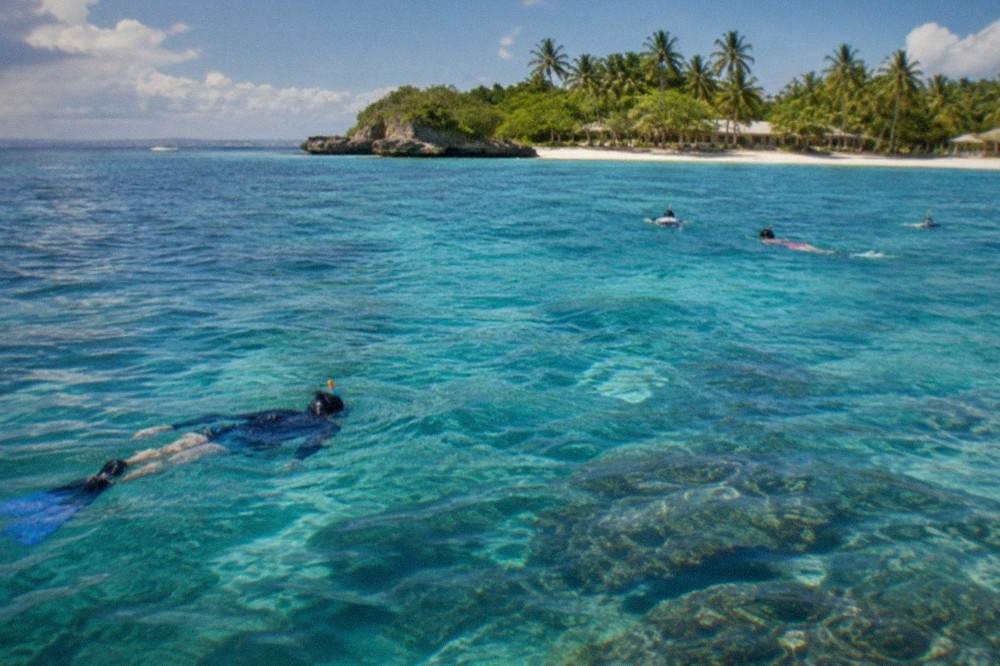
The practical way to see the sanctuaries is a boat day with lunch included, and the most booked option is the Mactan island-hopping day trip covering Gilutungan, Caohagan and Nalusuan, a full-day tour with lunch on the boat or on a beach.
If you would rather compare several Mactan-based days before committing, these three cover the spread of what the island offers:
For the beach-by-beach comparison, including which stretches of Mactan are actually swimmable versus built over with resort seawalls, read whether Mactan has nice beaches and the longer Mactan beaches guide.
Planning Your Mactan Island-Hopping Day
| Item | Typical figure | Notes |
|---|---|---|
| Environmental fee, foreign tourists | P100 (about US$1.6) | Charged for island hopping from Lapu-Lapu; unchanged for foreigners |
| Environmental fee, local tourists | P20 (about US$0.3) | Reduced from P100 (about US$1.6) by the July 2025 ordinance amendment |
| Sanctuary entrance, Gilutungan or Nalusuan | About P150 (about US$2.4) to P300 (about US$4.8) | Paid per person at the sanctuary, on top of the environmental fee |
| Olango Wildlife Sanctuary entrance, foreigner | P100 (about US$1.6) | Filipino adults pay P30 (about US$0.5); birds mainly September to March |
| Boat day duration | About 6 hours | Standard Gilutungan-Caohagan-Nalusuan circuit with lunch |
Fees are set by the city and the sanctuary managements and can change; carry cash, since the beach kiosks do not take cards.
What Is The History Behind Mactan Island?
Mactan's claim to world history rests on a single afternoon: on 27 April 1521, the chief Lapu-Lapu defeated a Spanish landing party led by Ferdinand Magellan, who was killed in the shallows off the island. Magellan had reached Cebu in April 1521 and won the baptism of the local ruler Rajah Humabon, but Lapu-Lapu refused Spanish authority and the confrontation ended European hopes of a quick foothold.
The battle is one of the most consequential skirmishes in colonial history, because it delayed Spanish settlement of the archipelago by more than four decades. It was only in 1565 that the Legazpi-Urdaneta expedition returned and founded a Spanish settlement in Cebu, the oldest city in the Philippines. The Lapu-Lapu Shrine, a bronze statue of the chief with a kampilan sword and shield, marks the traditional battle site at Punta Engaño, on Mactan's northern tip, and the site is managed as a national shrine.
Lapu-Lapu's name now covers the whole island: Lapu-Lapu City is the highly urbanized city that administers Mactan and its offshore islets. The island's other heritage claim is quieter but real: Mactan and Cordova have long been the guitar-making workshops of the Visayas, and hand-built guitars from the island's luthiers are sold across the Philippines. The historical half-day circuit, shrine plus the Cebu City heritage sites across the channel, is a common pairing for visitors with limited time.
Is Mactan Island Worth Visiting Compared With Cebu City?
Mactan is worth visiting for almost every traveller, because it combines the airport, the beach resorts and the island-hopping piers in one compact island, but it is a resort-and-sea destination rather than a heritage city break. Cebu City holds the colonial churches, museums and food scene; Mactan holds the swimming, diving and boat trips. Most first-time visitors split a stay between the two, sleeping on Mactan and day-tripping into the city.
The standard comparison works like this. If your priority is heritage, street food and nightlife, stay in Cebu City and cross to Mactan only for the airport and a beach day. If your priority is a swim before breakfast, a dive in the morning and a boat trip the next day, stay on Mactan and accept a bridge commute for city sightseeing. The full trade-off is laid out in Mactan versus Cebu City for where to stay.
Divers in particular base themselves on Mactan: the island's east coast dive shops run trips to the same sanctuaries the snorkellers visit, plus further sites across the Camotes Sea, and the airport proximity means a dive holiday here can start an hour after landing. Whether the island deserves a full day of your itinerary on its own merits, beyond the beaches, is a fair question, and the honest answer is that the sanctuaries, not the island's own shore, are what justify the trip for most visitors.
For longer island ambitions, Mactan is also a practical overnight staging point for trips north and south across the province, since the airport and the resort piers sit within an hour of most of the region's boat departure points.
Common Questions About Mactan Island
What is Mactan Island known for?
Mactan Island is known for the 1521 Battle of Mactan, in which the chief Lapu-Lapu defeated Ferdinand Magellan; for its beach resorts and island-hopping trips to the Gilutungan, Caohagan, Nalusuan and Pandanon marine sanctuaries; for Mactan-Cebu International Airport, the main gateway to the Central Visayas; and for its guitar-making workshops.
Is Mactan part of Cebu City?
No. Mactan is administered by Lapu-Lapu City, one of the three highly urbanized cities in Metro Cebu, alongside Cebu City and Mandaue City. These cities are administratively independent of Cebu Province but grouped with it geographically. Mactan is connected to the mainland by the Osmeña Bridge, the Marcelo Fernan Bridge and the CCLEX toll bridge.
How far is Mactan Island from Cebu City?
The airport on Mactan is about 13 to 15 km from Cebu City, typically 25 to 60 minutes by road depending on bridge traffic. The MyBus airport service charges P30 (about US$0.5) to P50 (about US$0.8) depending on distance, and yellow airport taxis flag down at about P70 (about US$1.1).
Can you swim on Mactan Island itself?
Yes, mainly at the resort beaches on the island's east coast around Maribago and the neighbouring barangays, though much of the shoreline is occupied by resorts. Many visitors prefer the island-hopping trips to the offshore sanctuaries, where the snorkelling is better than on Mactan's own shore.
Who was Lapu-Lapu and why is he famous?
Lapu-Lapu was the chief of Mactan who, on 27 April 1521, defeated a Spanish landing force led by Ferdinand Magellan, who was killed in the battle. He is commemorated by the Lapu-Lapu Shrine on Mactan's northern tip and by the city that administers the island, which carries his name.
What islands can you visit from Mactan?
The standard island-hopping circuit from Mactan covers the marine sanctuaries of Gilutungan, Caohagan and Nalusuan, with Pandanon as a longer option. Olango Island, a Ramsar wetland famous for migratory birds, lies just offshore, and dive boats from Mactan also reach sites across the Camotes Sea.
Mactan rewards a day or two of any Cebu itinerary, whether you come for the shrines, the sanctuaries or simply because your flight lands there. More on the whole province, from the highlands to the whale sharks of the south, is collected across Cebu Travel Guide.