Mactan-Cebu International Airport (MCIA)
Mactan-Cebu International Airport (IATA CEB) sits on Mactan Island in Lapu-Lapu City, Cebu, Philippines, and is the main gateway to the Central Visayas. This guide covers its two terminals, every transport option into Cebu City or Mactan, the visa and eTravel rules that apply on arrival, and what to do in the hours after you land.
Short answer
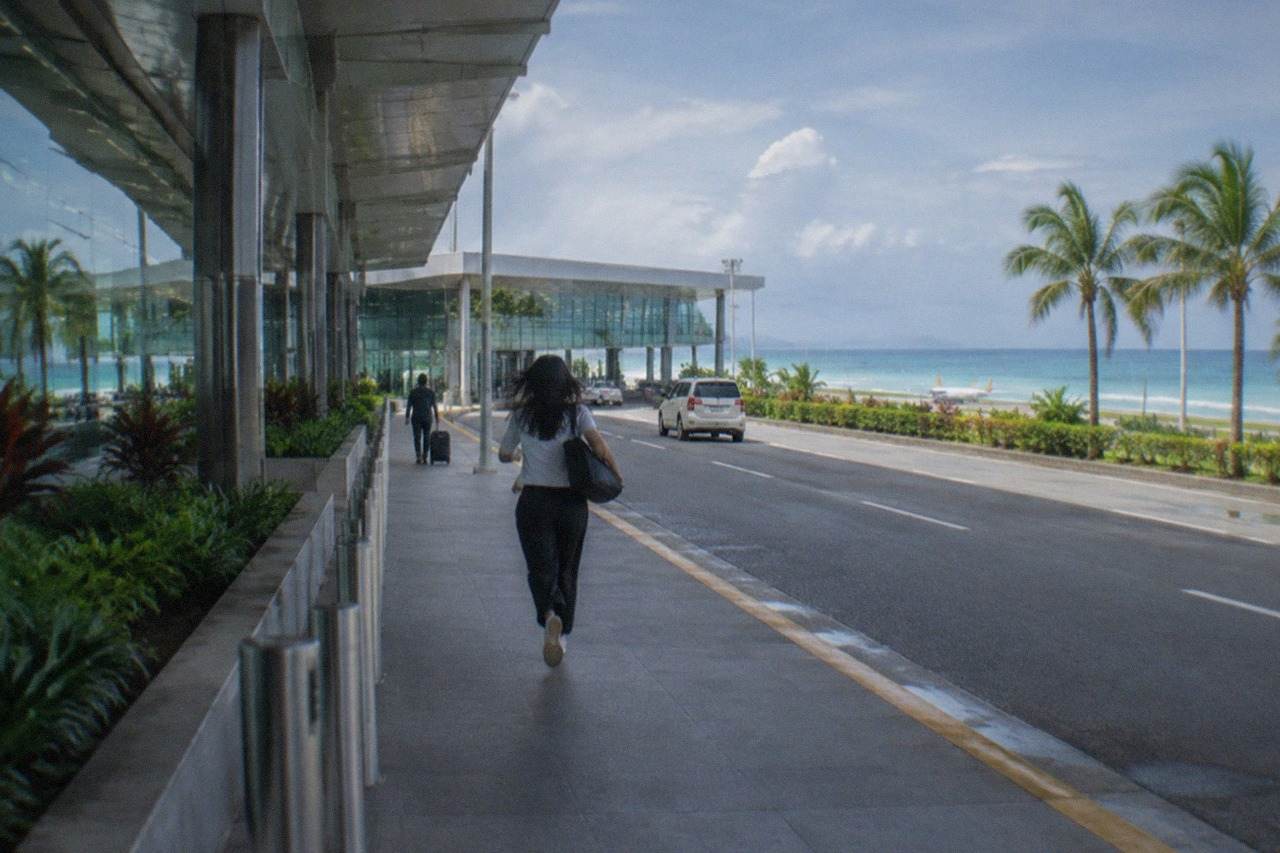
Mactan-Cebu International Airport (MCIA, IATA CEB) is on Mactan Island in Lapu-Lapu City, about 13 to 15 km from central Cebu City, roughly 25 to 60 minutes by road depending on traffic. Terminal 1 handles mostly domestic flights, Terminal 2 mostly international. MyBus runs to SM City Cebu from about P30 to P50 (about US$0.5 to US$0.8), and Grab, white metered taxis and yellow airport taxis all serve the terminals.
Mactan-Cebu International Airport, usually shortened to MCIA and carrying the IATA code CEB, is the main international gateway to the island province of Cebu in the Central Visayas region of the Philippines. It sits on Mactan Island, inside Lapu-Lapu City, which is a highly urbanized city administratively independent of Cebu Province, across the Mactan Channel from Cebu City itself. That geography matters for every traveler: you land on Mactan, and reaching the main city means crossing a bridge. This Cebu Travel Guide page walks through the airport itself, every way of getting into town, the paperwork you need before boarding, and how to plan the first day of your trip around the airport's location.
Where Is Mactan-Cebu International Airport And Which Terminal Will You Use?
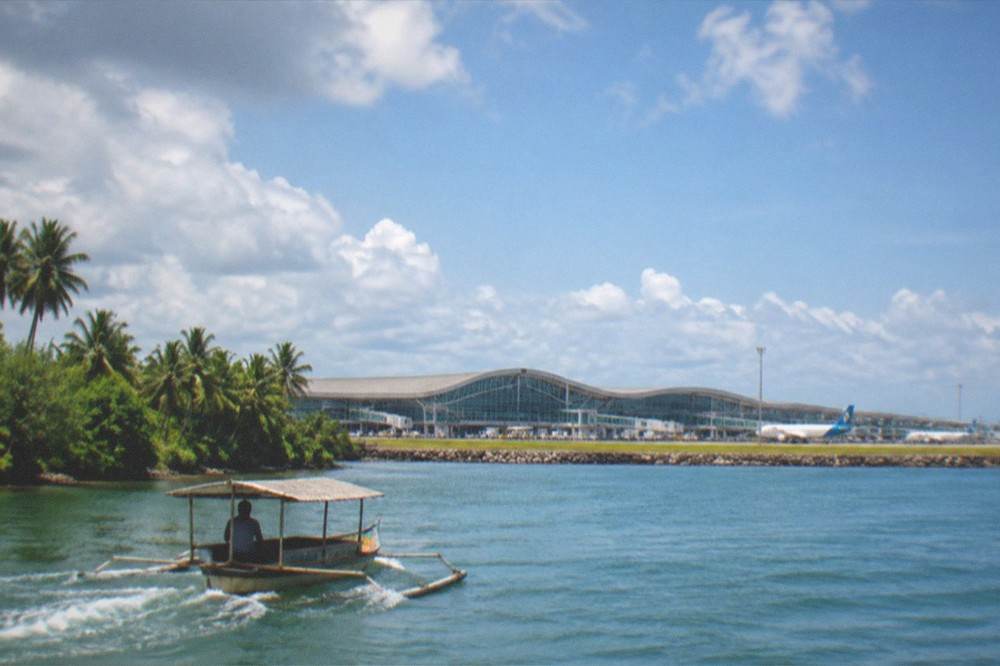
Mactan-Cebu International Airport sits on Mactan Island in Lapu-Lapu City, Cebu, Philippines, about 13 to 15 km from central Cebu City, which usually means a 25 to 60 minute drive depending on bridge traffic. Terminal 1, which opened in 1990, primarily handles domestic flights, while Terminal 2, which opened on 1 July 2018, primarily handles international flights. The two terminals are adjacent and connected by a walkway, so transfers between them are straightforward.
The airport is operated by Aboitiz InfraCapital Cebu Airport Corporation, a public-private partnership with the Mactan-Cebu International Airport Authority, with full operations under the concessionaire commencing on 16 January 2025. A second runway opened on 30 January 2025, part of the reason the airport has been adding routes quickly: since late 2025, new services have included Jetstar to Brisbane, Vietnam Airlines to Hanoi, AirAsia and Firefly to Kuala Lumpur, and Philippine Airlines to Guam, alongside a revived AirAsia domestic hub feeding Cebu from Davao, Iloilo, Caticlan and elsewhere.
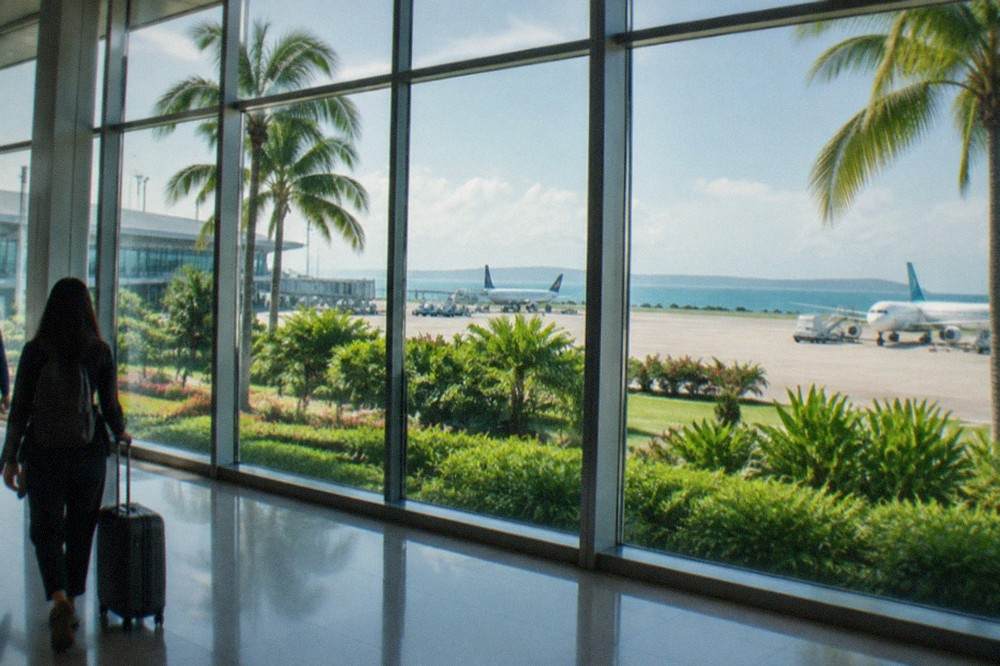
Which terminal you use follows your flight, not your choice. If you are flying in from Manila, Caticlan, Davao or another Philippine city, expect Terminal 1. Arriving from Singapore, Seoul, Doha, Brisbane or anywhere outside the country usually means Terminal 2, a timber-lined building that has won design awards and is genuinely pleasant to arrive into. Check your booking or the airline's confirmation for the terminal, because a handful of domestic carriers use T2 when their international and domestic operations share a check-in row.
| Terminal | Opened | Primary use | Notes |
|---|---|---|---|
| Terminal 1 | 1990 | Domestic flights | Older building, adjacent to T2, connected by walkway |
| Terminal 2 | 1 July 2018 | International flights | Award-winning timber design, expanded retail and dining |
One practical point: because the airport is on Mactan Island, some visitors never actually need to cross to Cebu City at all. If your hotel is in Lapu-Lapu City near the beach resorts, the airport can be as little as a short taxi hop away. The question of which side to stay on is covered in detail in Mactan Versus Cebu City For Your Stay, and the beach options on the airport's own island are listed in Mactan Island Beaches And Coastal Spots.
How Do You Get From Cebu Airport To Cebu City?
The cheapest fixed option from MCIA to Cebu City is the MyBus, running between the airport and SM City Cebu with fares of roughly 30 to 50 pesos depending on distance; SM City Cebu to the airport runs roughly 6:00 AM to 9:00 PM and the airport to SM roughly 7:00 AM to 10:00 PM. A taxi or Grab covers the roughly 13 to 15 km to the city center in about 25 to 60 minutes depending on traffic.
There is no rail link and no airport express.
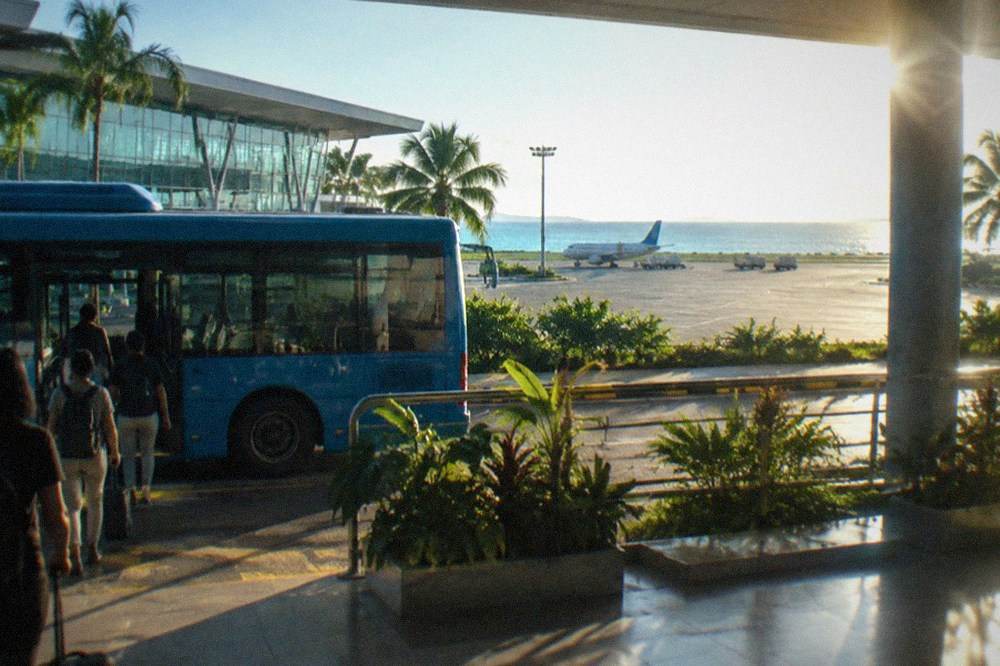
MyBus is the airport's own published ground transport option, running the SM City Cebu, Parkmall and MCIA route in both directions, plus a separate 24/7 route serving the Lapu-Lapu Public Market. The bus is air-conditioned and departs frequently; the airport's transport guide is the authoritative source for the current schedule, and fares are paid on boarding. For most travelers staying anywhere near SM City Cebu, Fuente Osmeña or the IT Park, the bus plus a short jeepney or Grab hop is the budget route.
Taxis come in two flavors at MCIA. Yellow airport taxis, the accredited airport fleet, flag down at about P70 (about US$1.1) plus roughly P4 (about US$0.1) per 300 meters. White metered city taxis queue at the same terminals and flag down at about P40 (about US$0.6) plus about P14 (about US$0.2) per kilometer, with waiting time added. Grab operates in Cebu with designated pickup zones outside arrivals at both terminals, and the app shows the fare before you book, though it moves with demand. All three options are legitimate; the difference is price structure and how much you value a fixed upfront fare after a long flight.
| Transport | Approximate cost basis | Where to find it | Best for |
|---|---|---|---|
| MyBus | P30 (about US$0.5) to P50 (about US$0.8) depending on distance | Airport curb, both terminals | Budget travelers heading to SM City Cebu area |
| Yellow airport taxi | About P70 (about US$1.1) flag-down plus about P4 (about US$0.1) per 300 m | Accredited queue at arrivals | Fixed, hassle-free ride to the city |
| White metered taxi | About P40 (about US$0.6) flag-down plus about P14 (about US$0.2) per km | Taxi rank at arrivals | Standard metered ride |
| Grab | App-based upfront fare, demand-based | Designated pickup zones outside arrivals | Price certainty without cash negotiation |
| Hotel or resort transfer | Set by the property, confirm when booking | Pre-arranged, arrivals hall | Late arrivals and family groups |
Traffic on the bridges between Mactan and Cebu City is the single biggest variable in your journey time. The existing crossings are the Osmeña (Mactan-Mandaue) Bridge, the Marcelo Fernan Bridge and the CCLEX expressway, which opened on 30 April 2022 and carries tolls of P107 (about US$1.7) for cars one way. A fourth bridge between Paknaan in Mandaue and Ibo in Lapu-Lapu is planned but still in pre-construction, so allow generous time on weekend evenings and festival days. The broader transport picture, including jeepney routes and the partially operating bus rapid transit, is covered in Getting Around Cebu Without A Car.
If your first full day is short on planning time, a private tour that collects you from your hotel removes the early-morning scramble entirely, which is why the Bohol countryside option below appears in this guide's recommendations.
What Should You Know About Arrivals, Immigration And eTravel At Cebu Airport?
Every arriving passenger at MCIA, Filipino or foreign, must register on the eTravel platform within 72 hours before arrival and show the QR code before boarding; registration is free at the official site. Nationals of the United States, the United Kingdom, Australia and every EU state receive an initial 30-day visa-free stay for tourism, extendable with the Bureau of Immigration, and need a passport valid at least six months beyond the stay plus an onward or return ticket.
The eTravel requirement is the one that catches people. It is web-based, free of charge, and the customs declaration is integrated into the same form, so you complete health, immigration and customs entries in one pass. The Bureau of Immigration repeatedly warns about fake eTravel sites that charge fees; the only genuine registration is at the official government site. Do it in the departure lounge if you have forgotten, since the 72-hour window runs up to arrival.
Two corrections to widely repeated claims are worth fixing here, because outdated blogs still circulate them. First, the visa-free stay is 30 days, not the 21 days some older pages state; the 30-day rule comes from the official e-visa policy page and applies to the roughly 157 countries on the visa-free list. Second, foreign tourists do not pay the Philippine travel tax when they fly out, as long as their stay is under one year; that tax falls on Filipinos and resident foreigners. The full entry checklist, including extension mechanics, is in Philippines Visa And eTravel Rules For Cebu.
| Requirement | Rule | Who it applies to |
|---|---|---|
| eTravel registration | Within 72 hours before arrival, free, QR code at boarding | All arriving passengers |
| Passport validity | At least 6 months beyond intended stay | Visa-free nationals |
| Onward or return ticket | Required at check-in and immigration | All foreign visitors |
| Initial stay | 30 days for tourism, extendable via Bureau of Immigration | US, UK, EU, Australia and other listed nationals |
| Travel tax on departure | Exempt for non-immigrant foreigners staying under 1 year | Foreign tourists |
Immigration at Terminal 2 has been moving toward faster processing, with the airport's transfer program cutting minimum connection times and electronic gates reported as planned for installation in late 2026. In normal conditions, arrivals from the aircraft door to the arrivals hall takes a moderate walk, biometric capture and a document check; at peak international banks, queues build. There is nothing to pay at the airport on arrival beyond your transport, since the passenger service charge is bundled into your airline ticket.
Once you are through, the question is what to do with your first full day, and the most popular answer among travelers landing in Cebu is the Bohol countryside loop across the strait. A private version handles the ferry timing for you.
When Is The Best Time To Fly Into Cebu And What Weather Should You Expect?
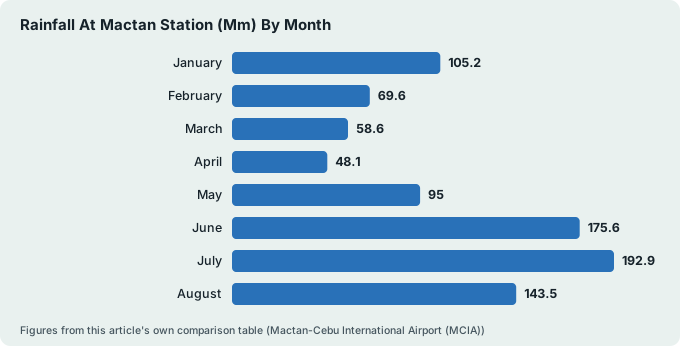
The best time to fly into Cebu is the dry season, December to May, when PAGASA's national rule places the island outside the rainy months of June to November. Mactan station's 1991-2020 climate normals show the driest month is April at 48.1 mm of rain and the wettest is October at 194.8 mm, with an annual total of 1,685.0 mm and a mean temperature of 28.1 C. Typhoon risk in the Visayas peaks from roughly July to October.
Cebu is tropical, full stop: there is no cool season in the temperate sense, just a drier half of the year and a wetter one. The practical difference for a flyer is schedule reliability. During the June to November rainy season, afternoon thunderstorms are common and typhoon systems can disrupt flights across the Visayas, as Typhoon Tino did in November 2025 when it brought severe flooding to Cebu before the province recovered quickly. Airlines generally rebook affected passengers, but a tight same-day connection is riskier in October than in March.
| Month | Rainfall at Mactan station (mm) | Season |
|---|---|---|
| January | 105.2 | Dry season |
| February | 69.6 | Dry season |
| March | 58.6 | Dry season |
| April | 48.1 | Dry season, driest month |
| May | 95.0 | Dry season, turning hotter |
| June | 175.6 | Rainy season begins |
| July | 192.9 | Rainy season |
| August | 143.5 | Rainy season |
| September | 179.6 | Rainy season |
| October | 194.8 | Rainy season, wettest month |
| November | 161.9 | Rainy season, typhoon tail |
| December | 139.7 | Transition to dry season |
One calendar event outweighs weather for January travelers. The Sinulog festival, Cebu's grandest celebration, falls on the third Sunday of January, with the 2027 Grand Parade set for 17 January 2027 at the Cebu City Sports Center. Flights and hotels around Sinulog fill early and price accordingly, and the bridges into the city jam on parade day. If you are coming for the festival, book months ahead and expect the airport to be busy; if you want quiet streets, avoid that weekend entirely. The month-by-month detail is in The Best Time To Visit Cebu and the storm calendar in Cebu Weather And Typhoon Season.
What Facilities And Services Does Mactan-Cebu International Airport Offer?
MCIA offers the facilities of a mid-sized international hub rather than a mega-airport: two connected terminals, a walkway between them, currency exchange and ATMs in arrivals, airline lounges, a broad dining and retail mix in Terminal 2, free Wi-Fi, designated Grab pickup zones, and an airport transfer program that cut minimum connection times to as little as 35 minutes for domestic-to-domestic connections. The airport surpassed 500,000 transfers under that program by September 2026.
Terminal 2 in particular is a comfortable place to spend a layover, with timber ceilings, natural light and a dining row that mixes Philippine chains and international brands. Terminal 1 is more functional but has been progressively upgraded, and further investments were committed when the concession extension was approved in September 2026. For a private transfer or a tour that starts the moment you land, the arrivals hall is where operators and hotel drivers wait with name signs.
A few practical notes. The passenger service charge is already in your ticket price, so there is no separate terminal fee desk to find at MCIA, unlike some older Philippine airports. Free Wi-Fi is available in both terminals, and SIM cards and pocket Wi-Fi are sold in arrivals, a topic covered in detail in SIM Cards And Internet In Cebu. Left-luggage facilities, smoking areas and prayer rooms exist but shift location with terminal works, so ask at an information counter rather than trusting an old blog map.
| Facility | Where | Notes |
|---|---|---|
| Currency exchange and ATMs | Arrivals and departures, both terminals | Pesos available on landing; rates vary by provider |
| SIM cards and pocket Wi-Fi | Arrivals retail row | Multiple operators with tourist packages |
| Airline and pay lounges | Terminal 2 primarily | Timed access available for eligible passengers |
| Grab pickup zones | Outside arrivals, both terminals | Marked bays; app shows the fare before booking |
| MyBus stop | Airport curb | SM City Cebu route plus 24/7 Lapu-Lapu Public Market route |
| Information counters | Both terminals | Best source for shifting amenities during works |
Should You Stay In Mactan Or Cebu City After Landing At MCIA?
Stay in Mactan if you want beach resorts, dive shops and the shortest possible transfer from the airport, since Lapu-Lapu City is where you land; stay in Cebu City if you want heritage sites, restaurants and nightlife, at the cost of a 25 to 60 minute bridge crossing after your flight. Mactan suits short stays, divers and resort-focused trips, while Cebu City suits first-time sightseers and food travelers. Neither choice is wrong, but they produce very different first evenings.
Mactan's resort strip sits close to the airport, which makes it the natural choice for a late arrival or an early departure. The island is also home to the Lapu-Lapu Shrine, the monument to the chieftain whose forces defeated Magellan at the Battle of Mactan on 27 April 1521, and to marine sanctuaries used for island hopping. The trade-off is that Mactan's dining and cultural scene is thinner than the city's across the water. The case for each side, neighborhood by neighborhood, is laid out in Where To Stay In Cebu.
Cebu City, the provincial capital and the country's oldest chartered city since 24 February 1937, holds the Basilica Minore del Santo Niño, Magellan's Cross, Fort San Pedro and the Carbon market district, plus the lechon restaurants the city is famous for. The city's IT Park district is where much of the dining and nightlife energy now sits. If your trip is short and sightseeing-focused, the city wins; if it is a beach week, Mactan does. The comparison questions travelers ask most are answered in Mactan Or Cebu City: Which Should You Choose? and Is Mactan Worth Visiting On A Cebu Trip?.
For a first evening in the city, a market walk is the fastest way into Cebu's food culture, and a guided one keeps the ordering simple:
What Day Trips Can You Take From Cebu Without Changing Hotels?
The strongest day trips from the Cebu City and Mactan area are Bohol's countryside across the strait by fast ferry, Moalboal's sardine run and Pescador Island to the south, and Oslob's whale sharks further down the coast, all reachable as organized tours with hotel pickup. OceanJet runs Cebu City to Tagbilaran in about two hours with around thirteen sailings a day. Staying in one hotel and touring out daily is a workable Cebu strategy.
The Bohol day trip is the classic: a fast ferry from Pier 1 in Cebu City to Tagbilaran, then a countryside loop that includes the Loboc River cruise with lunch, and a same-day ferry back. Tourist class fares on that route run at P960 (about US$15.3) as of 21 September 2026. Because the ferry schedule anchors everything, a private tour that handles the timing is the low-stress version, especially in a group. The ferry logistics, operators and current fares are broken down in Ferries From Cebu To The Neighboring Islands and specifically The Cebu To Bohol Ferry Explained.
South of the city, Moalboal's sardine run sits just off Panagsama Beach, a permanent resident school rather than a seasonal migration, with a P100 (about US$1.6) environmental user fee to swim or snorkel and about P100 (about US$1.6) per dive at Pescador Island's marine sanctuary. Further along the same coast, Oslob's whale shark interaction runs about 6 AM to 12 PM at P1,000 (about US$15.9) for foreign visitors, boat and guide included, with strict rules on distance and sunscreen. Both are long days from Cebu City, which is exactly why tours with transport included sell well. The full breakdowns live in The Moalboal Sardine Run and Oslob Whale Shark Watching.
For travelers who want the Bohol loop without sharing a bus with thirty strangers, the private version is the one worth checking:
Budget-wise, Cebu rewards a rough plan: airport transport, island fees and ferry fares are all modest in dollar terms, but they add up across a week. The cost picture, including what a mid-range day of eating and touring looks like, is tallied in Cebu On A Budget: What Things Cost, and the safety context for the island, including how the 2025 typhoon and earthquake affected different areas, is in Staying Safe In Cebu.
Common Questions About Mactan-Cebu International Airport
How far is Cebu Airport from Cebu City?
The airport sits on Mactan Island in Lapu-Lapu City, about 13 to 15 km from central Cebu City. The drive usually takes 25 to 60 minutes depending on bridge traffic, and there is no official fixed journey time, so allow the upper end at rush hour and on festival weekends.
Is there a bus from Mactan-Cebu International Airport to Cebu City?
Yes. MyBus runs between MCIA and SM City Cebu via Parkmall, with fares from about P30 (about US$0.5) to P50 (about US$0.8) depending on distance. SM City Cebu to the airport runs roughly 6:00 AM to 9:00 PM, the airport to SM roughly 7:00 AM to 10:00 PM, and a separate 24/7 route serves the Lapu-Lapu Public Market.
Which terminal at MCIA handles international flights?
Terminal 2, which opened on 1 July 2018, primarily handles international flights, while Terminal 1, which opened in 1990, primarily handles domestic flights. The terminals are adjacent and connected by a walkway, so a connection between them is a short walk.
Do I need to pay a terminal fee at Cebu Airport?
No, not at the airport. The passenger service charge at MCIA is bundled into your airline ticket price, so there is no separate fee desk at the terminal. You only need cash on hand for your ground transport.
Is Grab available at Mactan-Cebu International Airport?
Yes. Grab operates across Cebu with designated pickup zones outside arrivals at both terminals. The app shows an upfront fare before you confirm, though prices move with demand, and the same zones serve white metered taxis and yellow airport taxis.
Do foreigners need eTravel registration to enter Cebu?
Yes. Every arriving passenger, foreign or Filipino, must register on the eTravel platform within 72 hours before arrival and present the QR code before boarding. Registration is free at the official government site, and the Bureau of Immigration warns against copycat sites that charge fees.
Can I visit Bohol on a day trip after landing in Cebu?
Yes, and it is one of the most popular first-day moves. OceanJet runs Cebu City's Pier 1 to Tagbilaran in about two hours with around thirteen daily sailings, and organized countryside tours with the Loboc River cruise and lunch return the same day. A private version handles the ferry timing for you: Check availability.
The airport is the least interesting part of Cebu and the part every visitor has to pass through, so it pays to get it right: register eTravel before you fly, know your terminal, pick your transport by budget rather than habit, and decide which side of the bridge you are sleeping on before you land. From there, the island opens up, and everything else on this site, starting with the main Cebu itinerary planner, is about what you do once you are outside the terminal doors.