It Park Cebu
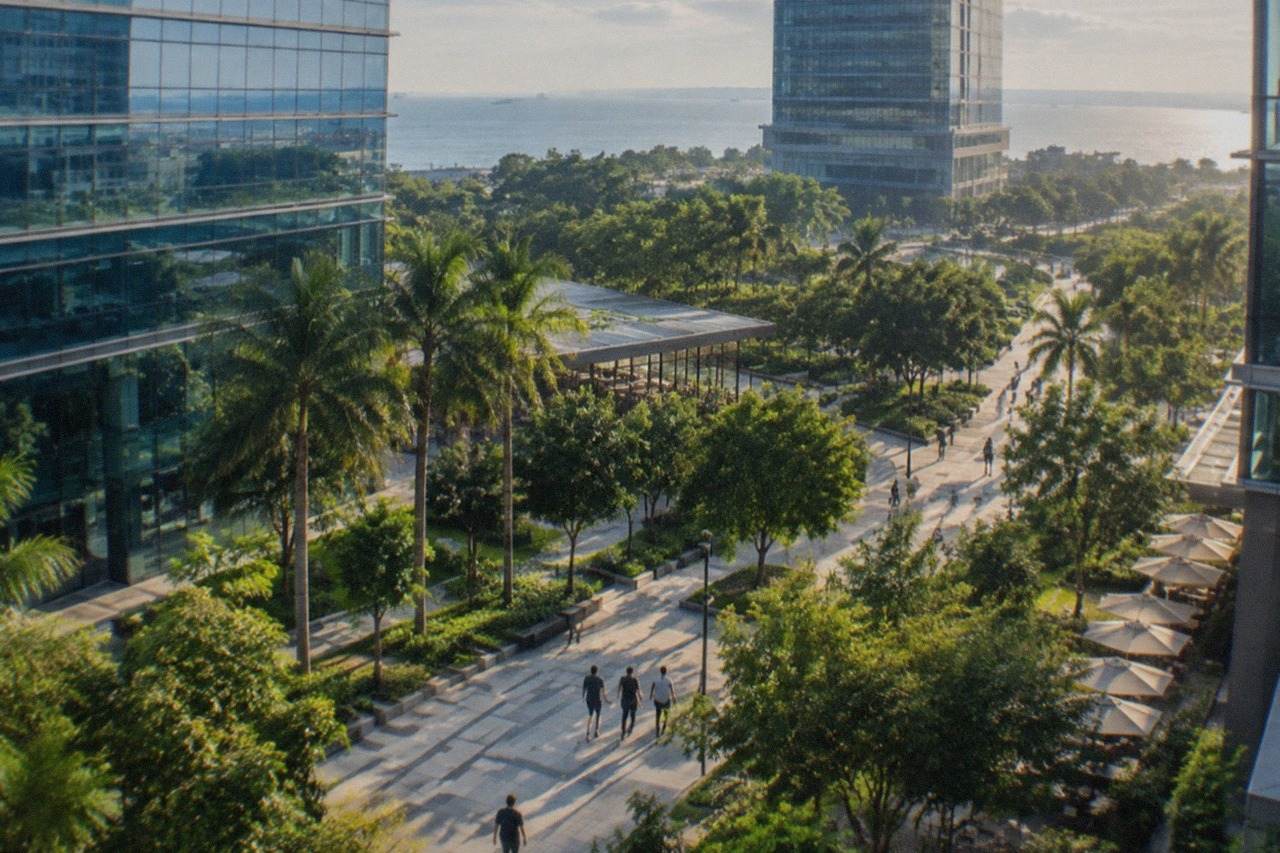
IT Park is the glass-and-steel business district at the heart of Cebu City in the Philippines, and it has quietly become one of the most convenient places a visitor can stay: walking distance of malls and restaurants, the inland end of the city's newest bus route, and a comfortable base for day trips across the island.
Short answer
IT Park is a business and lifestyle district in Cebu City, Philippines, about 13 to 15 km from Mactan-Cebu International Airport. It is a practical base for visitors: the Cebu Bus Rapid Transit route ends here, the Tops Lookout shuttle departs from here, and heritage downtown Cebu is a short ride away.
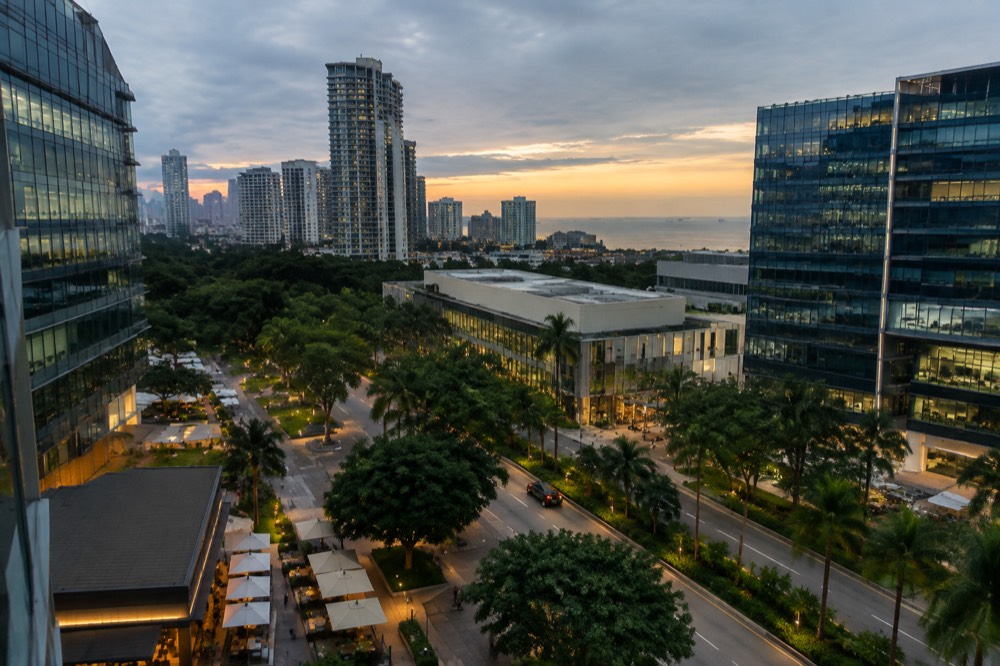
IT Park sits in Cebu City, on the island of Cebu in the Central Visayas region of the Philippines, and it is the closest thing the city has to a purpose-built modern district: office towers, condo buildings, restaurants, and shaded walkways laid out on a grid that is genuinely pleasant on foot. Cebu City itself is a highly urbanized city, administratively independent of Cebu Province, and IT Park has become its default address for business travelers, remote workers, and a growing share of tourists who prefer a comfortable base over a beachfront one. This guide from Cebu Travel Guide covers what the district actually offers a visitor: how to reach it, what to do within an afternoon of it, where to eat, and which day trips across Cebu it makes painless.

What Is It Park Cebu And Why Do Visitors Stay There?
IT Park is a planned business and lifestyle district in Cebu City, the capital of the island province of Cebu in the Philippines, built around offices, restaurants, and residential towers rather than around a historic core. Visitors choose it for three practical reasons: it is walkable, it sits at the inland end of the city's newest bus route, and it puts a visitor between the airport, the heritage downtown, and the mountain attractions of Busay. It is a base, not a sightseeing destination in itself.
That last point is worth being honest about. Nobody crosses the world for IT Park itself. What the district does is solve the logistics problem that Cebu City otherwise poses: the heritage sites such as Magellan's Cross and the Basilica Minore del Santo Niño cluster downtown around Colon Street, the beaches sit across the channel on Mactan, and the waterfalls and whale sharks are hours south. Staying in IT Park puts you in the middle of that geometry with the best food scene of any district in the city.
The neighborhood sits a short distance from Cebu Business Park, its slightly older sibling district, and the two function as one extended area for dining and shopping. The Cebu Bus Rapid Transit route that began partial operations in March 2026 runs between Il Corso on the South Road Properties and IT Park, which makes the district the natural jumping-off point for the waterfront development at the southern end of the city. If you want the fuller picture of what the district is known for, the dedicated answer page on what IT Park is known for goes deeper.
How Do You Get To It Park Cebu From The Airport?
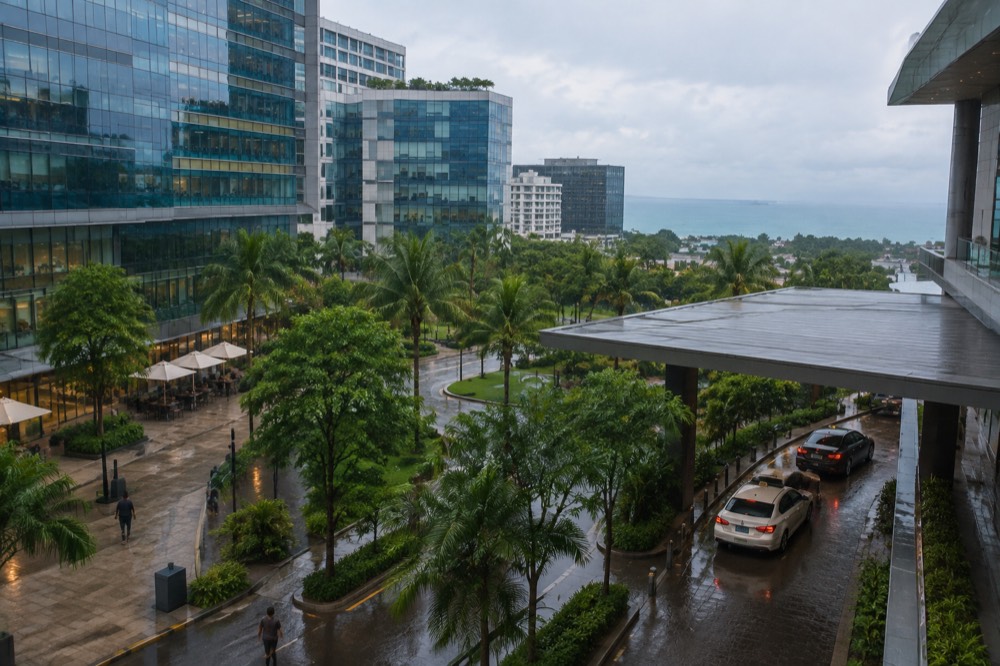
Mactan-Cebu International Airport is roughly 13 to 15 km from IT Park by road, and the drive takes anywhere from 25 to 60 minutes depending on bridge traffic. Four options cover the trip: the Grab app with upfront pricing, a metered white taxi, a more expensive yellow airport taxi, or the MyBus airport shuttle to SM City Cebu followed by a short onward ride. There is no direct rail link, and none is coming soon.
The distance figure deserves a caveat: there is no single official published figure for the airport-to-district run, and the 13 to 15 km estimate comes from transport guides rather than an airport page. In practice the variable is not distance but the bridge. All traffic between Mactan Island, where the airport is, and mainland Cebu City crosses one of three bridges, and at peak hours the crossing can dominate the journey. Build slack into any airport departure from IT Park, especially for a morning flight.
Here is how the options compare, with every peso figure carrying its dollar equivalent:
| Option | What it involves | Cost |
|---|---|---|
| Grab | App-based, upfront pricing shown before booking, designated pickup zones outside arrivals at both terminals | Dynamic; the app quotes the fare before you book |
| Yellow airport taxi | Airport-accredited, higher flag-down | Flag-down P70 (about US$1.1), plus P4 (about US$0.1) per 300 m |
| White metered taxi | Standard city taxi, meter required | Flag-down about P40 (about US$0.6), plus about P14 (about US$0.2) per km |
| MyBus shuttle | Air-conditioned bus between MCIA and SM City Cebu, then a short Grab or taxi hop to IT Park | P50 (about US$0.8) regular on the main route, some segments cheaper |
The MyBus runs from the airport to SM City Cebu roughly every 20 minutes, from 7 AM to 10 PM airport-side and 6 AM to 9 PM on the return leg, per the airport's own transport guide. It is the cheapest route into the city center, though it drops you at the mall rather than at IT Park, so budget one more short ride.
How Do You Get Around Cebu City From It Park?
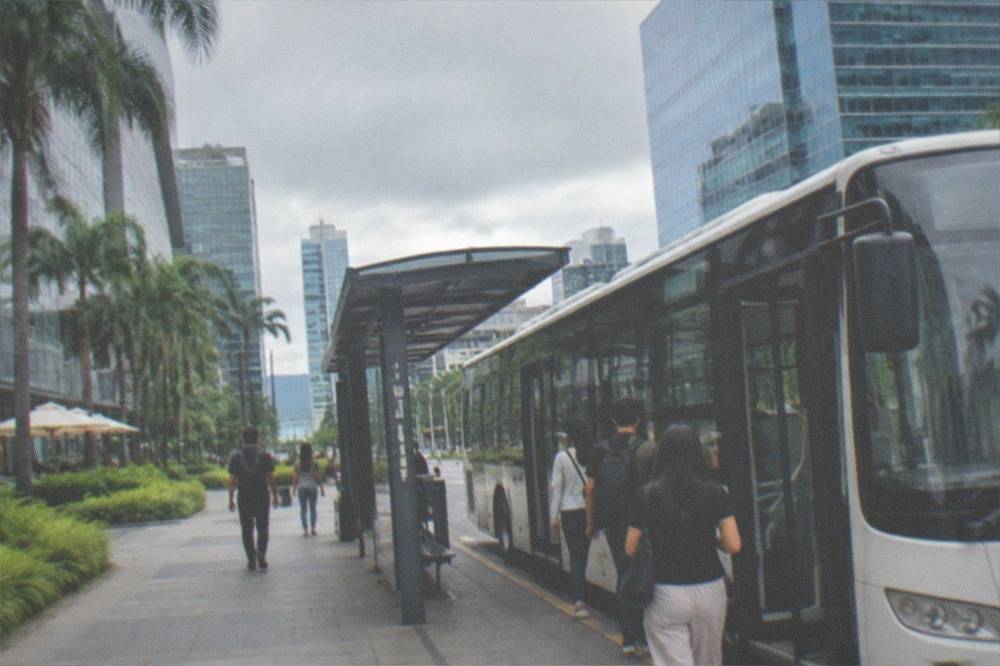
The Cebu Bus Rapid Transit, which began partial operations on 13 March 2026, runs a single route between Il Corso on the South Road Properties and IT Park, using a short dedicated corridor downtown and mixed traffic elsewhere. Rides were offered free at launch; reporting from March 2026 also lists the regulated air-conditioned bus fare of a P18 (about US$0.3) minimum for the first 5 km, so check the current fare before boarding. Beyond the bus, Grab covers the city, and jeepneys remain the cheapest way to move.
The route matters more to a visitor than the technology. The line threads through the South Bus Terminal, the Capitol, Fuente Osmeña, Ayala, and Luz before reaching IT Park, which means the district connects directly to the terminal for south-bound buses and to the Fuente area for downtown. The full Phase 1 system, over 13 km with 17 stations, is not yet operational, and the World Bank restructured the project in 2026, so do not plan around stations that do not exist.
| CBRT stop (Il Corso to IT Park) | Why a visitor would use it |
|---|---|
| Il Corso (SRP) | Waterfront development, near SM Seaside and the new Cebu Lighthouse attraction |
| Cebu South Bus Terminal | Buses to Oslob, Moalboal, and the rest of south Cebu |
| Capitol | Historic provincial capitol building, gateway to downtown |
| Fuente Osmeña | Central roundabout, short hop to downtown heritage sites |
| Ayala | Mall and dining in the Cebu Business Park area |
| Luz | Residential stretch approaching the district |
| IT Park | Northern terminus, the district itself |
One caveat on fares: free rides were offered at launch under a program announced by the city, while a commuter guide published days later lists the LTFRB-regulated fare of P18 (about US$0.3) minimum for the first 5 km plus P3 (about US$0.0) per km after, with P14 (about US$0.2) for discounted passengers. Both reports are from March 2026. Treat the fare as something to confirm on the day rather than a settled number.
For everything else, the practical guide to getting around Cebu covers jeepneys, taxis, and ride-hailing in detail, including how the Grab app works at the airport and across the city.
What Can You Do Near It Park Cebu In Half A Day?
The honest answer is that IT Park's half-day itinerary is mostly about eating and planning, because the district's attractions are food, coffee, and malls rather than monuments. A realistic half day looks like this: a long breakfast in the district, a walk through the adjacent business park, then a bus or Grab ride up to Tops Lookout in the Busay hills, whose shuttle plus entry package departs from IT Park at P200 (about US$3) per person. The lookout is open 24 hours, so sunset works.
Tops Lookout is the one big attraction with a direct operational tie to the district: the operator's own site lists a shuttle plus entry package from IT Park at P200 (about US$3.2), with entry alone at P100 (about US$1.6) regular, P70 (about US$1.1) for seniors and persons with disabilities, and free for children under two. The lookout stays open around the clock, with the upper decks sometimes closing around 2 AM, and a rooftop add-on costs about P50 (about US$0.8). On a clear evening the view across Cebu City to the Mactan Channel is the best in the city.
| Time | Activity | Notes |
|---|---|---|
| Morning | Breakfast and coffee in IT Park | The district's cafe scene is its strongest suit |
| Late morning | Walk to Cebu Business Park and Ayala area | Flat, shaded, 20 to 30 minutes at a stroll |
| Afternoon | Grab or shuttle to Tops Lookout | Shuttle plus entry P200 (about US$3.2) from IT Park |
| Sunset | Tops Lookout decks | Open 24 hours; go before dark for the road up |
| Evening | Dinner back in the district | Book ahead on weekends |
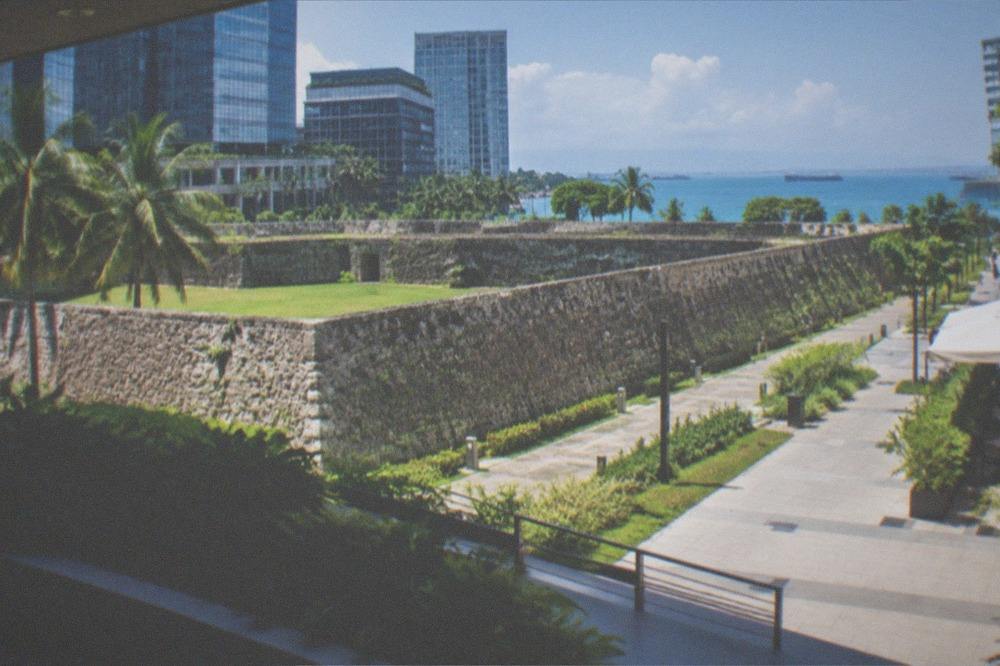
Beyond the hills, the rest of the city is within a short ride: the heritage cluster of Magellan's Cross, the Basilica of Santo Niño, and Fort San Pedro all sit together downtown, close enough that a single morning covers all three. The Temple of Leah and Sirao Flower Garden sit on the same Busay hill road as Tops, so a car day can string all three together.
If you would rather have someone else handle the logistics, these guided options all work from a Cebu City base:
Each of these departs from or can be joined in Cebu City, and each solves a different problem: the food walk covers the markets and backstreets, the falls tour handles the long drive south, and the island-hopping trip covers the boat and permits. Prices for all three are set by the operators' live listings rather than published flat rates, so check current availability before committing to a date.
Where Should You Eat Around It Park Cebu?
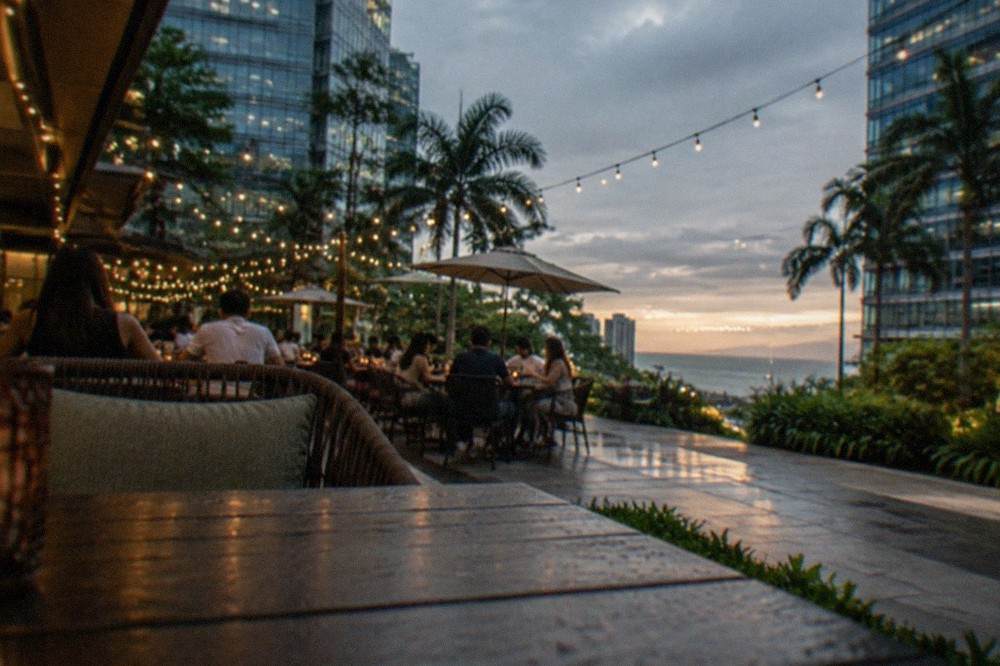
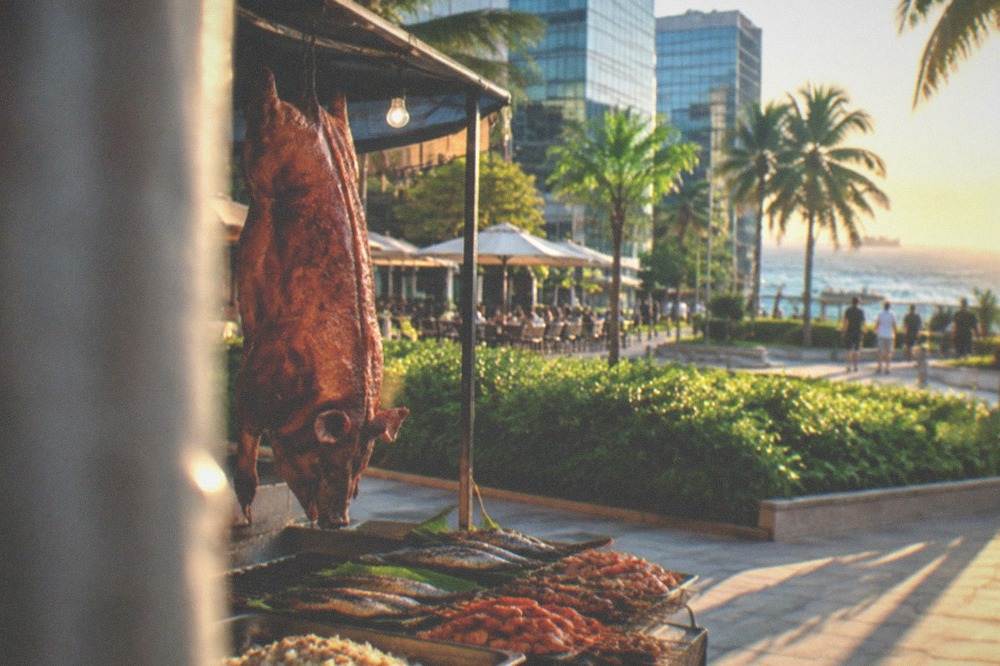
IT Park has the densest concentration of restaurants in Cebu City, spanning the district itself and the adjoining Cebu Business Park, and it is the one part of the city where you can eat well for a week without repeating a venue. The food ranges from international chains to Cebuano classics, and the outdoor courtyard dining areas stay busy late into the evening. For the island's signature dishes, though, the best versions sit in the markets and old downtown, not in the business district.
That distinction matters. Cebu's most famous food, lechon, has its own guide on Cebu food and lechon, and the celebrated roasters are scattered across the city rather than clustered in IT Park. What the district offers instead is reliability: air-conditioning, consistent hours, and menus you can read at midnight after a delayed flight.
The fastest way to reach the authentic end of Cebu's food scene is a guided walk. The Cebu Market & Food Tour runs through the markets and food streets of central Cebu City, and its price is not published by the operator, only on the live listing. It is rated by past guests on that same listing, so read the recent reviews there rather than relying on secondhand summaries.
A market walk pairs naturally with a visit to Colon Street, often called the country's oldest street, which runs through the downtown grid the food tour typically touches. If you would rather explore solo, go early: Cebu's markets are at their best in the morning, before the heat builds.
What Does It Cost To Visit The Attractions Around It Park Cebu?
The attractions within easy reach of IT Park are unusually cheap by international standards: Tops Lookout charges P100 (about US$1.6) entry, the Temple of Leah runs about P120 (about US$2) on weekdays and P150 (about US$2.4) on weekends, and Sirao Flower Garden charges about P100 (about US$1.6). Downtown, Magellan's Cross and the Taoist Temple are free, while Fort San Pedro charges P50 (about US$0.8). A full day of sightseeing costs less than a single museum ticket in most of Europe.
Here is the full fee picture for the sites a visitor based in IT Park would realistically visit, with every figure in pesos and its dollar equivalent:
| Attraction | Entry fee | Notes |
|---|---|---|
| Tops Lookout | P100 (about US$1.6) regular, P70 (about US$1.1) senior/PWD, under 2 free | Open 24 hours; shuttle plus entry from IT Park P200 (about US$3.2) |
| Temple of Leah | About P120 (about US$1.9) weekday, P150 (about US$2.4) weekend | Hours shortened from April 2026; confirm before going |
| Sirao Flower Garden | About P100 (about US$1.6) | Two adjacent gardens; confirm on site |
| Fort San Pedro | P50 (about US$0.8) regular, P40 (about US$0.6) students and seniors | About 8 AM to 7 PM |
| Magellan's Cross | Free | About 8 AM to 6 PM |
| Taoist Temple | Free, donations appreciated | Hours vary by source; confirm locally |
| Casa Gorordo Museum | About P100 (about US$1.6) | Monday to Saturday |
| Museo Sugbo | P50 (about US$0.8) general, P25 (about US$0.4) students | Reopened August 2025; Monday to Friday |
Two caveats belong with this table. First, several of these fees come from recent local reporting rather than official price lists, because attractions in Cebu rarely publish tariffs on their own sites; the figures above reflect 2025 and 2026 reporting and can change. Second, the 30 September 2025 magnitude 6.9 earthquake off northern Cebu prompted structural inspections at several Cebu City museums, including Casa Gorordo and Museo Sugbo, in early October 2025; both have since reopened, but if a museum visit is central to your plans, confirm opening status on the day.
What Is The Best Time Of Year To Visit It Park Cebu?
Cebu is tropical with two seasons, not four: PAGASA, the national weather service, classifies June to November as the rainy season and December to May as the dry season. The Mactan station's 1991-2020 normals show the pattern clearly, with October the wettest month at 194.8 mm of rain and April the driest at 48.1 mm. For a city-based trip centered on IT Park, January to April offers the most reliable weather, and January adds the Sinulog festival.
The rainfall numbers deserve a look in full, because they shape what a Cebu City trip feels like month by month:
| Period | Rainfall pattern (PAGASA Mactan normals, 1991-2020) | What it means for a visit |
|---|---|---|
| Dec-Feb | December 139.7 mm, January 105.2 mm, February 69.6 mm | Cool dry season; best overall weather |
| Mar-May | March 58.6 mm, April 48.1 mm, May 95 mm | Hot dry season; April is the driest month |
| Jun-Aug | June 175.6 mm, July 192.9 mm, August 143.5 mm | Rainy season begins; typhoon risk rises |
| Sep-Nov | September 179.6 mm, October 194.8 mm, November 161.9 mm | Wettest stretch; typhoon season peaks |
The annual picture at Mactan is 1,685.0 mm of rain across 138 rain days, with a mean temperature of 28.1 °C. Rain in Cebu tends to arrive in heavy bursts rather than all-day drizzle, so even in the wet season a city trip built around malls, museums, and restaurants, which is what an IT Park base implies, remains workable between downpours.
Typhoons are the one factor that can genuinely disrupt plans. The season runs June to November, with peak activity roughly July to October, and Typhoon Tino in November 2025 brought severe flooding to Cebu before the tourism zones were confirmed open within days. The dedicated guide to the best time to visit Cebu covers the typhoon calendar in depth.
January deserves a special mention: Sinulog, the grand festival held on the third Sunday of the month, fills Cebu City for the weekend. The 2027 Grand Parade is set for 17 January 2027 at the Cebu City Sports Center, which has been the main venue since the festival returned there from the South Road Properties. Hotels across the city, IT Park included, fill early for that weekend.
Is It Park Cebu A Good Base For Day Trips?
Yes, and it is arguably the best all-round base in Cebu City for them, because the district sits close to both the Cebu South Bus Terminal, reachable on the new bus route, and the piers that serve Bohol. South Cebu's headline trips, the whale sharks of Oslob and the sardine run at Moalboal, are three to four hours away by bus, while Kawasan Falls sits past Moalboal. Guided tours absorb all of that driving.
The bus figures come from the south terminal rather than from IT Park itself, so factor in the ride to the terminal: Ceres buses to Oslob take about 3.5 to 4.5 hours and run frequently through the day, while Moalboal runs take about 2.5 to 3.5 hours with departures every 30 to 45 minutes. For Bohol, OceanJet's fastcraft crosses to Tagbilaran in about two hours, with fares from 21 September 2026 at P960 (about US$15.3) tourist class and P1,440 (about US$23) business class after a fuel surcharge took effect.
| Day trip from Cebu City | Journey | What it delivers |
|---|---|---|
| Oslob whale sharks | About 3.5 to 4.5 hours by bus from the South Bus Terminal | Snorkeling beside whale sharks, plus Tumalog Falls nearby |
| Moalboal sardine run | About 2.5 to 3.5 hours by bus | The famous sardine school, reachable from shore |
| Kawasan Falls | South of Moalboal, via Badian | Turquoise falls and regulated canyoneering |
| Bohol countryside | About 2 hours by fastcraft from Pier 1 | Chocolate Hills, tarsiers, Loboc River |
The whale shark interaction at Oslob is the island's most famous experience, and it carries a fixed local fee: P1,000 (about US$15.9) per foreign visitor and P500 (about US$8.0) per Filipino, boat and guide included, under the municipal ordinance reinstated in March 2025. Sessions run from about 6 AM to noon, which is why every tour leaves Cebu City brutally early. The ethics of the practice are genuinely contested, and the dedicated page on whale shark ethics at Oslob lays out both sides so you can decide with full information before paying.
Guided versions of the big south-Cebu day trips handle the 3 AM alarm, the fees, and the logistics for you:
The falls tour is the one that benefits most from a guide, because canyoneering at Kawasan is regulated: only the Badian route operates, the Alegria route remains suspended, cliff jumping is banned at the main basin, and independent visitors are limited to Level 1 of the falls. A tour with an accredited operator covers the guide, gear, and permits in one package, with the price shown on the live listing.
The island-hopping option heads the other direction, out to the sandbars and sanctuaries around Mactan and the Camotes Sea, and it suits travelers who want water and beach without the long drive south. Like the others, its price is unpublished and appears only on the operator's live listing.
For planning a longer stay around these trips, the itineraries for 3 days in Cebu and the South Cebu itinerary sequence the city, the hills, and the Oslob-to-Moalboal corridor sensibly.
Should You Stay In It Park Cebu Or Somewhere Else?
IT Park suits travelers who value walkability, restaurants, and a modern apartment-style stay over beachfront or heritage atmosphere, and it is the strongest choice for business travelers, remote workers, and anyone with early flights or long day trips. It is a weaker choice if your trip is entirely about beaches, in which case Mactan wins, or if you want colonial atmosphere, in which case downtown wins. For a mixed itinerary of city, hills, and south Cebu day trips, it is hard to beat.
The comparison the site gets asked about most is IT Park versus the beach resorts across the channel, and the honest trade-off is simple: Mactan puts you on the sand and closer to the airport, while IT Park puts you closer to the city's food scene, the bus route south, and the hill attractions. The dedicated comparison of Mactan versus a Cebu City stay works through the decision, and the broader where to stay in Cebu guide covers every district from Lapu-Lapu City to Moalboal.
Whatever you choose, the practicalities of arrival are the same: register on the eTravel platform within 72 hours before your flight, carry a passport valid for six months, and know that visa-free nationals from the United States, the United Kingdom, Australia, and the EU receive an initial 30-day stay. Foreign tourists staying under a year are exempt from the Philippine travel tax on departure. The full entry guide lives on the Philippines visa and eTravel page.
Common Questions About It Park Cebu
What is IT Park Cebu known for?
IT Park is known as Cebu City's modern business district: office towers, business-process outsourcing companies, condo hotels, and one of the densest restaurant scenes in the city. For visitors it functions mainly as a comfortable, walkable base with strong transport links, including the northern terminus of the Cebu Bus Rapid Transit route that began partial operations in March 2026.
How far is IT Park Cebu from the airport?
Mactan-Cebu International Airport is roughly 13 to 15 km from IT Park by road, and the drive takes about 25 to 60 minutes depending on bridge traffic. A Grab ride, a metered white taxi, or a yellow airport taxi covers the trip directly; the MyBus shuttle runs to SM City Cebu for P50 (about US$0.8) and requires one short onward ride.
Can you get to Oslob and Moalboal from IT Park Cebu?
Yes. The Cebu Bus Rapid Transit route connects IT Park to the Cebu South Bus Terminal, from which Ceres buses run to Oslob, about 3.5 to 4.5 hours, and Moalboal, about 2.5 to 3.5 hours, throughout the day. Many travelers instead book a guided day tour, which handles the pre-dawn departure and the local fees.
Is IT Park Cebu walkable?
Yes. The district is one of the few genuinely pedestrian-friendly parts of Cebu City, with shaded walkways, courtyard dining, and a compact grid, and it connects on foot to the adjoining Cebu Business Park area. Sidewalk quality drops outside the district, so use Grab or the bus for longer hops.
What does it cost to visit attractions near IT Park Cebu?
Very little by international standards. Tops Lookout charges P100 (about US$1.6) entry, the Temple of Leah about P120 (about US$1.9) on weekdays and P150 (about US$2.4) on weekends, Sirao Flower Garden about P100 (about US$1.6), and Fort San Pedro P50 (about US$0.8), while Magellan's Cross and the Taoist Temple are free. Fees are from 2025 and 2026 local reporting and can change, so confirm on the day.
When is the best time to visit IT Park Cebu?
January to April offers the most reliable weather, falling within PAGASA's December-to-May dry season, with April the driest month at 48.1 mm of rain in the Mactan station normals. January also brings Sinulog, Cebu's grand festival, held on the third Sunday of the month at the Cebu City Sports Center. Avoid planning around the June-to-November typhoon season without buffer days.