Cebu Trip Cost / Budget
Cebu is one of Southeast Asia's better-value island destinations, but the costs are uneven: city sightseeing is close to free, while whale shark watching and canyoneering carry real price tags. Here is what each part of a Cebu trip actually costs.
Short answer
A budget traveller can get around Cebu on roughly US$25 to US$40 a day once flights are paid, a mid-range trip runs higher because of tours and island hopping, and the big-ticket items are the Oslob whale shark fee at P1,000 (about US$15.9) for foreign visitors and canyoneering at roughly P1,500 to P2,000 (about US$23.8 to US$31.7).
Cebu, the island province in the Central Visayas region of the Philippines, is a destination where the same week can be spent for very different amounts of money. A traveller who sleeps in a guesthouse, eats at carinderias and swims at free city-adjacent beaches will spend a fraction of what a diver or an island-hopper spends. The purpose of this Cebu Travel Guide page is to lay out the real numbers: the entrance fees, the bus and ferry fares, the food costs and the tour prices, so the budget can be planned before the peso notes are broken. Everything below comes from verified operator schedules, local government fee notices and the site's own checked facts, and every peso figure carries its dollar equivalent at the pinned exchange rate.
How Much Does A Cebu Trip Cost Overall?
A Cebu trip breaks into four cost blocks: flights, which vary constantly and are never quoted here; accommodation, which this site does not price; daily living, meaning food and local transport, which are genuinely cheap; and activities, which are where budgets blow out. The two largest activity costs are the Oslob whale shark fee and a Kawasan canyoneering package, and both are set by local ordinance or accredited operators. Daily costs are low enough that activities, not eating or getting around, decide the total.
Flights are the one cost block this page cannot price, because airfares move constantly and no verified fare belongs here. What can be said is that Mactan-Cebu International Airport gained a wave of new routes across 2025 and 2026, including Jetstar to Brisbane, Vietnam Airlines to Hanoi and AirAsia to Kuala Lumpur, which has widened the choice of arrival cities. The Cebu airport guide covers the terminals and the transfer options in detail.
Accommodation is deliberately not priced on this page: no verified nightly rate for any Cebu property exists in this site's fact pack, and quoting a hotel rate from memory is exactly how bad budget guides mislead people. What the pack does support is the relative statement that Cebu City and Mactan between them cover the full spectrum, from guesthouses to resorts, and the where-to-stay and Mactan-versus-city trade-offs are covered elsewhere on this site without inventing numbers.
The honest headline is that Cebu rewards spending decisions made in advance. A traveller who decides early that whale sharks and canyoneering are worth it, and books them deliberately, will find the rest of the trip cheap around those two anchors. A traveller who improvises will find the fees stack up quickly, because almost every headline attraction south of the city carries its own charge.
What Does A Daily Budget In Cebu Look Like?
A shoestring day in Cebu, sleeping in a basic guesthouse and eating local food, can hold to roughly US$25 to US$40 including the bed, because jeepney rides cost a few pesos and city heritage sites are free or nearly free. A mid-range day runs noticeably higher, and the difference is almost entirely the activity line: one whale shark morning or one canyoneering day adds more than a week of jeepney rides. The table below shows how the blocks fit together.
The daily budget question is really the activity-frequency question. On a day with no paid activity, costs collapse: the Basilica and Magellan's Cross cost nothing, the Taoist Temple is free with donations appreciated, and a jeepney across the city costs the new LTFRB minimum fare of P14 (about US$0.2) on a traditional jeepney or P17 (about US$0.3) on a modern one for the first four kilometres. On a day with whale sharks, the picture changes completely.
| Budget block | Budget traveller | Mid-range traveller | Notes |
|---|---|---|---|
| City transport (jeepney) | P14 (about US$0.2) per first 4 km ride | P14 (about US$0.2) to P17 (about US$0.3) per ride | Traditional vs modern jeepney minimums, from 28 Sept 2026 |
| Airport bus (MyBus) | P50 (about US$0.8) to SM City Cebu | Same | Official airport transport guide fare |
| Typical main meal, local eatery | Low, peso-level | Higher at malls and restaurants | No verified single price; eat where locals queue |
| Heritage sites (Basilica, Magellan's Cross, Taoist Temple) | Free | Free | Donations appreciated at the Taoist Temple |
| One headline activity | P1,000 (about US$15.9) Oslob (foreigner) or P1,500 (about US$24) to P2,000 (about US$32) canyoneering | Same fees, plus tours on top | The two big-ticket items |
| Museums (Fort San Pedro, Casa Gorordo, Museo Sugbo) | P50 (about US$0.8) plus P100 (about US$1.6) plus P50 (about US$0.8) | Same | Regular admission each |
The pattern worth internalising: fixed daily costs are small and activity costs are lumpy. A seven-day trip with two big activity days and five quiet days prices very differently from one with an activity every day, even with the identical hotel and identical meals.
What Do Entrance Fees In Cebu Cost?
The verified Cebu entrance fees run from free to about a thousand pesos: Fort San Pedro charges a small regular admission with student and senior discounts, Tops Lookout charges an adult fee with senior and PWD discounts and free entry under age 2, the Oslob whale shark interaction is the island's most expensive single fee at double the local rate for foreign visitors, and Magellan's Cross, the Basilica and the Taoist Temple cost nothing. The exact figures, all verified, sit in the table below.
Starting with the numbers: Fort San Pedro is P50 (about US$0.8) regular and P40 (about US$0.6) for students and seniors; Tops Lookout is P100 (about US$1.6) for adults, P70 (about US$1.1) for seniors and persons with disabilities, and free under age 2; the Oslob whale shark interaction is P1,000 (about US$15.9) for foreign tourists and P500 (about US$8.0) for Filipinos, boat and guide included; Kawasan Falls Level 1 is about P200 (about US$3.2); and the Olango Island Wildlife Sanctuary is P100 (about US$1.6) for foreign visitors and P30 (about US$0.5) for Filipino adults.
Two of these numbers correct older blogs, and it matters. Fort San Pedro is frequently quoted at P30 (about US$0.5)/P20 (about US$0.3) on outdated pages; the 2026 fee update confirmed the entrance fees at P50 (about US$0.8) regular and P40 (about US$0.6) discounted, revising only event rental rates. And the Oslob fee is not a flat P500 (about US$8.0) for everyone: the municipal ordinance rates, reverted effective 21 March 2025, charge foreign tourists P1,000 (about US$15.9) and locals P500 (about US$8.0), and sightings are never guaranteed, as four absent days in late May 2026 demonstrated.
| Site | Fee | Status |
|---|---|---|
| Fort San Pedro | P50 (about US$0.8) regular, P40 (about US$0.6) students/seniors | Verified, corrects older P30 (about US$0.5)/P20 (about US$0.3) blogs |
| Tops Lookout | P100 (about US$1.6) adult, P70 (about US$1.1) senior/PWD, under 2 free | Operator-verified, open 24 hours |
| Magellan's Cross | Free | Consistent across sources |
| Basilica del Santo Niño | Free entry | Mass schedule restored to pre-pandemic times |
| Taoist Temple | Free, donations appreciated | No official site; confirm hours locally |
| Museo Sugbo | P50 (about US$0.8) general, P25 (about US$0.4) students/seniors | Reopened 29 Aug 2025, Monday to Friday |
| Casa Gorordo | About P100 (about US$1.6) | Blog-tier figure; confirm on site |
| Oslob whale sharks | P1,000 (about US$15.9) foreign, P500 (about US$8.0) local | LGU notice effective 21 Mar 2025 |
The free tier is genuinely strong. A full day walking the Magellan's Cross, Basilica and Taoist Temple circuit, plus the Heritage of Cebu Monument on Colon Street, costs nothing in admission. The only warning from the pack is that several city museums, including Casa Gorordo and the Yap-Sandiego Ancestral House, closed for structural inspection after the 30 September 2025 earthquake, and their current status should be confirmed before a visit is planned around them.
How Much Does Transport In Cebu Cost?
Getting around Cebu is cheap at the bottom and priced per crossing at the top: jeepney minimums cover the first four kilometres for a handful of pesos, the airport bus to SM City is fixed and modest, bridge tolls and fastcraft fares are the expensive crossings, and southbound buses to Oslob and Moalboal cost a few hundred pesos for hours of travel. The exact fares, with their dates and caveats, are in the table below.
The jeepney fare is the foundation of a Cebu budget. The DOTr-approved adjustment effective 28 September 2026 sets the traditional jeepney minimum at P14 (about US$0.2) for the first four kilometres plus P2 (about US$0.0) per additional kilometre, and the modern jeepney minimum at P17 (about US$0.3) plus P2 (about US$0.0) per kilometre. The MyBus airport transfer is P50 (about US$0.8) to SM City Cebu, the CCLEX bridge toll for a car is P107 (about US$1.7) one way, and the OceanJet fastcraft to Bohol is P960 (about US$15.3) tourist class or P1,440 (about US$23) business class after the September 2026 fuel surcharge. Buses south to Oslob run roughly P145 (about US$2.3) to P250 (about US$4.0) and to Moalboal roughly P120 (about US$1.9) to P210 (about US$3.3).
| Transport | Cost | Notes |
|---|---|---|
| Traditional jeepney | P14 (about US$0.2) first 4 km, then P2 (about US$0.0)/km | National matrix from 28 Sept 2026 |
| Modern jeepney | P17 (about US$0.3) first 4 km, then P2 (about US$0.0)/km | Same matrix |
| MyBus, airport to SM City Cebu | P50 (about US$0.8) | Official airport guide; runs 7 AM to 10 PM from the airport |
| CCLEX toll, Class 1 car | P107 (about US$1.7) one way | Full LTRC matrix since 1 Oct 2025 |
| CCLEX toll, Class 1M motorcycle | P68 (about US$1.1) one way | Same matrix |
| OceanJet to Tagbilaran, tourist | P960 (about US$15.3) | From 21 Sept 2026, includes 10% fuel surcharge |
| OceanJet to Tagbilaran, business | P1,440 (about US$23) | Same date |
| Ceres bus to Oslob | About P145 (about US$2.3) to P250 (about US$4.0) | From Cebu South Bus Terminal, 3.5 to 4.5 hours |
| Ceres bus to Moalboal | About P120 (about US$1.9) to P210 (about US$3.3) | Frequent departures, 2.5 to 3.5 hours |
Two planning notes from the pack. First, the Cebu Bus Rapid Transit has been in only partial operation since 13 March 2026, a single Il Corso to IT Park route with free rides offered at launch; check the current fare before relying on it, because sources conflict on what is charged now. Second, SuperCat is not running Cebu to Tagbilaran as of September 2026 despite appearing in some outdated listings; OceanJet is the fastcraft, and Lite Ferries runs slower RORO crossings at roughly P400 (about US$6.4) to P520 (about US$8.3). The ferries from Cebu and getting around Cebu guides carry the full detail.
What Does Food Cost In Cebu?
Food is where Cebu is kindest to a budget: local eateries serve rice-and-dish meals for a handful of pesos, the city's famous lechon is sold by weight from market stalls rather than at restaurant prices, and the only food costs that add up are international hotel breakfasts and mall dining that no one needs. No single verified meal price exists in this site's fact pack, so this section deliberately avoids quoting one.
It points instead to the structures that keep food cheap: markets, carinderias and the lechon stalls the island is famous for.
The honest position on food pricing is that the pack verifies the fame, not the figure. Cebu's lechon is nationally renowned, and the Cebu lechon guide covers where to find it; the pack does not attach a verified price to a serving, so this page will not invent one. What can be said with confidence is the structural advice: eat where the queue is local, buy fruit at Carbon Market rather than at a hotel, and treat a food tour as the one food spend that reliably pays for itself in orientation.
A market food walk is the highest-information food purchase available on the island. The Cebu Market & Food Tour runs through the city's markets; its price is not published by the operator, so check the live listing rather than any number printed elsewhere. What a guided walk buys is a decoder for everything bought afterwards: which stalls, which dishes, which prices are the local ones. For travellers staying more than a few days, that knowledge compounds.
For free food knowledge, the tip-based walking tours are the other option. The Essential Cebu free tour on GuruWalk, led by a local guru, covers ten stops and costs nothing upfront, tips only, and it is the cheapest possible first day in the city. GuruWalk is named here deliberately: these are the guru's own walks, not this site's products, and the tip-based model is exactly what it says.
How Much Do Cebu Day Trips Cost?
The headline day-trip costs in Cebu are the activity fees, not the travel: an Oslob day centres on the whale shark fee plus a small falls entrance, a Kawasan day centres on the canyoneering package or a much smaller swimming-only entrance, and a Moalboal day centres on the environmental user fee for the sardine run. Bohol day trips add a fastcraft fare each way unless a tour bundles it. Every figure is listed in the table below.
The Oslob line deserves its own arithmetic. The verified fee is P1,000 (about US$15.9) per foreign visitor with boat and guide included, and the interaction runs about thirty minutes under LGU rules with a four-metre minimum distance, no sunscreen and no touching. Tumalog Falls adds about P50 (about US$0.8) entrance, and the habal-habal motorbike ride from Tan-awan runs P50 (about US$0.8) to P100 (about US$1.6) each way. A join-in tour from Cebu City, like the Oslob join-in day tour that includes the Tumalog stop, bundles the 3:00 to 4:00 AM-style early start and the long transfer; its price is unpublished, so the listing is the only source.
| Day trip | Core verified cost | What it covers |
|---|---|---|
| Oslob whale sharks | P1,000 (about US$15.9) foreign / P500 (about US$8.0) local | Boat and guide included, about 30 minutes in the water |
| Tumalog Falls | About P50 (about US$0.8) | Entrance; motorbike from Tan-awan P50 (about US$0.8) to P100 (about US$1.6) each way |
| Kawasan Falls, swimming only | About P200 (about US$3.2) | Level 1 entrance |
| Kawasan canyoneering | Roughly P1,500 (about US$24) to P2,000 (about US$32) | Badian-accredited guide, gear, fees, lunch; Badian route only, Alegria suspended |
| Moalboal sardine run | P100 (about US$1.6) | Environmental user fee to swim or snorkel at Panagsama |
| Pescador Island diving | About P100 (about US$1.6) per dive | Marine park fee, on top of dive shop costs |
| Bohol day trip | P960 (about US$15.3) ferry each way, tourist class | OceanJet fastcraft, about 2 hours, 13 sailings a day |
| Bantayan Island | P25 (about US$0.4) terminal plus P30 (about US$0.5) eco fee | Hagnaya terminal fee and Santa Fe ecological fee |
The canyoneering range needs its explanation. Blog-tier sources put the LGU-regulated package at P1,500 (about US$24), while SunStar reported in October 2025 that tourists typically pay P2,000 (about US$32); the honest statement is the range, never a single figure. The Alegria route remains suspended, so all canyoneering runs the Badian route, and cliff jumping is banned at the main Level 1 basin. The Oslob day trip and Moalboal day trip pages carry the full logistics.
For the falls without the canyoneering, a dedicated Kawasan Falls day tour from Cebu is offered by an operator that has not published a price and carries no rating yet, so the live listing is the only reliable source. The falls stayed open through the phased P110 (about US$1.8) million rehabilitation that began in June 2026, so the works are not a reason to skip it, though weather closures pause canyoneering several times a year.
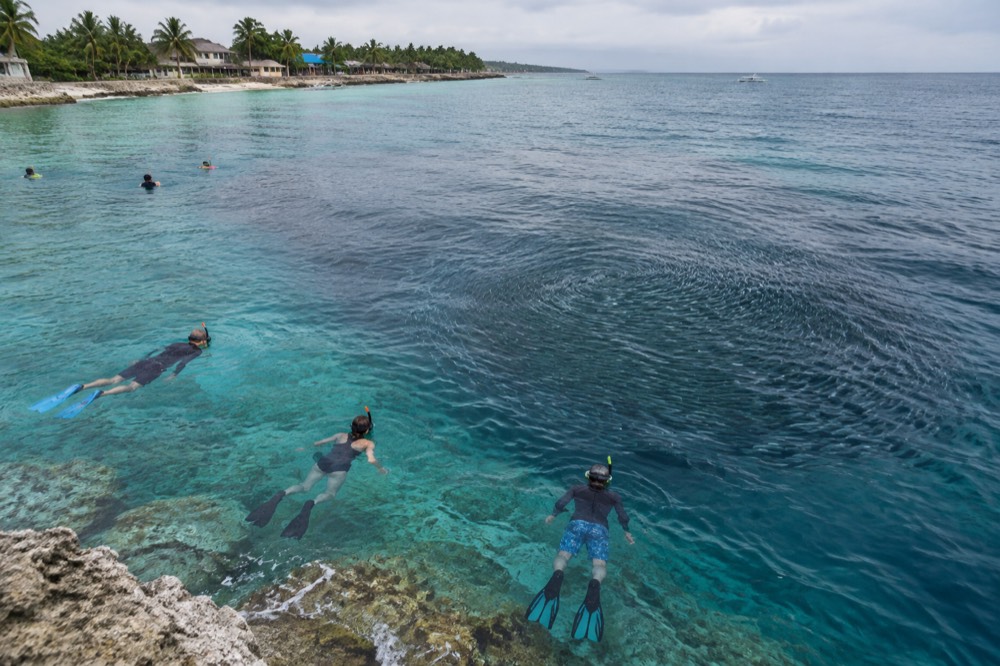
Does Cebu Charge A Travel Tax Or Terminal Fee?
No, foreign tourists staying under one year do not pay the Philippine travel tax: the PHP 1,620 (about US$26) economy and 2,700 first-class tax falls on Filipinos and resident taxpayers, and non-immigrant foreigners on short stays are exempt, which corrects a persistent myth on travel forums. The airport passenger service charge at Mactan-Cebu is bundled into the airline ticket, so there is no separate payment desk at the airport. The only mandatory pre-arrival cost is the eTravel registration, which is free.
The travel tax myth is worth killing explicitly because it distorts budgets. Travellers see the tax in Filipino departure coverage and assume it applies to them; the TIEZA exemption rules are clear that non-immigrant aliens staying less than one year do not pay. Note also that a House bill to abolish the tax passed in March 2026 but had not become law as of September 2026, so nothing has changed yet, and the Philippines visa and eTravel guide covers the entry side in full.
The eTravel registration deserves one warning from the pack: it is free only at the official site, and the Bureau of Immigration repeatedly warns about fake eTravel sites that charge fees. Register within 72 hours before arrival, at no cost, and present the QR code at boarding.
How To Save Money On A Cebu Trip Without Missing It
The three biggest savings in Cebu are structural: travel in the December-to-May dry shoulder rather than peak festival week, use the free tier of the city's heritage sites before paying for any museum, and book the two expensive activities deliberately rather than accumulating small paid stops. Sinulog week in mid-January is the most expensive and most crowded time in Cebu City, while the same city in, say, February costs the same in fees but far less in accommodation demand and queue time.
The free tier first. Magellan's Cross, the Basilica, the Taoist Temple and the Heritage of Cebu Monument cost nothing, and the tip-based GuruWalk free tours, including the Essential Cebu walk with its ten stops and the jeepney-ride walking tour, cover the city's core at whatever the walker decides to tip. That is a full day of the island's most famous sights with no fixed outlay.
Then the timing. PAGASA's rule puts the rainy season from June to November and the dry season from December to May, with the Mactan station's 1991-2020 normals showing October as the wettest month at 194.8 mm and April the driest at 48.1 mm. The best time to visit Cebu and Cebu weather and typhoon season guides carry the detail, but the budget point is simple: the dry months outside Sinulog week give the best combination of reliable weather and soft demand.
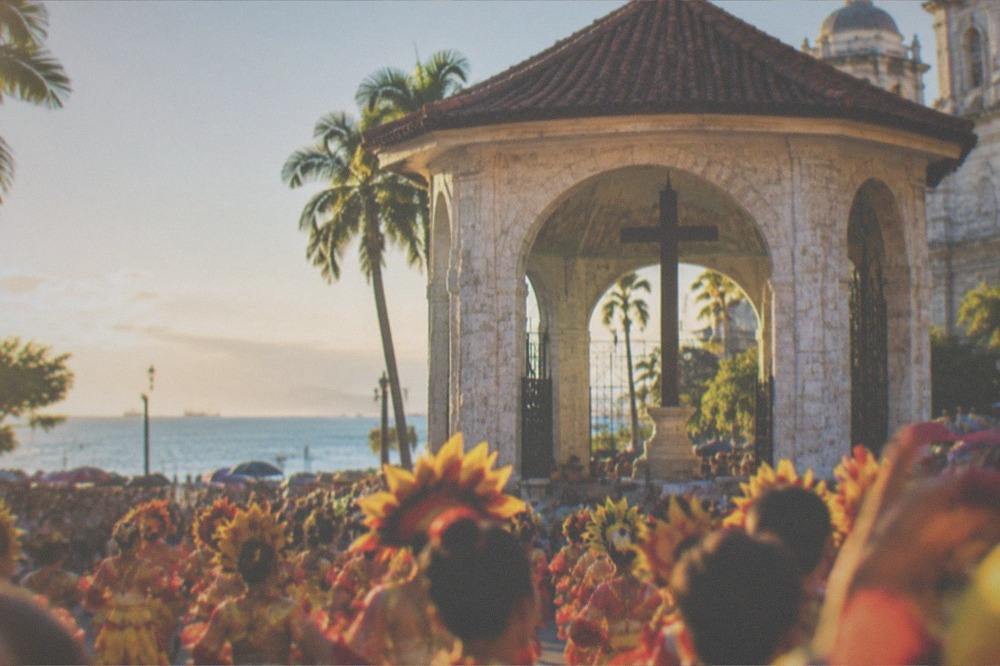
Then the transport choices. The Ceres buses from the South Bus Terminal are the budget spine of any south Cebu itinerary: frequent, air-conditioned options available, and a fraction of any private-transfer quote. The trade-off is time, three and a half to four and a half hours to Oslob, but on a multi-day south loop the savings fund the activities themselves. The south Cebu itinerary shows how the pieces chain together.
Finally, the tour-versus-DIY decision. Some activities are functionally DIY-proof: the sardine run at Panagsama is a few metres from shore behind a P100 (about US$1.6) user fee, and the city heritage walk needs no operator at all. Others are not: canyoneering is legally tied to accredited Badian guides, and whale shark logistics from Cebu City involve a 3 AM-style start that tours solve. Spend the money where the structure demands it and save where it does not.
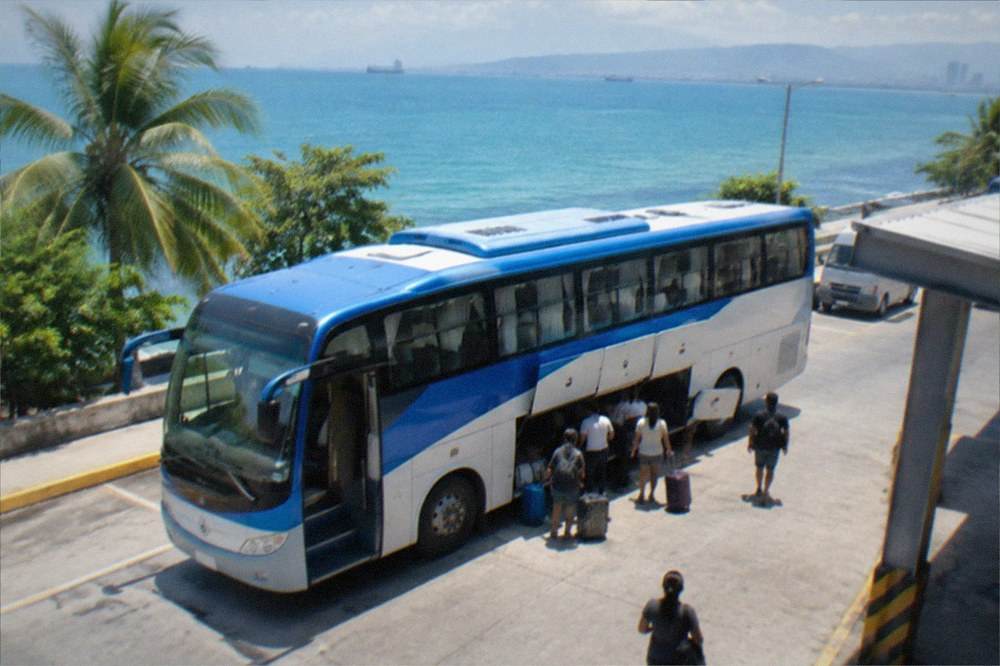
Is Cebu Expensive Compared To Other Philippine Islands?
Cebu sits in the middle of the Philippine price range: cheaper than Boracay, whose island position and resort strip push every cost up, broadly comparable to Bohol on daily living, and more expensive than genuinely quiet islands like Bantayan only because Bantayan has almost nothing to pay for. Within Cebu, the split is between the free-to-cheap city and the fee-carrying south: whale sharks, canyoneering and island hopping are what make a Cebu week cost what it costs, and skipping or keeping them is the real budget decision.
The site's own comparisons carry the detail on Cebu versus Bohol, Cebu versus Boracay and Cebu versus Palawan, each breaking down where the money goes differently. The short version for this page: Cebu's advantage is that its expensive items are optional and clearly priced in advance, while its cheap tier, the heritage core, the beaches reachable by bus, the food, is unusually deep for a destination this well connected by air.
One Cebu-specific cost comparison is worth making explicitly. The whale shark fee is the island's single most criticised price point, and the ethics debate is real, covered honestly on this site's Oslob whale shark ethics page. What the budget page can add is that the fee is at least transparent: P1,000 (about US$15.9) buys a defined thirty-minute interaction with boat and guide, under LGU rules, and the money is collected by the municipality. Travellers who object to the practice on principle can put the same day into Moalboal's sardine run instead, at P100 (about US$1.6), swimming with a resident school that is fed by nobody.
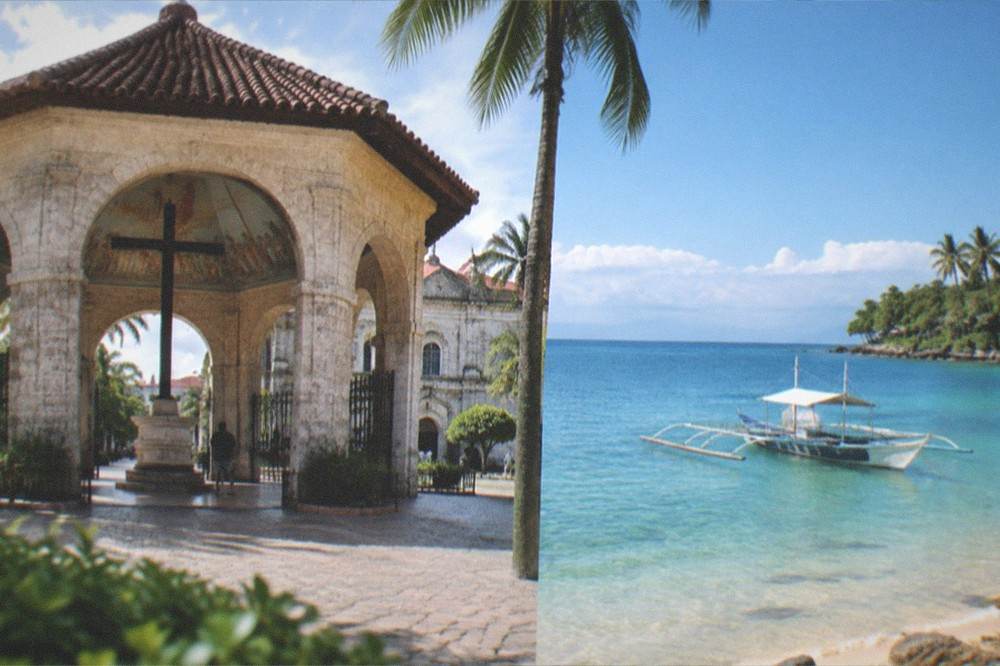
The Essential Cebu free tour on GuruWalk deserves its place in a budget plan precisely because it is the counterweight to every fee on this page: a local guru walks ten stops of culture and local flavour, tip-based, no fixed price, and it converts the free heritage tier from a list of buildings into an explanation of them. For a first day in the city, before any peso goes to an entrance booth, it is the highest-value item on this entire page.
Common Questions About Cebu Trip Costs
How much does a Cebu trip cost?
A Cebu trip's cost is decided by activities, not daily living: jeepney rides start at P14 (about US$0.2), city heritage sites are free, and the two big fees are the Oslob whale shark interaction at P1,000 (about US$15.9) for foreign visitors and canyoneering at roughly P1,500 (about US$24) to P2,000 (about US$32). Flights and accommodation are priced separately and no verified nightly rate is quoted on this site.
Is Cebu expensive for tourists?
No, by regional standards, as long as the activity fees are planned for. Daily transport and food are cheap, the heritage core of Cebu City is free, and even the headline fees, P1,000 (about US$15.9) for whale sharks, P200 (about US$3.2) for Kawasan Falls swimming, P100 (about US$1.6) for the Moalboal sardine run, are published in advance so nothing ambushes the budget.
Do foreign tourists pay the Philippine travel tax when leaving Cebu?
No. The travel tax, P1,620 (about US$26) economy or 2,700 first class, applies to Filipinos and residents; non-immigrant foreigners staying less than one year are exempt under TIEZA rules. The airport passenger service charge is already bundled into the airline ticket, so nothing is paid at a counter.
What is the cheapest way to get from Cebu airport to the city?
The MyBus airport bus, at P50 (about US$0.8) to SM City Cebu, running from 7 AM to 10 PM from the airport, is the cheapest verified transfer. A white metered city taxi costs more, with a flag-down around P40 (about US$0.6) plus roughly P14 (about US$0.2) per kilometre.
How much is the Oslob whale shark fee?
The Oslob municipal fee is P1,000 (about US$15.9) per foreign tourist and P500 (about US$8.0) per Filipino, boat and guide included, under rates reverted on 21 March 2025. The interaction lasts about thirty minutes and sightings, while usual, are not guaranteed.
What is the best time of year to visit Cebu on a budget?
The dry season from December to May, outside Sinulog week in mid-January, combines reliable weather with softer demand. October is the wettest month at Mactan station and the June-to-November typhoon season carries disruption risk, so the dry shoulder months give the best value.
The final word on a Cebu budget is that the island is honest about its prices: almost every fee on this page is published by a local government or operator, and the ones that are not, like several tour prices, say so on their listings. Plan the two or three expensive days deliberately, let the free tier carry the rest, and the trip costs exactly what it should.