South Cebu Day Tour
A south Cebu day tour packs whale sharks, waterfalls and the Moalboal sardine run into one long day on the island's southern coast. Here is what each stop costs, how the buses run, and which route actually works.
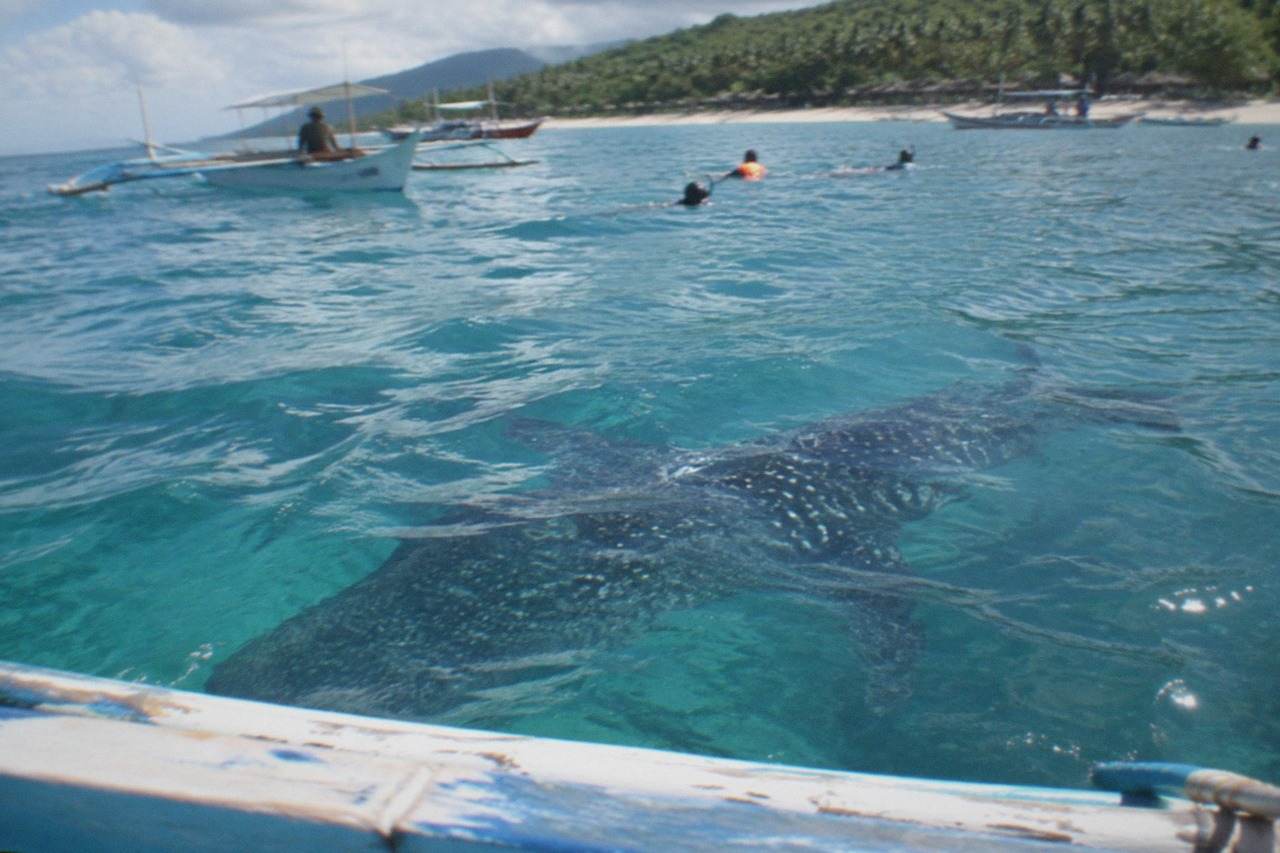
Short answer
The classic south Cebu day tour runs whale sharks in Oslob, Tumalog Falls, then Kawasan Falls or Moalboal. The Oslob interaction fee is P1,000 (about US$16) for foreign visitors, buses leave from Cebu South Bus Terminal, and most guided versions take 10 to 12 hours door to door.
The southern coast of Cebu, an island province in the Central Visayas region of the Philippines, holds the stops people picture when they imagine the island: whale sharks feeding off Tan-awan, a turquoise cascade at Tumalog, the canyoneering run into Kawasan Falls, and the permanent sardine school off Panagsama Beach in Moalboal. The problem is not what to see, it is geometry. The good stuff is spread along roughly 100 km of coast road south of Cebu City, buses are the only public transport, and the whale sharks stop swimming at midday. A south cebu day tour therefore succeeds or fails on timing, and this page lays out the timings, the verified fees and the realistic route choices, with the join-in option compared against doing it yourself.
What Does A South Cebu Day Tour Actually Include?
A south Cebu day tour is a single long day, typically 10 to 12 hours, that strings together two to four stops on the island's south coast: the whale shark interaction in Oslob, Tumalog Falls, optionally Sumilon Island, and then either Kawasan Falls in Badian or the sardine run and Pescador Island at Moalboal. Guided versions leave Cebu City before dawn because the whale shark session ends around noon, while independent travellers do the same route with early Ceres buses from the Cebu South Bus Terminal.
The route works because of one hard constraint: the Oslob whale shark operation runs only in the morning. The Municipality of Oslob's tourism office posts interaction hours of roughly 6:00 AM to 12:00 PM, with a registration cutoff around 11:00 AM, so everything else in the day is scheduled backwards from that. Tours that also want Kawasan Falls or Moalboal leave Cebu City between 3:00 and 4:00 AM, reach Tan-awan around 6:30 or 7:00 AM, spend about 30 minutes in the water, then drive two to three more hours south and west.
Doing it independently is entirely possible and many travellers do. Ceres Liner buses run the Cebu South Bus Terminal to Oslob route several times daily, with the journey taking roughly 3.5 to 4.5 hours and fares in the P145 (about US$2.3) to P250 (about US$4.0) range depending on the class of bus. The trade-off is simple: a bus costs far less than a tour but commits you to public-transport timing on a day where the clock matters. Our south Cebu itinerary page covers the two- and three-day versions if one day feels too tight, and the Oslob day trip page goes deep on that single stop.
How Much Does The South Cebu Day Tour Cost In Fees?
The fixed local fees for the classic route are the Oslob whale shark interaction, the Tumalog Falls entrance, the Kawasan Falls Level 1 entrance and the Moalboal environmental user fee, with a guided canyoneering descent at Kawasan covering the accredited guide, gear, municipal fees and lunch in one regulated package. Every one of these is set by local ordinance or municipal regulation rather than by tour operators, and the whale shark fee is the single biggest line on the day's budget.
In numbers: the Oslob interaction is P1,000 (about US$15.9) per foreign visitor or P500 (about US$8.0) per Filipino, Tumalog Falls entrance is about P50 (about US$0.8), Kawasan Falls Level 1 entrance is about P200 (about US$3.2), and the Moalboal environmental user fee is P100 (about US$1.6) to swim or snorkel at Panagsama. A guided canyoneering descent at Kawasan runs roughly P1,500 (about US$24) to P2,000 (about US$32) with a Badian-accredited guide.
The Oslob fee is set by Municipal Ordinance No. 010 (s. 2020) and was reaffirmed effective 21 March 2025 by the Oslob tourism office, with the boat and a guide included in that fee. SunStar reported in May 2026 that the site draws 800 to 900 visitors a day in season, so the morning queue is real even when the sharks show up.
| Stop | Fee (foreign visitor) | Fee (Filipino) | Notes |
|---|---|---|---|
| Oslob whale shark interaction | P1,000 (about US$15.9) | P500 (about US$8.0) | Boat and guide included; about 30 minutes in the water |
| Tumalog Falls entrance | about P50 (about US$0.8) | about P50 (about US$0.8) | Habal-habal from Tan-awan about P50 (about US$0.8) to P100 (about US$1.6) each way |
| Kawasan Falls Level 1 entrance | about P200 (about US$3.2) | about P200 (about US$3.2) | Swimming only; upper levels are canyoneering-only |
| Kawasan canyoneering package | roughly P1,500 (about US$24) to P2,000 (about US$32) | same range | LGU-regulated; guide, gear, fees and lunch included |
| Moalboal environmental user fee | P100 (about US$1.6) | P100 (about US$1.6) | Panagsama swim and snorkel, Ordinance 165-2021 |
| Pescador Island marine park | about P100 (about US$1.6) per dive | about P100 (about US$1.6) per dive | Collected by dive shops |
| Sumilon Island day pass | about P1,600 (about US$25) to P2,000 (about US$32) | same range | Bluewater resort day use, transfers included |
Two warnings on those figures. First, SunStar's October 2025 reporting on Badian quoted tourists "typically" paying around P2,000 (about US$32) for canyoneering while guide sites list P1,500 (about US$24), so treat that line as a range and confirm with your operator, not a single price. Second, the Alegria canyoneering route has been suspended through 2025 and 2026; only the Badian route operates, and cliff jumping is now banned at the main Level 1 basin. If a vendor offers you the Alegria route, that is a stale itinerary.
Is One Day Enough For Oslob, Tumalog And Kawasan Together?
Oslob, Tumalog Falls and Kawasan Falls in one day is possible but tight: it means a 3:00 to 4:00 AM departure from Cebu City, the whale shark session by 7:00 AM, Tumalog by 9:00 AM, and a two to three hour drive to Badian for an early afternoon at Kawasan, returning to the city by evening. Most guided versions drop either Kawasan or the falls stop, and travellers who want a relaxed pace split the coast over two days instead.
The reason the full triple works at all is the geography: Oslob and Tumalog sit close together on the southeast coast, while Kawasan is a separate drive south and west through Badian. A join-in day tour handles the transfers and the queue-jumping; doing it by bus is where it falls apart, because the onward connection from Oslob to Badian adds waiting time you cannot control. The Kawasan Falls guide covers the falls on their own, and the Moalboal day trip page does the same for the west coast.
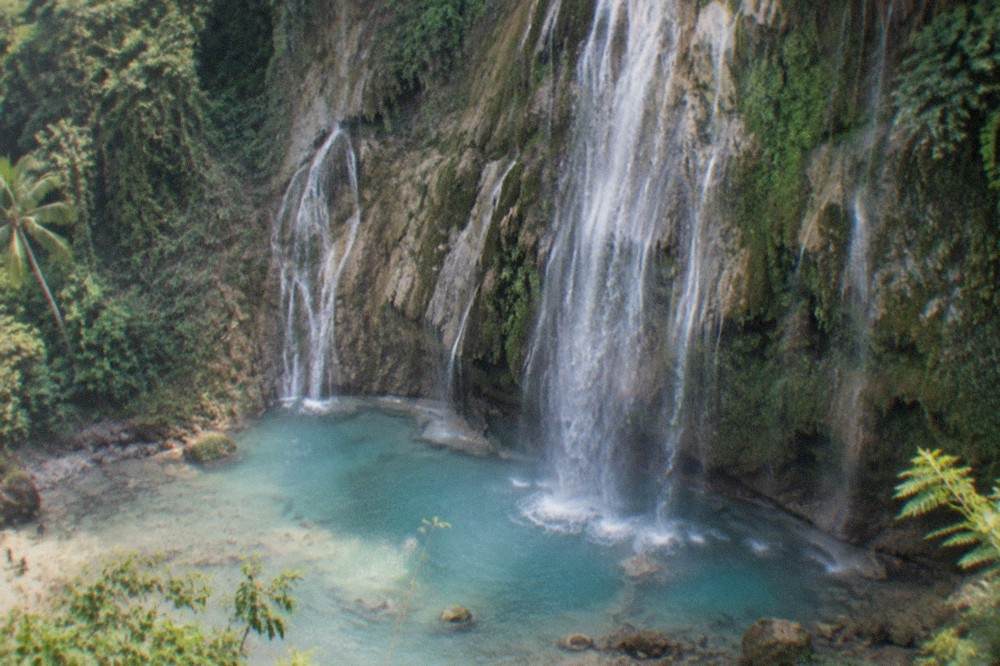
A realistic single-day schedule, whether guided or independent, looks like this:
| Time | Stop | What happens |
|---|---|---|
| 3:00-4:00 AM | Depart Cebu City | Hotel pickup or first actions at the south bus terminal |
| 6:30-7:00 AM | Oslob (Tan-awan) | Mandatory briefing, gear, about 30 minutes with the whale sharks |
| 8:30-9:30 AM | Tumalog Falls | Short habal-habal ride, swim and photos |
| 10:00 AM | Drive to Badian | Two to three hours along the southwest coast |
| 12:30-3:30 PM | Kawasan Falls | Level 1 swim or a guided canyoneering descent |
| 4:00-7:00 PM | Return to Cebu City | Three to four hours depending on traffic |
The one-day-with-everything version leaves no margin. If the whale sharks are late surfacing, if the briefing queue is long, or if a rain closure pauses canyoneering, which happened repeatedly across 2025 and 2026, the schedule slips and Kawasan gets cut. That is the honest case for the two-day version on the south Cebu itinerary page: Oslob and Tumalog on day one, Moalboal and Kawasan on day two.
Whale Sharks In Oslob: What The Rules And The Fees Are?
The Oslob whale shark interaction runs roughly 6:00 AM to 12:00 PM daily, charges a higher rate for foreign visitors than for Filipinos, and puts you in the water for about 30 minutes under fixed municipal rules: stay about four metres from the body and five from the tail, no touching, no sunscreen, no flash photography, life jackets mandatory, and feeding done only by licensed municipal spotters. Sightings are not guaranteed, and the fee includes the boat and a guide.
The current figures are P1,000 (about US$15.9) for foreign tourists and P500 (about US$8.0) for Filipinos, reaffirmed by the Oslob tourism office effective 21 March 2025. Those rules come from the Oslob tourism office and are consistent across 2025 and 2026 reporting. The no-sunscreen rule is the one that surprises people: it exists because the sharks feed at the surface and chemical residue is a genuine problem, so reef-safe or nothing, and cover-up clothing is the practical answer. The feeding is the ethics question visitors tend to ask next, and the honest answer is that the practice is licensed and regulated by the municipality, publicly defended by the mayor in May 2026 as a lure rather than a primary food source, and unchanged by any DENR order.
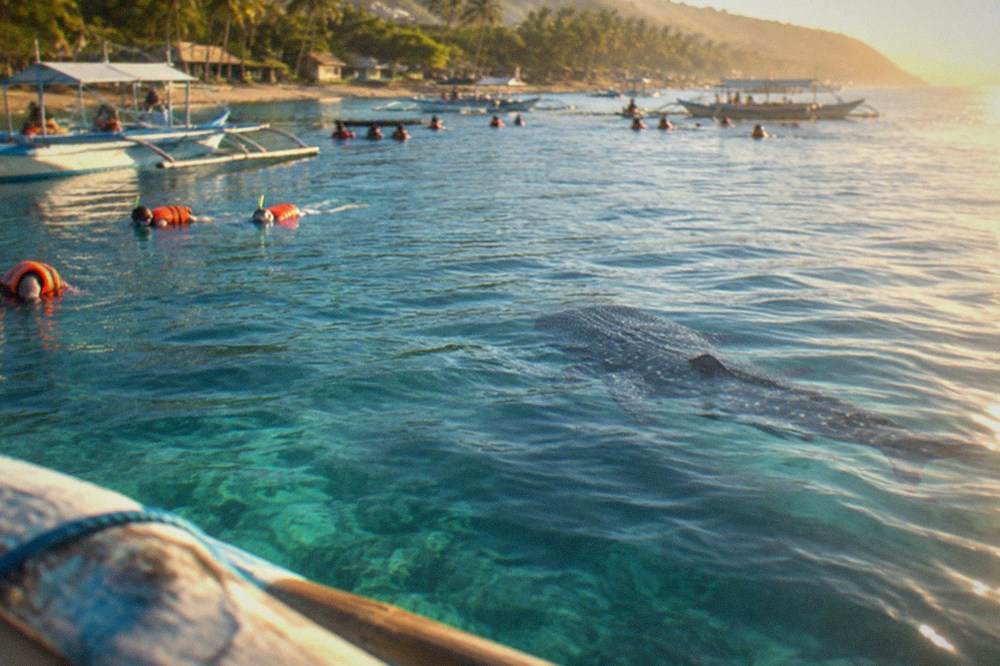
The sighting caveat matters for planning. In late May 2026 the whale sharks were absent from the Tan-awan interaction area for about four days because seasonal plankton moved to a neighbouring barangay; the municipality clarified operations were paused, not closed, and the sharks returned. SunStar's reporting is blunt that sightings dictate operations in Oslob. Book a morning slot, keep the afternoon flexible, and know that a no-show morning is a possibility, not a scandal.
The join-in day tour above is the version most first-time visitors take: the operator's live listing carries the current price and the departure details, and the day includes the early-morning drive from Cebu City plus a Tumalog Falls stop. Check availability if that shape of day fits.
Tumalog Falls And Sumilon: Are The Extra Oslob Stops Worth It?
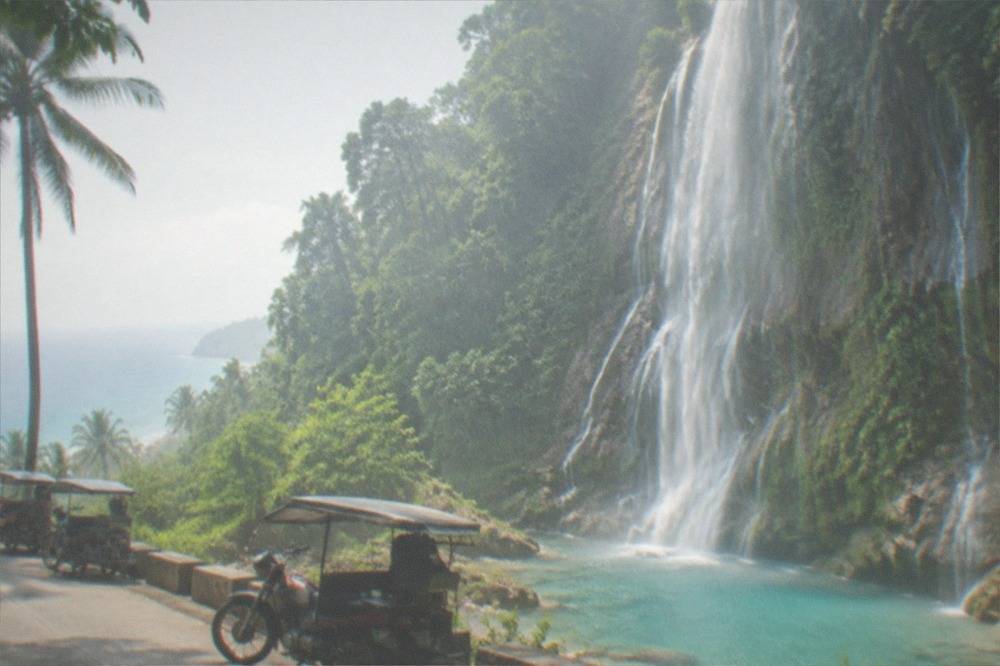
Tumalog Falls is worth the stop and costs almost nothing: entrance is a small municipal fee, the habal-habal ride from Tan-awan is a short motorcycle hop, and the falls are a wide, shallow curtain of turquoise water about 15 minutes from the whale shark site. Sumilon Island is a bigger commitment, a resort day pass with boat transfers, best saved for a dedicated Oslob day rather than a packed tour that also needs the waterfalls or the sardine run.
In figures: Tumalog entrance is about P50 (about US$0.8), the habal-habal from Tan-awan runs P50 (about US$0.8) to P100 (about US$1.6) each way, and Sumilon's Bluewater day passes sit in the roughly P1,600 (about US$25) to P2,000 (about US$32) range including boat transfers. Tumalog is the natural second stop precisely because it is close and quick. The falls pour over a broad rock face into a swimmable pool, the walk from the drop-off point is short, and in the morning light it is the most photographed spot on the southeast coast. Most join-in tours build it in; independent travellers reach it by habal-habal, the local motorcycle taxi, from the Tan-awan registration area.
Sumilon Island sits just offshore from Oslob and belongs to the Bluewater resort, which sells day use from 8:00 AM to 3:00 PM with boat transfers included; the resort's own offers page listed a group day rate of P2,000 (about US$32) net per guest on weekdays, valid to mid-October 2026. The island has a sandbar, a marine sanctuary and a lagoon, and it is lovely, but it adds three to four hours to an Oslob morning. On a day that also needs Kawasan or Moalboal, skip it; the Oslob day trip page covers it as a standalone plan.
Kawasan Falls And Canyoneering: What Has Changed Recently?
Kawasan Falls is open but under active rehabilitation, with a phased multi-million-peso program running since June 2026, and the rules have tightened: only the Badian canyoneering route operates, the Alegria route is suspended, cliff jumping is banned at the Level 1 basin, life jackets are mandatory, and a three-hour limit applies, with Level 1 the only section open to independent swimmers and the upper levels canyoneering-only. The works are worth roughly P110 (about US$1.8) million and the site has stayed open throughout.
The rehabilitation is the headline change. The Manila Times reported in June 2026 that the falls stayed open during the P110,000,000 (about US$1,752,820) works, so a 2026 or 2027 visit is still possible, but expect scaffolding, fencing and works traffic on the approach. The safety record is also worth knowing plainly: a rockfall on 23 October 2025 injured a guide, canyoneering was suspended from 26 October and reopened on 28 October after inspection, and the municipality enacted a revised canyoneering ordinance in 2026 that governs guide conduct. Weather closures, mostly rain-driven, have repeatedly paused canyoneering through 2025 and 2026 while the falls themselves stayed open.
| Kawasan fact | Current status |
|---|---|
| Level 1 entrance | about P200 (about US$3.2), swimming only |
| Canyoneering, Badian route | roughly P1,500 (about US$24) to P2,000 (about US$32) all-in with accredited guide |
| Alegria route | Suspended through 2025-2026 |
| Cliff jumping at Level 1 basin | Banned since 2025 |
| Upper levels | Canyoneering-only, no independent access |
| Rehabilitation | P110,000,000 (about US$1,752,820) phased works from June 2026, site open |
| Monthly closure | Third Wednesday cleanup each month |
For a day tour, the practical choice is between the Level 1 swim and the full canyoneering descent. The swim takes an hour and fits any schedule; the descent takes considerably longer once transfers are counted and realistically demands that Kawasan be your day's main event rather than a tag-on after Oslob. The Kawasan Falls guide has the full breakdown.
That half-day canyoneering package from Moalboal, with lunch included, is the version that fits a two-day south Cebu plan: sleep in Moalboal, canyoneer in the morning, sardine run in the afternoon. It suits travellers basing themselves on the west coast rather than squeezing the falls into a one-day dash.
Moalboal On A Day Tour: Sardines, Turtles And Pescador?
Moalboal's sardine run is the easiest headline stop on the whole south coast: the school is a permanent, year-round resident off Panagsama Beach, roughly 20 to 30 metres from shore, reachable with a modest environmental user fee and rented fins, with the municipality's own site noting the best window is 7:00 to 9:00 AM. Pescador Island adds a boat trip and marine park fees, and sea turtles are commonly seen on the same reef.
The numbers are small: the environmental user fee is P100 (about US$1.6), gear rental runs about P150 (about US$2.4) to P250 (about US$4.0), and Pescador's marine park fee is about P100 (about US$1.6) per dive. The sardine run is the detail that surprises first-time visitors: this is not a seasonal migration but a resident baitball, present daily weather permitting, which is why Moalboal works as a reliable stop on any south coast day. The fee kiosk takes cash, and collection is honestly inconsistent, so carry the P100 (about US$1.6) plus a buffer. The Moalboal sardine run page covers the snorkelling and diving options, and the Moalboal day trip page builds the full day around it.
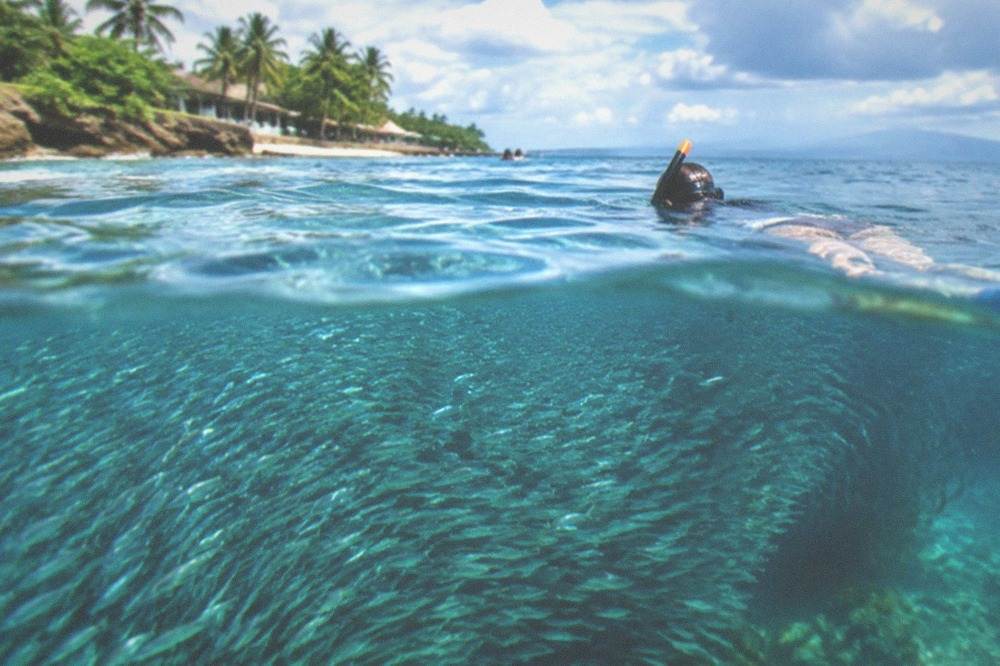
Fitting Moalboal into a one-day tour alongside Oslob is the stretch version: the drive from Oslob around to Moalboal takes most of the afternoon, leaving a late snorkel before the long return to Cebu City. It works as a guided combo, and a small-group islands-plus-falls tour covers both ends of the coast in one vehicle. Independently, it is a two-day plan. The Oslob or Moalboal comparison page has the honest head-to-head.
How Do You Get To South Cebu Without A Tour?
You get to the south coast by Ceres Liner bus from the Cebu South Bus Terminal: Oslob takes roughly 3.5 to 4.5 hours, Moalboal roughly 2.5 to 3.5 hours, buses run multiple times daily, and you pay onboard or at the terminal; within the towns, habal-habal motorcycle taxis cover the short hops to Tumalog and the falls trailheads. The bus is cheap, frequent and the backbone of independent south Cebu travel.
In fares: Oslob runs P145 (about US$2.3) to P250 (about US$4.0) depending on the class of bus, and Moalboal P120 (about US$1.9) to P210 (about US$3.3). The Oslob service runs on the Cebu to Bato via Oslob route with departures spread across the day, and the Moalboal buses leave every 30 to 45 minutes, so the west coast is the easier independent target. The catch is the return: late buses from the far south thin out in the evening, which is the real reason one-day independent tours of the deep south are rare. Note that Cebu's partial bus rapid transit line, which began interim operations on 13 March 2026, runs an Il Corso to IT Park corridor and does not serve the south at all.
| Route | Rough time | Fare range | Frequency |
|---|---|---|---|
| Cebu South Bus Terminal to Oslob | 3.5-4.5 hours | P145 (about US$2.3) to P250 (about US$4.0) | Multiple daily, roughly 03:00 to 19:00 departures |
| Cebu South Bus Terminal to Moalboal | 2.5-3.5 hours | P120 (about US$1.9) to P210 (about US$3.3) | Every 30-45 minutes |
| Tan-awan to Tumalog Falls (habal-habal) | 15 minutes | P50 (about US$0.8) to P100 (about US$1.6) each way | On demand |
| Moalboal town to Panagsama (habal-habal) | short hop | local rate, confirm before riding | On demand |
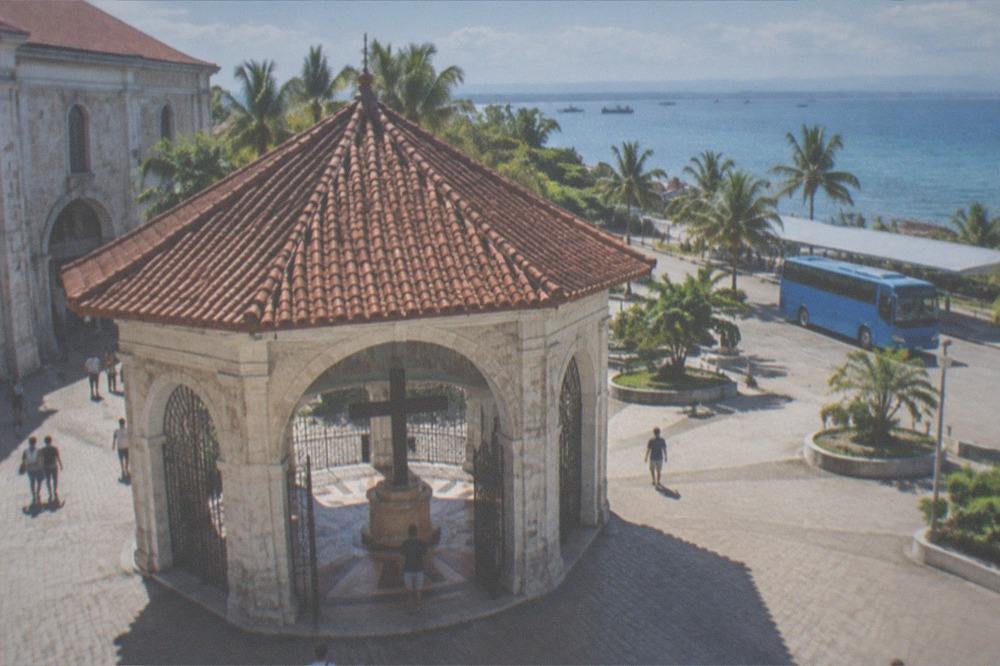
One timing note that matters more than any fare: the whale shark morning starts at 6:00 AM, and the bus from the city takes up to 4.5 hours. An independent Oslob plan therefore means either a pre-dawn first bus, or, far better, a night in Oslob or Dalaguete the evening before. That single decision is what separates the relaxed version of this day from the exhausting one.
What Is The Best Time Of Year For A South Cebu Day Tour?
The best months for a south Cebu day tour are December to May, PAGASA's dry season, with April the driest month on the Mactan station normals and October the wettest; the rainy season runs June to November with typhoon risk peaking roughly July to October, and the whale sharks themselves swim year-round, so the season decides your weather, not your sharks. The climate here is tropical, with a mean temperature of 28.1 °C on the 1991-2020 normals.
The rainfall figures behind that: April averages 48.1 mm, October 194.8 mm, and the annual total is 1,685.0 mm across 138 rain days, per PAGASA's 1991-2020 normals for the Mactan station. Any month can serve you a hot, wet afternoon, but the June-to-November window genuinely raises the odds. Typhoon Tino in early November 2025 brought record rainfall and severe flooding to Cebu, a reminder that the "ber" months carry the highest Visayas landfall risk.
| Month | Rainfall (mm, Mactan normals) | Season | Verdict for the day tour |
|---|---|---|---|
| January | 105.2 | Dry | Excellent; Sinulog crowds in Cebu City mid-month |
| March | 58.6 | Dry | Excellent |
| April | 48.1 | Dry | Driest month; best all-round choice |
| June | 175.6 | Rainy | Workable but watch canyoneering closures |
| September | 179.6 | Rainy | Higher typhoon risk |
| October | 194.8 | Rainy | Wettest month; falls at full flow |
| November | 161.9 | Rainy | Peak landfall-risk window |
The counter-argument for the wet months is the waterfalls themselves: October's Kawasan is at its most powerful. The trade is spectacle against the real chance of a canyoneering suspension, which the rain has triggered repeatedly. If you travel in the wet season, keep the falls swim as the plan and treat canyoneering as a bonus.
Should You Book A Guided Tour Or Do South Cebu Independently?
Book a guided tour if you want Oslob plus Kawasan or Moalboal in one day: the 3:00 AM logistics, the queue at Tan-awan and the onward connections are exactly what an operator solves, and the join-in whale shark day tour with its Tumalog stop is the proven shape. Go independent if you have two or more days, are sleeping in Moalboal or Oslob anyway, or only want one stop, because the buses are cheap and the coast is easy once the clock pressure is gone.
The honest cost comparison is not fee versus fee, it is fee-plus-time. The guided day buys you a seat on a van that leaves before the buses and skips the connection risk; the independent version costs a fraction of that in fares and fees but asks you to overnight on the coast to do it well. Travellers who split the difference usually book the whale shark morning as a join-in tour, then bus west to Moalboal and stay a night or two. The south versus north Cebu page helps pick the base.
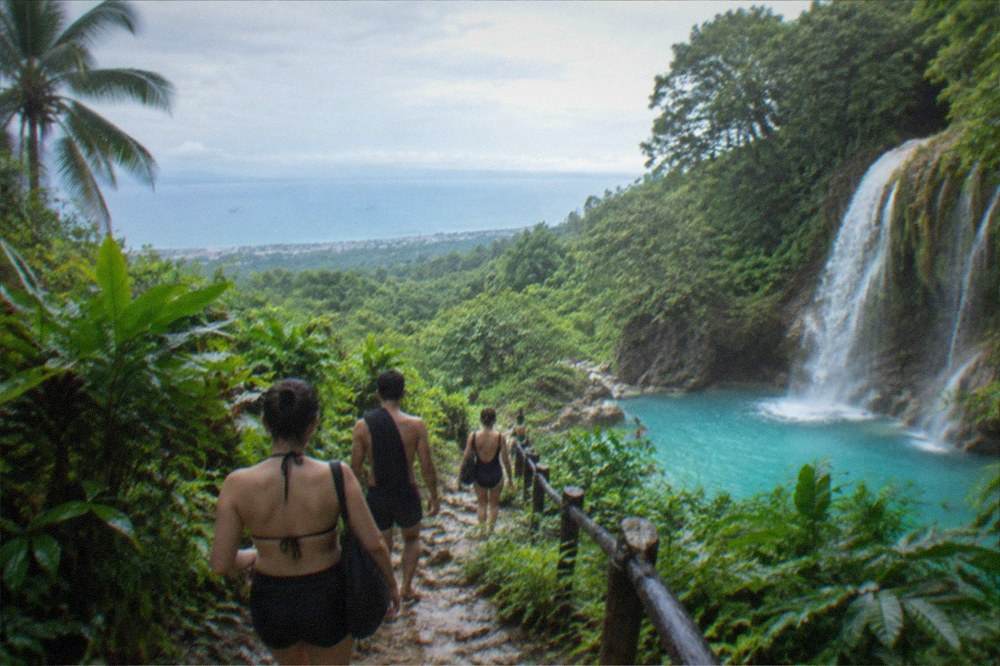
For travellers with more than one day, the same booking energy can go further afield. A falls-plus-Osmeña Peak combo, price unpublished by the operator, adds the highest point in Cebu to the falls, and pairs naturally with an overnight in Dalaguete. It suits a two-day south coast plan far better than a one-day dash.
Common Questions About South Cebu Day Tours
Can you do Oslob and Kawasan Falls in one day?
Yes, but it is a long day: a 3:00 to 4:00 AM departure from Cebu City, the whale shark session by 7:00 AM, Tumalog Falls mid-morning, then a two to three hour drive to Badian for an early afternoon at Kawasan, returning to the city by evening. Most guided versions do exactly this, and it works best with a tour because the onward connection from Oslob to Badian is the fragile part.
How much does a south Cebu day tour cost?
The fixed local fees are P1,000 (about US$15.9) for the Oslob whale shark interaction as a foreign visitor, about P50 (about US$0.8) at Tumalog Falls, about P200 (about US$3.2) at Kawasan Level 1, and P100 (about US$1.6) at Moalboal, with a Badian canyoneering package at roughly P1,500 (about US$24) to P2,000 (about US$32) all-in. Bus fares from Cebu City run P145 (about US$2.3) to P250 (about US$4.0) to Oslob. Guided tour prices are set by the operators, so check the live listing rather than a printed figure.
Are whale sharks guaranteed in Oslob?
No. Sightings dictate operations in Oslob, and in late May 2026 the sharks were absent from the Tan-awan area for about four days when seasonal plankton moved to a neighbouring barangay. The municipality clarified the activity was paused, not closed, and it resumed. Book a morning slot and keep the afternoon flexible.
What are the rules for swimming with whale sharks in Oslob?
The municipality's rules require a briefing before the boat, a minimum distance of about four metres from the body and five from the tail, no touching, no sunscreen, no flash photography, mandatory life jackets, and a session of about 30 minutes. Feeding is done only by licensed municipal spotters, never by tourists.
Is canyoneering at Kawasan Falls open right now?
The Badian route is open and the falls stayed open through the P110,000,000 (about US$1,752,820) rehabilitation that began in June 2026, but the Alegria route is suspended and cliff jumping is banned at the Level 1 basin. Rain-driven safety closures have paused canyoneering repeatedly through 2025 and 2026, so check conditions the day before, and note the monthly third-Wednesday cleanup closure.
What is the best month for a south Cebu day tour?
December to May, PAGASA's dry season, with April the driest month on the Mactan normals at 48.1 mm of rain. The rainy season from June to November carries typhoon risk peaking roughly July to October, and October is the wettest month at 194.8 mm. The whale sharks and the sardine run are present year-round, so the season decides your weather rather than your wildlife.
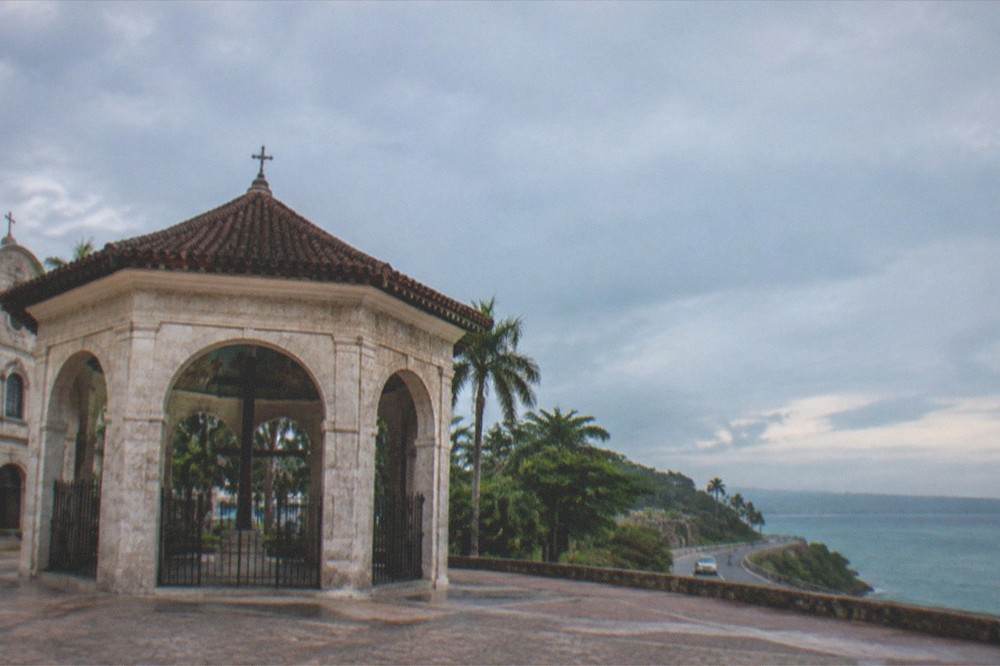
The south coast rewards early risers and punishes optimists: leave before dawn, book the whale shark morning ahead of time, keep the falls swim as your plan and canyoneering as your bonus, and the single day delivers the version of Cebu that made the island famous. For everything the wider island offers beyond this one long day, the Cebu Travel Guide homepage and the things to do in Cebu roundup carry the rest of the coast, from the Bohol day trip across the strait to the quiet beaches of the north.