South Cebu Vs North Cebu
Cebu, the island province in the Central Visayas region of the Philippines, splits cleanly into two very different trips: the south, with Oslob's whale sharks, Kawasan Falls and Moalboal's sardine run, and the north, with Malapascua's thresher sharks, Bantayan's beaches and a slower pace.
Short answer
South Cebu suits first-time visitors who want the famous trio of whale sharks, waterfalls and sardine runs within a few hours of Cebu City. North Cebu suits divers and travellers with more time, centred on Malapascua and Bantayan. Most first trips to Cebu go south.
Cebu, the island province at the heart of the Central Visayas region of the Philippines, is not one destination but two. The southern half holds the attractions most foreign visitors arrive for: the whale sharks of Oslob, the canyons of Kawasan Falls and the swirling sardine run at Moalboal. The northern half is quieter and takes longer to reach, anchored by the thresher shark dives off Malapascua and the low-key beaches of Bantayan Island. Choosing between them is mostly a question of time, budget and whether your priority is ticking off famous sights or slowing down.
This guide compares the two halves honestly, using Cebu's own figures for fees, travel times and seasons. It draws on the wider Cebu travel guide hub on this site, and if you are still building a full trip, the master list of things to do in Cebu covers both halves together.
What Is The Difference Between South Cebu And North Cebu?
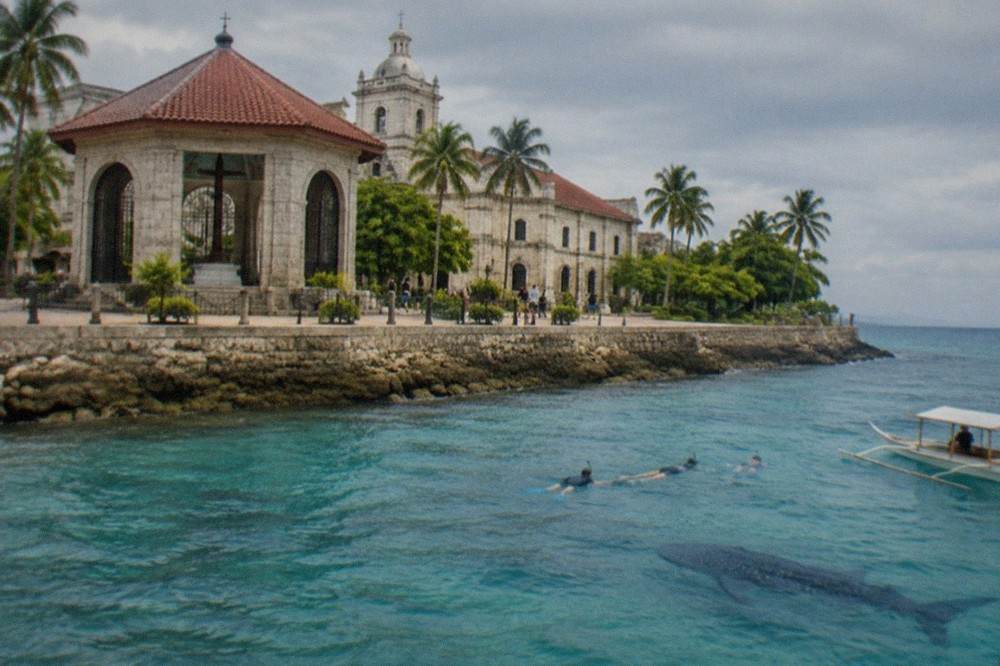
South Cebu is the high-volume sightseeing half: whale shark watching in Oslob, canyoneering at Kawasan Falls and the Moalboal sardine run all sit along a single coastal highway a few hours from Cebu City. North Cebu is the diving and island half: its headline attractions are Malapascua's thresher sharks, reached by boat from Maya port, and Bantayan Island, and it sees far fewer day-trippers because the journeys are longer. The south trades on concentration, the north on space.
The south's geography explains its popularity. Everything sits along the same road south, so a single base in Moalboal or Oslob lets you reach Kawasan, Tumalog Falls and Sumilon Island without backtracking. The Municipality of Oslob's own tourism office sets the whale shark fees: P1,000 (about US$15.9) per foreign visitor and P500 (about US$8.0) per Filipino, boat and guide included, with sessions running from roughly 6 AM to midday. That schedule alone shapes every southern itinerary, because it forces early starts.
The north works differently. Malapascua, in Daanbantayan municipality at the island's northern tip, is a dive destination rather than a day-trip one: thresher sharks are now seen mostly at Kimud Shoal, with dives plus marine park fees. Bantayan, further west, adds a small terminal fee of P25 (about US$0.4) at Hagnaya and an ecological fee of P30 (about US$0.5) on arrival in Santa Fe. Nothing in the north can be done as a comfortable day trip from Cebu City, which is precisely why it stays quieter.
One more difference matters in 2026. The M6.9 earthquake of 30 September 2025, with its epicentre offshore from Bogo City, damaged several of the north's coral-stone heritage churches, including the shrines at Daanbantayan and Bogo. The Department of Tourism declared Cebu open to visitors in late October 2025, and the ports and dive operations recovered, but church visits in the far north remain partly disrupted while restoration proceeds.
Which Side Of Cebu Is Better For First-Time Visitors?
For a first visit of three to five days, South Cebu is the safer choice, because it stacks three of the island's most famous experiences along one road and each is reachable from Cebu City in under half a day. North Cebu rewards a second visit or a trip of five days or more, when there is time to overnight on Malapascua or Bantayan rather than just glimpse them. The south is where most first itineraries, including this site's own, send newcomers.
The practical arithmetic favours the south. Ceres Liner buses run from Cebu South Bus Terminal to Oslob in about 3.5 to 4.5 hours, with fares around P145 (about US$2.3) to P250 (about US$4.0), and to Moalboal in about 2.5 to 3.5 hours at roughly P120 (about US$1.9) to P210 (about US$3.3). That means a visitor landing at Mactan-Cebu International Airport in the morning can be at a Moalboal guesthouse by late afternoon. The north's equivalent journey, Cebu City to Maya port for the Malapascua boat, is a longer haul with no comparable frequent bus service described in the verified schedules, and the final leg is by boat.
The south also carries more of the infrastructure first-timers lean on: more join-in tours, more frequent transport, and a denser cluster of the sights that made Cebu famous in the first place. Our South Cebu itinerary and the South Cebu day tour pages are built around exactly that concentration.
If your first visit falls in January, there is one more reason to base yourself around Cebu City: the Sinulog festival's Grand Parade, held on the third Sunday of January at the Cebu City Sports Center, draws the country's biggest crowds and makes the city itself the main attraction.
What Does South Cebu Cost Compared With North Cebu?
On verified attraction fees alone, the two halves are closer than people expect: the south's biggest single fee is the Oslob whale shark session at one thousand pesos per foreign visitor, while the north's headline costs are the Malapascua dives at roughly 1,800 to 2,000 pesos each plus small island fees under one hundred pesos. The real difference is transport and nights: the south fits into day trips from one base, the north needs overnight stays and boat hops.
The table below gathers the figures for the main paid attractions on each side. All amounts are Cebu's own local fees, not tour operator prices, and each is paid on site in pesos.
| Side | Attraction | Verified fee (foreign visitor) |
|---|---|---|
| South | Oslob whale shark watching | P1,000 (about US$15.9) per person |
| South | Tumalog Falls entrance | about P50 (about US$0.8) |
| South | Kawasan Falls Level 1 entrance | about P200 (about US$3.2) |
| South | Kawasan canyoneering (Badian-accredited guide) | roughly P1,500 (about US$24) to P2,000 (about US$32) |
| South | Moalboal environmental user fee (swim or snorkel) | P100 (about US$1.6) |
| South | Pescador Island marine park fee | about P100 (about US$1.6) per dive |
| South | Sumilon Island day pass | about P1,600 (about US$25) to P2,000 (about US$32) |
| North | Malapascua thresher shark dive | roughly P1,800 (about US$29) to P2,000 (about US$32) per dive |
| North | Maya port environmental and terminal fees | roughly P95 (about US$1.5) to P140 (about US$2.2) |
| North | Bantayan Hagnaya terminal fee | P25 (about US$0.4) |
| North | Bantayan Santa Fe ecological fee | P30 (about US$0.5) |
Two notes on those numbers. First, the Oslob fee is set by municipal ordinance and reverted in March 2025 to its current rates, so older blogs quoting different figures are out of date. Second, the canyoneering range is deliberate: a Badian municipal ordinance regulates the activity, but reported all-in prices vary between roughly P1,500 (about US$24) and P2,000 (about US$32) depending on inclusions, so treat any single number with caution.
Budget travellers should read the fuller breakdown on the Cebu budget and costs page. One structural point is worth stating here: because the south's attractions are close together, a visitor can base in one town and spend little on inter-town transport, while the north's attractions are separated by long bus rides and boat hops that add up over a week.
How Do You Get To South Cebu And North Cebu From Cebu City?
South Cebu is reached by frequent Ceres Liner buses from Cebu South Bus Terminal along the coastal highway, with Moalboal about 2.5 to 3.5 hours away and Oslob about 3.5 to 4.5 hours, buses running throughout the day. North Cebu is reached by long-haul bus or private van to the northern tip, then by boat: Malapascua via Maya port, Bantayan via Hagnaya. The south is a bus ride, the north is a bus ride plus a ferry.
The southern route is genuinely easy. Buses to Moalboal leave roughly every 30 to 45 minutes, and the Oslob service (the Bato via Oslob route) runs more than nine times daily from early morning to evening. You pay onboard or at the terminal, and the same highway continues past the turnoffs for Kawasan Falls and Osmeña Peak, which is why a single southern base works so well.
The northern route demands planning. The journey to Maya port, the jump-off for Malapascua, takes most of a day by public transport, and boats from Maya to the island are scheduled around tide and weather. Bantayan adds the Hagnaya crossing, where the P25 (about US$0.4) terminal fee is paid before boarding. Both northern crossings can be suspended in rough weather, which matters most during the typhoon season from June to November.
For getting around once you are there, the getting around Cebu guide covers jeepney fares, buses and ride-hailing, and the Cebu airport guide covers the run in from Mactan-Cebu International, about 13 to 15 km from the city with drives of roughly 25 to 60 minutes depending on traffic.
What Are The Best Things To Do In South Cebu?
The four anchors of South Cebu are whale shark watching at Oslob, canyoneering and swimming at Kawasan Falls, snorkelling the sardine run at Moalboal's Panagsama Beach, and a day pass on Sumilon Island, and all four sit within about an hour of each other along one coastal road. Add Tumalog Falls and the Osmeña Peak hike and a full week fills easily.
Oslob is the headline, and the whale shark session is tightly regulated: a mandatory briefing, a minimum distance of about four metres from the animals, no sunscreen in the water, no touching, and roughly thirty minutes in the water per session. Sightings are not guaranteed, and in late May 2026 the sharks were absent from the Tan-awan interaction area for about four days when plankton moved to a neighbouring barangay, a reminder that this is wildlife, not an aquarium. The ethics of the hand-feeding program are genuinely debated, and our whale shark ethics page covers both sides. Other pages covering the same trip are gathered on Cebu Travel Guide.
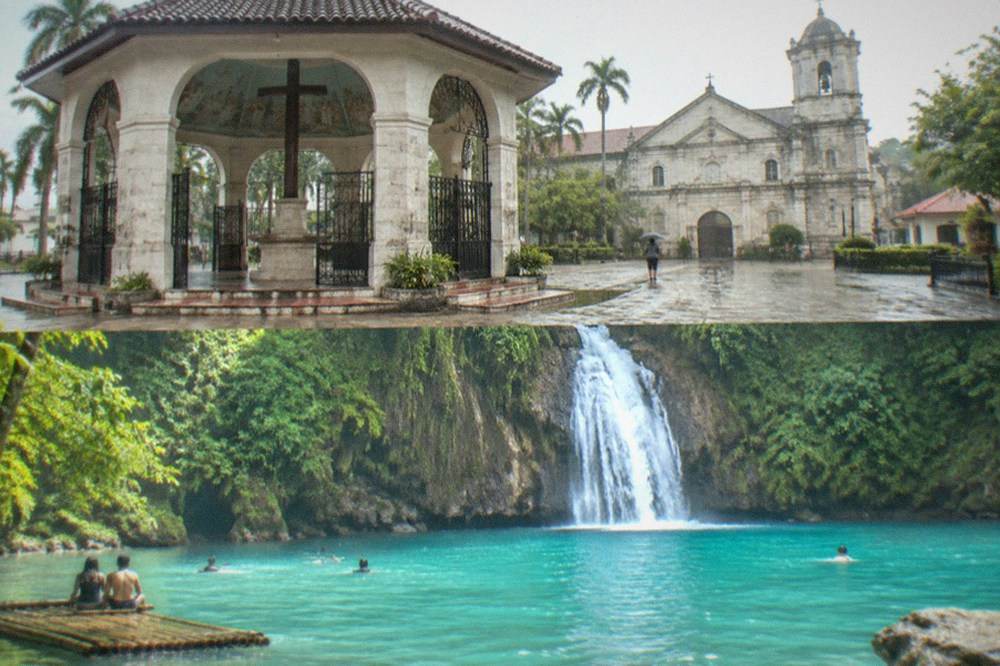
Kawasan Falls in Badian is the second anchor. The Level 1 basin, the swimming stop for most visitors, costs about P200 (about US$3.2) to enter, and cliff jumping is now banned there. The full canyoneering descent, which starts upstream and ends at the falls, runs only through the Badian route, since the Alegria route has been suspended through 2025 and 2026. A phased 110-million-peso rehabilitation began in June 2026 while the site stayed open.
Moalboal is the third. The sardine run is a permanent, year-round school holding just off Panagsama Beach, reachable from shore after paying the P100 (about US$1.6) environmental user fee, with the municipal tourism office noting early morning as the best window. Pescador Island, a short boat ride out, adds reef dives at about P100 (about US$1.6) per dive in marine park fees.
| South Cebu sight | Typical time needed | Best start |
|---|---|---|
| Oslob whale sharks | half morning | 6 AM briefing |
| Tumalog Falls | 1-2 hours | after the whale shark session |
| Kawasan Falls swim (Level 1) | half day | mid-morning |
| Kawasan canyoneering | 3-5 hours | early morning |
| Moalboal sardine run | 1-2 hours | 7-9 AM |
| Sumilon Island day pass | full day | morning boat |
For beach-focused travellers, the question of which stretch of coast is best is covered in detail at the best beach in South Cebu, and the wider Cebu beaches guide places the southern strand in context.
What Are The Best Things To Do In North Cebu?
North Cebu is built around two islands: Malapascua, whose dive sites at Kimud Shoal are the most reliable place in the country to see thresher sharks at dawn, and Bantayan, a flat, laid-back island of white-sand beaches and small resorts reached by ferry from Hagnaya. The mainland strip between them adds the Olango Island bird sanctuary just off Mactan and the recovering heritage towns of the far north.
Malapascua is the north's one genuinely world-class draw. The thresher sharks are seen primarily at Kimud Shoal now, with Monad Shoal secondary, and dive boats leave before dawn to reach the cleaning stations at first light. Dives cost roughly P1,800 (about US$29) to P2,000 (about US$32) plus marine park and environmental fees, and Maya port charges arriving visitors in the range of P95 (about US$1.5) to P140 (about US$2.2). This is a trip for divers, or for travellers happy to base on a small island for several days.
Bantayan is the counterpoint: no headline attraction, just beaches, seafood and a slow loop around the island by motorbike. The fees are almost nominal, P25 (about US$0.4) at Hagnaya and P30 (about US$0.5) in Santa Fe, and the island's tourism recovered steadily through 2026 after the 2025 earthquake disrupted the northern municipalities hardest.
The far north's heritage churches, including the 1858 shrines at Daanbantayan and Bogo, were damaged by the September 2025 earthquake, and restoration was still in its early stages through 2026, so a church-hopping itinerary should not be promised to first-time visitors this year. Closer to the city, Olango Island's wildlife sanctuary, the Philippines' first Ramsar site when designated in 1994, charges foreign visitors P100 (about US$1.6) and hosts over sixty migratory shorebird species from September to March.
Divers weighing the two halves should also read the Cebu diving guide, which compares Moalboal's shore-access sardines with Malapascua's deep shoals directly.
Where Should You Stay: South Cebu, North Cebu Or Cebu City?
Sleep in Cebu City or Mactan for the first and last nights, then split the remainder: three or four nights based in Moalboal covers the entire southern circuit, while a northern trip means committing to Malapascua or Bantayan for at least two or three nights each, because the transit time makes single-night stays pointless. The city is the hub, the south is a base-and-radiate trip, the north is a destination stay.
The southern base logic is simple. Moalboal sits between Oslob and Kawasan, so from a Panagsama or Basdaku guesthouse you can reach the sardine run on foot, Kawasan in under an hour by road, and Oslob in about two hours. Oslob itself works as an alternative base if whale sharks are the priority, since the 6 AM briefing rewards being close.
The north leaves no such flexibility. Once you have travelled to Maya or Hagnaya, the day is spent, and the islands reward settling in. Malapascua's dive boats leave before dawn, so staying on the mainland defeats the purpose, and Bantayan's charm is precisely the absence of a reason to hurry.
| Trip length | Suggested split |
|---|---|
| 3 days | Cebu City 1 night, Moalboal 2 |
| 5 days | Cebu City 1, Moalboal 2, Oslob 2 |
| 7 days, first visit | City 1, Moalboal 3, Oslob 2, city 1 |
| 7 days, return visit | City 1, Malapascua 3, Bantayan 3 |
Accommodation options on both coasts are covered on the Cebu resorts and hotels page, and families should cross-check the Cebu family travel guide, since the north's boat legs and early dive schedules suit older children better than toddlers.
When Is The Best Time To Visit Each Side Of Cebu?
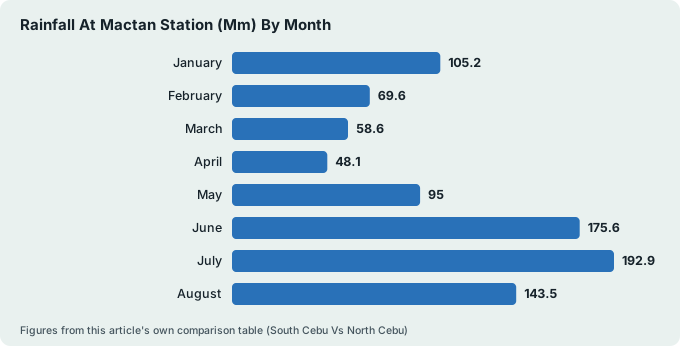
Both halves share the same calendar: PAGASA's dry season runs December to May and the rainy season June to November, with typhoon risk peaking roughly July to October, and the Mactan station's 1991-2020 normals show October as the wettest month at 194.8 mm of rain and April the driest at 48.1 mm. The one regional wrinkle is that the north's island crossings are more exposed to weather suspensions, so the dry season matters more there.
The rainfall table tells the story month by month. These figures are PAGASA's own Mactan station normals, published for the island as a whole, and both halves sit within the same climate classification.
| Month | Rainfall at Mactan station (mm) |
|---|---|
| January | 105.2 |
| February | 69.6 |
| March | 58.6 |
| April | 48.1 |
| May | 95.0 |
| June | 175.6 |
| July | 192.9 |
| August | 143.5 |
| September | 179.6 |
| October | 194.8 |
| November | 161.9 |
| December | 139.7 |
March and April are the sweet spot for both halves. The southern waterfalls are at their most swimmable, the sardine run's visibility is at its best from December through May, and the northern crossings run reliably. November 2025 showed what the wet season can do: Typhoon Tino (Kalmaegi) brought severe flooding to Cebu and a provincial state of calamity, though the Department of Tourism quickly confirmed the core tourism zones in Cebu City and Mactan were largely unaffected and open.
The full seasonal picture, including the whale shark question, is on the best time to visit Cebu and Cebu weather and typhoon season pages.
Which Half Should You Actually Choose?
Choose South Cebu if this is your first trip, if you have a week or less, if whale sharks or canyoneering are the reason you booked the flight, or if you want the safety net of frequent buses and join-in tours. Choose North Cebu if you are a diver, if you have already done the southern classics, or if your ideal trip is one island, one beach and no early-morning bus queues. Many travellers with ten days or more simply do both.
There is no wrong answer, only a mismatch between pace and geography. The south delivers Cebu's greatest hits at a pace that suits a first Asian island trip, at the cost of sharing Oslob's 800 to 900 daily visitors in peak season. The north asks for more travel patience and pays it back with empty beaches and a dawn dive that exists almost nowhere else on earth.
One planning note that straddles both halves: if your dates are flexible, the Bohol day trip from Cebu City, a roughly two-hour fastcraft crossing from Pier 1, makes a strong add-on from a city base either way, and the Cebu to Bohol ferry guide covers the current operators and fares.
Common Questions About Choosing Between South Cebu And North Cebu
Is South Cebu or North Cebu better for a first visit?
South Cebu, in almost every case. Its three headline attractions sit along one coastal road with frequent buses from Cebu City, so a first trip of three to five days can cover whale sharks, waterfalls and the sardine run from a single base. North Cebu needs overnight stays to make sense.
Can you visit both South Cebu and North Cebu on one trip?
Yes, with ten days or more. A workable split is Cebu City one night, Moalboal two or three, Oslob one or two, then the long haul north to Malapascua or Bantayan for three nights before flying out. Anything shorter turns into more transit than holiday.
Is North Cebu still worth visiting after the 2025 earthquake?
Yes. The Department of Tourism declared Cebu open to visitors in late October 2025, and Bantayan Island, Malapascua and the Daanbantayan ports and dive spots were reported operational with no major cancellations. The damage was concentrated in the far north's heritage churches, several of which remain under assessment or restoration through 2026.
Are the whale sharks in Oslob guaranteed?
No. Sightings are usual but not guaranteed: in late May 2026 the whale sharks were absent from the Tan-awan interaction area for about four days when seasonal plankton moved to a neighbouring barangay, and operations paused until they returned. The Oslob tourism office and the mayor both confirmed the sharks had not left the area permanently.
Which side of Cebu is cheaper?
On attraction fees the two sides are similar, with Oslob at P1,000 (about US$15.9) for foreign visitors and Malapascua dives at roughly P1,800 (about US$29) to P2,000 (about US$32) each. The real cost difference is transport and nights: the south can be done as day trips from one base, while the north requires overnight stays and boat fees that add up over a week.
Which side has the better beaches?
The north, for pure sand. Bantayan's Santa Fe coast is the island's classic white-sand stretch, and Malapascua's Bounty Beach is a postcard. The south's best swimming is less about beaches than about experiences: the sardine run at Panagsama and the sandbar and lagoon of Sumilon Island, whose day pass runs about P1,600 (about US$25) to P2,000 (about US$32).
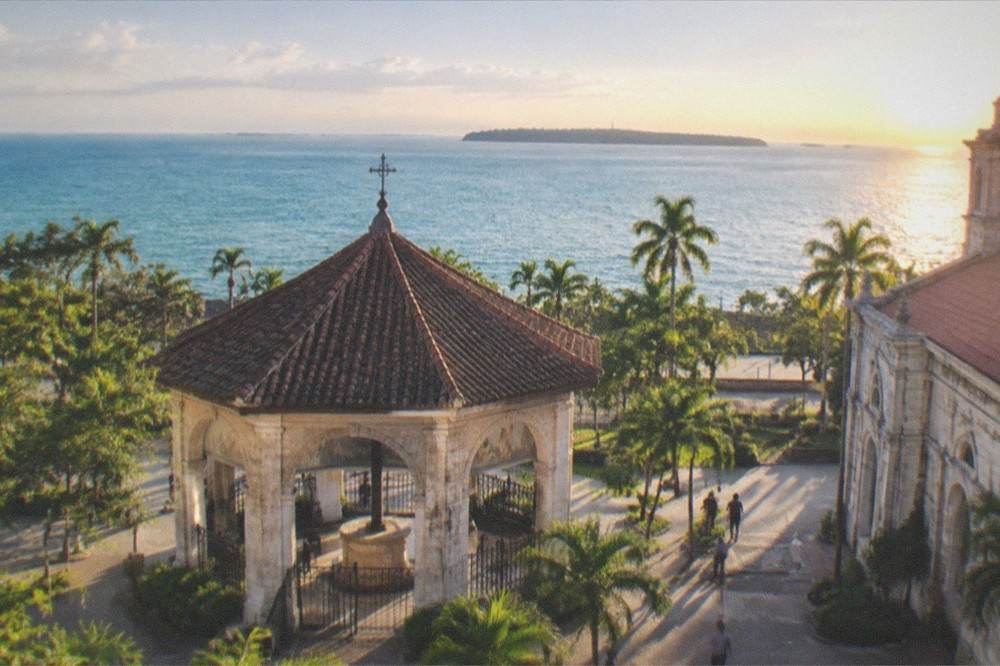
Whichever half you pick, the honest summary is this: the south gives you Cebu's famous sights with the crowds that fame brings, and the north gives you the island most of those crowds never reach. Start with the south if it is your first time, and save the north for the trip that will make you fall for Cebu twice.