How Far Are The Beaches From Cebu?
Mactan's resorts sit across the channel from Cebu City in the Philippines, south Cebu's sand and waterfalls are reachable by bus, and the far north islands lie beyond that.
Cebu, an island province in the Central Visayas region of the Philippines, is a beach destination with a twist: the provincial capital, Cebu City, is a dense port metropolis with no swimming beach of its own. The sand sits on Mactan Island across the channel, along the long southern coast, and on scattered islands to the north, and the honest answer to the distance question depends entirely on which of those you mean. The short version: resort beaches are minutes away by bridge, the famous south coast is a bus ride of roughly two and a half to four and a half hours, and the far north is a commitment of half a day each way.
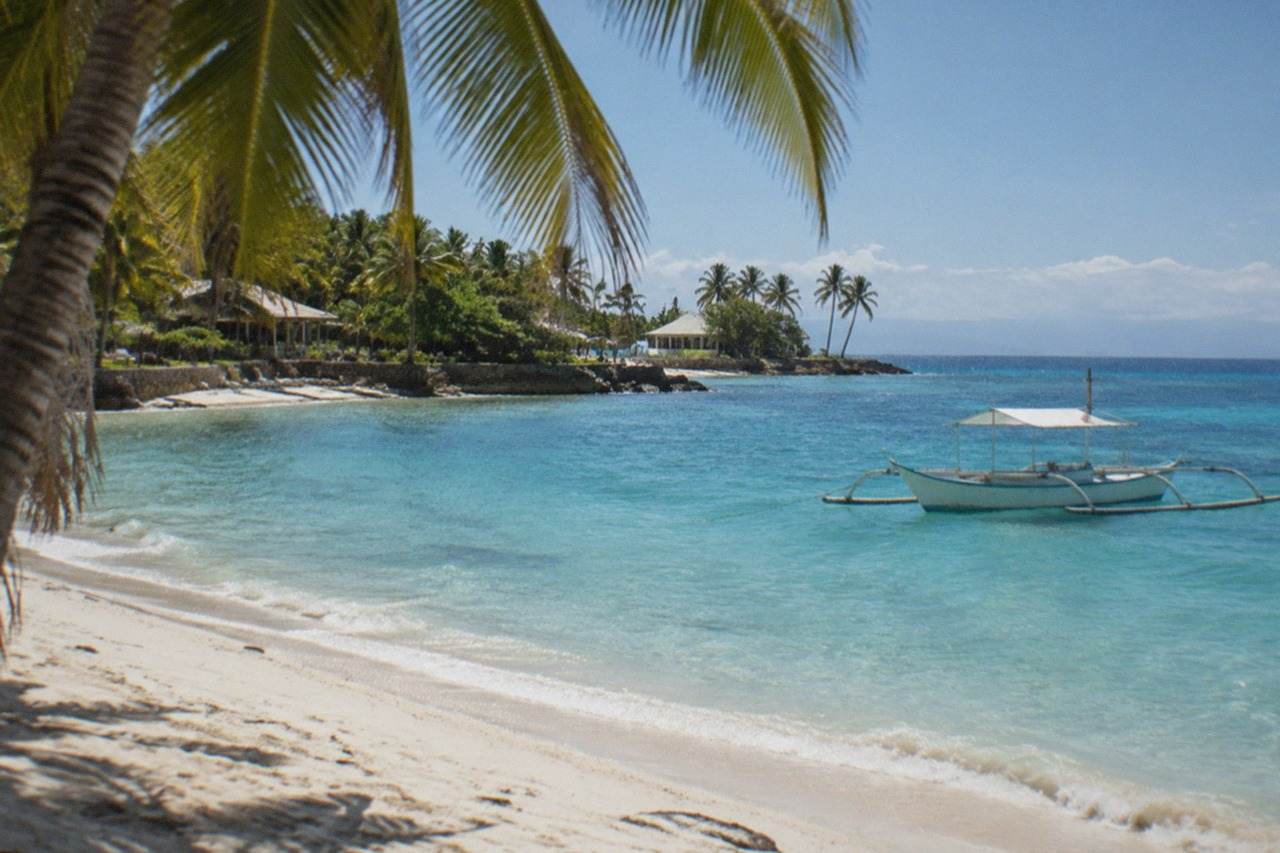
How Far Are The Beaches From Cebu?
The nearest real swimming beaches to Cebu City are on Mactan Island, across the Mactan Channel and reachable by bridge in a matter of minutes to an hour depending on traffic, while the province's headline beach coasts lie much further out: the south Cebu beach towns around Moalboal sit about 2.5 to 3.5 hours away by bus, Oslob about 3.5 to 4.5 hours, and the northern islands beyond that. There is no swimmable city beach in Cebu City itself.
That three-tier geography is the single most useful thing to understand before planning. Cebu City is a working harbor city, highly urbanized and administratively independent of the province around it, and its waterfront is piers, not sand. Everything beach-shaped falls into one of three rings around it.
The inner ring is Mactan. Lapu-Lapu City, on Mactan, is one of Cebu's three highly urbanized cities, and its east coast carries the resort strip that people typically picture when they imagine a Cebu beach holiday. You reach it by crossing one of the bridges over the Mactan Channel, and the crossing is short enough that resort day passes and beach clubs are a normal half-day outing from a city hotel. Our guide to Mactan's beaches covers the individual stretches.
The middle ring is the south coast. This is where the postcard material lives: the sardine run off Panagsama Beach in Moalboal, the whale sharks of Oslob, Sumilon Island's sandbar. Ceres Liner buses run south from the Cebu South Bus Terminal on these routes throughout the day, and the journey times are long but predictable.
The outer ring is the north and everything reached by ferry: Bantayan Island, Malapascua, the Camotes Islands. These are the places you go when the beach is the whole point of the trip, not a side trip.
Which Beaches Are Closest To Cebu City?
The beaches of Mactan Island in Lapu-Lapu City are the closest to Cebu City, lying directly across the Mactan Channel and connected by bridge, so a trip from the city center to a Mactan resort beach is a short hop rather than a journey, and it is the only beach area you can realistically visit for a few hours and still be back for dinner. For a swimming beach within the city itself, there is none.
Mactan is the practical answer for most short-stay visitors. The island's resort coast faces the Camotes Sea and the calm, shallow water between Mactan and Olango, which makes it a family-friendly swim rather than a surf beach. Mactan-Cebu International Airport is also on the island, so many travelers technically land closer to the beaches than to the city: the airport sits about 13 to 15 km from Cebu City by road, a drive of roughly 25 to 60 minutes depending on bridge traffic. Other pages covering the same trip are gathered on Cebu Travel Guide.
The trade-off is character. Mactan's beaches are resort beaches, groomed and partly private, with the best sand inside hotel grounds or on islands reached by boat from Mactan's east-coast jetties. For the full picture of which stretch suits which traveler, see which part of Cebu has the best beaches and our overview of Cebu's beaches. If you are deciding where to sleep, the comparison of Mactan or Cebu City as a base comes down almost entirely to this distance question.
One practical note on island-hopping from Mactan: Lapu-Lapu City charges an environmental fee for island hopping, P100 (about US$1.6) for foreign tourists, while a 2025 amendment cut the local rate to P20 (about US$0.3). The marine sanctuaries at Hilutungan and Nalusuan each add their own entrance fees in the region of P150 (about US$2.4) to P300 (about US$4.8) per person.
How Far Are The South Cebu Beaches From Cebu City?
The south Cebu beach towns are a genuine bus ride from Cebu City: Moalboal is about 2.5 to 3.5 hours south on the Ceres coastal route and Oslob about 3.5 to 4.5 hours, so the south works better as an overnight destination or a long organized day tour rather than a quick beach hop, and the distance is the reason tour packages run ten hours or more.
The south is where Cebu earns its reputation. Panagsama Beach in Moalboal is the access point for the sardine run, a permanent school of sardines that holds a few metres off the reef wall and is reached by simply walking into the water; the municipal tourism office lists it among the town's main draws. Moalboal charges an environmental user fee of P100 (about US$1.6) per person to swim or snorkel, under a 2021 ordinance, and Pescador Island's marine park adds roughly P100 (about US$1.6) per dive.
Further along the same coast, Oslob pairs its whale-shark interaction area with Tumalog Falls and Sumilon Island. Oslob's municipal fee for the whale-shark watching session is P1,000 (about US$15.9) for foreign visitors and P500 (about US$8.0) for Filipinos, boat and guide included, and Tumalog Falls charges about P50 (about US$0.8) entrance. Sumilon's Bluewater resort sells day use with boat transfers, with a weekday group offer valid to mid-October 2026, per the resort's own offers page.
Getting there independently means the Cebu South Bus Terminal and a Ceres Liner: buses toward Bato via Oslob run roughly nine or more times a day starting before dawn, and the ordinary or air-conditioned fare falls in the range of P145 (about US$2.3) to P250 (about US$4.0) for Oslob and P120 (about US$1.9) to P210 (about US$3.3) for Moalboal. Those journey times, 3.5 to 4.5 hours to Oslob and 2.5 to 3.5 hours to Moalboal, are why the question "how far are the beaches from cebu?" has a different answer for the south than for Mactan.
| Beach area | Direction from Cebu City | Typical journey | What the water is known for |
|---|---|---|---|
| Mactan resort coast (Lapu-Lapu City) | East, across the Mactan Channel by bridge | Minutes to about an hour by road, traffic-dependent | Calm, shallow resort swimming and island-hopping departure point |
| Moalboal (Panagsama) | South, by Ceres bus | About 2.5 to 3.5 hours | Sardine run off the reef wall, Pescador Island diving |
| Oslob (Tan-awan) | South, by Ceres bus | About 3.5 to 4.5 hours | Whale shark interaction area, Tumalog Falls, Sumilon sandbar |
| Bantayan Island (Santa Fe) | North, bus to Hagnaya then ferry | Half a day door to door | Wide white sand beaches, laid-back island pace |
The table's last row is the honest boundary of a day trip. Once a ferry enters the itinerary, the beach stops being a hop and becomes the destination.
How Far Are Bantayan, Malapascua And The Northern Beaches?
The northern beach islands are the farthest sand from Cebu City: Bantayan Island requires a long bus ride north to Hagnaya port followed by a ferry crossing, and Malapascua adds another boat leg beyond Maya port, so both are best treated as two-night or three-night destinations, with the Department of Tourism confirming the ports and beaches remained open to visitors after the September 2025 earthquake that damaged some northern heritage churches.
The north rewards patience. Bantayan's Santa Fe coast carries some of the widest, whitest sand in the province, and Malapascua is the base for early-morning thresher shark dives at the shoals offshore, a dive that typically costs in the region of P1,800 (about US$29) to P2,000 (about US$32) plus marine park fees. Neither is a day-trip proposition from Cebu City in any comfortable sense.
The practical arithmetic: the earthquake of 30 September 2025, a magnitude 6.9 event with its epicentre offshore from Bogo City, hit exactly this northern stretch hardest, damaging coral-stone churches in Daanbantayan, Bantayan town and Bogo. But the tourism infrastructure was cleared quickly. The Department of Tourism stated in late October 2025 that Bantayan Island and Malapascua were open, with the Santa Fe, Maya and Kawit ports fully operational, and by spring 2026 the northern towns were reporting steady visitor numbers again. The churches are a separate story from the beaches, and the beaches are open.
Ferry fees on these routes are small but real: the Hagnaya terminal fee is P25 (about US$0.4) per person and Santa Fe's ecological fee on arrival at Bantayan is P30 (about US$0.5). For the full island picture, our piece on the nicest beach in Cebu places the northern islands in context.
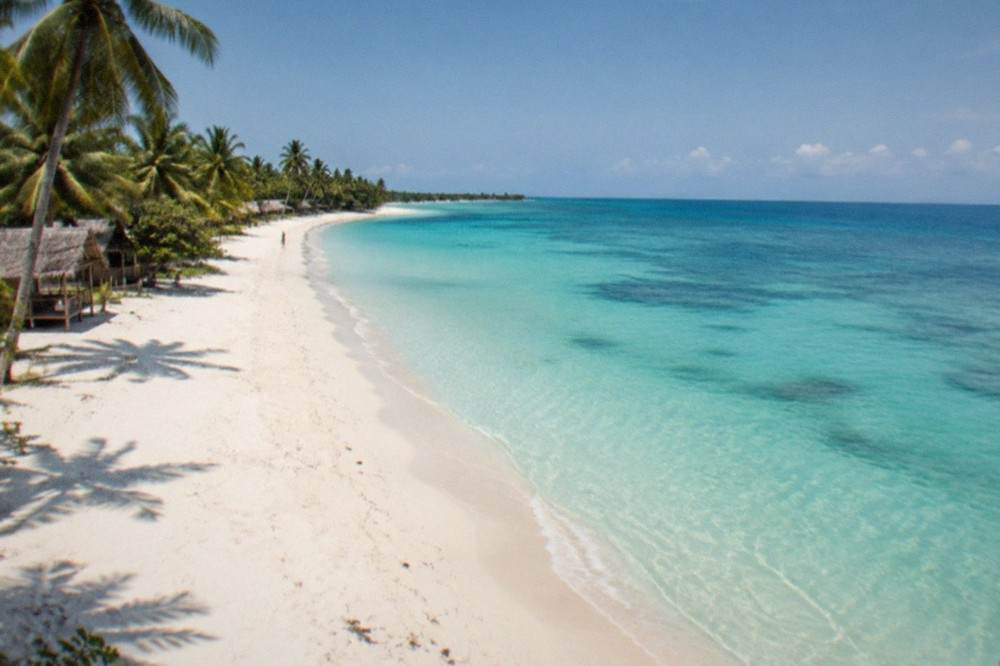
Should You Stay In Cebu City Or Near The Beach?
Stay in Cebu City if the trip mixes beaches with city sightseeing, food and heritage, accepting that every beach run is a bridge crossing or a bus ride; stay on Mactan if swimming is the daily priority and you want the water minutes away; and stay down the south or north coast only once you have committed two or more days to it, because the distances that make those coasts beautiful also make them awkward as a base for anything else.
This is the decision that quietly shapes every Cebu itinerary. A city base puts the Basilica del Santo Niño, Colon Street and the lechon restaurants within walking or short jeepney range, and the beaches become excursions. A Mactan base inverts that: the water is at the door and the heritage sites become the excursion. A Moalboal or Oslob base is a different trip altogether, one where the beach is not a question of distance because you are already on it.
For travelers using the city as a hub, the filler day between beach runs is a food day, and Cebu City's markets are the heart of it. The Cebu Market & Food Tour walks the city's food culture; the operator's live listing carries current availability, and Check availability before committing a morning.
Two timing notes finish the picture. PAGASA's national rule puts the rainy season from June to November and the dry season from December to May, with the Mactan station's 1991-2020 normals showing about 1,685 mm of rain spread over 138 rain days a year, so beach weather is possible in any month but likeliest in the dry half. And typhoon season runs June to November with a peak roughly July to October, which matters more for the exposed northern islands than for sheltered Mactan. Our piece on the best month to visit Cebu works through the calendar in detail, and the planning question of how many days in Cebu is enough depends heavily on which of the three beach rings you intend to reach.
Common Questions About Beaches Near Cebu
How far are the beaches from cebu?
Mactan's resort beaches are across the channel from Cebu City, minutes to about an hour by road. The south coast towns are 2.5 to 4.5 hours away by bus, and the northern islands take half a day including ferries. There is no swimming beach in Cebu City itself.
Does Cebu City have its own beach?
No. Cebu City's waterfront is port and industrial, and the nearest swimmable beaches are on Mactan Island across the Mactan Channel, reached by bridge.
Which is closer to Cebu City, Mactan or Moalboal?
Mactan, by a wide margin. Mactan is a bridge crossing measured in minutes to an hour, while Moalboal is about 2.5 to 3.5 hours south by Ceres bus from the Cebu South Bus Terminal.
Can you do a beach day trip from Cebu City?
Yes, to Mactan easily, and to the south coast through an organized day tour, since the bus journeys of 2.5 to 4.5 hours each way are why south-coast tours run around ten hours or more.
Are the northern islands like Bantayan worth the distance?
For a two or three night stay, yes. Bantayan and Malapascua are half a day from Cebu City including ferry legs, but the Department of Tourism confirmed both were open and their ports operational after the September 2025 earthquake.