Best Beaches In Cebu
Cebu, an island province in the Central Visayas region of the Philippines, packs more swimming spots into one landmass than most countries manage in a whole coastline. This guide lays out the best beaches in Cebu by area, with the verified entrance and environmental fees, the seasons that matter, and the honest transport realities of each one.
Short answer
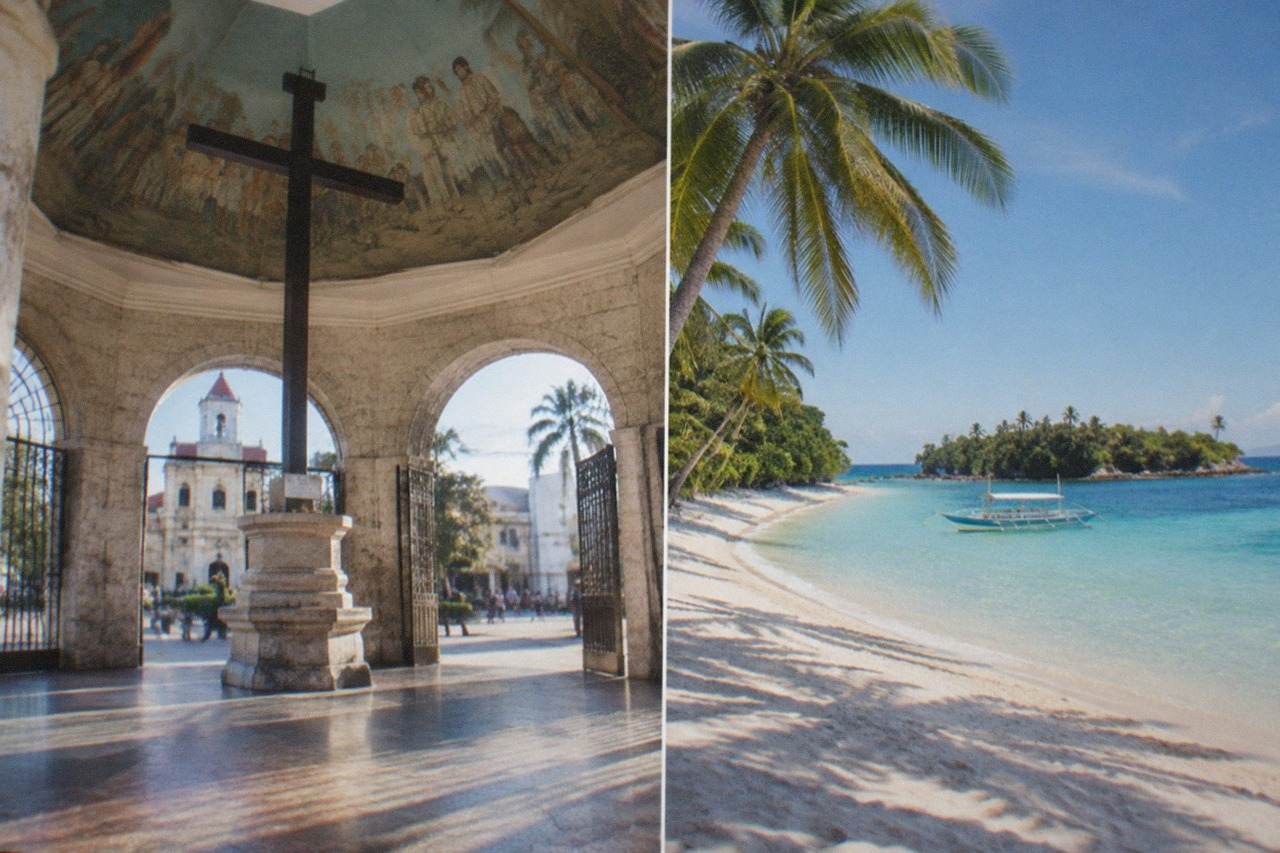
The best beaches in Cebu are split across four areas: the resort beaches of Mactan Island near Cebu City, the white sand and whale sharks of Oslob and Sumilon in the south, the sardine-run shoreline of Moalboal, and the long empty strands of Bantayan and Malapascua in the north. Each area carries its own fees, seasons and travel times.
Cebu, an island province in the Central Visayas region of the Philippines, is one of the few places where a coral reef, a waterfall and a mountain trail can all sit inside a single day's drive. Its beaches are the reason people come, and they are not one thing: the resort-lined shores of Mactan are a twenty-minute hop from the airport, while the wilder sand of Bantayan takes half a day to reach. This guide from Cebu Travel Guide breaks the coast into four areas, lists the fees the local governments actually charge, and tells you what each stretch of sand is genuinely good for.
Which Are The Best Beaches In Cebu?
The best beaches in Cebu fall into four distinct areas, and the right one depends on what you want from the water. Mactan Island holds the resort beaches closest to Cebu City and the airport. South Cebu, meaning Oslob, Sumilon Island and Moalboal, pairs white sand with whale sharks and the famous sardine run. North Cebu, meaning Bantayan Island and Malapascua, offers the longest and quietest strands. Camotes Island in the east rounds out the set with laid-back local beaches.
That geography matters more than any top-ten list, because travel times on this island are long. A visitor who bases in Cebu City and tries to day-trip to Bantayan will spend most of the day on buses and ferries. A visitor who bases on Mactan can swim before breakfast and still make a meeting downtown by nine. The Mactan beaches guide covers the resort coast in detail, and the question of how far the beaches are from Cebu City is one of the most common planning queries this site gets.
The table below is the honest summary. Every fee in it is a figure the local government or operator publishes, and each one reappears with more context in its own section.
| Area | Signature beach | Known for | Realistic day trip from Cebu City? |
|---|---|---|---|
| Mactan Island | Resort beaches of Lapu-Lapu City | Convenience, diving, marine sanctuaries | Yes, easily |
| Oslob and Sumilon | Sumilon Island sandbar | Whale sharks, white sand | Yes, long day |
| Moalboal | Panagsama and Basdaku | Sardine run, turtles | Yes, long day |
| Bantayan Island | Santa Fe beaches | Long quiet strands | No, stay overnight |
| Malapascua | Bounty Beach | Thresher shark diving | No, stay overnight |
| Camotes Islands | Santiago Bay and Mangodlong | Local, low-key | No, stay overnight |
What Are The Best Beaches On Mactan Island Near Cebu City?
The best beaches on Mactan Island are the private resort strands along the east coast of Lapu-Lapu City, backed by the marine sanctuaries of Hilutungan, Nalusuan, Caohagan and Pandanon that island-hopping boats visit daily. Mactan is where convenience wins: the beaches sit fifteen to thirty minutes from Mactan-Cebu International Airport and the water is calm year-round. It is not the prettiest sand in the province, but it is the sand you can actually reach in half an hour.
The fees here are municipal and modest. Lapu-Lapu City charges an environmental fee of P100 (about US$1.6) for foreign tourists on island hopping, and a July 2025 amendment cut the local rate to P20 (about US$0.3) while leaving the foreign rate unchanged. The sanctuary islands themselves charge separately: Hilutungan runs about P150 (about US$2.4) to P200 (about US$3.2) per person and Nalusuan about P100 (about US$1.6) to P300 (about US$4.8), figures that vary by operator and by how the fee is collected on the day. A boat tour that bundles three islands with lunch removes most of this friction, and the Mactan versus Cebu City stay question is worth reading before booking a hotel, because the answer decides whether your beach is a resort pool deck or a two-hour bus ride away.
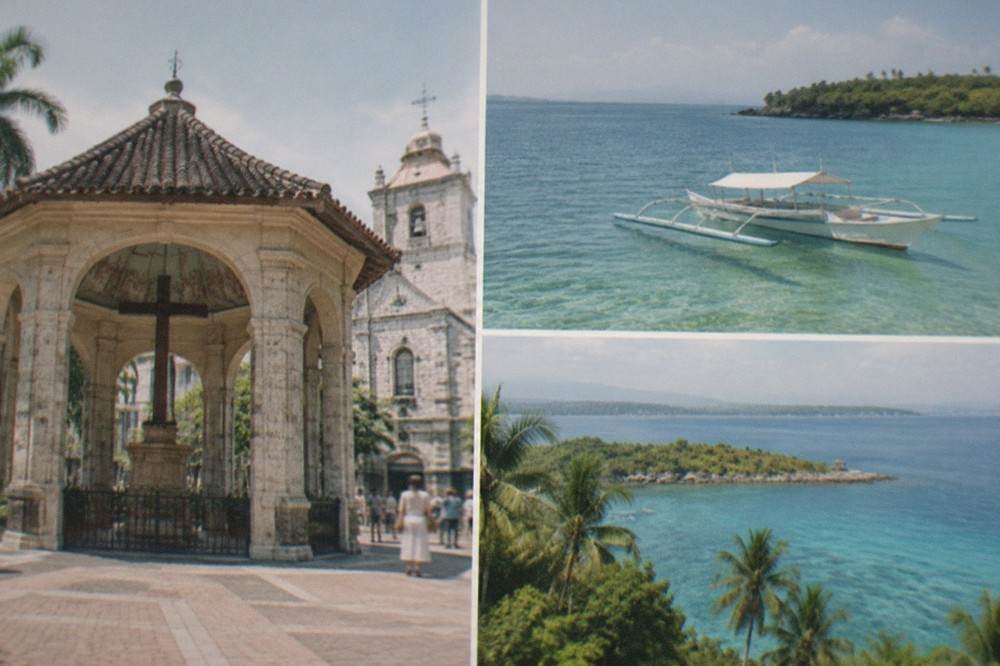
For families, Mactan is the easy call. The resorts here are built for shallow, calm, life-guarded swimming in a way the open-coast beaches of the south are not, and the family travel guide covers what to expect with children in tow. The trade-off is crowds: the sandbars and sanctuary snorkel stops fill up by mid-morning, and Sunday is the busiest day of the week.
What Are The Best Beaches In South Cebu?
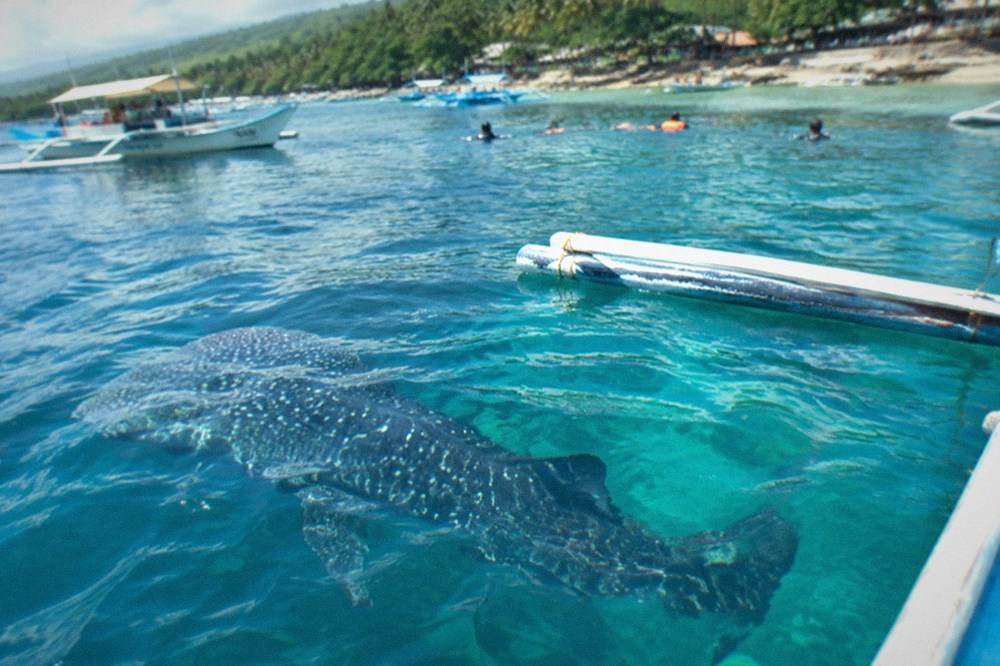
The best beaches in South Cebu are the Sumilon Island sandbar off Oslob, the white sand of Basdaku near Moalboal, and the swimming coves around Oslob itself, with the whale-shark interaction area of Tan-awan as the reason most people make the long drive south. The whale-shark fee for foreign visitors is the single largest expense on this coast, the activity runs from roughly six in the morning until noon, and the Bluewater resort day pass is the only legal way onto Sumilon's facilities.
The numbers behind that: the Oslob whale-shark fee is P1,000 (about US$15.9) for foreign visitors and P500 (about US$8.0) for Filipinos, boat and guide included, while the Sumilon Bluewater day pass runs a verified P2,000 (about US$32) net per guest from Monday to Thursday, consumable on food and drinks. South Cebu is where the beach stops being a backdrop and becomes the whole itinerary. The Oslob whale sharks draw 800 to 900 visitors a day in peak season, and the local government's rules are strict: a mandatory briefing, a minimum distance of about four metres from the animals, no sunscreen in the water, no touching, and roughly thirty minutes in the interaction area. The Oslob whale sharks guide covers the ethics in full, and the Oslob town guide covers the practicalities of an overnight stay, which is the calmer way to do it than the dawn dash from the city.
Tumalog Falls, a short habal-habal ride from the Tan-awan registration area, charges about P50 (about US$0.8) entrance and makes a natural second stop on any Oslob day. The full coastal run is covered in the South Cebu itinerary.
The whale-shark day tour above is the single most booked beach-adjacent product on this coast. The operator's listing carries the current price and the departure details, which is worth knowing before you book anything else for the same day. Beside it, the internal Oslob whale shark tour page has the full write-up, and you can Check availability directly with the operator.
Moalboal, south of the city by bus, is the other half of the south coast story. The sardine run at Panagsama sits a few metres from shore, a permanent school that the municipal tourism office says is best between seven and nine in the morning, and the environmental user fee to swim or snorkel is P100 (about US$1.6) under the 2021 municipal ordinance. The Moalboal sardine run guide covers the dive shops and the Pescador Island marine sanctuary, which charges about P100 (about US$1.6) per dive on top of the town fee.
What Are The Best Beaches In North Cebu?
The best beaches in North Cebu are the long white strands of Santa Fe on Bantayan Island and the small crescent of Bounty Beach on Malapascua, both of which need an overnight stay rather than a day trip. Bantayan charges a small terminal fee at Hagnaya port and an ecological fee on arrival in Santa Fe. Malapascua is the thresher shark diving capital of the Visayas, and after the September 2025 earthquake the tourism office confirmed the island stayed open, with Maya port fully operational.
The specific figures: the Bantayan terminal fee is P25 (about US$0.4) at Hagnaya and the ecological fee is P30 (about US$0.5) on arrival in Santa Fe. North Cebu is the quiet half of the province, and the September 2025 magnitude 6.9 earthquake off Bogo hit it hardest. The coral-stone churches of Daanbantayan, Bogo and San Remigio were damaged, and the Archdiocesan Shrine of San Vicente Ferrer in Bogo suspended indoor masses for six months to a year. The beaches and ports, though, kept running: the Department of Tourism declared Bantayan and Malapascua open in late October 2025, and by March 2026 the Daanbantayan tourism office was reporting steady daily visitor numbers again. The recovery context is in the Cebu safety guide.
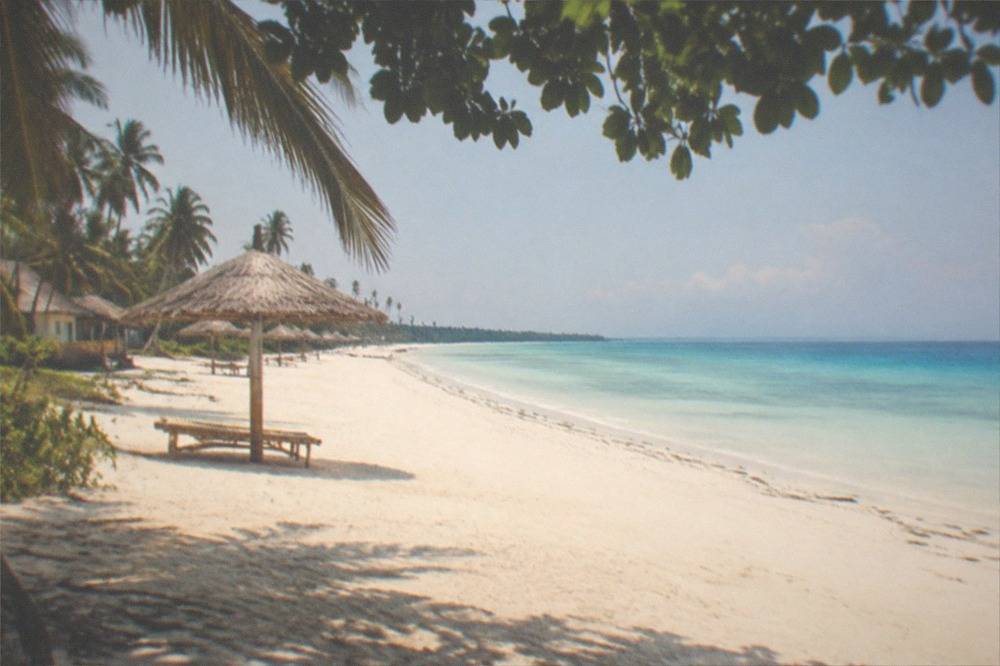
Bantayan is the beach for people whose priority is doing very little. Santa Fe's sand runs for kilometres, the water is shallow and calm, and the island's famous Holy Week tradition means it fills up once a year and empties again. The Bantayan Island guide covers the ferry from Hagnaya, and the Bantayan day trip guide explains honestly why one day is not enough.
Malapascua is smaller and more single-minded. Divers come for the threshers at Kimud Shoal, which now hosts most of the sightings, at dive costs of roughly P1,800 (about US$29) to P2,000 (about US$32) per dive plus marine park fees. The Malapascua thresher sharks guide and the Malapascua Island guide cover the dive season and the boat from Maya. Camotes, the third north-eastern option, is a low-key escape of bay beaches and cave pools that suits travellers with extra days rather than tight ones.
One inland option deserves a slot on any north-bound or south-bound beach week: the Kawasan Falls and Osmeña Peak combination above, which pairs the Badian waterfall with the highest point on the island. The operator has not published a price, so the listing itself is the only source for the current figure, and the tour runs about eleven hours. The falls charge a separate entrance of about P200 (about US$3.2) for the Level 1 swimming basin, and the canyoneering route above it is regulated by the Badian municipal government.
What Do Beach And Island Fees In Cebu Actually Cost?
Beach and island fees in Cebu are municipal, small and cash-based, and they stack quickly: a day that combines the Oslob whale sharks, Tumalog Falls and a Sumilon day pass adds up to more than any single fee suggests, before food or transport. The single biggest fee on any Cebu beach itinerary is the Oslob whale-shark interaction for foreign visitors. The recurring ones are the environmental fees at Moalboal and on Lapu-Lapu island hopping, plus the port and eco fees on Bantayan.
Every verified fee on this page is collected in the table below. Fees change by municipal ordinance rather than by season, and collection is not always consistent, so carry small bills and treat each figure as the current published rate rather than a permanent law.
| Fee | Amount | Who charges it | Notes |
|---|---|---|---|
| Oslob whale shark interaction | P1,000 (about US$15.9) foreign / P500 (about US$8.0) local | Oslob LGU | Boat and guide included, about 30 minutes |
| Tumalog Falls entrance | P50 (about US$0.8) | Barangay management | Habal-habal from Tan-awan extra |
| Sumilon Bluewater day pass | P2,000 (about US$32) net | Bluewater Sumilon | Monday to Thursday offer, consumable |
| Moalboal environmental user fee | P100 (about US$1.6) | Moalboal municipality | Swim or snorkel, Panagsama |
| Pescador Island dive fee | About P100 (about US$1.6) per dive | Marine sanctuary | Collected via dive shops |
| Lapu-Lapu island hopping environmental fee | P100 (about US$1.6) foreign / P20 (about US$0.3) local | Lapu-Lapu City | Cut for locals in July 2025 |
| Hilutungan sanctuary | About P150 (about US$2.4) to P200 (about US$3.2) | Sanctuary management | Varies by collection point |
| Nalusuan sanctuary | About P100 (about US$1.6) to P300 (about US$4.8) | Island management | Includes island access |
| Bantayan terminal fee | P25 (about US$0.4) | Hagnaya port | Per crossing |
| Bantayan ecological fee | P30 (about US$0.5) | Santa Fe | On arrival |
| Kawasan Falls Level 1 entrance | About P200 (about US$3.2) | Badian LGU | Swimming only |
Two patterns are worth noticing. First, the foreign rate is routinely several times the local rate, and there is no negotiating it: the Oslob differential is fixed by municipal ordinance. Second, fees are rarely included in tour prices unless the listing says so explicitly, so a cheap boat hire can end up costing more than a bundled tour once every sanctuary stop collects its share.
When Is The Best Time To Visit Cebu Beaches?
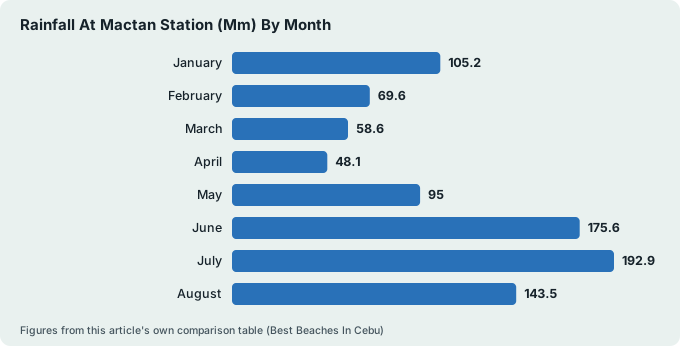
The best time to visit Cebu beaches is the dry season from December to May, with March and April the driest months on the Mactan station's published rainfall normals, at 58.6 mm and 48.1 mm. PAGASA's national rule puts the rainy season from June to November, and the wettest month in the Mactan series is October at 194.8 mm.
Typhoon risk peaks roughly July to October, and November 2025's Typhoon Tino brought record flooding to parts of Cebu, a reminder that the tail of the season still bites.
The monthly picture from the PAGASA Mactan normals shows the shape of the year clearly. The annual total at the station is 1,685.0 mm spread over 138 rain days, and the mean temperature sits at 28.1 degrees, which is to say: it is always beach weather, and the question is only whether it is also rain weather.
| Month | Rainfall at Mactan station (mm) | Season |
|---|---|---|
| January | 105.2 | Dry |
| February | 69.6 | Dry |
| March | 58.6 | Dry |
| April | 48.1 | Dry |
| May | 95.0 | Dry |
| June | 175.6 | Rainy begins |
| July | 192.9 | Rainy |
| August | 143.5 | Rainy |
| September | 179.6 | Rainy |
| October | 194.8 | Rainy, wettest |
| November | 161.9 | Rainy |
| December | 139.7 | Rainy, easing |
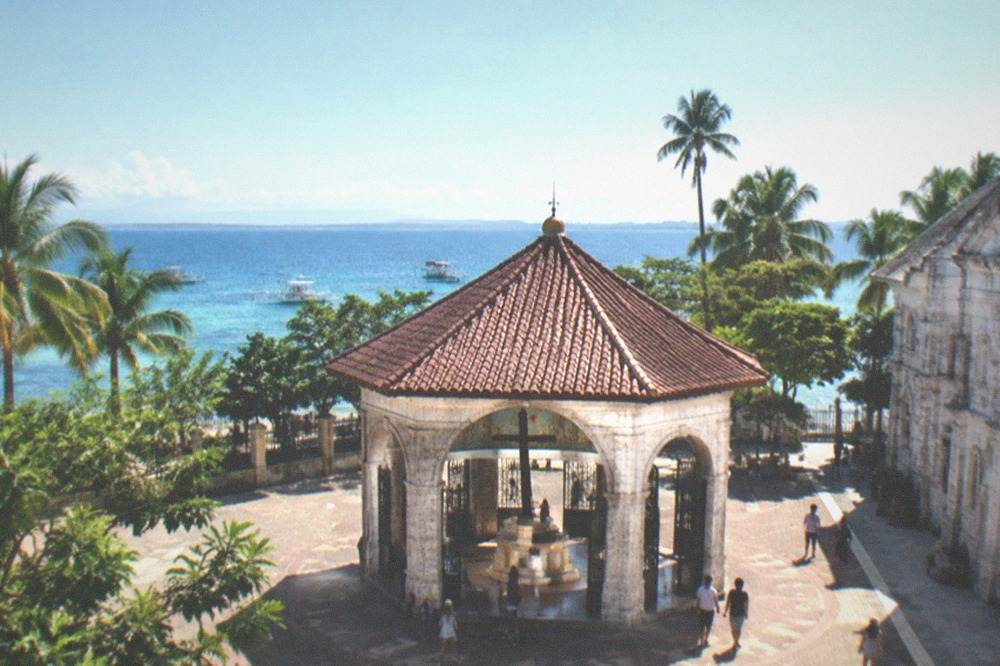
The counter-argument to the dry season is Sinulog. The festival's Grand Parade falls on the third Sunday of January, and the 2027 edition is set for 17 January at the Cebu City Sports Center. January is dry, cheap by festival-city standards and culturally the best month of the Cebu year, but it is also the month when hotel demand spikes around parade weekend. The Sinulog festival guide and the best time to visit Cebu guide cover the trade-offs, and the typhoon season guide covers the wet-half planning in detail.
How Do You Get To Cebu's Beaches Without A Car?
You reach Cebu's beaches without a car by bus, ferry and habal-habal, and the south coast is the easiest run: Ceres buses leave the Cebu South Bus Terminal for Oslob roughly every one to two hours, taking about three and a half to four and a half hours, and for Moalboal every thirty to forty-five minutes, taking about two and a half to three and a half hours. Bantayan needs a bus to Hagnaya plus a ferry, and Malapascua a bus to Maya plus a short boat hop.
The bus is the backbone of independent beach travel here. It is cheap, frequent on the south route, and air-conditioned on most departures, and the getting around Cebu guide covers the terminals, the apps and the taxi flag-downs. For islands beyond the bus network, the ferry is the second leg, and the ferries from Cebu guide lists the operators and the fares, including the crossing to Bohol covered in the Cebu to Bohol ferry guide.
| Beach destination | Main route from Cebu City | Rough journey time |
|---|---|---|
| Mactan resort beaches | Taxi, Grab or MyBus from the airport | 15 to 30 minutes |
| Oslob | Ceres bus from the South Bus Terminal | 3.5 to 4.5 hours |
| Moalboal | Ceres bus from the South Bus Terminal | 2.5 to 3.5 hours |
| Bantayan | Bus to Hagnaya, then ferry to Santa Fe | Half a day |
| Malapascua | Bus to Maya, then boat to the island | Half a day |
| Camotes | Bus plus ferry from Danao or Mandaue | Half a day |
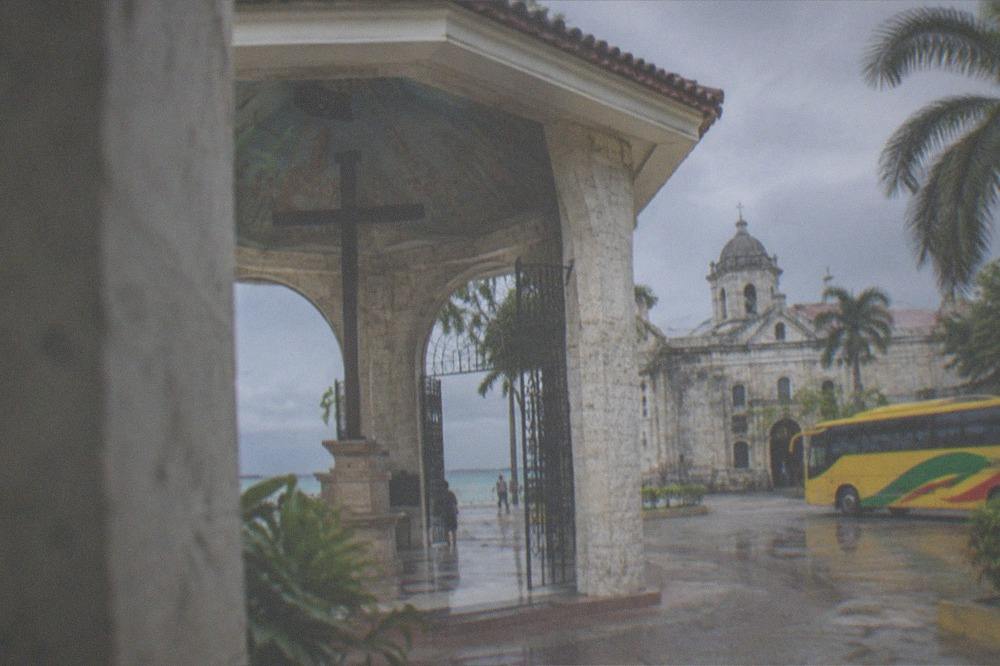
The honest advice is that a guided tour is not laziness on this island, it is arithmetic. A south coast day that stacks whale sharks, Tumalog Falls and Moalboal is close to impossible by public transport in one day, because the bus schedules and the noon cutoff at the whale-shark site collide. Solo drivers face the same arithmetic with a rental car, and the Cebu itinerary guide shows how to split the coast across several days instead.
Where Should You Stay For Beach Access In Cebu?
You should stay on Mactan Island for short-trip beach access, in Moalboal or Oslob for a south coast swimming base, and on Bantayan or Malapascua if the beach itself is the whole point of the trip, because each overnight area puts you within walking distance of the water and removes the daily bus leg. The Mactan versus Cebu City decision is the first fork: Mactan gives you the resort beaches, the city gives you the heritage sites, restaurants and nightlife.
The where to stay in Cebu guide covers the accommodation map area by area, and the Mactan versus Cebu City comparison settles the most common first-night question. The pattern that works is two nights in the city at the start, then a move to whichever coast the itinerary favours, rather than a single base with long daily returns.
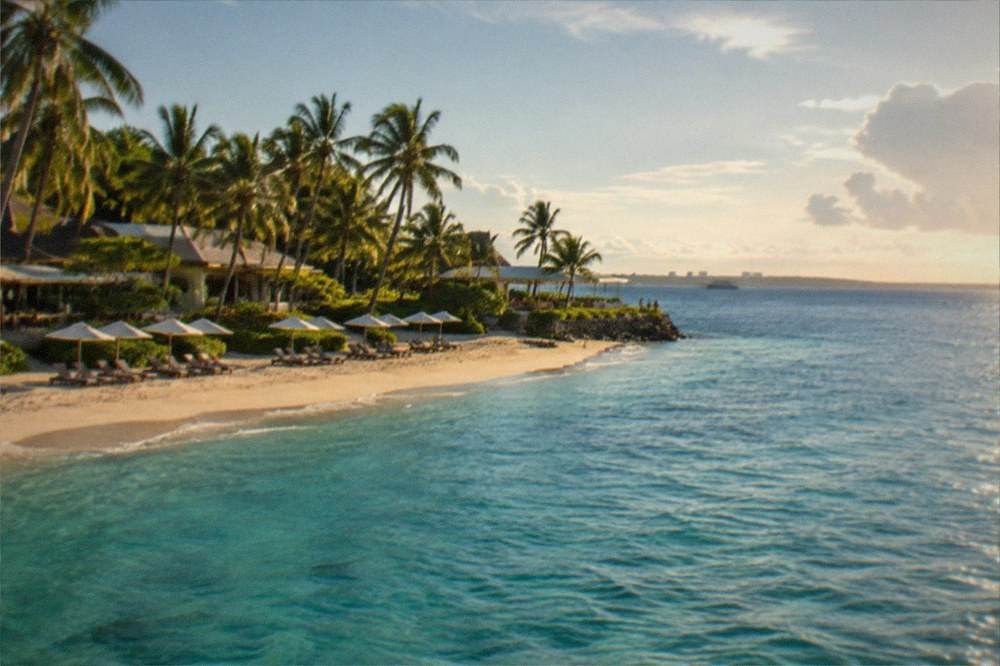
For a mixed week, the 3 days in Cebu itinerary shows how to chain the areas without backtracking, and the Cebu travel guide hub indexes every area, itinerary and practical guide on this site in one place.
An inland counterweight to a beach-heavy week also exists further north, in Danao. The Danasan Eco Adventure Park sells a single day pass covering its adventure activities, the operator has not published the price, and the live listing is the only reliable source for the current figure.
Common Questions About Cebu Beaches
Which part of Cebu has the best beaches?
North Cebu has the longest natural strands, on Bantayan Island and Malapascua. South Cebu has the most dramatic beach-plus-wildlife combinations, at Oslob, Sumilon and Moalboal. Mactan has the most convenient resort beaches. The question of which area suits you is covered in the best beaches by area answer.
Are there nice beaches on Mactan Island?
Yes, mostly inside resorts and on the island-hopping stops. The public sand on Mactan is limited, so visitors swim at a resort or take a boat to the marine sanctuaries of Hilutungan, Nalusuan and Caohagan. The Mactan beaches answer has the detail.
How far are the beaches from Cebu City?
Mactan's beaches are 15 to 30 minutes away by road. Oslob is about 3.5 to 4.5 hours south by bus, Moalboal about 2.5 to 3.5 hours, and Bantayan and Malapascua each take about half a day including a ferry or boat leg. The distance answer breaks down every route.
Do you have to pay to use beaches in Cebu?
Some, yes. Municipal environmental fees apply at Moalboal (P100 (about US$1.6) to swim or snorkel), on Lapu-Lapu island hopping (P100 (about US$1.6) for foreign tourists) and on arrival at Bantayan's Santa Fe (P30 (about US$0.5)). Resort beaches on Mactan require a day pass or a room. Many local beaches are free, but the managed swimming areas are not.
Is swimming with the Oslob whale sharks worth it?
It depends on your view of the ethics. The activity is tightly regulated by the Oslob municipal government, with mandatory briefings, distance rules and licensed spotters, but the sharks are lured with feed, which critics argue habituates them. The fee is P1,000 (about US$15.9) for foreign visitors and sightings are not guaranteed. The whale shark ethics guide lays out both sides.
Can you swim at Cebu beaches year-round?
Yes, the water stays warm all year, with a mean temperature of 28.1 degrees at the Mactan station. What changes is the rain: June to November is the rainy season, with October the wettest month at 194.8 mm, and typhoon risk peaks roughly July to October. December to May is the reliably dry window.